


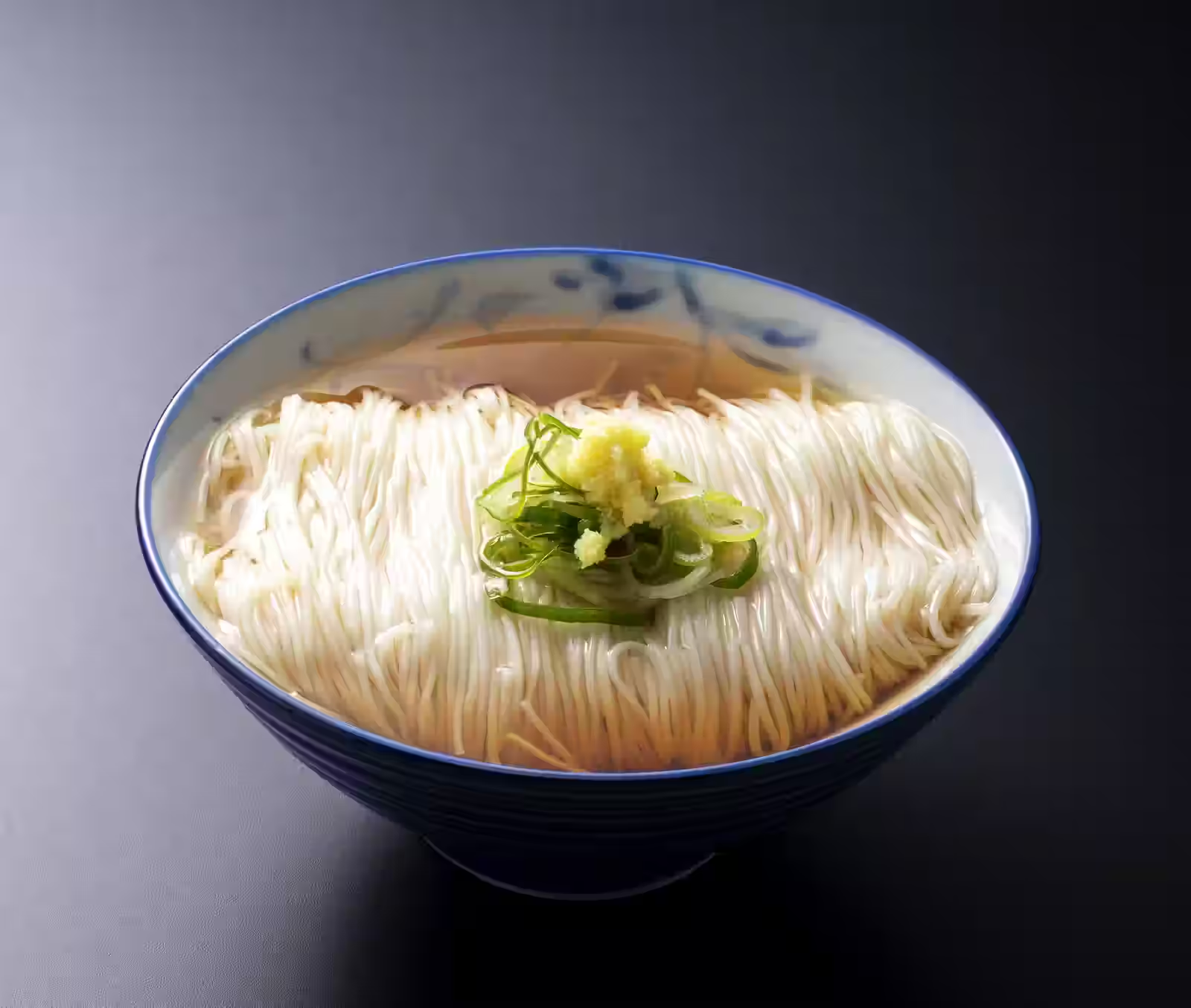


Hinai Jidori (比内地鶏) is a premium Japanese chicken from Akita Prefecture. It originates from the Hinai region near Odate City, and it is known for its deep, natural umami and firm yet tender texture. This Akita chicken is most famous as the essential ingredient in Kiritanpo nabe, Akita’s iconic hot pot dish. But its uses go well beyond that one recipe. If you have never heard of Hinai Jidori, this guide covers everything worth knowing.
What Is Hinai Jidori?
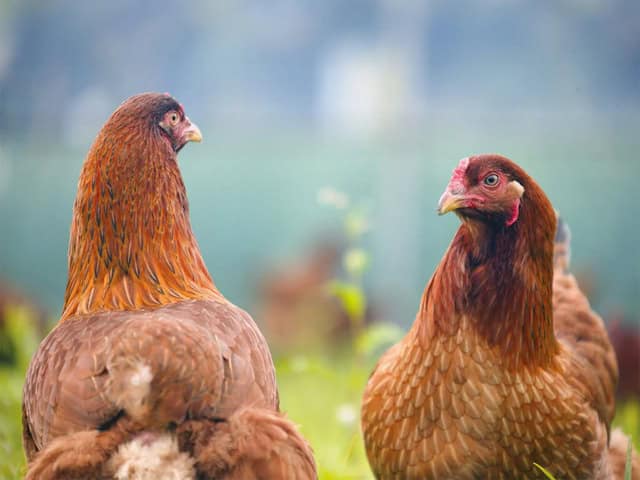
Hinai Jidori is one of Japan’s three most celebrated jidori chickens. It is raised under strict conditions in Akita Prefecture, where farmers follow guidelines set by the Akita prefectural government. The breed belongs to the broader category of Japanese free-range chicken, but Hinai Jidori stands well above average commercial poultry. The meat is denser, the color is deeper, and the flavor is noticeably richer. Compared to a standard broiler, it almost tastes like a different protein. That contrast surprises a lot of first-time visitors to Akita.
Scientifically, the difference comes down to umami compounds. Hinai Jidori contains high levels of inosine acid and arachidonic acid. Both contribute to the savory depth that makes the broth so satisfying. When you simmer this chicken, the stock turns golden and full-bodied. That is why it works so well in soups, hot pots, and dishes where the cooking liquid matters as much as the meat itself.
Hinai Jidori History

The story begins in the Edo period, in the northern Akita region once called Hinai. Local farmers kept a breed called Hinaidori, valued for its meat, eggs, and even feathers used in military decoration. The flavor was exceptional. Records indicate that this chicken was once offered as tax payment to feudal lords, which tells you something about how highly people regarded it. Over generations, the breed was refined and crossbred to create what eventually became modern Hinai Jidori.
The Meiji period brought disruption. Foreign chicken breeds entered Japan, and native breeds like Hinaidori declined sharply. By 1942, the Japanese government stepped in and designated the original Hinai chicken as a national natural monument. That protection preserved the genetic line, but it also created a separation that still exists today.
Hinai Chicken vs. Hinai Jidori: What Is the Difference?
This distinction confuses many people, and it is worth addressing clearly.
Hinai chicken (比内鶏) is the original protected breed. It is a national natural monument, raised today almost entirely for ornamental purposes. You will not find it on a restaurant menu. Its growth rate is slow, its disease resistance is low, and commercial production would be impractical.
Hinai Jidori (比内地鶏) is the food-grade version. Farmers developed it by crossing Akita Hinaidori with Rhode Island Red roosters. It retains the rich flavor profile of the original breed while offering better productivity. This is the chicken you actually eat. When a restaurant in Akita says they serve Hinai Jidori, this is what they mean.
Think of it this way: Hinai chicken is the ancestor preserved in a glass case, and Hinai Jidori is the working descendant that carries the flavor forward.
Taste, Texture, and Why It Matters
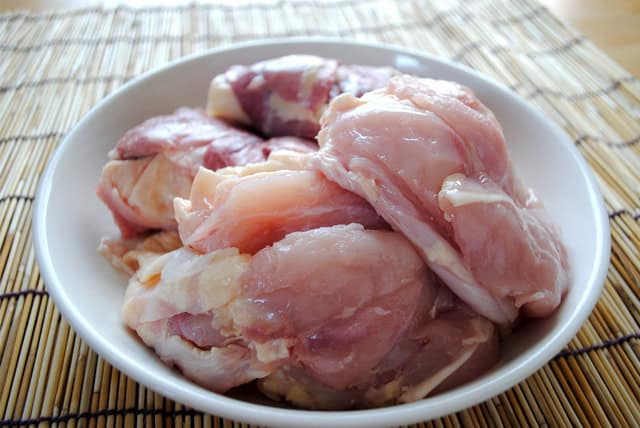
The first thing most people notice is the texture. Hinai Jidori has a noticeably firmer bite than supermarket chicken. It is not tough, but it has substance. Each piece holds together well, even after long simmering, which is exactly what you want in a hot pot. The muscle fibers are tighter because the birds are raised longer and move more freely during their lives.
The flavor is where things get genuinely interesting. The meat carries a natural savoriness that builds as you chew. It is not subtle. When you make a broth from Hinai Jidori bones and meat, the liquid turns rich, slightly golden, and deeply umami. That broth is the soul of a proper Kiritanpo nabe. Using ordinary chicken in the same recipe produces a noticeably thinner, less satisfying result.
Compared to standard broiler chicken, the fat distribution is different too. The fat in Hinai Jidori is more evenly integrated into the muscle, which means flavor rather than greasiness. It is a quality worth noticing.
How Hinai Jidori Is Used in Cooking
Most people outside Akita associate this chicken primarily with Kiritanpo nabe. That association is fair, but it only tells part of the story. Kiritanpo is a hot pot made with rice sticks and Hinai Jidori broth, and it is genuinely one of the best ways to experience the chicken’s flavor. The broth does most of the work, and this chicken delivers.
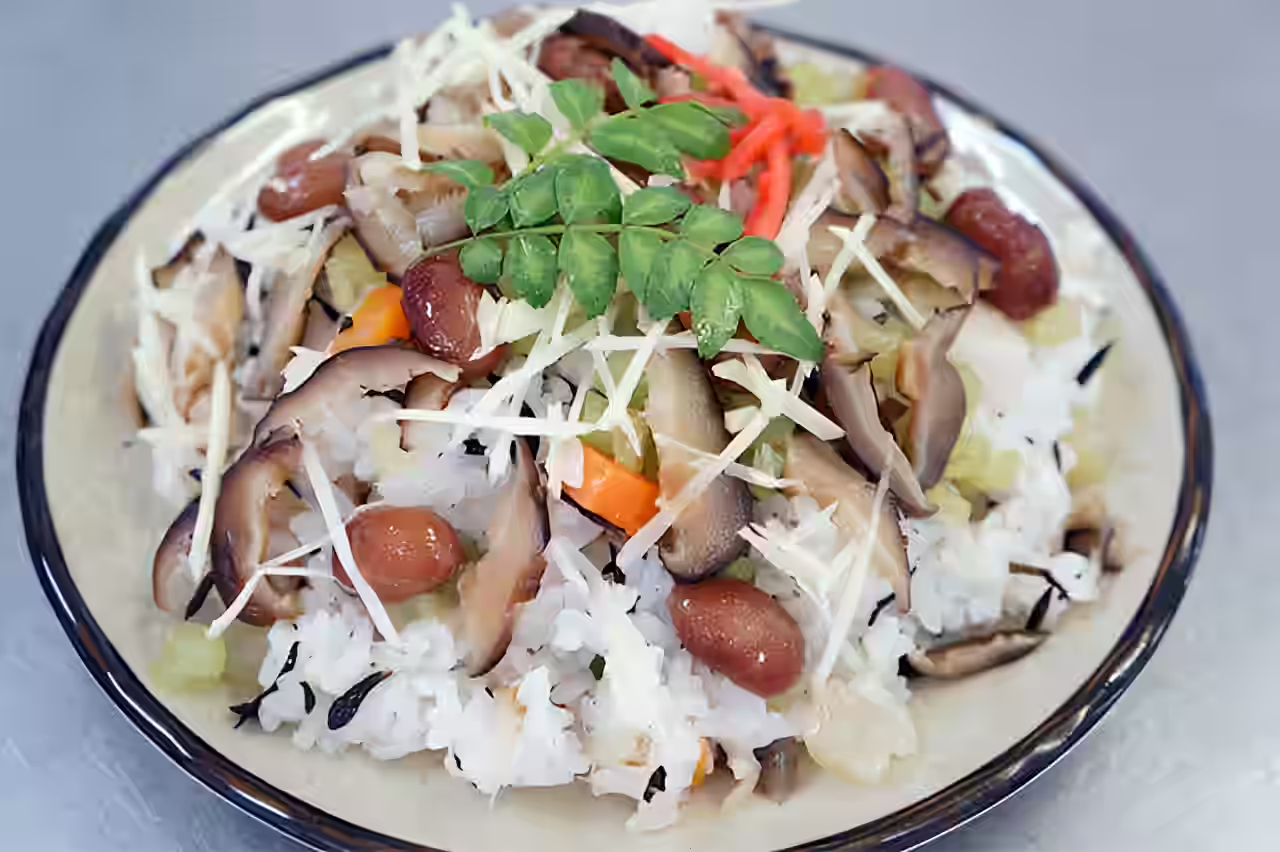
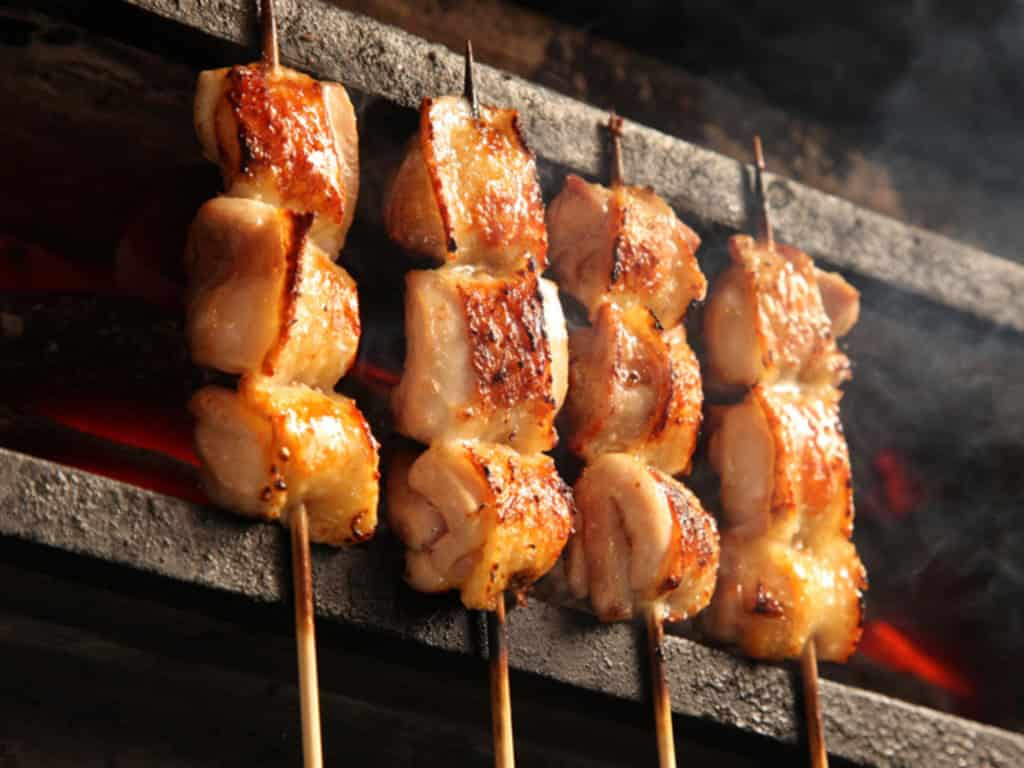
Beyond the hot pot, Hinai Jidori also appears in oyakodon, the classic chicken and egg rice bowl. The combination of firm, flavorful chicken with richly flavored eggs from the same region makes for a deeply satisfying bowl. Yakitori is another strong option. The dense meat holds up well on skewers, and the natural umami means minimal seasoning is needed. Some restaurants also serve it as炊き込みご飯 (takikomi gohan), a seasoned rice dish where the chicken flavor absorbs into every grain.
For travelers interested in other ways Japan celebrates premium poultry, Chicken Nanban from Miyazaki and Karaage offer interesting contrasts in style and region.
FAQ
- How is Hinai Jidori different from regular chicken?
-
Hinai Jidori has a firmer texture, deeper color, and significantly higher umami content than standard broiler chicken. It is raised longer, moves more freely, and develops denser muscle. The broth it produces is noticeably richer, which is why it is prized for hot pots and simmered dishes.
- What does Hinai Jidori taste like?
-
The meat is savory, firm, and full of natural umami. It is not mild like commercial chicken. The fat integrates well into the muscle, so the flavor feels rich without being greasy. In broth form, it turns golden and deep, which is why it works so well in Kiritanpo nabe.
- What dishes use Hinai Jidori besides Kiritanpo?
-
Hinai Jidori works well in oyakodon (chicken and egg rice bowl), yakitori, takikomi gohan (seasoned rice), and clear soups. Anywhere the chicken’s natural flavor can shine, this breed performs well. Oyakodon made with Hinai Jidori is a particular favorite in Akita restaurants.
- Where can I eat Hinai Jidori?
-
Akita Prefecture is the main place to find it. Odate City, in the Hinai region, has specialist restaurants. Akita City also has dedicated Hinai Jidori dining spots. Outside Akita, it occasionally appears in select Japanese restaurants in Tokyo and other major cities, but the best experience is in the region itself.
Hinai Jidori Restaurants
Akita Hinai-ya Odate Main Store (秋田比内や 大館本店)
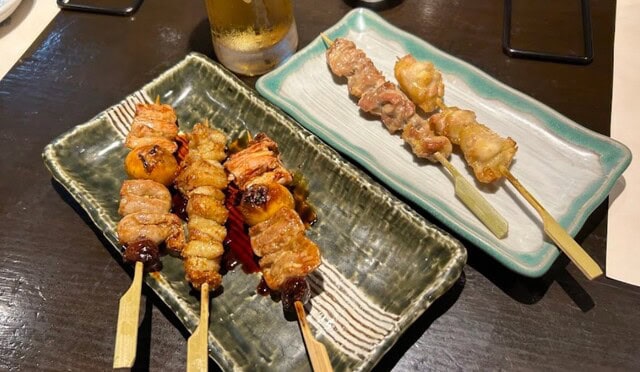
This is one of the most well-known spots to try Hinai Jidori in its home region. The Odate main store specializes in dishes made with certified Hinai Jidori, from hot pots to oyakodon. The atmosphere is relaxed and welcoming. It is a good first stop if you are visiting Odate City and want a straightforward introduction to what this premium chicken actually tastes like.
Honke Abeya Akita Store (本家あべや 秋田店)
Located in central Akita City, Honke Abeya focuses entirely on Hinai Jidori cuisine. The oyakodon here has a loyal following among locals, and the Kiritanpo nabe is available in season. It is casual enough for a solo lunch and comfortable for small groups. A good option if you are spending time in Akita City rather than traveling up to Odate.
Final Thoughts
Hinai Jidori is one of those ingredients that rewards curiosity. It is not just a premium label. The flavor difference is real, measurable, and easy to taste. If you are traveling through Akita Prefecture, trying this chicken in a proper Kiritanpo nabe or a simple oyakodon is one of the most honest food experiences the region offers. It connects directly to the land, the history, and the people who have been raising this breed for centuries.
Enjoy exploring Japan’s regional chicken culture further with Chicken Nanban from Miyazaki and crispy Karaage from across the country.
References
Akita Prefectural Agriculture, Forestry and Fisheries Department – Hinai Jidori official information (surveyed 2024): https://common3.pref.akita.lg.jp/hinaijidori/
Ministry of Agriculture, Forestry and Fisheries (MAFF) – Regional cuisine database, Akita entry (surveyed 2024): https://www.maff.go.jp/j/keikaku/syokubunka/k_ryouri/search_menu/
Akita Hinai-ya official restaurant site (surveyed 2024): https://akitahinaiya.co.jp/



Comments