



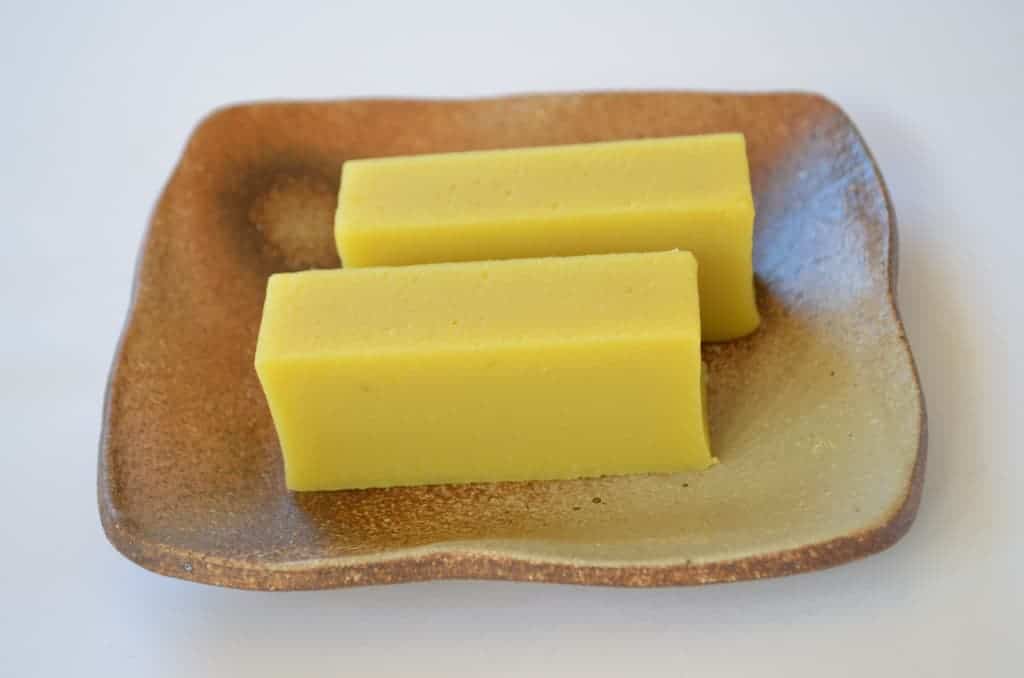
Walk through Asakusa on a cool afternoon and you will notice golden blocks stacked in shop windows. That is Imo Yokan, a dense Japanese sweet made by pressing cooked sweet potato and sugar into a sliceable block. It belongs to the wagashi family, yet it tastes closer to a baked sweet potato than to jelly.
So what exactly is this sweet potato yokan, and how does it differ from the bean-based yokan you may know? This guide covers the taste, the history, the best sweet potatoes, a reference recipe, storage, and where to buy it.

What is Imo Yokan?
In short, Imo Yokan is a confection made primarily from steamed sweet potatoes and sugar. Makers mash the potatoes smooth and press the paste into a rectangular mold. Some versions contain no setting agent at all. Others, however, use agar powder for a firmer and cleaner cut.
Quick facts
- Japanese name
- 芋ようかん (imo yōkan)
- Also written
- Imo Youkan, sweet potato yokan
- Category
- Wagashi (traditional Japanese sweet)
- Main ingredients
- Sweet potatoes and sugar; some recipes add salt or agar powder
- Closely linked place
- Asakusa, Tokyo
- Origin
- Devised in Asakusa before 1902, when Funawa opened, according to the company’s history
- Texture
- Dense, soft, and easy to slice
- Shelf life
- Often short; follow the date on the package
What the name means
The name is simple once you split it. Here, imo refers to sweet potato, while yokan refers to a family of molded, sliceable Japanese sweets. You may also see “Imo Youkan,” which is just an alternative romanization. This guide therefore uses “Imo Yokan” throughout.
Funawa, the Asakusa confectioner most closely tied to the sweet, lists only sweet potatoes, sugar, and a little salt. According to the company, its recipe uses no coloring, preservatives, or flavorings. Still, that describes one maker’s product, and recipes elsewhere vary.
What does Imo Yokan taste like?
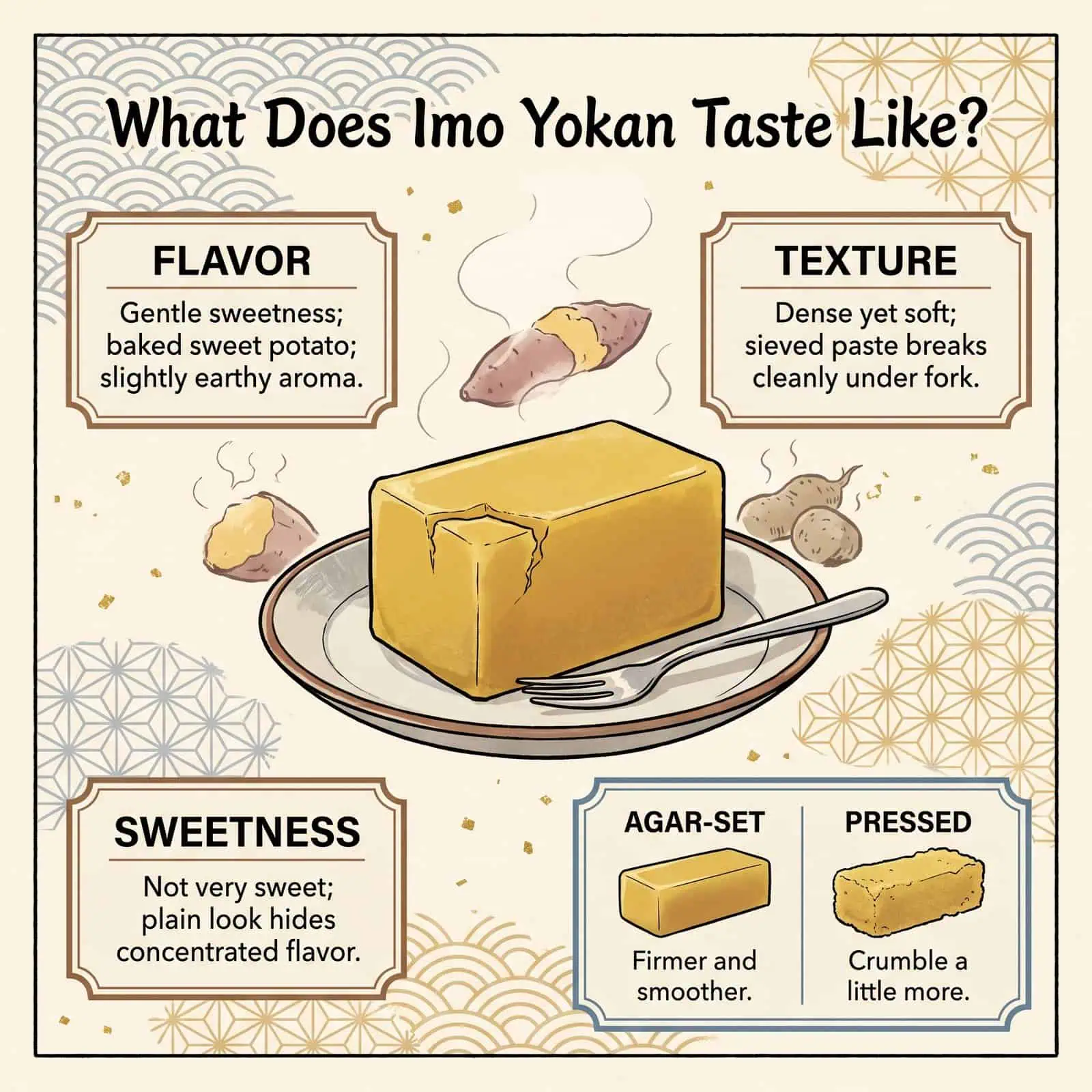
Expect something closer to a baked sweet potato than to jelly. The sweetness is gentle, and the aroma is warm and slightly earthy. Because makers sieve the paste, the texture feels dense yet soft, and it breaks cleanly under a fork.
Is it very sweet? Not really, and that may surprise you if you expect a sugary jelly. Agar-set versions feel firmer and smoother, whereas pressed versions crumble a little more. Its plain appearance gives little hint of the concentrated sweet potato flavor inside.
Imo Yokan vs regular yokan
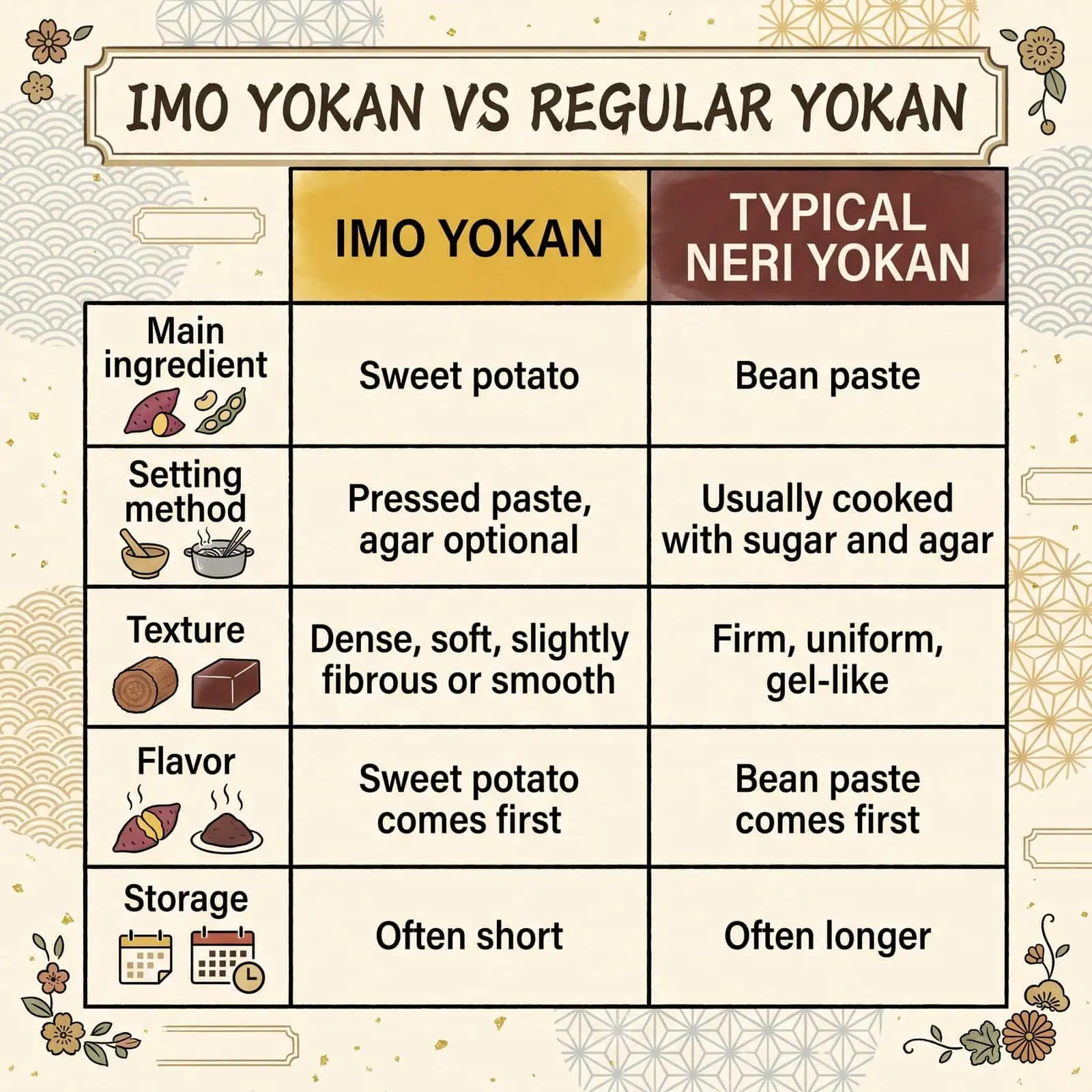
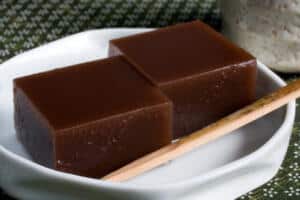
How does it compare with regular yokan? The main difference is the base. Typical neri yokan starts from bean paste cooked with sugar and agar. Imo Yokan, in contrast, puts the sweet potato first. Meanwhile, mizu yokan sits at the softer, wetter end of the family.
| Feature | Imo Yokan | Typical neri yokan |
|---|---|---|
| Main ingredient | Sweet potato | Bean paste |
| Setting method | Pressed paste; agar is optional | Usually cooked with sugar and agar |
| Texture | Dense, soft, slightly fibrous or smooth | Firm, uniform, and gel-like |
| Flavor | Sweet potato comes first | Bean paste comes first |
| Storage | Often short; depends on the product | Often longer; depends on the product |
Keep in mind that this is a general picture. Therefore, ingredient labels and use-by dates always take priority over the table.
History of Imo Yokan
An Asakusa wholesaler’s idea
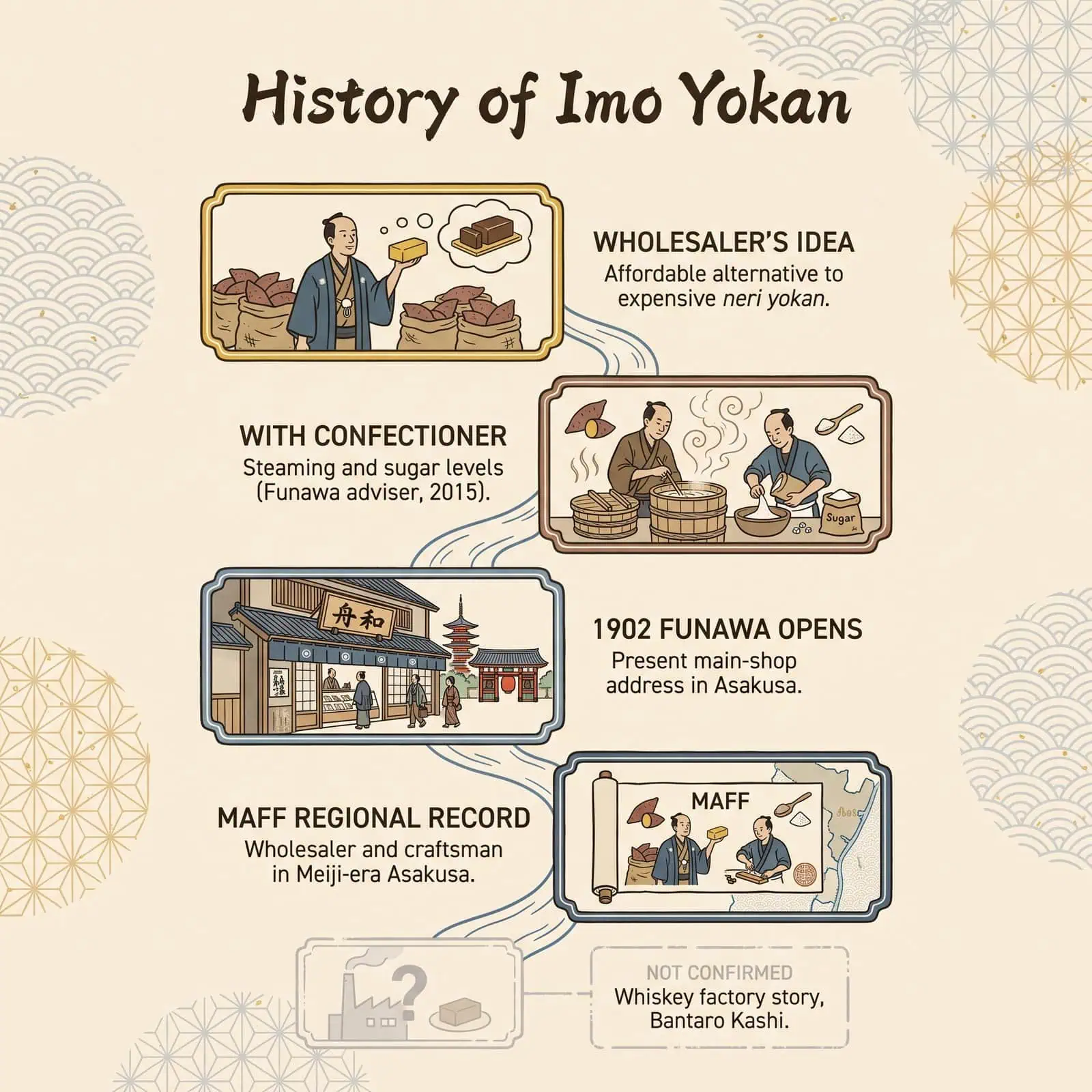
The clearest account comes from Funawa itself. According to its official history, founder Wasuke Kobayashi ran a sweet potato wholesale business in Asakusa. At the time, neri yokan was expensive, so ordinary families rarely ate it. He therefore developed a sweet potato version as an affordable alternative.
A 2015 account by a Funawa adviser adds one more name. It says Kobayashi worked with an Asakusa confectioner, Ishikawa (石川定吉), on steaming methods and sugar levels. Funawa then opened in 1902 at its present main-shop address. Reportedly, the shop name joins one character from Ishikawa’s trade name (舟定) with one from Wasuke (和助).
Japan’s agriculture ministry tells a similar story. Its regional cuisine database credits a sweet potato wholesaler and a confectionery craftsman in Meiji-era Asakusa. Since then, the sweet has spread well beyond Tokyo.
Stories that the records leave open
Some secondary accounts link Kobayashi and Ishikawa to a shared job at a whiskey factory. The available primary and official sources, however, do not confirm that story. Likewise, claims about an Edo-period sweet called “Bantaro Kashi” lack a traceable source. This guide leaves both out.
One more note concerns the name Ishikawa. Primary sources print his given name only in kanji, without a reading, so this guide shows the kanji rather than a guessed spelling. Also, phrases like “the original” are Funawa’s own wording and belong to company history.
Best sweet potatoes for Imo Yokan
Which are the best sweet potatoes for Imo Yokan? It depends on the texture you want, so there is no single winner. Japan’s agriculture ministry notes that Beni Haruka, Kogane Sengan, and Silk Sweet lead national planting. However, that ranking reflects farming, not suitability for this sweet.
Fluffy and traditional: Beni Azuma and Naruto Kintoki

These varieties cook up dry and fluffy, which suits a potato-forward block. According to the Funawa adviser’s account, the company moved through several fluffy varieties over the decades. In 2015, it named Beni Azuma as its raw material. Breeding researchers likewise describe Beni Azuma as a dry-textured table variety.
Moist and smooth: Beni Haruka, Silk Sweet, and Beni Masari

Prefer a silkier slice? Then look for these moist varieties. Silk Sweet generally gives a lighter, smoother impression. Beni Haruka and Beni Masari, meanwhile, tend to produce a sweeter-tasting block. Because they hold more moisture, a home recipe may need less water.
Dense and naturally sweet: Annō Imo

Annō Imo, associated with Tanegashima in Kagoshima, is sticky and intensely sweet. Some recipes rely mainly on the variety’s natural sweetness. Commercial products, however, may still contain added sugar, so read the label.
Color-focused: purple sweet potato varieties

Purple varieties such as Ayamurasaki give a vivid violet block. The ministry notes that Ayamurasaki contains anthocyanin pigment, and growers first raised it for coloring. In general, these types taste milder, so the appeal is partly visual.
How to make Imo Yokan: the MAFF reference recipe
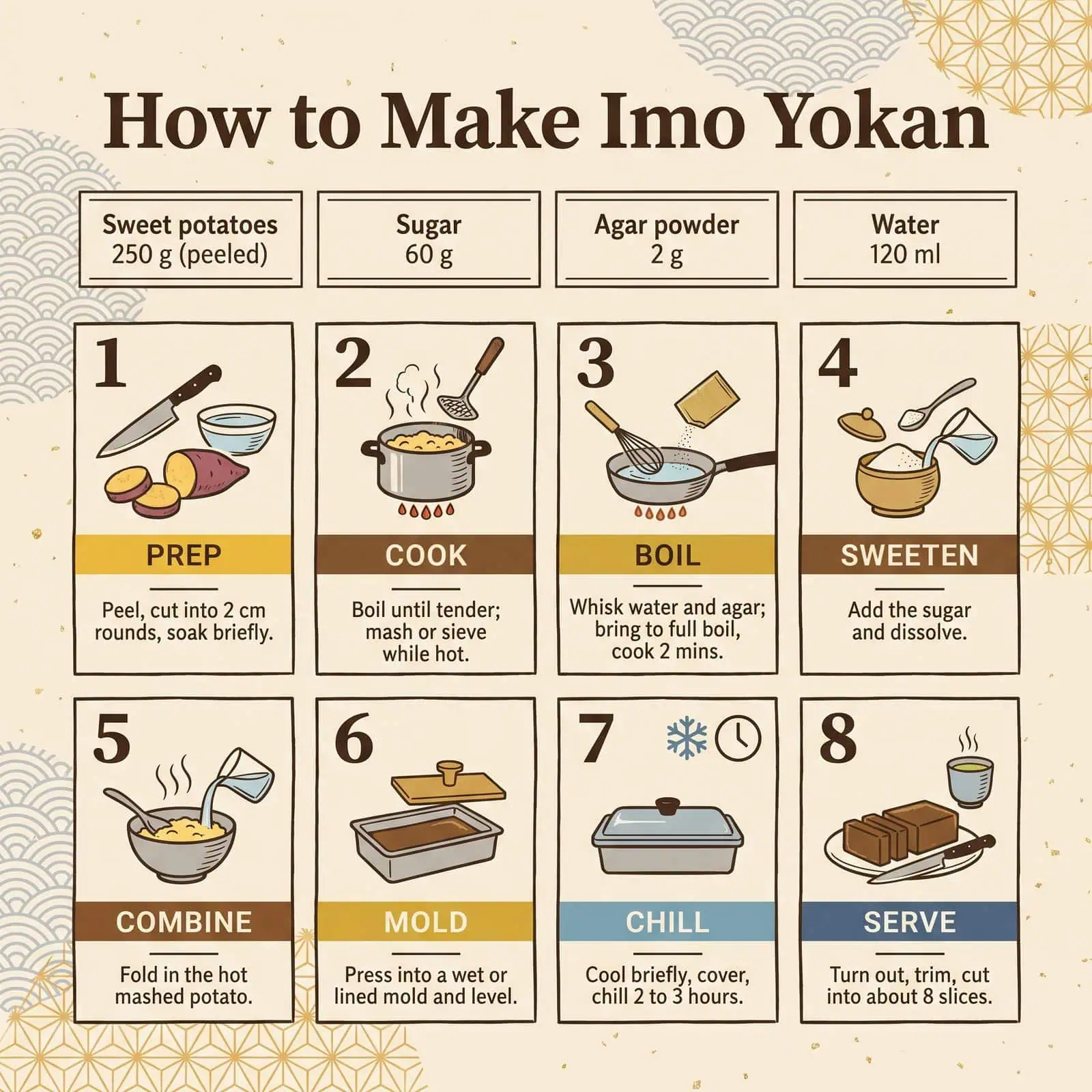
Wondering how to make Imo Yokan at home? This Imo Yokan recipe follows the quantities published by Japan’s agriculture ministry (MAFF) in its regional cuisine database. It uses agar powder, so the block slices neatly.
Recipe status
This is an official reference recipe, organized for home cooks. Food in Japan has not yet tested it. The quantities come from MAFF; the mold size, chilling time, and slice count are editorial estimates, not confirmed values. It yields about 4 servings.
Equipment
- Saucepan
- Steamer or large pot
- Potato masher or fine-mesh sieve
- Silicone spatula
- Digital kitchen scale
- Small rectangular mold (a 15 × 12 cm / 6 × 5 in loaf-style pan works for this quantity), plus baking paper if you like
Imo Yokan (agar-set reference recipe)
Ingredients
- Sweet potatoes: 250 g (about 9 oz), weighed after peeling
- Sugar: 60 g (roughly 5 tbsp)
- Agar powder: 2 g (weigh it; spoon sizes vary by brand)
- Water: 120 ml (½ cup)
- Extra water for soaking and boiling
Instructions
- Peel the sweet potatoes and cut them into 2 cm (¾ in) rounds. Then soak them briefly in water.
- Boil them in plenty of water until tender. Drain, then mash or sieve while still hot.
- Whisk the measured water and agar powder in a saucepan before heating.
- Bring it to a full boil while stirring. Next, keep a gentle boil for about 2 minutes.
- Add the sugar and stir until it dissolves completely.
- Fold in the hot mashed potato and mix until uniform.
- Press the mixture into a wet or lined mold and level the top.
- Cool briefly, cover, and refrigerate until firm, usually 2 to 3 hours. Finally, turn out, trim, and cut into about 8 slices.
Why the agar must boil
Powdered agar normally needs a full boil to dissolve. A brief simmer is not enough, and the block may stay soft as a result. Standard Japanese guidance, including a recipe sheet from Chino in Nagano, the heart of agar country, is to boil and then keep it simmering for about two minutes. Treat that as general guidance, and follow your package if it says otherwise.
Mold, cooling, and cutting
First, lightly wet the mold or line it with baking paper. Press in the hot mixture, level it with a damp spatula, and tap out any gaps. Next, let the steam fade for a short time at room temperature. Then cover the mold and move it to the refrigerator.
Do not leave this moist mixture out for long, because it spoils easily. Once it is firm, turn out the block and trim the uneven edges. A clean, slightly damp knife gives you sharp rectangular slices.
Making it without agar
Funawa’s own ingredient list has no agar at all, so an agar-free block is possible. Treat it as a separate style, though, rather than a direct substitution. Omit the agar and its measured water, then add sugar gradually to hot, finely sieved sweet potato. Pack the mixture firmly while warm.
The final texture depends heavily on the potato variety and its moisture. Dry, fluffy types such as Beni Azuma hold together best. The result is softer and more delicate, and the slices look less sharp. In exchange, the potato flavor comes through very clearly.
How to serve Imo Yokan

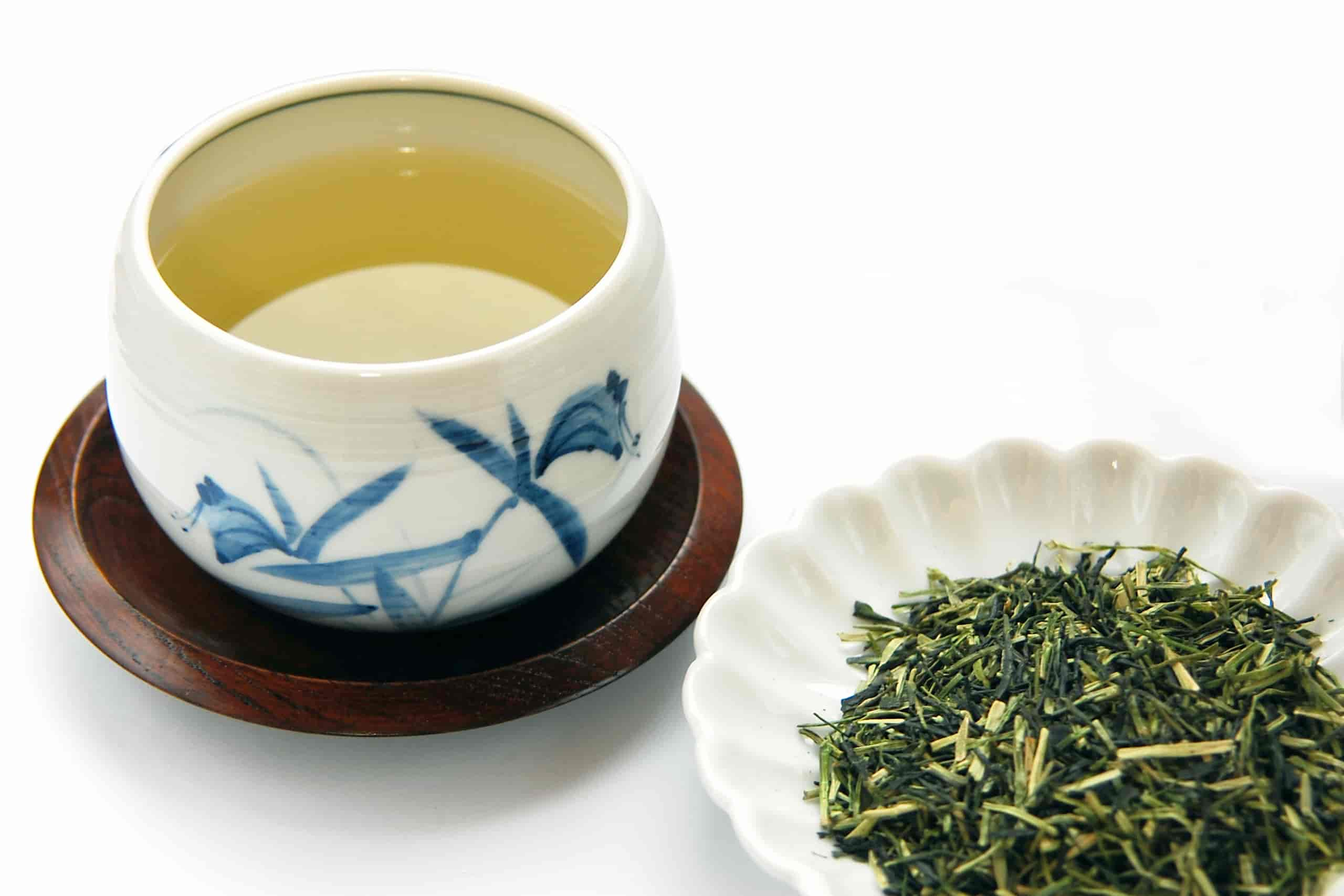
Imo Yokan is commonly served plain with green tea. However, a little heat changes it completely. Toast a slice in the oven, or pan-fry it in a little butter. The surface caramelizes, and the result tastes close to yakiimo.
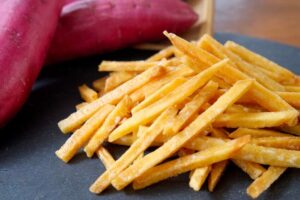
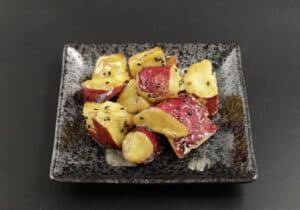
What about seasonal events? You can certainly serve it at New Year gatherings, cherry-blossom picnics, or moon-viewing evenings. Still, no source ties it to a specific ceremony. In practice, the ministry describes it as an everyday snack that people make year-round. If you enjoy potato sweets, daigaku imo and imo kenpi are natural next steps.
Storage and shelf life
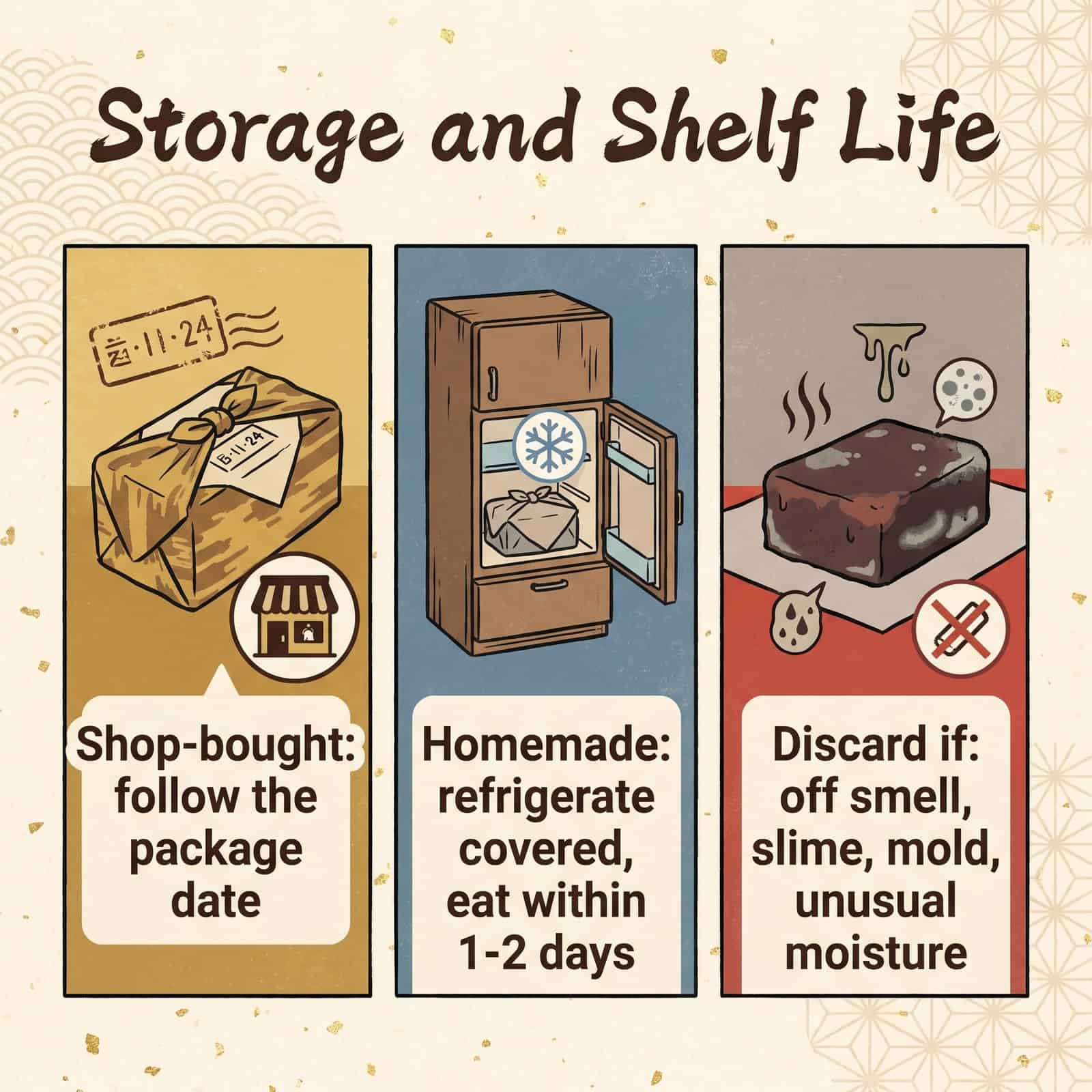
Imo Yokan shelf life varies a lot by recipe, packaging, and preservative use. Fresh, high-moisture products often have a short use-by period. In fact, the Funawa adviser’s account calls the short keeping time a mark of the real thing. Therefore, follow the date and storage instructions on the package.
What about a homemade block? Keep it covered in the refrigerator and eat it within a day or two, since it has no preservatives. Discard it if you notice an off smell, unusual surface moisture, slime, mold, or any other sign of spoilage.
Where to buy Imo Yokan
Information checked: October 3, 2026. Hours, branches, and limited products change, so confirm details before you travel.
Funawa Asakusa main shop (舟和)

Funawa is the natural first stop, because its company history links the shop directly to the sweet’s development. The main shop at 1-22-10 Asakusa sells Imo Yokan by the piece on the first floor, open daily from 10:00 to 19:00. A café upstairs keeps separate hours. Since the product often carries a short use-by date, buy it near the end of your visit and ask whether it needs refrigeration.
Where to buy Imo Yokan in Tokyo
Funawa also runs counters at Kaminarimon and along Nakamise, and its store list includes outlets at Tokyo and Ueno stations. Hours differ by branch, though. For stations, neighborhoods, prices, maps, and takeaway tips, see our local Imo Yokan Tokyo guide. If you would rather graze, our Asakusa sweet potato sweets walk maps a full route.
Beyond Tokyo: sweet potato regions
Funawa’s store list covers outlets from Hokkaido to Kyushu, although some locations skip certain products by season. Outside that network, look to the growing regions. Kawagoe in Saitama is known for potato sweets, while Ibaraki and Chiba grow much of Japan’s Beni Azuma. Similarly, Tokushima is home to Naruto Kintoki, and Kagoshima’s Tanegashima is the source of Annō Imo.
Dietary and ingredient information
How many Imo Yokan calories are in a slice? It depends on the potato, the sugar level, and the slice size, so no single figure applies. For commercial products, use the nutrition label. For a homemade block, calculate from your exact recipe and finished weight.
Basic versions contain only plant ingredients, since agar comes from seaweed. They also contain no wheat, so a plain block is naturally gluten-free. Even so, check labels if you have allergies, because recipes and factory conditions differ.
Conclusion
Imo Yokan is simple on paper: sweet potato, sugar, and a firm press. Yet that simplicity is the point. A Meiji-era wholesaler turned a cheap root into something that still fills Asakusa shop windows more than a century later. Ready to try it? Make the reference recipe above, or plan a tasting walk with our Asakusa sweet potato sweets guide.
Imo Yokan FAQ
Ingredients and diet
- Does Imo Yokan contain beans?
-
Usually not. Imo Yokan is made from sweet potatoes and sugar, so bean paste is not part of the basic recipe. Typical neri yokan, by contrast, is made from bean paste, sugar, and agar. Some shops sell both side by side, so check the label.
- Is Imo Yokan vegan and gluten-free?
-
A plain block usually is. The basic ingredients are sweet potatoes, sugar, salt, and sometimes agar, which comes from seaweed. None of these contain wheat or animal products. However, recipes vary, so confirm the label for any added butter, dairy, or flavorings.
- How is Imo Yokan different from sweet potato cake?
-
Sweet potato cake, or suīto poteto, is a baked Western-style sweet. It mixes mashed sweet potato with butter, sugar, and egg, then bakes it until golden. Imo Yokan, instead, is pressed or set without baking. As a result, it stays denser and tastes more purely of potato.
Making it at home
- Can I make Imo Yokan without agar?
-
Yes, but treat it as a separate style rather than a direct substitution. Omit the agar and its water, add sugar gradually to hot sieved potato, and pack the mixture firmly while warm. Dry, fluffy varieties hold together best. Expect a softer block with less sharp slices.
- Why did my Imo Yokan not set?
-
Most often, the agar did not dissolve fully. Powdered agar normally needs a full boil for about one to two minutes. Too much liquid can also weaken the set. In addition, check that your agar amount matches the package directions.
- Can I use moist varieties like Beni Haruka?
-
Yes, and the slice will be smoother. Because these potatoes hold more moisture, reduce the water slightly or the block may stay soft. Taste before adding all the sugar, since moist varieties are often sweeter. Fluffy types remain the easier choice for a first attempt.
Buying and storing
- Does Imo Yokan need refrigeration?
-
Often, yes, especially for fresh products with a short use-by date. Some packaged versions keep at room temperature, so the label decides. When in doubt, ask the shop at purchase and keep the box cool. Homemade blocks always belong in the refrigerator.
- Can I take Imo Yokan home as a souvenir?
-
Within Japan, yes, if you can eat it before the printed date. For international travel, fresh Imo Yokan is risky because of its short shelf life. Look instead for packaged versions with a longer date. Always check your destination’s rules on bringing in food.
- Where can I buy Imo Yokan in Tokyo?
-
Funawa’s Asakusa main shop is the most historically relevant stop. Funawa also runs other counters around Asakusa and lists further outlets on its website. However, availability can change by season. Check the official store list before you visit.
About this guide
- Originally published
- February 28, 2024
- Substantially reviewed
- October 3, 2026
- Reviewed by
- Food in Japan editorial team
- Update note
- History, terminology, recipe instructions, storage guidance, shop information, and sources were reviewed. Unsourced historical anecdotes, a fixed calorie figure, a general shelf-life estimate, and one restaurant listing without confirmed availability were removed.
References
- Funawa – History of Funawa (舟和の歴史) (Accessed October 2026)
- Funawa – Imo Yokan and Funawa (芋ようかんと舟和) (Accessed October 2026)
- Funawa – Store list (店舗一覧) (Accessed October 2026)
- Japan Root and Tuber Crops Development Association – Imo-rui Shinkō Jōhō No. 124 (July 2015): The history of Funawa, Imo Yokan, and mitsumame (Accessed October 2026)
- Ministry of Agriculture, Forestry and Fisheries (MAFF) – Our Regional Cuisines: Imo-yokan (Sweet Potato Cake) (Accessed October 2026)
- Ministry of Agriculture, Forestry and Fisheries (MAFF) – Sweet potato varieties Q&A (サツマイモの品種について教えてください) (Accessed October 2026)
- Ministry of Agriculture, Forestry and Fisheries (MAFF) – Types of sweet potato (サツマイモのいろいろな種類) (Accessed October 2026)
- Chino City, Nagano – Health Promotion Division recipe sheet: milk agar fruit punch (牛乳寒天のフルーツポンチ), showing standard powdered-agar boiling method (Accessed October 2026)
- Breeding Science – Katayama, K., Kobayashi, A., Sakai, T., Kuranouchi, T., & Kai, Y. (2017). Recent progress in sweetpotato breeding and cultivars for diverse applications in Japan. 67(1), 3–14 (Accessed October 2026)
- Breeding Science (J-STAGE) – Polyploid QTL-seq revealed multiple QTLs controlling steamed tuber texture and starch gelatinization temperature in sweetpotato. 74(2) (Accessed October 2026)
Related Articles
- Imo Yokan in Tokyo (芋羊羹) (Surveyed: October 2026)
- Asakusa Sweet Potato Food Guide: Yakiimo, Daigaku Imo, Imo Yokan and More (Surveyed: October 2026)
- Yokan (羊羹) (Surveyed: October 2026)
- Mizu Yokan (水羊羹) (Surveyed: October 2026)
- Daigaku Imo (大学芋) (Surveyed: October 2026)
- Yakiimo (Surveyed: October 2026)
- Imo Kenpi (いもけんぴ) (Surveyed: October 2026)
- Sweet Potato Cake (スイートポテト) (Surveyed: October 2026)
- Imo Shochu (芋焼酎) (Surveyed: October 2026)



Comments