


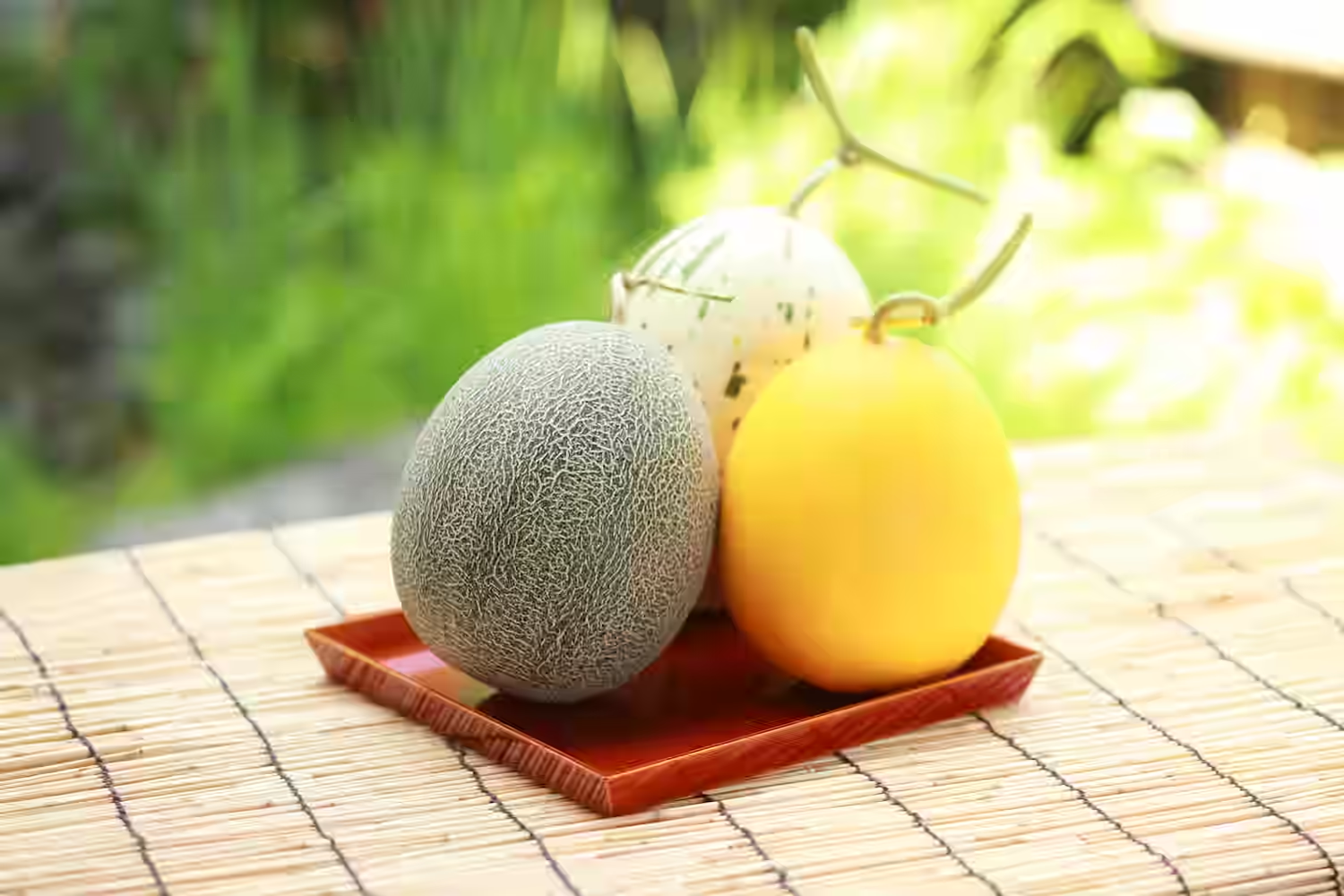


Japan’s most famous gift melons wear a fine white net. Thank You Melon (サンキューメロン) does not. Instead, this pale, smooth-skinned melon with green flesh grows only in the Hachiryu district of Mitane Town. That district lies on the Sea of Japan coast of Akita Prefecture. Outside a short early-summer window, you will struggle to find one at all.
This guide explains what Thank You Melon is and how it relates to the wider family of Hachiryu melons. It also covers how sand dunes became melon country and what the fruit tastes like. Finally, it shows where travelers can buy one.
What Is Thank You Melon?
Thank You Melon is a melon variety that, according to Mitane Town, farmers grow only in its Hachiryu district. Japan’s tourism agency calls it a particularly prized variety in an area already known for sweet melons. Its season is also short, and you mainly find it at local farm stands or through limited seasonal sales. That is why so few people outside Akita have tasted it.
Quick Facts
- Japanese name
- サンキューメロン (Sankyū Meron)
- Where it grows
- Only in the Hachiryu district of Mitane Town, Akita Prefecture
- Region
- Sea of Japan coast, northern Tohoku
- Main season
- June to July, according to Japan’s tourism agency
- Look
- Pale, smooth rind without the raised net of muskmelons
- Flesh
- Green, smooth, and sweet
- Growing land
- Irrigated coastal sand dunes
- Where to buy
- Local farm stands such as Dragon Fresh Center (checked September 2026)
Japanese and English Names
In Japanese the melon is サンキューメロン, pronounced sankyū meron, which is simply the English phrase “thank you” written in katakana. Japan’s official multilingual tourism database uses the English name Thank You Melon, so this guide does the same. However, we could not find a published explanation of the name. So any origin story you hear locally is worth taking with a smile.
Thank You Melon vs Hachiryu Melon
The distinction between Thank You Melon and Hachiryu melon matters. Hachiryu melon (八竜メロン) is not one variety. Rather, it is the local name for all the melons from Hachiryu. The Mitane Town Tourism Association lists Thank You, Takami, Grace, and others under it. Thank You Melon, therefore, is one variety within the wider Hachiryu melon family. Official tourism sources specifically describe it as a variety cultivated only in Hachiryu.
Where Does Thank You Melon Come From?
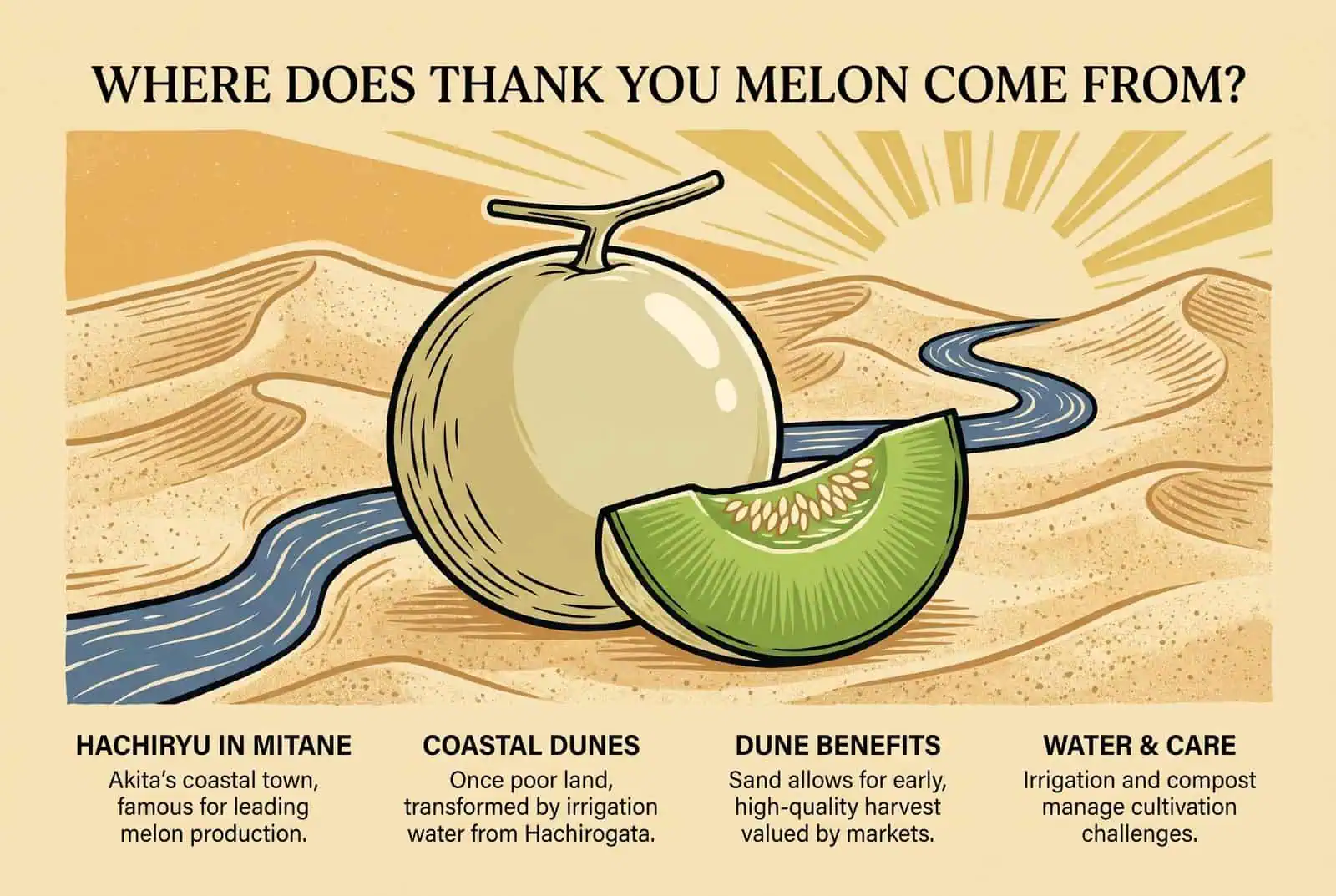
Hachiryu in Mitane, Akita
Hachiryu was once a town of its own, Hachiryu-machi, before it merged into present-day Mitane. It sits on the Sea of Japan coast in northern Akita, beside the reclaimed Hachirogata lagoon. Mitane Town describes Hachiryu as one of Akita’s leading melon areas. Japan’s tourism agency adds that melons make up about 70 percent of the district’s farm produce.
How Sand Dunes Became Melon Fields
For a long time, however, the coastal dunes were poor farmland. In a 2017 memoir series for the Akita Sakigake Shimpo newspaper, a local farmer looked back on those years. The sandy land had no water source, she recalled, and it suited few crops. As a result, many men left for months to work elsewhere. Irrigation changed that.
Accounts of the start date differ slightly, though. The same newspaper group’s travel site says melon production began in 1963, when the old town irrigated its coastal dunes. Meanwhile, a study in Tohoku Agricultural Research traces the boom to Prince melons introduced in the early 1960s. It adds that a prefectural project built an irrigated dune district in 1969, piping water from Hachirogata. By 1970, melons covered about 80 hectares and earned over 100 million yen.
Why the Dunes Suit Melons
Once water arrived, the dunes turned out to have real advantages. Researchers at the Akita Agricultural Experiment Station also noted two advantages of dune melons. They could ship early, and they reached high quality, so markets valued them. Sand has a downside too, though. Those same researchers studied fruit cracking at harvest, testing how irrigation and compost affected the problem.
What Does Thank You Melon Look and Taste Like?
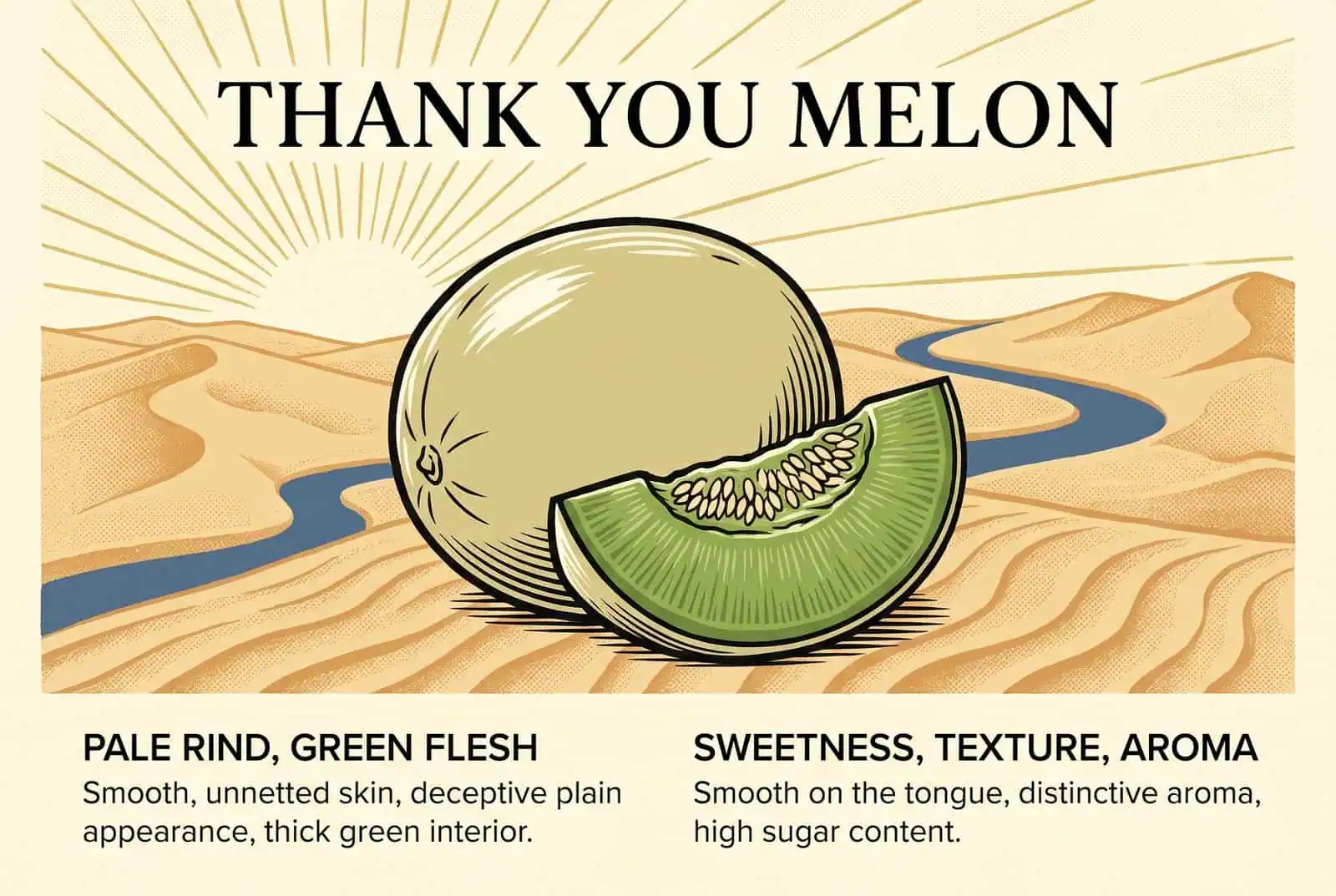
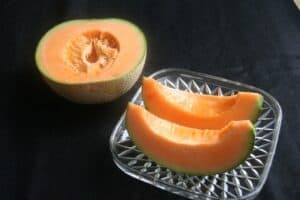
At first glance, it looks surprisingly plain. Without a net pattern, a Thank You Melon resembles an everyday table melon more than a gift-box muskmelon. The inside tells a different story.
Pale Rind and Green Flesh
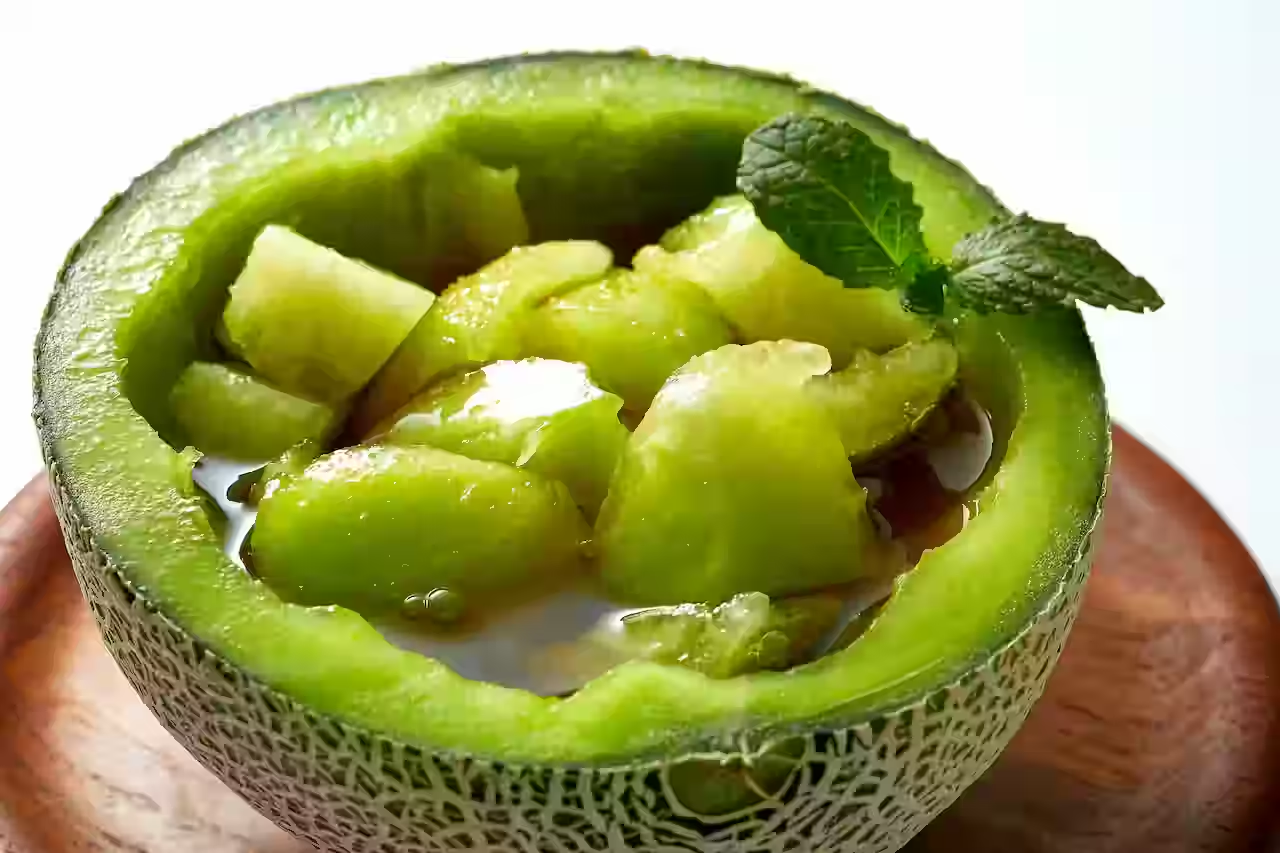
The rind is smooth and pale, close to white. In 2020, an Iwate produce wholesaler brought the melon into its local market. Its staff noted that it looks a lot like common smooth-skinned varieties at first glance. Cut it open, however, and you find green flesh. That combination of plain skin and green interior is part of what makes it easy to underestimate.
Sweetness, Texture, and Aroma
Akita’s regional press describes Thank You Melon as smooth on the tongue, sweet, and marked by a distinctive aroma. The wholesaler’s tasting note agreed, calling the flesh sweet and smooth. We could not find a published official sugar standard, though. So treat any exact Brix number online as a seller’s estimate, not a guarantee. As with any melon, sweetness also depends on the season and on ripeness.
When Is Thank You Melon in Season?
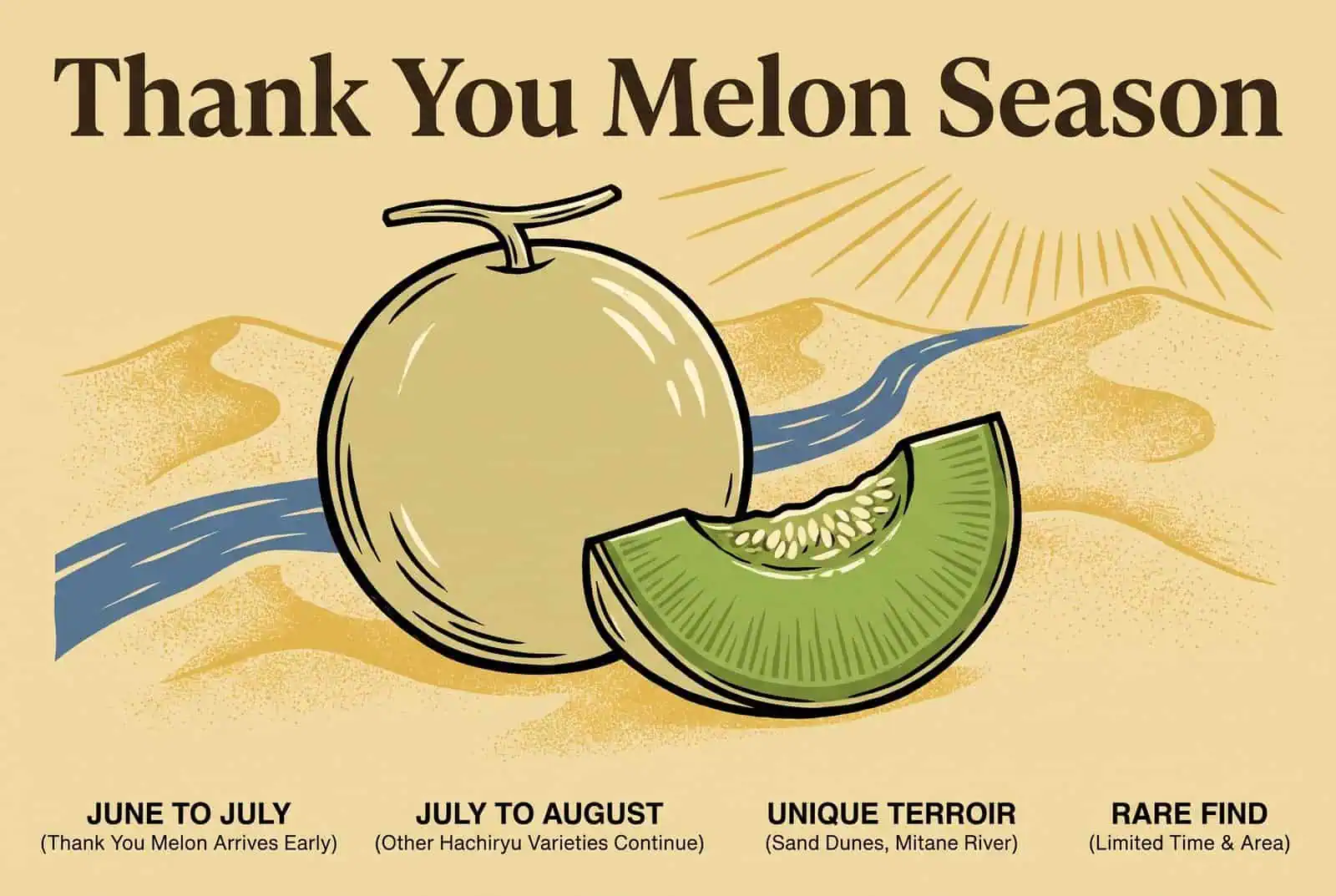
Timing matters more here than with most fruit. Official sources describe the season in slightly different ways. That is mostly because some cover Thank You Melon alone, while others cover all Hachiryu melons.
| Source | What it covers | Period |
|---|---|---|
| Japan Tourism Agency (2020) | Thank You Melon | June to July |
| Mitane Town (2025) | All Hachiryu melon varieties | July to August |
| Akita Sakigake Shimpo travel site (2019) | Hachiryu melon shipments | Early July to late August |
In short, Thank You Melon arrives early, while other varieties keep the farm stands full into August. If Thank You Melon is your goal, aim for late June or July. Weather shifts harvests from year to year, so call a farm stand before you travel.
Thank You Melon vs Other Hachiryu Melons
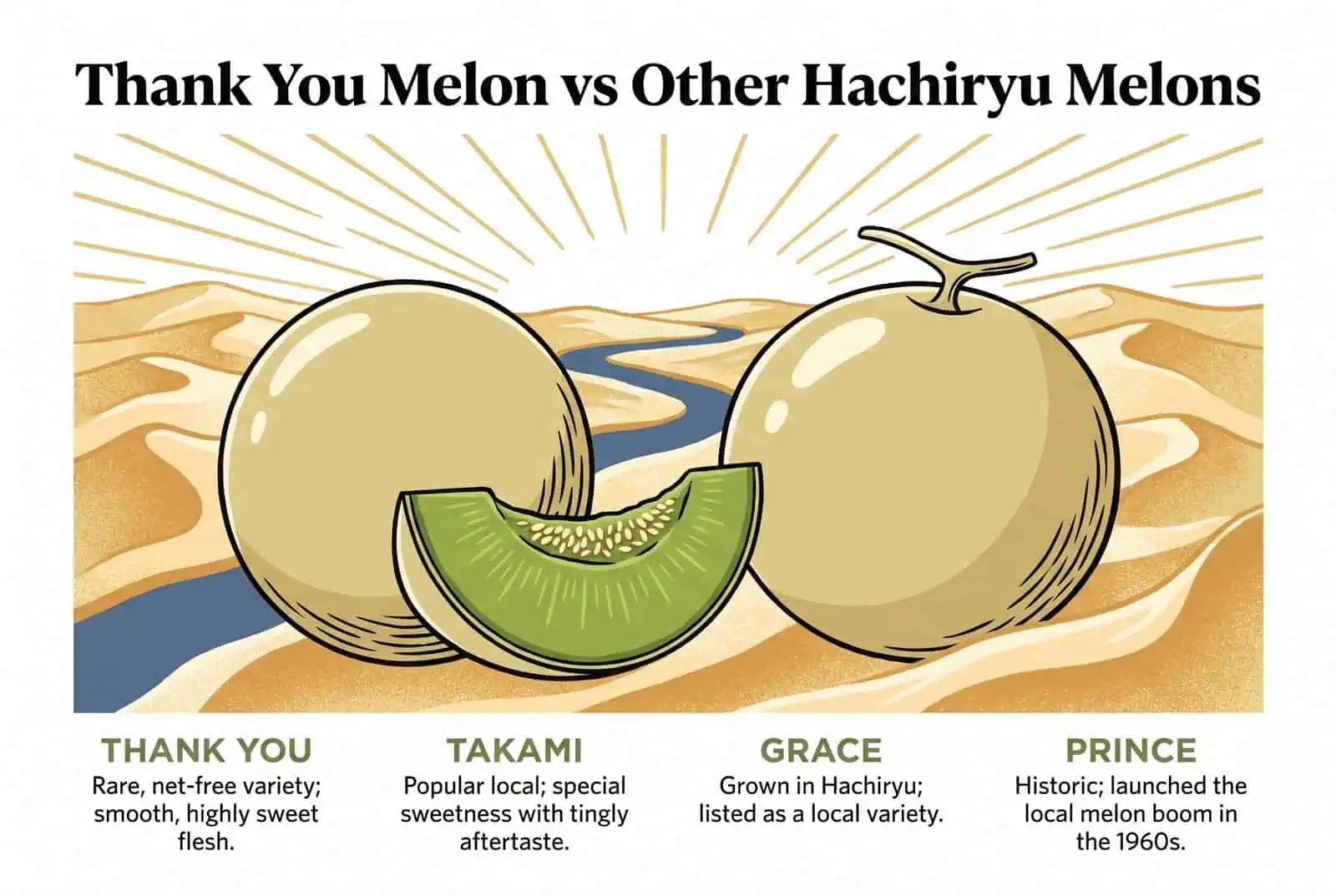
Hachiryu growers plant several varieties so that harvests follow one another through the summer. The table below sums up what official and regional sources say about the best-known names.
| Melon | Place in Hachiryu | What sources say |
|---|---|---|
| Thank You | Grown only in Hachiryu | A particularly prized variety; smooth, sweet flesh |
| Takami | A popular local variety | Special sweetness with a slightly tingly aftertaste |
| Grace | Grown in Hachiryu | Listed among local varieties by the tourism association |
| Prince | Historic variety | Launched the local melon boom in the 1960s and once led Akita dune plantings |
Is Every Hachiryu Melon a Thank You Melon?
No. A box labeled Hachiryu melon may hold Takami, Grace, or another variety entirely. So if you specifically want Thank You Melon, ask the seller for サンキュー by name. Labels at Dragon Fresh Center carry the grower’s name, and staff can confirm the variety.
How to Choose, Eat, and Store Thank You Melon
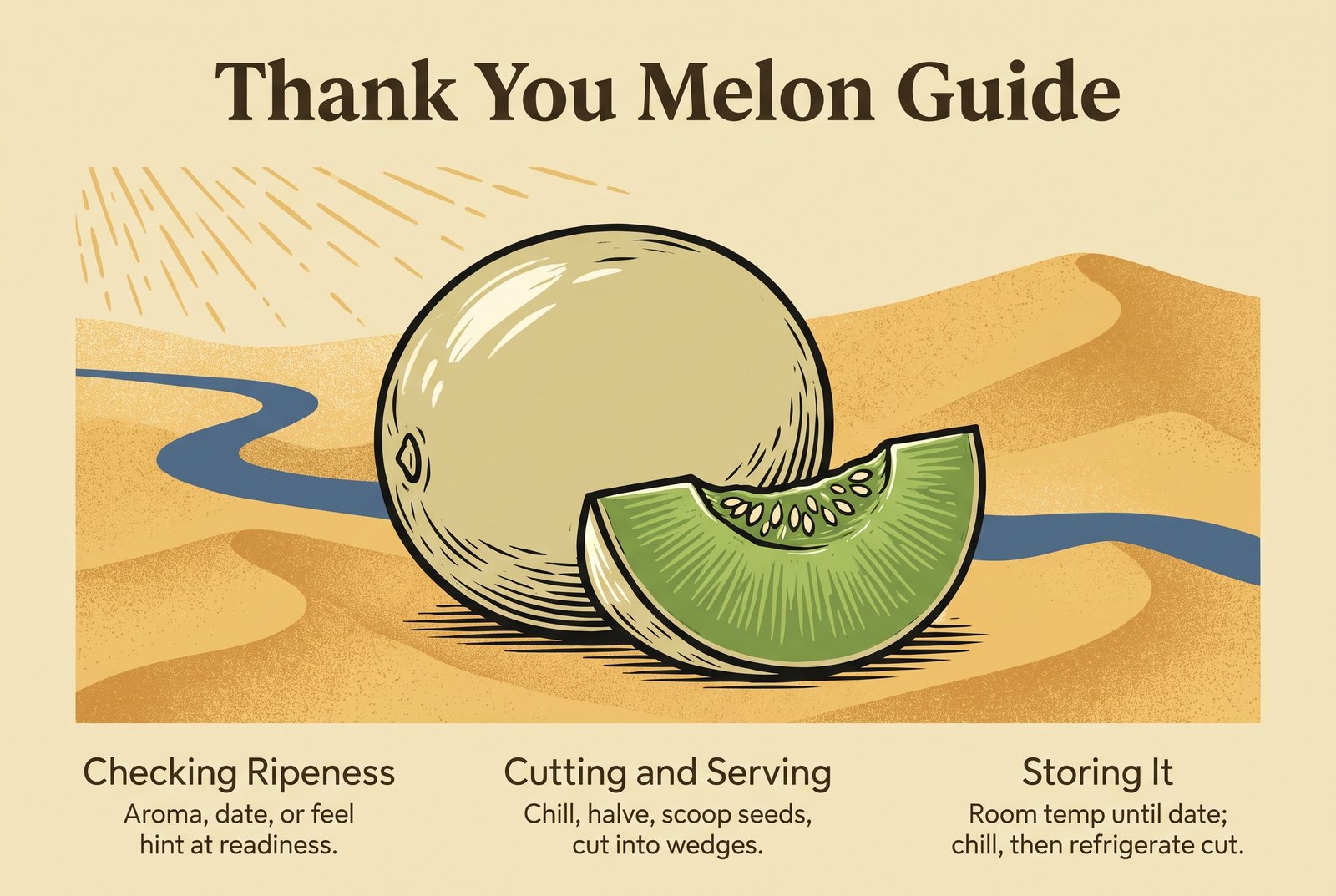
Checking Ripeness
Ripeness cues vary by melon and by grower, so there is no single test for Thank You Melon. Depending on the fruit, a sweeter aroma or slight softening may hint that it is ready. Still, the grower knows best. At farm stands, check any recommended eating date on the label, or ask the seller when the fruit will be ready.
Cutting and Serving
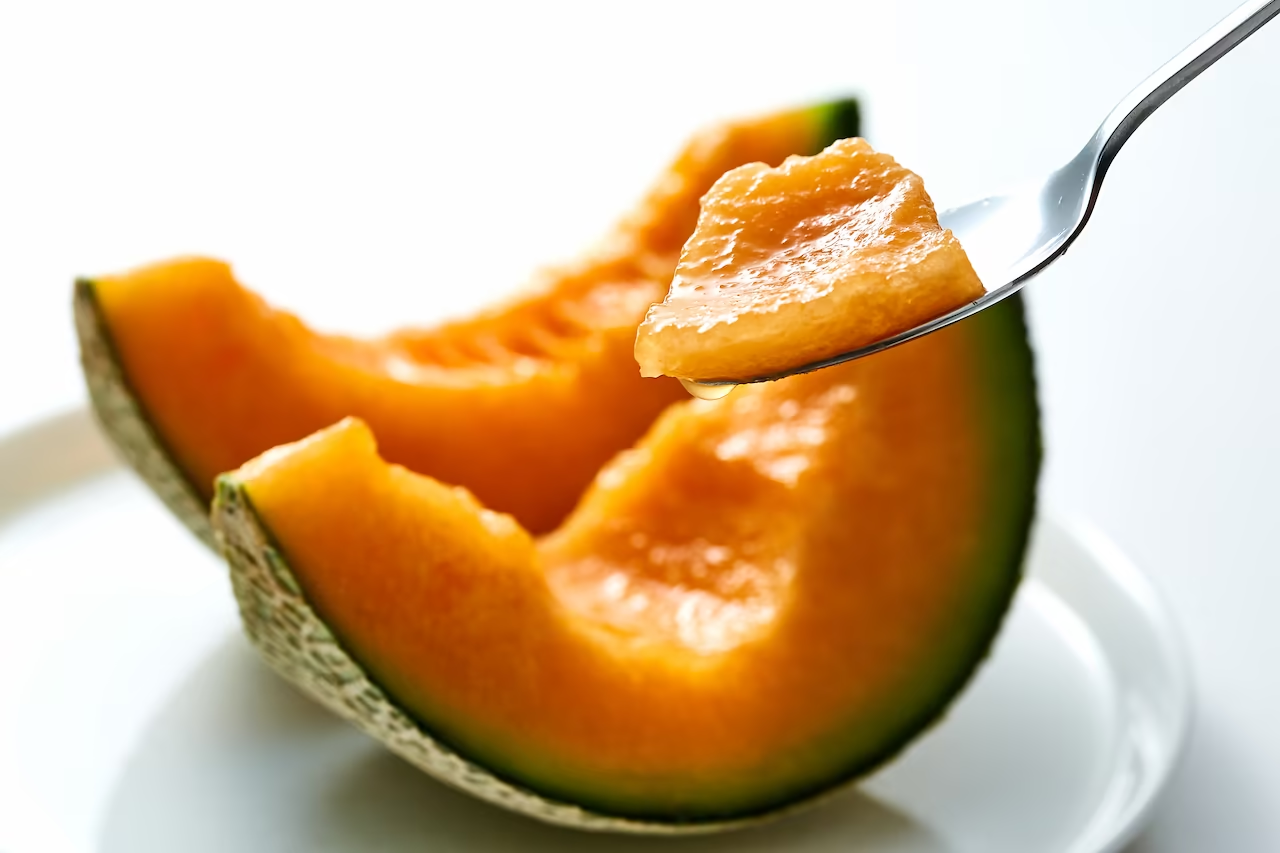
First, chill the melon for a few hours before serving. Then halve it, scoop out the seeds, and cut it into wedges. In Japan, people commonly serve melon plain as a dessert, which lets the aroma come through without distraction.
Storing It
Keep an uncut melon at room temperature in a cool, shaded place until its recommended eating date. Chill it for a few hours just before serving. After cutting, cover the exposed flesh, refrigerate it promptly, and eat it as soon as possible.
Where to Buy Thank You Melon
Mitane Town lists two farm stands for buying and asking about Hachiryu melons. Both sell mainly local produce, and both get crowded in melon season.
Dragon Fresh Center
A farmers’ market that opened in 1994 and takes its name from the dragon tower beside it. In 2020, Japan’s tourism agency reported that about 100 local farms sold here with JA support, and every item carried the grower’s name. Phone: 0185-85-3116.
Hachiryu Sanchoku Center Melodian
A second farm stand in the Hamada area of Hachiryu, where melons line the shelves in summer. Phone: 0185-72-1118.
Opening Hours
Japan’s tourism agency lists Dragon Fresh Center’s hours as 9:00 to 18:00 for most of the year, closing at 17:00 from November to February. Holiday closures and seasonal changes are possible, though, so call before making a special trip. English may be limited, and a translation app helps.
Online and Overseas
Small amounts do leave the district. In 2020, for example, a produce wholesaler in Iwate brought some into its local market. Still, supply is small and such sales come and go. Shipping fresh melons abroad also depends on each country’s quarantine rules. We could not confirm any regular overseas sales, so for most readers, tasting it in Akita is the realistic option.
Why Thank You Melon Matters to the Local Community
Melons reshaped Hachiryu’s economy. In fact, the Tohoku Agricultural Research study found that melons made up about half of the local JA branch’s vegetable sales in 1997. Yet the same study found that the district’s farm output peaked in 1985 and then declined.
Japan’s tourism agency describes the same trend. Production has fallen sharply since the late 1980s, largely because farmers are aging. Meanwhile, few young people want to learn the demanding skills of pollination, growing, and harvesting. Appearance also counts at market, since round, large, unblemished melons fetch the best prices. For a variety found nowhere else, that makes every new grower important.
Other Foods to Try in Mitane
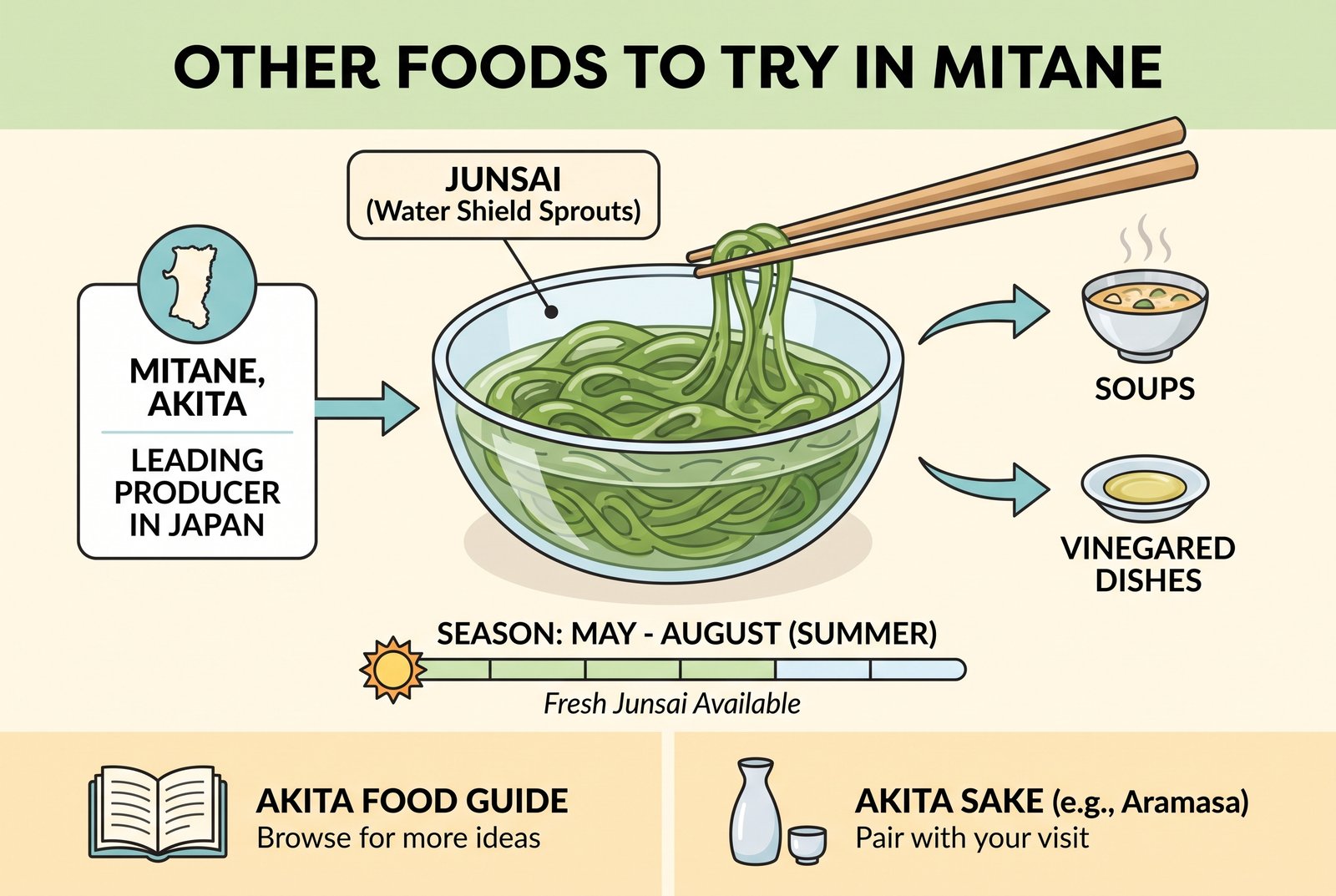
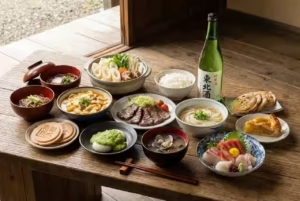
According to the town, Mitane is also one of Japan’s leading producers of junsai. These slippery water shield sprouts appear in soups and vinegared dishes. Fresh junsai appears from May to August, so a summer trip can combine both specialties. For more ideas, browse our Akita food guide, or pair your visit with Akita sake such as Aramasa.
Is Thank You Melon Worth Seeking Out?
If you enjoy fruit with a sense of place, yes. Thank You Melon is not a showpiece muskmelon, and it will not arrive in a gold box. Instead, it tells a quieter story about dunes, irrigation, and farmers who turned sand into a summer harvest.
Go in late June or July, start at Dragon Fresh Center, and ask for it by name. Then compare it with a Takami from the next shelf. For other seasonal favorites, see our guide to Japanese fruit.
Frequently Asked Questions About Thank You Melon
About the Melon
- Is Thank You Melon the same as Hachiryu Melon?
-
No. Hachiryu melon is the local name for the melons grown in the Hachiryu district of Mitane, Akita, including Takami and Grace. Thank You Melon is one variety within that group. Official tourism sources describe it as a variety cultivated only in Hachiryu.
- Why is Thank You Melon so rare?
-
Mitane Town says it grows only in Hachiryu, and its season is short. Production in the district has also declined since the late 1980s as farmers age. As a result, local farm stands in season are the most reliable place to find it.
Season and Buying
- When is Thank You Melon in season?
-
Japan’s tourism agency gives June to July as its season. Other Hachiryu varieties continue through August. Harvest timing shifts with the weather, so check with a farm stand before traveling.
- Where can I buy Thank You Melon?
-
Start with the farm stands Mitane Town lists for Hachiryu melons: Dragon Fresh Center and Hachiryu Sanchoku Center Melodian. Small amounts occasionally reach markets elsewhere in Japan, but supply is limited.
- Can I buy Thank You Melon outside Japan?
-
We could not confirm any regular overseas sales. Fresh melon shipments also depend on each country’s import rules. Tasting it in Akita during the season is the most reliable option.
Ripeness and Storage
- How do I know when Thank You Melon is ready to eat?
-
Check any recommended eating date on the label, or ask the seller. Ripeness cues vary by melon, although a sweeter aroma or slight softening can be a hint. When in doubt, follow the grower’s advice.
- How should I store Thank You Melon?
-
Keep it uncut at room temperature in a cool, shaded place until its eating date. Chill it for a few hours before serving. Once cut, cover it, refrigerate it, and eat it soon.
References
Official and public sources
- Mitane Town – Specialty and Local Products (updated January 2025) (Accessed September 2026)
- Japan Tourism Agency – Hachiryū Melons, Multilingual Commentary Database (FY2020) (Accessed September 2026)
- Japan Tourism Agency – Hachiryū Melons, Japanese Text (PDF) (Accessed September 2026)
- Mitane Town Tourism Association – Melons (Accessed September 2026)
- Akita Municipalities Association – Melons, Mitane Town (Accessed September 2026)
Research, press, and trade sources
- NARO Tohoku Agricultural Research – Idle Farmland in the Irrigated Dune District of Hachiryu Town, Tohoku Agricultural Research No. 53 (Accessed September 2026)
- NARO Tohoku Agricultural Research – Tamura, Hatakeyama, and Fujimoto, Preventing Fruit Cracking in Dune-Grown Melons, Tohoku Agricultural Research No. 17 (Accessed September 2026)
- Akita Sakigake Shimpo – Speaking of the Times, No. 47, Part 15: Life in Coastal Hachiryu (2017) (Accessed September 2026)
- Akita Sakigake Shimpo – Speaking of the Times, No. 47, Part 23: Opening Dragon Fresh Center (2017) (Accessed September 2026)
- Navitabi (Akita Sakigake Shimpo) – Melons, Mitane Town (2019) (Accessed September 2026)
- Mypl Oshu – Sasatoyo Seika: Thank You Melon from Hachiryu (July 2020) (Accessed September 2026)
Related Articles
- Japanese Fruit (Surveyed: September 2026)
- Akita Food Guide (Surveyed: September 2026)
- Aramasa Sake (Surveyed: September 2026)





Comments