



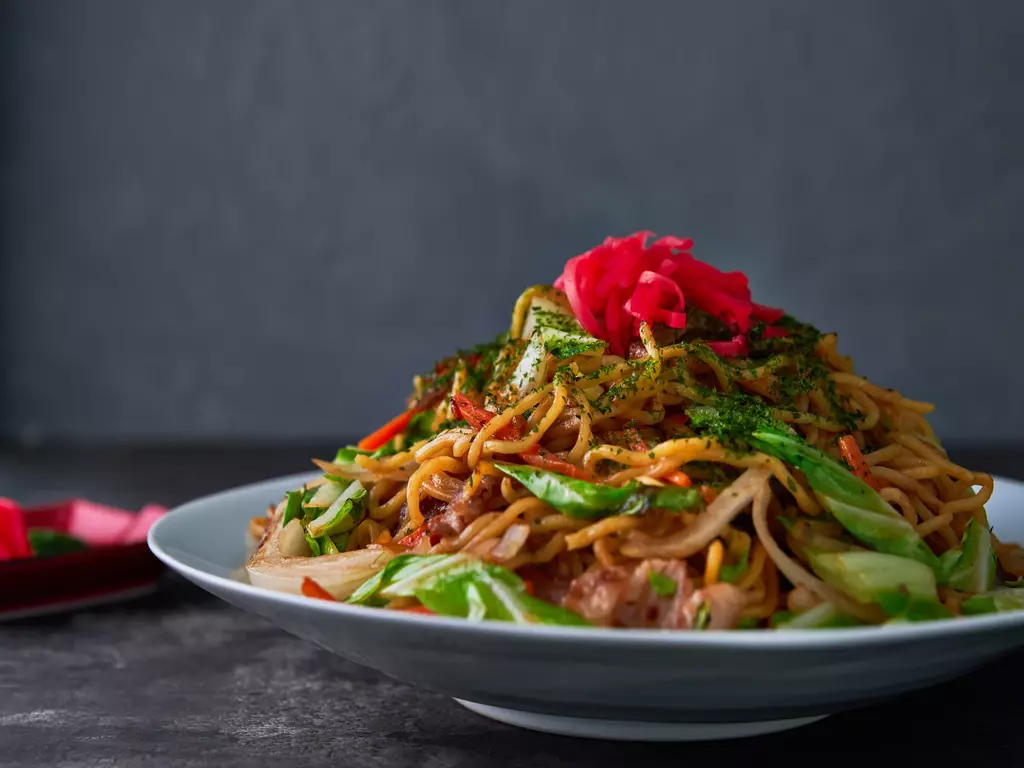
Walk past a summer festival in Japan and you will smell it before you see it. Sweet, tangy sauce hits a hot griddle, and the pork crisps at the edges while the cabbage softens. That is yakisoba (焼きそば), Japanese stir-fried noodles made with wheat noodles, vegetables, meat, and a sweet-savory sauce. It costs a few hundred yen and cooks in minutes, so it turns up almost everywhere.
This guide explains what yakisoba is, and also how to make it at home. It also covers the sauce, the three famous regional styles, and a few Tokyo shops worth a detour.
What Is Yakisoba?
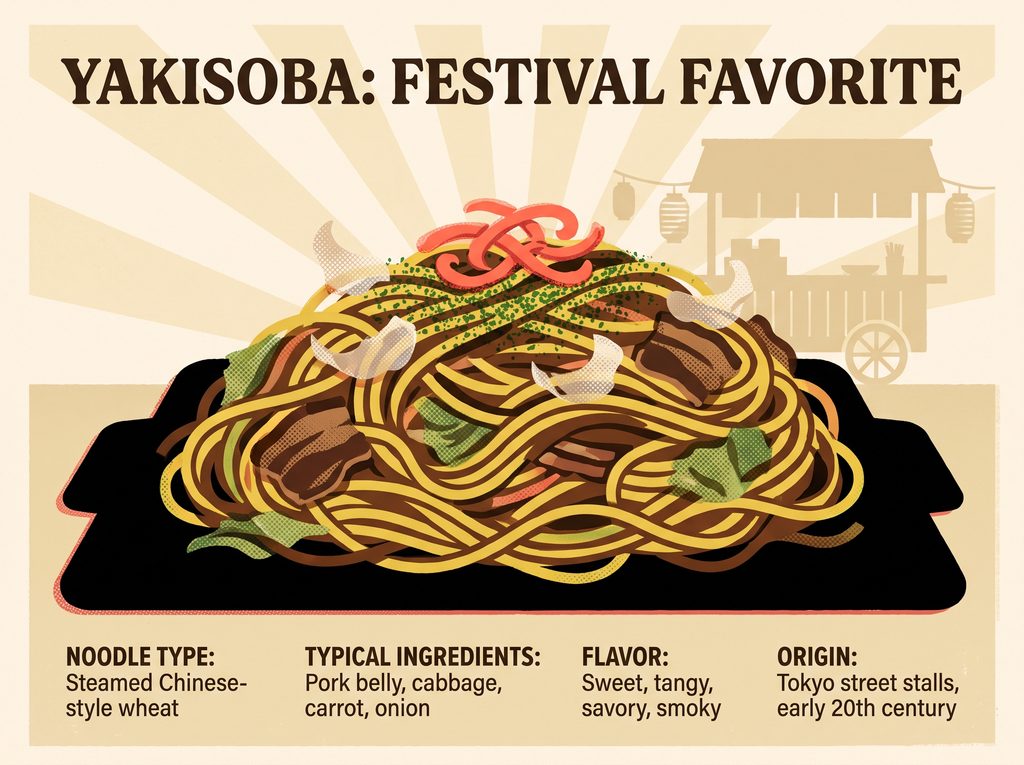
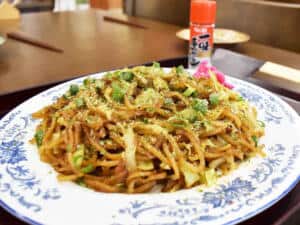
Yakisoba is a Japanese stir-fried noodle dish made with wheat noodles, vegetables, meat, and a sweet-savory sauce. Cooks use steamed Chinese-style wheat noodles rather than buckwheat soba. They fry pork and cabbage on a hot griddle, add the noodles, then coat everything in a Worcestershire-based sauce. Overall, the dish tastes sweet, tangy, savory, and lightly smoky.
- Origin
- Sauce yakisoba: Tokyo, early 20th century
- Noodle type
- Steamed Chinese-style wheat noodles (mushi chukamen)
- Typical ingredients
- Pork belly, cabbage, onion, carrot, bean sprouts
- Flavor
- Sweet, tangy, savory, and lightly smoky
- Cooking method
- Stir-fried on a griddle or in a wide pan
- Cooking time
- About 10 minutes, plus 10 minutes of prep
- Common toppings
- Aonori, red pickled ginger, bonito flakes, mayonnaise, fried egg
The name contains “soba,” yet the dish does not normally use buckwheat soba noodles. Cooks use steamed Chinese-style wheat noodles instead. In older Japanese usage, “soba” could mean noodles in general, and the word stuck. Our Japanese noodle guide, for example, compares soba, udon, and ramen side by side.
What Does Yakisoba Taste Like?
The first bite is mostly sauce. It tastes sweet and sour at the same time, with a little spice underneath and a caramelized edge. Then the cabbage arrives, soft but still slightly crunchy, and the pork fat carries the aroma. The noodles themselves stay mild, though they keep a gentle chew.
The toppings do quiet work. Aonori adds a sea smell, while red pickled ginger cuts the richness and bonito flakes bring smokiness. Festival versions lean very sweet, so some people love them while others find them heavy. Still, a pinch of extra ginger usually fixes that.
History of Yakisoba in Japan
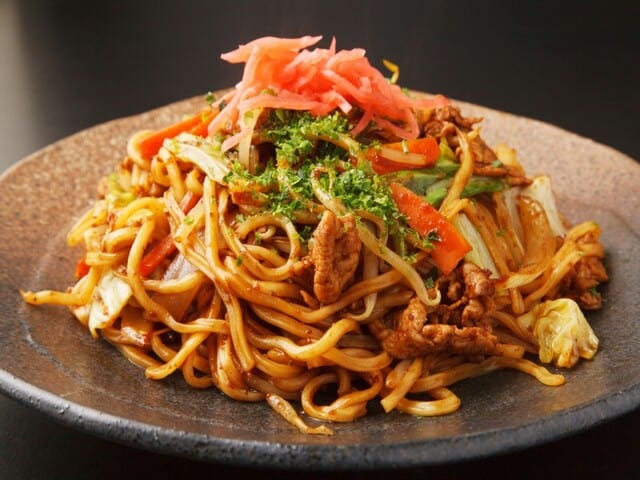
The noodles came first. Chinese-style wheat noodles, alkaline and yellow, initially reached Japanese port cities in the late 19th century. Stir-fried dishes modeled on Chinese chow mein followed soon after. Meanwhile, noodle factories around Asakusa in Tokyo made fresh wheat noodles cheap and easy to find.
Sauce yakisoba, however, grew up in a different kitchen. Griddle stalls in Tokyo, for instance, sold playful imitations of Western dishes seasoned with Worcestershire sauce. Sauce maker Otafuku traces sauce yakisoba to these okonomiyaki-style stalls in Taisho-era Tokyo. Similarly, researcher Shiozaki Shogo reaches that conclusion from his work on old Asakusa shops. The exact year remains unclear. Early versions, though, apparently held only cabbage, with no meat at all.
The postwar years then turned a Tokyo snack into a national dish. Wheat flour was available when rice was not, and a plate of noodles filled people up cheaply. Griddle shops in Fujinomiya and Yokote started serving their own versions around this time. Then, in the 1970s, instant cup yakisoba pushed the dish into every convenience store.
Why Yakisoba Is Everywhere in Japan
Matsuri stalls, school festivals, teppan restaurants, snack shops, family dinners: yakisoba appears at all of them. The reasons are practical. A griddle cooks a batch in minutes, and besides, the ingredients cost little. The smell of sauce on hot iron travels far, so a stall barely needs a sign.
Portioning is easy too. A cook scoops a pile into a clear pack, then adds ginger and aonori before handing it over. Watching someone flip a mountain of noodles is half the appeal. Overall, that mix of speed, price, and theater keeps the dish in the culture.
Yakisoba Ingredients
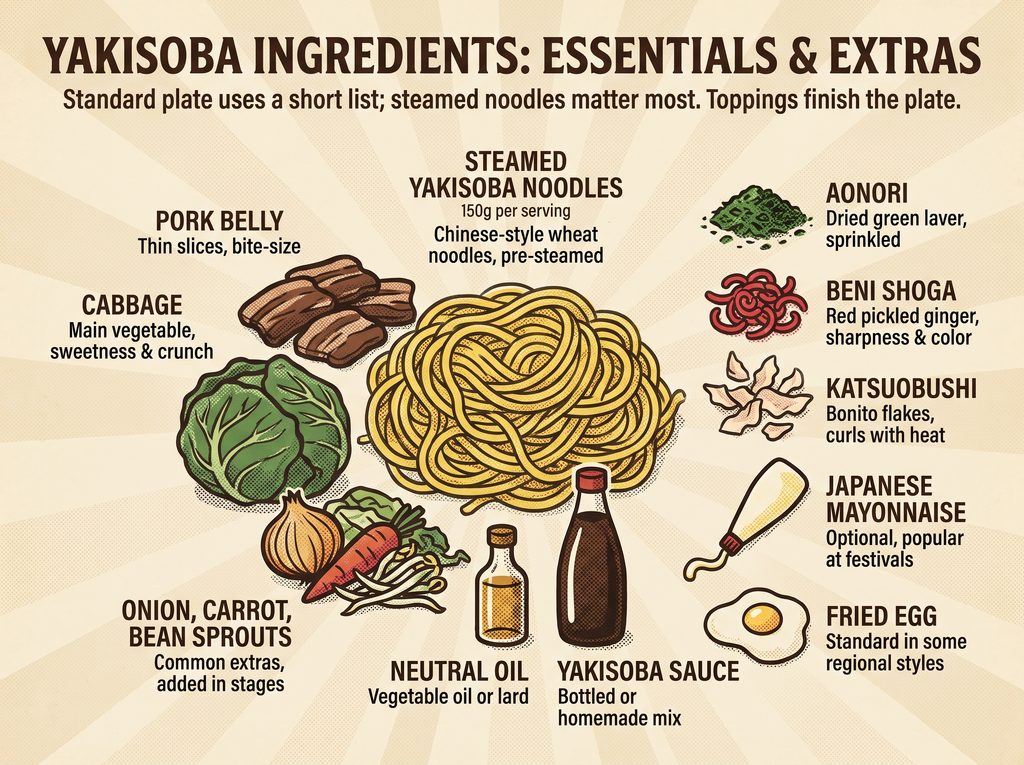
A standard plate uses a short list of ingredients, although the noodles matter most. Manufacturers steam and lightly oil the noodles, which makes them easier and faster to stir-fry. In Japan, three-portion packs sit in every supermarket, generally with sauce packets tucked inside.
- Steamed yakisoba noodles: Chinese-style wheat noodles prepared for stir-frying, generally about 150 g per serving
- Pork belly: thin slices, cut into bite-size pieces before frying
- Cabbage: the main vegetable, which adds sweetness and crunch
- Onion, carrot, bean sprouts: common extras, added in stages while frying
- Neutral oil: vegetable oil, or lard if you want a richer, more traditional taste
- Yakisoba sauce: bottled, unless you mix your own from Worcestershire sauce
Toppings finish the plate. Most shops offer at least the first two.
- Aonori: dried green laver, sprinkled on just before serving
- Beni shoga: red pickled ginger, especially for sharpness and color
- Katsuobushi: bonito flakes that curl when the heat rises
- Japanese mayonnaise: optional, though popular at festivals
- Fried egg: standard in some regional styles, including Yokote
Yakisoba Sauce
Above all, the sauce gives yakisoba its sweet, tangy, and savory flavor. Bottled yakisoba sauce usually starts with Japanese Worcestershire-style sauce. Makers then add sweeter, thicker seasonings such as fruit puree, sugar, and starch. Household recipes often go further with oyster sauce, ketchup, soy sauce, or a spoon of sugar.
One point trips up cooks outside Japan. Unlike the bottle in a Western pantry, Japanese Worcestershire sauce belongs to its own family. Under Japan’s JAS standard, “Worcester sauces” form a family sorted by viscosity: thin Worcester, medium chuno, and thick noko. All of them taste fruitier and less sharp than Lea & Perrins-style sauce. So if you only have the Western kind, use a little less and add sugar.
Yakisoba Sauce Recipe
This homemade blend makes enough for two servings. Mix everything in a small bowl before you start cooking, because you will not have time later.
| Ingredient | Quantity | Notes |
|---|---|---|
| Japanese Worcestershire sauce | 2 tbsp | Or 1½ tbsp Western Worcestershire, if you add ½ tsp sugar |
| Oyster sauce | 1 tbsp | Vegetarian mushroom oyster sauce also works |
| Ketchup | 1 tbsp | Adds sweetness and body |
| Soy sauce | 1 tsp | For depth |
| Sugar | ½ tsp | Adjust to taste |
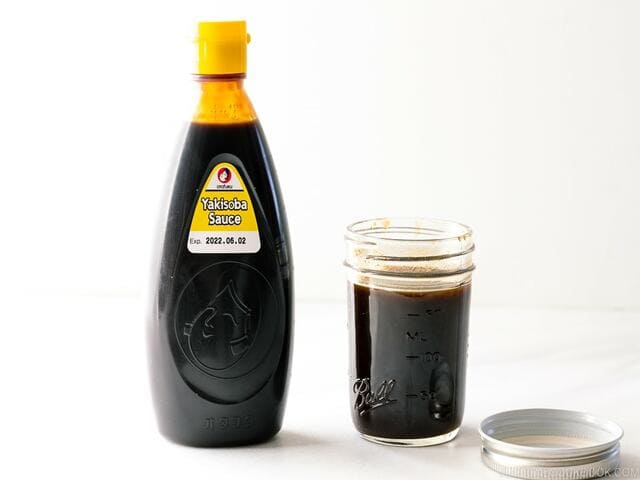
Liquid Sauce vs Powder Sauce
Liquid yakisoba sauces come in several styles. So choose one that suits the noodle thickness and your balance of sweetness, tang, and spice. Powder sauces, on the other hand, ride along inside instant cups and some noodle packs.
| Liquid sauce | Powder sauce | |
|---|---|---|
| Flavor | Rounded, sweet, and fruity; many regional styles | Sharper and spicier, though fewer varieties exist |
| Texture | Glossy coating, slight stickiness | Dry finish, since it absorbs moisture from the noodles |
| Best use | Fresh noodles, thick noodles, restaurant cooking | Instant cups, camping, quick weeknight packs |
| Storage | Refrigerate after opening, so the shelf life stays short | Long shelf life at room temperature |
| Availability | Supermarkets in Japan, Asian grocers abroad | Mostly bundled with noodles |
A Short Note on Instant Yakisoba
Shops in Japan and across Asia also stock many instant yakisoba products. Names, cooking methods, and seasonings vary by market, though. The Japanese version, for example, comes in a square tray. You pour in boiling water, wait three minutes, drain through the lid, then mix in the sauce. Long-selling brands, including Nissin’s Yakisoba U.F.O. and Maruka Foods’ Peyoung, fill the shelves. They are fun, though nothing like the griddle version.
Authentic Yakisoba Recipe
The following recipe explains how to prepare a classic version at home. Altogether, it makes two generous plates in about 20 minutes. Read the six steps once before you turn on the heat, because the cooking part moves fast.
This recipe follows the method generally used in home kitchens across Japan, scaled for two servings. We checked the restaurant details in September 2026. Still, shops change their hours often, so please confirm before visiting.
- Prep time10 minutes
- Cook time10 minutes
- Total time20 minutes
- Servings2
- DifficultyEasy
- CuisineJapanese
- CourseMain dish
- EquipmentWide frying pan or griddle, spatula, tongs
Ingredients for Two Servings
| Ingredient | Quantity | Substitute | Preparation |
|---|---|---|---|
| Steamed yakisoba noodles | 2 portions (300 g total, about 150 g each) | Fresh ramen noodles, if cooked and drained well | Warm briefly, so the strands loosen |
| Pork belly, thinly sliced | 100 g | Chicken thigh or shrimp, though firm tofu works | Cut into 3 cm pieces |
| Cabbage | 150 g | Napa cabbage, or bok choy if you prefer | Cut into bite-size pieces |
| Onion | 50 g, about ¼ medium onion | Leek, though scallion whites work | Thinly sliced |
| Carrot | 30 g | Red bell pepper | Cut into thin strips |
| Bean sprouts | 40 g | Skip, unless you add shredded cabbage | Rinse, then pat dry |
| Neutral oil | 1 tbsp | Lard, especially for a richer taste | None |
| Sake | 1 tbsp | Dry sherry, though water or stock also work | None |
| Yakisoba sauce | 4 tbsp | Homemade blend above, if you prefer | Mix it in advance |
| Salt and pepper | 1 pinch each | None | For the pork |
| Aonori, bonito flakes, red pickled ginger | To taste | Chopped scallion, or mayonnaise if you like | Serve on top |
How to Make Yakisoba in Six Steps
Stir the sauce ingredients together in a small bowl, or measure out 4 tablespoons of bottled sauce. Then set the bowl beside the stove, because you will not have time to hunt for it later.
Cut the pork into bite-size pieces, then season it with salt and pepper. Then cut the cabbage, slice the onion, and cut the carrot into strips. Rinse the bean sprouts, and pat every vegetable dry before cooking.
Packaged noodles come out cold and pressed into a block. Warm them in the microwave for about 60 seconds. Otherwise, sprinkle on a tablespoon of water and cover them briefly. Then separate the strands gently.
Heat the oil in a wide pan over medium-high heat. Then fry the pork until the edges brown. Add the carrot and onion, followed by the cabbage, and stir-fry until the cabbage softens.
Add the loosened noodles and the sake, then toss for a minute until everything is hot. Drop in the bean sprouts, since they need only 30 seconds. Finally, pour the sauce around the hot edge of the pan, not over the noodles.
Toss quickly to coat, then leave the noodles alone for 30 seconds so the sauce caramelizes slightly. Lastly, slide everything onto plates and finish with aonori, bonito flakes, and red pickled ginger.
Technique Tips for Better Yakisoba
Two details separate a good plate from a soggy one. First, keep water to a minimum, since extra moisture softens the noodles and thins the sauce. Bean sprouts release water quickly, so add them at the very end and cook them only until lightly crisp.
Secondly, mind the pan. A crowded pan drops in temperature, so cook in batches when you make more than two servings. Pouring the sauce around the hot edge releases its aroma, though the sugars burn easily. Toss quickly, and then the dish comes together.
Common Yakisoba Mistakes
- Cold, clumped noodles. Warm and loosen them first, or else they tear and cook unevenly.
- Too much water. A tablespoon is enough, since extra liquid softens the noodles and dilutes the sauce.
- Overcrowding the pan. The temperature drops, so everything steams instead of frying.
- Adding sauce too early. The sugars burn before the noodles heat through.
- Overcooked vegetables. Cabbage should keep a little crunch, so add bean sprouts last.
Three Major Regional Yakisoba Styles in Japan
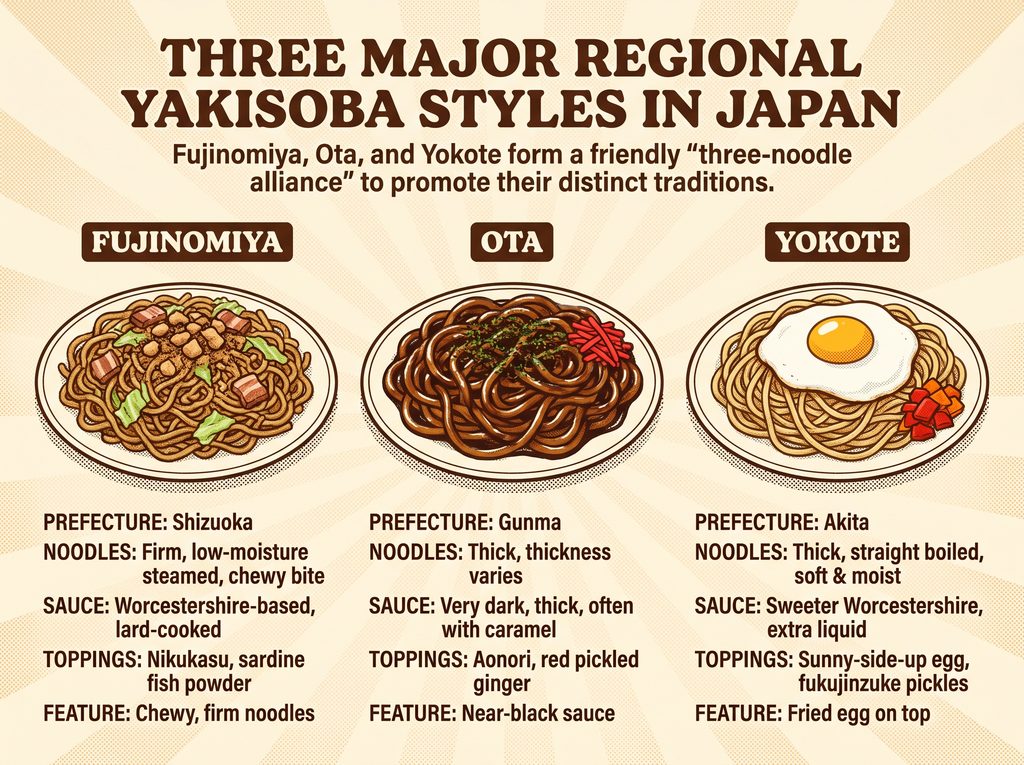
Although Japan has many regional variations, three styles became especially well known. Fujinomiya in Shizuoka, Ota in Gunma, and Yokote in Akita even signed a friendly “three-noodle alliance.” The three cities also promote their noodle traditions through tourism, events, and community groups.
| Fujinomiya | Ota | Yokote | |
|---|---|---|---|
| Prefecture | Shizuoka | Gunma | Akita |
| Noodles | Firm, low-moisture steamed noodles with a chewy bite | Thick noodles, though the thickness varies by shop | Thick, straight boiled noodles, soft and moist |
| Sauce | Worcestershire-based, generally cooked with lard | Very dark, thick sauce, often with caramel | Sweeter Worcestershire sauce with extra liquid |
| Toppings | Nikukasu (pork cracklings), sardine fish powder | Aonori, red pickled ginger | Sunny-side-up egg, fukujinzuke pickles |
| Defining feature | Chewy, firm noodles | Near-black sauce | Fried egg on top |
Fujinomiya Yakisoba
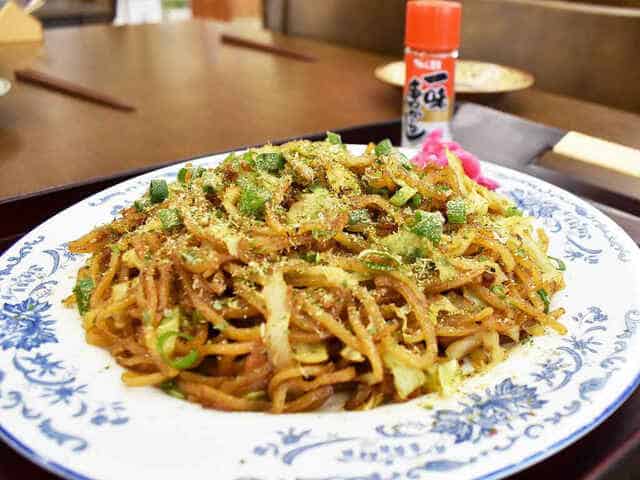
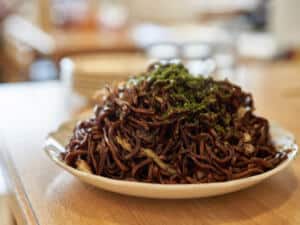
Fujinomiya Yakisoba is one of Japan’s best-known local B-class gourmet dishes. Indeed, it won the first two B-1 Grand Prix contests, in 2006 and 2007. The city credits the dish with drawing large numbers of visitors since then. The noodles set it apart. Local makers steam them with less water than usual, so they stay firm and chewy even after frying.
Nikukasu adds pork flavor and a crisp, savory texture. These are the cracklings left after rendering lard, which also goes into the pan. Instead of bonito flakes, cooks dust the plate with sardine and mackerel powder. The Fujinomiya Yakisoba Society specifies noodles from the city’s four makers: Marumo Food Industry, Sanomen, Sogamen, and Kanoya. Our full guide to chewy Fujinomiya Yakisoba covers the shops and the recipe.
Ota Yakisoba (Joshu Ota Yakisoba)
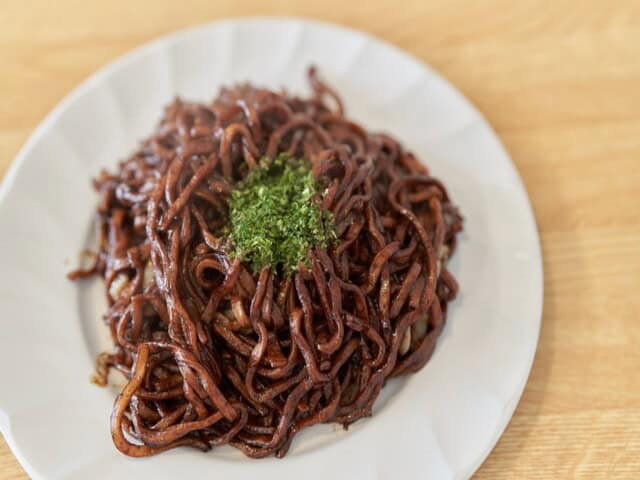
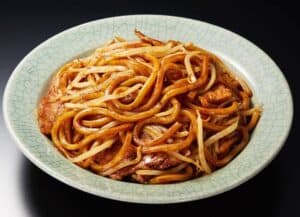
Ota Yakisoba, also called Joshu Ota Yakisoba after the region’s old name, comes from Ota City in Gunma. Its sauce is the darkest of the three, sometimes close to black. Shops build it on Worcestershire sauce and natural caramel, which gives the color and a mellow sweetness. It looks intense, though it stays balanced, with a mild sour and spicy edge.
Ota takes a loose approach. There are no rules about seasoning or noodle production, so every shop cooks it slightly differently. Still, thick noodles and plenty of fried cabbage are the common thread. Cooks generally finish the noodles with aonori and red pickled ginger. For shops and a home recipe, see our article on dark-sauce Oota Yakisoba.
Yokote Yakisoba
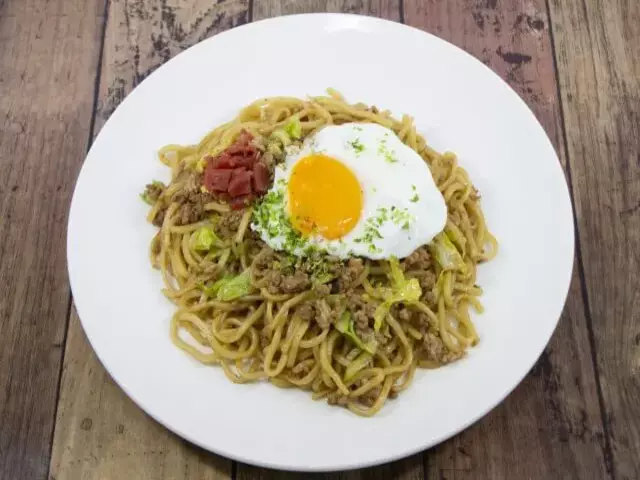
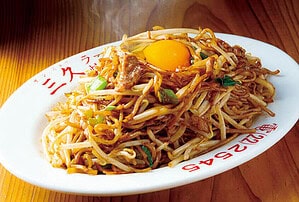
Yokote Yakisoba from Akita is the one with the egg. A sunny-side-up egg sits on thick, straight noodles, and then diners break the yolk into the sauce. The sauce leans sweet and carries a little more liquid than usual, so the noodles feel moist rather than crisp. Ground pork and cabbage make up the rest, while fukujinzuke pickles replace red ginger.
Yokote entered the B-1 Grand Prix from the start, and finally won the fourth contest in 2009. The 2009 award helped introduce Yokote’s local noodle tradition to diners across Japan. Today the Yokote Yakisoba Norenkai, a group of local shops, still runs an annual festival. Read more in our guide to egg-topped Yokote Yakisoba.
Other Regional Yakisoba
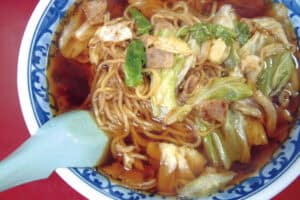
The big three are only the start. Tochigi, for instance, has Soup Yakisoba, where sauce-fried noodles sit in a light soy broth. It sounds odd and works surprisingly well. Fukushima’s Namie Yakisoba uses extra-thick noodles, while Oita’s Hita Yakisoba crisps them hard on the griddle. Many towns have a version, so locals happily argue about which one is right.
Best Yakisoba in Tokyo
Festival stalls are the easy answer, but a few Tokyo shops treat yakisoba as a specialty. The four below all had confirmed listings in September 2026. Hours change often, so check before you go.
| Shop | Area / station | Specialty | Budget | Hours (checked Sep 2026) | Reservations |
|---|---|---|---|---|---|
| Mikasa | Jimbocho, 2 min from Jimbocho Station | House-made thick noodles, sauce or salt | Around ¥1,000 | 11:00 to 20:30, closed Sundays, until noodles run out | Not accepted |
| Marusho Hongo 3-chome | Hongo, 4 min from Hongo-sanchome Station | Extra-thick house-made noodles on an iron plate | Around ¥1,000 | Lunch and dinner, though closed Sundays | Accepted |
| Okonomiyaki Kiji Marunouchi | Marunouchi, TOKIA B1F, 3 min from Tokyo Station | Osaka-style yakisoba and modan-yaki | ¥1,500 to ¥3,000 | 11:00 to 15:30 and 17:00 to 22:30 | Check with the shop |
| Bairin | Higashi-Gotanda, 4 min from Gotanda Station | Huge Shanghai-style and sauce yakisoba plates | ¥1,000 to ¥2,000 | Lunch and dinner, if the shop keeps its usual schedule | Check with the shop |
Mikasa (神保町やきそば みかさ)
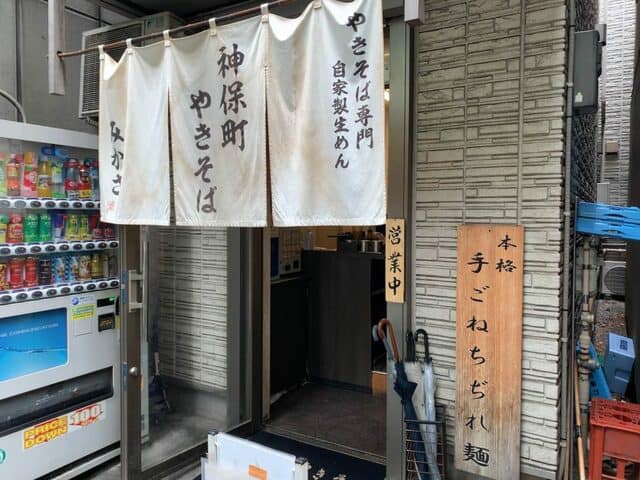
Mikasa is a nine-seat counter in the bookshop district of Jimbocho. The shop makes its own flat, thick noodles from Hokkaido wheat and closes when the day’s batch runs out. The sauce version is sweet and thick, while the salt version comes with lemon. Mikasa’s founder later opened a related shop, Shinuchi Mikasa, in Takadanobaba.
Marusho Hongo 3-chome (まるしょう 本郷三丁目店)
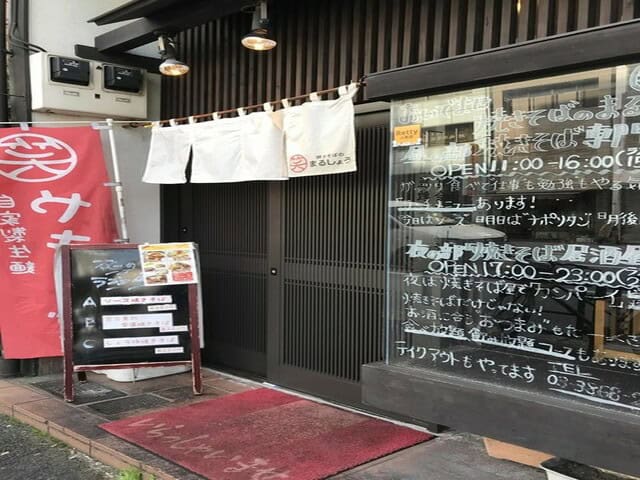
Marusho is the Tokyo branch of a yakisoba specialist from Chiba. Staff make the very thick noodles upstairs every day. The sauce, meanwhile, blends products from Tokiha Sauce, a Tokyo maker founded in 1923. Plates arrive on a sizzling iron dish, so you control the final crisp. The menu also runs to salt, soy sauce, and a Neapolitan-style version.
Okonomiyaki Kiji Marunouchi (きじ 丸の内店)
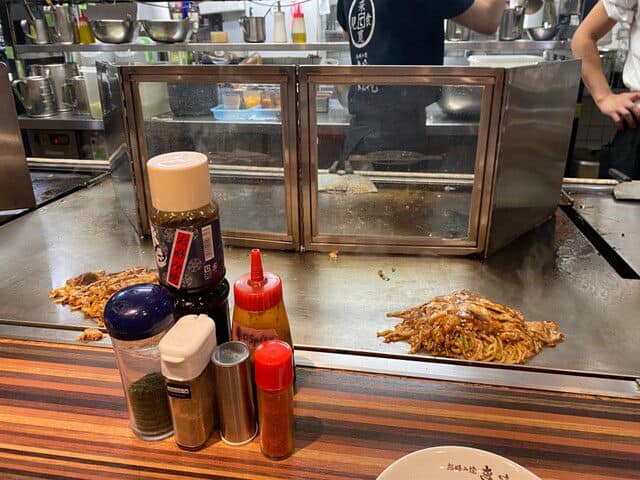
Kiji is the Tokyo outpost of an Osaka okonomiyaki shop, in the TOKIA building by Tokyo Station. Cooks griddle the yakisoba with crisp pork, and the modan-yaki then layers those noodles into an okonomiyaki. So it suits a group that wants both dishes in one sitting.
Bairin (中国料理 梅林)
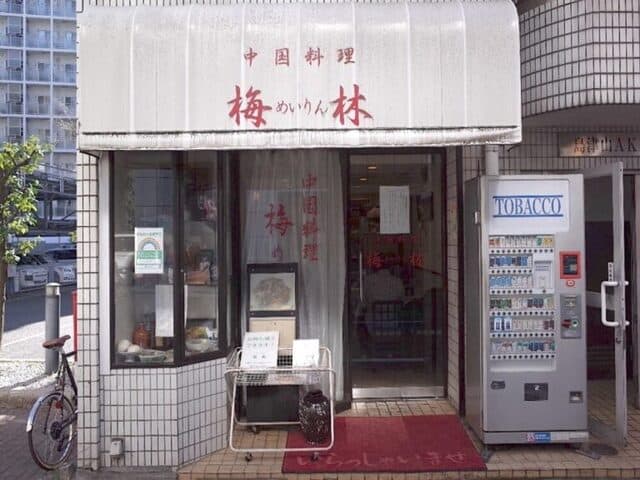
Bairin is an old-school Chinese restaurant a short walk from Gotanda Station. Portions run large, so ordering one plate between two people is sensible. The Shanghai yakisoba uses soy sauce and stays light, while the sauce version pairs thin noodles with a vinegar tang. Bring a friend, unless you arrive very hungry.
- Festival stalls: a few hundred yen a pack, though prices rise at big events
- Casual restaurants and teppan shops: around ¥1,000, including a drink at some shops
- Specialty shops in Tokyo: around ¥1,000, or more if you add toppings
- Instant cups: the cheapest option, so check the shelf price at any convenience store
Yakisoba Substitutions
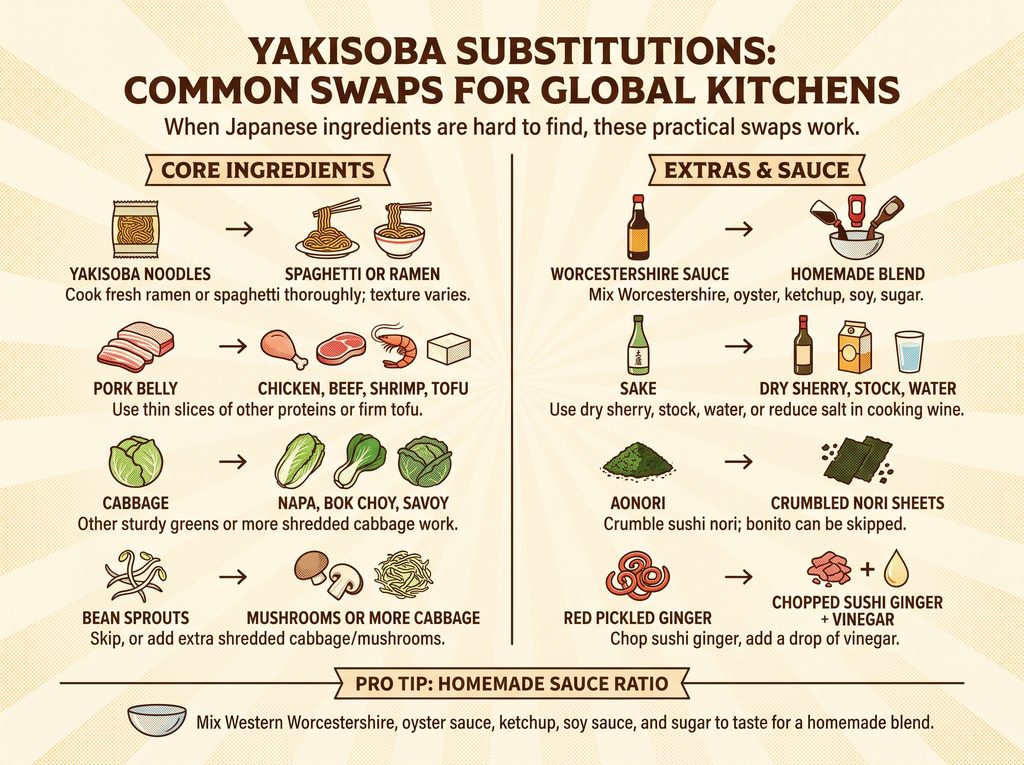
Outside Japan, half the ingredient list can be hard to find. Fortunately, the dish forgives. Here are the swaps that work in practice.
- Yakisoba noodles: fresh ramen-style wheat noodles work if you cook and drain them thoroughly. Spaghetti also works, though the texture is less traditional.
- Pork belly: chicken thigh, thinly sliced beef, shrimp, or firm tofu.
- Worcestershire sauce: use the homemade blend above with Western Worcestershire, oyster sauce, ketchup, soy sauce, and a little sugar.
- Sake: dry sherry, unsalted cooking wine, water, or stock. If you use seasoned cooking wine, reduce the added salt.
- Cabbage: napa cabbage, bok choy, or savoy cabbage.
- Bean sprouts: skip them, or add shredded cabbage and a few sliced mushrooms.
- Aonori: crumbled nori sheets. Bonito flakes, meanwhile, can simply go unused.
- Red pickled ginger: sushi ginger, chopped, plus a drop of vinegar.
Vegetarian and Vegan Yakisoba
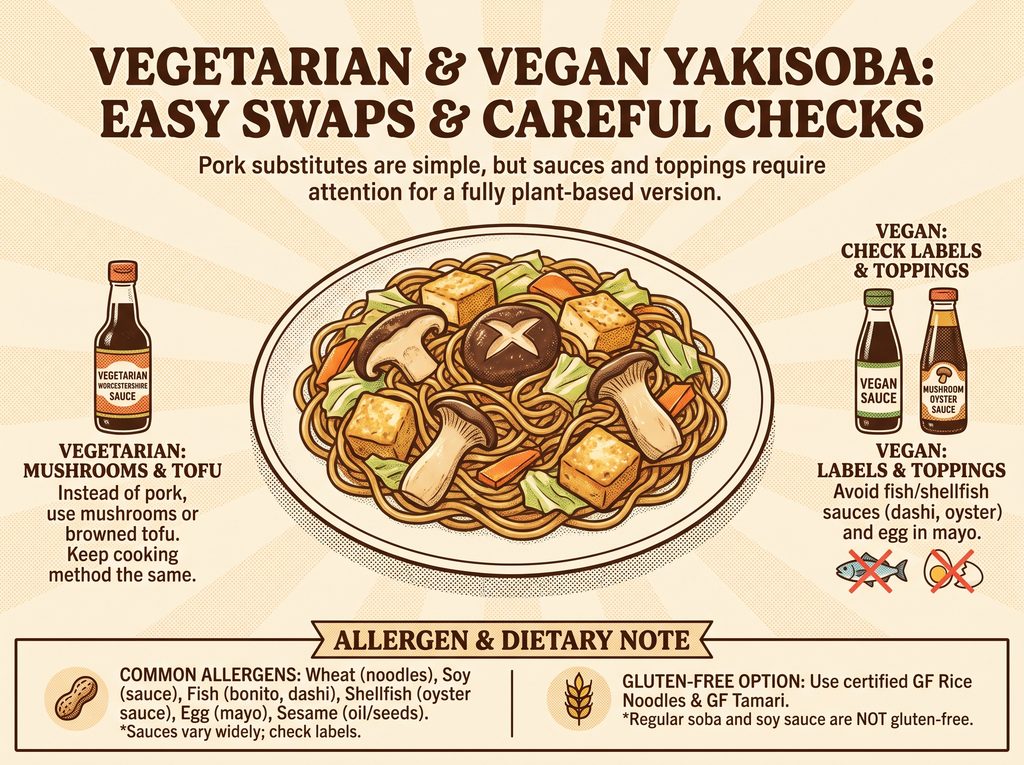
Vegetarian yakisoba is easy. Instead of pork, use sliced shiitake or king oyster mushrooms, pan-fried tofu, or plant-based protein. Add the mushrooms first so they brown, and keep everything else the same. The sauce does most of the work anyway.
Vegan yakisoba, however, needs a closer look at labels. Some Worcestershire-style sauces contain anchovy, oyster sauce contains shellfish, and bonito flakes and many dashi seasonings come from fish. Japanese mayonnaise contains egg. So choose a vegan Worcestershire sauce and mushroom oyster sauce, then skip the bonito.
Yakisoba commonly contains wheat, soy, fish, shellfish, egg, and sesame, though this depends on the sauce. Check every product label, because sauces vary widely by brand. For a gluten-free version, use certified gluten-free rice noodles and gluten-free tamari. Ordinary soba and regular soy sauce, however, do not make the dish gluten-free.
Storage and Make-Ahead Tips
Yakisoba is best within minutes of leaving the pan. Still, leftovers happen. Cool them quickly, then refrigerate in a sealed container within two hours. Eat them within a day or two. Afterwards, reheat in a hot pan with a teaspoon of water and a splash of sauce. The microwave works too, but the noodles turn soft and the aroma fades.
For a party or a bento, prepare the sauce and cut the firm vegetables the day before. Then cook and sauce the noodles immediately before serving. Freezing is possible, but the cabbage goes limp, so I would not recommend it.
Conclusion
Yakisoba is simple at heart: steamed wheat noodles, a hot griddle, cabbage and pork, and a sweet-savory Worcestershire-based sauce. Get the noodles loose and the pan hot, add the sauce last, and the rest takes care of itself. The recipe bends easily toward vegetarian, vegan, or whatever is in the fridge.
After that, the regional styles are the next step. Try Fujinomiya Yakisoba for the chew, Oota Yakisoba for the dark sauce, and Yokote Yakisoba for the egg. If you want the strange cousin, Soup Yakisoba is waiting in Tochigi. And for the bigger picture of soba, udon, and ramen, start with our Japanese noodle guide.
Yakisoba FAQ
Noodles and Sauce
- Is yakisoba made with buckwheat?
-
No, standard yakisoba uses steamed Chinese-style wheat noodles, not buckwheat. In fact, the name comes from an older, broader use of “soba” for noodles. Individual products can vary, however, so check the label if you have a buckwheat allergy. Fresh ramen noodles, meanwhile, make the closest substitute abroad.
- What is yakisoba sauce made of?
-
Yakisoba sauce starts with Japanese Worcestershire-style sauce, which is fruitier and milder than the British kind. Makers then add sweeter, thicker seasonings such as fruit puree, sugar, and starch. At home, a simple mix gets close, including Worcestershire sauce, oyster sauce, ketchup, soy sauce, and sugar. Mix it before you start cooking.
- What is the difference between yakisoba and soba?
-
Soba refers to thin buckwheat noodles, generally served in broth or chilled with a dipping sauce. Yakisoba uses wheat noodles and is stir-fried with sauce rather than served in liquid. The two share a word but not an ingredient. If a menu abroad lists “yakisoba” with buckwheat noodles, it is a modern twist rather than the Japanese standard.
- What is the difference between yakisoba and yaki udon?
-
The noodles are the difference. Yaki udon uses thick, soft udon noodles, while yakisoba usually uses thinner Chinese-style wheat noodles. Sauces and toppings can overlap, and many shops season yaki udon with soy sauce instead of Worcestershire. Yaki udon is said to have started in Kokura, Fukuoka, when yakisoba noodles were scarce after the war.
Cooking Yakisoba at Home
- How do I stop the noodles from becoming soggy?
-
Keep water out of the pan. Pat the vegetables dry, then loosen the noodles with only a tablespoon of water. Then cook over high heat in a pan that is not crowded. Then add the bean sprouts and the sauce at the very end. If the noodles still look wet, leave them untouched for 30 seconds so the bottom crisps.
- Can I substitute ramen noodles?
-
Yes, fresh ramen noodles are the best substitute because they are also Chinese-style wheat noodles. Boil them for about a minute less than the package says, drain well, and toss with a teaspoon of oil. Then add them to the pan as you would steamed noodles. Instant ramen blocks also work in a pinch, though they turn soft faster.
Variations and Where to Eat It
- Can I make it vegetarian?
-
Yes, and it takes one swap. Replace the pork with mushrooms, pan-fried firm tofu, or a plant-based protein, and brown it well before adding the vegetables. Similarly, for a vegan plate, choose vegan Worcestershire and mushroom oyster sauce. Leave off the bonito flakes and mayonnaise. The dish loses little in the process.
- Where can I eat the best yakisoba in Tokyo?
-
Specialty shops such as Mikasa in Jimbocho and Marusho in Hongo make their own thick noodles and serve little else. For Osaka-style griddle cooking near Tokyo Station, Kiji in the TOKIA building is a safe bet. In summer, meanwhile, festival stalls remain the most atmospheric option. Generally, expect to pay around ¥1,000 at a specialty shop.
References
- Otafuku Sauce – The Origins of Sauce Yakisoba (ソース焼そばの源流) (Accessed September 2026)
- Ministry of Agriculture, Forestry and Fisheries (MAFF) – Japanese Agricultural Standard for Worcester Sauces (ウスターソース類の日本農林規格) (Accessed September 2026)
- Agriculture & Livestock Industries Corporation (alic) – Japan’s Worcester-Type Sauces, by the Japan Sauce Industry Association (Accessed September 2026)
- Fujinomiya City (Furusato Choice) – Fujinomiya Yakisoba: Tasting Set from the City’s Four Noodle Makers (Accessed September 2026)
- Fujinomiya City Central Library – Fujinomiya Exploration No. 36: The Secrets of Fujinomiya Yakisoba (Accessed September 2026)
- FamilyMart – Press Release: Yokote Yakisoba Supervised by the Yokote Yakisoba Norenkai (Accessed September 2026)
- Jalan Net – Yokote Yakisoba: Shops and the Yokote Yakisoba Festival (Accessed September 2026)
- J-STAGE – Matsunaga, M. (2013). B-Class Gourmet and Regional Promotion: A New Movement in Local Government Seen in B-Class Gourmet Town Revitalization. Journal of the Japan Association for Local Public Service, 49(2), 39 (Accessed September 2026)
- J-STAGE – A Study of “Local Brand”: Analysis Centered on the Success of Fujinomiya Yakisoba (地域ブランドに関する一考察) (Accessed September 2026)
- Oricon News – Interview with Shiozaki Shogo on the Origins of Sauce Yakisoba (Accessed September 2026)
- Tabelog – Jimbocho Yakisoba Mikasa: Official Shop Information (Accessed September 2026)
- Macaroni – Marusho Hongo 3-chome: House-Made Noodles and Tokiha Sauce (Accessed September 2026)
- Hitosara – Okonomiyaki Kiji Marunouchi: Shop Information (Accessed September 2026)
- Retty – Bairin: Restaurant Listing, Gotanda (Accessed September 2026)
Related Articles
- Fujinomiya Yakisoba (富士宮やきそば) (Surveyed: September 2026)
- Oota Yakisoba (太田やきそば) (Surveyed: September 2026)
- Yokote Yakisoba (横手やきそば) (Surveyed: September 2026)
- Soup Yakisoba (スープ入り焼きそば) (Surveyed: September 2026)
- Yaki Udon (焼きうどん) (Surveyed: September 2026)
- Japanese Noodles Guide (Surveyed: September 2026)
- Yakisoba Bread (焼きそばパン) (Surveyed: September 2026)



Comments