



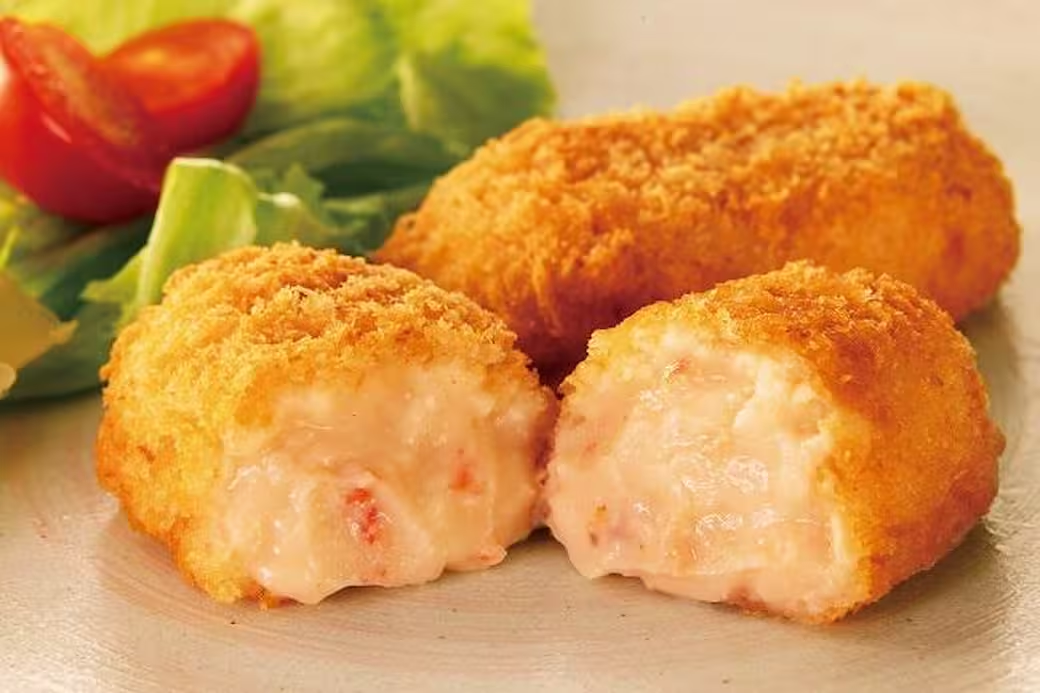
Crab cream croquette is a Japanese yoshoku dish made from crab meat bound in béchamel sauce, coated in panko, then deep-fried until golden. People also call it kani cream korokke, using the Japanese word for crab and croquette together. It differs from regular potato korokke because the filling stays creamy and almost liquid before frying.
This guide covers what crab cream croquette is, its history, and how it compares to potato korokke. You will also find the ingredients, a step by step method, serving tips, and where to find it around Japan.
What Is Crab Cream Croquette?
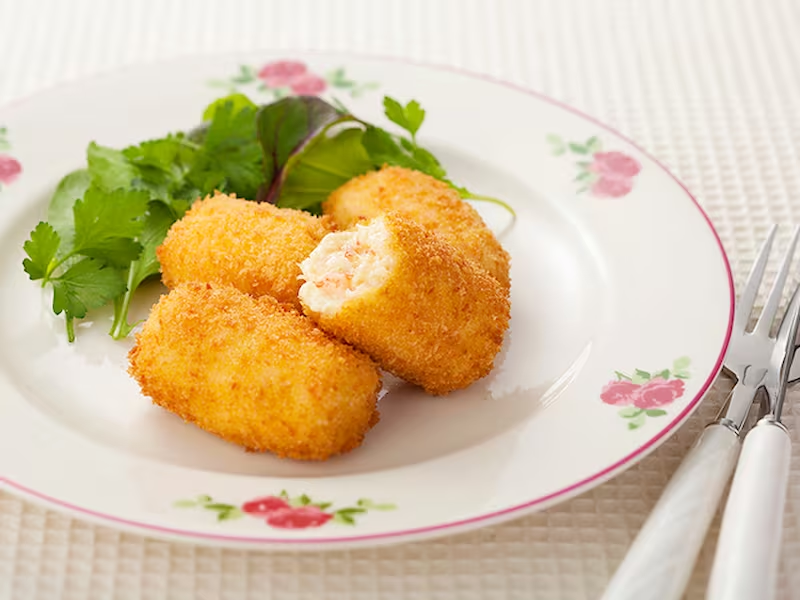
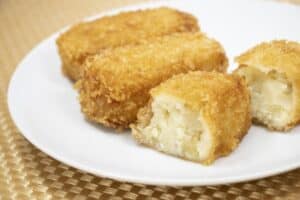
Kani cream korokke belongs to yoshoku, the category of Western style dishes that Japan reworked into its own cuisine. Instead of mashed potatoes, cooks build the filling from a thick béchamel sauce studded with crab meat and sautéed onion. That filling gets chilled hard, shaped into small logs, then coated in flour, egg, and panko breadcrumbs before frying.
Once fried, the croquette shows three distinct textures. The panko shell turns crisp and golden. Just under it sits a thin, tender layer, and the center stays hot, creamy, and almost molten. That contrast is the whole point of the dish, and it is why people order it again and again at yoshoku restaurants.
History of Crab Cream Croquette in Japan
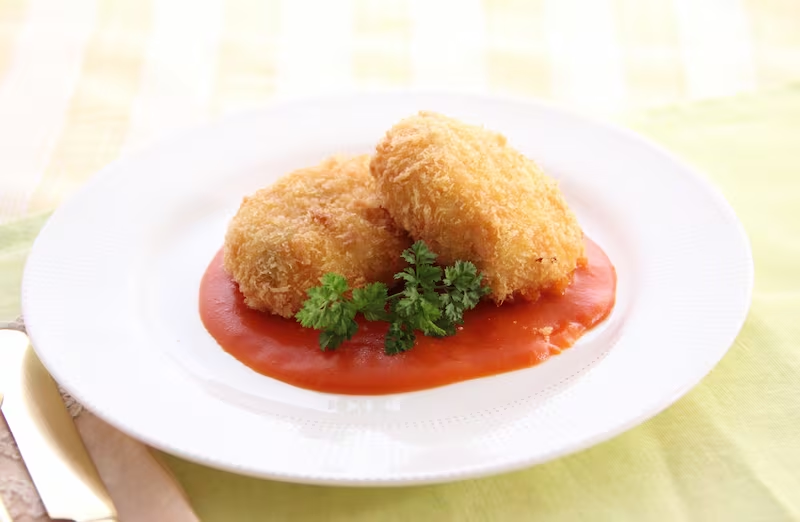
Croquettes reached Japan during the Meiji era, when the country opened up to Western food and culture. Japan borrowed the word korokke from the French croquette, and some say the Dutch kroket also shaped the name. European croquettes did not use potatoes at all. Japan later built its own potato based korokke because milk and cream stayed expensive and hard to find.
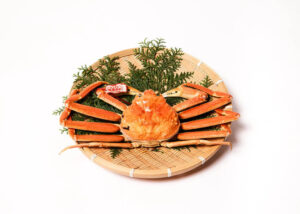
As Japan’s dairy industry grew through the early twentieth century, cream filled versions became possible for more kitchens. Béchamel sauce needed reliable milk and butter, so the cream croquette first appeared as a special occasion dish rather than daily food. Crab, prized for its delicate sweetness, paired naturally with that rich sauce.
One often repeated story credits Tokuzo Akiyama, a well known chef who served the Imperial court, with popularizing crab cream croquette in the early Showa period. Restaurants across Japan picked up the recipe soon after, and it settled into yoshoku menus as a comforting, slightly upscale dish. Even today, many people associate it with nostalgic family dinners and old fashioned Western style restaurants.
What Makes It Different from Korokke?
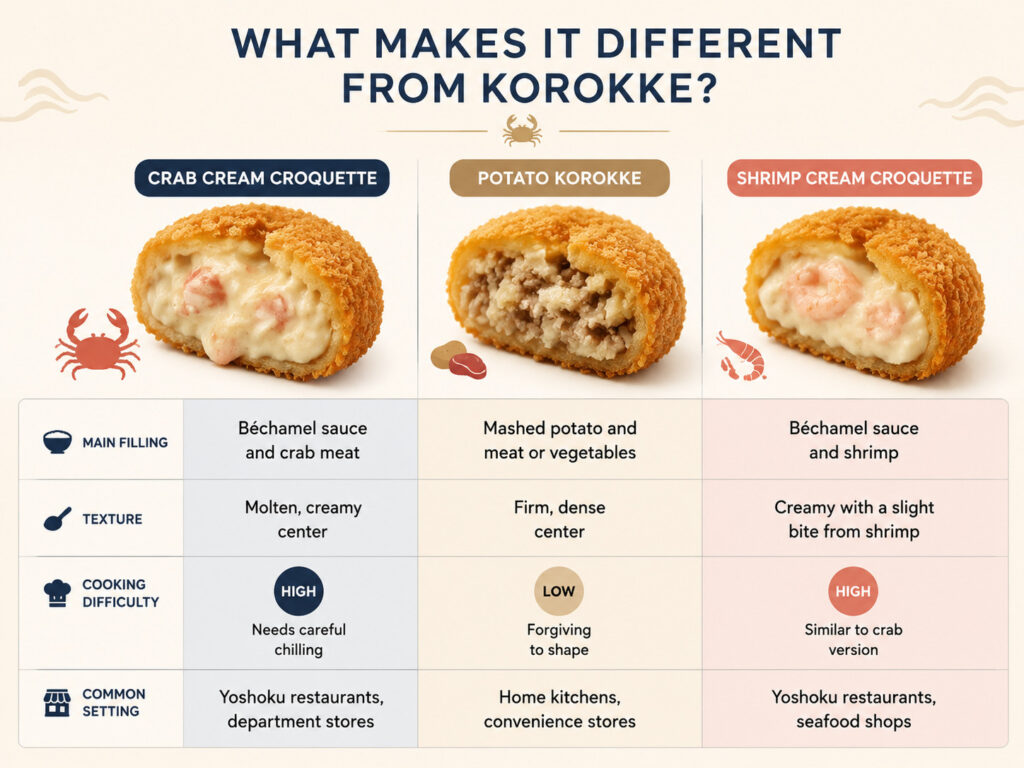
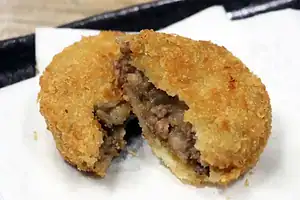
Standard korokke relies on mashed potato as its base, mixed with ground meat or vegetables. Crab cream croquette skips potato entirely and depends on béchamel sauce instead. That single change affects everything from texture to cooking difficulty.
Potato filling holds its shape easily, since starch keeps everything firm even at high heat. Béchamel filling behaves more like a thick sauce, so it needs a long chill before shaping. Because of that, chefs treat crab cream croquette as a more delicate, restaurant style dish rather than a quick homemade snack.
| Feature | Crab Cream Croquette | Potato Korokke | Shrimp Cream Croquette |
|---|---|---|---|
| Main filling | Béchamel sauce and crab meat | Mashed potato and meat or vegetables | Béchamel sauce and shrimp |
| Texture | Molten, creamy center | Firm, dense center | Creamy with a slight bite from shrimp |
| Cooking difficulty | High, needs careful chilling | Low, forgiving to shape | High, similar to crab version |
| Common setting | Yoshoku restaurants, department stores | Home kitchens, convenience stores | Yoshoku restaurants, seafood shops |
Key Ingredients
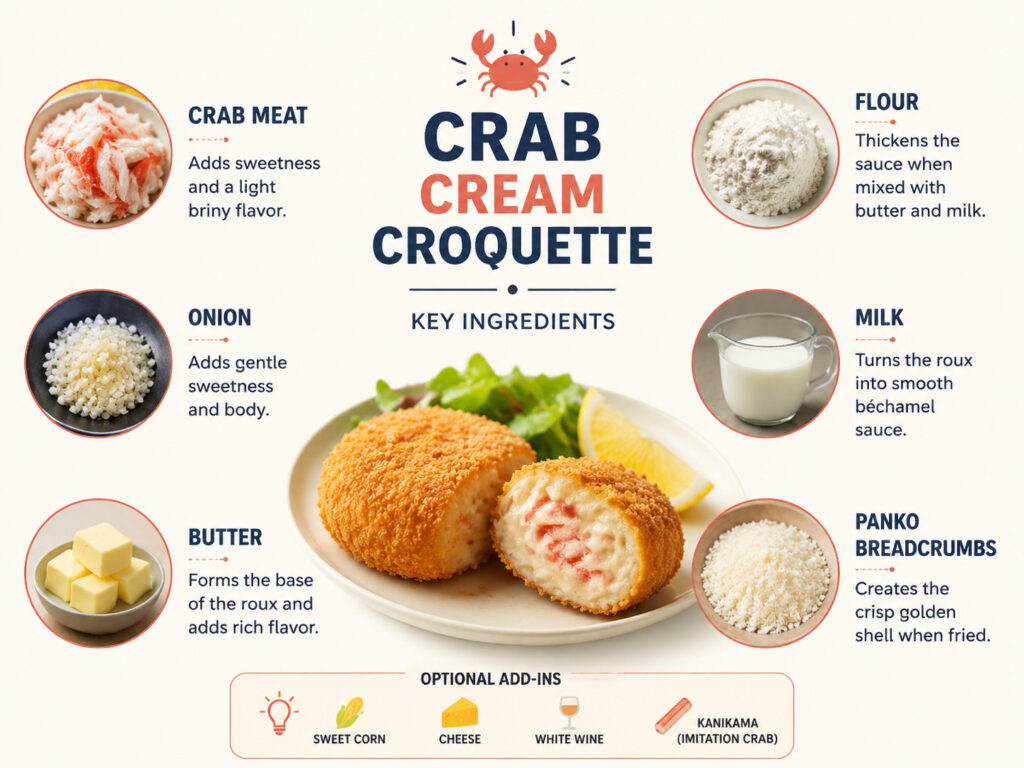
Crab cream croquette uses a short ingredient list, yet each item plays a clear role in the final texture. Here is what typically goes into the filling and coating.
- Crab meat: Fresh or canned crab meat adds sweetness and a light briny flavor to the filling.
- Onion: Finely chopped onion, sautéed until soft, adds gentle sweetness and body.
- Butter: Butter forms the base of the roux and gives the béchamel its rich flavor.
- Flour: Flour thickens the sauce when mixed with butter and milk, creating the roux.
- Milk: Milk, warmed and added slowly, turns the roux into smooth béchamel sauce.
- Panko breadcrumbs: These light, airy Japanese breadcrumbs create the crisp golden shell once fried.
Some cooks add sweet corn, cheese, or a splash of white wine for extra flavor. If real crab feels too pricey, some households swap in kanikama, the imitation crab stick, though the taste turns milder and less briny.
How to Make Crab Cream Croquette
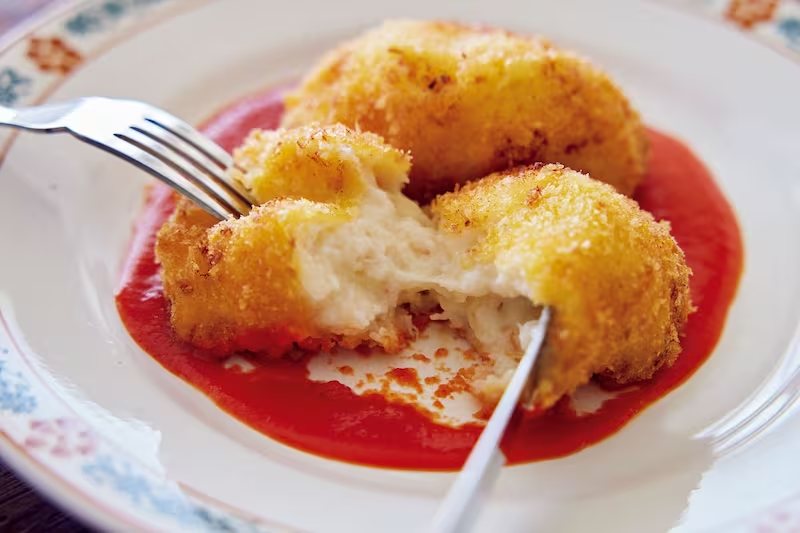
Making this dish at home takes patience, mostly because of the chilling steps. Follow these six stages for a reliable result.
- Sauté the filling. Cook chopped onion in butter until soft, then stir in crab meat and cook briefly.
- Build the béchamel. Add flour to make a roux, then whisk in warm milk gradually until smooth and thick.
- Chill the mixture. Spread the filling on a tray, cover it, and refrigerate until firm, or freeze briefly to speed things up.
- Shape the croquettes. Divide the chilled filling into portions and roll each one into a small log or oval shape.
- Coat in panko. Dust each piece in flour, dip it in egg, then press it into panko breadcrumbs for full coverage.
- Fry until golden. Deep fry in oil around 180°C until the shell turns crisp and golden brown, then drain on a rack.
Tips to Prevent the Filling from Leaking
The biggest risk with crab cream croquette is a burst shell. Hot, liquid filling can push through the panko if the temperature or timing goes wrong. A few habits keep that from happening.
- Chill the filling thoroughly, ideally overnight, so it holds its shape before frying.
- Press out any air pockets while shaping, since trapped air expands quickly in hot oil.
- Keep the oil steady around 180°C, since oil that runs too hot cooks the shell before the inside sets.
- Avoid handling the shaped croquettes too much, as warm hands soften the filling fast.
- Use a fine, even layer of panko so the shell fries evenly without weak spots.
This careful balance between frozen filling and hot oil is exactly why chefs treat the dish like a small kitchen science experiment.
How It Tastes
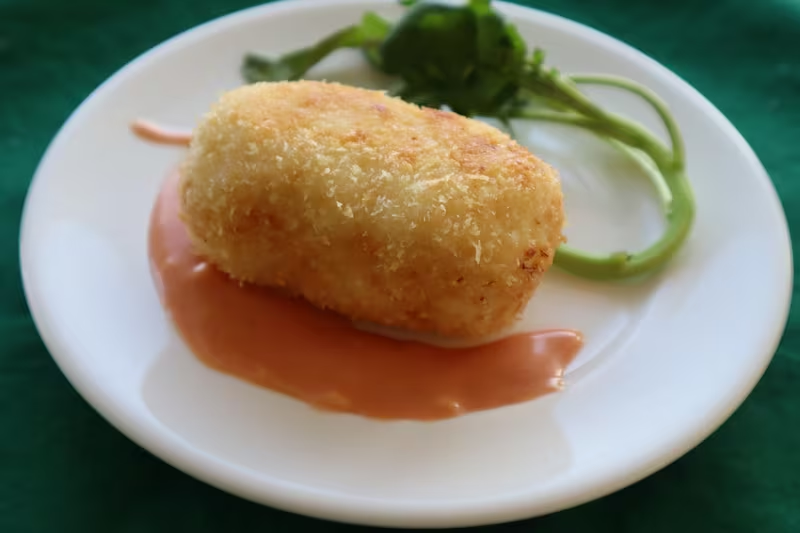
The first bite always starts with the shell. It snaps rather than crunches loudly, and the panko tastes lightly toasted. Right behind that crispness, the creamy filling spills out warm and smooth.
Crab meat brings a gentle sweetness and a faint sea aroma that lingers after swallowing. Nutmeg and black pepper, common seasonings in the béchamel, add a soft warmth in the background. Many people also notice a slightly milky aftertaste from the butter and milk, which makes the dish feel comforting rather than heavy.
What Sauce Goes Well with It?
Sauce choice changes the whole experience, so it is worth knowing the common options. Tonkatsu sauce, a thick and slightly sweet brown sauce, adds tang that cuts through the richness. Tartar sauce brings a creamy, tangy contrast that many people pair with seafood dishes.
A simple squeeze of lemon works well too, especially for those who want the crab flavor to stay front and center. Some restaurants serve a ketchup and Worcestershire blend instead, which leans sweeter and more familiar to Western palates.
What to Serve with Crab Cream Croquette
Because the croquette itself feels rich, lighter side dishes balance the meal well. Shredded raw cabbage is the most traditional pairing, and its crunch contrasts nicely with the soft filling. A small side salad with a light vinaigrette works in a similar way.
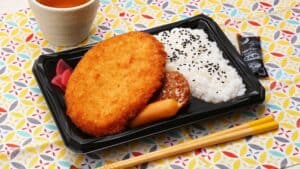
Miso soup rounds out a home style meal, while rice makes the dish more filling as a main course. Some people even tuck a smaller crab cream croquette into a bento box, or serve it alongside curry for a heavier dinner plate.
Where to Eat or Buy It in Japan
Crab cream croquette shows up in several places across Japan, not just sit down restaurants. Knowing where to look helps you find it quickly, whether you want a fresh version or something quick.
- Yoshoku restaurants: These specialize in Western style Japanese food and usually serve the freshest, hand cooked version.
- Department store food halls: Depachika basement floors often sell prepared croquettes ready to eat or reheat.
- Supermarket deli counters: Many supermarkets stock fried or ready to fry crab cream croquettes near the prepared foods section.
- Frozen food aisles: Frozen versions let you fry or bake the croquette at home whenever you want.
- Convenience stores: Some konbini chains sell a simplified version, especially during colder months.
How Much Does It Cost?
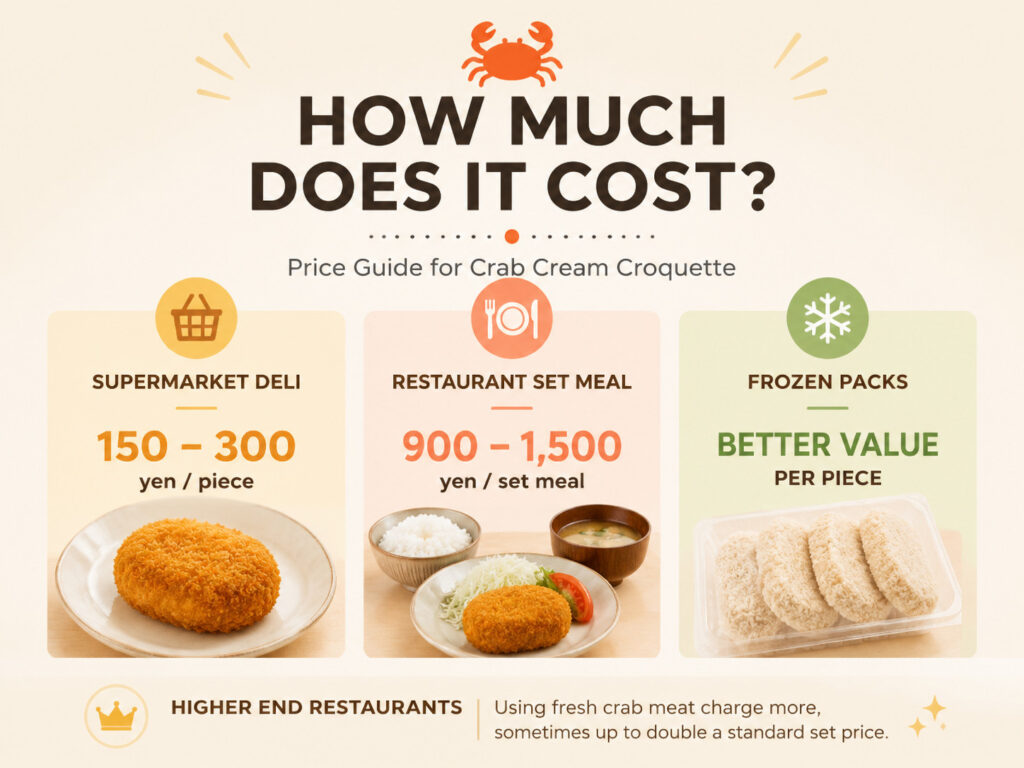
Prices vary depending on where you buy it, but a few rough ranges help with planning. A single croquette from a supermarket deli counter usually costs somewhere between 150 and 300 yen. Restaurant set meals, which include rice, soup, and salad, often run between 900 and 1,500 yen.
Frozen packs sold at supermarkets vary by brand and crab content, but they usually offer better value per piece than eating out. Higher end restaurants that use fresh crab meat rather than canned or imitation crab charge noticeably more, sometimes double a standard set price.
Nutrition Notes
Even though it is fried, crab cream croquette carries some genuine nutritional value. Crab meat supplies protein, vitamin B12, and omega-3 fatty acids, all of which support heart and brain health. Compared to beef, crab offers a leaner protein option with less saturated fat.
The milk and butter used in the béchamel sauce also contribute calcium, which matters for bone strength. Naturally, the frying oil adds calories, so most people treat this as an occasional treat rather than a daily staple.
Conclusion
Crab cream croquette captures what yoshoku does best. It takes a French technique, reworks it with Japanese ingredients, and turns it into comfort food with real technical skill behind it. The contrast between crisp shell and molten center is what keeps people ordering it again.
Whether you try it at an old fashioned yoshoku restaurant or pick up a frozen pack at a supermarket, this dish rewards a little patience. If you plan to cook it at home, remember that chilling time matters just as much as frying technique.
If you like this dish, try Korokke, the potato based original that started Japan’s croquette obsession. You might also enjoy Kanikama, the imitation crab stick often used as a budget substitute in home cooking. For something completely different, Crockett Bread shows how korokke flavors made their way into a Tokyo style bread snack.
Crab Cream Croquette FAQ
- What is crab cream croquette?
-
Crab cream croquette, or kani cream korokke, is a yoshoku dish made from béchamel sauce mixed with crab meat and onion. Cooks chill the filling, shape it into small logs, then coat it in panko before frying. The result is a crisp shell around a hot, creamy center. It is one of the most popular fried dishes at Japanese Western style restaurants.
- How does it differ from potato korokke?
-
Standard korokke uses mashed potato as its main filling, which holds its shape easily during frying. Crab cream croquette relies on béchamel sauce instead, so the filling stays soft and needs careful chilling before shaping. Because of that difference, this dish takes more skill to fry without the shell breaking. Many people consider it a more elegant version of the classic korokke.
- What does it taste like?
-
The panko shell tastes lightly toasted and offers a satisfying crunch. Inside, the filling brings a creamy, buttery flavor with sweet notes from the crab meat. Seasonings like nutmeg and black pepper add gentle warmth without overwhelming the crab. Overall, it tastes rich but not overly heavy, especially when paired with a tangy sauce.
- Is it hard to make at home?
-
Yes, it is trickier than regular korokke, mainly because the filling stays soft even after cooking. It needs thorough chilling, ideally overnight, before shaping and coating. Skipping that step often leads to a burst shell during frying. With patience and careful temperature control, though, home cooks can get good results.
- Where can I eat it in Japan?
-
You can find crab cream croquette at yoshoku restaurants, department store food halls, and supermarket deli counters. Frozen versions are also common in supermarkets for home cooking. Some convenience stores carry a simplified version too, especially in colder months. Yoshoku restaurants generally offer the freshest, most flavorful take on the dish.
- How much does it usually cost?
-
A single croquette from a supermarket deli counter typically costs between 150 and 300 yen. Restaurant set meals, including rice and soup, often range from 900 to 1,500 yen. Prices climb higher at restaurants that use fresh crab instead of canned or imitation crab. Frozen packs from supermarkets usually offer the best value for home cooking.
References
- Sudachi Recipes – Crab Cream Croquette (Kani Kurimu Korokke). (Surveyed: July 2026)
- Japanese Taste – How to Make Kani Cream Korokke (Creamy Crab Croquettes Recipe). (Surveyed: July 2026)
- The Japan Times – Recipe: Crab Cream Croquettes. (Surveyed: July 2026)
- Government of Japan, Highlighting Japan – Korokke: A Beloved Dish in Japanese Households. (Surveyed: July 2026)
- Beyond Sweet and Savory – Japanese Crab Croquettes Kani Korokke. (Surveyed: July 2026)
- Wikipedia Japan – Korokke, Origins and Regional Variation. (Surveyed: July 2026)
Related Articles
- Korokke (Surveyed: July 2026)
- Kanikama (Surveyed: July 2026)
- Crockett Bread (Surveyed: July 2026)
- Tonkatsu (Surveyed: July 2026)
- Menchi Katsu (Surveyed: July 2026)



Comments