



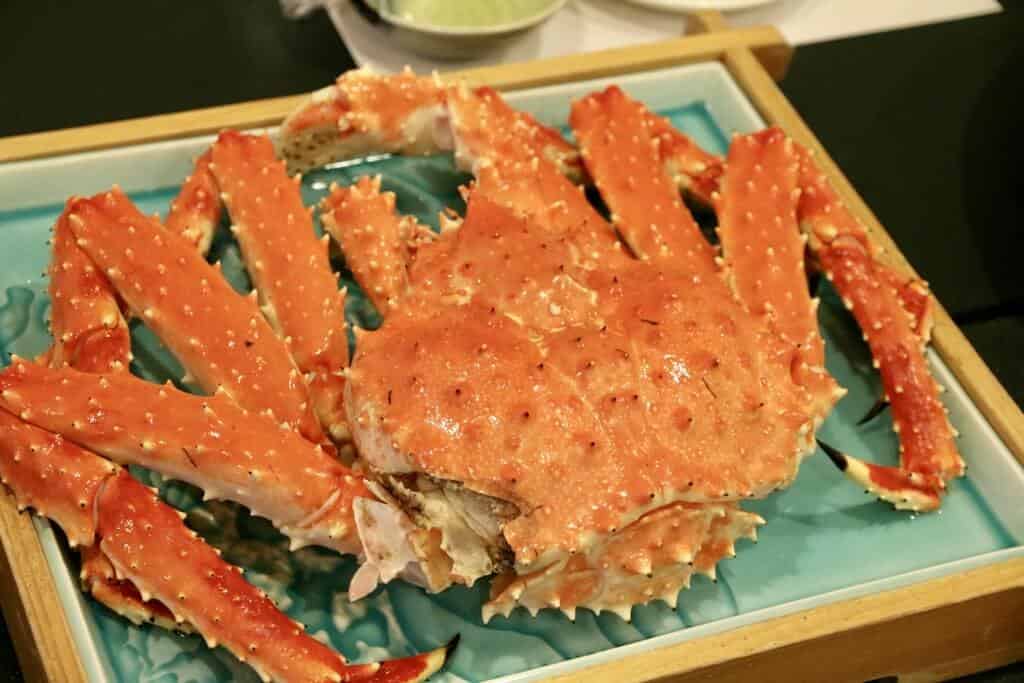
タラバガニ Taraba crab is Japan’s most celebrated king crab. It comes from the frigid waters off Hokkaido and the Sea of Okhotsk, grows to over one meter in leg span, and commands prices that reflect both its rarity and its remarkable flavor. If you have seen it piled high at a Hokkaido seafood market or featured in a New Year’s spread, and wondered what the fuss is about, this guide answers the question directly.
Wait: Taraba Crab is Not Actually a Crab
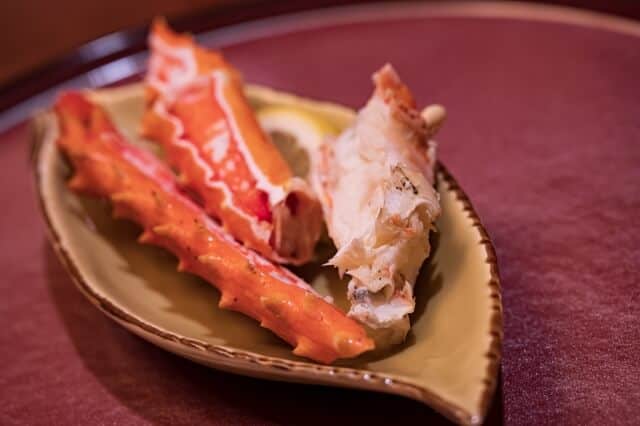
This surprises most people, and it is one of the more interesting facts about this creature. Taraba crab is not a true crab. It belongs to the hermit crab family. The clearest sign is the leg count: true crabs have ten legs, while taraba crab has only eight, including the claws. Two additional legs are hidden and vestigial, tucked beneath the shell.
Despite this, the crab looks so similar to a true crab that Japanese fishermen and consumers have always treated it as one. The classification matters to scientists. To everyone eating it, what matters is the flavor of those thick, sweet legs. And on that front, it delivers.
What is Taraba Crab?
Taraba crab (タラバガニ) is the Japanese name for red king crab, the largest and most prized of the roughly 15 king crab species found in Japanese waters. It is caught in deep, cold water, typically at depths exceeding 500 meters, in the seas around Hokkaido. The name itself translates roughly as “cod basket crab,” because early fishermen first encountered it as an accidental bycatch while targeting cod.
In English-speaking countries, the same creature is simply called king crab. The name fits. Few seafoods carry the same combination of size, prestige, and flavor. It is premium Japanese seafood in every sense of the term, and it sits at the top of the hierarchy alongside snow crab and hairy crab when it comes to Japanese crab culture.
Size, Lifespan, and What Makes It Special
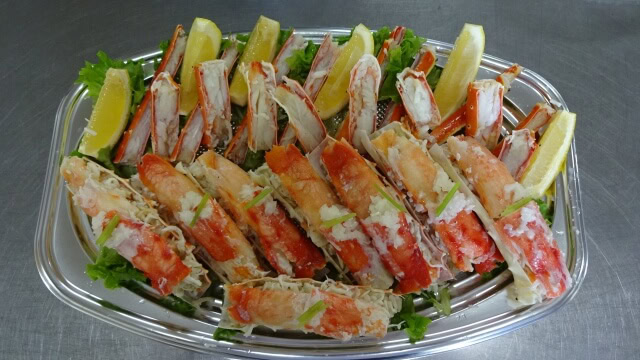
The numbers are genuinely impressive. Taraba crab can reach a leg span of up to one meter. The body alone can weigh several kilograms. These are among the largest crustaceans in the world’s oceans. Some individuals live for more than thirty years, which means the crab on your plate may be older than many of the people eating it.
What makes the size commercially significant is the yield. Larger crabs mean thicker legs, and thicker legs mean more edible meat per animal. The flesh is white, firm, and slightly sweet. It flakes cleanly from the shell. There is very little filler. When you order taraba crab at a Hokkaido restaurant, a significant portion of what you are paying for is simply meat, not shell weight. That ratio is part of why it is so highly valued.
Why is Taraba Crab So Expensive?
Several factors combine to push the price up. First, the sheer size and edible yield makes each animal worth more at market than smaller crab species. Second, domestic supply from Hokkaido has not kept pace with demand. Japan now imports significant quantities from Russia and Alaska to fill the gap. In the late 1990s, annual imports exceeded 40,000 tonnes. Supply chain costs, cold-chain logistics, and import tariffs all flow through to the retail price.
Third, taraba crab carries strong seasonal and cultural associations. It is closely linked to New Year’s celebrations and high-end dining occasions in Japan. That cultural status inflates perceived value and sustains premium pricing even when supply is adequate. Finally, fishing is regulated in most sourcing regions. That regulation limits how much can be caught in any given season, which keeps supply constrained.
When is Taraba Crab in Season?
The main season for 北海道のタラバガニ Hokkaido king crab is spring through early summer. The crab hibernates in deep water (roughly 100 to 200 meters) through late autumn and winter. As water temperatures rise in early spring and drift ice clears from the Hokkaido coast, the crabs migrate toward shallower coastal waters. Fishing begins in earnest between Soya and Abashiri, two of Hokkaido’s main crab-fishing areas.
Most of the annual domestic catch happens between April and July. A smaller amount is caught in winter. The timing varies slightly by region. If you are visiting Hokkaido specifically to eat taraba crab at its freshest, late spring is the most reliable window.
That said, imported taraba crab is available in Japan year-round, frozen and fresh. For restaurants outside Hokkaido, imported product is the norm in most seasons.
What Does Taraba Crab Taste Like?
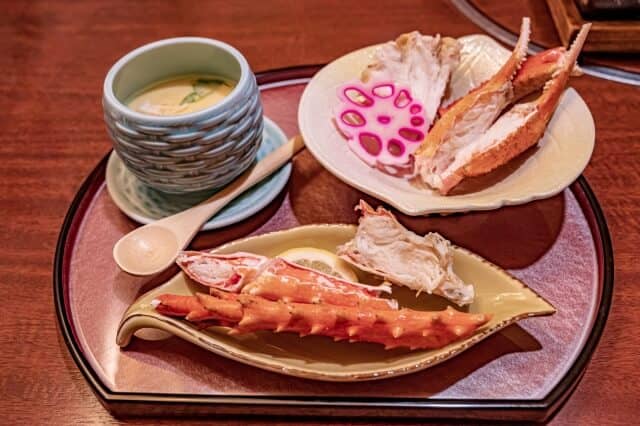
The meat is sweet and clean, with a mild briny undertone that reminds you it came from cold sea water. It is firmer than snow crab and more substantial in texture. The flavor is not sharp or intensely “crabby.” It is delicate enough that simpler preparations bring it out better than heavily seasoned ones.
Boiled taraba crab lets you taste the meat most directly. You can pull the flesh from the leg in long, clean pieces. Grilled or flame-roasted leg sections deepen the flavor slightly and add a mild caramelized edge. Either way, the sweetness is the defining characteristic. It is why people return to it for special occasions rather than treating it as an everyday food.
How to Eat Taraba Crab
The ways to eat taraba crab fall into two broad categories: preparations that keep the meat central, and dishes that incorporate it into something larger.
Classic preparations
Boiled crab legs served cold or at room temperature with ponzu or butter are the most popular choice at Hokkaido seafood markets and specialist restaurants. Grilled legs, charred slightly over open flame, are common at izakayas and festival stalls. Both methods are deliberately simple because the ingredient does not need help. Sashimi-grade taraba crab is available at high-end restaurants, though it is relatively rare and expensive even by king crab standards.
Hot pot and cooked dishes
Taraba crab nabe (hot pot) is one of the most beloved winter dishes in Hokkaido. The crab cooks gently in a dashi broth alongside tofu and vegetables, and the broth becomes deeply flavored as the meal progresses. Crab gratin using the leg meat mixed into a béchamel and baked in the shell is a popular café and brasserie dish. Crab-topped sushi and crab-dressed salads appear widely on restaurant menus throughout Japan. The meat was also historically important as a canned export product, and canned taraba crab is still sold in supermarkets and used in home cooking.
A Brief History in Japanese Cuisine
Taraba crab’s connection to Japanese cuisine is relatively recent. It does not appear in historical texts from earlier periods the way other seafoods do. The crab first entered Japan’s food culture in the 1870s, initially as a bycatch item. It was not until the peak of North Sea fishing in the 1960s, when factory ships left in April and returned in September after months-long expeditions, that taraba crab became widely available and commercially significant. Within roughly a century, it went from an accidental catch to a centerpiece of Japanese premium seafood culture. That is a fast rise for any ingredient.
A Note on Supply
Domestic Hokkaido stocks of taraba crab are under pressure. Catch limits are regulated, and some fishing zones have seen declining yields over the past few decades. The majority of taraba crab consumed in Japan today comes from imported Russian and Alaskan sources. This import dependence is worth being aware of if you care about sourcing, though it does not affect the quality of what arrives on the plate when handled well.
Where to Eat Taraba Crab in Tokyo
Kani Jigoku Shinbashi (かに地獄 新橋) — Accessible and Direct from Hokkaido
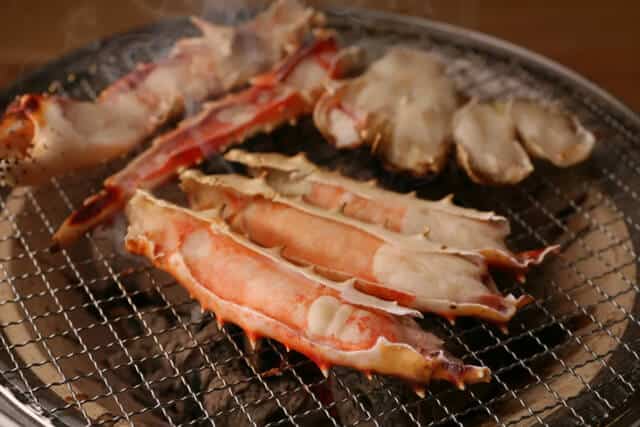
This Shinbashi restaurant sources crab directly from Nemuro City in Hokkaido, which keeps quality consistent and prices lower than many comparable venues in Tokyo. Crab is available from 638 yen per 100g. The all-you-can-drink option, covering over 70 beverages including draft beer, runs 329 yen for 30 minutes. It is a straightforward, no-pretense venue for people who want good crab at a manageable price in central Tokyo.
Final Thoughts
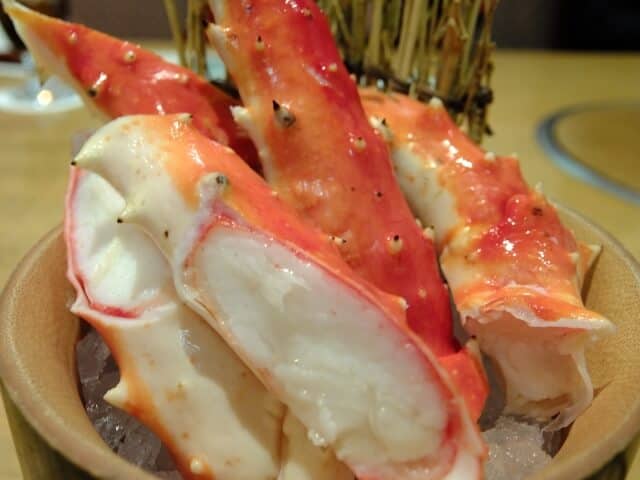
たらばがに premium Japanese seafood does not oversell itself. The size is real. The flavor is real. The price reflects genuine scarcity and quality, not just marketing. If you are visiting Hokkaido in spring, eating freshly caught taraba crab at the source is one of the more memorable food experiences available in Japan. If you are in Tokyo, good imported product at a reliable restaurant gets you close to that experience at a lower cost.
For more on Japan’s crab culture, the guides on snow crab (zuwaigani) and hairy crab (kegani) cover the other two members of Japan’s crab triumvirate. And if Hokkaido seafood in general interests you, the Hokkaido food guide is a good starting point.
Exploring Japanese seafood? Browse the full seafood collection on Food in Japan.
Taraba Crab FAQ
What is taraba crab?
Taraba crab (タラバガニ) is the Japanese name for red king crab, the largest and most prized crab species in Japanese cuisine. It is caught in the cold waters around Hokkaido and the Sea of Okhotsk. The name means “cod basket crab,” because it was first discovered as bycatch in cod-fishing areas. It is known for its massive size, thick legs, and sweet, firm white meat.
Is taraba crab really a crab?
No. Taraba crab is technically a hermit crab, not a true crab. True crabs have ten legs. Taraba crab has only eight visible legs, including the claws, with two vestigial legs hidden under the shell. Despite this, it is universally treated as a crab in Japanese food culture because it looks and functions like one in the kitchen.
Why is taraba crab so expensive?
Several factors drive the high price. Taraba crab is very large, so each animal yields a lot of edible meat, which increases its market value. Domestic Hokkaido supply is limited by regulated fishing and declining wild stocks, so Japan imports heavily from Russia and Alaska. Logistics costs, cold-chain handling, and cultural association with premium occasions all contribute to the final price.
When is taraba crab in season?
The main domestic season for Hokkaido taraba crab is spring through early summer, roughly April to July. The crab migrates to shallower coastal waters as drift ice clears from the Hokkaido coast. Fishing begins in areas like Soya and Abashiri. Imported taraba crab is available in Japan year-round.
What does taraba crab taste like?
The meat is sweet, firm, and clean-tasting with a mild briny note. It is less delicate than snow crab and more substantial in texture. The sweetness is the defining characteristic. Simple preparations like boiling or grilling highlight it best. Heavy seasoning tends to overpower the natural flavor.
How do you eat taraba crab?
The most popular way is boiled or grilled crab legs served with ponzu or butter. It is also eaten in hot pot (nabe), sushi, crab gratin, and salads. In Hokkaido, fresh boiled crab at a seafood market stall is the classic first experience. Canned taraba crab is also widely used in home cooking.
How does taraba crab compare to snow crab?
Taraba crab is significantly larger and has firmer, meatier legs. Snow crab (zuwaigani) has thinner legs with more delicate, slightly sweeter meat. Snow crab is generally less expensive. Taraba crab is considered the prestige option for special occasions. Both are prized in Japanese cuisine, but they have a distinctly different eating experience.
How large can taraba crab grow?
The leg span of a large taraba crab can reach up to one meter. Some individuals weigh several kilograms. They can live for more than thirty years. This makes them one of the largest crustaceans in the ocean. The size is a key reason for their value, since larger crabs yield proportionally more edible meat.
Where can I eat taraba crab in Japan?
In Hokkaido, seafood markets and specialist crab restaurants in cities like Sapporo, Hakodate, and Kushiro are the best options, especially in spring. In Tokyo, crab-specialist restaurants like Kani Jigoku in Shinbashi offer direct-from-Hokkaido product at accessible prices. High-end kaiseki and seafood restaurants throughout Japan feature it on seasonal menus.
References
- Aquamarine Fukushima — King Crab biology reference
- Maruha Shinko — Taraba crab seasonal data
- Kani Jigoku Shinbashi — dd-holdings.jp



Comments