



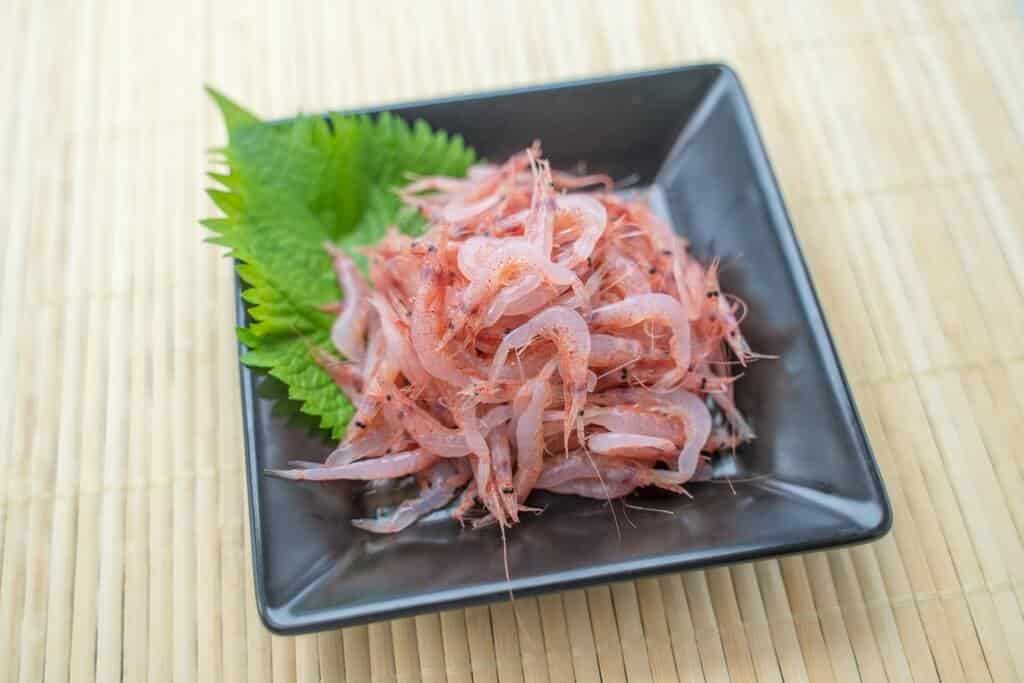
Sakura shrimp is a rare seafood from Suruga Bay in Shizuoka. In Japan, licensed commercial catches come from this bay alone. Locals call it sakura ebi, and its soft pink color explains the cherry blossom name. This article covers the season, the fishing culture, and the best ways to eat it.
So, what is sakura shrimp exactly? It is a tiny deep-sea shrimp, about 4 cm long, eaten whole with its soft shell. People enjoy it raw, boiled, sun-dried, or fried into crispy kakiage fritters.
- Rarity: commercial fishing happens only in Suruga Bay, Shizuoka.
- Season: two short windows, in spring and autumn.
- Best-known dish: kakiage, a crisp mixed tempura fritter.
Sakura Shrimp at a Glance
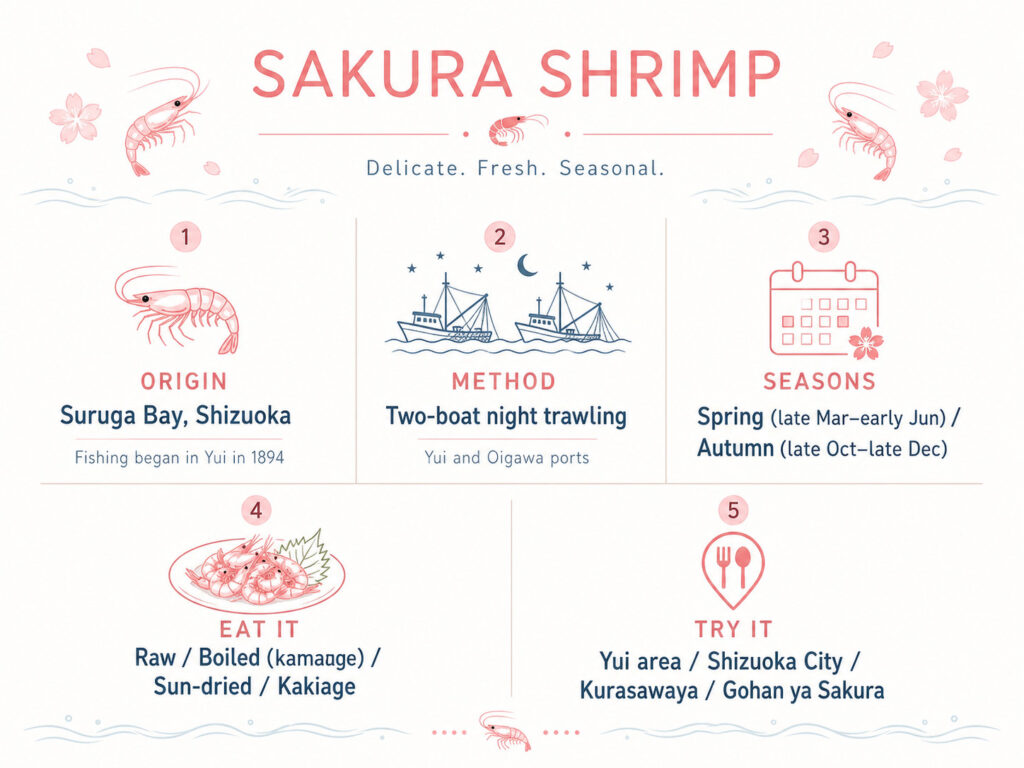
| Origin | Suruga Bay, Shizuoka; fishing began in Yui in 1894 |
| Fishing method | Two-boat night trawling at Yui and Oigawa ports |
| Season | Spring (late March to early June) and autumn (late October to late December) |
| How to eat | Raw, boiled (kamaage), sun-dried, or as kakiage |
| Where to try | Yui area and Shizuoka City; Kurasawaya, Gohan ya Sakura |
What Is Sakura Shrimp?
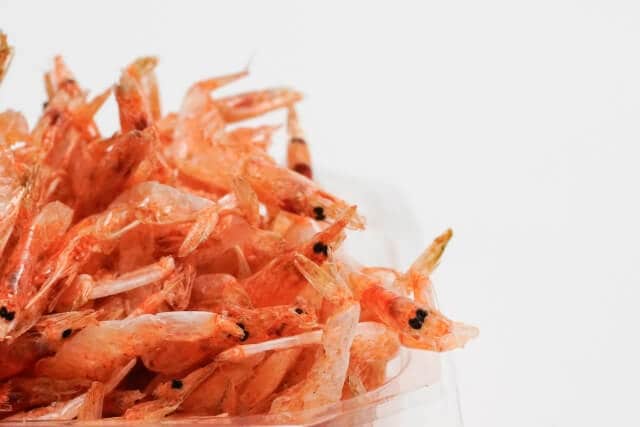
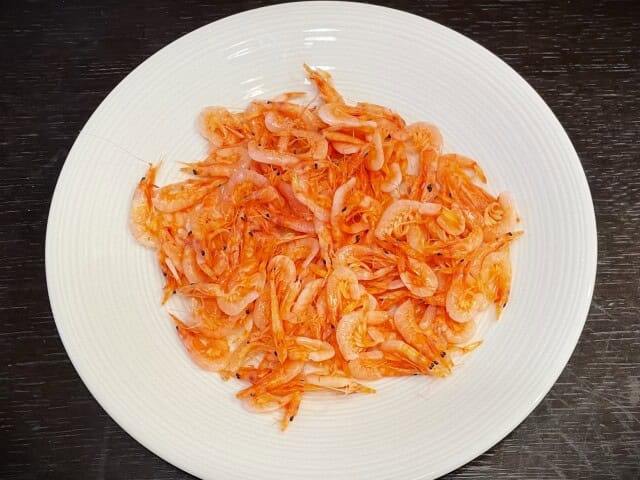
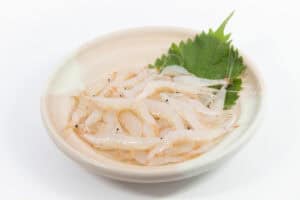
Sakura shrimp (sakura ebi) is a small deep-sea shrimp, about 40 mm long. In the water it looks almost transparent. Once landed, its pink color shows clearly, and that shade gave the shrimp its cherry blossom name. Locals also call it “the ruby of the sea.”
You eat the whole shrimp, shell, head, and all. The soft shell adds a light crunch and plenty of calcium. The flavor is sweet and savory, with a clean ocean aroma. Small as it is, this local seafood carries surprising depth. Compared with the white shrimp of Toyama Bay, it tastes bolder and slightly nuttier.
Where Is Sakura Shrimp Caught?
Suruga Bay in Shizuoka Prefecture is the only place in Japan with commercial fishing licenses for sakura shrimp. Roughly 120 licensed vessels work in pairs from the Yui, Kambara, and Oigawa districts. Every catch lands at just two ports: Yui Port and Oigawa Port. The morning auctions there set the market for the whole country.
Why Only Suruga Bay?
The answer lies in the bay itself. Suruga Bay is Japan’s deepest bay, dropping to around 2,500 meters. That rare depth so close to shore creates an ideal home for this deep-sea species. By day, the shrimp stay about 200 to 350 meters down. At night, they rise to around 20 to 60 meters to feed.
Fishermen use that habit. Two boats set out together at night and pull a net between them through the shallow layer. Once the net closes, workers suck the shrimp up through large hoses and move them into containers. Back at port, the catch waits in refrigerators for the next morning’s auction. The whole cycle, from seabed to auction floor, happens within hours.
History of Sakura Shrimp Fishing
The industry started with a lucky mistake. In 1894, two fishermen went out from Imajuku, now part of Yui, to catch horse mackerel at night. They forgot the floating barrels that usually kept the net near the surface. That mistake led to the discovery of sakura shrimp.
Their net sank far deeper than planned. When Mochizuki Heishichi and Watanabe Chubei hauled it up, about 150 kg of pink shrimp filled it. The accident showed that fishing deeper brought huge catches. Full-scale fishing began the next year in Yui, then in Kambara in 1896. From there, sakura shrimp became a signature Shizuoka industry.
A Carefully Managed Fishery
The fishery is also known for restraint. By prefectural regulation, fishing stops from June 11 to September 30 to protect spawning. Crews also rest voluntarily from January to March. The pool system has an even deeper story. After years of harsh competition and pollution problems in the 1960s, the fleet began pooling trials in 1968. In 1977, all three districts united under one total pool system, sharing every yen of revenue equally. No boat gains from overfishing, so nobody overfishes.
The system faced its hardest test recently. Catches hit record lows between 2018 and 2020. In response, Shizuoka University launched a joint resource-regeneration project with local cooperatives in 2019. Signs of recovery appeared from the autumn 2021 season. Crews still run trial operations before each season and shorten it when stocks look weak. It is a small fishery, but a thoughtful one. That care is why the shrimp still returns each year.
Season and Best Time to Eat
The fishing calendar has two short windows. Exact dates shift a little each year, based on the trial catches.
| Season | Period | What to expect |
|---|---|---|
| Spring | Late March to early June | The main season; plump shrimp and lively port events |
| Autumn | Late October to late December | A shorter run with deep, concentrated flavor |
| Summer and winter | Closed | No fishing, to protect spawning and stocks |
For raw sakura shrimp, visit during these windows. Truly fresh raw shrimp rarely travels far from Yui or Shizuoka City. Dried and frozen products, meanwhile, are available all year.
How to Eat Sakura Shrimp
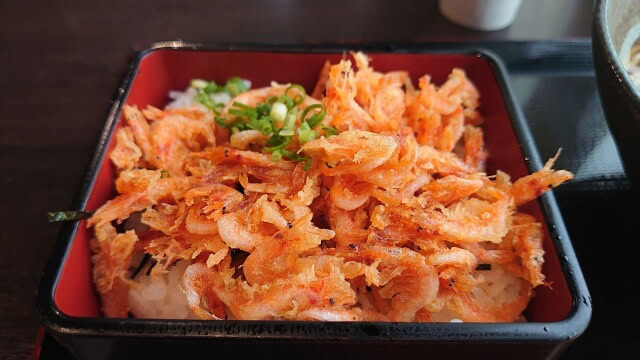
Locals enjoy this shrimp in four main forms. Raw, it tastes sweet and delicate, usually over rice with grated ginger. Boiled kamaage shrimp turns plump and mildly briny. Sun-dried shrimp packs the strongest umami, perfect as a topping. And then there is kakiage, the famous fritter, essentially a local take on tempura.
Dried sakura shrimp also works as an everyday seasoning. Sprinkle it on yakisoba, okonomiyaki, or salads. In fact, it is a classic topping for Fujinomiya Yakisoba, another Shizuoka specialty.
Okiagari: The Fishermen’s Dish
One local dish rarely appears in guidebooks. It is called sakura ebi no okiagari, literally “coming in from the sea.” Fishermen returning from night trawls simmered fresh shrimp with tofu and green onions. The broth uses soy sauce, sake, and a little sugar, close to a light sukiyaki. The shrimp’s sweetness deepens the broth within minutes. Yui families still make it during the season, and a few local restaurants serve it. Honestly, it might be my favorite way to understand this shrimp. If you see okiagari on a menu, order it without hesitation.
Sun-Drying and the Pink Carpet
Producers sun-dry part of each catch on the Fuji River riverbed. The drying yards turn bright pink, with Mt. Fuji rising behind them. Locals call this view the “pink carpet,” and photographers travel far for it. The scene appears only during the fishing seasons, on clear days. Drying is not just beautiful, either. It concentrates the umami and lets people enjoy the shrimp year-round.
Sakura Shrimp Kakiage Recipe
Which Type of Sakura Shrimp Should You Use?
| Type | Best for | Note |
|---|---|---|
| Raw (fresh or frozen) | Rich, juicy kakiage | Hard to find outside Shizuoka |
| Boiled (kamaage) | This recipe; easy and sweet | Widely sold in packs |
| Dried | Strong umami accent | Use about half the amount |
Ingredients of Sakura Shrimp Kakiage
| Sakura Shrimp Kakiage Ingredients for 2 persons | Measurements |
|---|---|
| Onion | 75g |
| Green onion | 30g |
| Boiled Sakura shrimp/ebi | 50g |
| Salt | 1.5g |
| Cake flour | 50g |
| Water | 60g |
| Salad oil | 15-30g |
How to Make Sakura Shrimp Kakiage
Slice the onion thinly and chop the green onions into small pieces. Place the chopped onions, green onions, shrimp, salt, and flour into a bowl. Then, mix everything well.
Gradually add water to the mixture while stirring, until the batter comes together. If it feels too thick, add a little water. If it feels too thin, add flour. Once mixed, divide the batter into 4 equal portions.
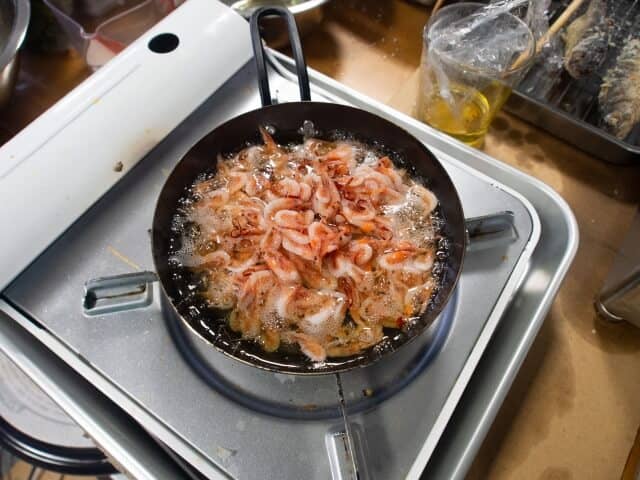
Pour salad oil into a frying pan to a depth of about 5 mm. Heat it to 170-180°C. Spread two portions of the batter into the pan and fry. When the bottom turns golden brown, flip it over. Reduce the heat and fry for about 2 more minutes.
You can also coat the kakiage in the sauce and place it on rice to make a kakiage rice bowl.
- Tip 1: do not overcrowd the pan; fry one or two pieces at a time.
- Tip 2: keep the oil at 170-180°C so the fritter crisps without burning.
- Tip 3: serve immediately; the crunch fades fast once it cools.
Where to Eat Sakura Shrimp in Shizuoka
Kurasawaya (くらさわや)
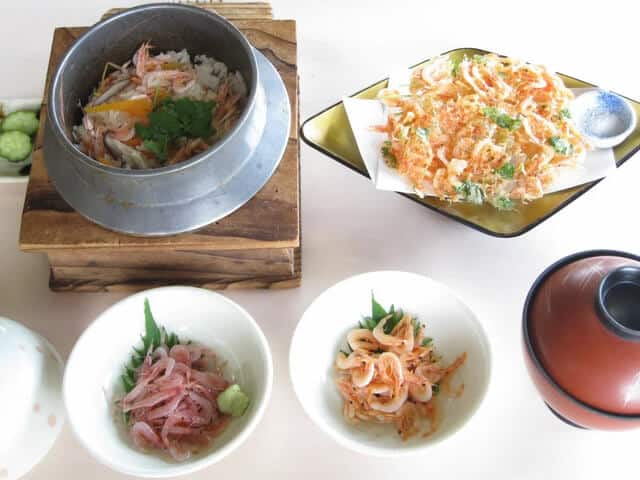
Kurasawaya sits on a hill along the old Tokaido road. From the windows, you can see Mt. Fuji and the Izu Peninsula across Suruga Bay. The menu runs from raw sakura ebi to fried dishes and shrimp rice. Its thin-battered kakiage is the standout, and honestly, worth the trip alone.
- Best for: a full sakura shrimp course with a Mt. Fuji view.
- Signature dish: crispy thin-battered kakiage.
- Access: hillside above Yui, Shimizu Ward, Shizuoka City.
- Budget: around 2,000 to 3,500 yen per person.
Gohan ya sakura (ごはん屋さくら)
This friendly spot near Yui serves fresh sakura shrimp at fair prices. The menu covers raw, boiled, kakiage, and soy-simmered tsukudani styles. The popular Sakura Shrimp Set Meal gathers all of them on one tray. With table seats and tatami areas, it suits families and casual travelers alike.
- Best for: comparing every style in one affordable set.
- Signature dish: Sakura Shrimp Set Meal with raw, kakiage, and tsukudani.
- Access: Yuiimajuku, Shimizu Ward, near the old Yui post town.
- Budget: around 1,500 to 2,500 yen per person.
Planning a wider food day? Pair your shrimp lunch with Shizuoka Oden in the city center. The dark broth and dashi powder make a fun contrast after delicate seafood.
Price Guide: What to Order
- Raw sakura shrimp bowl: about 1,500 to 2,000 yen, in season only.
- Kakiage (single piece): about 300 to 600 yen at casual shops.
- Set meal (teishoku): about 1,500 to 2,500 yen with several styles.
- Dried shrimp pack: about 500 to 1,500 yen depending on grade.
- Shrimp senbei crackers: about 300 to 800 yen per bag.
Where to Buy Sakura Shrimp Souvenirs
Souvenir shopping is easy around Yui Station, Shizuoka Station, and highway service areas. Sun-dried shrimp suits cooks who want an umami topping for noodles and rice. Shrimp senbei crackers travel well and please almost everyone. Frozen raw shrimp appeals to sashimi lovers with a cooler bag and a short trip home. Kamaage packs sit in between: ready to eat, gently briny, and great over rice. If you are unsure, start with a small dried pack. It keeps for months and instantly upgrades home cooking.
Summary
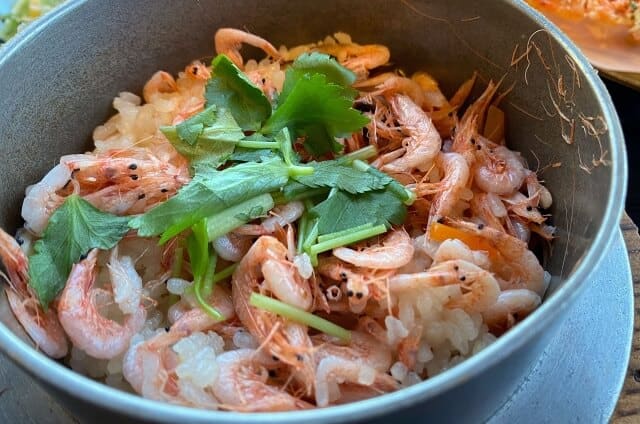
Sakura shrimp is a rare pink shrimp caught in Suruga Bay, and a genuine pride of Shizuoka. A single accident in 1894 built a fishery that locals now manage with real care. The result is a seafood you can taste raw, boiled, dried, or crisp in kakiage. If you visit Yui or Shizuoka City during the fishing season, try it raw first and then as kakiage.
You can also try other Japanese shrimp specialties. We recommend Ise ebi and the white shrimp of Toyama!
Sakura Shrimp (Sakura Ebi) FAQ
What are sakura shrimp?
They are tiny pink shrimp about 4 cm long. In Japan, licensed boats catch them only in Suruga Bay, Shizuoka. You eat them whole, including the soft shell and head.
Why are they called “sakura”?
The name comes from their color. Their soft pink shade reminded locals of cherry blossoms, or sakura. The shrimp look almost transparent in the water, and the pink shows once they land.
Can you eat sakura shrimp raw?
Yes, and raw is the local favorite. Fresh raw shrimp spoils fast, though, so it rarely leaves the area. For the real thing, visit Yui or Shizuoka City during the fishing season.
When is the season?
There are two windows each year. Spring runs from late March to early June, and autumn from late October to late December. Summer stays closed so the shrimp can spawn safely.
What is the most popular dish?
Kakiage takes the crown. This crispy mixed fritter binds the shrimp with onions in a light batter. Restaurants around Yui serve it in sets, on rice bowls, and even on soba.
Do I peel the shell?
No peeling needed. The shell is thin and soft, so you eat the whole shrimp. That is also why this seafood delivers so much calcium.
Where can I eat them?
The Yui area offers the freshest dishes, right beside the port. Shizuoka City restaurants also serve them widely in season. Elsewhere in Japan, you will mostly find dried or frozen versions.
Why do they dry them in the sun?
Sun-drying preserves the catch and concentrates the umami. The drying yards by the Fuji River create the famous “pink carpet” view with Mt. Fuji behind. Sprinkle the dried shrimp on yakisoba, okonomiyaki, or salads.
Are they healthy?
They are a nutritious choice. Eating the whole shrimp provides plenty of calcium, and the shell contains astaxanthin, an antioxidant pigment. As with any seafood, balance matters more than quantity.
Do they turn red when cooked?
Not really. Unlike most shrimp, they are already pink when raw. The color stays nearly the same after boiling or frying, which makes dishes look bright and festive.
References
- MAFF (Ministry of Agriculture, Forestry and Fisheries), Our Regional Cuisines: Sakura Ebi no Kakiage (Shizuoka), https://www.maff.go.jp/j/keikaku/syokubunka/k_ryouri/search_menu/menu/sakuraebi_no_kakiage_shizuoka.html (Surveyed: July 2026)
- Pride Fish (JF Zengyoren, National Federation of Fisheries Cooperatives), Suruga Bay Sakura Ebi, https://www.pride-fish.jp/JPF/pref/detail.php?pk=1623739618 (Surveyed: July 2026)
- Shizuoka University, Suruga Bay Sakura Shrimp Resource Regeneration Research Project, https://wwp.shizuoka.ac.jp/sakuraebi/ (Surveyed: July 2026)
- Sasakawa Peace Foundation, Ocean Policy Research Institute, Ocean Newsletter: Suruga Bay Sakura Ebi Fishery Today, https://www.spf.org/opri/newsletter/349_3.html (Surveyed: July 2026)
- JF Yui Port Fishery Cooperative, Official Site, https://yuikou.jp/ (Surveyed: July 2026)
Related Articles
- Tempura (天ぷら) (Surveyed: July 2026)
- White Shrimp (白えび) (Surveyed: July 2026)
- Shizuoka Oden (静岡おでん) (Surveyed: July 2026)
- Fujinomiya Yakisoba (富士宮やきそば) (Surveyed: July 2026)
- Ise Ebi (伊勢海老) (Surveyed: July 2026)



Comments