



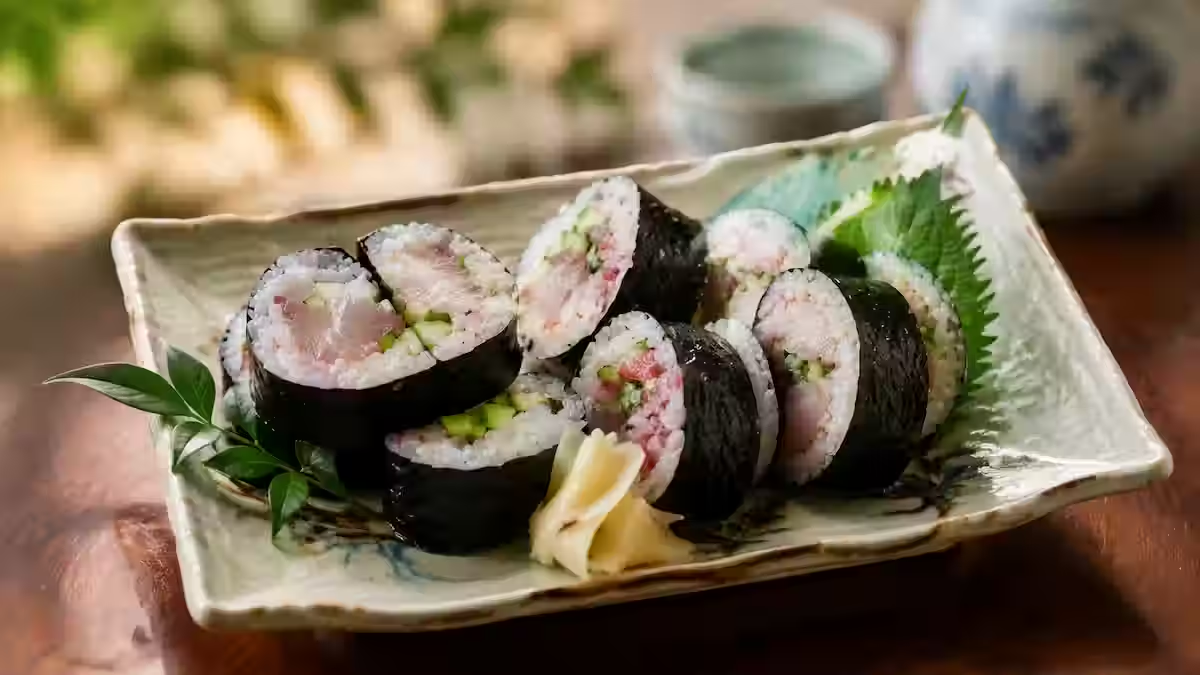
Sado Island sits in the Sea of Japan. It is famous for fresh seafood and folk culture. One local sushi roll captures both at once. That roll is called Okesa maki. It is a true taste of Sado.
So what is Okesa maki sushi from Sado? It is a thick sushi roll filled with yellowtail. Plum, shiso, and cucumber join the fish. The combination feels both rich and refreshing. It has become a beloved island specialty.
The roll carries a poetic local name. It is named after the Sado Okesa folk song. That song is one of Japan’s most famous dances. So the dish ties food to island tradition. The name alone tells a story. For more on Japanese rolls, see our sushi guide.
Quick Facts About Okesa Maki
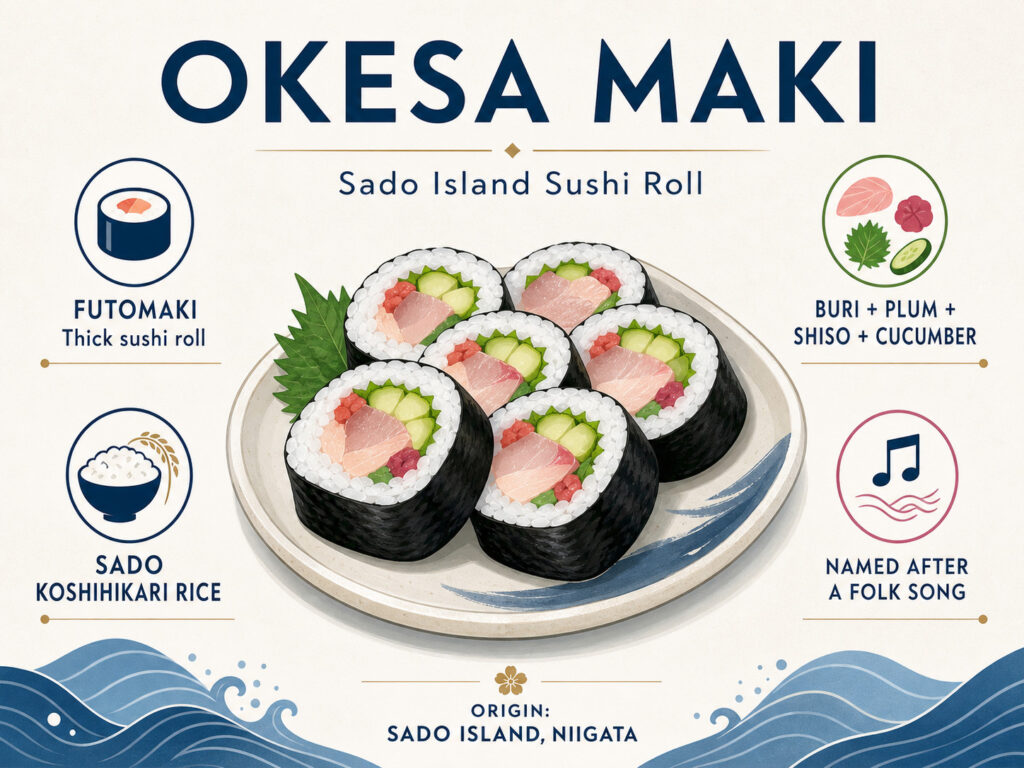
Here is a quick snapshot before the details begin.
| Japanese Name | おけさ巻 (Okesa maki) |
| Type | Futomaki (thick sushi roll) |
| Origin | Sado Island, Niigata |
| Restaurant | Chozaburo (Sado-mae sushi) |
| Main Fillings | Buri (yellowtail), umeboshi plum, shiso, cucumber |
| Rice | Certified Sado Koshihikari |
| Flavor | Rich fatty fish, balanced by tangy, refreshing notes |
| Named After | The Sado Okesa folk song |
What Is Okesa Maki and What Goes In It?
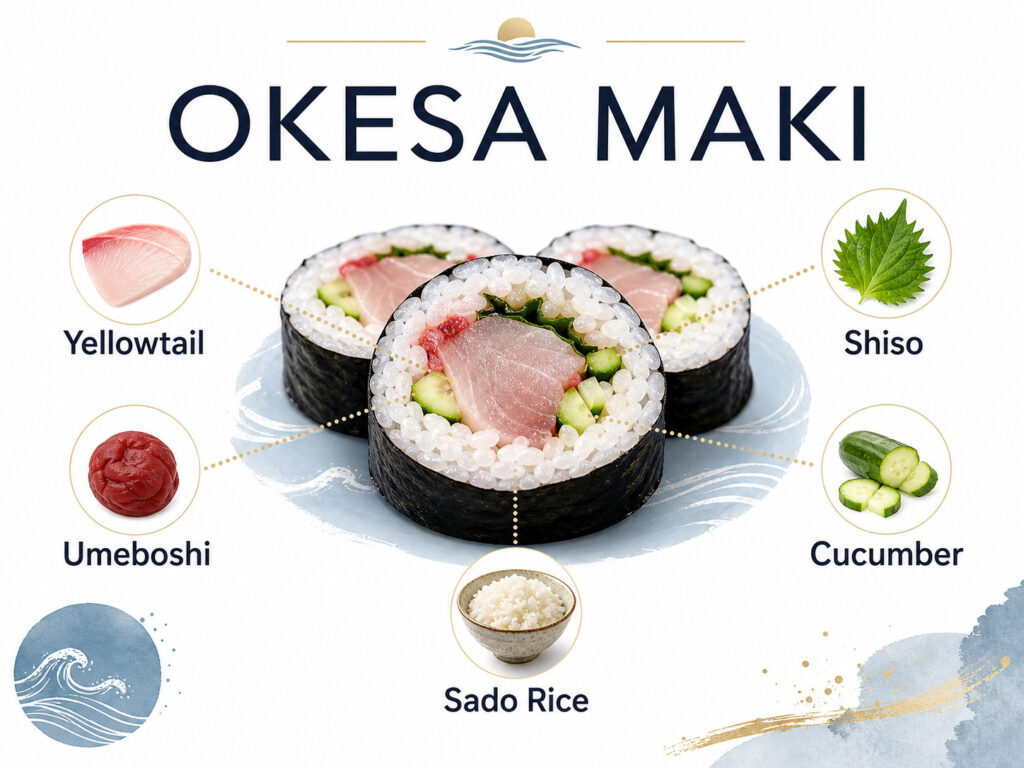
Okesa maki is a futomaki, or thick sushi roll. The star ingredient is buri, or yellowtail. Sado is famous for its winter yellowtail. The fish is fatty, rich, and full of flavor. So it makes a luxurious filling.
The roll also holds three supporting ingredients. Pickled plum, called umeboshi, adds a sharp tang. Fresh shiso leaf brings a fragrant, herbal note. Crisp cucumber gives a cool, clean crunch. So each bite balances richness and freshness.
The rice matters here too. The restaurant uses certified Sado Koshihikari rice. This local grain is prized across Japan. The sushi rice is seasoned with care. So even the base honors the island.
How Does It Taste?
How does Okesa maki taste overall? The yellowtail brings a deep, fatty richness. Then the plum cuts through with bright acidity. The shiso adds a cool, aromatic lift. So the flavors never feel heavy. This balance is the roll’s real charm.
Many fatty fish rolls can feel too rich. A plain buri roll might overwhelm the palate. Okesa maki avoids that problem cleverly. The plum and shiso refresh each bite. So you can enjoy the fatty fish without tiring of it.
How It Compares to Other Sushi Rolls
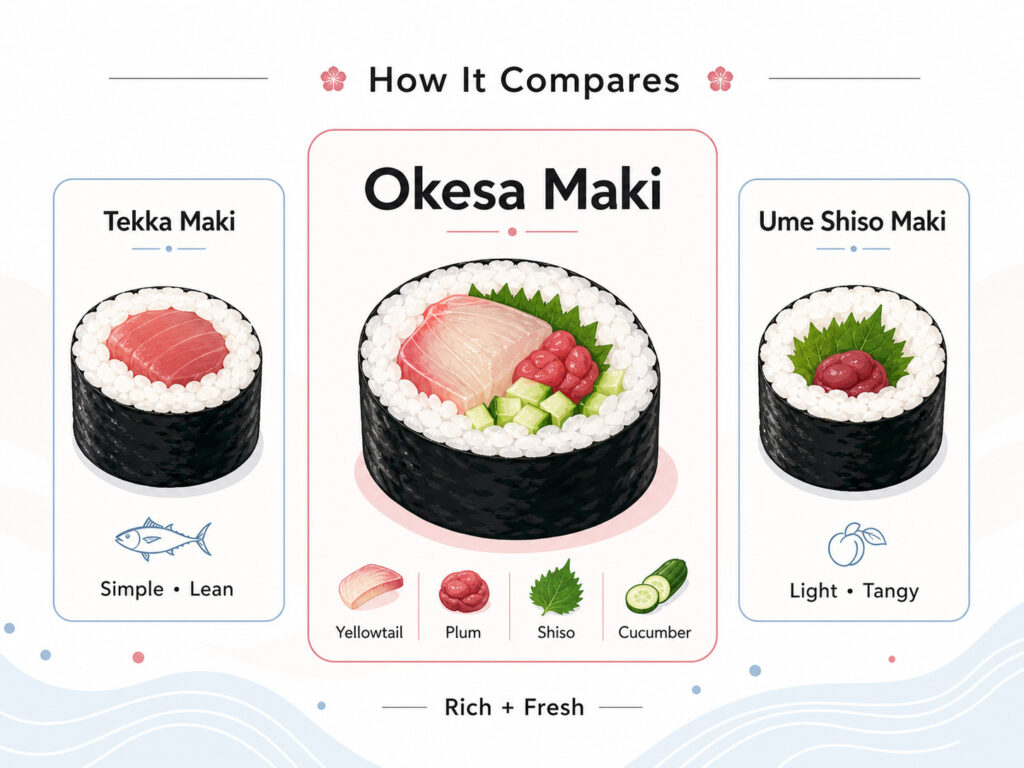
Let us compare it to a few familiar rolls. A tuna roll, or tekka maki, is simple and lean. A plum and shiso roll is refreshing but light. Okesa maki combines both ideas in one. So it offers richness and freshness together.
| Roll | Main Filling | Character |
|---|---|---|
| Okesa maki | Yellowtail, plum, shiso, cucumber | Rich and refreshing |
| Tekka maki | Tuna | Simple and lean |
| Ume shiso maki | Plum and shiso | Light and tangy |
The Island Behind the Roll
Let us look closer at the island behind this roll. Sado is a large island off Niigata. Cold currents from the north sweep past its shores. These chilly waters make the seafood superb. So the island has a proud food culture.
Winter is the key season for yellowtail. From late autumn through early spring, the fish thrive. The cold water makes them especially fatty. Locals call this prized catch kanburi, or cold yellowtail. So winter is the best time for Okesa maki.
The fattiness of winter buri is remarkable. The flesh turns rich, soft, and full of umami. Even people who dislike yellowtail often change their minds. The local fish simply tastes different. So the season truly shapes the roll.
This is why the supporting ingredients matter so much. Rich, fatty fish needs a bright counterpoint. The sour plum provides exactly that contrast. The shiso adds a fresh, green fragrance. So the roll stays lively from start to finish.
The cucumber plays a quiet but vital role. It adds a cool, crisp texture to each slice. Without it, the roll might feel soft throughout. That gentle crunch keeps things interesting. So even a simple vegetable earns its place.
The Restaurant Behind Okesa Maki
The roll comes from one special restaurant. Its home is a sushi shop called Chozaburo. The shop sits on Sado Island in Niigata. It has served the community for over forty years. So it is a true local institution.
Chozaburo is a classic Sado-mae sushi restaurant. Sado-mae means sushi made with local Sado seafood. The owner buys fish straight from local fishermen. He even holds bidding rights at the local market. So the freshness is hard to beat.
How Okesa Maki Was Created
Now let us look at how the roll began. Sado has long been known for yellowtail. The cold winter sea brings rich, fatty fish. Local cooks wanted to showcase this treasure. So a special roll was a natural idea.
The shop combined yellowtail with classic partners. Plum and shiso are timeless companions for fish. Cucumber added a fresh, crunchy texture. Together, they made a balanced, memorable roll. So the recipe found its harmony.
The Story Behind the Name
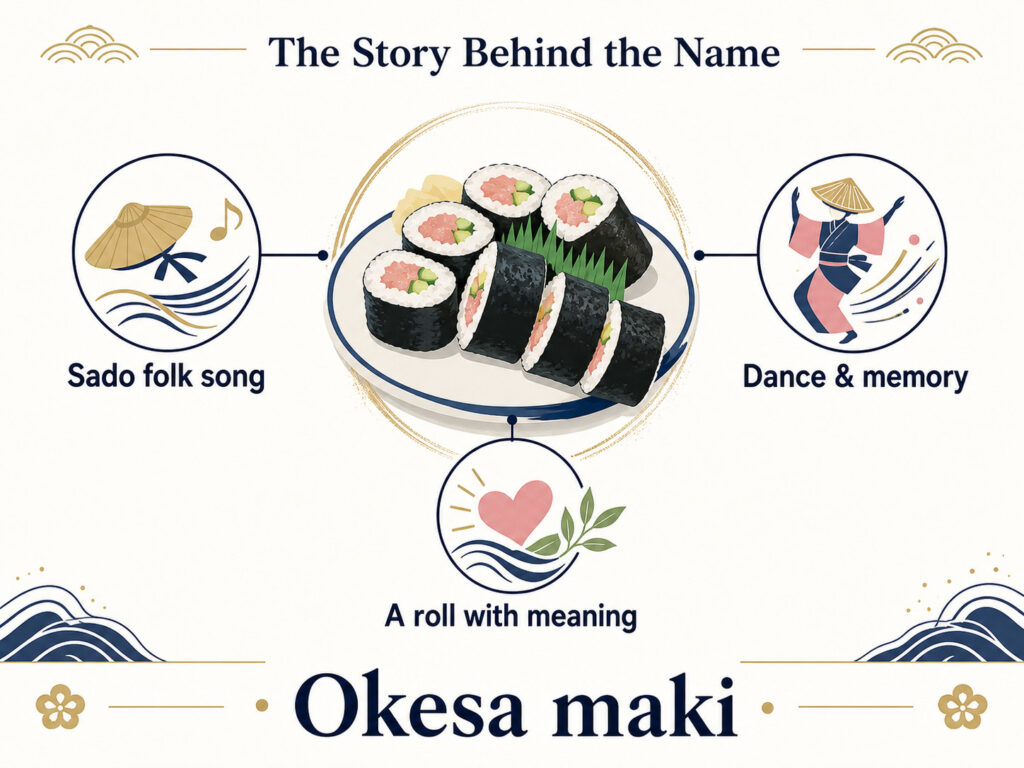
Then came the question of a name. The owner looked to island culture for ideas. The Sado Okesa folk song is famous nationwide. It represents the spirit of the island. So the roll became Okesa maki.
Now consider the folk song behind the name. Sado Okesa is a traditional Bon dance song. Dancers wear straw hats and move in slow, graceful lines. The melody is gentle, haunting, and deeply nostalgic. So the song means a great deal to islanders.
By borrowing this name, the roll gained meaning. It became more than just lunch. It turned into a small symbol of Sado. Visitors remember the song and the sushi together. So the name does real cultural work.
Pairing Okesa Maki with Sake
The roll also fits the island’s drinking culture. Sado produces several respected sake brands. A clean local sake pairs beautifully with the fish. The plum and shiso refresh the palate between sips. So Okesa maki suits a relaxed island meal.
Pairing it with sake feels especially natural. The fatty buri matches a crisp, dry sake well. The acidity of the plum echoes the drink. For a deeper look, see our guide to Niigata sake. So food and drink work hand in hand here.
Okesa Maki Today
Today, Okesa maki remains a signature dish. Fans order it fresh at the counter. Others buy it packed to take home. Some carry it back to the mainland by ferry. So the roll travels well beyond the island.
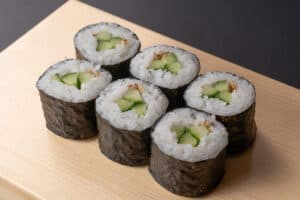
Eating the roll is a simple pleasure. The shop usually serves it in eight pieces. Each slice shows a neat spiral of color. The pink fish, green shiso, and white rice look lovely. So the roll pleases the eye as well as the tongue.
Many visitors order it as part of a larger meal. They pair it with fresh nigiri sushi. Some add the shop’s long-loved ramen too. So a visit can become a full island feast. The roll anchors the experience nicely.
The restaurant also serves other Sado specialties. Pressed sushi and a long-loved ramen are favorites. Sado is also known for its yellowtail cutlet bowl. So the island offers many local flavors. Yet Okesa maki holds a special place.
It is worth remembering that this is a regional dish. You will not find it in every sushi shop. It belongs to Sado and to one beloved restaurant. So tasting it feels like a small discovery. That rarity adds to its appeal.
Where to Try Okesa Maki on Sado
You can taste the original Okesa maki at Chozaburo. It is a beloved Sado-mae sushi restaurant. The shop lies about 15 minutes by car from Ryotsu port. So it is an easy stop on any Sado trip. It gets busy fast, so arriving early helps.
| Restaurant | Chozaburo Sushi (鮨 長三郎) |
| Address | 81-4 Niibo, Sado, Niigata 952-0116 |
| Access | About 15 minutes by car from Ryotsu port |
| Phone | +81 259-22-2125 |
| Hours | Roughly 11:00 to 14:30 and 17:00 to 20:30 (varies by day) |
| Closed | Tuesdays (can vary, so check ahead) |
| Note | Okesa maki is also sold as takeout; half size available |
The shop is also famous for fresh local sushi. Its long-loved ramen draws fans too. Many visitors try the Sado yellowtail cutlet bowl here. So one visit covers several island specialties. Parking is limited, so plan your trip with care.
Okesa Maki FAQ
What is Okesa maki?
It is a thick Sado sushi roll. It contains yellowtail, plum, shiso, and cucumber. The roll is rich yet refreshing. It is named after the Sado Okesa folk song.
Where does Okesa maki come from?
It comes from Sado Island in Niigata. A sushi restaurant called Chozaburo created it. The shop has run for over forty years. It is a classic Sado-mae sushi spot.
Why is it called Okesa maki?
It is named after the Sado Okesa folk song. That song is famous across Japan. The name links the roll to island culture. So it celebrates local pride.
What does Okesa maki taste like?
The yellowtail is fatty and rich. Plum adds a sharp, bright tang. Shiso brings a cool, herbal note. So the roll tastes balanced, not heavy.
What kind of fish is used?
It uses buri, or yellowtail. Sado is famous for winter yellowtail. The cold sea makes the fish fatty. So the flavor is deep and rich.
Can I take Okesa maki home?
Yes, the shop sells it to go. Many visitors buy it as a souvenir. Some carry it back by ferry. So it travels well from the island.
Is Okesa maki the same as a tuna roll?
No, it is quite different. A tuna roll is lean and simple. Okesa maki is rich and layered. It mixes fish, plum, shiso, and cucumber.
What else is Sado known for?
Sado is known for fresh seafood. The yellowtail cutlet bowl is famous too. Local Koshihikari rice is prized. So the island offers many flavors.
References
- Chozaburo Sushi, official site of the Sado-mae sushi restaurant. (Surveyed: June 2026)
- Visit Sado (Sado Tourism Navi), guide to Chozaburo and Sado-mae sushi. (Surveyed: June 2026)
- dancyu, feature on Chozaburo and its buri “Okesa maki” roll (2019). (Surveyed: June 2026)
- Niigata Prefecture, information on Sado winter yellowtail (kanburi). (Surveyed: June 2026)
Related Articles
- Sushi (Surveyed: June 2026)
- Niigata Sake (Surveyed: June 2026)




Comments