




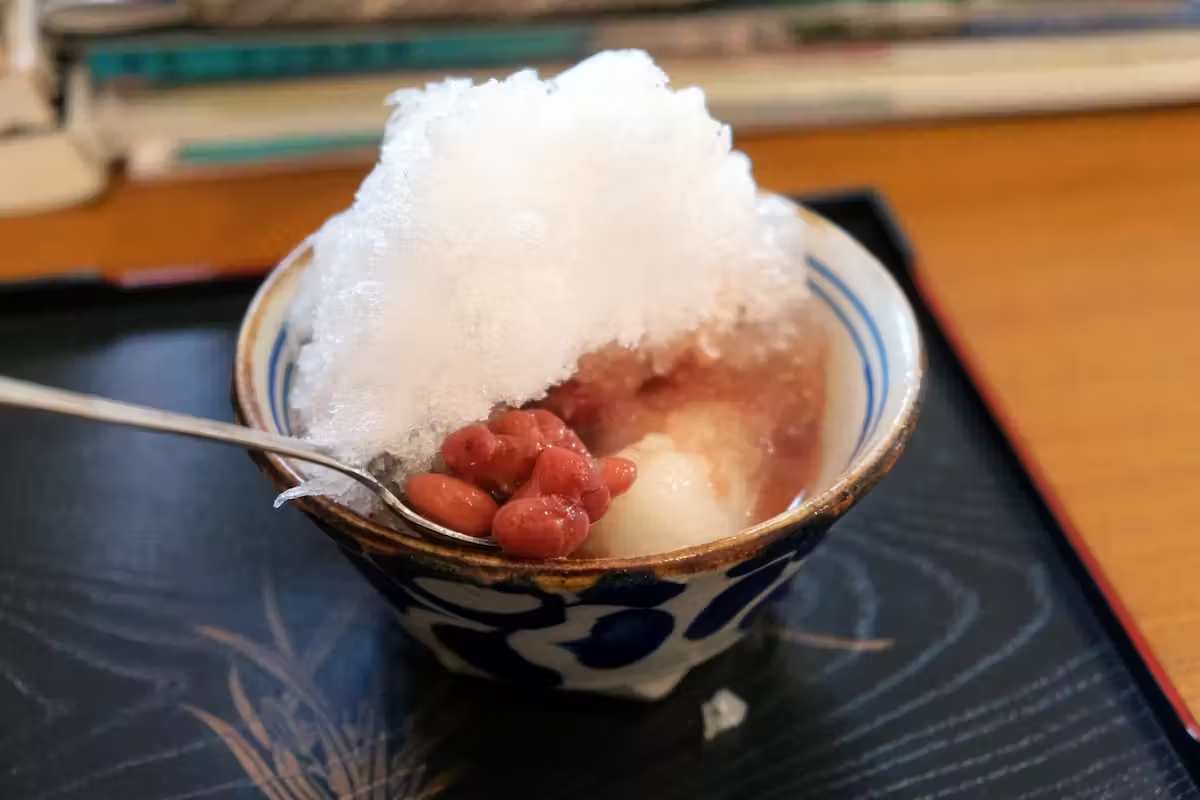
Okinawa zenzai breaks every rule you thought you knew about Japanese sweets. On the mainland, after all, zenzai means a steaming bowl of sweet red bean soup. In Okinawa, order zenzai and you get a mountain of shaved ice. Beneath that snowy peak, however, hide plump kidney beans, simmered sweet with brown sugar. The whole thing is icy, gentle, and wonderfully refreshing.
So why does this island dessert share a name with a hot winter soup? The answer winds through Okinawa’s history, from royal-era sweets to the postwar years. There is even an American twist to the story. This guide covers the taste, the beans, the history, and the beloved shops. Let me introduce the coolest dessert in Japan’s warmest prefecture.
Quick Facts About Okinawa Zenzai
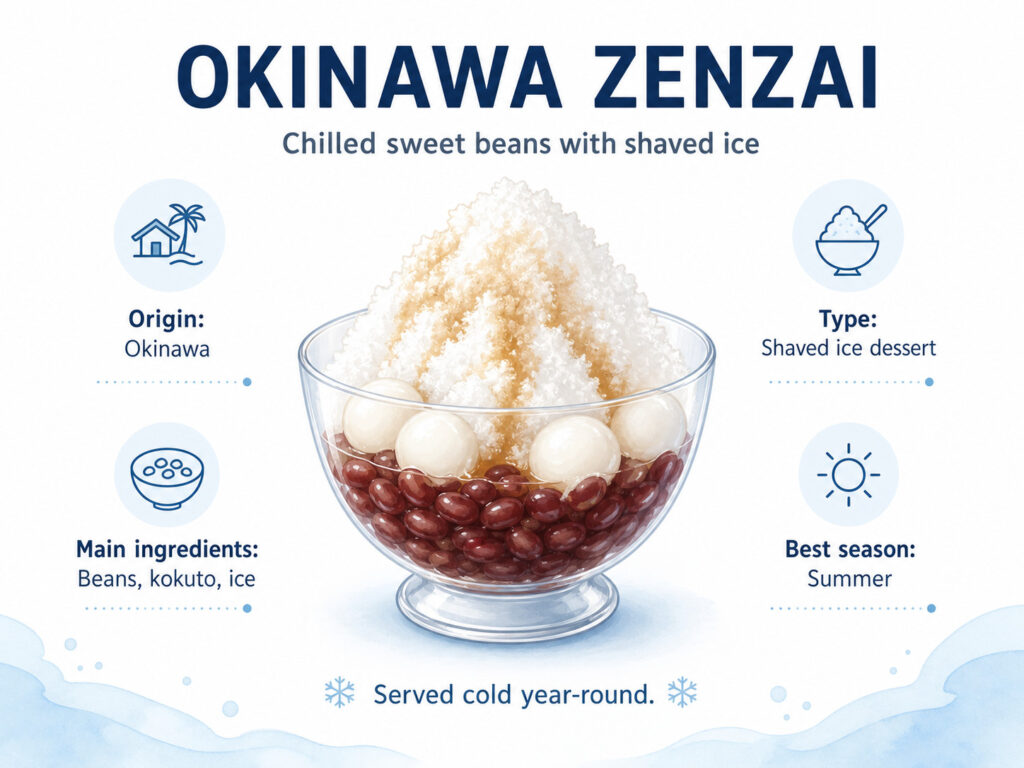
| Japanese Name | 沖縄ぜんざい (Okinawa zenzai) |
| Origin | Okinawa Prefecture |
| Type | Shaved ice over sweet simmered beans |
| Main Ingredients | Kintoki (red kidney) beans, kokuto brown sugar, shaved ice |
| Common Additions | Mochi, shiratama dumplings, barley, condensed milk |
| Served | Cold (the mainland version is hot) |
| Best Season | Summer, though eaten year-round |
Okinawa zenzai is a chilled dessert built on sweetened kintoki beans. These are red kidney beans, simmered slowly with sugar or kokuto brown sugar. Then a generous heap of fluffy shaved ice goes on top. In addition, many shops add chewy mochi or small shiratama rice dumplings. Islanders eat it year-round, though summer is its true season.
What Is Okinawa Zenzai?
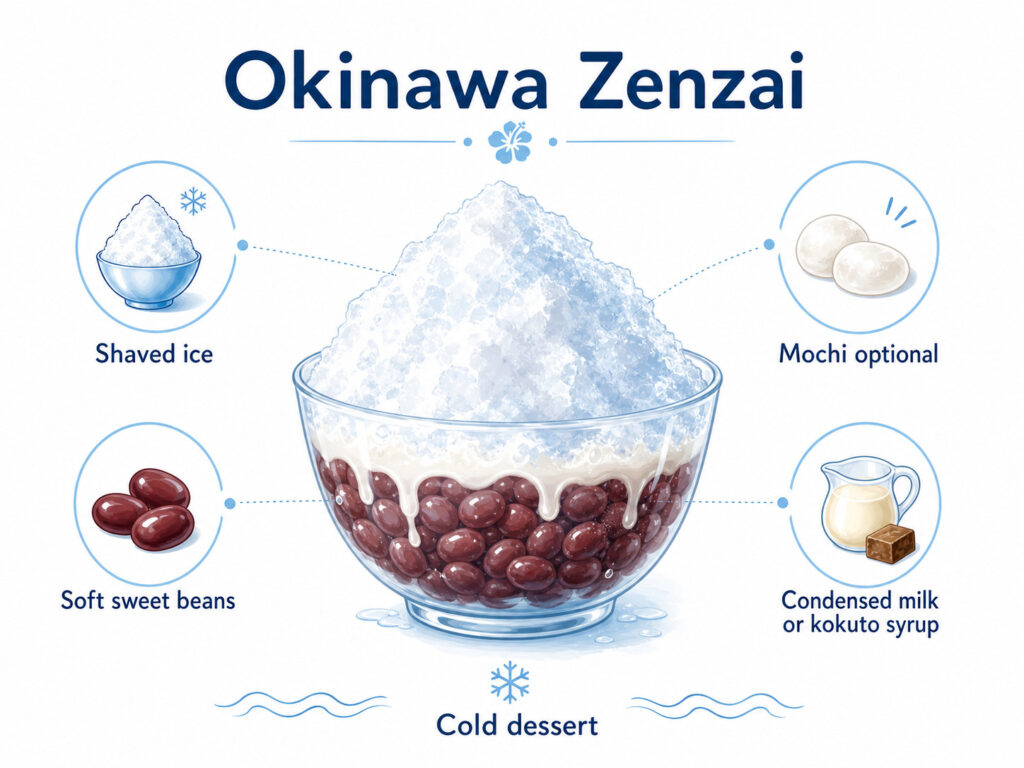
At first glance, Okinawa zenzai looks like a simple bowl of shaved ice. Dig in, though, and the spoon soon strikes treasure. There, at the bottom, waits a layer of large, soft beans in sweet syrup. These beans are the heart of the dish, cooked for hours until tender. Slowly, their gentle sweetness seeps upward into the melting ice. Every spoonful mixes cold, fluffy ice with rich, mochi-like beans.
Moreover, shops often slip in mochi, shiratama dumplings, or even pressed barley. Some pour on condensed milk or a dark kokuto syrup for extra depth. In Okinawa, this icy treat is simply called zenzai. Locals call the mainland’s warm version “hot zenzai” to tell them apart. That small detail says a lot about how beloved the cold style is here.
How It Differs From Mainland Zenzai
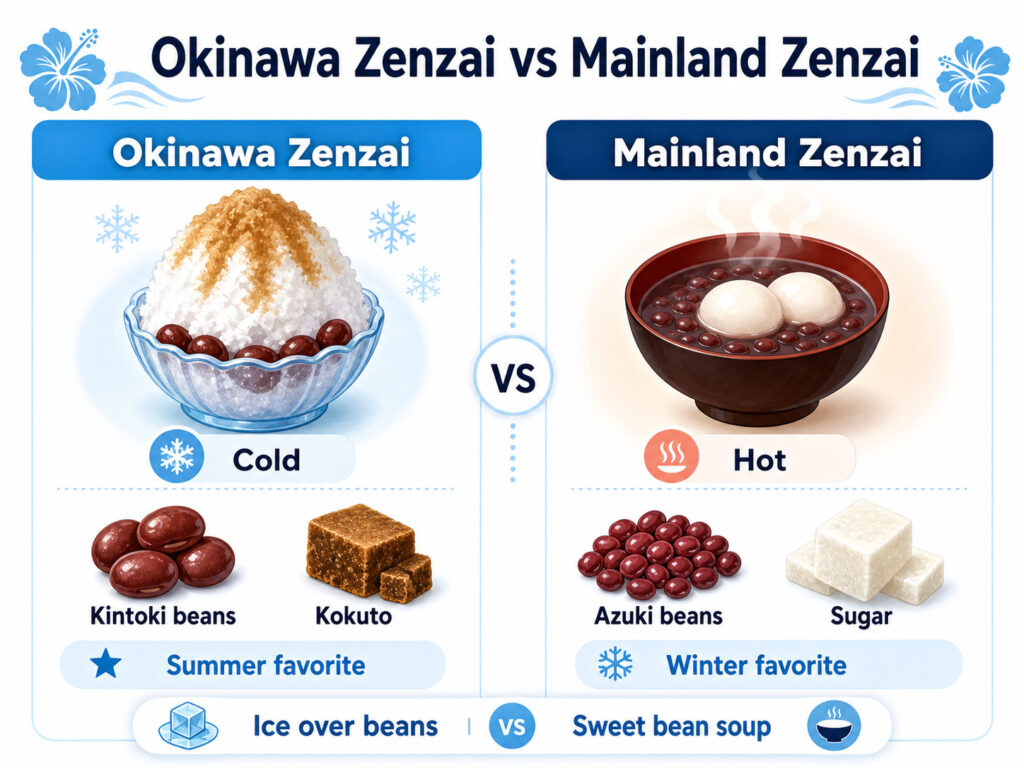
The gap between the two styles genuinely surprises first-time visitors. Mainland zenzai is a warm soup of azuki beans, usually served with grilled mochi. People eat it to warm up in winter, often around the New Year. Okinawa turned that idea completely upside down.
| Okinawa Zenzai | Mainland Zenzai | |
|---|---|---|
| Temperature | Ice cold | Hot |
| Beans | Kintoki (red kidney) | Azuki |
| Sweetener | Sugar or kokuto brown sugar | Sugar |
| Style | Shaved ice over beans | Sweet bean soup with mochi |
| Season | Summer favorite | Winter favorite |
The beans differ too, and that difference matters. Specifically, mainland cooks use small azuki, while Okinawan cooks favor big kintoki beans. Kintoki beans hold their shape and give a satisfying, almost meaty bite. Meanwhile, the sweetener often changes as well. Okinawan shops love kokuto, the island’s famous black sugar, pressed straight from sugarcane juice. Because it is barely refined, kokuto keeps minerals and a deep, almost caramel sweetness.
If you enjoy the warm mainland style, our guides to zenzai and oshiruko explore it fully.
What Does Okinawa Zenzai Taste Like?
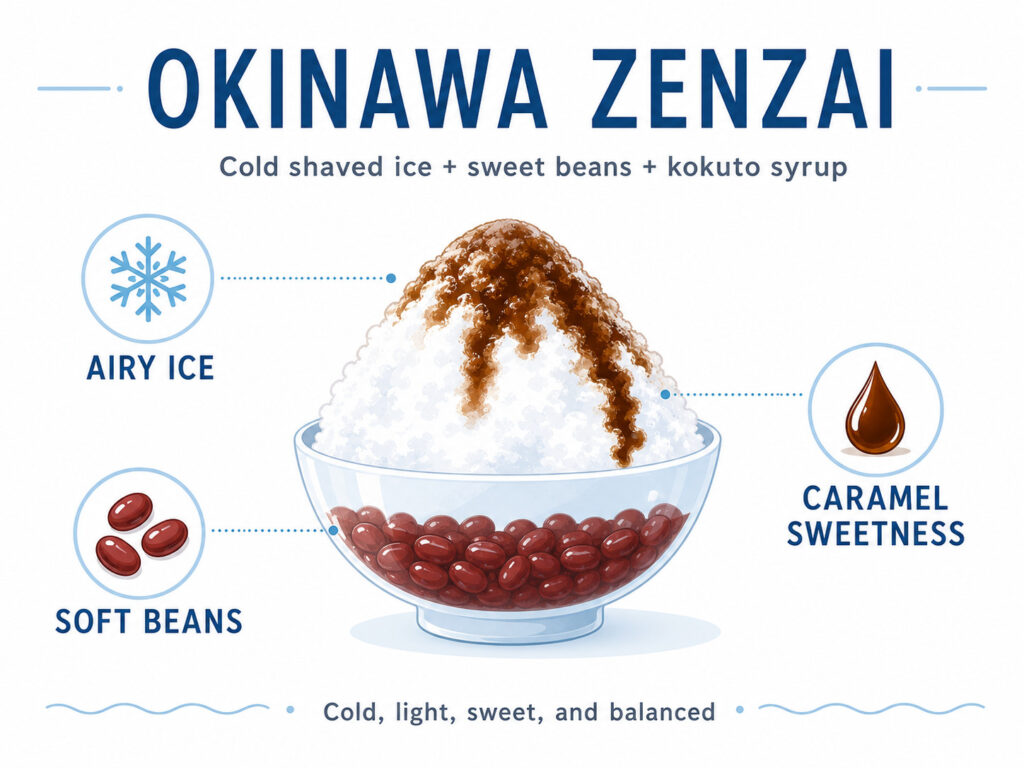
The first spoonful is pure, airy cold. Indeed, good shops shave the ice so fine that it melts like fresh snow. Then the beans arrive, and everything changes. Suddenly, the bowl turns plump, soft, and sweet, with a texture close to chestnut or mochi. Meanwhile, the kokuto syrup adds a warm, caramel-like note beneath the chill.
Honestly, I did not expect beans and ice to work this well together. Yet the balance is quietly brilliant. The ice cools and lightens, while the beans ground each bite with richness. Nothing tastes heavy, and nothing tastes too sweet. On a humid Okinawan afternoon, it feels close to perfect.
The Beans and the American Connection
Here the story takes a surprising turn. The kintoki beans in most bowls are actually red kidney beans, often imported. In fact, their rise dates to the years after World War II. During the postwar American administration, imported goods flooded Okinawa. Suddenly, cheap California kidney beans were everywhere. Before long, cooks discovered they were ideal for the job.
For one thing, their thick skins kept them from falling apart during long simmering. The result was a plump, chewy bean that azuki could not match. So a humble American import became the soul of a beloved local sweet. In that sense, this dessert carries a piece of postwar Okinawan history in every bowl.
The History of Okinawa Zenzai
How did a warm soup’s name end up on a shaved-ice dessert? No one knows for certain, and that mystery is part of the charm. Still, historians and shop owners offer a few compelling threads.
The Amagashi Theory
One popular theory points to amagashi, an old Okinawan festival sweet. Traditionally, families simmered mung beans and barley with kokuto for the children’s festival in early summer. Often, they served it chilled, a rare cold treat in the subtropical heat. After the war, kintoki beans replaced the mung beans. As refrigerators spread, a cap of shaved ice followed naturally, or so the theory goes.
The Prewar Ice-Shop Theory
A researcher of Ryukyuan cuisine tells a different story. According to Junko Ashitomi, the roots lie in prewar sweets made with azuki beans. Notably, a newspaper article from about a century ago backs her up. It describes ice shops near Naha selling “kintoki,” shaved ice over sweet red beans. So iced bean desserts existed in Okinawa long before the war. After 1945, cheap imported kidney beans simply took over the starring role.
How the Name Stuck
The name itself settled sometime around the 1960s. In fact, menus from that era already list a “chilled zenzai” alongside older names. Perhaps it began as a casual joke, since the dish resembled a cold zenzai. Whatever the origin, the name spread naturally among ordinary people. Today it is simply how Okinawans say dessert in summer.
Where to Eat Okinawa Zenzai
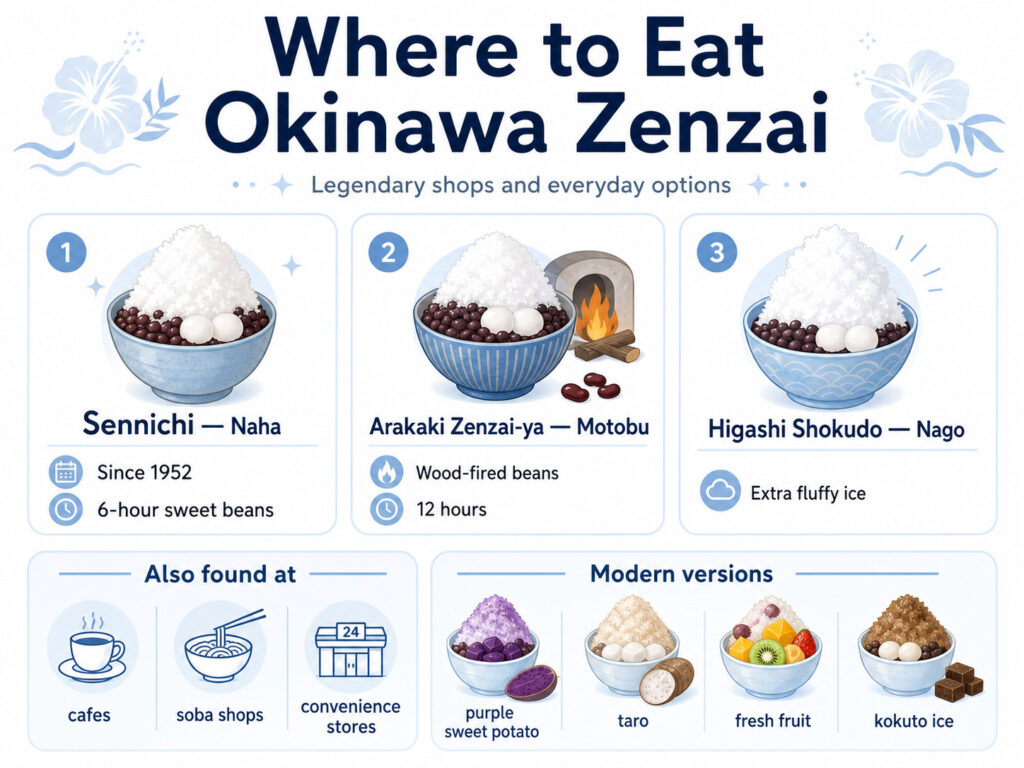
Great bowls await all over the islands, from Naha cafes to countryside stands. A few legendary shops anchor the scene.
Legendary Shops
In Naha, the beloved Sennichi traces back to a small diner opened in 1952. The founders simmered their beans with sugar for six hours, and the family still follows that recipe. Since then, generations of locals have grown up on its towering ice. Up north in Motobu, near the famous aquarium, sits Arakaki Zenzai-ya. Remarkably, this shop cooks its beans over a wood fire for a full twelve hours.
It serves only zenzai, and it closes when the day’s pot runs out. In Nago, Higashi Shokudo is famous for impossibly fluffy ice. Naha’s Fujiya, meanwhile, tops its bowls with kokuto-flavored ice, and its stands appear in supermarkets and even the airport.
Everyday and Modern Versions
You do not need a famous shop to try one, though. Sweet shops, diners, and many Okinawa soba restaurants serve it too. Finishing a hot bowl of noodles with a cold zenzai is a classic local move. Even convenience stores across the islands now sell cup versions with mochi. Meanwhile, modern cafes push further, topping bowls with purple sweet potato, taro, or fresh fruit. On Miyako Island, a local version even uses small black cowpeas instead.
How to Make It at Home
Making a homemade bowl takes patience, but the steps are simple. Above all, everything depends on the beans, so treat them kindly. First, soak dried kintoki beans overnight in plenty of water. Then simmer them gently, skimming foam, until they turn completely tender. Next, add sugar and a good spoonful of kokuto, and cook the beans slowly in the syrup. Rushing this step toughens them, so keep the heat low.
Afterward, chill the beans well in their sweet liquid. To serve, spoon beans and syrup into a bowl, then add boiled shiratama dumplings. Finally, shave ice over everything in a generous, snowy pile. A drizzle of extra syrup or condensed milk finishes it beautifully.
Is Okinawa Zenzai Nutritious?
Zenzai is a treat first, yet its two stars carry real nutrition. Kidney beans and kokuto both bring more to the bowl than sweetness alone. Kintoki beans are genuinely nourishing. In fact, they pack plant protein, iron, and among the highest fiber of any bean. That fiber supports digestion, while the iron helps guard against tiredness.
So the beans give this dessert a surprisingly wholesome base. Kokuto adds its own quiet benefits. Unlike white sugar, this black sugar keeps minerals from the sugarcane juice. Specifically, it carries potassium, calcium, and iron, plus traces of B vitamins. By some measures, it holds far more calcium than refined white sugar.
Still, honesty matters here. A bowl is sweet, so it is a treat rather than a health food. Enjoyed now and then, though, it is a treat with a little goodness inside.
Final Thoughts
Okinawa zenzai is more than a clever way to beat the heat. Rather, it is a small edible history of the islands. The kokuto speaks of Okinawa’s sugarcane fields. Meanwhile, the kidney beans recall the hard, inventive postwar years.
The mountain of ice celebrates the simple joy of staying cool in the subtropics. Somehow, all of that hides inside one humble, inexpensive bowl. If you visit the islands, seek one out between beaches and museums. Better yet, follow the locals: hot noodles first, cold zenzai after. One spoonful of that snowy, bean-sweet magic explains everything.
Okinawa Zenzai FAQ
What is Okinawa zenzai?
Okinawa zenzai is a cold dessert from Okinawa. Sweet simmered kintoki beans sit under a pile of shaved ice. Shops often add mochi or shiratama dumplings. It is a summer favorite across the islands.
How is it different from mainland zenzai?
Mainland zenzai is a hot azuki bean soup with mochi. The Okinawan version is ice cold. It uses big kintoki beans instead of azuki. Shaved ice replaces the warm soup.
What beans are used?
Shops use kintoki beans, a type of red kidney bean. Many are imported, a habit dating to the postwar years. Their thick skins survive long simmering. The result is a plump, chewy texture.
What does Okinawa zenzai taste like?
It tastes gently sweet and very refreshing. The beans are soft and rich, like chestnuts. The ice is light and melts instantly. Kokuto syrup adds a deep caramel note.
Why is it served cold?
Okinawa has a hot, subtropical climate. A cold bean dessert suits the islands far better than a hot soup. Shaved ice became common as refrigeration spread after the war. The style stuck and became the local standard.
Is Okinawa zenzai eaten in winter?
Yes, many shops serve it all year. Some also offer a hot version in winter. Locals call that one “hot zenzai.” Still, summer is the true season.
Where can I try it in Naha?
Sennichi is the most famous classic shop in Naha. Its history goes back to a diner opened in 1952. Fujiya is another local favorite with kokuto-flavored ice. Many cafes and diners serve it too.
What is the famous shop near the Churaumi Aquarium?
Arakaki Zenzai-ya in Motobu is the legend there. It simmers beans over a wood fire for twelve hours. The shop sells only zenzai. It closes once the day’s beans run out.
What toppings are common?
Shiratama rice dumplings and mochi are the classics. Some shops add pressed barley for texture. Condensed milk and kokuto syrup are popular pours. Modern cafes add fruit or purple sweet potato.
Can I buy it at a convenience store?
Yes, convenience stores in Okinawa sell cup versions. Many include mochi and sweet beans under the ice. They are a cheap, easy introduction. Freshly shaved shop versions taste better, though.
How do you make it at home?
Soak kintoki beans overnight, then simmer them until tender. Sweeten them slowly with sugar and kokuto. Chill the beans well in their syrup. Serve them under freshly shaved ice with shiratama.
What is kokuto?
Kokuto is Okinawan black sugar made from sugarcane. It has a deep, mineral-rich sweetness. Island cooks use it in many sweets. It gives this dessert its distinctive flavor.
References
- Ryukyu Shimpo, feature on the history of Okinawa zenzai, including researcher Junko Ashitomi of the Ryukyu Cuisine Preservation Association and a century-old newspaper account of iced “kintoki” sweets. (Surveyed: July 2026)
- Okinawa Times, on the roots of the dish, with the histories of Sennichi (founded 1952 as Yafune Shokudo) and Arakaki Zenzai-ya. (Surveyed: July 2026)
- Orion Beer, Orion Story, on amagashi, kintoki beans, and how the shaved-ice style spread. (Surveyed: July 2026)
- Tabirai Okinawa, on Sennichi, its six-hour simmered beans, and its family recipe. (Surveyed: July 2026)
- Standard Tables of Food Composition in Japan (MEXT), nutritional data for kidney beans (Phaseolus vulgaris), including fiber, protein, and iron. (Surveyed: July 2026)
- Japan Bean Association (Nihon Mamerui Kyokai), nutritional composition of beans, including kidney beans. (Surveyed: July 2026)
- Ryukyu Kokuto Co., on the nutritional profile of Okinawan kokuto brown sugar, including potassium and calcium. (Surveyed: July 2026)
Related Articles
- Zenzai (Mainland Sweet Red Bean Soup) (Surveyed: July 2026)
- Oshiruko (Sweet Red Bean Soup) (Surveyed: July 2026)
- Okinawa Soba (Surveyed: July 2026)
- Soki Soba (Surveyed: July 2026)
- Japanese Snacks Guide: Wagashi, Dagashi and Traditional Sweets (Surveyed: July 2026)




Comments