



Tap a pale bar against the corner of a table, and it breaks with a clean crack. That small ritual introduces Amegata (あめがた), a pulled malt candy associated with Saga Prefecture in Kyushu. Its mellow sweetness comes from malt syrup rather than granulated sugar. Even the thin starch film around it is edible.
Amegata stands out even in Saga, a region shaped by Japan’s historic Sugar Road. People eat it as a nostalgic snack, use it in some simmered dishes, and traditionally give it around childbirth. This guide explains its ingredients, texture, history, storage, and where to find it.
What Is Amegata?
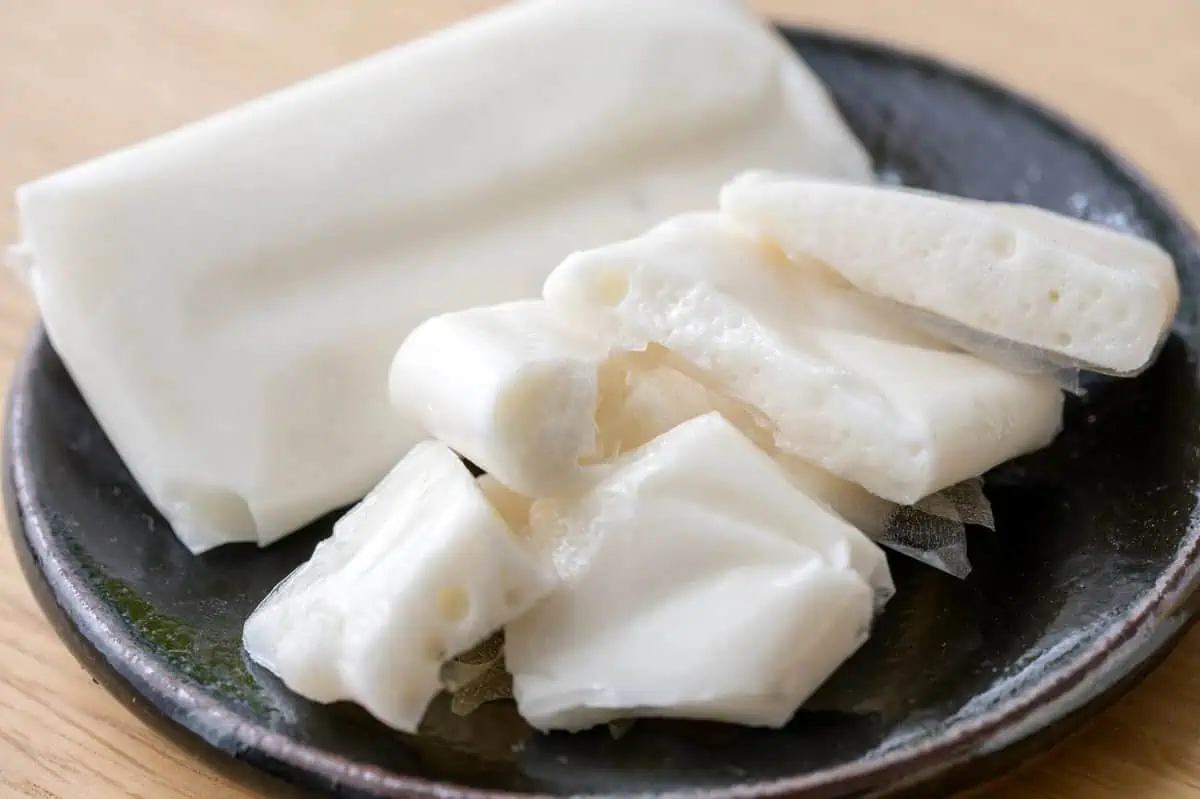
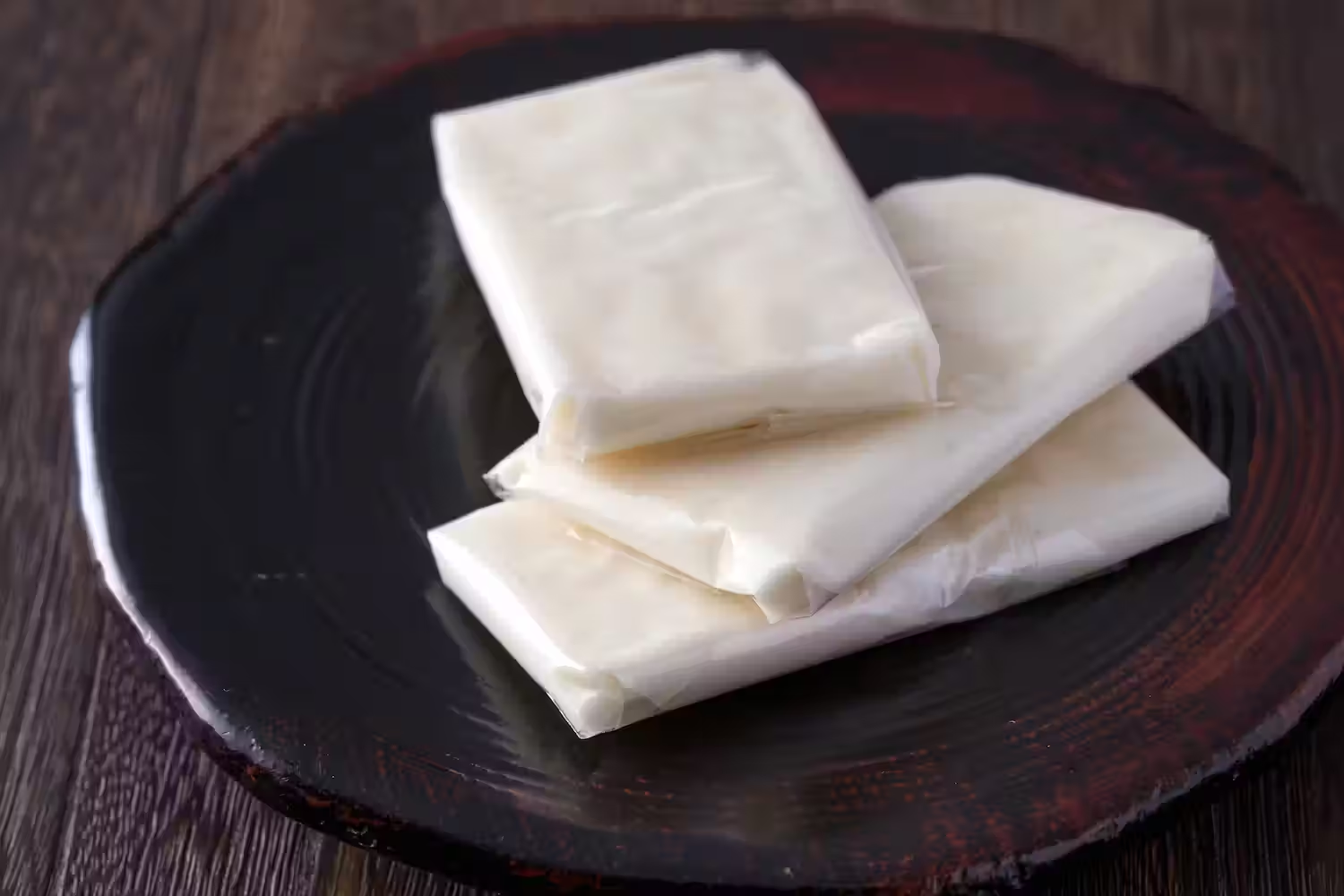
Amegata is a traditional pulled malt candy associated today with Saga Prefecture in Kyushu. First, makers cook malt syrup. Then they stretch it again and again until it turns pale and opaque. They shape it into firm flat bars and wrap each one in edible starch film, called oburāto in Japan.
One point needs care. Tokunaga Ame Sohonpo’s current product does not list granulated sugar as a separate ingredient. However, amegata is not sugar-free, because malt syrup contains sugars such as maltose.
Quick Facts
- Japanese name
- あめがた (also written 飴形 or 飴方); a related local name is のんきい (nonkii), used differently by different sources
- Region
- Saga Prefecture, Kyushu; Saga City and the former post towns of Ureshino
- Ingredients
- Malt syrup (bakuga mizuame) and edible starch film, per Tokunaga Ame Sohonpo’s current label
- Sugar
- No granulated sugar listed as a separate ingredient, but not sugar-free: malt syrup contains maltose
- Size
- About 12 cm × 3.5 cm × 1 cm per bar (same product)
- Shelf life
- 180 days (same product)
- Example price
- ¥540 for a pack of 6 at Tokunaga Ame Sohonpo, checked October 24, 2026
- Uses
- Snack, traditional postpartum gift, and regional cooking sweetener
Product details in this guide refer to Tokunaga Ame Sohonpo’s current six-bar pack. We checked its official page on October 24, 2026. Ingredients, size, shelf life, and storage advice may differ among producers. Cultural and historical claims come from regional media, municipal publications, libraries, and agricultural groups, as noted in each case.
Why Is Amegata White?
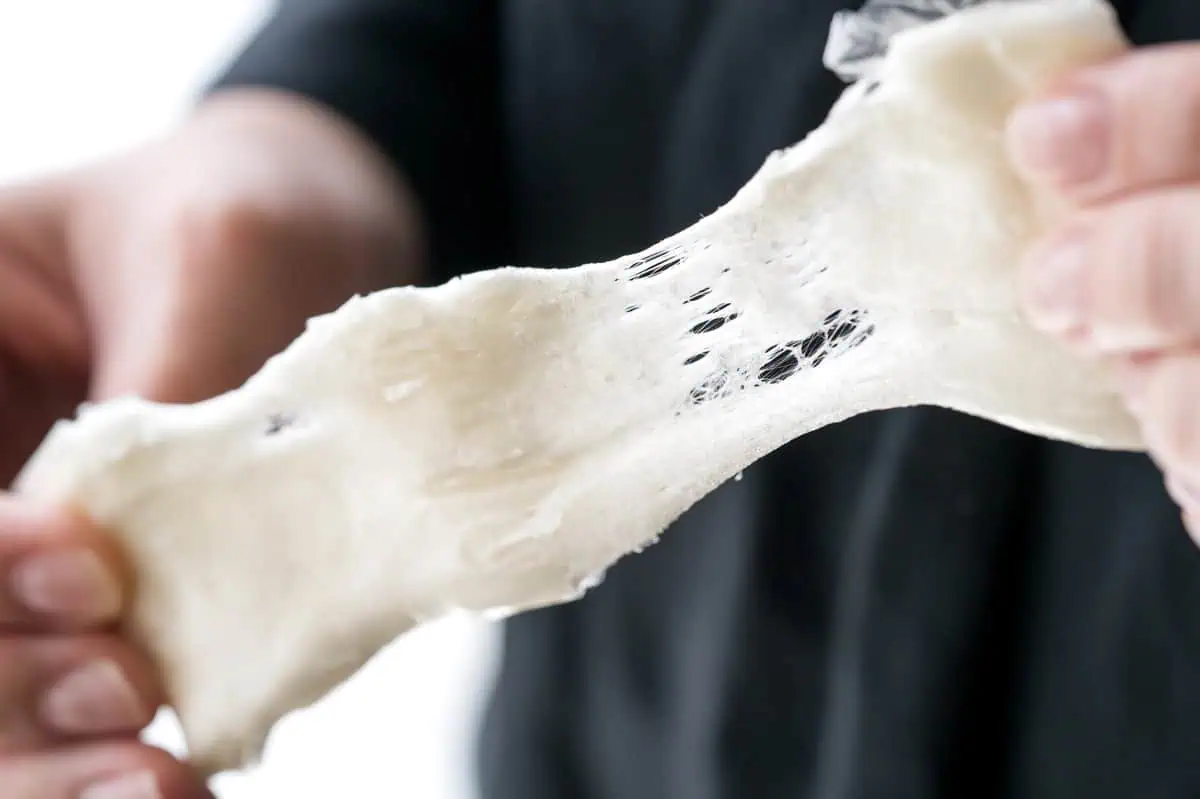
Amegata turns pale and opaque as makers repeatedly pull and fold the warm candy. At first, freshly cooked malt syrup looks amber or brown. Pulling works air into it and likely makes it scatter more light, which is consistent with other pulled candies. Saga’s regional media SAGA MAGA documents the workshop process at Tokunaga Ame Sohonpo. No source here, however, offers a laboratory analysis of the color change.
Where does the sweetness come from? Traditional accounts describe starch from glutinous rice converted into syrup with barley malt. SAGA MAGA says this maker starts with glutinous rice, and Nagasaki City’s cultural magazine gives the same account. However, the current retail label lists only “malt syrup,” so the starch source is not specified there.
From Amber Syrup to a Pale Bar
- 1Saccharify. Enzymes in barley malt turn grain starch into sweet malt syrup.
- 2Cook. The syrup thickens into a dark amber mass.
- 3Pull. Repeated stretching works in air, and the candy turns pale, glossy, and opaque.
- 4Shape and wrap. Flat bars firm up as they rest, then go into edible starch film.
What Does Amegata Taste Like?
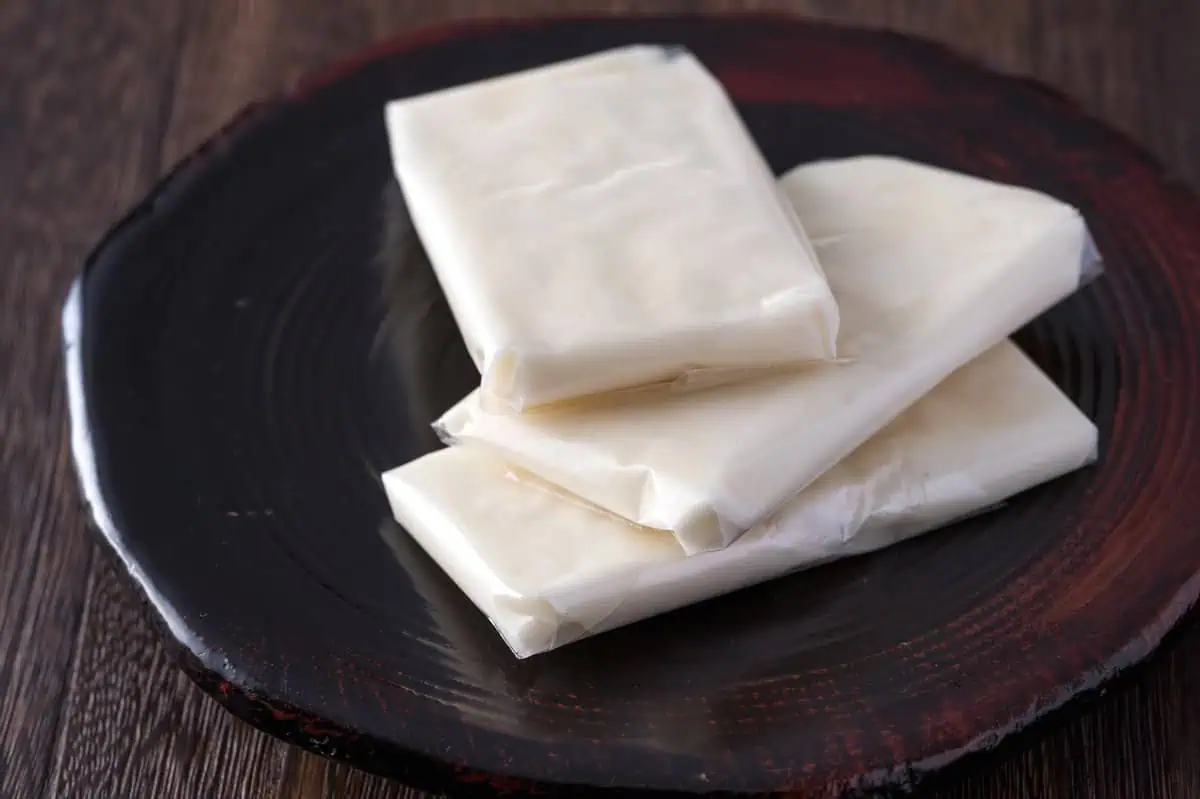
Amegata has a mild, mellow malt-syrup sweetness rather than strong added flavors. SAGA MAGA describes it as mellow and less cloying than sugar when used in cooking. Expect a soft sweetness instead of the sharp hit of many modern candies.
Texture, however, is the memorable part. The bar breaks when cool, hence the table-corner habit. In the mouth, it softens rather than shattering like hard candy. It is also sticky enough that makers wrap it in edible film to keep it off your fingers. Eat that thin wrapper along with the candy.
Compared with sour gummies or fruit drops, amegata tastes restrained rather than intense. Its appeal lies in mellow sweetness, chewy texture, and nostalgic simplicity. In spirit it sits closer to old-fashioned Japanese snacks known as dagashi than to modern confectionery.
The Sugar Road Paradox
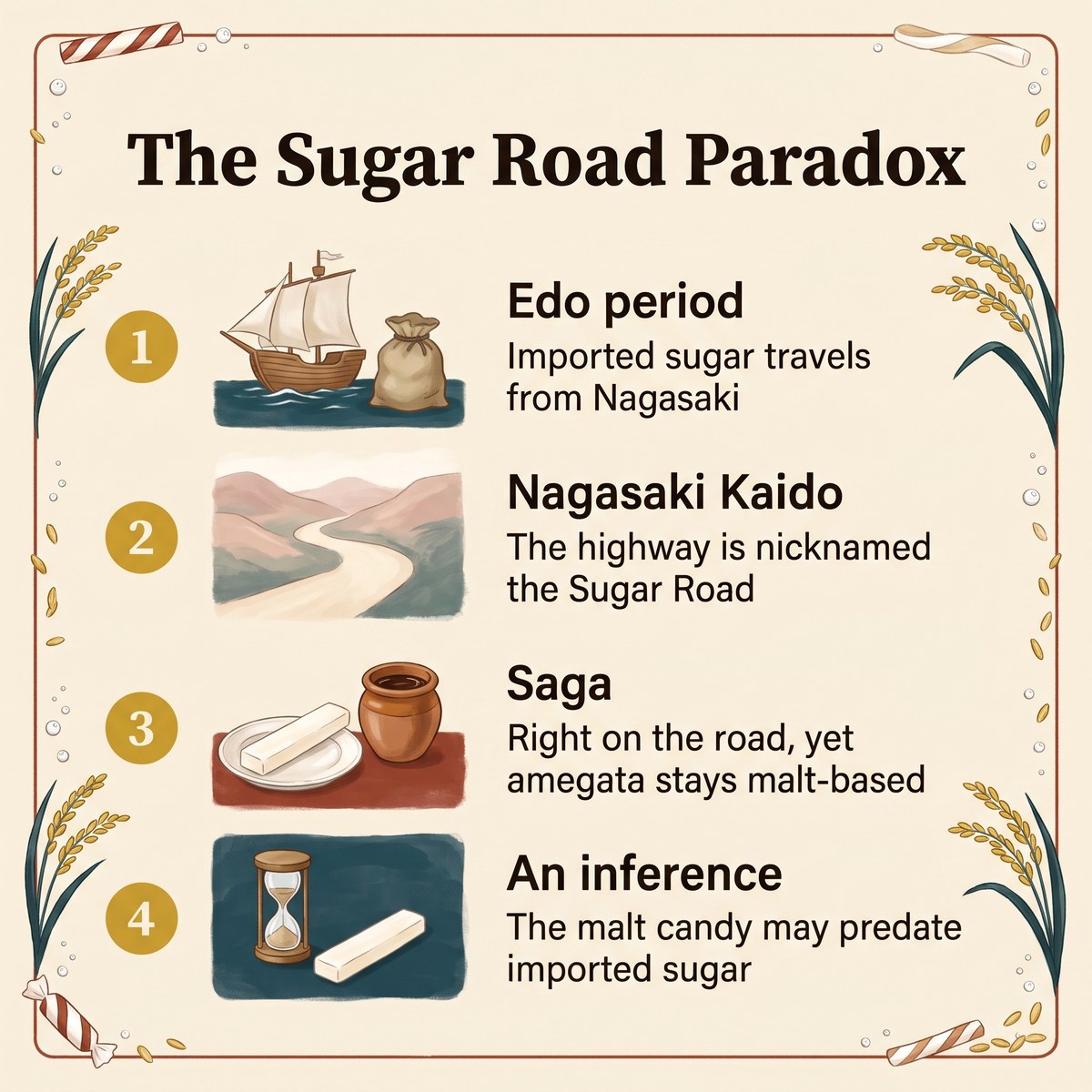
Here is the twist behind the mellow taste. In the Edo period, imported sugar traveled from Nagasaki along the Nagasaki Kaido highway, now nicknamed the Sugar Road. Towns along it became famous for sugary treats, such as Nagasaki’s Castella. Saga lay right on that road.
Even so, amegata kept its malt-based recipe. Nagasaki City’s magazine suggests the rice-and-malt candy tradition may predate the wider spread of imported sugar. That remains an inference rather than a documented fact. Still, it explains why a sugar-town candy relies on malt instead.
Three Ways Saga Uses Amegata
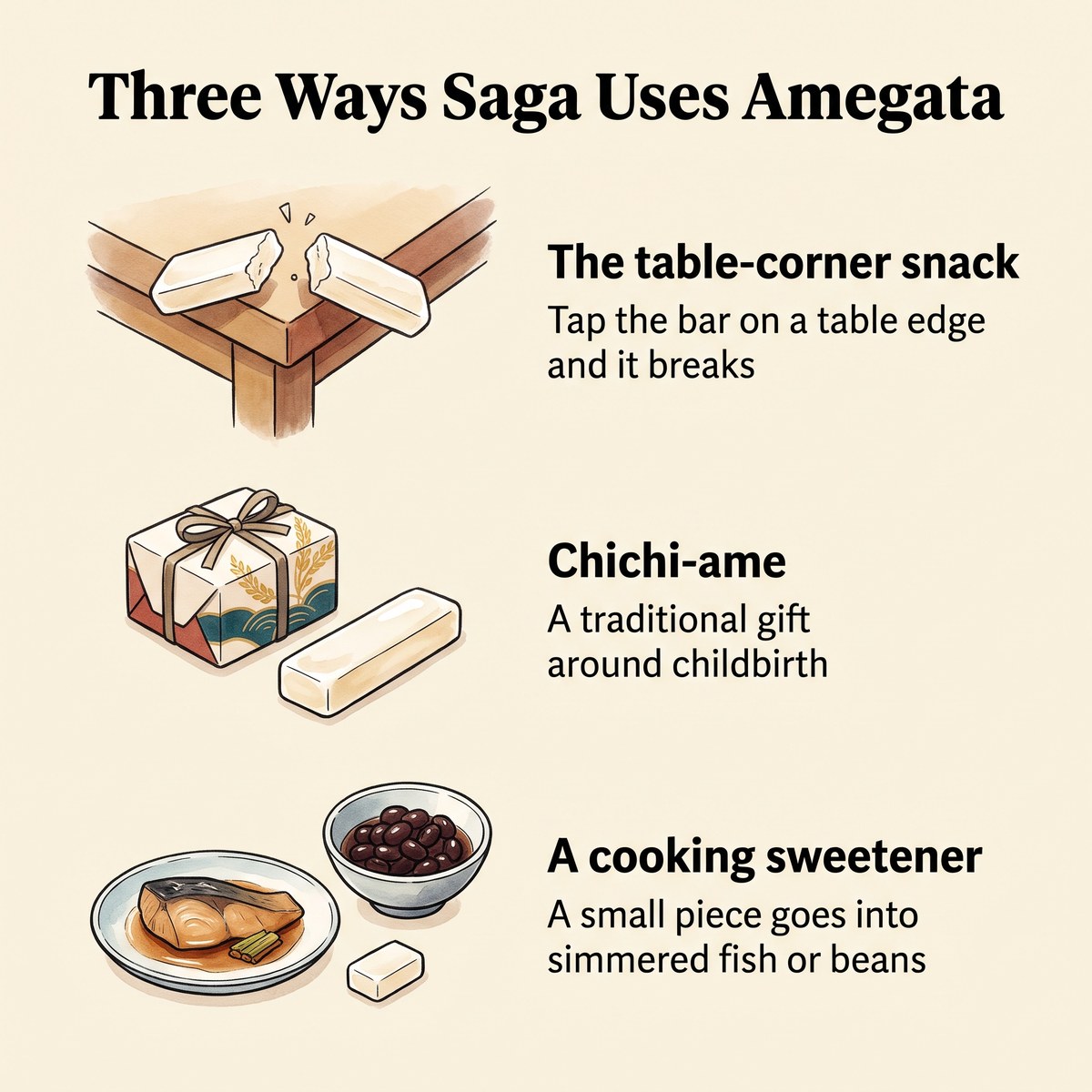
Few candies lead a double life. Amegata leads a triple one. It is a snack, a traditional gift, and a cooking ingredient all at once.
1. The Table-Corner Snack
Each bar is big, roughly 12 centimeters long, so people break it before eating. Tokunaga Ame Sohonpo’s own product page calls the table-corner method a “traditional art” these days. SAGA MAGA ties the sharp crack to childhood memories across Saga. The same report suggests keeping bars in the refrigerator.
2. Chichi-ame: A Gift for New Mothers
In Saga, amegata also goes by the name chichi-ame (乳飴), or “milk candy.” According to Nagasaki City’s magazine, people traditionally gave it around childbirth, believing it supported nursing mothers. SAGA MAGA reports that some families continue the custom today. This is a local tradition, not a medical claim. No source here provides clinical evidence of any effect on milk production.
The custom even appears in folklore. For instance, the Saga Prefectural Library archives a tale called “The Amegata Shop and the Ghost.” In it, a pale woman buys amegata with a single coin for six nights. When she stops coming, the shopkeeper and a priest open a recent grave and find a living baby inside. The library presents this as oral tradition, told by a narrator born in 1925.
3. A Regional Cooking Sweetener
This is the use that surprises visitors most. Tokunaga Ame Sohonpo suggests dropping leftover bars into simmered fish, beans, or seaweed tsukudani. According to the maker, simmering it gently with fish adds gloss and depth. SAGA MAGA likewise mentions simmered dishes, tsukudani, and even jam.
Regional recipes also back this up. Two JA women’s groups in Saga publish recipes for funankogui. That dish is crucian carp wrapped in kelp and simmered for a day or two. Both recipes include amegata “to taste” alongside other sweeteners, although the specific sugars differ between them. Japan’s agriculture ministry records funankogui as a festive dish from Kashima City. Families prepare it for Hatsuka Shogatsu on January 20 and eat it at local autumn festivals.
Good to know
The ministry’s own funankogui recipe uses brown sugar, white sugar, and liquid syrup, with no amegata. So amegata is a regional option in this dish, not a required ingredient. The JA recipes leave the quantity to the cook, and no published ratio replaces sugar gram for gram.
Amegata vs Mizuame vs Hard Candy
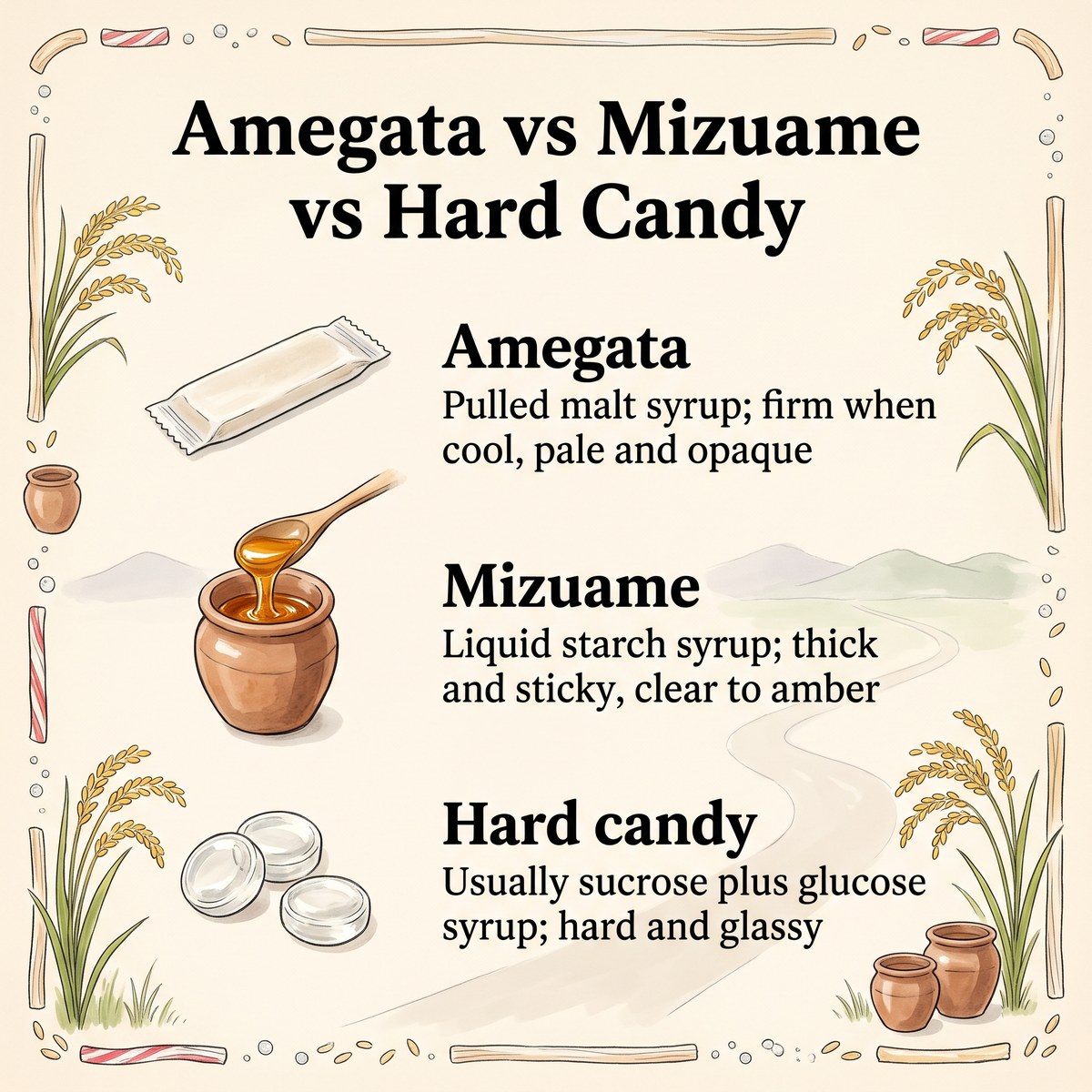
Japanese sweets include several malt-based products, and the names can blur together. This table separates amegata from its closest relatives.
| Point | Amegata | Mizuame (liquid syrup) | Sucrose-based hard candy |
|---|---|---|---|
| Base ingredient | Pulled malt syrup (in the documented Saga product) | Liquid starch syrup | Usually sucrose plus glucose syrup |
| Texture | Firm when cool; softens in the mouth | Thick and sticky | Hard and glassy |
| Appearance | Pale and opaque after pulling | Clear to amber | Clear, colored, or opaque |
| Main use | Snack and regional cooking sweetener | Confectionery and glazing | Primarily eaten as candy |
| Regional association | Strongly tied to Saga today | Used throughout Japan | Made throughout Japan and worldwide |
Konpeito offers another useful contrast. Those tiny sugar stars belong to the sugar-based tradition that imported sugar made possible. Our Konpeito guide tells that story. Chitose ame, another long, pulled candy, also invites comparison. Their ingredients and regional traditions, though, are not necessarily the same.
Nonkii and Other Variations
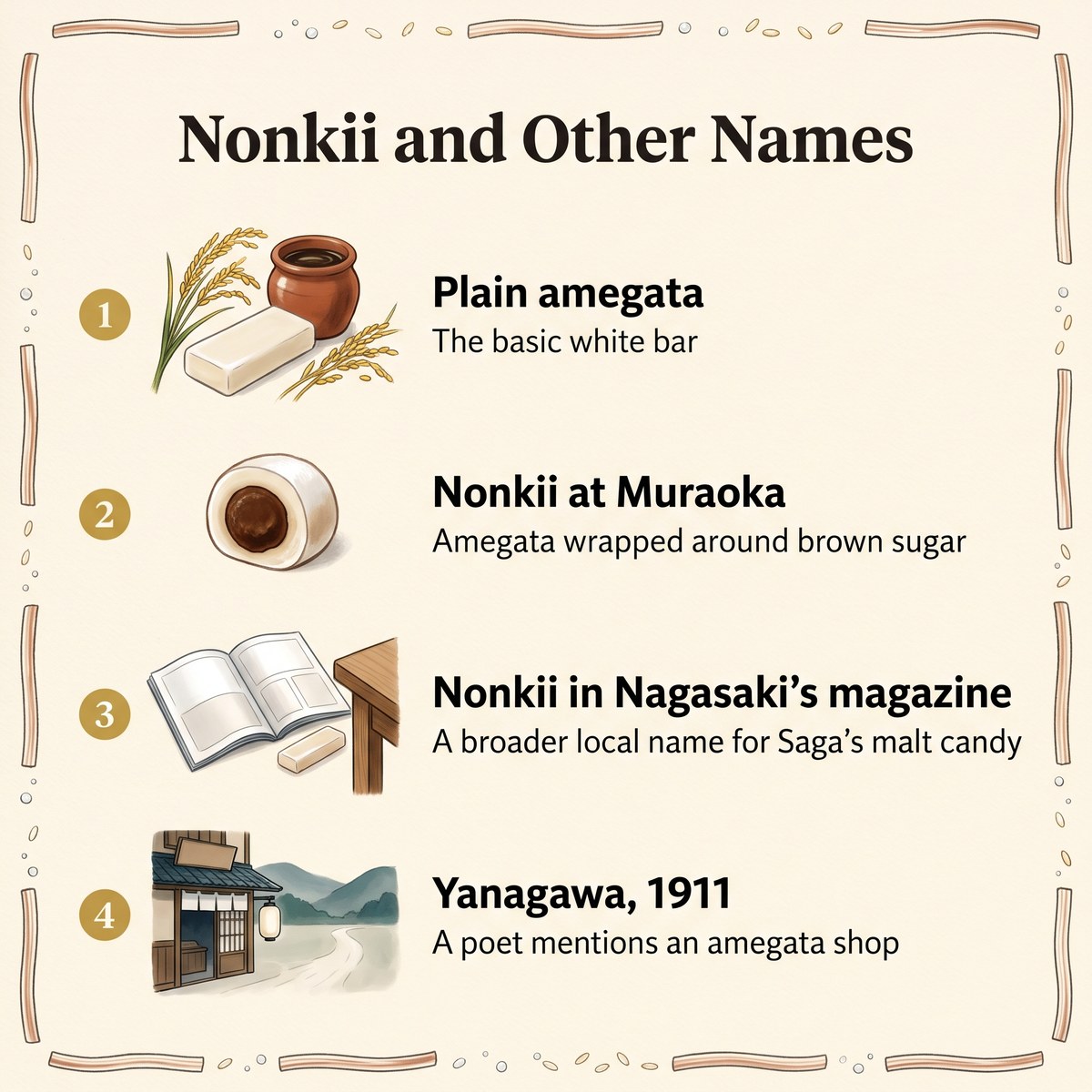
Plain white amegata is the basic form, of course. Saga also uses the name nonkii (のんきい), though sources apply it differently. A 2012 newsletter from Muraoka Sohonpo, a Saga confectioner, describes nonkii as amegata wrapped around brown sugar. Makers slice it so the dark core shows, like Kintaro candy. Nagasaki City’s magazine, by contrast, uses nonkii as a broader local name for Saga’s malt candy.
The name’s origin is uncertain. Nagasaki City’s magazine points to Honcho Shokkan, a food encyclopedia from the Genroku era in the late 1600s. That text describes long white candy cut with a chisel, called “nomikiri.” The magazine suggests this might be the root of nonkii. Yet it stops short of certainty. Muraoka’s newsletter uses the same cautious wording.
Beyond Saga, a similar word once lived across the Ariake Sea. In 1911, poet Kitahara Hakushu mentioned an “amegata shop” in his memoir of Yanagawa, in today’s Fukuoka Prefecture. He glossed amegata as a candy particular to Yanagawa. Whether the two traditions were one is a question for future research.
Where to Buy Amegata in Saga and Online
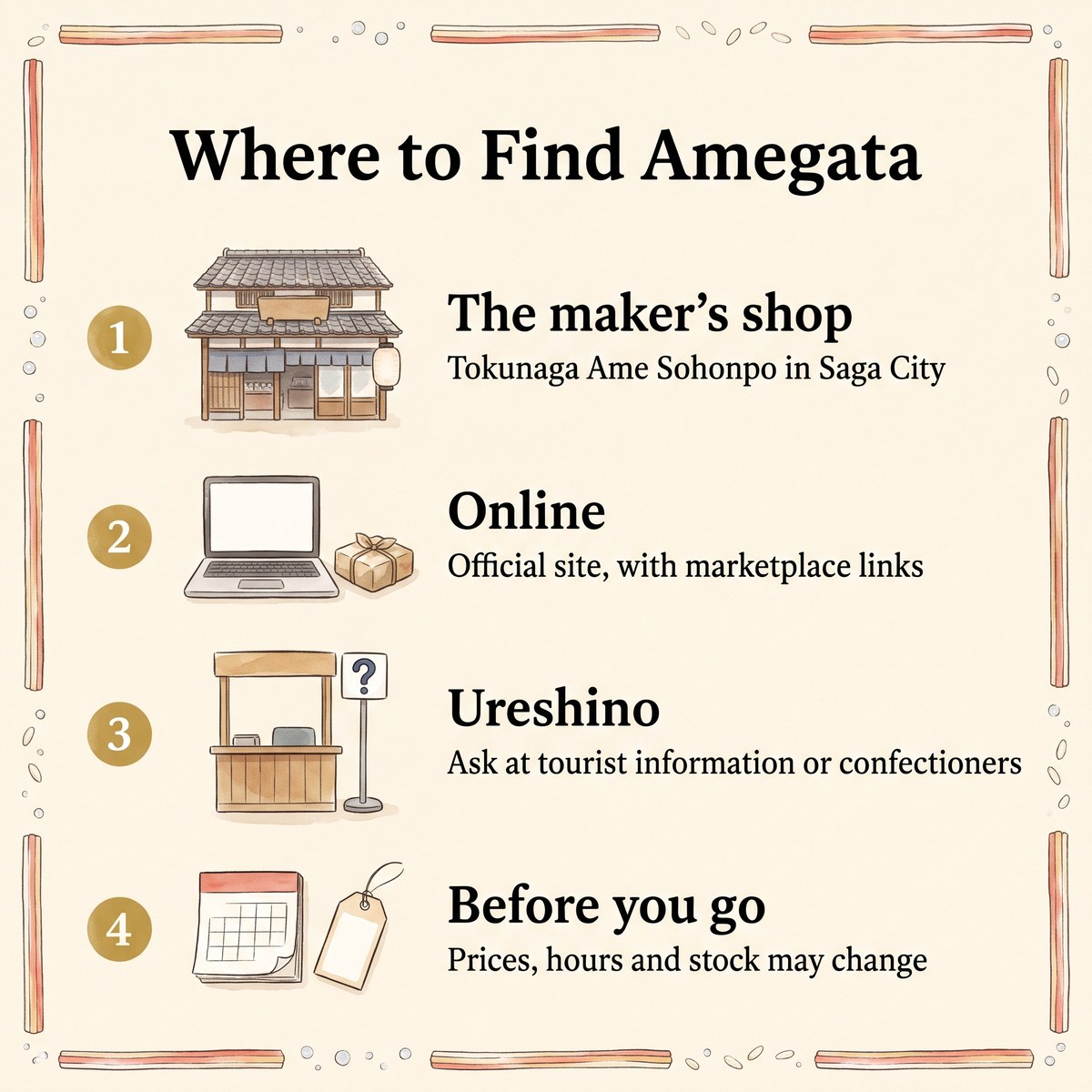
The best-documented maker is Tokunaga Ame Sohonpo in Kinryu, Saga City. According to SAGA MAGA, the shop claims more than 200 years of history. Its recipe, it says, dates from the late Edo period. In addition, the report features eighth-generation craftsman Teruumi Eguchi as the maker at its workshop. The shop takes orders through its official site and links to marketplace listings.
Tokunaga Ame Sohonpo (元祖 徳永飴総本舗)
- Address
- 1865-1 Yakushimaru, Kinryu-machi, Saga City, Saga Prefecture
- Product
- Amegata, 6 bars, ¥540 including tax (official site, October 24, 2026)
- Also sells
- Candy balls, liquid mizuame, chitose ame, and other local sweets
- Online
- Orders via the official site, with links to Amazon and Yahoo! Shopping listings; check shipping destinations at checkout
- Note
- Opening hours and closing days were not listed on the product page. Check the official site before visiting.
Saga City is not the only place, though. The official Sugar Road site lists amegata among the traditional sweets still handmade by old confectioners in Ureshino. That city held two post towns on the Nagasaki Kaido, Shiota and Ureshino. If you visit Ureshino for its hot springs, ask the tourist information desk or established confectioners whether amegata is available.
In short, your options are the maker’s shop, its online store, and a search in Ureshino. Prices, hours, and stock change, so confirm details with each shop. The sources here do not confirm overseas shipping or shops outside Saga.
How to Eat and Store Amegata
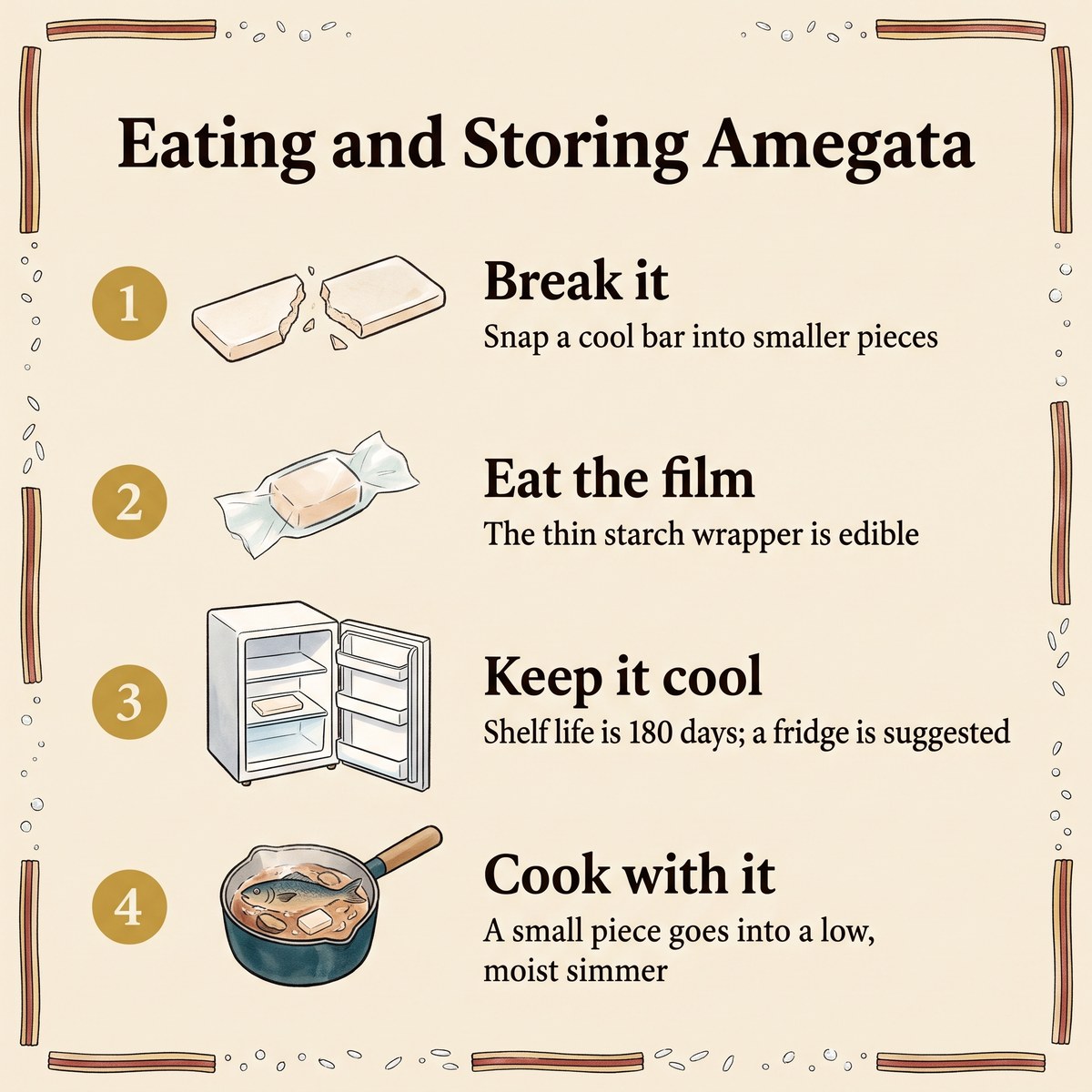
Break a cool bar into smaller pieces and eat the starch film with it. For storage, Tokunaga Ame Sohonpo’s product page lists a shelf life of 180 days. SAGA MAGA, meanwhile, suggests keeping bars in the refrigerator. Since heat softens the candy, a cool bag helps during summer travel. If the package gives different instructions, follow those.
For cooking, break off a small piece so it dissolves evenly in a moist, low simmer. Regional recipes, for example, use amegata alongside other sweeteners and leave the amount “to taste.” So treat it as one sweetener among several, not a gram-for-gram substitute for sugar.
Is Amegata Gluten-Free or Vegan?
Sources confirm neither. The ingredient name “malt syrup” alone does not reveal the finished product’s gluten level. So people with celiac disease, wheat allergy, or barley allergy should ask the maker directly. Useful questions cover gluten testing, barley-derived ingredients, and cross-contact. The product page publishes no such details, and no vegan certification appears either. The wrapper is edible starch film that keeps sticky candy off fingers and packaging. One manufacturer documented by the agriculture agency ALIC makes such film from potato starch with a little oil and emulsifier. This product’s maker, however, has not published its wrapper’s composition.
Does this contain wheat or barley?
小麦や大麦は入っていますか。
Komugi ya oomugi wa haitte imasu ka?
Is the wrapper edible?
この包みは食べられますか。
Kono tsutsumi wa taberaremasu ka?
Conclusion: A Malt Candy on the Sugar Road
Amegata rewards a second look. It is a malt candy on a road built by sugar. It also serves as a traditional gift around childbirth and a regional cooking sweetener. Pulling turns brown syrup into a pale bar, with no coloring needed.
If you pass through Saga, pick up a pack. Break one against a table edge. Then save a small piece to try in a low simmer with fish or beans. For more from the prefecture, see our guides to Saga Beef and Yobuko Ika. Or browse the wider world of wagashi.
Frequently Asked Questions about Amegata
Eating and Buying
- Can you eat the clear wrapper around amegata?
-
Yes. The thin film is an edible sheet made primarily from starch, not plastic. Confectioners use it so sticky candy does not cling to fingers or packaging.
- Is amegata sugar-free?
-
No. The documented product lists malt syrup rather than granulated sugar, but malt syrup contains sugars such as maltose. Do not assume amegata is sugar-free or low in carbohydrates.
- Can you buy amegata online?
-
Yes. Tokunaga Ame Sohonpo accepts orders through its official website and links to Amazon and Yahoo! Shopping listings. Check shipping destinations and stock at checkout. The sources here do not confirm overseas shipping.
Cooking and Culture
- How do you cook with amegata?
-
Break off a small piece and add it to a low, moist simmer with fish, beans, or seaweed tsukudani. Regional recipes use it “to taste” alongside other sweeteners, so start small.
- What is the difference between amegata and nonkii?
-
Sources differ. A Saga confectioner describes nonkii as amegata wrapped around brown sugar. Nagasaki City’s magazine, however, uses it as a general local name for Saga’s malt candy. Ask the shop which version it sells.
- Is amegata only found in Saga?
-
Today the documented makers sit in Saga City and Ureshino. A 1911 memoir by poet Kitahara Hakushu also mentions an amegata shop in Yanagawa, Fukuoka. So the name once traveled around the Ariake Sea. Whether shops outside Saga sell it today remains unconfirmed.
References
- Tokunaga Ame Sohonpo – Amegata (6 bars) Product Page (Accessed October 2026)
- SAGA MAGA – Sweet Without Sugar? The Story of Amegata (Accessed October 2026)
- Nagasaki City Official Web Magazine “Nagazine” – The Sugar Road from Nagasaki, section ② Amegata (Accessed October 2026)
- Nagasaki Kaido Sugar Road (Sugar Road Liaison Council) – Ureshino City (Accessed October 2026)
- JA Group – Funankogui Recipe by JA Saga Sajo Women’s Division (Accessed October 2026)
- JA Group – Funankogui Recipe by Midori District Women’s Division (Accessed October 2026)
- Ministry of Agriculture, Forestry and Fisheries (MAFF) – Our Regional Cuisines: Funankogui, Saga Prefecture (Accessed October 2026)
- Saga Prefectural Library – Folktales of Saga, No. 3: The Amegata Shop and the Ghost (Accessed October 2026)
- Muraoka Sohonpo – Newsletter No. 134, Chitose Ame Feature (November 2012) (Accessed October 2026)
- Aozora Bunko – Kitahara Hakushu, Omoide (1911), “Waga Oitachi” (Accessed October 2026)
- Agriculture and Livestock Industries Corporation (ALIC) – Oblate Production Using Hokkaido Potato Starch (August 2011) (Accessed October 2026)
Related Articles
- Konpeito (金平糖) (Surveyed: October 2026)
- Chitose ame (千歳飴) (Surveyed: October 2026)
- Castella (カステラ) (Surveyed: October 2026)
- Tsukudani (佃煮) (Surveyed: October 2026)
- Dagashi (駄菓子) (Surveyed: October 2026)
- Wagashi (和菓子) (Surveyed: October 2026)
- Saga Beef (佐賀牛) (Surveyed: October 2026)
- Yobuko Ika (呼子イカ) (Surveyed: October 2026)
Photo credit: ©Saga Prefectural Cultural Tourism Federation (写真提供:佐賀県文化観光連盟)




Comments