





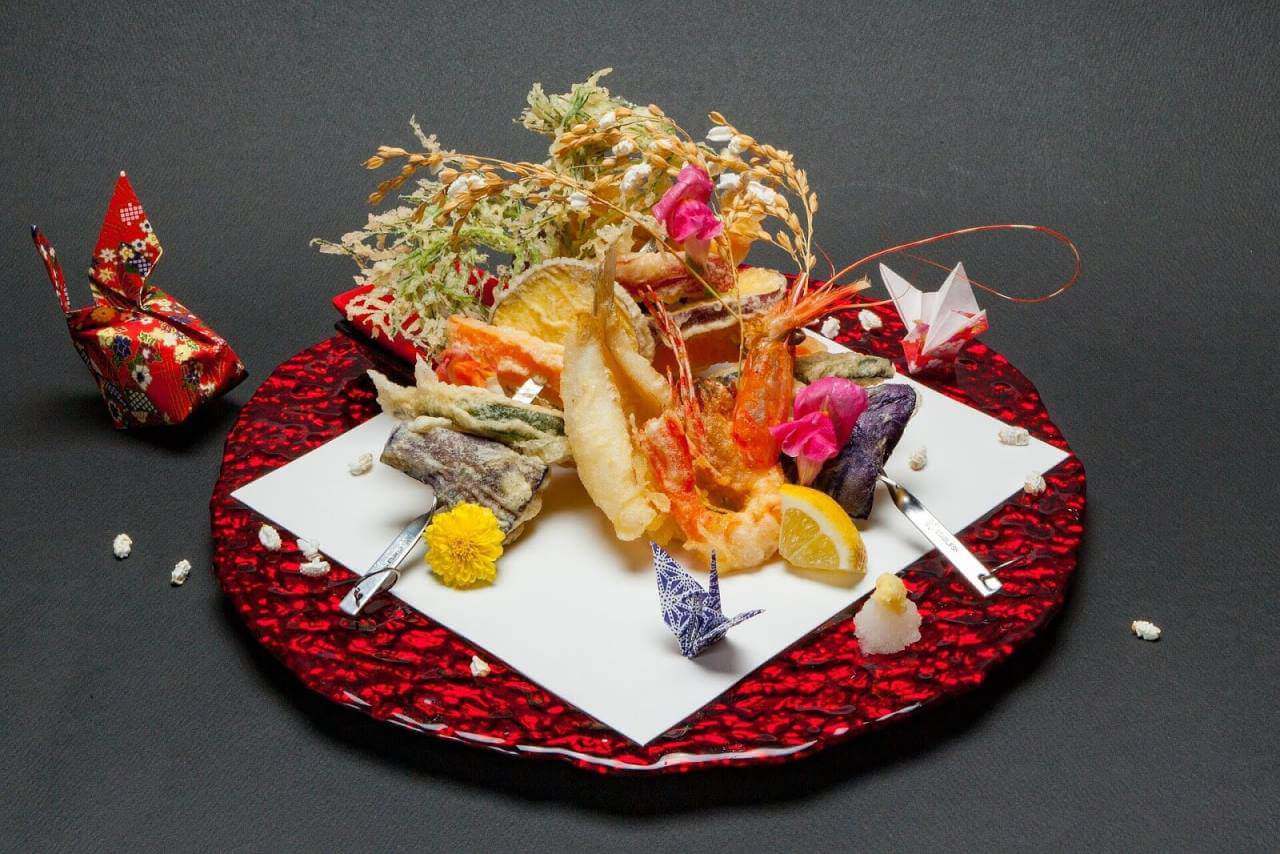
Tempura is a Japanese dish of seafood or vegetables coated in a thin, cold batter and briefly deep-fried. Edo-style tempura developed in Tokyo from battered-frying techniques associated with Portuguese influence in Nagasaki. It remains one of the city’s signature foods today. This guide explains its origins and main types. It also covers a simple home recipe, how to eat it, and where to try it around Tokyo.
Tempura at Glance
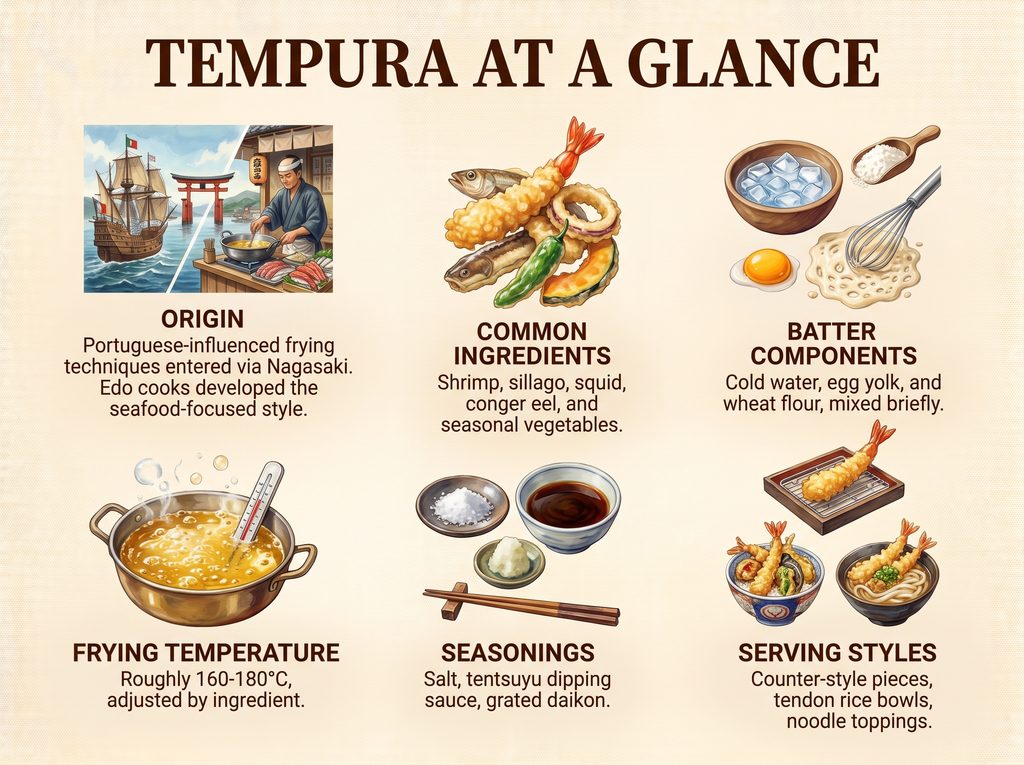
- Origin: Portuguese-influenced frying techniques entered Japan through Nagasaki; Edo cooks later developed the seafood-focused style now known as Edo-style tempura
- Common ingredients: Shrimp, sillago, squid, conger eel, and seasonal vegetables
- Batter components: Cold water, egg yolk, and wheat flour, mixed briefly
- Frying temperature: Roughly 160-180°C, adjusted by ingredient
- Seasonings: Salt, tentsuyu dipping sauce, grated daikon
- Serving styles: Counter-style pieces, tendon rice bowls, noodle toppings
What Is Tempura?
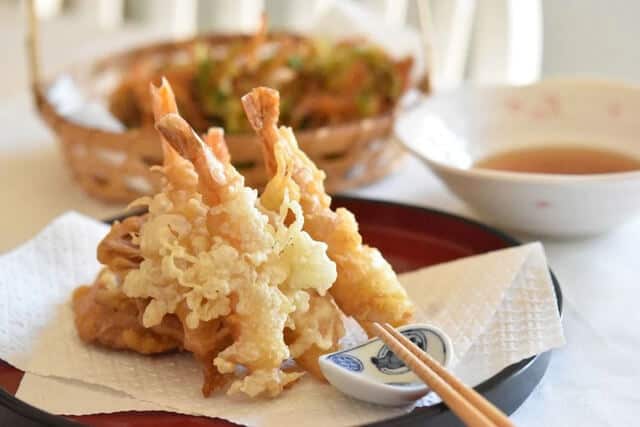
What distinguishes the dish is its thin batter and short frying time. Unlike breadcrumb-coated furai, the coating stays delicate enough to highlight the ingredient underneath. Restaurants serve tempura as a main dish or a side dish. It also appears as a topping for rice, udon, and soba.
Tempura terminology can describe either a regional tradition or a serving format. Edo-style refers to the seafood-focused tempura tradition associated with Tokyo, while terms such as kakiage and tendon describe a shape or a way of serving the dish rather than a region. Specialty counters in Tokyo fry each piece to order, while casual chains sell it as a quick tendon bowl.
Tempura History
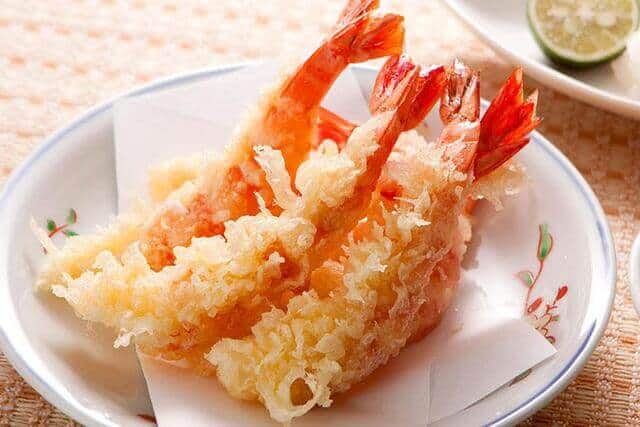
Portuguese-influenced battered-frying techniques entered Japan through Nagasaki during the era of Nanban trade. Japanese cooks in Nagasaki adapted the technique into the regional dish now known as Nagasaki tempura. Modern versions use a relatively thick, seasoned batter. The published recipe from Japan’s Ministry of Agriculture, Forestry and Fisheries lists flour, potato starch, sugar, salt, light soy sauce, egg, sake, and water. Cooks generally serve it without a separate dipping sauce, and it may be eaten hot or cold.
The name’s exact origin remains uncertain. The same ministry page on Nagasaki tempura presents two competing theories, both drawn from Portuguese vocabulary. One links the name to “tempero,” a word for seasoning. The other points to “temporas,” referring to religious fasting periods. Neither is treated as confirmed.
During the Edo period, cooks in Edo transformed battered frying into a lighter dish suited to the city’s seafood supply and street-stall culture. According to the Ministry of Agriculture, Forestry and Fisheries, large-scale frying became more practical as edible-oil production increased during this period. The dish then spread through Edo’s street-stall dining culture. Cooking with large quantities of oil also posed a fire risk in densely built Edo, and this risk influenced where frying businesses could operate in the city. Edo-style tempura came to emphasize fresh Edo Bay seafood, sesame oil, and food served immediately after frying.
An early Edo-period text titled “Shokudoki” contains the name “tenpura.” The National Diet Library’s catalog lists the surviving edition’s publication year as unknown. This record, in other words, does not establish a precise first-use date. The surviving documentary record therefore does not identify one uncontested starting point for the modern dish.
The Ministry of Agriculture, Forestry and Fisheries also traces a later shift. Tempura developed from a fast, everyday food into a refined dish served at ryotei and specialty restaurants from the Meiji era onward. After the 1923 Great Kanto earthquake, displaced Tokyo craftsmen relocated across the country. They carried Edo-style tempura with them, helping it spread nationwide.
Types of Tempura
Edo-Style Tempura
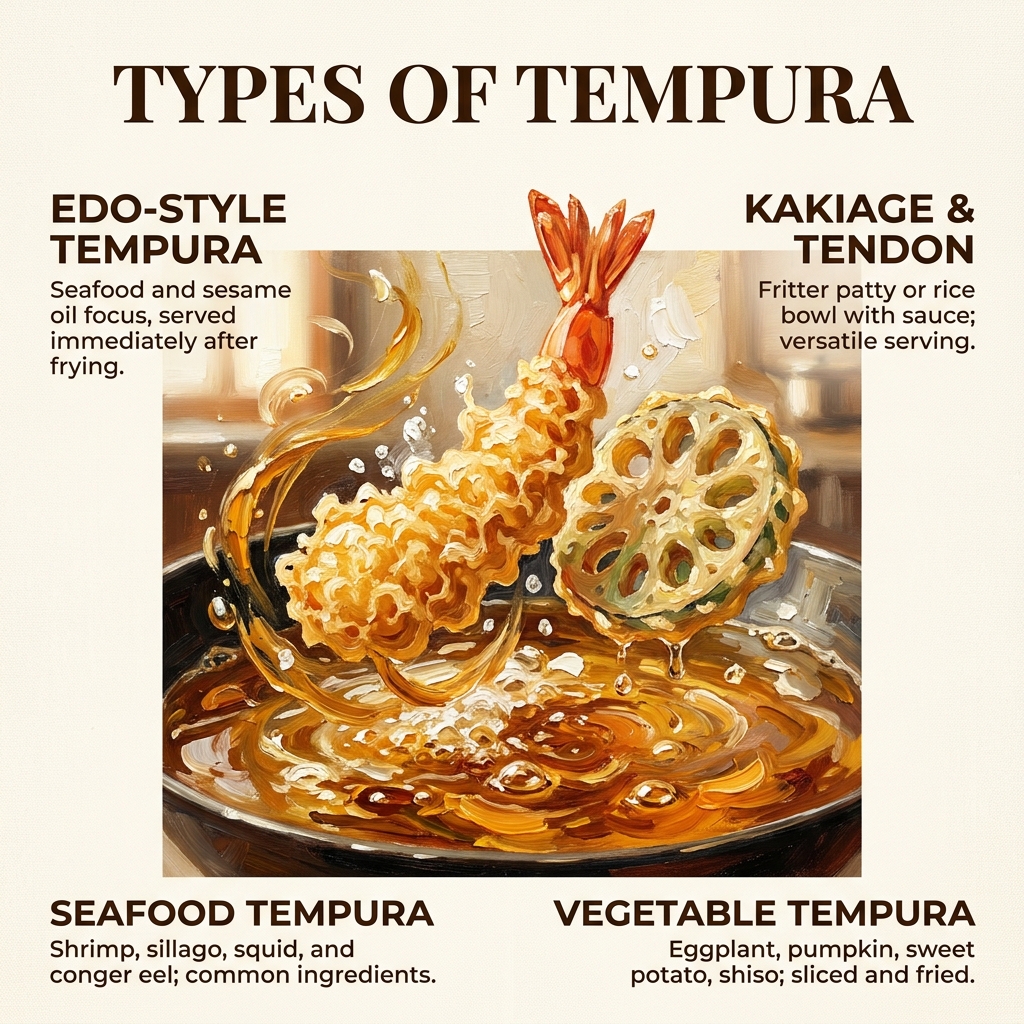
Edo-style tempura traditionally emphasizes seafood, sesame oil, and pieces served immediately after frying. Common ingredients include shrimp, sillago, squid, conger eel, goby, scallop, and young sweetfish. Modern restaurants vary in their oil blends, batter formulas, ingredients, and preferred seasonings, so treat this as a general description rather than a fixed recipe followed by every shop.
Kakiage and Tendon: Shapes and Serving Formats
Kakiage is a fritter shape. Cooks mix julienned vegetables and small seafood into the batter, then fry the mixture into a single patty. Restaurants serve kakiage as an appetizer, a side dish, or a topping for rice and noodles. Tendon is a serving format rather than a style of cooking. Chefs drizzle a sweet-savory sauce over freshly fried tempura and serve it on rice. No extra seasoning is needed at the table.
Seafood and Vegetables
- Ebi (shrimp) tempura – one of the most widely available seafood choices
- Sakana (fish) tempura – made with small fish, opened fish, or fillets such as sillago (kisu), conger eel (anago), goby (megochi), and young sweetfish (wakaayu)
- Ika (squid) and hotate (scallop) – both listed by Japan’s agriculture ministry among Edo-style tempura’s main seafood ingredients
- Nasu (eggplant) – sliced into rounds, halves, or a fan shape before frying
- Kabocha (pumpkin) – thin wedges, skin left on, sweet and starchy
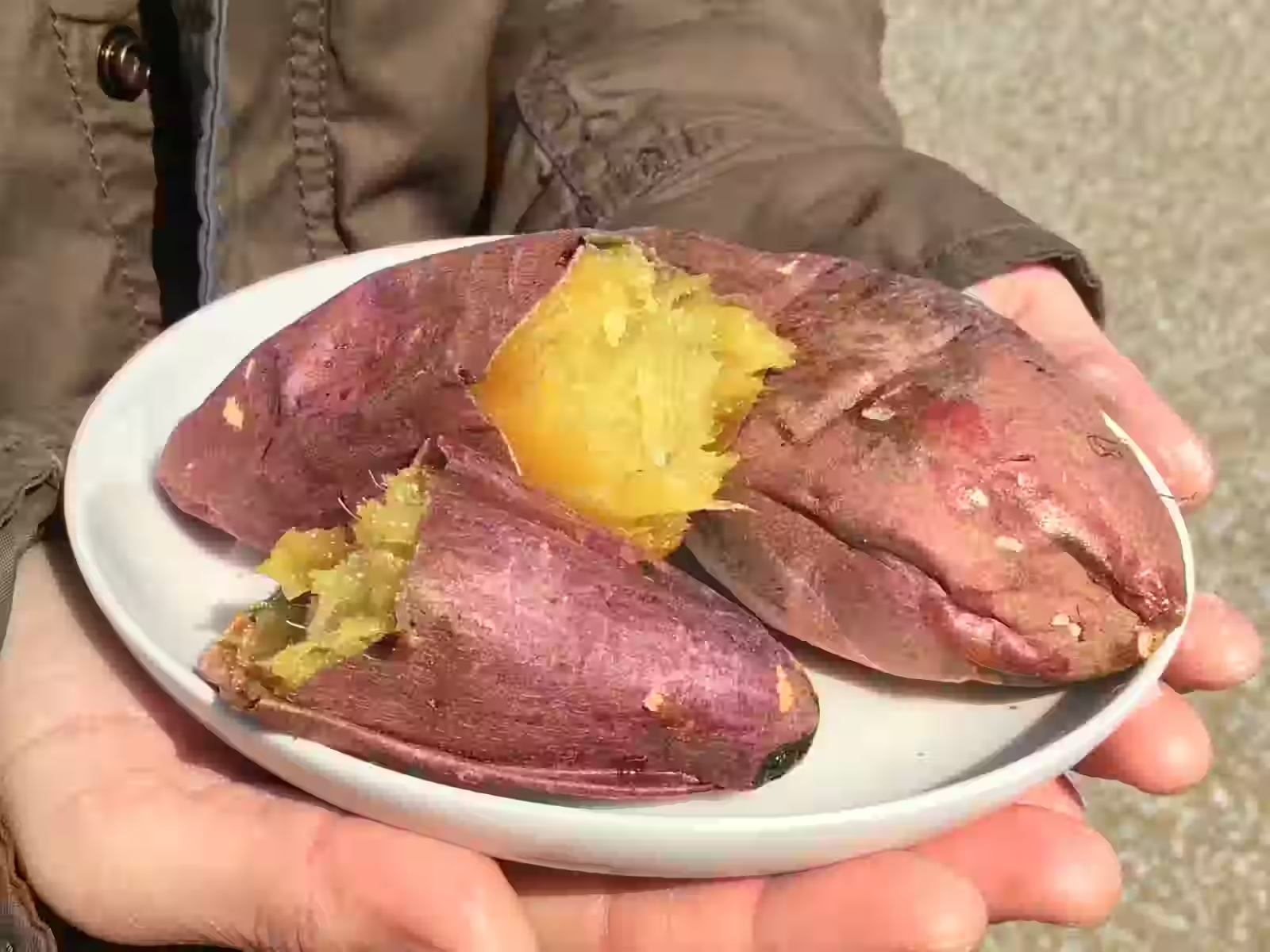
- Satsumaimo (sweet potato) – commonly cut into thin slices for quick frying, although some specialist restaurants use much thicker pieces and cook them slowly
Examples You May Encounter by Season
| Season | Examples You May Encounter |
|---|---|
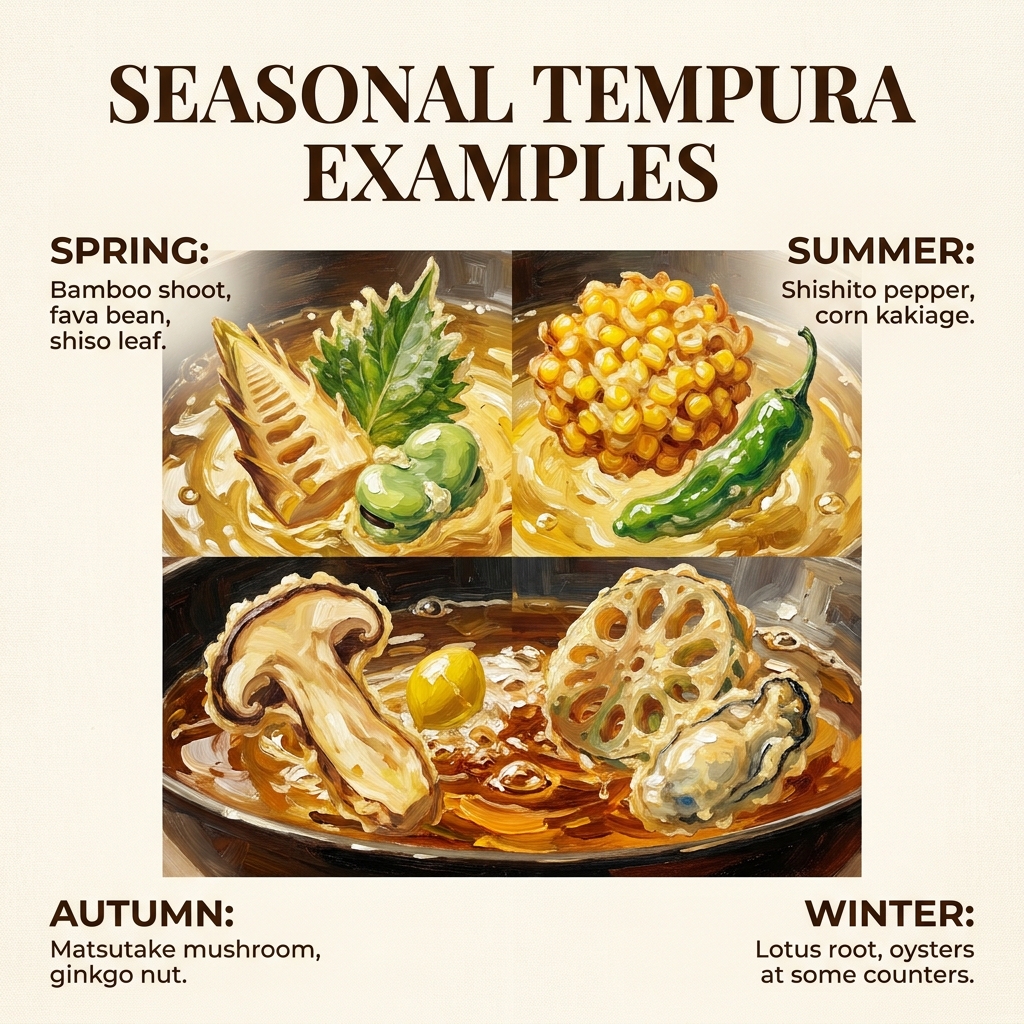
| Spring | Bamboo shoot, fava bean, shiso leaf |
| Summer | Shishito pepper, corn kakiage |
| Autumn | Matsutake mushroom, ginkgo nut |
| Winter | Lotus root, oysters at some counters |
These are examples found on seasonal menus, not fixed calendar rules. Availability varies by region, weather, market supply, and each restaurant’s own sourcing.
How to Make Tempura
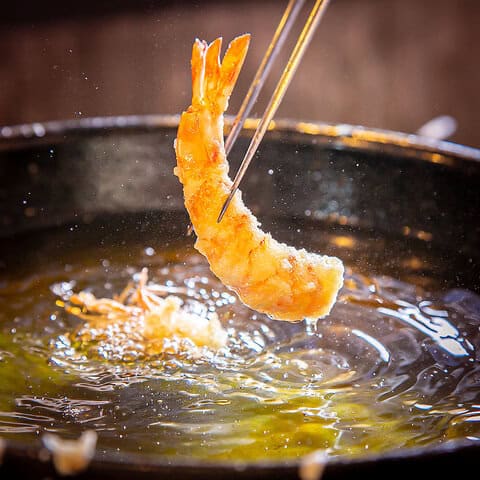
This small-batch recipe is adapted from the Tokyo tempura recipe published by Japan’s Ministry of Agriculture, Forestry and Fisheries. Quantities and ingredient choices have been adjusted for home cooking. Serves 2 to 3. Prep time: about 20 minutes. Cook time: about 15 minutes. Total time: about 35 minutes.
Ingredients
| Cake flour or low-protein flour (Japanese-style) | 100g |
| Egg yolk (following the ministry’s published batter style) | 1 |
| Ice-cold water | 160ml (adjust slightly based on your flour and yolk size) |
| Extra cake flour, for dusting | 1-2 tablespoons |
| Frying oil (sesame oil or a neutral vegetable oil) | Enough for a 3-4cm depth in a small, deep pot |
| Shrimp, peeled and deveined | 6-8 pieces |
| Seasonal vegetables (eggplant, sweet potato, shiso) | As needed |
| Grated daikon | A small bowlful |
| Prepared tentsuyu, homemade or store-bought | To taste |
For a gluten-free version, use a rice-flour blend specifically labeled gluten-free, if required. Check the package label, because not every rice-flour or tempura-flour product is wheat-free. Using a labeled gluten-free flour blend removes wheat from the batter only. It does not make the finished dish allergen-free, because egg, shellfish, shared oil, and shared utensils may still present risks.
Quick Tentsuyu
Combine dashi, soy sauce, and mirin in a small saucepan, adjusting the ratio to your taste. Bring the mixture briefly to a simmer, then remove it from the heat. Serve warm with grated daikon. If you prefer not to make it from scratch, a store-bought tentsuyu works just as well.
How to Keep Tempura Crisp
Cold batter is one important factor in crisp tempura. Using ice-cold water and mixing only briefly helps limit gluten development, which can otherwise make the coating heavier. Several other steps matter just as much: drying and lightly dusting the ingredients, keeping the oil at a steady temperature, frying small batches, draining on a rack, and serving immediately.
Instructions
- Slice the vegetables first, then prepare the shrimp: trim the tail tip to release trapped moisture, and cut a few shallow slits along the belly to keep it straight while frying.
- Pat the shrimp and vegetables completely dry with paper towels. Dust smooth or moist ingredients lightly with flour, then shake off the excess. This helps the batter adhere more evenly.
- Heat the frying oil to 170-180°C for seafood. Use a slightly lower temperature for thick root vegetables so the center can cook before the coating becomes too dark. Check the temperature with a kitchen thermometer.
- Just before frying, whisk the egg yolk into the ice-cold water, then mix in the flour briefly. Small lumps are fine and even preferred.
- Dip each piece in the batter, coating it thinly rather than thickly.
- Lower a few pieces into the oil at a time, without crowding the pot. Watch for the bubbling to slow and the batter to set, rather than judging by color alone, since sesame oil browns faster than lighter oils.
- Remove each piece once the batter is crisp and bubbling has slowed. For shrimp, look for opaque flesh and a firm texture; thick vegetables should feel tender when pierced with a skewer. Drain briefly on a rack, then serve immediately with salt or tentsuyu and grated daikon.
Cooking time varies by ingredient size, thickness, starting temperature, oil volume, and equipment, so treat any specific timing as a starting point rather than a guarantee. Fry until the batter is crisp and the bubbling slows, then confirm the ingredient is cooked through before serving. Let the oil return to the target temperature before adding the next batch.
A few food safety notes: keep raw seafood separate from ready-to-eat ingredients. Wash your hands, knives, boards, and bowls after handling it. Do not judge doneness by the batter’s color alone; check that seafood is opaque and firm before serving. Never fill the pot more than halfway with oil, and stay near the stove the entire time you are frying.
Common Problems and Fixes
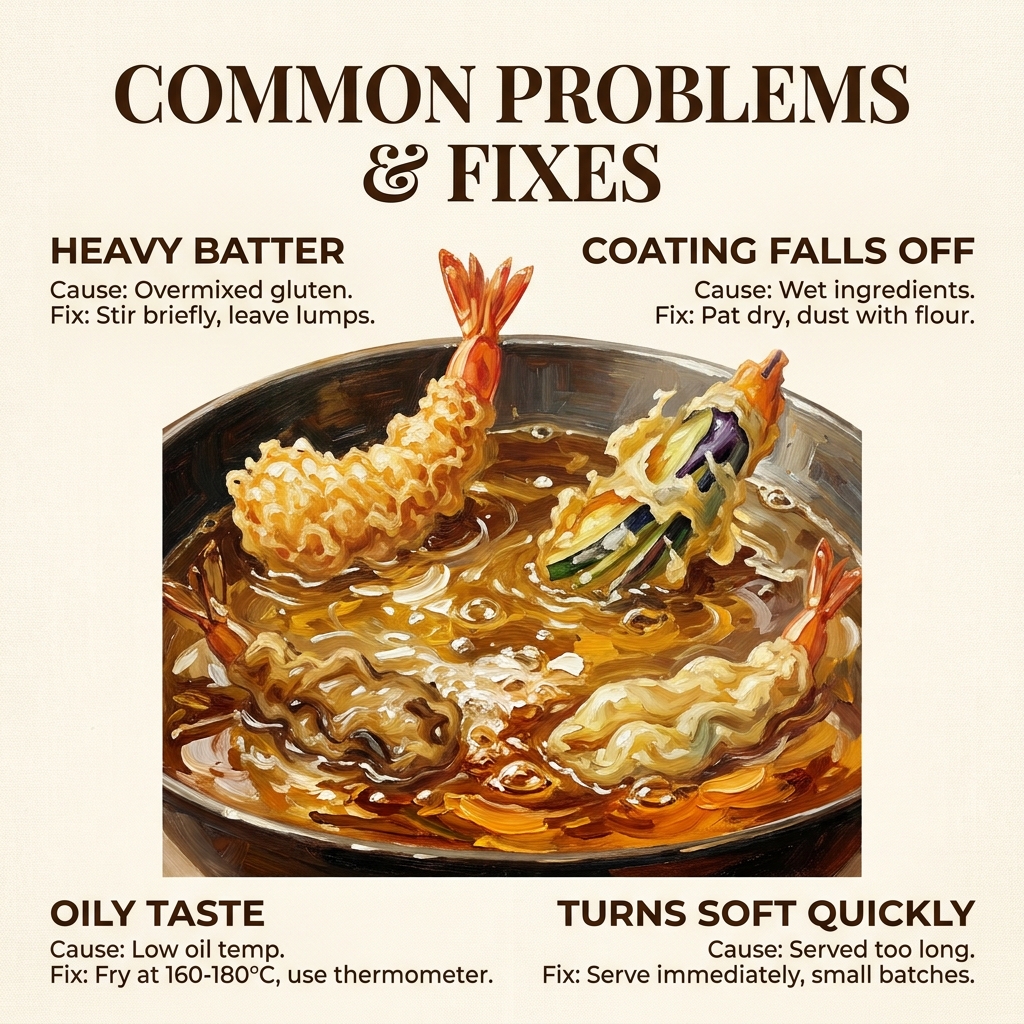
Most tempura problems trace back to a handful of causes. The table below covers the most frequent issues.
| Problem | Likely Cause | Fix |
|---|---|---|
| Batter feels heavy | Overmixed batter develops gluten | Stir briefly, leave small lumps |
| Coating falls off | Ingredients were wet before dipping | Pat dry, dust lightly with flour first |
| Tempura tastes oily | Oil temperature too low | Fry at 160-180°C, check with a thermometer |
| Turns soft quickly | Served too long after frying | Serve immediately, fry in small batches |
How to Eat Tempura
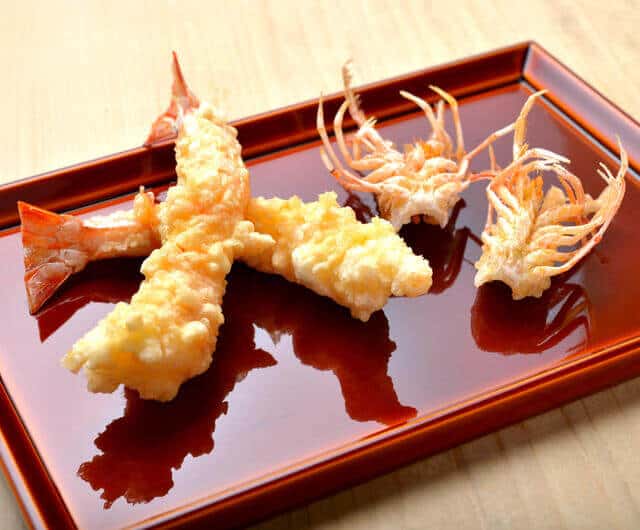
At specialist counters, cooks often serve pieces one at a time so diners can eat each item immediately after frying. Common seasonings include tentsuyu, grated daikon, salt, citrus, and grated ginger.
- Eat each piece as soon as it arrives, while the batter is still crisp.
- If you want to taste the ingredient and batter clearly, try a small bite plain or with a little salt before adding tentsuyu.
- Add a small amount of salt or dip lightly into tentsuyu with grated daikon.
- If a piece is too large to eat comfortably, divide it with chopsticks when possible. Otherwise, take manageable bites.
Some counters serve pieces in a set sequence, often moving from lighter items toward stronger flavors. The exact order varies by restaurant and course, though. Treat this as a general tendency rather than a fixed rule.
Choosing Tentsuyu, Salt, or Restaurant-Suggested Pairings
Plain salt lets the ingredient’s natural flavor lead, which is why many specialty counters recommend it. Some restaurants also offer flavored salts, although the available varieties differ by shop. Tentsuyu, a savory dashi-based sauce, pairs well with grated daikon and suits heartier pieces like eggplant or kakiage. Individual restaurants sometimes suggest their own pairings. Tenmatsu in Nihonbashi, for instance, recommends tentsuyu with daikon for vegetables, salt and lemon for shrimp or scallop, and a plum-based sauce for fish. These are restaurant-specific suggestions rather than universal rules, so feel free to season however you enjoy it most.
Allergens and Dietary Considerations
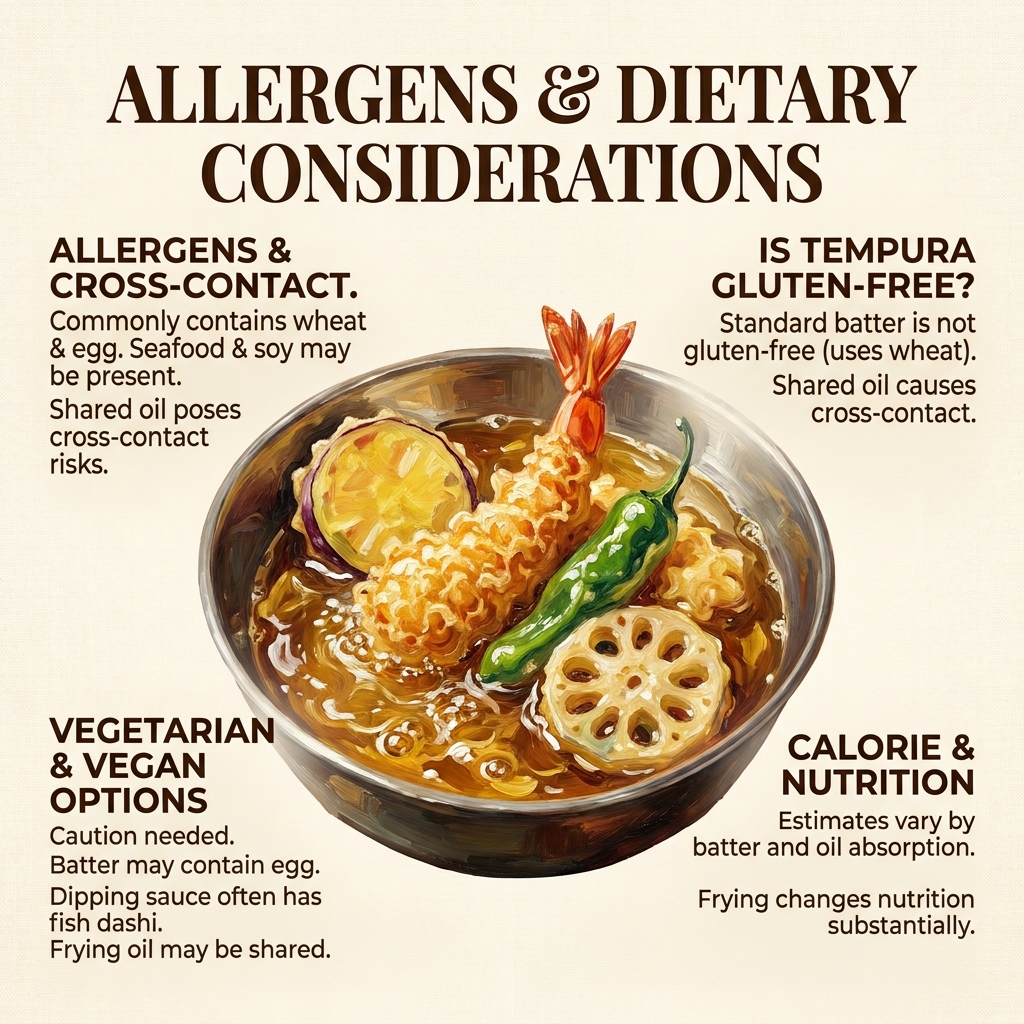
Calorie estimates vary by serving size, batter thickness, ingredient, and oil absorption. Values for plain, raw shrimp should not stand in for finished shrimp tempura, since frying changes the nutrition profile substantially. If you want a reliable figure, look for a nutrition database entry for the finished, fried dish rather than the raw ingredient. Check whether the value covers one piece, a 100-gram portion, or a full serving.
Tempura commonly contains wheat and may contain egg. Seafood varieties can contain shrimp or crab, and tentsuyu commonly contains soy. Even if the batter uses gluten-free ingredients, shared frying oil and shared utensils may cause wheat cross-contact. Japan’s allergen labeling rules for packaged foods do not automatically apply to restaurant menus in the same way, though. A menu may not list every allergen. If you have a serious allergy, ask staff directly rather than assuming a dish is safe based on its name.
Is Tempura Gluten-Free?
Standard tempura batter is not gluten-free, since it relies on wheat flour. Some specialty recipes use rice flour, cornstarch, or potato starch instead, which can remove gluten from the batter itself. Even then, shared frying oil at a restaurant may cause wheat cross-contact. People with celiac disease should choose a restaurant that can confirm gluten-free ingredients. Look for dedicated frying oil and separate utensils rather than relying on the menu name alone.
Vegetarian and Vegan Tempura Options
Vegetable tempura may be suitable for vegetarians, but check the batter, dipping sauce, and frying oil before assuming it fits your diet. The batter may contain egg, so it is not vegan by default. Tentsuyu often contains fish-based dashi, and kitchens may share frying oil with seafood even when preparing a vegetable order. Ask about all three points before ordering if you follow a strict diet.
Recommended Tempura Restaurants in Tokyo
Checked against official sources: September 2026. Hours, prices, and reservation policies change often at specialty restaurants, and some locations close temporarily for renovation. Confirm details on each restaurant’s official page before visiting.
Tokyo’s tempura scene spans everything from premium counter courses to casual tendon bowls, spread across Ginza, Nihonbashi, Asakusa, and Iidabashi. We selected six restaurant options to cover different budgets, neighborhoods, reservation styles, and dining formats. This is an editorial selection rather than a definitive ranking.
| Restaurant | Area / Station | Category | Approx. Budget | Reservation | Current Status |
|---|---|---|---|---|---|
| Tempura Kondo | Ginza Station | Luxury counter | ¥13,200 lunch / ¥22,000+ dinner | Advance reservations strongly recommended | Open as usual |
| Ginza Onodera | Higashi-Ginza Station / Shimbashi Station | Luxury counter | Course pricing, check official site | Recommended | Higashi-Ginza open; Namiki-dori temporarily closed for renovation |
| Tenmatsu Nihonbashi | Nihonbashi, Mitsukoshimae Station | Mid-range | ¥1,650-¥4,950 lunch / ¥8,800-¥13,200 dinner | Recommended; minimum-order conditions apply | Open as usual |
| Isshin Kaneko | Iidabashi Station | Mid-range | Check official site for current prices | Check official site | Check official site |
| Tempura Sansada | Asakusa, near Kaminarimon | Casual, historic | Roughly ¥1,940-¥4,720 | Walk-in daytime; evening reservations possible from 4 p.m. | Open as usual |
| Tendon Tenya | Multiple Tokyo locations | Casual chain | Roughly ¥630-¥1,160 for standard bowls | Not required, walk-in | Varies by branch |
Luxury Counter Tempura
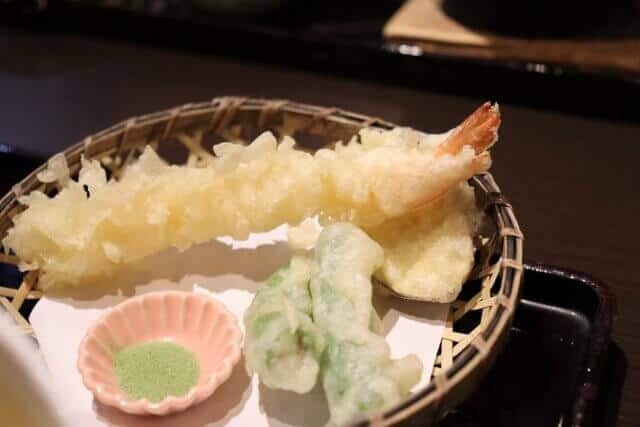
Tempura Kondo in Ginza is a prominent tempura counter. The restaurant is particularly known for treating vegetables as central tempura ingredients rather than secondary accompaniments. Its signature dish uses an unusually large piece of sweet potato, which the restaurant fries slowly for nearly 30 minutes. Advance reservations are strongly recommended, especially for preferred dates and times.
Ginza Onodera operates two tempura branches. The Higashi-Ginza branch is open on its regular schedule, about a one-minute walk from Higashi-Ginza Station, and adds a 10% service charge. One branch, Namiki-dori near Shimbashi Station, may be temporarily closed for renovation. Check the official site for the current status of each location before planning a visit. Both branches seat guests at a handmade shiraki wood counter, and this remains best for seasonal seafood and vegetables in an elegant setting.
Mid-Range Tempura
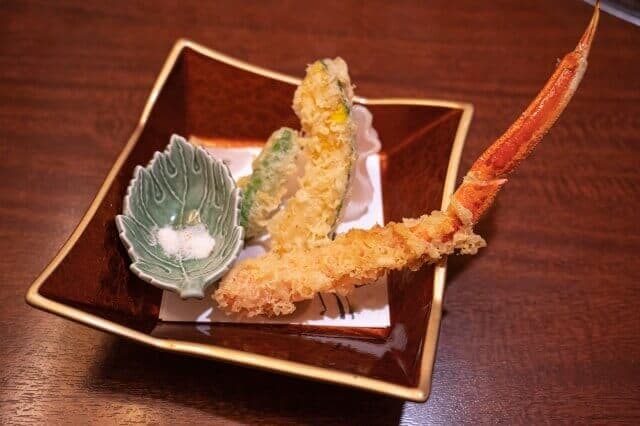
Tenmatsu was founded in Shibuya in 1936 and now operates in Nihonbashi near Mitsukoshimae Station, using pure sesame oil and seasonal ingredients. Lunch tempura sets range from about ¥1,650 to ¥4,950. Dinner sets and courses run roughly ¥8,800 to ¥13,200, and both lunch and dinner reservations carry minimum-order conditions. This is a solid choice for a traditional Edo-style tempura counter with a long, documented history and clear published pricing.
Isshin Kaneko is located near Iidabashi Station. It offers casual lunch options on selected weekdays and more structured tempura courses at dinner. Check the official site for current opening days, prices, and reservation requirements before visiting.
Casual Tempura and Tendon
Tempura Sansada sits right next to Kaminarimon in Asakusa and traces its history to the Edo period. It fries in sesame oil, Edo-style, and serves kakiage as a specialty. Its own tempura menu lists items from about ¥1,940 to ¥4,360. Its tendon menu ranges from about ¥2,000 to ¥4,720. Walk-ins are common during the day, and the restaurant accepts seat reservations for evening dining from 4 p.m. This works well as a casual tempura or tendon meal in a historic part of Tokyo, either as a walk-in lunch or a reserved evening visit.
Tendon Tenya is a casual restaurant chain specializing in affordable tendon bowls. Its official Tokyo location list includes branches in Ginza, Tsukiji, Yaesu, Asakusa, Okachimachi, Shinjuku, Shibuya, Ikebukuro, and Haneda Airport. Standard bowls are priced roughly between ¥630 and ¥1,160, according to the chain’s published menu, though limited, set, and location-specific items may cost more. The chain also publishes calorie and allergen information for both its in-store and takeout menus, which suits first-time visitors who want that information in advance. Individual branches occasionally close for short renovations, so check a specific location’s official page if you have one in mind.
Explore More Tokyo Food
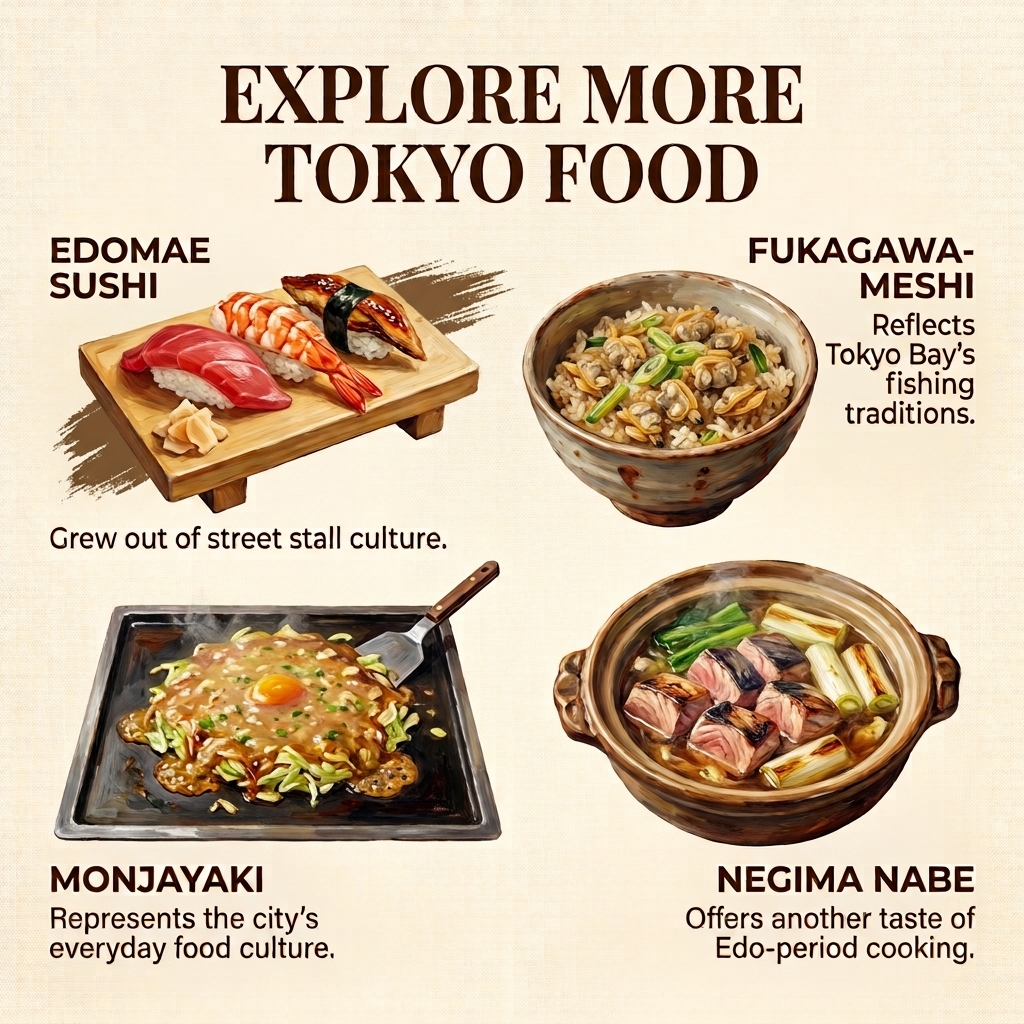
Tempura connects naturally to other Tokyo classics. Edomae Sushi grew out of the same street stall culture. Fukagawa-meshi reflects Tokyo Bay’s fishing traditions. Monjayaki represents the city’s everyday food culture, and Negima Nabe offers another taste of Edo-period cooking.
Conclusion
Tempura’s history reflects both Portuguese influence in Nagasaki and later culinary development in Edo. Tokyo cooks transformed battered frying into a seafood-focused street food and, eventually, a refined counter-dining tradition. The batter, oil, ingredients, and serving style evolved over time, but the central idea remained simple: coat an ingredient lightly, fry it quickly, and serve it at its best.
Careful oil temperature and quick serving help keep the coating crisp, whether you choose a casual tendon bowl or a multi-course counter meal. If you want to go further, try the recipe above at home. You could also pick a Tokyo restaurant that matches your budget. Or read about other Edo-period dishes that shaped the city’s food culture.
Tempura FAQ
What is tempura batter made from?
The batter is a light mix of wheat flour, egg yolk, and ice-cold water. Cooks stir it briefly, leaving small lumps, since overmixing builds gluten and makes the coating heavy. Some recipes use a rice-flour blend instead, though this changes only the batter and does not make the dish allergen-free on its own.
Why is tempura different from other fried food?
This frying style uses a thin liquid batter instead of the breadcrumb coating found on tonkatsu or furai. The thinner coating fries faster and stays lighter. That difference in coating, more than the frying itself, is what separates it from most other fried dishes in Japan.
Is tempura gluten-free?
No, standard tempura is not gluten-free because the batter contains wheat flour. Some recipes use labeled gluten-free flour blends, but shared oil and utensils can still cause wheat cross-contact. Ask whether the restaurant uses dedicated frying oil and separate utensils.
Can vegetarians eat tempura?
Vegetable tempura may be suitable for vegetarians, but check the batter, dipping sauce, and frying oil first. The batter may contain egg, tentsuyu often contains fish-based dashi, and kitchens may share oil with seafood. Confirm all three points with staff if you follow a strict diet.
Where can you eat tempura in Tokyo?
Tokyo offers options across many neighborhoods. High-end counters cluster in Ginza, mid-range shops sit in Nihonbashi and Iidabashi, and casual spots are common in Asakusa. Prices start at around ¥630 for a standard bowl at a casual chain and can exceed ¥20,000 for a premium counter course.
References
- Ministry of Agriculture, Forestry and Fisheries of Japan – Tempura, Tokyo (Accessed September 2026)
- Ministry of Agriculture, Forestry and Fisheries of Japan – Nagasaki Tempura (Accessed September 2026)
- Ministry of Agriculture, Forestry and Fisheries of Japan – Kanto Area Stories: Tokyo (Accessed September 2026)
- National Diet Library Search – “Shokudoki” catalog record (Accessed September 2026)
- National Diet Library – “Tenka Taihei,” Chapter 3 (Accessed September 2026)
- Ministry of Health, Labour and Welfare of Japan – Food Poisoning Prevention at Home (Accessed September 2026)
- Ministry of Health, Labour and Welfare of Japan – Hygiene Management for Food Service (Accessed September 2026)
- Consumer Affairs Agency of Japan – Food Allergen Labeling Information (Accessed September 2026)
- USDA FoodData Central – Nutrition Database (Accessed September 2026)
- Tempura Kondo – Official English Website (Accessed September 2026)
- Ginza Onodera – Tempura Ginza (Accessed September 2026)
- Tenmatsu – Nihonbashi Branch (Accessed September 2026)
- Tenmatsu – English Page (Accessed September 2026)
- Isshin Kaneko – Official Website (Accessed September 2026)
- Tempura Sansada – Official Website (Accessed September 2026)
- Tempura Sansada – Tempura Menu (Accessed September 2026)
- Tempura Sansada – Tendon Menu (Accessed September 2026)
- Tendon Tenya – Official English Website (Accessed September 2026)
- Tendon Tenya – Official Tokyo Locations Page (Accessed September 2026)
- Tendon Tenya – Official Menu PDF (Accessed September 2026)
Related Articles
- Edomae Sushi (Surveyed: September 2026)
- Fukagawa-meshi (Surveyed: September 2026)
- Monjayaki (Surveyed: September 2026)
- Negima Nabe (Surveyed: September 2026)



Comments