



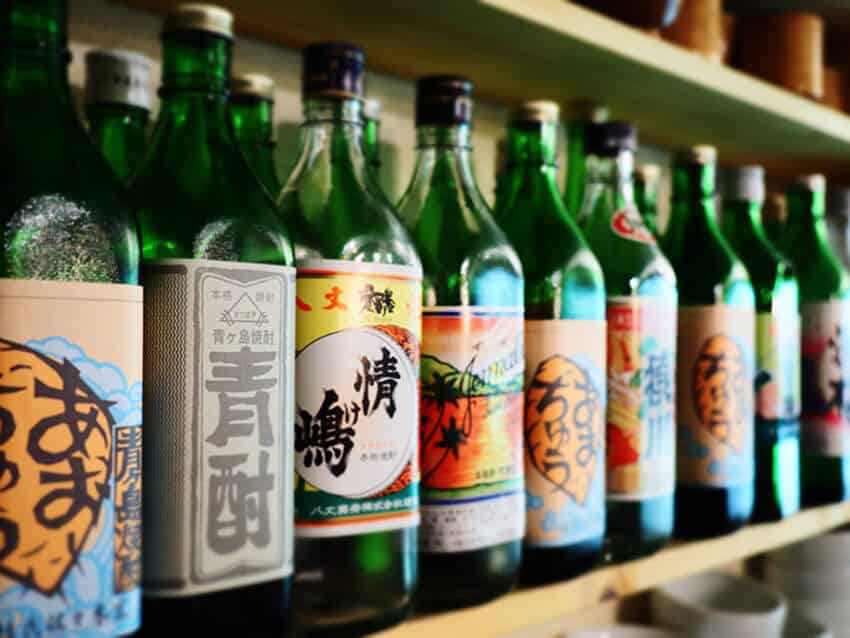
Ao chu is handmade Aogashima shochu, a rare island liquor from Tokyo that condenses the life, climate, and stories of this tiny volcanic island.
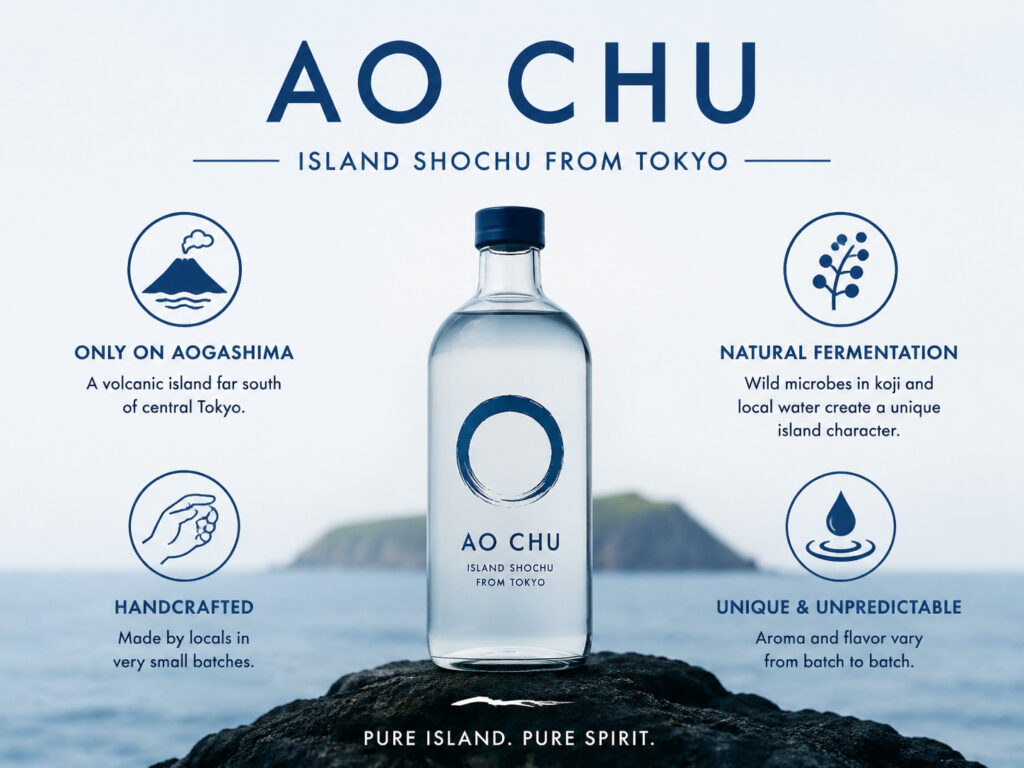
Ao chu is a traditional Japanese distilled spirit made only on remote Aogashima in Tokyo Prefecture. Islanders ferment barley and sweet potatoes with local koji and natural yeast, then distill the mash in small stills. Because production stays tiny and family based, bottles are hard to find and feel like rare Japanese alcohol even in Tokyo.
This guide explains what Ao chu is, how islanders make this Aogashima shochu, and how its taste differs from other traditional shochu in Japan. You will also see how to drink Ao chu, where to drink Ao chu in Tokyo, and an Aogashima shochu buying guide for visitors and collectors.
What is Ao chu?
Ao chu as an island liquor from Tokyo
Ao chu (青酎) is a special kind of Japanese distilled spirit, a type of shochu, made only on the small volcanic island of Aogashima far south of central Tokyo. Locals still make it by hand in very small batches, and for a long time most of the liquor never left the island. The name “Ao chu” plays on the island’s name, Aogashima, and signals that this is the signature shochu of the community.
In Japanese terms, Ao chu belongs to the same broad family as other shochu, yet the production scale and style make it feel quite different from mainstream brands. Island distillers rely on local water and wild microbes that live in the koji and fermenting mash. As a result, the aroma and flavor can shift from batch to batch, which many fans find exciting.
Ao chu history
From exile culture to family shochu
The history of Ao chu reflects the isolated nature of Aogashima. During the Edo period, the Izu Islands sometimes received exiles and people connected to trade in southern Japan. Historical accounts suggest that exiles and migrants brought distilling techniques to the archipelago, and islanders adapted those methods to local crops and conditions.
Aogashima stood even more remote than nearby islands. Transport was difficult, the land was steep, and residents needed to rely heavily on self-sufficiency. In that environment, turning sweet potatoes and grains into a long lasting distilled spirit made sense. Families could preserve calories, warm themselves in winter, and share drinks at important gatherings.
Over time, each household developed its own way of making shochu. Exiles brought distilling methods to the island, but local people merged them with their own rhythms of farming and fishing. That is why Ao chu still feels like a village product rather than a factory brand.
Love liquor and community drink
Ao chu was originally made not for sale but for the island’s people to enjoy and to share. Families passed recipes from parent to child, and women sometimes distilled shochu as a kind of “love liquor” for partners or husbands. Bottles were exchanged at local events, festivals, and family celebrations, which helped the drink take root as part of island identity.
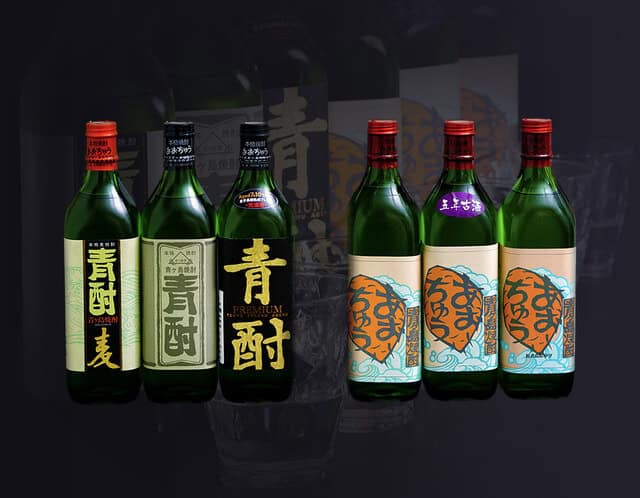
Today, a small group of master distillers still make Ao chu, often while also working in other jobs on the island. Each producer has a slightly different style, so the taste of Ao chu can differ from one label to the next. Limited production, difficult transport, and the traditional methods together make Ao chu one of the most sought after island liquors in Tokyo.
Ao chu recipe ingredients
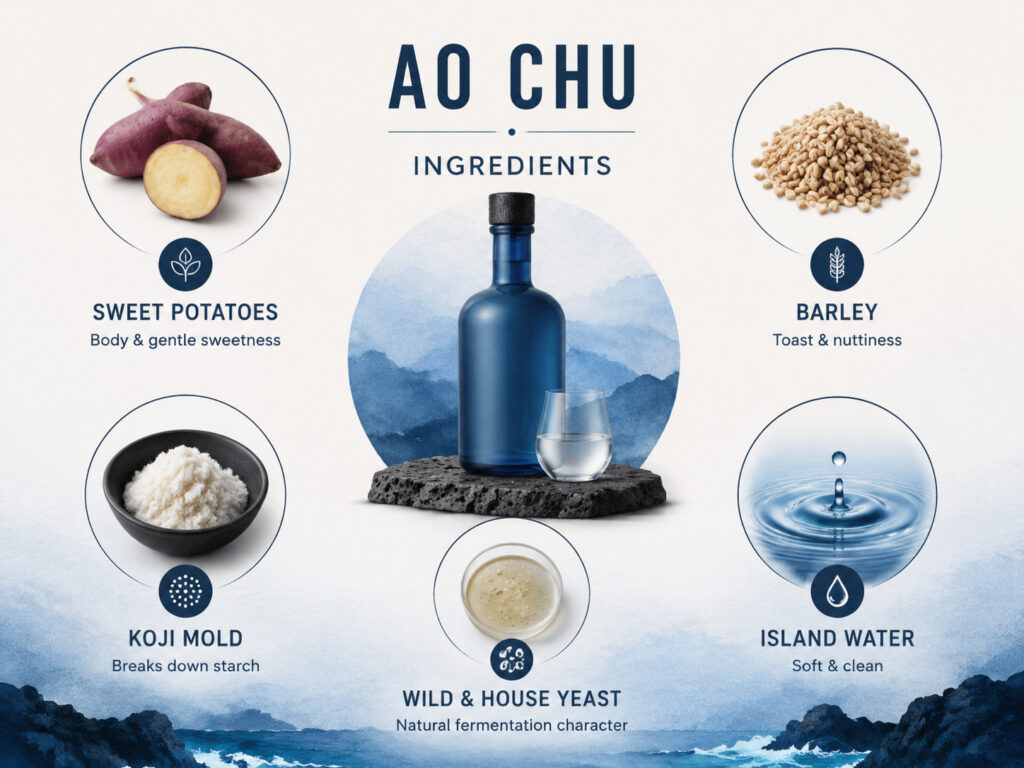
Ao chu relies on a simple but expressive ingredient list. Each element adds its own layer to the final aroma and taste.
Sweet potatoes (imo): Many versions of Ao chu use local sweet potatoes as a main starch source. They bring a gentle sweetness, a soft earthiness, and a thick body to the spirit.
Barley (mugi): Barley supports fermentation and brightens the profile. It adds toasty notes and a nutty edge, which can show through even after distillation.
Koji mold: As with other traditional shochu in Japan, koji breaks down starch into sugar so yeast can work. For Ao chu, producers often raise koji in very basic rooms, letting the climate and microflora of Aogashima influence the final character.
Wild and house yeast: Instead of relying only on commercial yeast, islanders often depend on natural yeast and house strains that have lived in their equipment over time. This makes each distillery’s Ao chu a little different and adds a faintly wild, rustic note.
Island water: Groundwater filtered through volcanic rock supports fermentation and distillation. Soft, clean water helps the spirit feel smooth even when the flavor runs deep.
How Ao chu is made
Ao chu follows the basic pattern of shochu making, yet island distillers keep some unique twists. They steam sweet potatoes and barley, mix them with koji and water, ferment the mash, and then distill it in small pot stills. Afterward, the spirit rests in tanks or jars before bottling, which lets rough edges settle.
Two-stage mashing and donburi style
Most commercial shochu makers use a two-stage mashing method. First they build a starter mash with koji, yeast, and water, then they add more steamed ingredients and water in a second step. This approach gives precise control and stable flavor in large tanks.
In contrast, Ao chu is famous for using a more old fashioned “donburi” style at some producers. They mix koji, main ingredients, and water in a single vessel without clearly separated stages. Natural microorganisms from the island join the mash, which sometimes leads to a slightly wild, almost untamed aroma.
Because of this, batches can vary. However, fans enjoy the personality and depth that come from these less controlled fermentations. Small stills and hands-on management keep the alcohol level in check, usually around standard shochu strength.
Ao chu taste and flavor
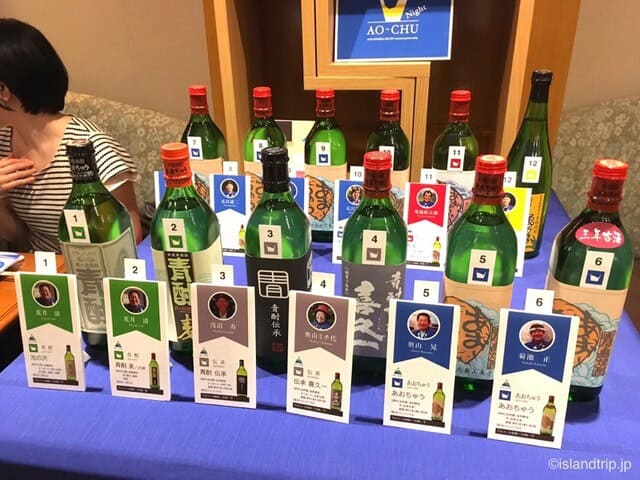
Every label tastes a bit different, yet some common traits appear again and again. Drinkers often describe Ao chu as bold and earthy, with a roasted grain nose from the barley. Behind that, sweet potato gives a soft sweetness and a slight richness that sits low on the tongue.
The aroma can feel smoky or toasty rather than fruity. Some bottles show a soil like depth, as if you can almost smell damp volcanic earth after rain. Others show a touch of wild fermentation, a kind of rustic, almost animal warmth that stays gentle rather than aggressive.
Despite this power, a light sweetness often lingers in the finish. A little acidity keeps the aftertaste from feeling heavy. The overall impression is complex but not too polished, which fits the handmade spirit of Ao chu.
For beginners
People who are new to shochu sometimes worry that Ao chu will taste too strong. In practice, a small glass with plenty of cold water or ice softens the edges and lets you focus on the grain and potato notes. Starting with a lower alcohol mix also gives you time to notice the gentle sweetness under the earthiness.
For shochu fans
Seasoned shochu drinkers often approach Ao chu like a natural wine or a farmhouse ale. They enjoy slight variations between bottles and vintages. Many people compare the depth to robust imo shochu, yet Ao chu usually feels a little more rustic and wild because of the island fermentation style.
Ao chu and other Japanese spirits
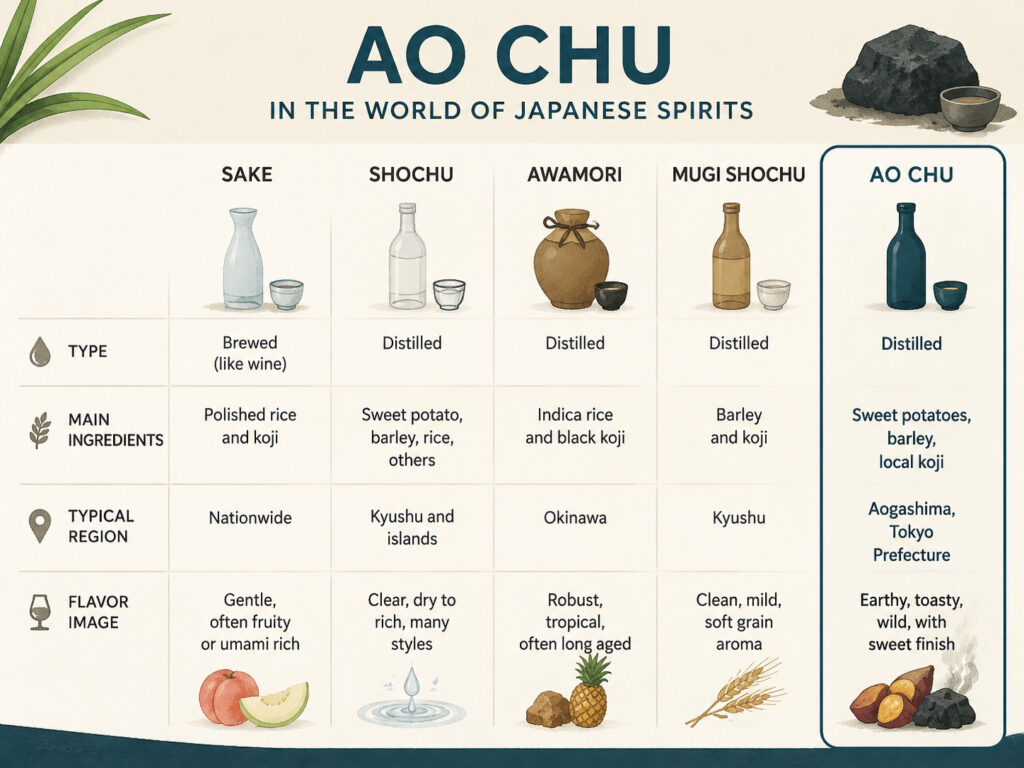
To understand Ao chu better, it helps to compare it with sake and awamori. All three are important drinks in Japan, yet their production and flavor differ.
| Drink | Type | Main ingredients | Typical region | Flavor image |
|---|---|---|---|---|
| Sake | Brewed (like wine) | Polished rice and koji | Nationwide | Gentle, often fruity or umami rich |
| Shochu | Distilled | Sweet potato, barley, rice, others | Kyushu and islands | Clear, dry to rich, many styles |
| Awamori | Distilled | Indica rice and black koji | Okinawa | Robust, tropical, often long aged |
| Ao chu | Distilled shochu | Sweet potatoes, barley, local koji | Aogashima, Tokyo Prefecture | Earthy, toasty, wild, with sweet finish |
Within the shochu family, Ao chu sits beside familiar styles such as mugi shochu made from barley and classic imo shochu based on sweet potatoes. Learning the basics of those styles first can make Ao chu’s special traits easier to notice.
Why people seek Ao chu
Several points make Ao chu attractive to collectors and travelers. These reasons go beyond flavor and connect to place and people.
- Very small scale production by a handful of island distillers.
- Use of local ingredients and natural fermentation methods.
- Strong link to Aogashima’s history as a remote, self sufficient community.
- Bottles that vary slightly year by year, which keeps tasting interesting.
- Reputation as a rare Japanese alcohol that even many Tokyo residents have never tried.
How to drink Ao chu
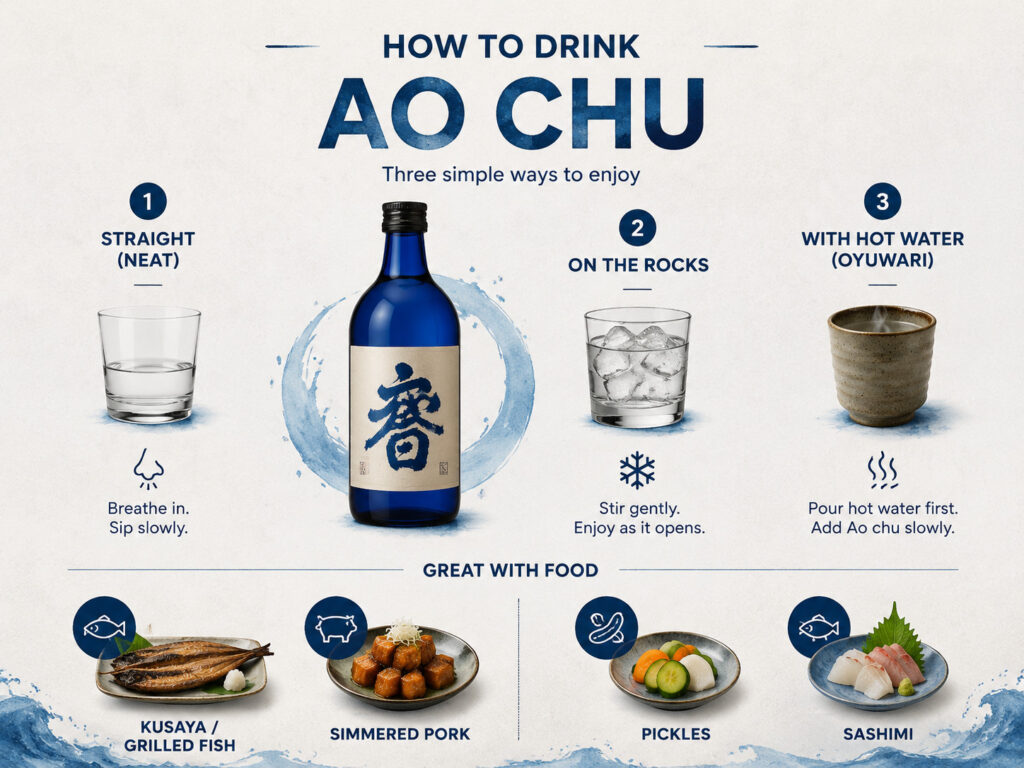
There is no single correct way to enjoy Ao chu. However, a few classic serving styles help show different faces of the spirit. You can adjust the method depending on the time of year and the food on the table.
Straight (neat)
Pour a small amount of Ao chu into a sturdy glass. Let it sit for a short moment, then bring it close and breathe in slowly. Sip in small amounts so you can follow how the flavor moves from roasted grain to earthy sweetness.
On the rocks
Fill a glass with a few solid ice cubes. Add Ao chu and stir gently to chill. As the ice melts, the aroma opens and the balance becomes softer, which many people find easier to drink.
With hot water (oyuwari)
First pour hot water into a heatproof glass or cup. Then add Ao chu slowly so it mixes without losing too much aroma. This style releases grain and potato notes, and on cold nights it feels very close to how islanders enjoy their shochu at home.
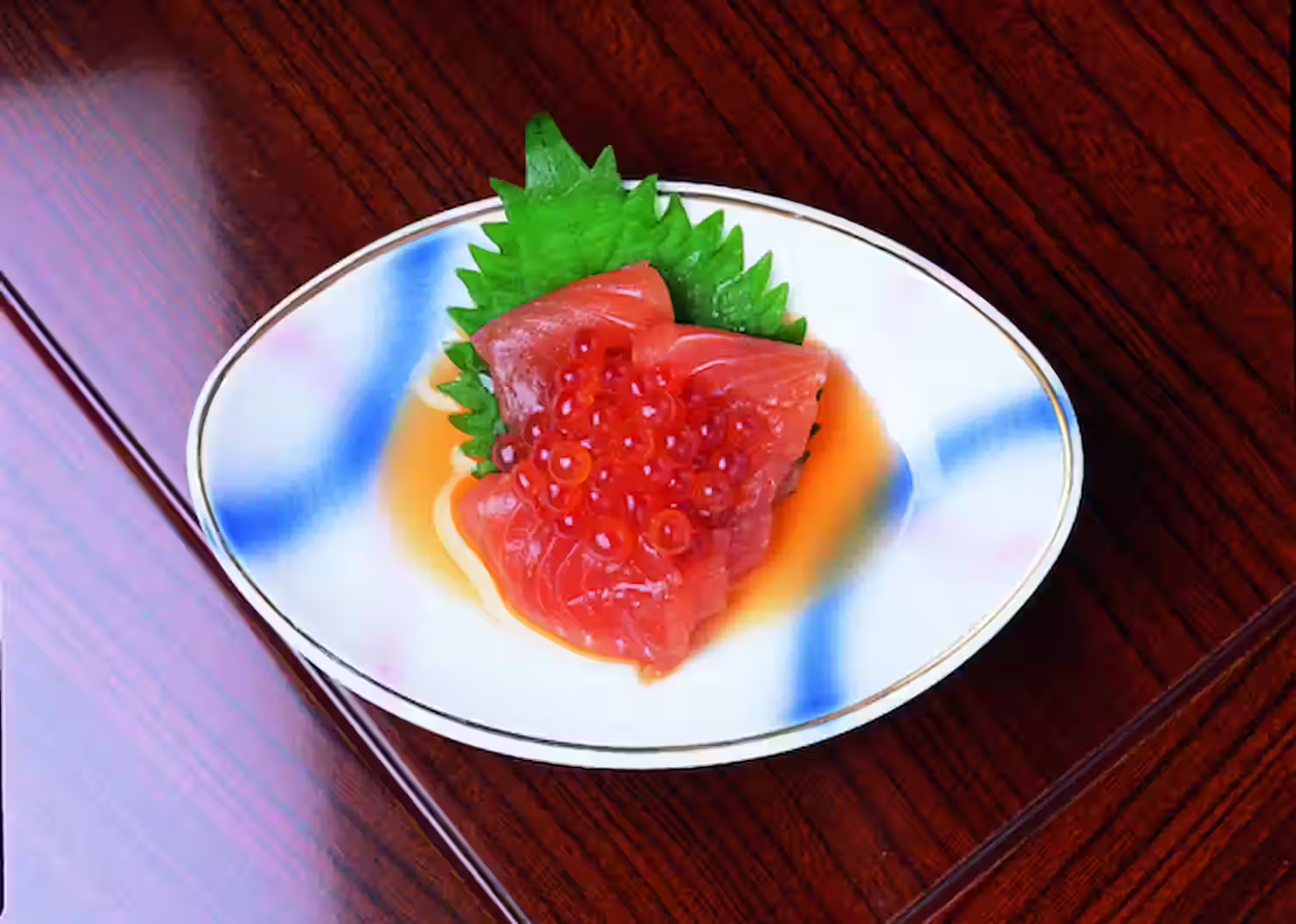
Ao chu also pairs well with food from the islands. Strongly flavored dishes such as kusaya, grilled fatty fish, or rich simmered pork stand up well to its depth. Lighter snacks, such as pickles and simple sashimi, reveal more of its subtle side.
Where to drink Ao chu in Tokyo
Because Ao chu comes from a tiny island, you will not see it on every izakaya menu in Tokyo. Still, patient drinkers can find it if they know where to look. It helps to target places that focus on island cuisine or that specialize in regional shochu.
Aogashima-ya (青ヶ島屋)
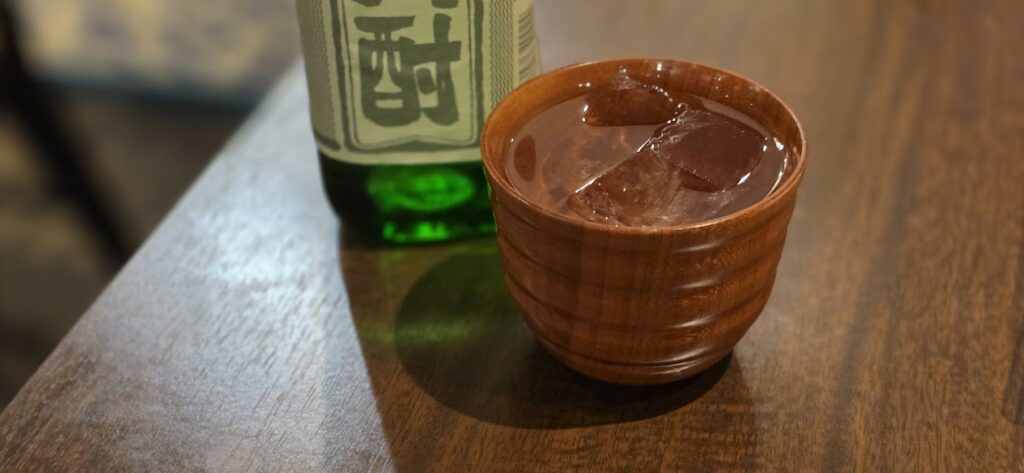
Aogashima-ya is a restaurant that serves dishes and drinks from the Izu Islands, with a special focus on Aogashima. It is famous as one of the few places in Tokyo where you can taste several types of Ao chu side by side. The menu often includes island snacks and seafood that match the shochu’s powerful profile.
Other places to look
Beyond this restaurant, Ao chu sometimes appears in Tokyo antenna shops that represent the islands, as well as in specialty liquor stores. Staff in shops that focus on shochu can sometimes order bottles from distributors when stock exists. It is worth asking directly, since many shops do not list Ao chu on their regular shelf labels.
Travelers who already plan to explore Tokyo’s food culture can check guides such as Tokyo Food – Traditional Edo Cuisine & Modern Japanese Food and then add an island shochu stop to their itinerary. Combining classic Edo dishes with a glass of Ao chu gives a wide sense of what the capital prefecture can offer.
Aogashima shochu buying guide
Because Ao chu is a rare Japanese alcohol, buying a bottle feels exciting but also slightly challenging. Availability changes quickly, and small shipments sell out fast. Even so, there are several routes that give you a realistic chance.
On Aogashima itself
The most direct way is to visit Aogashima and buy Ao chu at local shops or inns. Quantities are limited and may be reserved for residents or guests, so it helps to ask politely and accept that not every visit will line up with stock. When you do find bottles, they often carry a strong sense of place that makes them ideal souvenirs.
In Tokyo and nearby islands
Selected liquor shops in Tokyo, including some on Hachijojima, occasionally stock Ao chu. Island ferry terminals and airport shops sometimes get small allocations too. Calling ahead or checking shop newsletters improves your chances, since many stores keep only a few bottles at a time.
Online and mail order
In recent years, more retailers have started listing Aogashima shochu online when stock allows. Some shops work directly with Aogashima Shuzo and handle orders via email or fax. Because production stays small and the spirit has a strong following, prices often run higher than standard shochu of similar alcohol level.
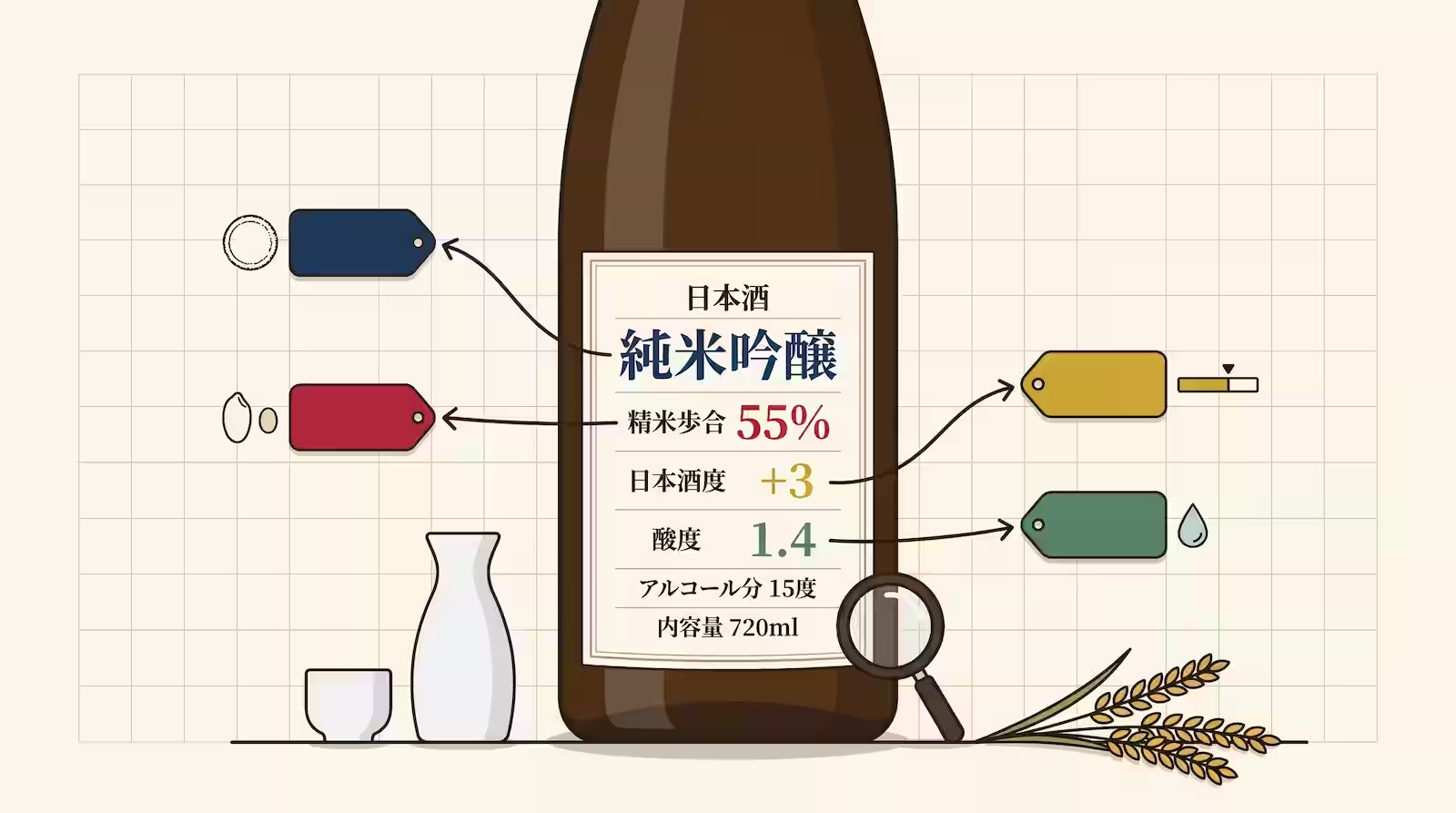
When buying Ao chu, it helps to read the label carefully. Different producers on the island may emphasize barley or sweet potato, use different fermentation styles, or bottle at slightly different strengths. Trying two labels side by side makes the diversity within Aogashima shochu easier to feel.
Visiting Aogashima island
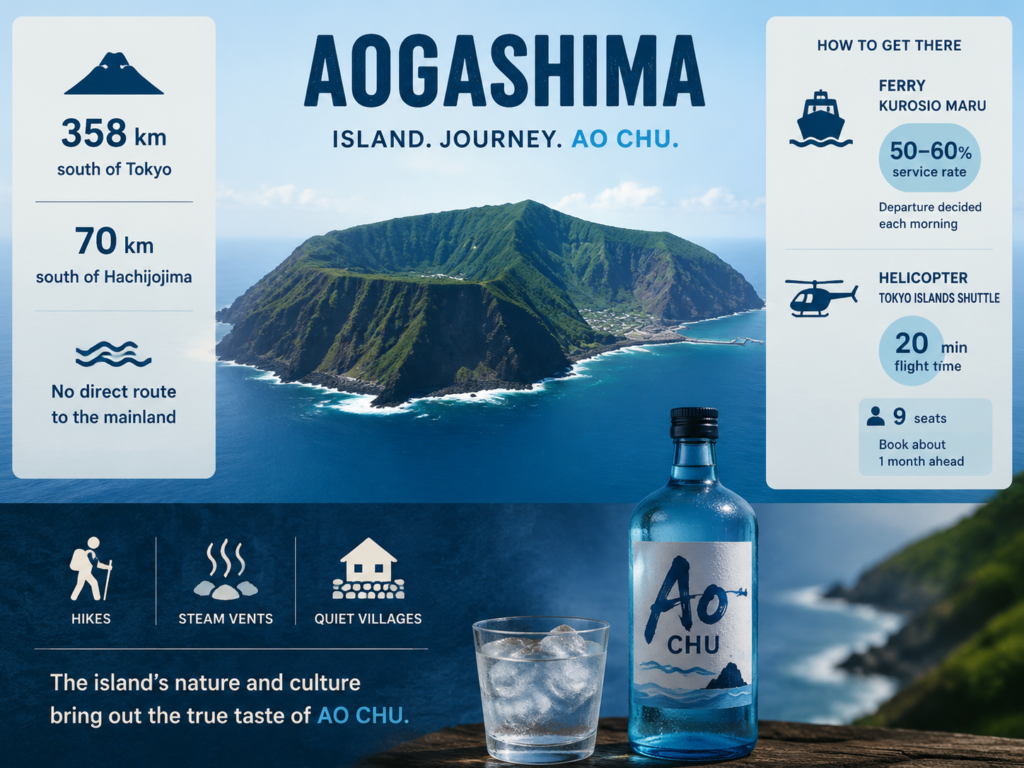
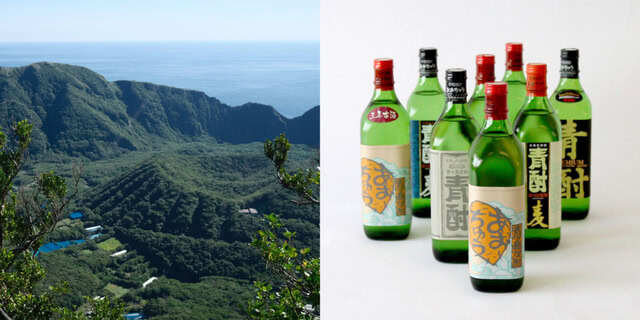
Ao chu becomes even more vivid when you see the island that created it. Aogashima sits about 358 kilometers south of central Tokyo and roughly 70 kilometers south of Hachijojima. There is no direct route from the mainland, so every trip starts with a flight or overnight ferry to Hachijojima, followed by a smaller boat or helicopter for the final leg.
From Hachijojima, travelers can take the ferry Kurosio Maru, though its service rate sits at only about 50 to 60 percent because of rough seas around Aogashima. The decision to sail gets made each morning, so a flexible schedule really matters. A helicopter shuttle called Tokyo Islands Shuttle runs more reliably, operating year-round with a 20-minute flight, but it carries just nine passengers per trip and requires booking about a month ahead. So a bit of patience, and maybe a spare day or two, goes a long way when planning the journey.
However, that effort changes the way the spirit tastes. The steep caldera walls, quiet villages, and strong sea winds all help explain why people valued a sturdy island liquor. Drinking Ao chu in a local inn after a long hike or a visit to the geothermal steam vents can feel like sharing a small piece of daily life with the community.
Conclusion
Ao chu is more than just another bottle on a bar shelf. It is a concentrated expression of Aogashima’s culture, from Edo period exile days to today’s self sufficient island life. Handmade production, deep earthy flavors, and its status as a rare Japanese alcohol all combine to make each glass memorable.
For drinkers in Tokyo, seeking out Ao chu offers a way to travel without leaving the city. You can enjoy it at island themed spots such as Aogashima-ya, or bring home a bottle when you find one. Those who fall in love with its taste may eventually decide to visit Aogashima itself and experience the landscape that shaped this remarkable shochu.
If you enjoy the powerful and unique flavors of Ao chu, you might also like to explore other Japanese distilled spirits such as imo shochu, mugi shochu, and Okinawan awamori. Tasting several styles side by side deepens your understanding of regional spirits across Japan.
Ao chu FAQ
Ao chu FAQ – The Island Spirit of Aogashima
What is Ao chu?
Ao chu is a rare handmade shochu from Aogashima, a tiny volcanic island that belongs to Tokyo Prefecture. Island families developed their own recipes over many generations. Today, a small number of distillers continue that tradition and bottle Ao chu as the signature island liquor. Each label carries a slightly different balance of grain, sweet potato, and wild fermentation character.
What is Ao chu made from?
Most Ao chu uses sweet potatoes and barley as its core ingredients, along with koji and local water. Sweet potatoes bring depth and a soft sweetness, while barley adds toasty grain notes. Natural or house yeast strains then ferment the mash before distillation. This mix of ingredients creates a flavor that feels both earthy and surprisingly layered.
What does Ao chu taste like?
Drinkers often describe Ao chu as bold, smoky, and a little wild, with clear roasted grain and sweet potato notes. A gentle sweetness usually appears in the finish and keeps the aftertaste from feeling too heavy. Some bottles show soil like depth and a rustic fermentation aroma that fans find charming. Overall, the taste reflects both the volcanic landscape and the hands-on way islanders make their shochu.
Why is Ao chu considered rare?
Ao chu comes only from Aogashima, where the population is very small and distilleries work on a tiny scale. Production remains limited because makers balance shochu with other jobs and community duties. Shipping from the remote island also depends on weather and transport links. As a result, even Tokyo bars and shops receive only modest quantities, which adds to the drink’s reputation as a rare Japanese alcohol.
How do you drink Ao chu?
Many people enjoy Ao chu straight to explore its full intensity in small sips. Others prefer it on the rocks so melting ice gradually opens the aroma and softens the palate. On cooler nights, mixing it with hot water highlights grain and potato notes and feels very close to local island style. Pairing it with rich dishes such as kusaya or grilled fatty fish also works well.
Where can I try Ao chu in Tokyo?
Travelers can often taste Ao chu at Aogashima-ya and other island themed restaurants that focus on Izu Islands cuisine. Some specialty liquor shops and antenna stores in Tokyo also stock bottles when supply allows. It helps to ask staff directly, because Ao chu may not always appear in standard menu listings. Checking island or shochu focused bars increases your chances of finding a pour.
Can I buy Ao chu online?
Some Japanese retailers and Aogashima Shuzo itself offer Ao chu through mail order when stock is available. Orders often go through forms, email, or fax rather than simple one click carts. Because demand is high and supply is small, prices tend to be higher than mass market shochu. Checking regularly and acting quickly when you see stock can help you secure a bottle.
References
- Aogashima Shuzo – Ao chu official information site. (Surveyed: July 2026) [web:45]
- Toyosu Market.com – “Ao chu, Aogashima shochu from Tokyo’s remote island.” (Surveyed: July 2026) [web:45]
- Shiawase Wine Club – “What is Ao chu? Types, drinking styles, and how to buy this rare shochu.” (Surveyed: July 2026) [web:50]
- Tanoshi O-Sake – “Ao chu, shochu from Aogashima in Tokyo.” (Surveyed: July 2026) [web:52]
- SHUN GATE – “Authentic shochu of Tokyo’s islands is imbued with their landscape.” (Surveyed: July 2026) [web:51]
- NHK World – “A Taste of Tokyo’s Islands: A Special Glass of Liquor.” (Surveyed: July 2026) [web:43]
- Japan Sake and Shochu Makers Association – “Honkaku Shochu, Japan’s traditional distilled beverage.” (Surveyed: July 2026) [web:41]
- Hot Pepper Meshi-tsu – Feature on Aogashima-ya and tasting all varieties of Ao chu. (Surveyed: July 2026) [web:47]
- Aogashima Village Official Website, access information including ferry and helicopter schedules to and from Hachijojima. (Surveyed: July 2026)
Related Articles
- Shochu (Surveyed: July 2026)
- Mugi Shochu (Surveyed: July 2026)
- Imo Shochu (Surveyed: July 2026)
- Tokyo Food – Traditional Edo Cuisine & Modern Japanese Food (Surveyed: July 2026)
- Kusaya (Surveyed: July 2026)



Comments