





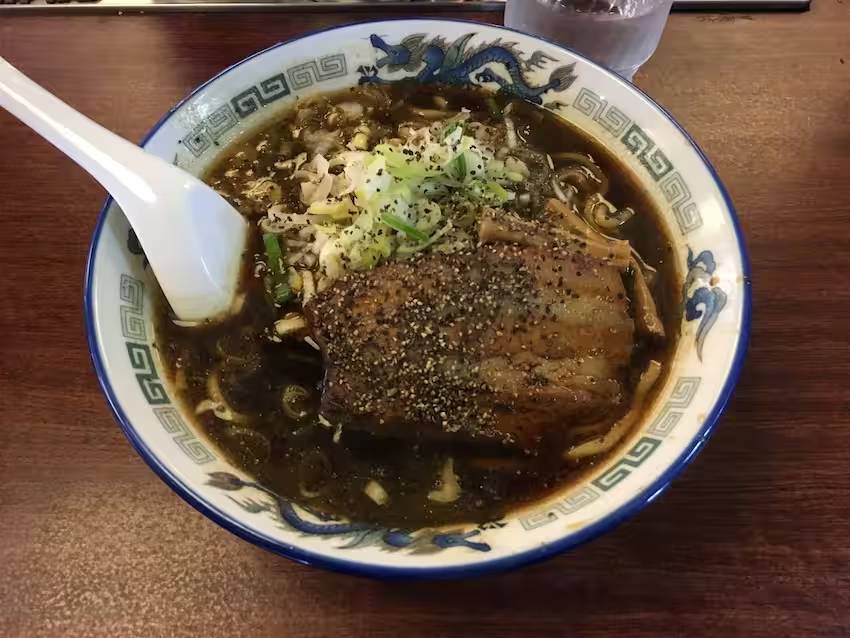
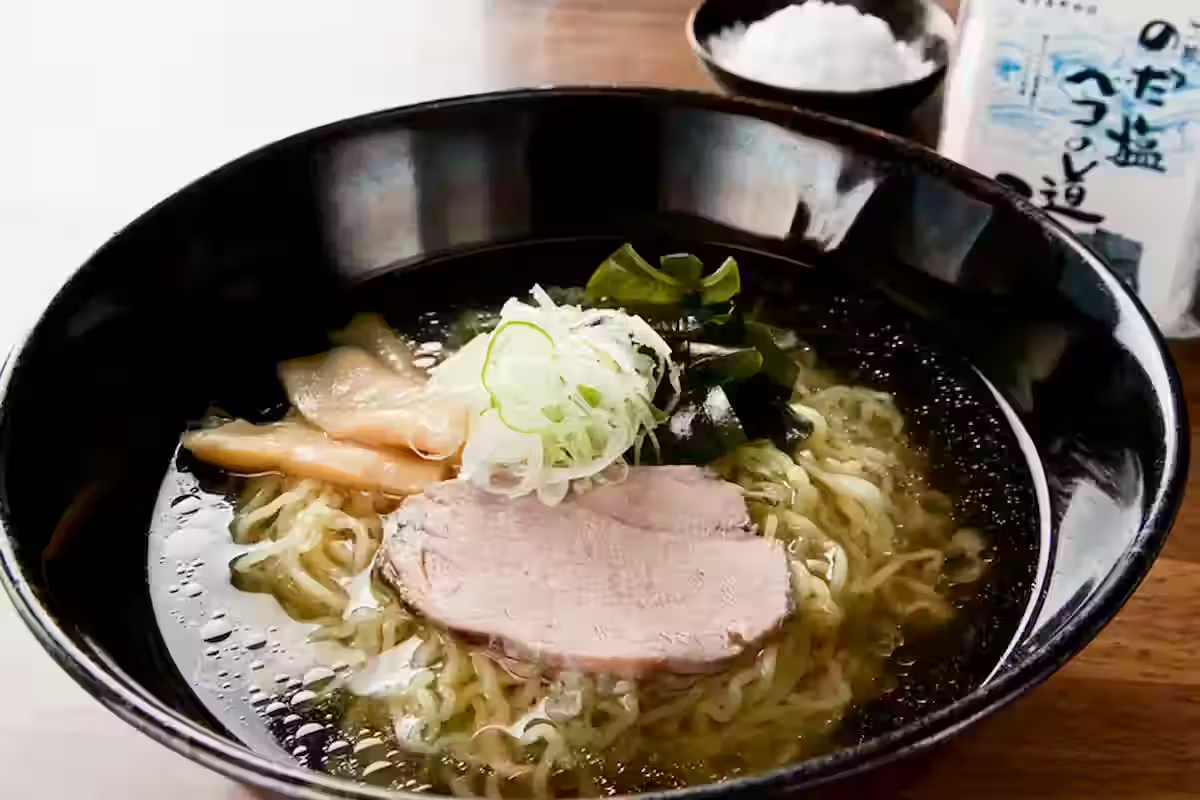
Toyama Black Ramen gets its name from a soup that is nearly pitch black. The color comes from dark soy sauce, and the flavor is just as bold as it looks. Why does the broth turn so dark? This article walks through the reason, along with the history behind this local dish. We also recommend a few shops worth visiting in Toyama Prefecture. Each restaurant has its own take on the recipe, so it’s worth trying more than one.
What Is Toyama Black Ramen?
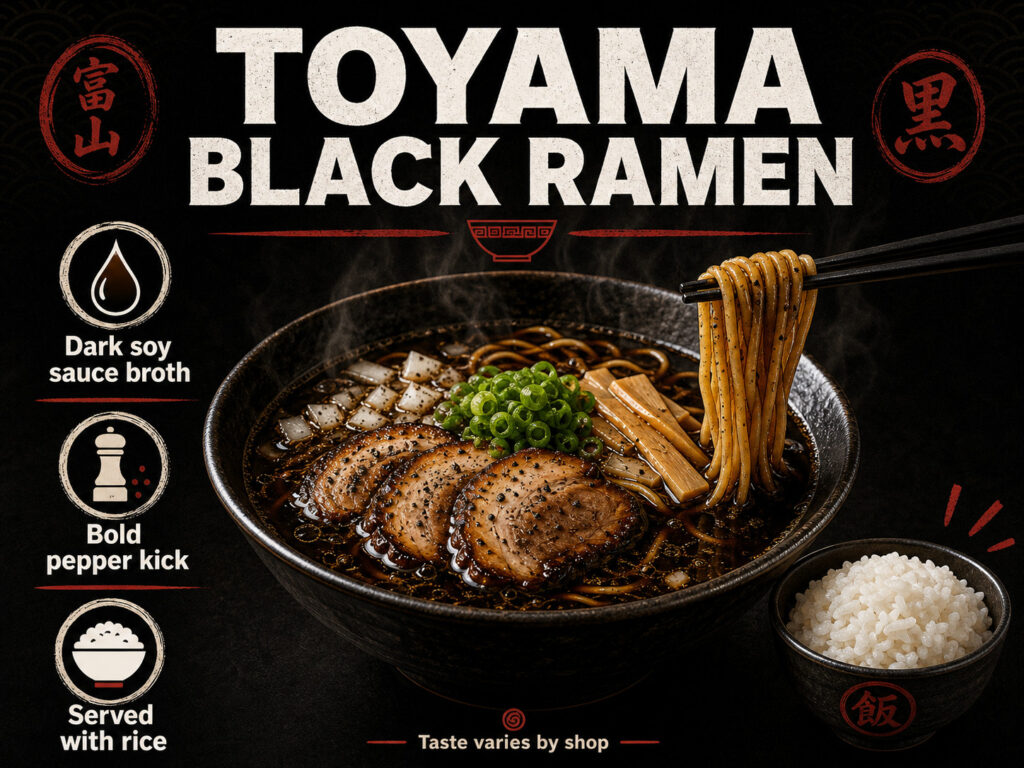
Toyama Black Ramen is a local ramen style that started in Toyama City. Its broth relies on strong dark soy sauce, and it usually carries a sharp kick of black pepper. Cooks originally designed it to be eaten alongside a bowl of rice. Knowing this backstory helps explain why the flavor is so intense.
The bowls may all look black, but the taste can differ wildly from shop to shop. Here’s why.
Toyama Black Ramen Characteristics
Why Is the Soup Black?
The broth turns black because cooks use a large amount of dark soy sauce. A tare simmered down for a long time creates that deep, near-black color. However, the intensity of the color and the aftertaste can vary a lot between restaurants. Some shops lean heavily into old-school saltiness, while others soften the blow with fish stock. So even though every bowl looks similarly dark, the experience of drinking it changes from place to place.
Is It Too Salty? How It Actually Tastes
Given the color, many first-timers brace themselves for an overwhelming salty hit. In reality, the dark soy sauce’s saltiness and the umami from fish stock tend to lead the flavor instead. The original style is indeed quite salty. That said, more shops now dial back the salt for an easier-drinking broth. If you’re trying it for the first time, a milder bowl from Menya Iroha is a gentle place to start.
Key Ingredients and Broth Composition
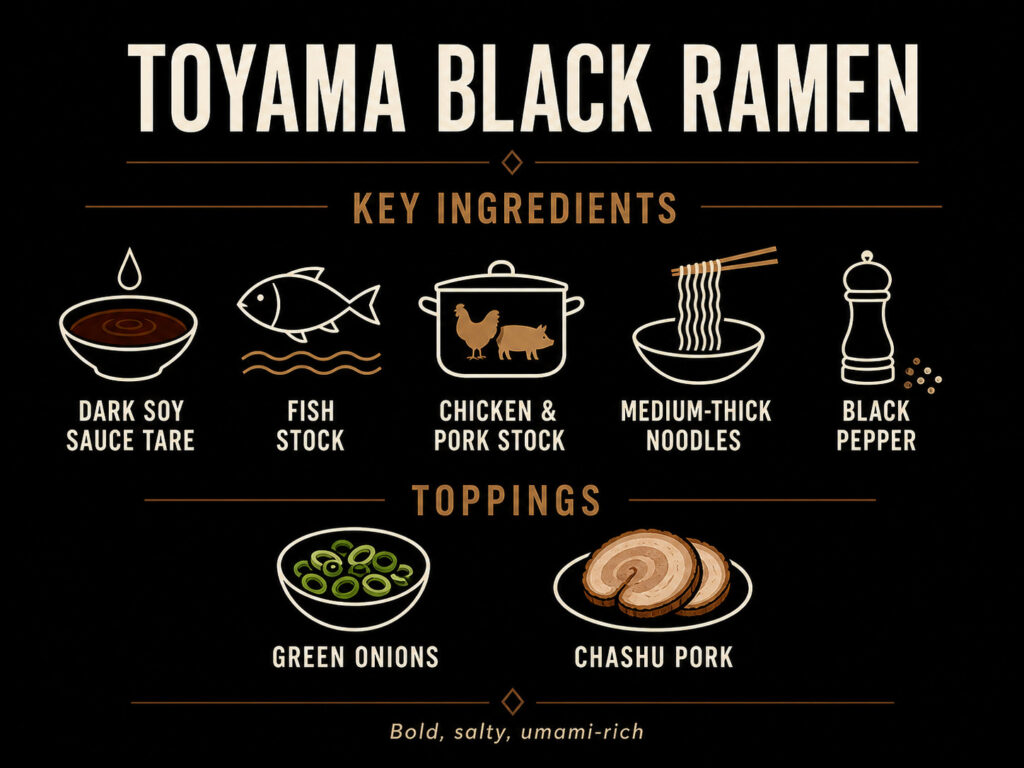
A few core ingredients build the flavor of Toyama Black Ramen. Understanding each one makes it easier to spot the differences between shops.
- Dark soy sauce tare: The base of the broth. Each shop uses its own blend, and it drives both the color and the salt level.
- Fish stock: Often made from bonito or dried sardines. It adds umami and softens the saltiness.
- Chicken and pork stock: Simmered separately, then blended in to give the broth body and richness.
- Medium-thick noodles: Firm noodles that hold up well against the strong broth.
- Black pepper: Added generously at the end for a sharp, spicy finish.
- Green onions: Piled on top, chopped and fresh.
- Chashu pork: Simmered pork belly that melts a little sweetness into the soup.
How to Eat Toyama Black Ramen
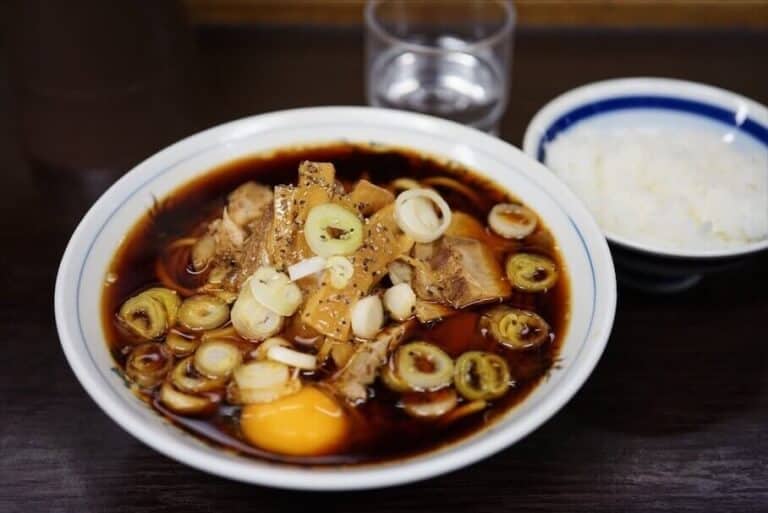
Locals tend to follow a loose pattern when eating this dish. Trying it this way brings you closer to how Toyama residents actually enjoy their bowl.
- Taste the noodles first, and notice the firm, chewy texture.
- Order a side of rice, then eat it together with the broth.
- Sip the soup slowly, and decide for yourself whether to finish the bowl.
This habit traces back to when manual laborers used the ramen as a rice topping. Because of that history, the broth’s saltiness is built to pair with plain white rice.
Toyama Black Ramen History
Origins
Toyama Black Ramen comes from Toyama City’s downtown area. The history dates back to around 1955. At the time, the city was in the middle of rebuilding after the Toyama air raid, and manual laborers filled the streets. Cooks created this ramen to help those workers replace lost salt after a long day. They used strong dark soy sauce to make a bowl that pairs well with rice.
Rise to National Fame
The dish started out as a food stand. It later grew into a proper shop under the name Daiki. Eventually, it settled in Toyama’s Nishimachi district and became known as Nishimachi Daiki. Around the same time, local ramen forums grouped several dark-broth shops, including Menya Iroha, under the shared label “Toyama Black.” Menya Iroha in particular took home the top sales spot at the Tokyo Ramen Show five times since the event began in 2009. That kind of recognition helped push the dish onto the national stage.
How Toyama Black Ramen Differs from Other Ramen
Compared with standard soy sauce ramen, Toyama Black Ramen has a few clear differences. The table below breaks them down.
| Item | Toyama Black Ramen | Regular Soy Sauce Ramen |
|---|---|---|
| Broth color | Nearly black, from dark soy sauce | Light to medium brown |
| Saltiness | Bold, though it varies by shop | Moderate and fairly consistent |
| Noodles | Medium-thick, curly noodles | Thin to medium noodles |
| Eating style | Often paired with a bowl of rice | Usually eaten on its own |
| Rice pairing | Excellent, almost like a side dish | Less common to order rice alongside |
In short, Toyama Black Ramen feels less like a standalone noodle dish and more like a full meal built around rice. If you want to compare it with other local ramen styles across Japan, our guide to Japanese Ramen covers regional variations in more depth.
Where Can You Eat Toyama Black Ramen?
Roughly 20 shops around Toyama City serve their own version of this dish. Takaoka City also has a strong lineup, especially among shops known for house-made noodles and chashu. Several restaurants even have branches near Toyama Station, which makes the dish easy to reach for travelers passing through by train. If you’re curious about other Toyama specialties, the Toyama Food guide is a good place to explore further.
Souvenirs and Ways to Enjoy It at Home
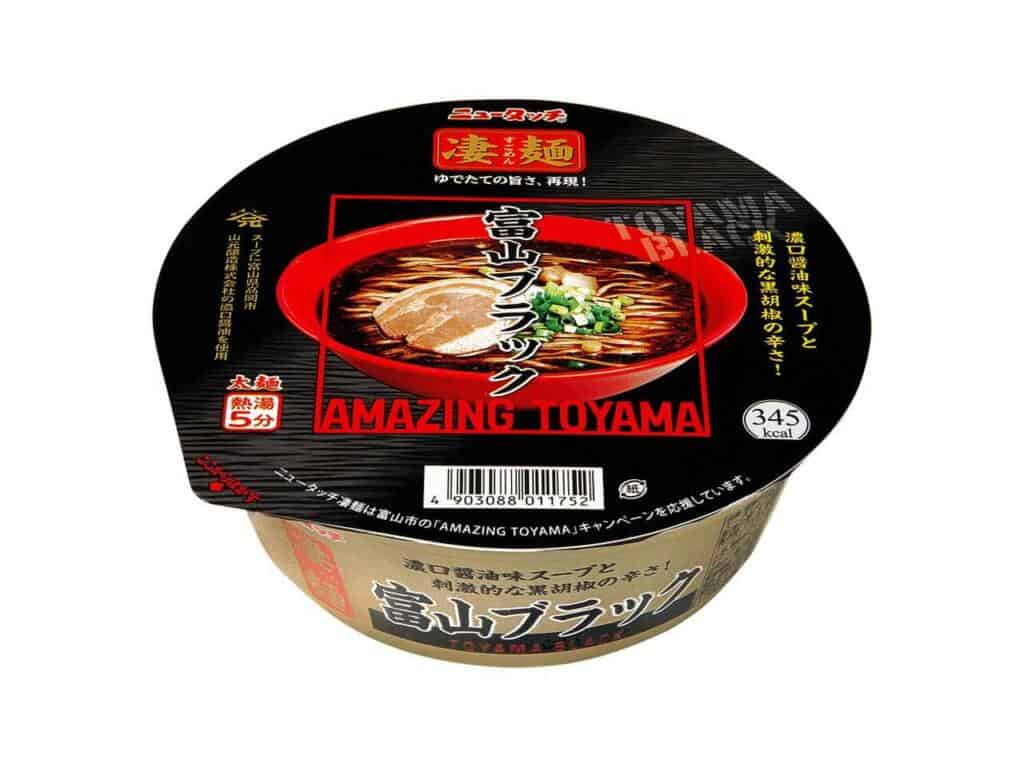
You don’t have to visit Toyama to try this ramen. Instant cup versions have been around since 2007, when a major food company first released one nationwide. Other manufacturers followed with their own versions in the years after. Nissin Foods joined the lineup in 2010, and today you can find Toyama Black Ramen at supermarkets and convenience stores across Japan. Souvenir packs of fresh noodles are also sold for people who want to recreate the dish at home. If mail order is more convenient, several retailers ship both cup noodles and fresh noodle sets. For another Toyama souvenir worth trying, take a look at Masu Zushi, the region’s famous pressed trout sushi.
Best Toyama Black Ramen Restaurants
Nothing beats trying the real thing in Toyama or Takaoka. Below are four shops, each with a distinct style. Hours and holidays can change, so it’s worth checking each shop’s official page before you visit.
| Restaurant | Saltiness | Signature Trait | Area | Good for First-Timers? |
|---|---|---|---|---|
| Nishimachi Daiki Main Store | Bold | Classic, old-school saltiness | Toyama City | Best for the original flavor |
| Menya Iroha | Milder | Smooth fish-based broth | Toyama City | Great for first-timers |
| Ramen no Shoryu | Bold | House-made noodles and chashu | Takaoka City | Best for ramen enthusiasts |
| Ramen Makotoya | Milder | Extra-thick, chewy noodles | Takaoka City | Good if you prefer less salt |
Nishimachi Daiki Main Store
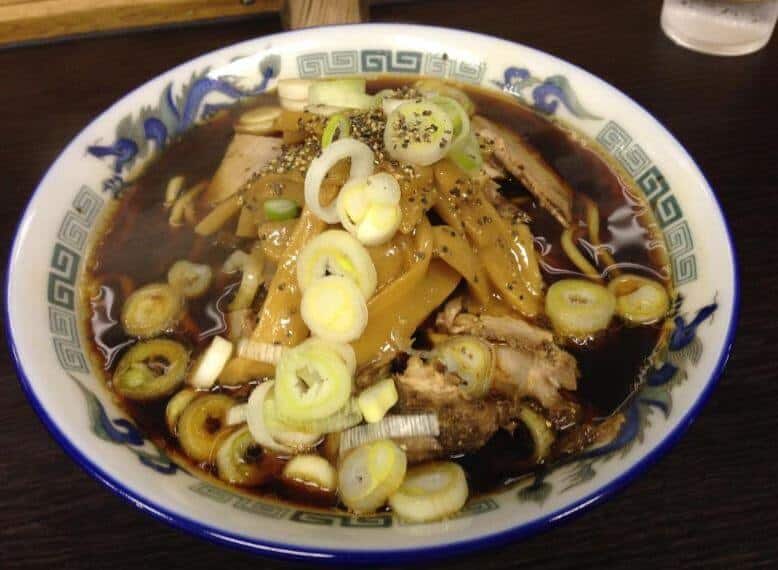
This is the shop to visit if you want the original flavor. You can order a medium, large, or extra-large bowl, and the taste feels genuinely nostalgic. A side of rice is popular here, and many regulars add a raw egg to soften the saltiness. The chashu is well seasoned, and the noodles hold a satisfying chew. This shop is known as the classic, orthodox style of Toyama Black Ramen. It now has a branch near Toyama Station, so visitors can stop by easily. Ownership has changed hands over the years, yet the shop’s secret sauce recipe remains the same.
Menya Iroha
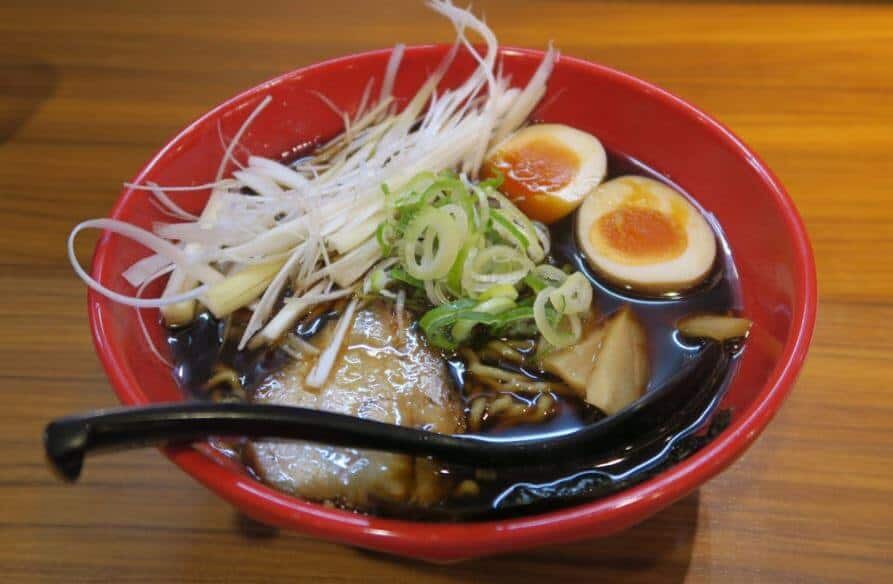
If the salt level worries you, this shop is worth trying first. It has grown into a chain with locations in Ishikawa Prefecture and even overseas, and the menu goes well beyond black ramen alone. Here, the broth is noticeably lighter and less salty than at most other shops. The secret lies in a fish-based soy sauce aged over many years, which builds rich flavor without piling on the salt. Chashu simmered for hours in that same soy sauce turns melt-in-your-mouth tender. It’s an easy recommendation for anyone trying Toyama Black Ramen for the first time.
Ramen no Shoryu
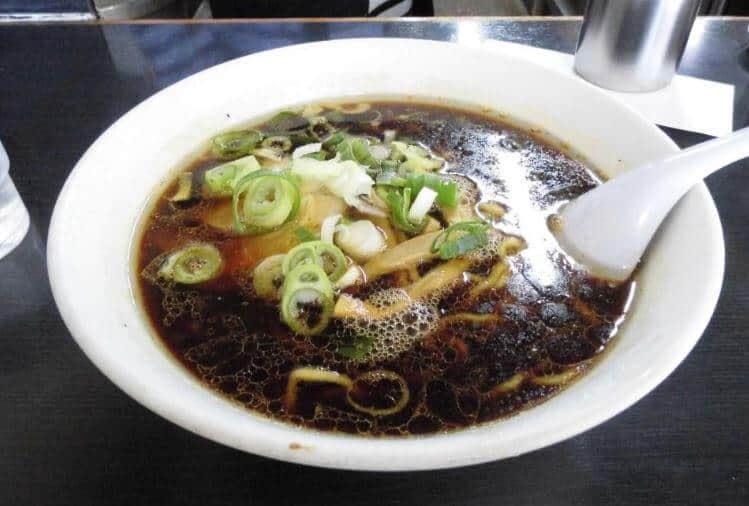
This long-running favorite sits in Takaoka City. The shop makes its noodles, broth, and chashu completely in-house. A blend of Noda and Ono soy sauces goes into a base built from chicken and pork bones, giving the broth its distinct character. The chewy, house-made noodles add real substance to every bite. Regulars keep coming back for a flavor that’s easy to crave.
Ramen Makotoya
This shop’s calling card is its extra-thick noodles. If salty broth usually holds you back, this bowl is a gentler option. The rich soup and thick noodles work together to make a hearty, satisfying meal. Portions run generous, so it’s worth arriving hungry.
Final Thoughts
Toyama Black Ramen leaves a strong impression with its dark soy sauce broth and firm, medium-thick noodles. The color suggests an overpowering saltiness, but the actual flavor shifts a lot from shop to shop. First-timers do well starting with a milder bowl at Menya Iroha. Cup noodles and souvenir packs also make it easy to bring the flavor home after your trip. For more of Toyama’s local food scene, check out Toyama Food, or compare it against other regional bowls in our Japanese Ramen guide.
Toyama Black Ramen FAQ
- Why is the soup black?
-
A large amount of dark soy sauce gives the broth its black color. A tare simmered for a long time is what produces that deep shade. That said, the intensity of the color and the aftertaste both vary by restaurant. Some bowls lean mild and drinkable, while others stay strong and salty from start to finish.
- When was Toyama Black Ramen created?
-
Shop owners in Toyama created this ramen around 1955 for manual laborers in the city. Many of these workers were rebuilding Toyama after the wartime air raid, and they needed to replace the salt they lost while sweating through the job. What began as a food stand eventually grew into a full restaurant. Today, it stands as one of Toyama’s most recognizable local dishes.
- What are the characteristics of Toyama Black Ramen?
-
A black broth built on dark soy sauce and medium-thick, curly noodles define this dish. Coarsely ground black pepper and a heap of chopped green onions finish the bowl. Chashu and menma round out the toppings in most versions. Between the striking look and the bold flavor, it’s a bowl that’s hard to forget.
- Is it really eaten with rice?
-
Yes, it is. Manual laborers originally ate this ramen as a topping for rice, and many diners still order rice alongside their bowl today. The broth’s saltiness pairs naturally with plain white rice. Of course, plenty of people also enjoy it with just the noodles and soup.
- Where can you eat Toyama Black Ramen?
-
Most shops cluster around central Toyama City, with a strong second cluster in Takaoka City. Several restaurants also operate branches near Toyama Station, making the dish easy to reach for travelers. Since the taste varies by shop and by region, trying a few different bowls is a great way to find your favorite.
References
- Wikipedia Japan – Toyama Black Ramen (Surveyed: June 2025)
- Government of Japan Online Magazine (Highlighting Japan) – Feature on Toyama Black Ramen (Surveyed: June 2025)
- Ministry of Agriculture, Forestry and Fisheries of Japan (MAFF) – Traditional Food Guide: Toyama Prefecture (Surveyed: June 2025)
- Takaoka Tourism Official Site – Toyama Black Ramen in Takaoka (Surveyed: June 2025)
Related Articles
- Toyama Food – Seafood Cuisine from Toyama Bay (Surveyed: June 2025)
- Masu Zushi (鱒寿司) (Surveyed: June 2025)
- Japanese Ramen – Regional Styles, Famous Bowls & Ramen Culture in Japan (Surveyed: June 2025)




Comments