




Seida no Tamaji is a traditional potato dish from Yamanashi Prefecture. Made from small potatoes simmered in a sweet and savory miso glaze, it represents both the local food culture of Uenohara City and a remarkable story of survival from the Edo period. The name alone carries history inside it. If you are looking for a regional Japanese dish with real roots, this is one worth knowing.
What Is Seida no Tamaji?
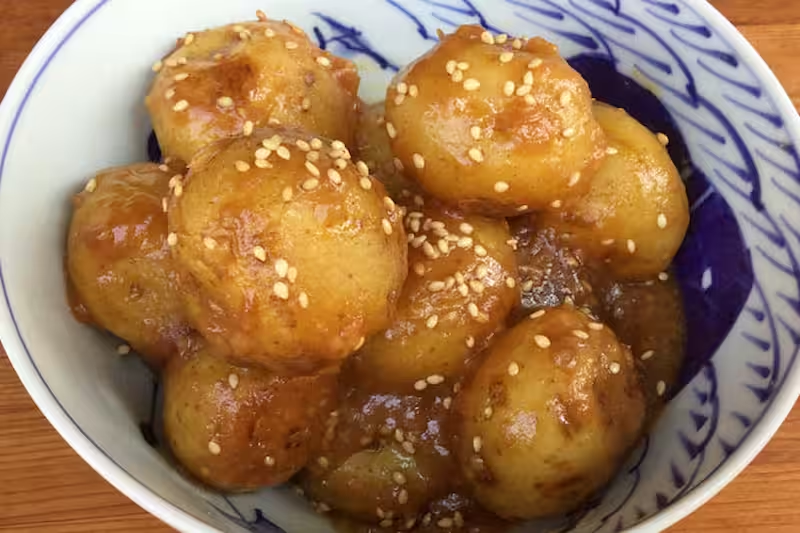
In the local dialect of Yamanashi, “tamaji” refers to tiny, bite-sized potatoes. These were the smallest potatoes from the harvest, too small to sell at market. Farmers kept them for home use rather than waste them. Over generations, this modest habit became something genuinely special.
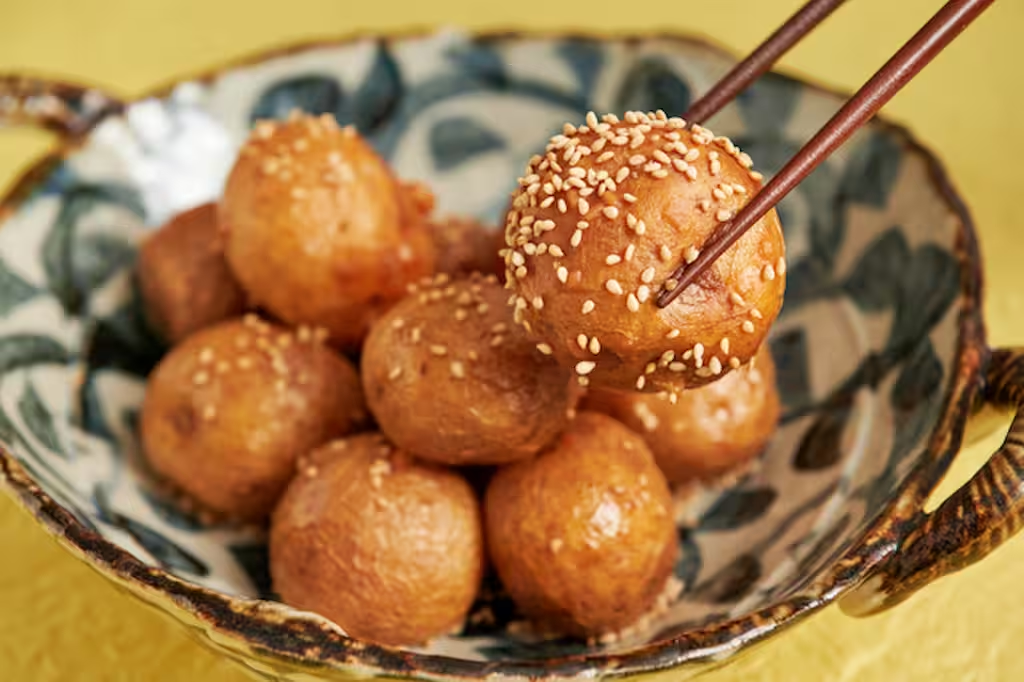
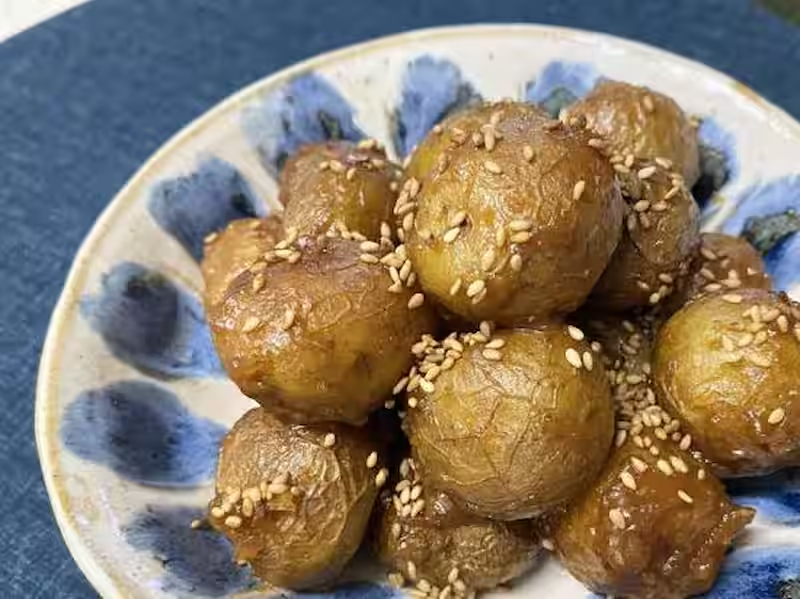
The potatoes cook whole, with their skins still on. They simmer slowly in a thick sauce of miso, sugar, and sometimes a splash of sake or soy sauce. The sauce reduces into a glossy, caramelized glaze that clings to every potato. It is rustic home cooking at its most honest, and somehow, it tastes like more than the sum of its parts.
What Does Seida no Tamaji Taste Like?
The first thing you notice is the glaze. It is sweet and savory at once, with a depth that comes from fermented miso rather than just sugar alone. The outside of each potato has a slight firmness where the sauce has set. Then you bite through, and the interior is soft, floury, and warm.
The flavor profile leans toward the sweeter end of Japanese comfort food. It is not sharp or heavily salted. There is a rounded, almost nutty quality from the miso that keeps the dish from feeling one-dimensional. Some versions add a small amount of sesame oil, which brings a faint warmth to the finish. Overall, it is the kind of taste that feels immediately familiar, even if you have never eaten it before. That is probably why locals call it comfort food without hesitation.
Why Are Tiny Potatoes Used?
This is a fair question. Most cuisines would simply discard the smallest potatoes, or peel and mash them into something else. Yamanashi farmers took a different approach. These tiny potatoes, often left after sorting the main crop, were given their own place at the table.
Part of this reflects the agricultural values of the mountain village communities in this part of the Chubu region. Wasting food, especially food grown by hand in difficult terrain, went against the grain of rural life. The small potatoes cooked faster, absorbed sauce more evenly, and held their shape well. Their size turned out to be an advantage. This kind of practical wisdom, turning what seems like a limitation into a feature, runs through much of Japan’s regional food culture.
Today the dish also carries quiet meaning around food sustainability. Using every part of the harvest, including the pieces that do not meet commercial standards, feels very relevant. Some things do not need to change.
The Hero Behind the Potato
The name of this dish honors a real person: Seida Nakai, a local official who worked in the Kofu domain of Kai Province during the Edo period (1603–1868). The 18th century brought repeated famines to Japan. Rice harvests failed across the country, and rural communities in mountain areas like Yamanashi faced genuine starvation.
Seida Nakai understood that potatoes offered something rice could not. They grew in poor soil. Cold mountain conditions did not stop them. Their yield per area of land was reliable even in difficult years. He traveled significant distances to obtain potato seeds and brought them back to the villages of what is now Uenohara City, specifically the hamlet of Yuzurihara.
The impact was real. Potato cultivation spread through the region and helped communities endure the famine years. Villagers remembered. They named the dish after him, and in time they built a small shrine to honor Seida Nakai as a kind of protective figure, sometimes called the “Potato God” of the area. That shrine still stands. Eating this dish is, in a quiet way, an act of gratitude that has lasted roughly 250 years.
How Is Seida no Tamaji Made?
The recipe is simple. That simplicity is part of what makes it feel so honest. You do not need special equipment or rare ingredients. What you need is patience and good miso.
- Scrub the small potatoes thoroughly. Do not peel them.
- Boil in salted water until just tender, around 15 minutes depending on size.
- Drain and return to the pan over medium heat.
- Add miso, sugar, and a small amount of sake or mirin.
- Stir and reduce until the sauce thickens into a glaze.
- Coat every potato evenly and serve warm.
Proportions vary by family and by restaurant. Some cooks use white miso for a milder, slightly sweeter result. Others prefer red miso for a deeper, more savory finish. Both approaches are authentic. This is the kind of dish where personal adjustment feels appropriate, and probably always has been.
Nutritional Highlights
Seida no Tamaji is modest in presentation but genuinely nutritious. Cooking the potatoes skin-on preserves nutrients that would otherwise leach away during peeling and boiling.
- Vitamin C: Potatoes are a reliable source, supporting immune function and skin health. Leaving the skin intact keeps more of it in the dish.
- Potassium: Present in useful amounts, contributing to normal blood pressure and muscle function.
- Dietary Fiber: The skin adds fiber that supports healthy digestion, something often missing from peeled potato preparations.
- Fermented Soybean Benefits: Miso brings probiotics, amino acids, and minerals. Regular fermented food consumption is associated with gut health and, interestingly, Yuzurihara is sometimes cited in longevity research as a region with notably long-lived residents.
When Do People Eat Seida no Tamaji?
The dish appears most naturally in autumn, when new potatoes come in from local farms. That seasonal timing still shapes how and where it gets served. Roadside stations (道の駅, michi-no-eki) around Uenohara City offer it as a local specialty, often sold warm in small bags alongside other farm products.
Local festivals and agricultural events in the Yamanashi mountain communities include it as part of the seasonal food lineup. Some elementary schools in the area incorporate it into school lunch programs, passing the dish to a younger generation as a piece of living food culture. At home, it functions as a side dish or snack, the kind of thing a grandparent might make without measuring anything. That informality is part of its identity.
How Seida no Tamaji Compares to Other Japanese Potato Dishes
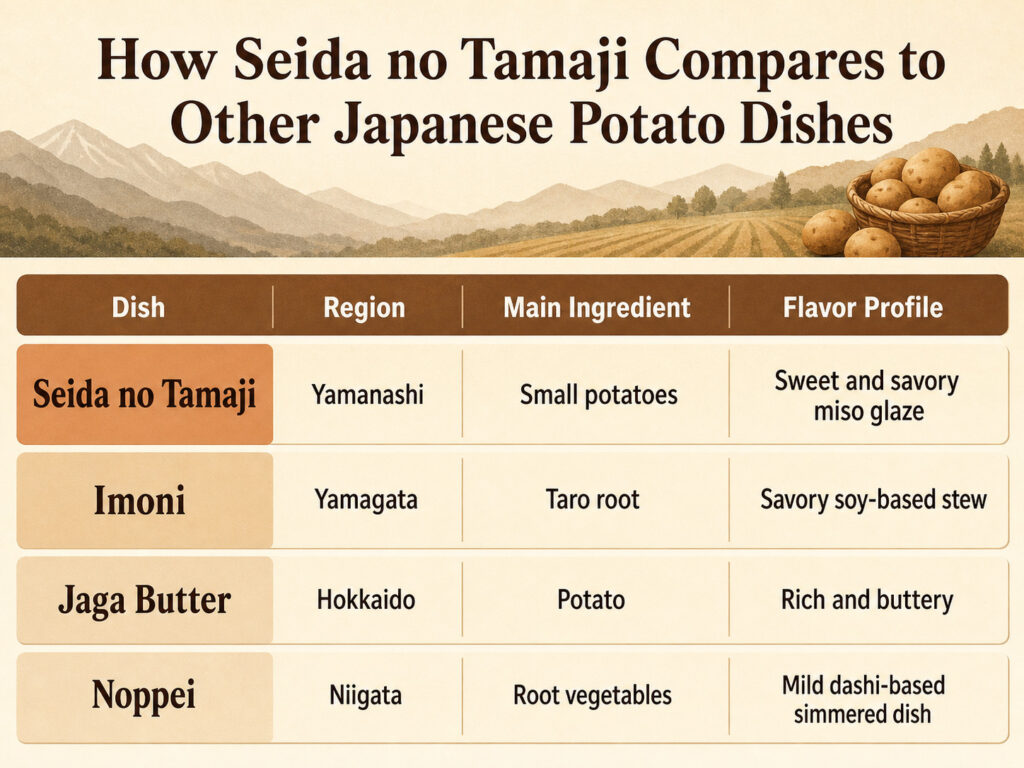
| Dish | Region | Main Ingredient | Flavor Profile |
|---|---|---|---|
| Seida no Tamaji | Yamanashi | Small potatoes | Sweet and savory miso glaze |
| Imoni | Yamagata | Taro root | Savory soy-based stew |
| Jaga Butter | Hokkaido | Potato | Rich and buttery |
| Noppei | Niigata | Root vegetables | Mild dashi-based simmered dish |
What sets Seida no Tamaji apart from other regional potato dishes is the miso glaze itself and the specific cultural narrative attached to it. Imoni and Noppei are community dishes with their own regional stories, but neither carries the connection to a named historical figure the way this one does. The dish is small in size but large in meaning.
Where to Eat Seida no Tamaji
Furusato Chojukan (ふるさと長寿館)
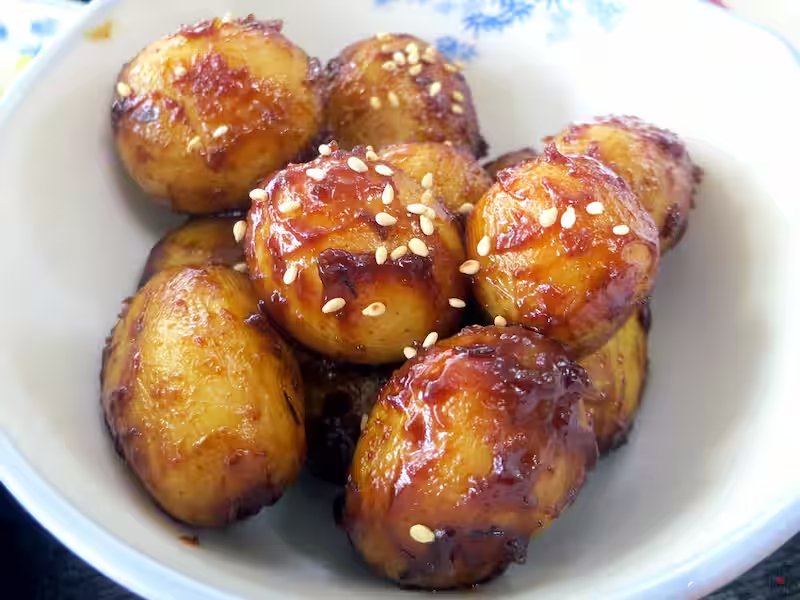
For the most authentic experience, Furusato Chojukan in Yuzurihara is the place to visit. This restaurant sits in the hamlet where Seida Nakai introduced potatoes over 250 years ago. The menu centers on traditional local ingredients, and Seida no Tamaji appears as a featured dish. Uenohara City is also known for the unusually long lifespans of its residents, which adds a certain context to eating here.
Conclusion
Seida no Tamaji is a humble dish with an outsized story. A handful of tiny potatoes coated in miso glaze does not look like much on the plate. But behind it sits a famine, a journey, a community that survived, and a man they chose to remember by naming their food after him. That kind of depth is rare, even in a country as rich in food culture as Japan.
If you find yourself in Yamanashi, this dish is worth seeking out. Not because it is complex or expensive, but because it is honest. It tastes like the mountains, the seasons, and the people who have been eating it for generations.
Exploring Yamanashi’s food culture? Also try Houtou, the hearty flat-noodle hot pot that defines mountain cooking in this prefecture, Yoshida Udon, Yamanashi’s firm and deeply satisfying noodle dish, and Miso Dengaku for another classic expression of miso in Japanese rustic cooking.
Seida no Tamaji FAQ
What is Seida no Tamaji?
Seida no Tamaji is a traditional regional dish from Uenohara City in Yamanashi Prefecture. It consists of tiny potatoes, cooked skin-on and coated in a sweet and savory miso glaze. The dish is considered a local heritage food with strong ties to the area’s agricultural history.
Why is it called Seida no Tamaji?
The dish is named after Seida Nakai, an Edo-period official who introduced potato cultivation to the hungry villages of Kai Province (now Yamanashi Prefecture) during a famine. “Tamaji” is the local dialect word for small potatoes. The name honors both the man and the ingredient he brought to the community.
Is Seida no Tamaji sweet or savory?
Both. The miso glaze combines fermented soybean paste with sugar, creating a flavor that is distinctly sweet-savory. The balance tilts slightly toward sweetness in most traditional preparations, though this varies by cook and region within Yamanashi.
Where can you eat Seida no Tamaji?
The most authentic version is at Furusato Chojukan in Yuzurihara, Uenohara City. Roadside stations around Uenohara also offer it seasonally. Outside Yamanashi, it rarely appears, which makes visiting the source all the more worthwhile.
Who was Seida Nakai?
Seida Nakai was a local official in the Kofu domain of Kai Province during the Edo period. He recognized that potatoes could survive in mountain conditions where rice could not. During a major famine, he traveled to obtain potato seeds and distributed them to struggling villages in what is now Uenohara City. Residents built a shrine in his honor, and the dish named after him has carried his memory forward for roughly 250 years.
References
Ministry of Agriculture, Forestry and Fisheries (MAFF) – “Seida no Tamaji, Yamanashi” | maff.go.jp (accessed 2026; dish origin, regional classification, historical background on Seida Nakai)
Uenohara City Official Tourism – “Yuzurihara Village and Local Cuisine” | yuzurihara-village.com (accessed 2026; restaurant details, regional longevity culture, seasonal availability)
Yamanashi Prefecture Food Culture Archive – “Traditional Dishes of Kai Province” | pref.yamanashi.jp (accessed 2026; agricultural heritage, Edo-period famine relief records, potato cultivation history)



Comments