



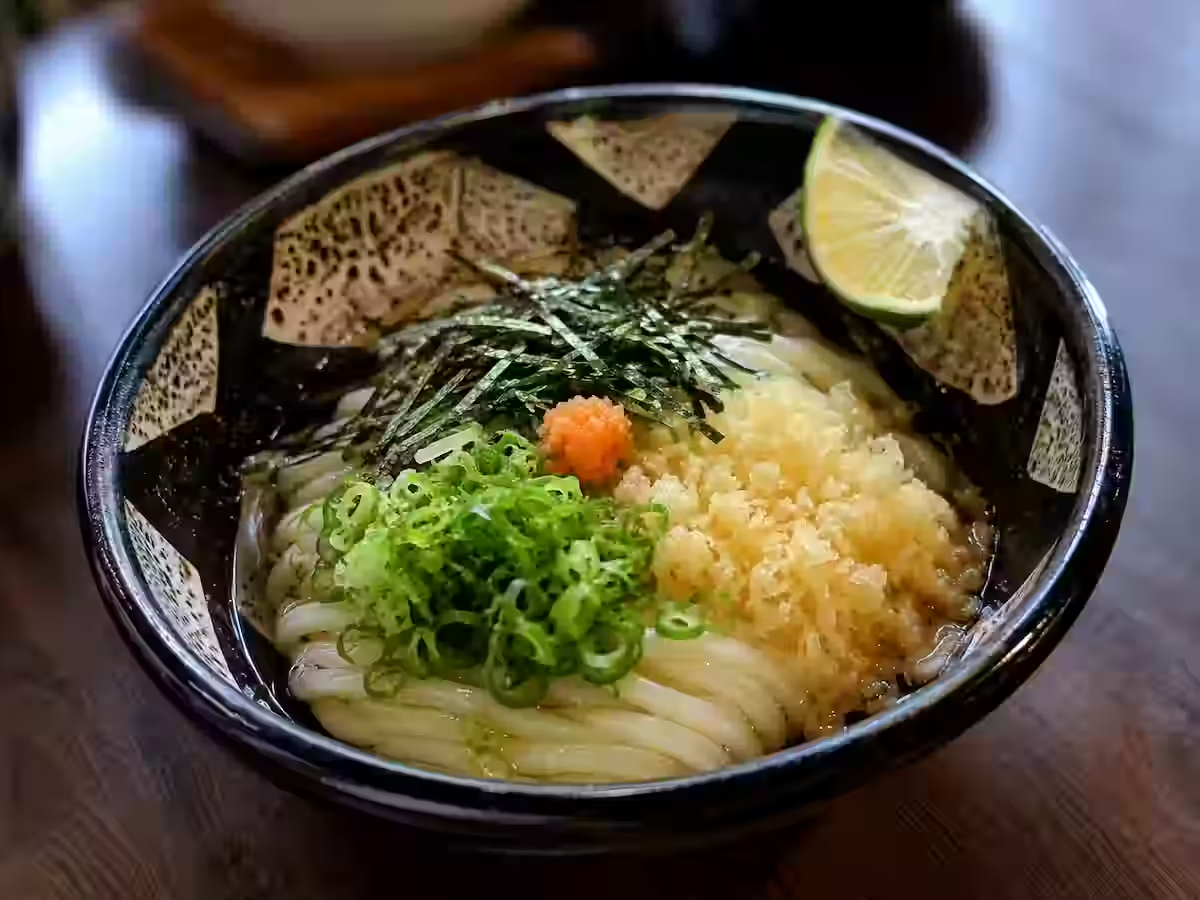
Kurashiki bukkake udon is a local Japanese udon dish from Kurashiki, Okayama, served with thick soy-based sauce poured directly over chewy noodles. Although the bowl looks simple, the sauce, toppings, and noodle texture create a bold local flavor. Today, many travelers know it as a must-try Kurashiki specialty.
The word “bukkake” means “to pour over” in this food context. Therefore, the sauce does not sit separately like zaru udon dipping sauce. Instead, it coats the noodles directly, making each bite rich, savory, and satisfying. Travelers get a compact taste of Kurashiki in one bowl.
For broader noodle context, see Japanese Noodles. To plan more regional meals, see Okayama Food.
What Is Kurashiki Bukkake Udon?
Kurashiki bukkake udon is a regional udon dish built around thick wheat noodles and concentrated soy-based sauce. Unlike soup udon, this style uses less liquid. As a result, the sauce clings to the noodles instead of surrounding them.
The flavor is bold but not complicated. Usually, the sauce combines soy sauce, dashi, sweetness, and deep umami. Cold bukkake udon highlights firm noodle texture, while hot bukkake udon feels softer and more comforting.
This famous Okayama noodle dish works as lunch, comfort food, and a quick travel meal. Moreover, the origin story gives the bowl more personality than a standard udon order. It feels casual, yet deeply rooted in local life.
Why Is It Famous in Kurashiki?
Kurashiki bukkake udon became famous because it connects directly to the city’s everyday food culture. The best-known origin story comes from Furuichi, a long-running local udon shop. According to that story, the founder’s son placed zaru udon in a bowl, poured sauce over it, and added toppings so the meal would be easier to eat during a mahjong game.
That small practical idea became a new local style. Over time, the shop refined the sauce, noodles, and toppings. Eventually, the dish grew from a family moment into Kurashiki soul food.
Furuichi opened in 1948, and the bukkake style developed during the Shōwa era. Later, its reputation spread beyond Okayama. In addition, the shop’s bukkake udon won major national udon competitions in 2016 and 2017, which strengthened its modern image.
Taste and Texture: Thick Sauce Over Chewy Udon
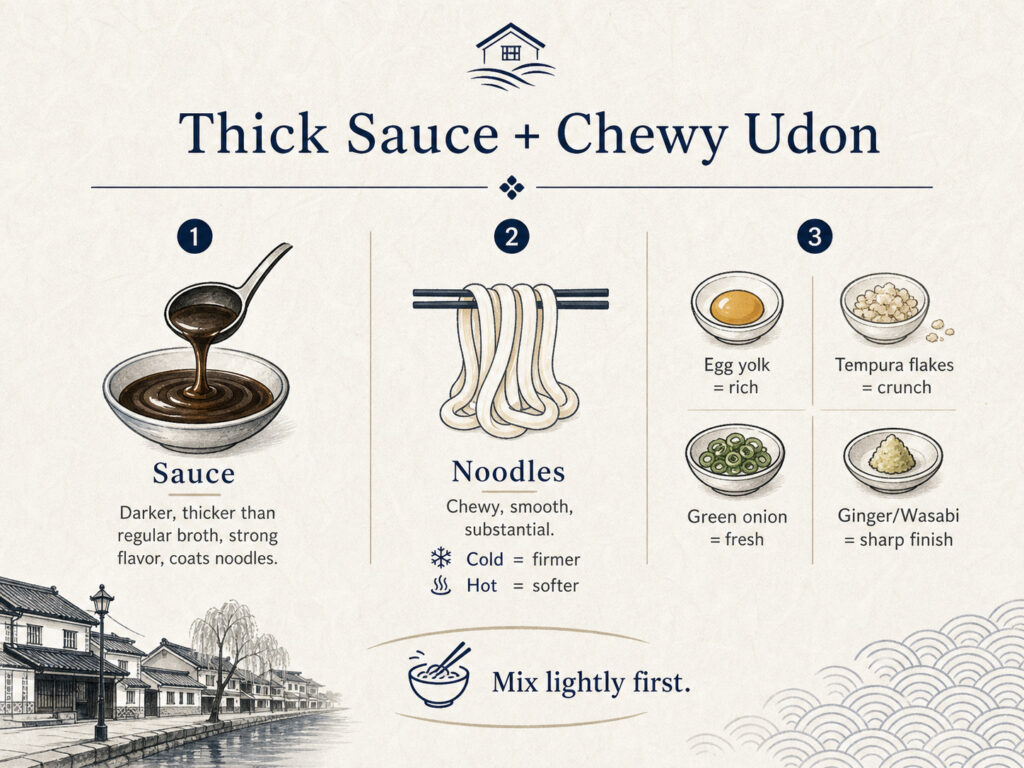
The first thing many visitors notice is the sauce. It is darker and thicker than regular udon broth. Since a small amount gives strong flavor, mixing matters. Once the sauce coats the noodles, the bowl becomes savory, sweet, and deeply satisfying.
The noodles bring the second key feature. They are chewy, smooth, and substantial. Cold noodles usually feel firmer because cold water tightens the texture. Meanwhile, hot noodles feel softer and absorb more sauce.
Toppings add contrast. Egg yolk can make the sauce richer. Tempura flakes bring crunch and oil. Green onion gives freshness, while ginger or wasabi sharpens the finish. Personally, I would taste the noodles once before mixing everything completely.
Cold or Hot: Which Should You Choose?
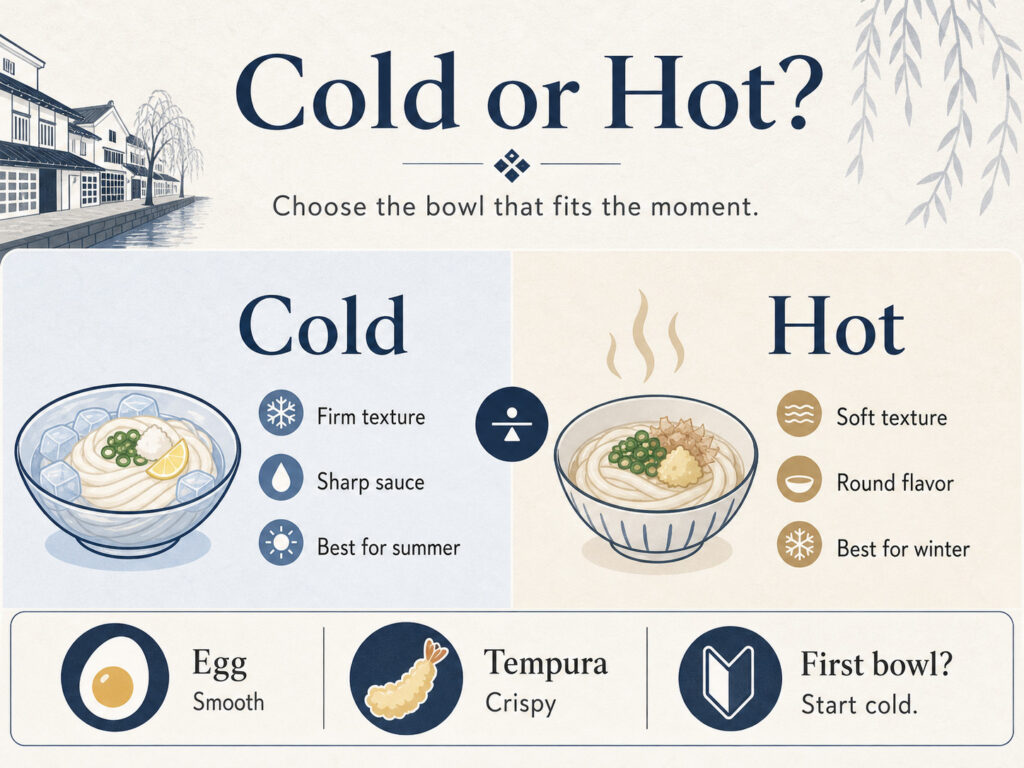
Both versions are common, and the choice changes the experience. Cold bukkake udon gives the strongest noodle texture. On the other hand, hot bukkake udon feels rounder and more comforting.
| Style | Noodle texture | Sauce impression | Best for |
| Cold bukkake udon | Firm and springy | Sharp, clear, refreshing | Summer or first-time texture lovers |
| Hot bukkake udon | Soft and chewy | Round, deep, comforting | Winter or relaxed meals |
| With egg | Smooth and rich | Milder and fuller | People who like creamy sauce |
| With tempura | Crispy and savory | More satisfying | A heavier lunch |
If this is your first bowl, cold is a good starting point. It shows the noodle strength clearly. However, on colder days, the hot version may feel more natural.
How Is It Different from Regular Udon?
Kurashiki bukkake udon differs from regular soup udon in three clear ways. First, the sauce is concentrated. Second, the noodles receive sauce directly. Finally, the toppings become part of the mixing experience.
Regular kake udon usually has hot broth surrounding the noodles. The taste feels gentle and soup-like. By contrast, bukkake udon feels more direct. The sauce reaches the noodles, toppings, and palate quickly.
Compared with zaru udon, the sauce also works differently. Zaru udon uses dipping sauce on the side. In this Kurashiki style, everything lands in one bowl. Therefore, the meal becomes easier, faster, and more casual.
For another Okayama noodle dish, see Okayama Ramen.
Common Toppings for Bukkake Udon
Toppings help define the bowl. Some shops keep things simple, while others offer tempura, beef, grated yam, or seasonal vegetables. In any case, the toppings should mix well with the sauce.
Common toppings include these.
- Green onion for freshness
- Tempura flakes for crunch
- Egg yolk or quail egg for richness
- Grated ginger for warmth
- Wasabi for a sharp accent
- Nori seaweed for aroma
- Grated daikon for lightness
- Tempura for a more filling meal
Seasonal toppings also appear. For example, lighter vegetable toppings work well in spring. In colder months, hot udon with egg or tempura feels especially satisfying.
How to Eat Kurashiki Bukkake Udon
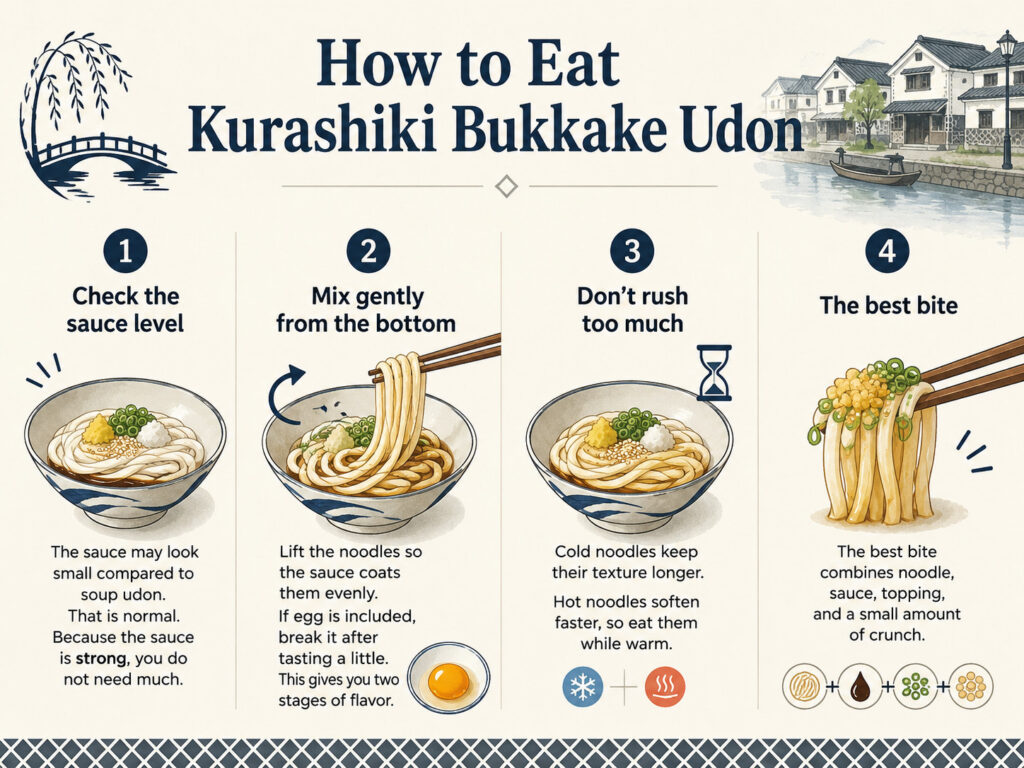
Start by looking at the sauce level. It may seem small compared with soup udon, but that is normal. Because the sauce is strong, you do not need much.
Next, mix gently from the bottom. Lift the noodles so the sauce coats them evenly. If egg is included, break it after tasting a little. This gives you two stages of flavor.
Try not to rush too much, though cold noodles keep texture longer. Hot noodles soften faster, so eat them while warm. Ultimately, the best bite combines noodle, sauce, topping, and a small amount of crunch.
The History of Kurashiki’s Bukkake Style
The dish’s history begins with postwar Kurashiki and the growth of local udon culture. Furuichi began in 1948, and the bukkake idea appeared later during the Shōwa period. The story feels very human because someone wanted to make udon easier to eat.
That convenience became a new style. The origin story also explains the dish’s character. It is practical, quick, and satisfying. Although it did not begin as luxury cuisine, it grew into a Kurashiki specialty.
Today, the style appears in shops around Okayama and beyond. Souvenir sets also let travelers take the flavor home. As a result, the dish stays connected to both tourism and local life.
Where Travelers Can Try It
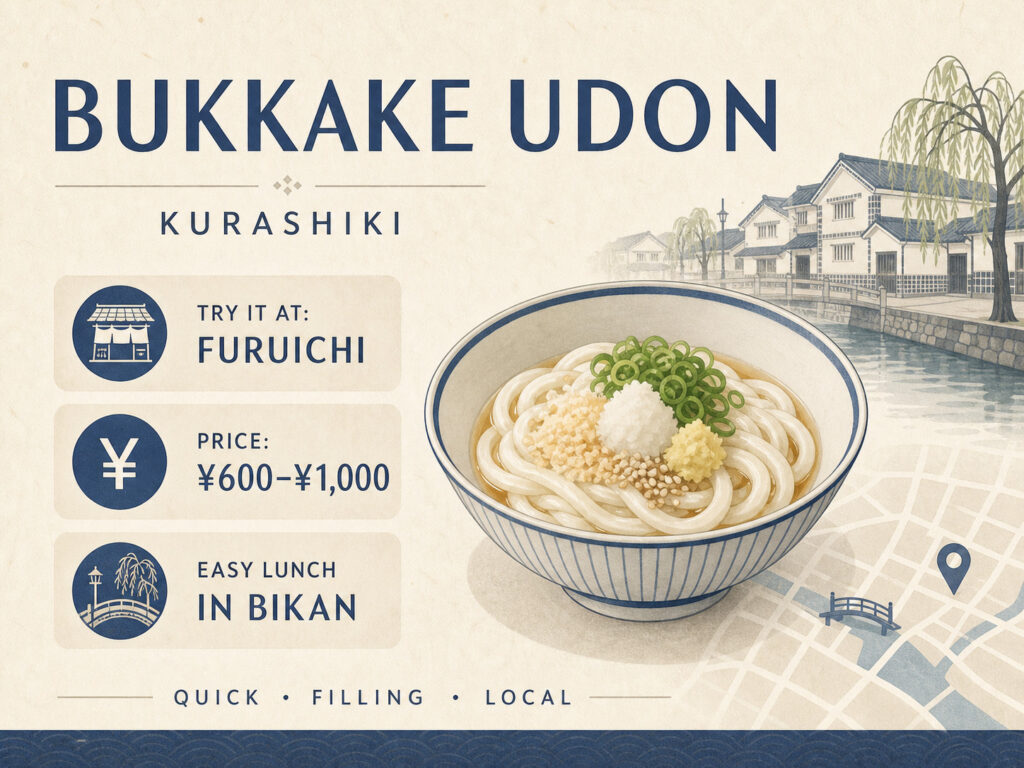
Furuichi remains the classic name for first-time visitors. The Naka shop near Kurashiki Station is convenient for travelers, while other branches suit different routes. Some visitors also try the Okayama Station Shinkansen platform branch before leaving the prefecture.
A standard bowl usually stays affordable. Many shops offer simple bowls in the ¥600 to ¥1,000 range, though toppings raise the price. Because turnover is quick, it works well during sightseeing.
If you visit Kurashiki’s historic Bikan area, bukkake udon makes an easy lunch. It is filling without taking too much time. For wider regional travel, see the Chugoku Food Guide.
Final Thoughts
Kurashiki bukkake udon is simple, rich, and deeply local. It does not rely on a large soup or complicated presentation. The appeal comes from chewy noodles, thick sauce, and toppings that mix into one satisfying bowl.
For first-time visitors, this is one of the easiest ways to taste Kurashiki food culture. Order it cold if you want firm noodles. Choose hot if you want comfort. Either way, the bowl tells a clear story of Okayama’s local noodle pride.
Kurashiki Bukkake Udon FAQ
What is Kurashiki bukkake udon?
It represents a highly popular regional noodle dish from Okayama Prefecture. Chefs prepare the meal by pouring a rich, concentrated soy-based sauce directly over thick, chewy wheat noodles. Diners can enjoy the bowl either piping hot or ice-cold depending on their preference. Generous toppings like raw egg, chopped green onions, crispy tempura flakes, and nori seaweed add delightful textures and deep flavors to the bowl.
How is Kurashiki bukkake udon different from regular udon?
Standard noodle dishes typically feature a large volume of hot, clear dashi broth. In contrast, this regional specialty utilizes a highly concentrated, sweet-and-savory soy sauce instead of a full soup. This dense sauce coats the thick noodles directly, delivering a much stronger and bolder flavor with every single bite. The final presentation feels far more robust and less soup-like than standard noodle bowls.
Is cold or hot Kurashiki bukkake udon better?
The cold version delivers much firmer, springier, and chewier noodles. On the other hand, the hot preparation softens the dough and offers a highly comforting warmth. First-time visitors almost always choose the chilled style to fully appreciate the legendary texture of the wheat noodles. During the freezing winter months, however, the warm bowl provides a far more satisfying and warming dining experience.
Why is bukkake udon famous in Kurashiki?
The city shares a deep historical connection with the origin story of this unique meal. A legendary local shop named Furuichi, which opened in 1948, originally pioneered and popularized this specific style during the Showa era. It quickly developed into the ultimate local soul food for residents. Eventually, the dish gained massive national attention after winning major championship titles at national noodle competitions.
What toppings go well with Kurashiki bukkake udon?
Fresh egg yolk, chopped scallions, crunchy tempura scraps, ginger, and wasabi all complement the sweet sauce beautifully. Adding a raw egg makes the dense broth significantly richer, while ginger and wasabi sharpen the overall flavor profile. Ordering a crispy piece of shrimp tempura transforms the simple bowl into an incredibly hearty, heavy meal. However, purists prefer minimal toppings to let the complex, aged soy sauce shine.
Where does Kurashiki bukkake udon come from?
This specialty originates from the historic canal district of Kurashiki City in southern Okayama Prefecture. Local farmers and merchants developed a love for thick, saucy wheat dishes to sustain themselves during busy trading days. Today, the surrounding region boasts a dense concentration of specialized restaurants maintaining this traditional recipe.
How much does Kurashiki bukkake udon cost?
A standard bowl typically costs between 500 and 900 yen. Prices vary slightly depending on the specific restaurant and the premium toppings you select. This affordable price point reflects its origins as a quick, daily soul food for the local working class. You can easily enjoy a highly filling, award-winning regional lunch on a very modest budget.
Is Kurashiki bukkake udon vegetarian or vegan friendly?
The traditional concentrated sauce contains fish stock (dashi) and sweet mirin. Vegans and vegetarians cannot safely eat the standard restaurant version, and cooks often top the bowl with a raw egg. However, you can easily prepare a plant-based version at home by brewing a dipping sauce from dried kelp and shiitake mushrooms instead of fish.
What are the main ingredients in the Kurashiki bukkake udon sauce?
The main ingredients include dark soy sauce, mirin, sugar, and a highly concentrated dashi broth made from kelp and bonito. The long-simmered, aged soy sauce gives the mixture its distinctive sweet-and-savory depth. This robust sauce clings beautifully to the thick wheat noodles without diluting the flavor.
Is Kurashiki bukkake udon popular outside Japan?
It remains relatively rare outside Japan, though noodle enthusiasts increasingly recognize its historic significance. You will occasionally find this specific style at specialty Sanuki-focused restaurants in major Asian and North American cities. This highly regional soul food successfully maintains its prestigious local charm primarily within Okayama Prefecture.
References
- Kurashiki Official Tourism – Kurashiki Udon Bukkake — checked in 2026; required reference for Kurashiki bukkake udon tourism information.
- Bukkake Furuichi Official Website — checked in 2026; origin story, ingredients, and competition history.
- Okayama Prefecture Official Tourism Guide – Furuichi Bukkake Udon — checked in 2026; English visitor guide, origin story, and shop information.
- Japanese Noodles — checked in 2026; internal reference for Japanese udon and noodle culture.
- Okayama Food — checked in 2026; internal reference for Okayama regional cuisine.
- Okayama Ramen — checked in 2026; related Okayama noodle article.
- Chugoku Food Guide — checked in 2026; broader regional food travel context.




Comments