




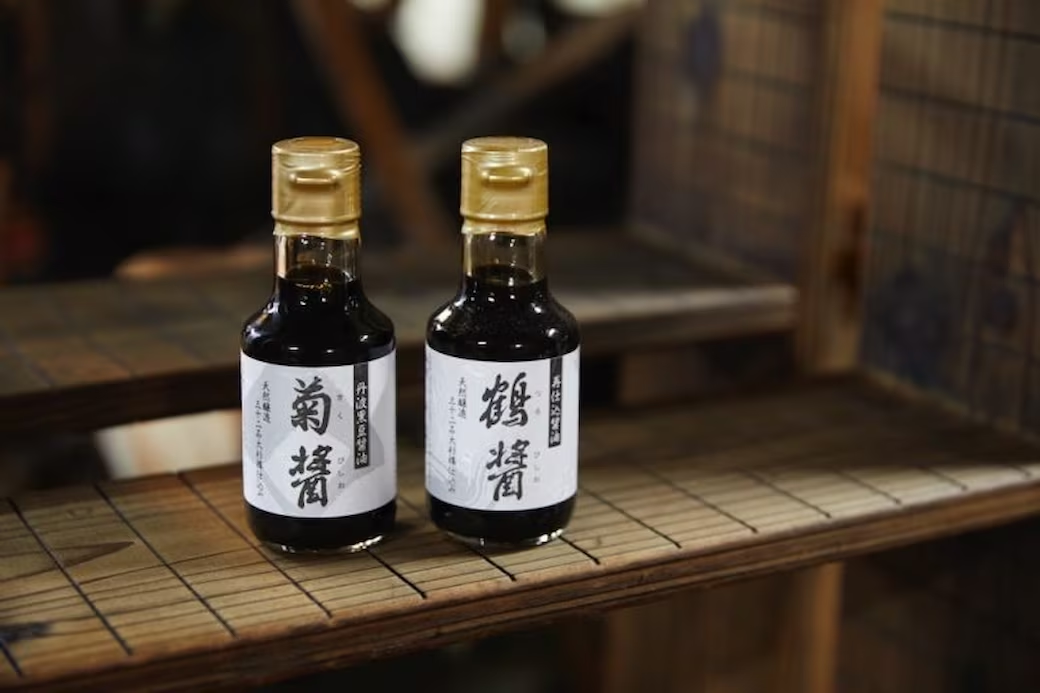
Many people visit Shodoshima for olive trees and sea views. Yet I always think about a different treasure. It is Shodoshima soy sauce, also called Shodoshima shoyu. This island-made soy sauce tastes deep, calm, and surprisingly alive. If you love food with a real story, you may feel the same.
Most Japanese soy sauce comes from modern tanks today. Shodoshima still protects older ways, and that choice matters. You can smell it in the streets near the breweries. You can taste it in simple rice, too. That is why soy sauce from Shodoshima feels special.
What Is Shodoshima Shoyu?
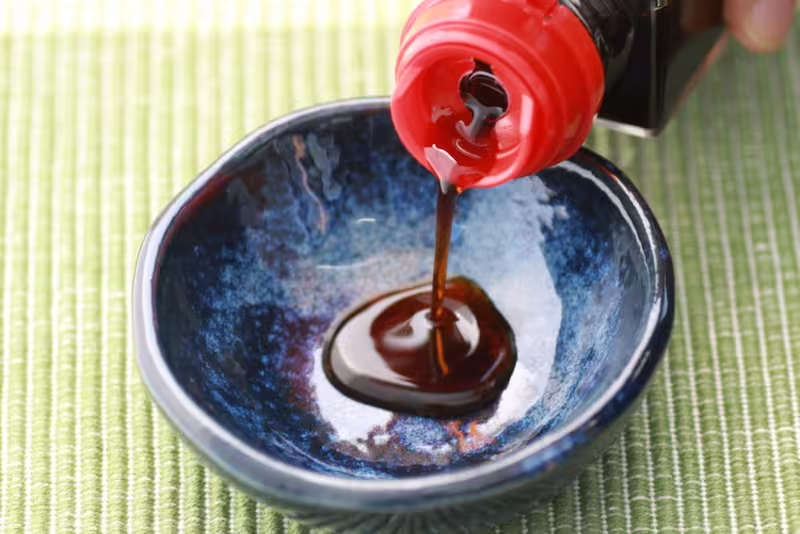
Shodoshima shoyu is a traditional Japanese seasoning. Brewers make it from soybeans, wheat, salt, and water. Koji starts the transformation, then time finishes it. This is fermented soy sauce, not a fast shortcut sauce. When it works well, it gives you Japanese soy sauce with deep umami.
You might wonder, what is Shodoshima soy sauce in one sentence. I would call it artisanal shoyu from Japan, shaped by wood, microbes, and sea air. Many brewers on the island still ferment in cedar wooden barrels called kioke. Those barrels do more than hold liquid. They host a living community that helps flavor grow.
People often say “aged soy sauce” when they talk about Shodoshima. That phrase fits because the taste needs patience. The color turns deep. The aroma becomes rounder. The salt feels softer on your tongue.
Why Shodoshima Became a Soy Sauce Island
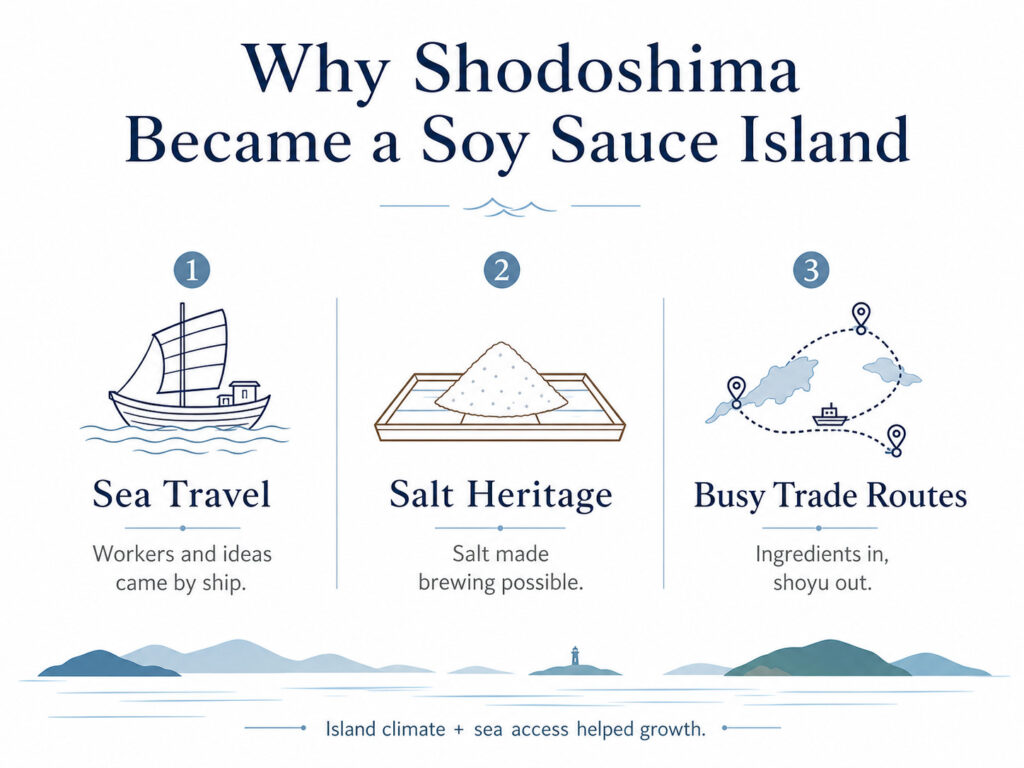
The Shodoshima soy sauce history starts with movement across the sea. Workers once came for stone, and they carried food with them. Islanders noticed a savory liquid from kinzanji miso. Curiosity kicked in, so they traveled to learn brewing skills. That early learning helped soy sauce from Kagawa take root here.
Salt also shaped the island’s path. Shodoshima built wealth through salt making for generations. Later, the market changed and the island needed a new focus. Brewers used local salt and shifted toward shoyu production. The island climate helped, too, and I think that detail often gets skipped.
Shodoshima also sat on busy sea routes in the Seto Inland Sea. Ships moved ingredients in and products out. That shipping culture made growth easier than on many small islands. When you picture a soy sauce town, you may imagine fields. Here, you should imagine boats.
Why Shodoshima Shoyu Is Different
Many soy sauce guides stop at “history, method, flavor, uses.” I used to accept that structure. Then I walked through the brewing area and smelled raw moromi in the air. I realized the island offers something bigger than a condiment. Shodoshima supports Japanese fermentation culture in a rare, visible way.
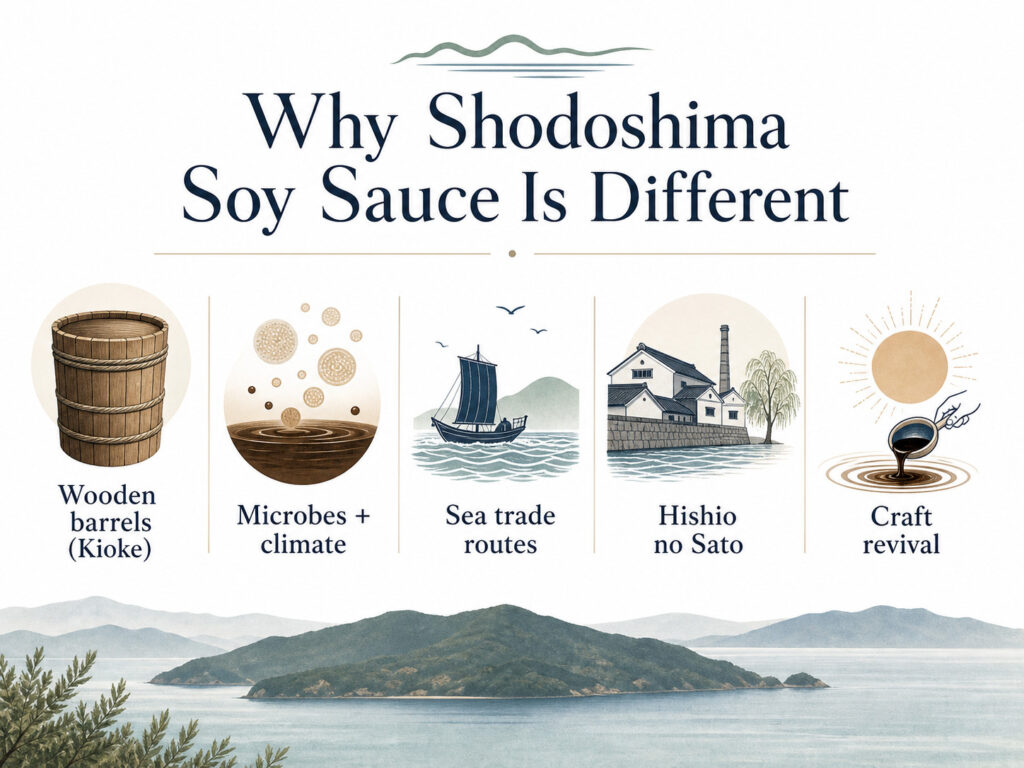
So, why Shodoshima soy sauce is famous comes down to an overlap of forces. Wood matters. Microbes matter. Climate matters. Trade matters. Place names matter, too, like “Hishio no Sato,” the soy sauce district.
- Many producers still use kioke, the traditional wooden barrels used for brewing.
- The island keeps one of Japan’s biggest clusters of working soy sauce barrels.
- Warm weather and low rainfall support steady fermentation over long seasons.
- Sea transport once made soybeans and wheat easier to bring in.
- “Hishio no Sato” holds breweries, tsukudani shops, and the smell of shoyu.
- Modern makers also drive Japan’s wooden barrel revival through craft training.
That last point may surprise you. Shodoshima does not only preserve old barrels. Some brewers also help rebuild the craft of barrel making itself. In other words, this island protects the tools that protect the taste. It feels like a quiet kind of guardianship.
Kioke Wooden Barrel Fermentation: The Heart of the Flavor
If you only remember one word from this article, pick “kioke.” A wood-barrel soy sauce can taste different from tank-brewed sauce. The barrel breathes a little with the seasons. The wood holds warmth, scent, and history. It also holds life.
Brewers often describe tiny residents inside the brewery. Those microbes live in the cedar staves, beams, and walls. They help shape soy sauce fermentation over long aging periods. Stainless tanks cannot offer the same home. That difference shows up as richer aroma and layered umami.
During my first visit to a kura storehouse, I felt unsure about my OWN nose. The smell seemed sweet, salty, and woody at once. Then it turned almost fruity for a second. I kept sniffing like a curious kid. That mix made me understand “Rich umami from wooden barrels” as a real thing.
People sometimes ask if this method is only nostalgia. I do not think so. The barrel creates a fermentation environment that cooks cannot fake with additives. The taste develops by time and fermentation. That is the whole point.
Taste and Flavor Profile
Shodoshima shoyu often tastes bold, yet gentle. You get a deep soy core, then sweetness and roasted notes. Some bottles carry a faint cedar aroma from the barrels. Many feel round rather than sharp. It is the kind of flavor that lingers without shouting.
This is why chefs call it a traditional Japanese soy sauce with depth. It brings “Deep flavor, naturally brewed” to simple food. Try it on warm rice first. Then try it on grilled fish. The sauce changes both, but it does not overpower.
Salt still matters, of course. Yet in a well-aged bottle, the salt feels integrated. The umami arrives first, then the finish comes clean. I find that comforting, especially in winter meals.
Types of Shodoshima Soy Sauce
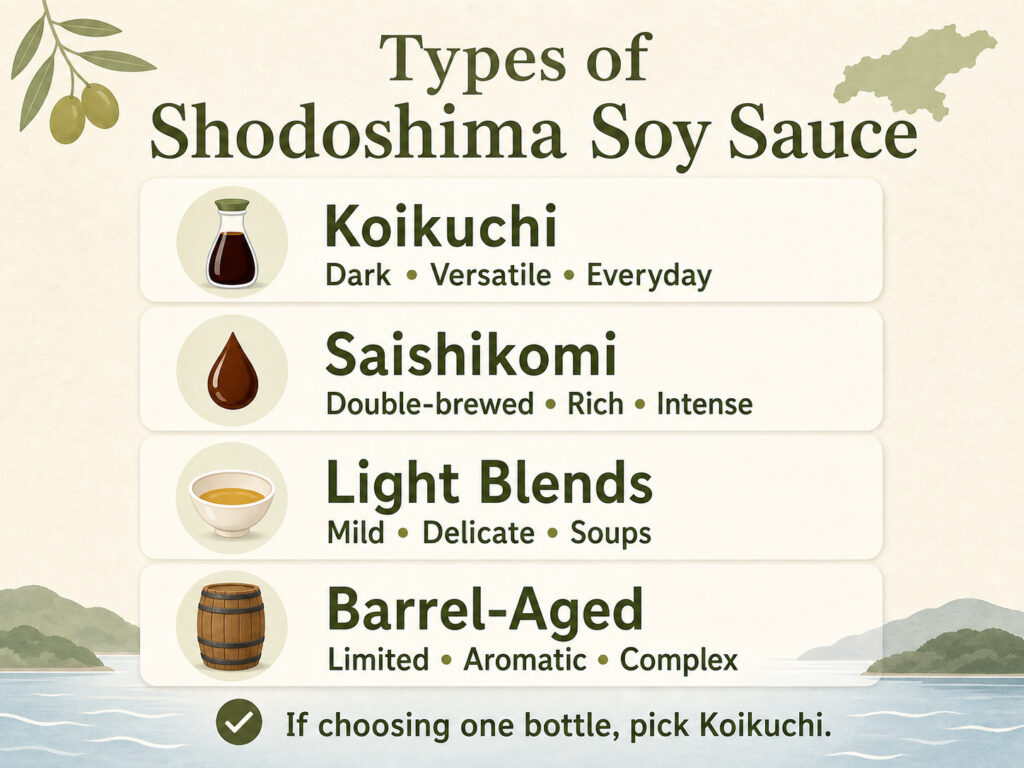
Not every bottle tastes the same, even on one island. Some producers focus on dark, classic Japanese shoyu. Others make sweeter blends for simmered dishes. You can also find richer styles that age longer. If you like tasting flights, Shodoshima makes that fun.
- Koikuchi style: dark, versatile, and the most common table soy sauce.
- Saishikomi style: double-brewed, thicker, and often more intense.
- Light and mild blends: useful for soups and delicate simmered vegetables.
- Barrel-aged limited batches: focused on aroma and slow complexity.
If you need one bottle for travel, choose the most versatile one. A classic koikuchi from Shodoshima works in almost everything. Then, add a special aged soy sauce later if you fall in love. Many visitors do, honestly.
How Shodoshima Soy Sauce Is Made
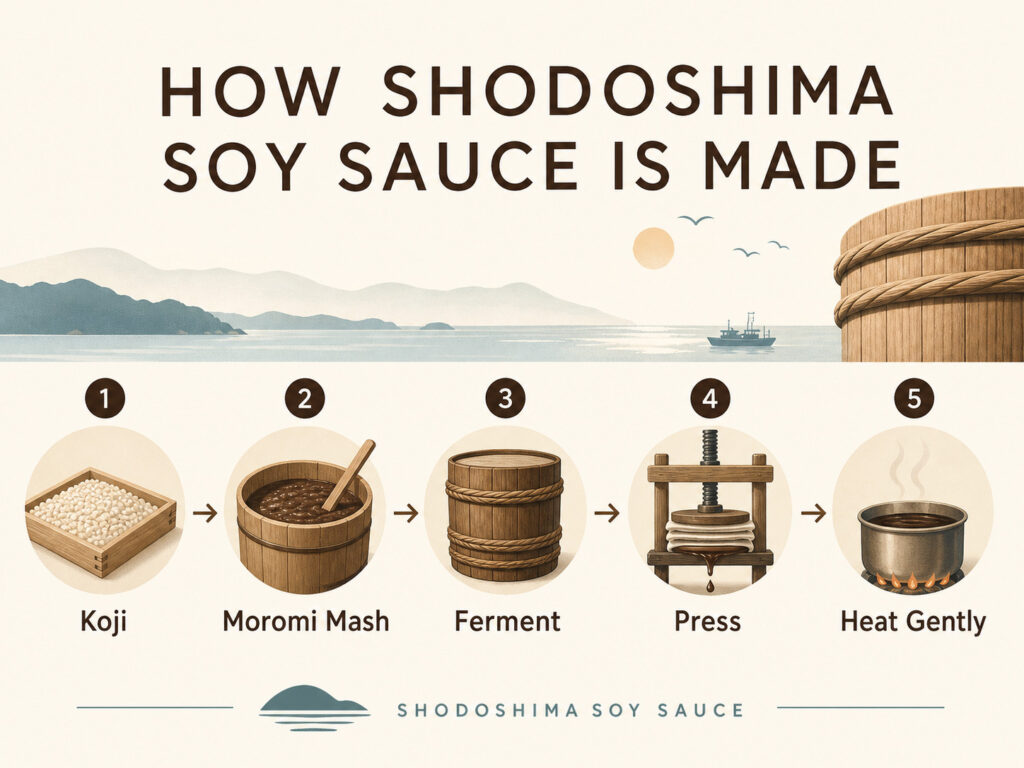
People often ask, how Shodoshima soy sauce is made. The steps look simple on paper, yet each one needs care. Brewers start by making koji, the friendly mold that drives many Japanese ferments. If you want a deeper primer, read our guide to shio koji and how koji works in everyday cooking.
Next, brewers mix soybeans, wheat, and brine to create moromi mash. They move that mash into tanks or, on Shodoshima, into kioke barrels. Then they wait and watch. They also stir, because moromi needs oxygen and even temperature. This is soy sauce fermentation as a daily rhythm.
Time does most of the hard work. Enzymes break down proteins into amino acids, which create umami. Yeast and bacteria add aroma and complexity. Eventually, brewers press the mash to separate liquid from solids. Many then heat it gently to stabilize flavor.
This process connects to a bigger story of Japanese fermentation. Foods like miso, sake, and vinegar follow similar logic. That shared logic explains why Japan’s pantry tastes so cohesive. If you enjoy that topic, our piece on Japan’s fermentation revival gives a wider view.
How Shodoshima Shoyu Is Used
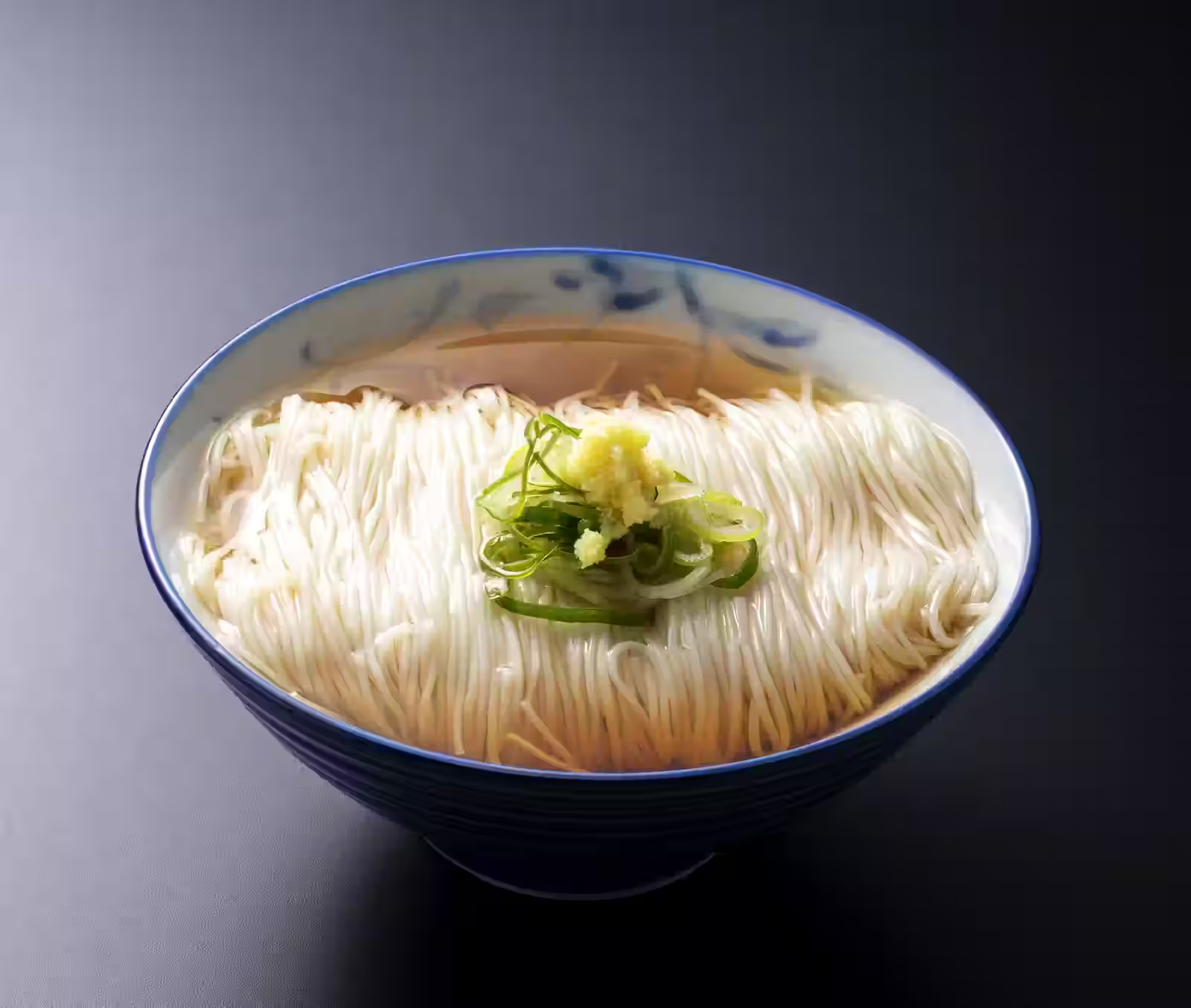
Now the practical question: Shodoshima soy sauce for cooking, how do you use it. Start with dishes where the sauce can lead. Use it in a dipping sauce for somen. Add it to simmered dishes near the end. Brush it on grilled fish for shine and aroma.
On the island, shoyu also supports local preservation culture. That connection shows up clearly in tsukudani. Tsukudani simmers seaweed, small fish, or vegetables in sweet soy sauce. It tastes perfect with rice, and it travels well as a souvenir. If you want the basics first, see our guide to Tsukudani.
- Somen dipping sauce, especially with citrus or grated ginger.
- Tsukudani, a local favorite and a Shodoshima pantry staple.
- Simmered dishes like nikujaga, pumpkin, or daikon with dashi.
- Grilled fish, where a glaze adds shine and roasted sweetness.
- Ramen tare, especially in shoyu ramen.
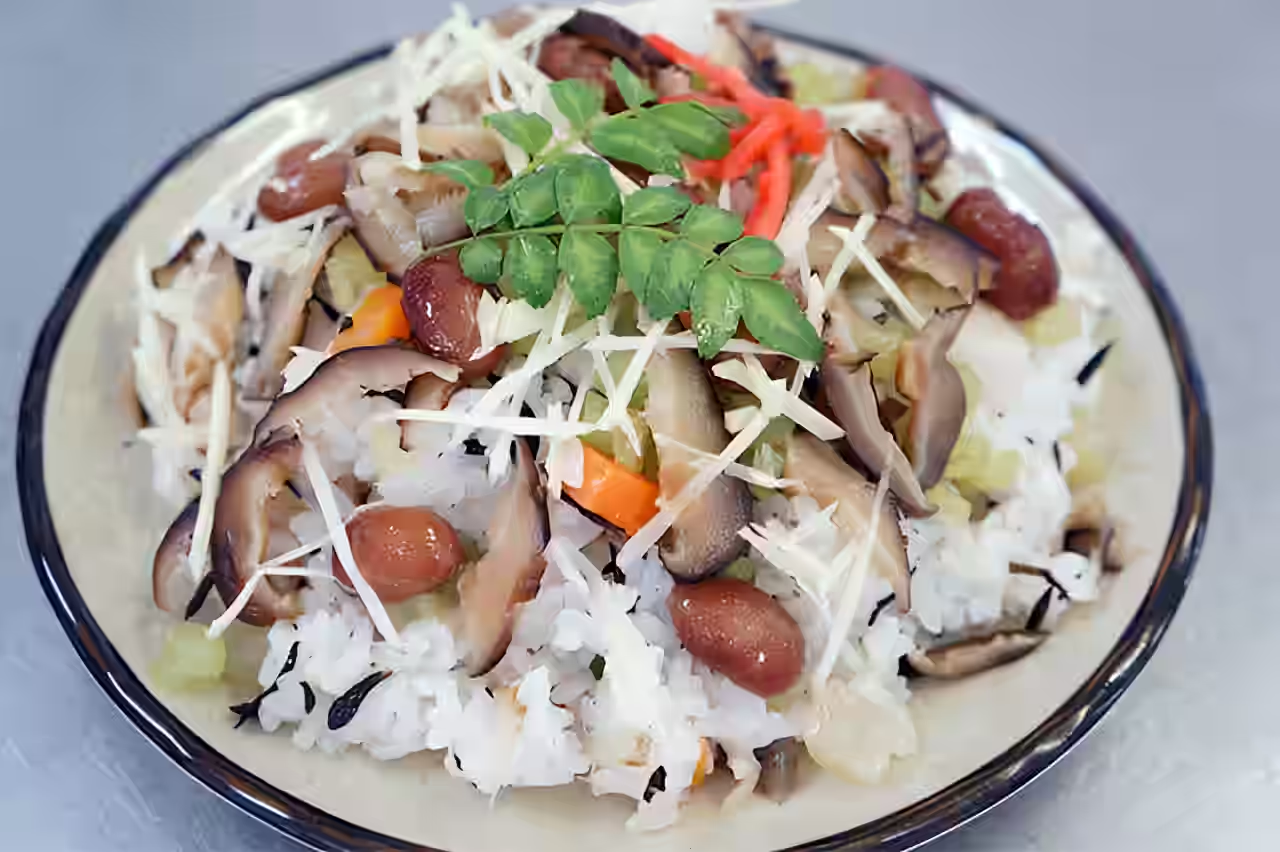
- Island cuisine, including bowls that use moromi and hishio seasoning.
If you enjoy meat, try it with olive-fed beef dishes when you visit. The salty-sweet depth balances rich fat nicely. That pair feels very Shodoshima to me. You can explore the island’s olive side in our Shodoshima olives guide.
One more tip helps at home. Do not cook this sauce to death. Add it late, or use it as a finishing drizzle. That keeps the aroma alive. The taste of Shodoshima tradition shows up most when you treat it gently.
Shodoshima Food Culture: More Than Soy Sauce
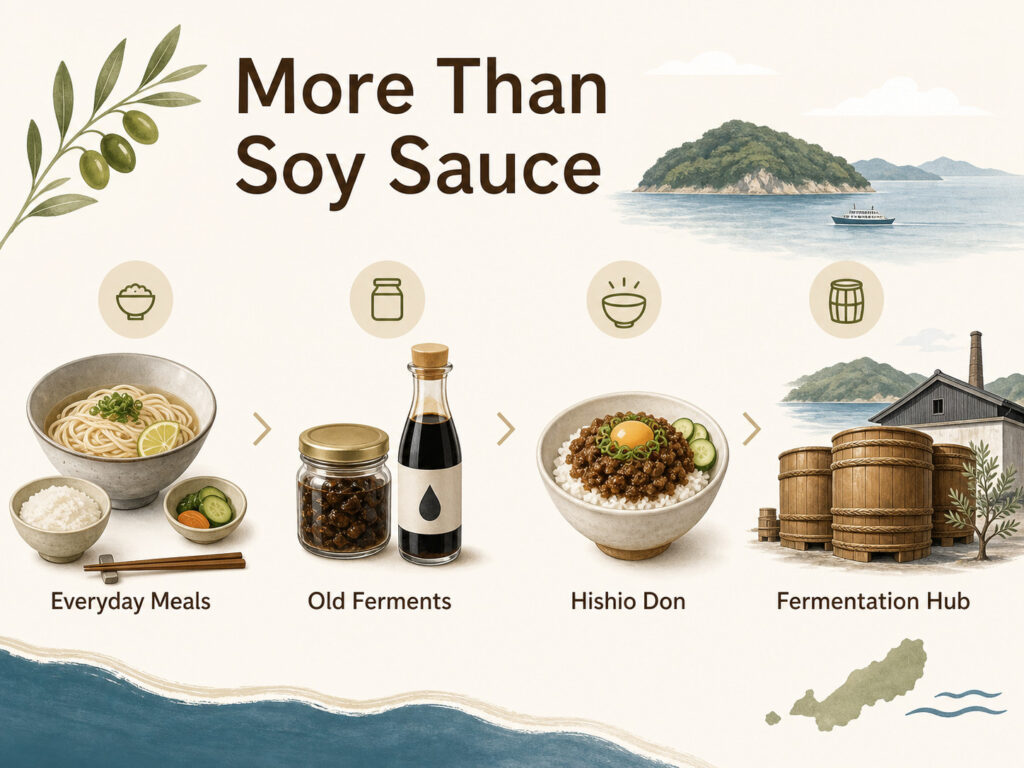
It is easy to talk about bottles and forget people. Yet Shodoshima food culture grows from daily meals. Families cook with shoyu, store tsukudani, and share noodles. Travelers taste the same flavors at cafes and small shops. That continuity makes the island feel honest.
Shodoshima also keeps older seasonings alive, like hishio and moromi-based foods. Those flavors sit between miso and soy sauce in the long timeline. If you want to taste that history in one bowl, try Hishio Don. It shows how fermentation can feel both ancient and modern.
When you zoom out, you can see the island as a fermentation hub. Shodoshima protects craft, microbes, architecture, and tourism in one place. That is rare, even in Japan. It also answers a big question English readers often have. What makes Japanese shoyu different across regions. The island gives a clear case study.
If you want regional context, our overview of Japanese soy sauce helps a lot. It explains why styles vary, and how local climate shapes taste. Shodoshima fits that pattern, but it also goes beyond it.
Where to Experience Shodoshima Shoyu
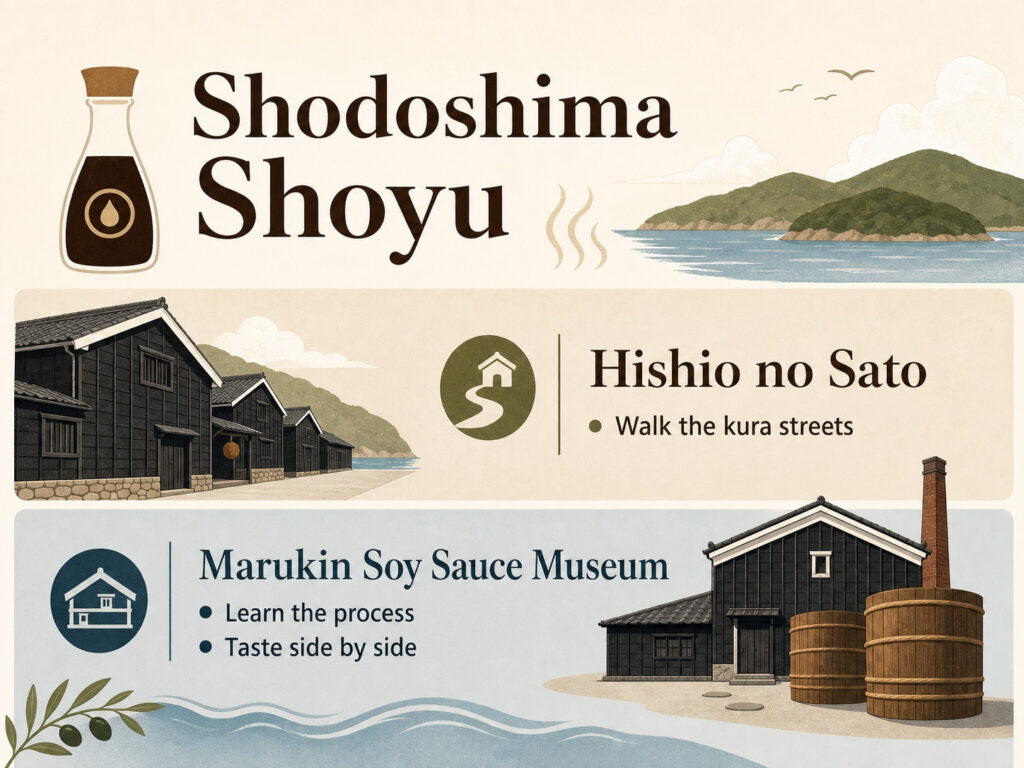
A travel guide to Shodoshima soy sauce should include more than shopping. You really want to walk the streets and smell the air. Visit the kura storehouses if you can. Taste small samples side by side. That is when differences become obvious.
Hishio no Sato (Soy Sauce Village)
Hishio no Sato is the famous soy sauce area on Shodoshima. Breweries and tsukudani makers cluster in a small district. The black wooden walls look nostalgic and photogenic. If you arrive hungry, that is fine. Many shops offer tastings and small snacks.
Marukin Soy Sauce Museum
Marukin runs one of the best-known soy sauce museums on the island. The displays help beginners understand the process. You can also find many bottle styles in one shop. If you feel overwhelmed by choices, start here. Then visit smaller breweries afterward.
A Must-Visit Spot to Try Shodoshima Shoyu
Yamaroku Shoyu (ヤマロク醤油)
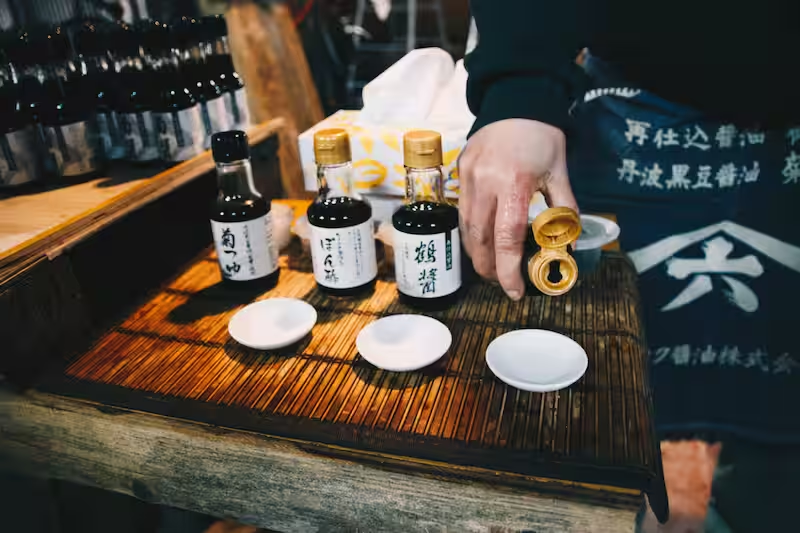
Yamaroku is a small brewery with a strong reputation overseas. The family has run it for generations, and they focus on kioke wooden barrel brewing. You can join a tour and stand beside huge cedar barrels. The smell inside the kura feels almost sweet.
After the tour, the cafe makes tasting easy and playful. Their soy sauce pudding surprises many visitors. It tastes creamy, then turns into something like caramel. The soy sauce adds depth instead of saltiness. I doubted it would work, and I felt very glad I tried it.
You can also try soy sauce ice cream, which sounds odd at first. The finish feels nutty and toasted. In cooler months, grilled rice cakes smell amazing near the entrance. The place feels welcoming, not stiff. That warmth matches the island spirit.
If you prefer a slower visit, go early in the morning. The air feels quiet then. You can hear footsteps on old wooden floors. I also like visiting on a weekday, if possible. It feels less rushed, and you can ask more questions.
Takeaway
Shodoshima shoyu is not just a condiment. It is a window into Japanese fermentation, wooden barrel craft, and island life. The flavor comes from time, microbes, and human patience. It also comes from place, which is harder to copy. If you want an authentic shoyu from Kagawa Prefecture, start here.
If you visit, follow your nose through Hishio no Sato. Taste a few bottles with simple food. Then bring one home and use it with care. You may find yourself smiling at a plain bowl of rice. I know I did.
For the ultimate island pantry tour, pair Shodoshima shoyu with Shodoshima somen, Tsukudani, and the island’s olive flavors from Shodoshima olives.
Shodoshima Soy Sauce FAQ
What is Shodoshima soy sauce?
It represents a premium liquid condiment from an island in Kagawa Prefecture. Local artisans brew it naturally over long periods using koji mold and traditional methods. Many producers still age the liquid inside historic cedar barrels called kioke. This time-honored combination creates a rich, deeply layered Japanese seasoning.
Why is Shodoshima soy sauce famous?
The island preserves a rare concentration of working, historic wooden barrels. The local region also offers a mild Mediterranean-like climate that perfectly supports steady, natural fermentation. Additionally, the area boasts a long maritime shipping history and a vibrant, living brewery district. Together, these unique elements create a prestigious local specialty with massive global appeal.
Is wood-barrel soy sauce always better?
Not always, as final flavor preferences remain highly personal. Still, barrel-aged varieties often offer much deeper aromas and incredible complexity. The ancient wooden containers host beneficial microbes that slowly shape the savory flavor over several years. Many chefs describe the final result as much rounder, softer, and less harsh than industrial products. You will likely prefer it if you appreciate subtle, earthy depth.
Does Shodoshima shoyu contain wheat?
Most traditional recipes utilize wheat, so many bottles contain this grain. However, some independent brewers offer gluten-free styles that closely resemble rich tamari. You should always read the ingredient labels carefully if you must avoid gluten. When in doubt, simply ask the retail staff directly before purchasing.
How should I store artisanal soy sauce?
You must keep the bottle away from direct heat, sunlight, and air. After opening the seal, refrigeration helps preserve the delicate, fresh aroma. You should also close the cap tightly after each use to prevent oxidation. If you treat this premium product like a fresh ingredient, the rich flavor will reward you over time.
Where can I buy Shodoshima soy sauce in Japan?
You will find the best selections right on the island at local brewery gift shops. High-end department stores and specialized gourmet grocers also stock these premium bottles in major cities like Tokyo and Osaka. Many independent producers also sell their limited-batch products directly to customers online.
How much does Shodoshima soy sauce cost?
A premium 500ml bottle typically costs between 1,000 and 2,500 yen. Prices vary greatly depending on the aging period and the rarity of the cedar barrels. While these bottles command a higher price than mass-market products, the intense flavor easily justifies the cost.
What are the main ingredients in Shodoshima soy sauce?
The main ingredients include whole soybeans, wheat, water, and sea salt. The natural yeasts dwelling inside the old cedar wood give the condiment its complex, highly aromatic profile. Brewers strictly avoid using artificial chemical preservatives or coloring agents.
What is the difference between Shodoshima soy sauce and mass-produced soy sauce?
The main difference involves the aging vessel and the fermentation speed. This island-made condiment ages slowly inside wooden barrels for up to three years under natural temperatures, while industrial factories utilize temperature-controlled steel tanks to complete the process in just a few months. This slow, natural process yields a vastly superior, deep flavor.
Is Shodoshima soy sauce popular outside Japan?
It enjoys growing popularity among Michelin-starred chefs and gourmet home cooks outside Japan. High-end international restaurants increasingly import these wooden-barrel varieties to enhance their sauces and marinades. This premium brand successfully represents the peak of traditional Japanese craftsmanship to the global culinary world.
References
- VISIT KAGAWA (Kagawa Tourism Federation) – https://www.my-kagawa.jp/en/see-and-do/10123 (2026: over one third of Japan’s kioke-brewed soy sauce comes from Shodoshima; only about 1% is kioke-brewed)
- Shodoshima Shoyu Association (Hishio no Sato) – https://shima-shoyu.com/history_en/ (2026: end of the 17th century ranked second in salt output; maritime transport supported raw material flows)
- Sustainable Japan by The Japan Times – https://sustainable.japantimes.com/satoyama/182 (2026: kioke shoyu about 1% of production; 2009 order highlighted postwar barrel craft decline)
- The Japan Times “Soy Sauce Special” – https://boj.japantimes.co.jp/seasonal-guide/soy_souce2025/soysouce-04/ (2025: around 3,000 wooden soy sauce barrels in Japan; more than 1,000 on Shodoshima)
840-620b-300x222.avif "Shodoshima Olives (小豆島オリーブ)")



Comments