




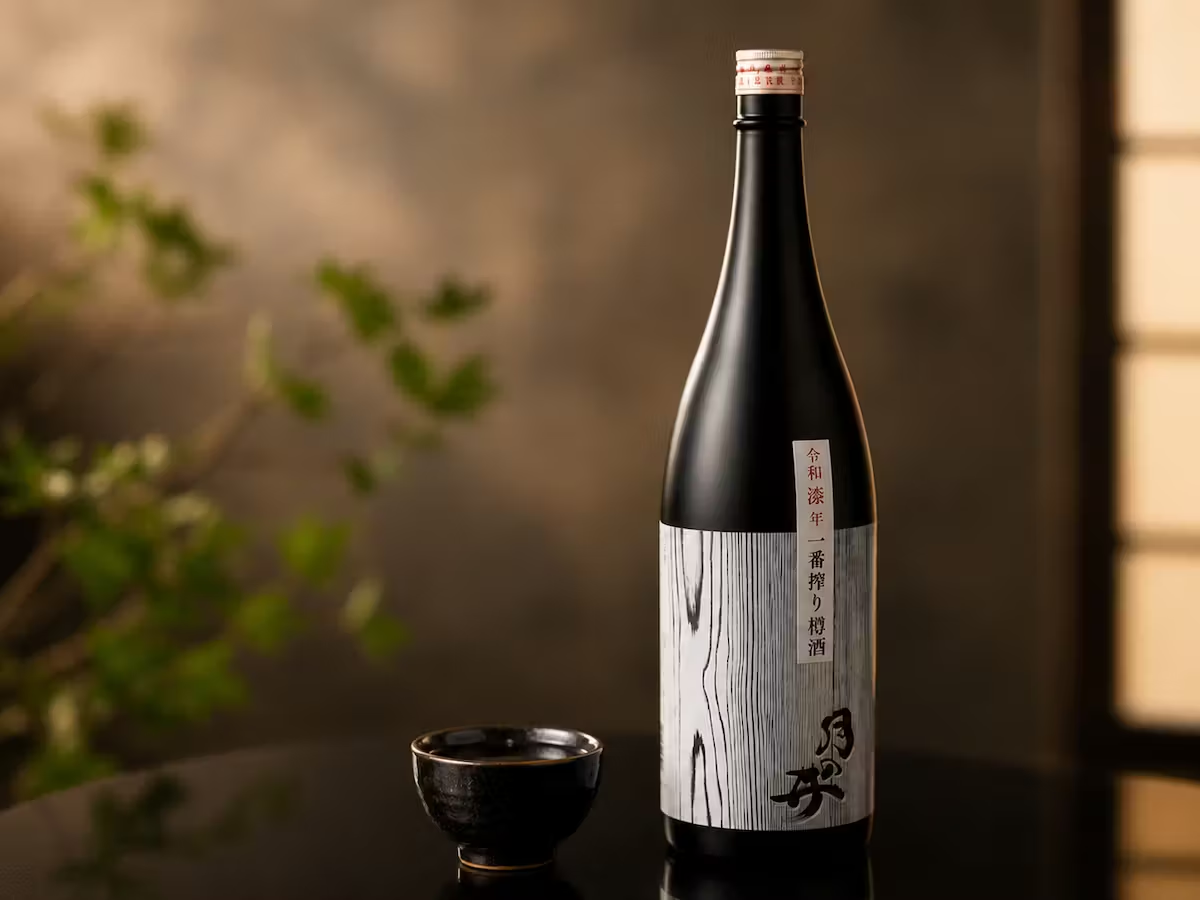
Taruzake is Japanese sake briefly stored in a cedar barrel. During that short contact, the sake absorbs a fresh woody aroma. The result is crisp, fragrant, and deeply tied to Japanese celebration culture.
This style is also called cask sake, wooden barrel sake, or cedar-scented sake. Some people may describe it as barrel-aged sake, but that term needs care. Taruzake is not aged like whiskey or wine. Instead, the cedar perfumes the sake.
The first smell often comes before the first sip. It can recall fresh cedar wood, old temples, sauna rooms, or a quiet forest after rain. That scent gives taruzake its charm. It also makes the drink feel ceremonial.
For many drinkers, taruzake is not everyday sake. It feels more festive. You may see it at weddings, festivals, business openings, New Year events, or kagami biraki ceremonies. The barrel, the aroma, and the shared toast all matter.
What Is Taruzake?
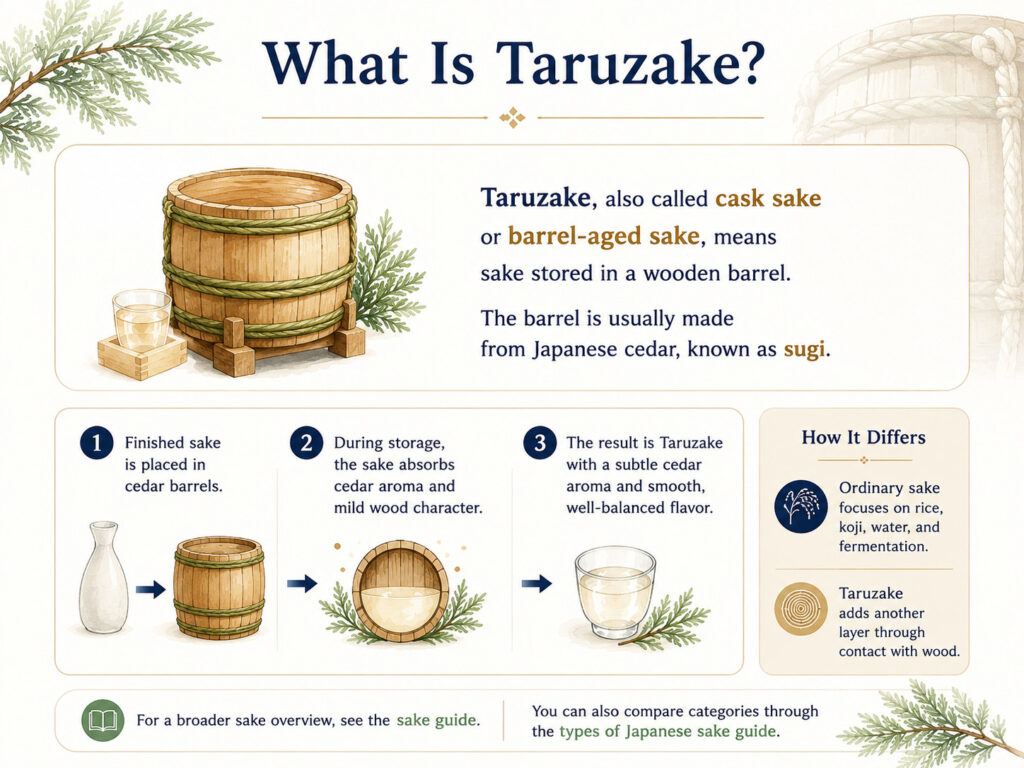
Taruzake means Japanese sake stored in a wooden cask. The barrel is usually made from Japanese cedar, called sugi. The sake stays inside long enough to absorb cedar aroma, but not so long that the wood dominates.
A simple cask sake definition is this: taruzake is sake with natural cedar aroma from barrel contact. The base sake may vary. Some producers use regular sake, honjozo, or other clean styles that allow the wood scent to stand out.
Unlike fruity ginjo sake, taruzake does not focus on apple, melon, or floral aroma. Its personality comes from wood. The sake may taste dry, crisp, slightly bitter, and refreshing. The cedar adds structure without making the drink sweet.
That makes taruzake unusual for beginners. It does not behave like most aromatic sake. However, with the right food, it can become surprisingly easy to enjoy.
For general sake background, see the sake guide. You can also compare categories through the types of Japanese sake guide.
What Does Taruzake Smell and Taste Like?
Taruzake flavor and aroma start with cedar. The scent can feel fresh, green, spicy, and slightly resinous. It may remind some people of wooden shrines or traditional Japanese buildings.
At first sip, the taste may seem unusual. The cedar aroma arrives strongly, then the sake follows. The flavor often feels dry, clean, and slightly sharp. A faint bitterness may appear at the end.
That bitterness is not always a flaw. In a good bottle, it adds tension. The finish becomes crisp and refreshing. With salty or grilled food, the wood aroma feels more natural.
Some taruzake feels light and pale. Other versions look slightly golden and smell stronger. The difference depends on the base sake, barrel type, and contact time.
I would not call taruzake delicate in the same way as daiginjo. It has a different kind of beauty. The appeal comes from air, wood, and memory. It feels less polished, but more atmospheric.
If the cedar aroma feels too strong at first, try it with food. Yakitori, grilled fish, or miso dengaku can soften the first impression. The sake often makes more sense at the table.
Taruzake vs Barrel-Aged Whiskey and Wine
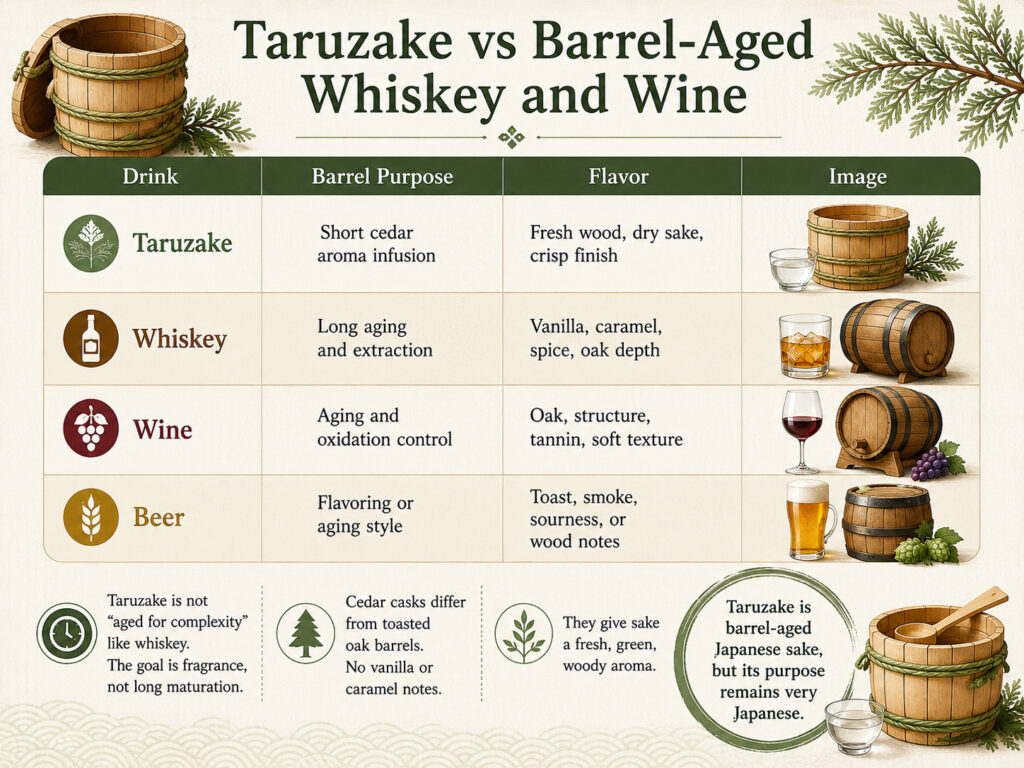
| Drink | Barrel Purpose | Flavor Image |
|---|---|---|
| Taruzake | Short cedar aroma infusion | Fresh wood, dry sake, crisp finish |
| Whiskey | Long aging and extraction | Vanilla, caramel, spice, oak depth |
| Wine | Aging and oxidation control | Oak, structure, tannin, soft texture |
| Beer | Flavoring or aging style | Toast, smoke, sourness, or wood notes |
This comparison helps avoid a common misunderstanding. Taruzake is not “aged for complexity” like whiskey. Instead, cedar briefly perfumes the sake.
Whiskey barrels usually aim for deep extraction. Oak gives vanilla, caramel, spice, color, and texture. Wine barrels can change structure and oxidation. Taruzake works differently.
Japanese cedar does not aim for heavy sweetness. It gives a fresh, green, woody aroma. The goal is not long maturation. The goal is a clear cedar scent.
This difference matters for taste. Taruzake can feel sharper and more direct than oak-aged drinks. It is closer to aroma infusion than deep barrel aging.
Why Japanese Sake Was Stored in Cedar Barrels
Before glass bottles became common, sake often traveled in wooden barrels. These barrels were practical containers for storage and transport.
During the Edo period, sake from major brewing regions moved toward Edo, now Tokyo. Nada became one of the most famous sources. Sake traveled by ship, and wooden barrels played a key role.
While traveling, the sake absorbed cedar aroma naturally. People began to connect that smell with fresh sake. The scent became part of the drinking experience.
At that time, cedar aroma did not begin as a marketing idea. It came from logistics. Yet people grew attached to it. The smell suggested newly arrived sake, liveliness, and quality.
Later, glass bottles, metal tanks, and modern distribution changed the industry. Sake no longer needed cedar barrels for transport. Still, the memory remained.
Brewers then continued making taruzake intentionally. What began as a practical side effect became a traditional sake style. That is why taruzake carries both history and flavor.
Why Cedar Aroma Feels “Japanese”
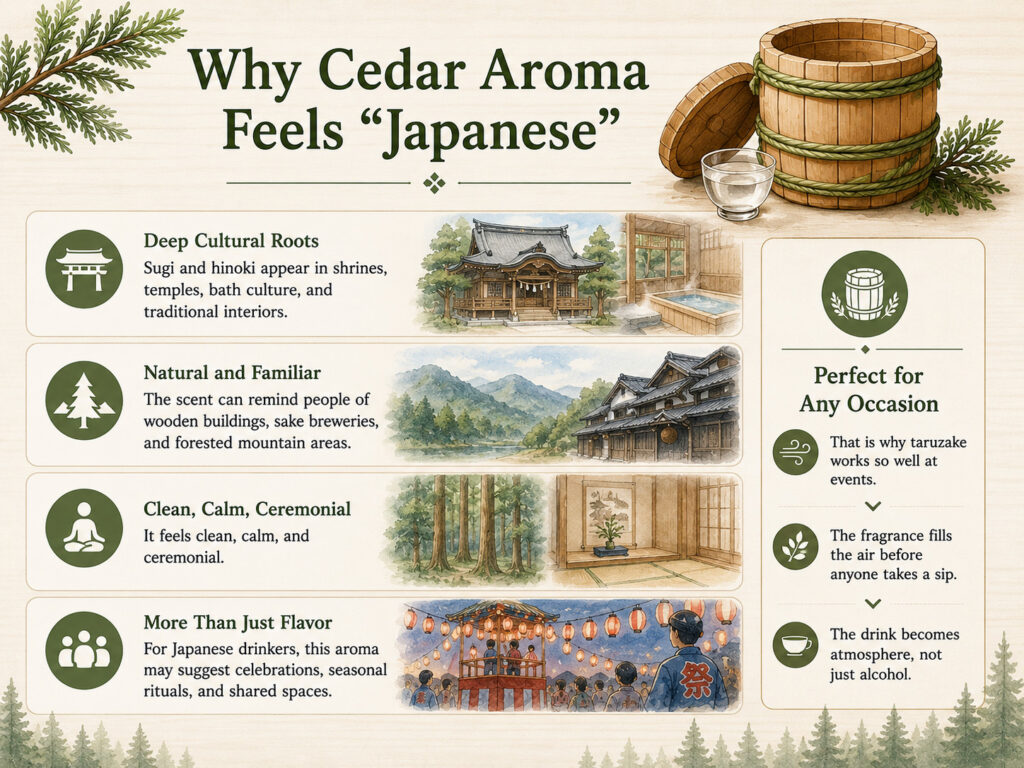
Cedar aroma feels Japanese because wood sits deeply inside Japanese culture. Sugi and hinoki appear in shrines, temples, homes, baths, and traditional interiors.
Think of a wooden shrine gate after rain and old brewery with damp beams and cool air. Think of a hot bath surrounded by wood. These scents connect to place, memory, and ritual.
Taruzake taps into that sensory world. It does not only taste like wood. It smells like ceremony, architecture, and seasonal gatherings.
For some Japanese drinkers, cedar aroma may feel nostalgic. For visitors, it may feel new and surprising. Either reaction makes sense.
The scent also changes the atmosphere of a room. When a barrel opens, cedar fragrance spreads quickly. Before anyone drinks, the space already feels festive.
That is why taruzake works well at events. It creates mood before flavor. Few sake styles do that so directly.
What Is Kagami Biraki?
Kagami biraki is a Japanese sake barrel opening ceremony. People strike the lid of a sake barrel with wooden mallets. Then they share the sake together.
The phrase means “opening the mirror.” The round lid of the barrel represents the mirror. Opening it suggests good fortune, harmony, and a new beginning.
You may see kagami biraki at weddings, New Year events, martial arts gatherings, festivals, and company openings. It often marks a fresh start.
Taruzake suits kagami biraki because the barrel itself becomes part of the performance. Guests hear the sound of the mallets. The lid opens. The cedar scent rises.
That moment is not only about alcohol. It is about shared timing. Everyone watches the opening, then drinks from the same source. The sake becomes a symbol of connection.
For this reason, taruzake is a classic toast for special occasions. It carries the scent of Japanese ceremony in a very literal way.
How Taruzake Is Made
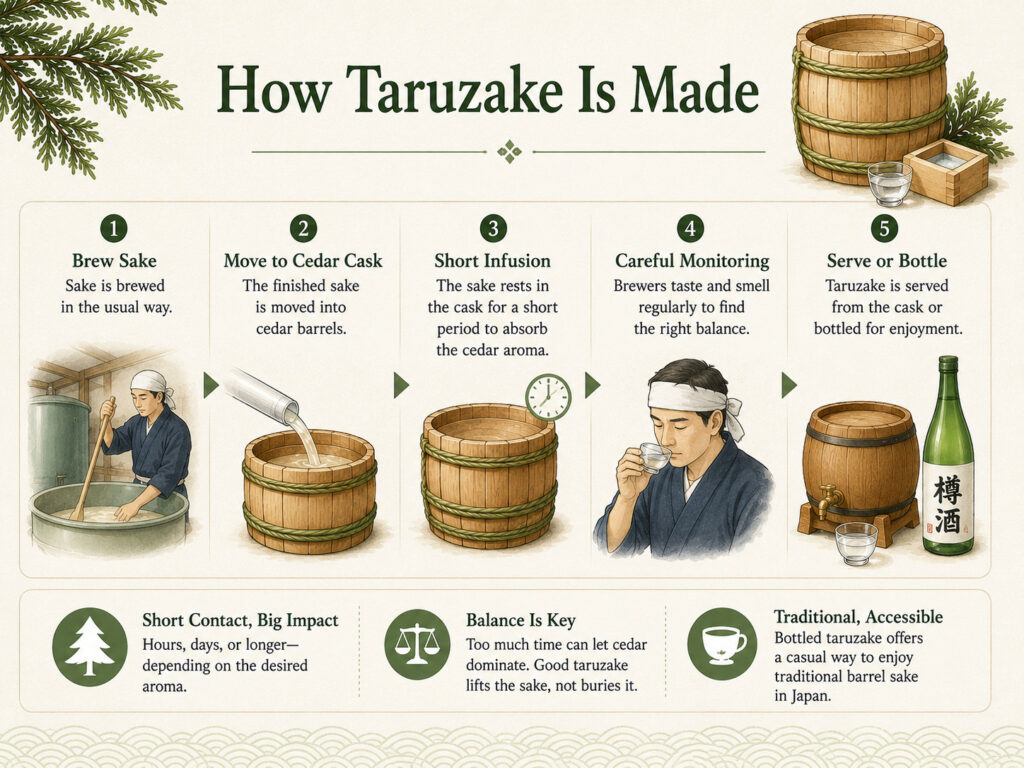
Taruzake begins with finished Japanese sake. Brewers first make sake through normal brewing steps. After that, they move it into cedar barrels.
The sake stays in the barrel for a limited time. This may be hours, days, or longer. The exact timing depends on the desired aroma.
Brewers check the sake carefully. If the contact is too short, the cedar may feel weak. If it lasts too long, the wood can overpower everything.
Balance is the key. The cedar should lift the sake, not bury it. Good taruzake keeps freshness while still tasting like sake.
After barrel contact, producers may serve the sake from the cask. Some also bottle it for shops, restaurants, and gifts. Bottled taruzake makes the style easier to enjoy at home.
For more brewing context, see the how sake is made guide.
Best Food Pairings for Taruzake
Taruzake pairs best with bold, savory, and grilled foods. The cedar aroma matches smoke, salt, miso, and charcoal.
Good pairings include:
- yakitori shio
- robatayaki
- charcoal-grilled fish
- grilled mushrooms
- miso dengaku
- smoked duck
- pickled vegetables
- grilled chicken
- roasted pork
- lightly smoked seafood
The dryness cuts through oil. Meanwhile, the cedar aroma matches smoky and earthy flavors. This makes taruzake useful with izakaya-style food.
Very delicate dishes may feel overshadowed. In that case, a lighter ginjo or junmai may work better. Taruzake has character, so food should meet it halfway.
Is Taruzake Good for Beginners?
Taruzake can be good for beginners, but it depends on expectations. If someone expects fruity sake, the cedar aroma may feel surprising.
The first glass can feel intense. It may smell more like wood than rice. That is not a mistake. It is the point of the style.
Food helps a lot. Try taruzake with yakitori, grilled fish, or miso dishes before judging it alone. The cedar becomes softer when paired with savory food.
Room temperature or slightly chilled service is usually easiest. These temperatures keep the aroma clear without making it too sharp.
I would not choose taruzake as someone’s first ultra-premium sake. However, it is excellent for curious drinkers. It shows a traditional side of Japanese sake that many people miss.
If you enjoy herbal drinks, smoky foods, or wood aromas, taruzake may suit you. If you dislike strong scents, start with a small pour.
How to Drink Taruzake
Taruzake tastes best at room temperature or slightly chilled. Room temperature brings out the cedar aroma clearly. Slight chilling makes the finish sharper and more refreshing.
Avoid very hot serving at first. Heat can make the cedar aroma feel rough. Gentle warmth may work, but strong heat is risky.
Small cups suit the style well. A masu cup can enhance the wood feeling, though it may add more aroma. A simple glass keeps the scent cleaner.
Start with a small sip. Let the aroma arrive first. Then notice the dry finish.
If the first sip feels too woody, take another with food. Taruzake often becomes more enjoyable after the palate adjusts.
Where to Try Taruzake in Japan
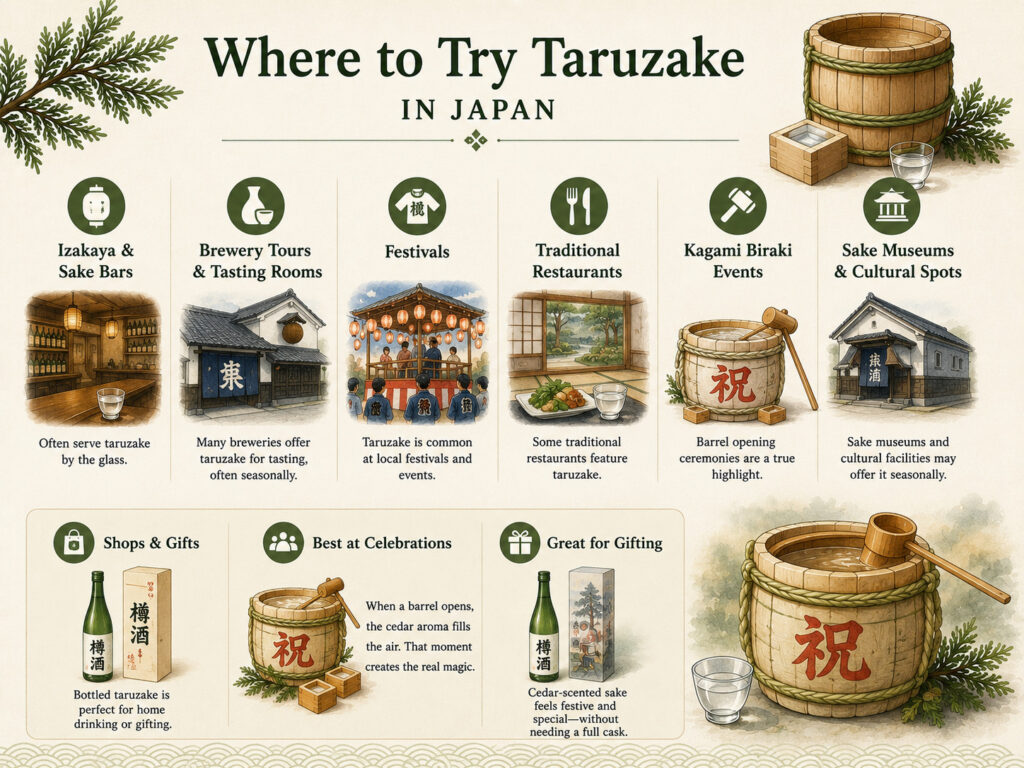
You can try taruzake at izakaya, sake bars, brewery tours, festivals, and traditional restaurants. It also appears at kagami biraki events.
Brewery tasting rooms may offer it seasonally. Sake museums sometimes explain barrel culture as part of sake history. Traditional restaurants may serve it during special courses.
Festivals and ceremonies offer the most memorable setting. When a barrel opens, the cedar scent fills the air. That experience explains taruzake better than any bottle label.
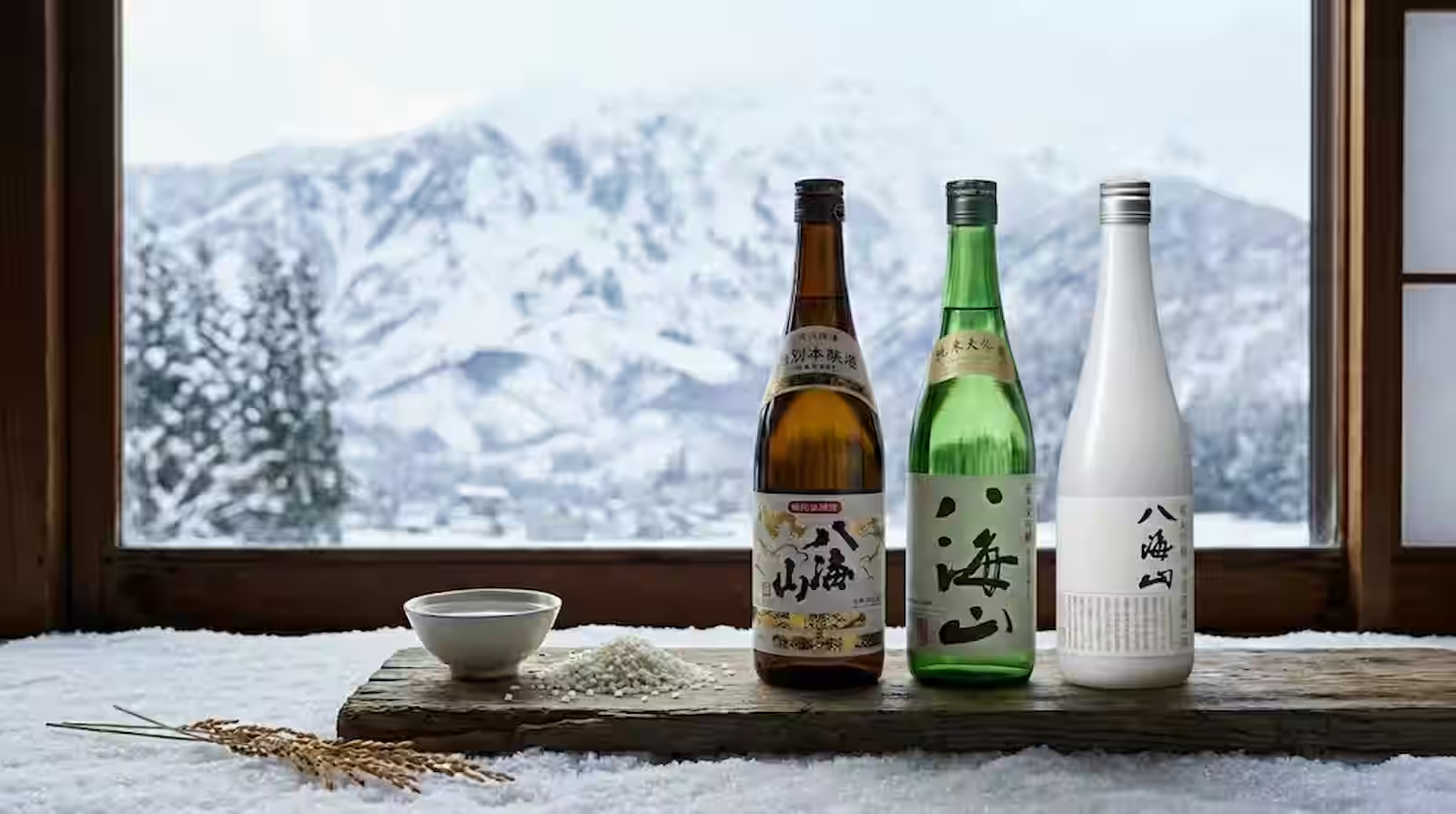
Bottled taruzake is also common. It works well as a gift because the aroma feels distinctive. Cedar-scented sake for gifting can feel more memorable than ordinary sake.
If you see taruzake at a sake shop, check the label. Some bottles have strong cedar aroma. Others stay mild and balanced. Ask the staff if possible.
Why People Still Choose Taruzake Today
Taruzake remains popular because it offers more than flavor. It brings story, scent, and ceremony together.
Modern sake often focuses on polishing ratios, yeast, or fruity aroma. Taruzake focuses on atmosphere. That makes it stand apart.
Some drinkers choose it for celebrations. Others enjoy it with grilled food. A few simply love the cedar scent.
It also has classic sake with modern appeal. Bottled versions make it easy to drink at home. Ceremony-style casks keep the traditional image alive.
The style can divide opinions. Some people love it immediately. Others find it too woody. That honesty is part of its character.
Taruzake does not try to please everyone. It gives a clear identity. In today’s sake world, that feels valuable.
Final Thoughts
Taruzake is more than sake with wood aroma. It connects cedar barrels, transport history, ceremony, and Japanese celebration culture.
The first sip may surprise you. That surprise is part of the experience. The scent feels old, fresh, and festive at the same time.
For some people, it becomes a favorite quickly. For others, it needs food and context. Either response feels natural.
If you want a sake that smells like tradition, taruzake is worth trying. It brings the scent of Japanese ceremony into the glass.
References
- Japan Sake and Shochu Makers Association, “Sake Guide”, checked in 2026, related reference for Japanese sake basics and sake culture.
- SAKETIMES, “SAKE 101: Kagami Biraki”, checked in 2026, kagami biraki is a sake cask opening ceremony used for weddings, festivals, and new beginnings.
- Kiku-Masamune, “Taru Sake”, checked in 2026, taru sake uses Yoshino cedar aroma, cask sizes include 18L, 36L, and 72L.
- Choryo Shuzo, “Yoshinosugi no Tarusake”, checked in 2026, bottled tarusake was launched in 1964 and uses Yoshino cedar barrel aroma.
- Masu Selling Company, “Taru Sake”, checked in 2026, taruzake is aged in cedar casks and used for weddings, openings, and kagami biraki.
- Sake, checked in 2026, related internal article for Japanese sake basics.
- Types of Japanese Sake, checked in 2026, related internal article for sake categories.
- How Sake Is Made, checked in 2026, related internal article for sake brewing.




Comments