





Namagenshu is Japanese sake that is both unpasteurized and undiluted. “Nama” means the sake skips pasteurization, while “genshu” means no water is added after brewing. Because of this, namagenshu tastes fresh, rich, lively, and often stronger than standard sake.
This is not a quiet sake style. It can feel intense, vibrant, and refreshing at the same time. The aroma may show fresh rice, green apple, melon, yogurt, or a slight herbal note. For people who want Japanese sake with strong character, it is worth knowing.
Basic Information About Namagenshu
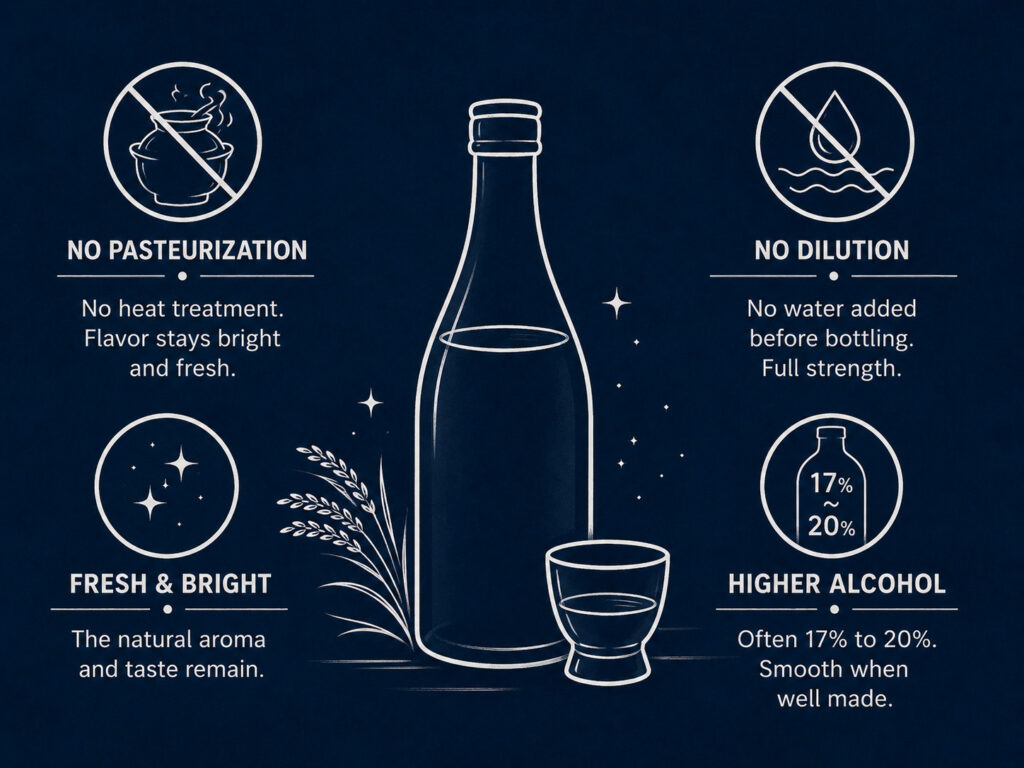
So, what is namagenshu in Japanese sake? It is fresh sake with no pasteurization and no final dilution. Most sake is pasteurized for stability and diluted with water to soften alcohol. Namagenshu skips both steps.
That means two things happen. First, the flavor stays bright and fresh because heat treatment is avoided. Second, the body stays concentrated because brewers do not add water before bottling.
As a result, this sake often has higher alcohol. Many bottles sit around 17% to 20%, though each brewery differs. It is a high alcohol sake, but a good bottle should not feel rough.
For the basics of sake, see the sake guide. You can also compare styles through the types of Japanese sake guide.
What Does Namagenshu Taste Like?
Namagenshu flavor and aroma are usually fresh, bold, and expressive. The first sip can feel juicy and energetic. Then the rice sweetness, umami, and alcohol warmth appear more clearly.
The texture often feels fuller than regular sake. Some bottles taste slightly sweet, while others feel dry and sharp. However, the common point is concentration. Nothing feels watered down.
Why does namagenshu taste so fresh? The answer comes from no pasteurization. Active enzymes and delicate aromas remain more noticeable. Because of this, the sake can feel close to bottled fresh sake from the brewery.
It is sometimes confused with unfiltered sake. However, namagenshu does not always mean unfiltered sake. Some bottles are clear, while others may be cloudy or lightly textured.
Namazake vs Genshu vs Namagenshu
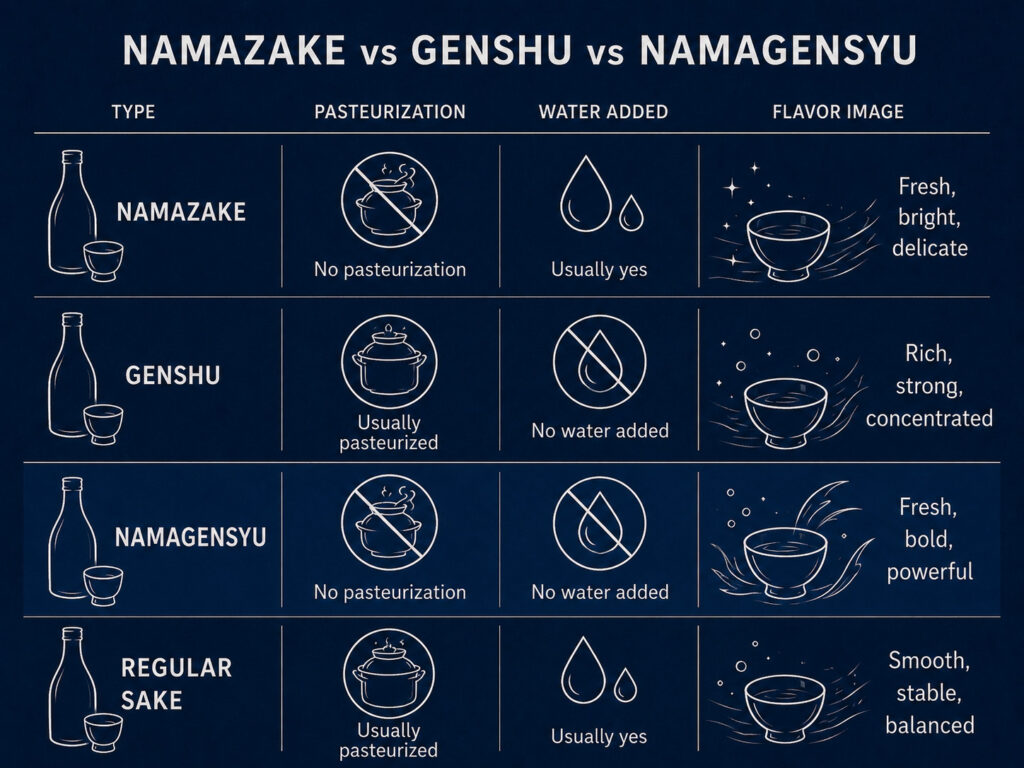
| Type | Pasteurization | Water Added | Flavor Image |
|---|---|---|---|
| Namazake | No pasteurization | Usually yes | Fresh, bright, delicate |
| Genshu | Usually pasteurized | No water added | Rich, strong, concentrated |
| Namagenshu | No pasteurization | No water added | Fresh, bold, powerful |
| Regular sake | Usually pasteurized | Usually yes | Smooth, stable, balanced |
This table explains the difference between namazake and namagenshu. Namazake means sake with no pasteurization. Genshu means sake with no water added. Namagenshu combines both qualities.
Therefore, namagenshu is an unpasteurized undiluted sake guide in one bottle. It has the freshness of namazake and the strength of genshu. That combination creates a seasonal sake with punch.
For deeper background, read the namazake guide and the genshu guide.
How Namagenshu Is Made
Namagenshu begins like other Japanese sake. Brewers steam rice, grow koji, and ferment the mash with yeast. After pressing, they handle the sake differently.
Standard sake often goes through pasteurization and dilution. Namagenshu avoids both. Brewers bottle the sake without heat treatment and without adding water.
This creates sake with no pasteurization and sake with no water added. The flavor remains fresh and concentrated. However, that freshness also makes storage more important.
For more brewing context, see the guide to how sake is made.
How to Store Namagenshu Safely
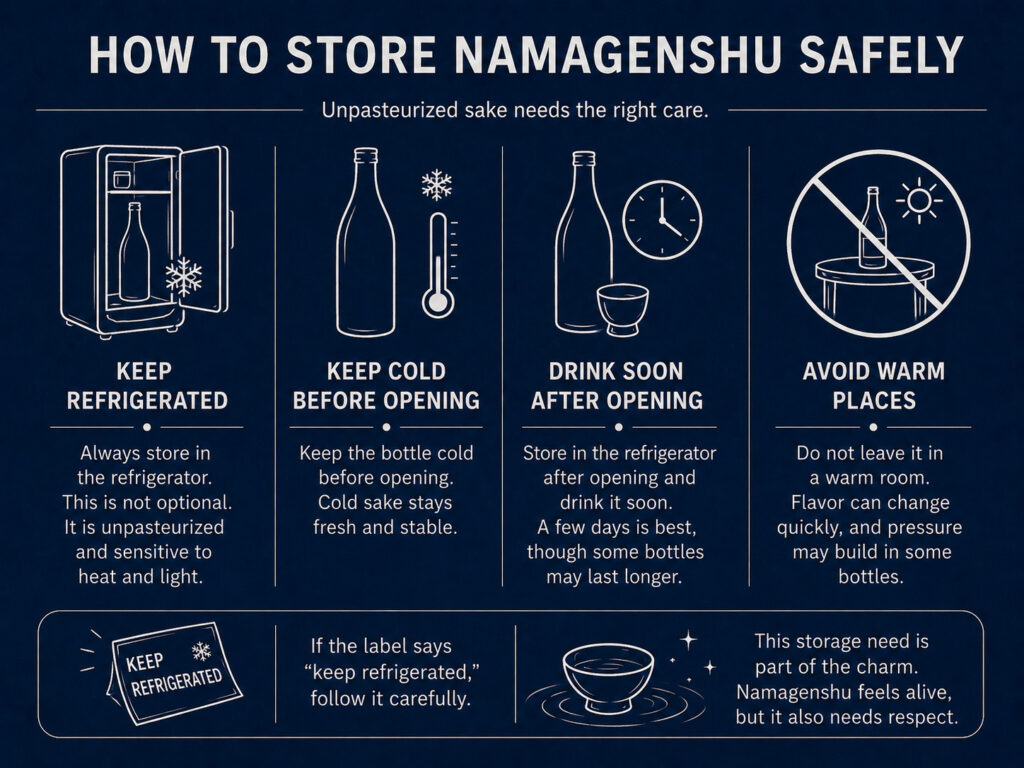
Namagenshu should be refrigerated. This is not optional. Because it is unpasteurized sake, the liquid remains sensitive to heat and light.
Keep the bottle cold before opening. After opening, store it in the refrigerator and drink it soon. A few days is best, though some bottles may last longer.
Avoid leaving it in a warm room. Flavor can change quickly, and pressure may build in some bottles. If the label says “keep refrigerated,” follow it carefully.
This storage need is part of the charm. Namagenshu feels alive, but it also needs respect.
How to Drink Namagenshu
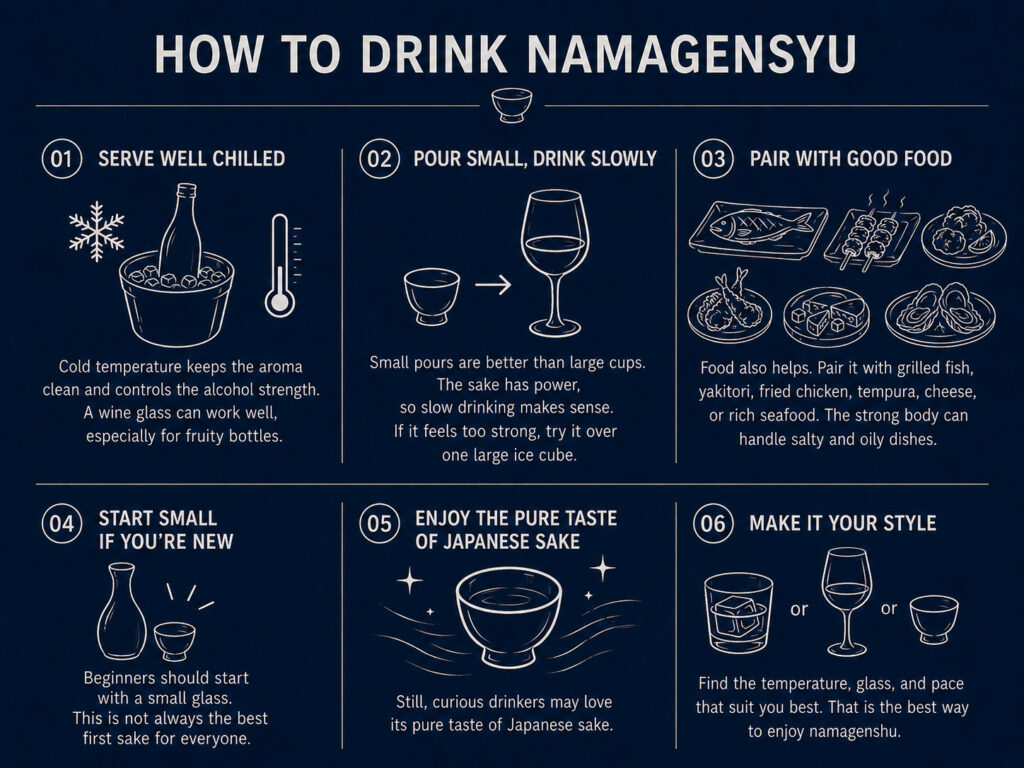
Serve namagenshu well chilled. Cold temperature keeps the aroma clean and controls the alcohol strength. A wine glass can work well, especially for fruity bottles.
Small pours are better than large cups. The sake has power, so slow drinking makes sense. If it feels too strong, try it over one large ice cube.
Food also helps. Pair it with grilled fish, yakitori, fried chicken, tempura, cheese, or rich seafood. The strong body can handle salty and oily dishes.
Beginners should start with a small glass. This is not always the best first sake for everyone. Still, curious drinkers may love its pure taste of Japanese sake.
History and Today
Namagenshu became easier to enjoy as refrigeration improved. In the past, fresh unpasteurized sake was harder to ship safely. Modern cold storage helped breweries send delicate bottles farther.
Seasonal releases also shaped its image. Many fresh sake bottles appear in winter and spring after brewing season. For sake fans, seeing namagenshu on a refrigerated shelf can feel exciting.
Today, breweries make many styles. Some are fruity and polished. Others are rustic, rich, and bold. This range keeps the category interesting.
It still feels close to the brewery. That is probably why people like it. A good bottle feels bottled straight from the brewery, with very little distance between maker and drinker.
Final Thoughts
Namagenshu is fresh sake with real impact. It combines unpasteurized brightness with undiluted strength. The result is rich flavor with lively aroma.
It is not the calmest Japanese sake. Yet that intensity is the point. If you want a seasonal fresh sake from Japan with bold character, namagenshu is a thrilling choice.
Enjoy it chilled, store it carefully, and take your time. A small glass can say plenty.
Namagenshu FAQ
What is namagenshu?
It represents a highly authentic style of Japanese rice wine. Brewers deliberately skip the standard heat treatment and completely avoid adding any extra water before bottling. This raw brewing method creates an incredibly fresh, rich, and concentrated flavor profile. You must keep the bottle refrigerated to protect the delicate live yeast inside.
What does namagenshu mean?
The first part of the word translates to “raw” or “unpasteurized” in English. The second half means an original alcoholic brew containing absolutely no added water. Together, the term describes a completely raw, uncut rice wine. The Japanese name tells consumers exactly how brewmasters treat the liquid after the initial fermentation finishes.
How does namagenshu taste?
It delivers an incredibly fresh, bold, and lively flavor. Drinkers quickly notice deep rice sweetness, vibrant fruit notes, rich umami, and a comforting alcohol warmth. The thick liquid provides a very full and highly concentrated texture on the tongue. Many fresh bottles also release a slight, pleasant sparkle when you pour your first glass.
Should namagenshu be refrigerated?
Yes, you must keep this raw beverage strictly refrigerated at all times. The lack of pasteurization leaves active yeast and enzymes swimming in the bottle. Warm temperatures quickly damage the delicate flavor and trigger unwanted chemical changes. You should always store an open bottle in the fridge and finish it within a few days.
Is namagenshu good for beginners?
Adventurous beginners often enjoy this powerful drink immensely. However, the high alcohol content and robust flavor sometimes overwhelm completely new drinkers. We recommend pouring a very small, well-chilled glass for your first tasting. Pairing the rich liquid with savory meat or fried dishes helps newcomers appreciate the intense flavors much more easily.
Where does Namagenshu come from?
This raw beverage originates from sake breweries across Japan. In the past, only the brewmasters could drink this fresh liquid directly from the fermentation tanks. Modern refrigeration technology now allows regional breweries to ship these delicate bottles safely to customers nationwide. Today, rural craft brewers specialize in creating these seasonal batches during the cold winter months.
Where can I drink Namagenshu in Japan?
You will find the best bottles directly at local Japanese breweries during the winter brewing season. High-end izakaya pubs and specialized liquor stores also stock these fragile items in their refrigerated display cases. Many premium dining establishments proudly serve fresh pours to match their seasonal seafood menus. Diners should always ask the bartender for their freshest unpasteurized options.
How much does Namagenshu cost?
A standard 720ml bottle typically costs between 1,500 and 3,500 yen. Prices vary greatly depending on the specific brewery and the quality of the local rice. Liquor stores add a small premium to cover the strict refrigerated shipping costs. Shoppers happily pay this slight markup to experience such a vibrant, brewery-fresh taste.
Is Namagenshu vegetarian or vegan friendly?
This raw alcohol contains absolutely no animal products. Brewers craft the liquid using only rice, water, yeast, and natural koji mold. Vegans and vegetarians can safely consume this entirely plant-based drink anywhere in Japan. The robust flavor profile pairs wonderfully with grilled vegetables and rich tofu dishes.
Is Namagenshu popular outside Japan?
This fragile drink enjoys growing popularity among hardcore enthusiasts outside Japan. Specialized importers carefully transport the bottles across oceans using strict cold-chain shipping networks. You will occasionally find these rare items at premium Japanese restaurants in major global cities. Global sake fans actively hunt for these seasonal releases to experience the most authentic brewery flavors possible.
References
- Namazake, checked in 2026, related internal article for unpasteurized sake and refrigeration guidance.
- Genshu, checked in 2026, related internal article for undiluted sake and typical 18% to 20% alcohol range.
- Sake, checked in 2026, related internal article for Japanese sake basics.
- Types of Japanese Sake, checked in 2026, related internal category for sake styles including namazake and genshu.
- How Sake Is Made, checked in 2026, related internal article for sake brewing.
- Japan Sake and Shochu Makers Association, “Sake Guide”, checked in 2026, reference for Japanese sake education and brewing information.
- National Research Institute of Brewing, “Label Terms”, checked in 2026, label terms include namazake and genshu as sake characteristics.




Comments