




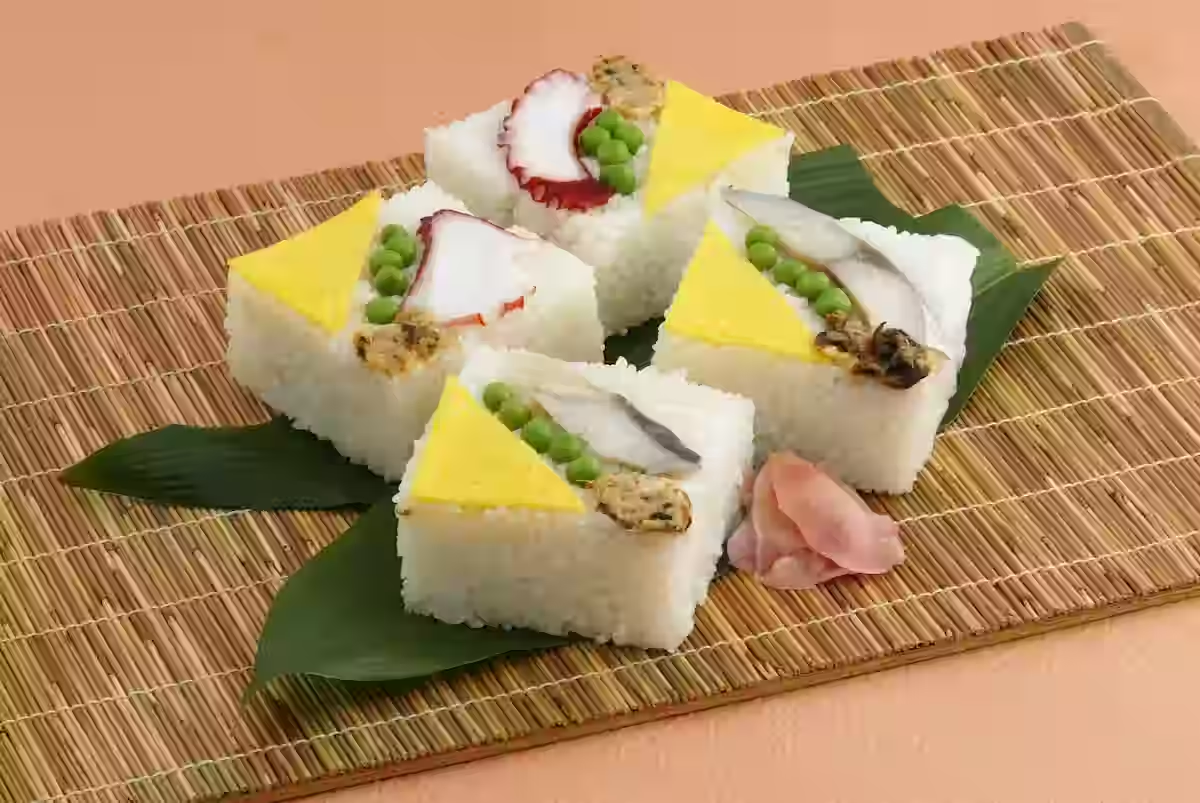
Kagawa is famous for udon, yet its food story runs deeper. One old dish carries a strange, catchy name. People call it Kankan zushi, a pressed sushi from Kagawa. Some also write it as Kankan sushi in English. The name comes from a sound, not a fish. Cooks once hammered wooden wedges to press it. That work made a steady “kan-kan” beat. So the dish earned its lively title. Kankan zushi カンカンずし Kagawa local sushi remains a regional treasure. Let me introduce this bold, blocky Kankan sushi.
What Is Kankan Zushi?
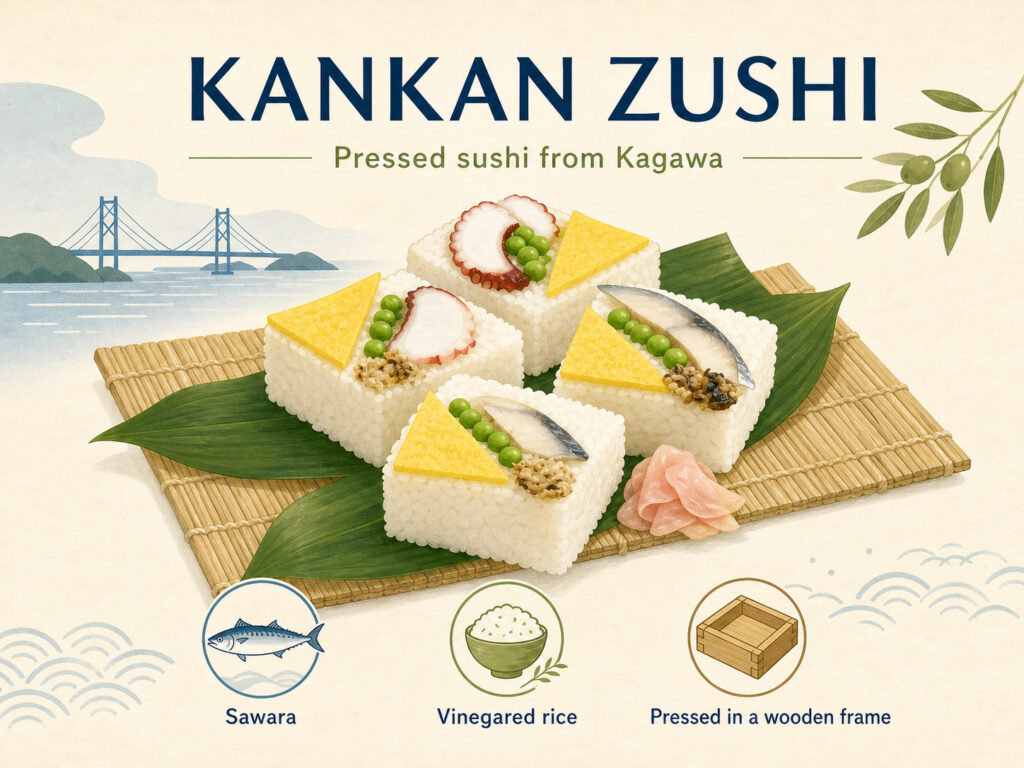
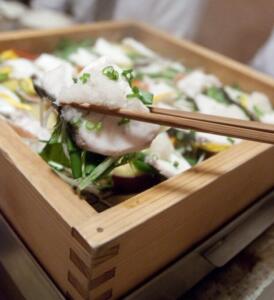
So what is Kankan zushi exactly? It is a traditional pressed sushi from Kagawa Prefecture. The dish belongs to the oshizushi, or pressed sushi, family. It uses sawara, known in English as Spanish mackerel. Cooks marinate the fish, then layer it with lightly vinegared rice. They press everything into a large wooden frame. So the result is a firm, dense block of sushi. In short, this is sawara pressed sushi, or さわらの押し寿司.
The Kabe district shaped this local style first. Kabe sits in old Shido, now part of Sanuki City. From there the dish spread across Sanuki City and into part of old Tsuda. So it counts as traditional sushi from the Higashi-Sanuki region in Kagawa. Locals also call it Horaita-zushi or kata-zushi. In Shido, some even say hako-zushi, meaning box sushi. Each name points to the same hearty, block-style sushi. This Sanuki Kankan zushi pressed sushi feeds a crowd with ease.
The Taste and Texture of Kankan Zushi
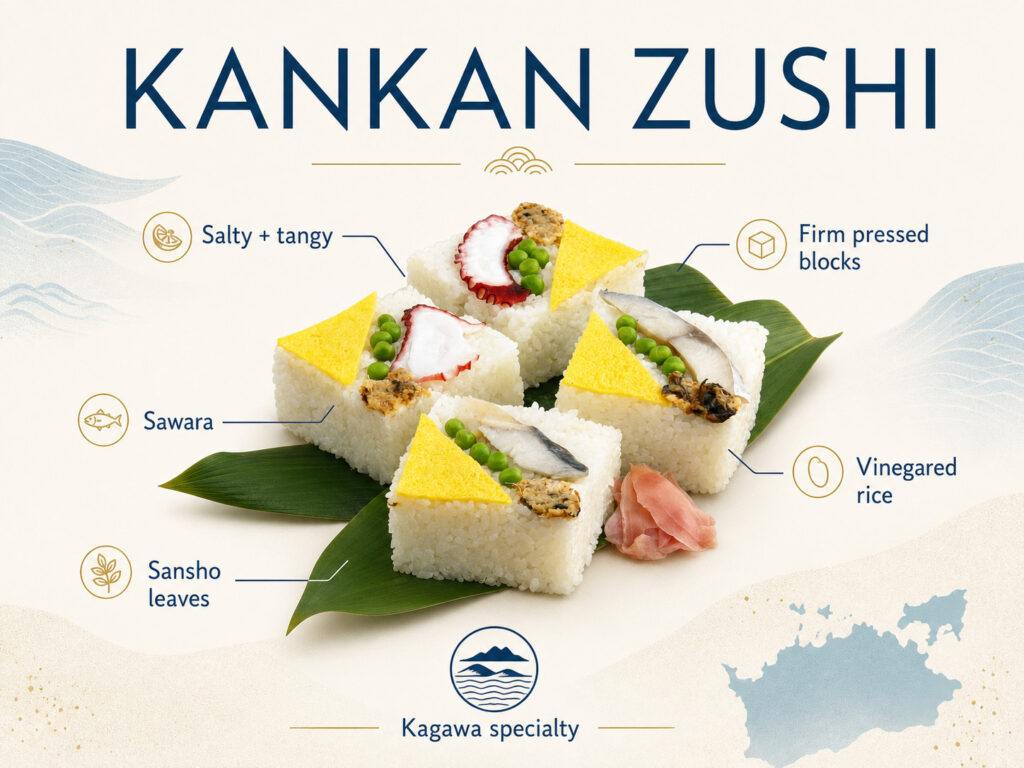
What does Kankan zushi taste like? The flavor leans salty, tangy, and deeply savory. Vinegar and salt cure the sawara, which sharpens its richness. The rice stays lightly vinegared, so it balances the fish. Honestly, the first bite tastes bolder than modern sushi. Here is what defines a good block:
- A salty and vinegared sawara pressed sushi
- Lightly vinegared rice and marinated Spanish mackerel
- Firm, compact sushi blocks made to be portable
- A large block-style pressed sushi from Kagawa
- Layers scented with sansho or haran leaves
- A clean aroma from Seto Inland Sea sawara (鰆)
The texture often surprises newcomers. Pressing makes each slice firm and solid. So the sushi holds together, even after rough handling. That sturdiness was the whole point, as we will see.
How to Make Kankan Sushi from Kagawa
So how do you make Kankan sushi from Kagawa? The method feels almost like carpentry. Each step rewards patience and a steady hand.
The Wedge-and-Mallet Method
First, cooks fillet the sawara and cure it in salt and vinegar. They press the cure until the flesh turns white inside. Next, they pack about a shō of vinegared rice into a wooden box. Then they lay the fish on top. Sansho or haran leaves go between the layers. Cooks often stack several boxes for a large batch. Finally, they fit a lid and drive in wooden wedges. A mallet taps those wedges, and a weight presses the block. So this wooden box pressed sushi uses wedges and a mallet. In effect, the maker presses by hammering wooden wedges into a frame.
The frame matters too. Old families used hard, odorless sendan wood. Most modern makers now choose cedar or cypress. After pressing, the sushi rests overnight to settle. The next day, cooks slice the firm block into portions.
Why It Is Called Kankan Zushi
So where does the odd name come from? Listen to the kitchen, and you will hear it. The mallet strikes the wedges with a sharp “kan-kan” rhythm. So the dish is named after that “kan-kan” hammering sound. Locals simply borrowed the noise of pressing. It is a rare sushi named for a sound, not a fish.
Why It Is Also Called Horaita-zushi
The dish carries a second name with its own story. Pressing makes the block extremely firm and dense. In fact, you could toss a piece without it falling apart. That toughness inspired the name Horaita-zushi (ほらいた寿司). So Kankan sushi is also called Horaita-zushi or kata-zushi. Both names celebrate how tightly cooks press it.
Kankan Zushi vs Other Pressed Sushi in Japan
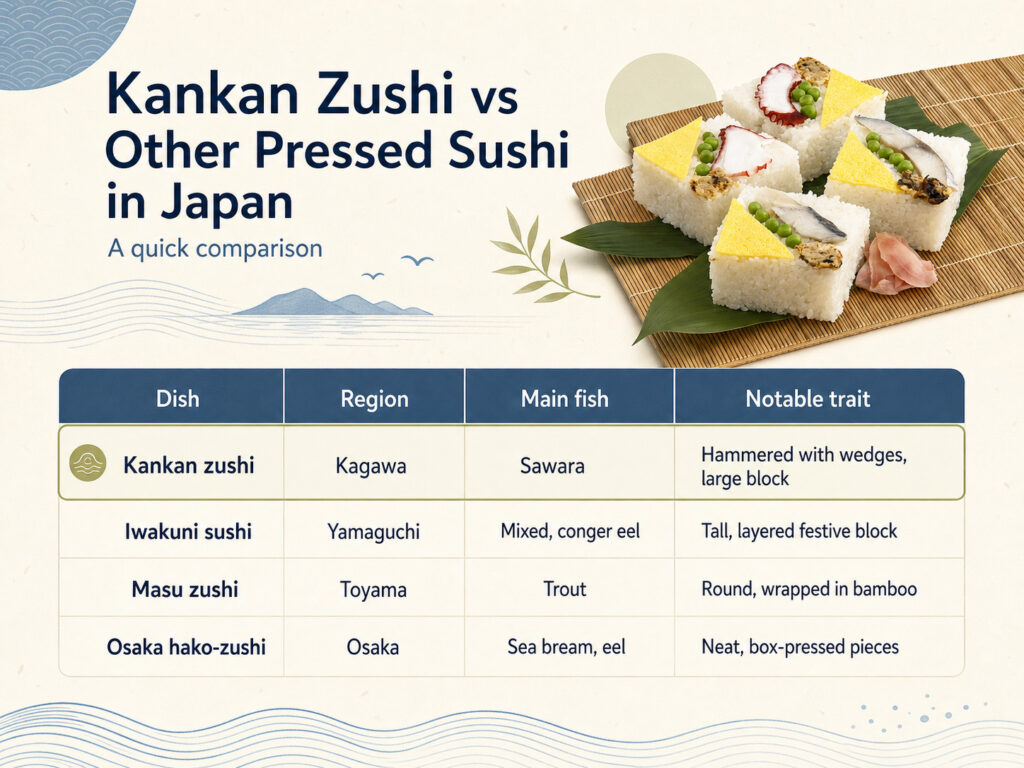
How does it compare with other pressed sushi in Japan? A short table makes the differences clear.
| Dish | Region | Main fish | Notable trait |
|---|---|---|---|
| Kankan zushi | Kagawa | Sawara | Hammered with wedges, large block |
| Iwakuni sushi | Yamaguchi | Mixed, conger eel | Tall, layered festive block |
| Masu zushi | Toyama | Trout | Round, wrapped in bamboo |
| Osaka hako-zushi | Osaka | Sea bream, eel | Neat, box-pressed pieces |
Each style presses rice, yet the tools and fish differ. Kankan zushi stands out for its wedge-driven force. It is a traditional sawara pressed sushi from the Seto Inland Sea. You can compare it with the famous Iwakuni sushi nearby. For a wider tour, see our guide to unique local sushi styles.
The History of Kankan Zushi
An Edo-Period Preserved Food
Kankan zushi began as a clever way to keep food. The dish dates to the Edo period in the Sanuki region. Salt, vinegar, and hard pressing all slowed spoilage. So the sushi lasted about a week in winter. In summer, it still kept for two or three days. This made it a traditional preserved food from Kagawa. It also counts as Edo period preserved sushi from the Sanuki region. Stacked boxes let families prepare large amounts at once.
Food for Fields and Festivals
Farm life shaped the dish in clear ways. Sanuki farmers held a spring custom called haruio. Before the busy season, they bought a whole sawara. Then they cooked many sawara dishes and invited relatives. Kankan zushi joined that celebration too.
The dish also fed workers during hard labor. So it became a farmhouse pressed sushi for field workers. Long ago, landlords served it to their farmhands. They even tossed a block to those seated farthest away. The sushi held its shape, so nothing crumbled. People also made it as celebration food and festival sushi in Kagawa.
Part of a Seto Inland Sea Sushi Culture
Kankan zushi fits a wider coastal tradition. The Seto Inland Sea shaped much of Kagawa’s cooking. Its calm waters give sawara, sardines, and shellfish. So local cooks built a rich, sea-based sushi culture. This Seto Inland Sea coastal sushi culture in Kagawa runs deep. Within it, Kankan sushi stands as a proud local cuisine of the Sanuki region.
Kankan Zushi Today
Today the dish has grown rare. Few homes still own the heavy wooden frames. Even so, some families and groups keep it alive. People often make it for memorial gatherings and festivals. You may also find it at local events or by request. Preservation groups teach the old method to newcomers. So this Kagawa heritage sushi has not vanished.
Where to Eat Kankan Sushi in Kagawa
So where can you try Kankan sushi in Kagawa? Home kitchens still make the most authentic versions. This is home-style sushi (カンカン寿司) from the Shido and Kabe area. Both sit in Sanuki City, in eastern Kagawa. Local events and seasonal festivals sometimes feature it. A few specialty shops and inns also prepare it by request. For more regional dishes, browse our Kagawa food page. Pairing it with Sanuki udon makes a very local meal.
Final Thoughts
Kankan zushi tells a story of thrift, sound, and community. The dish turns humble sawara into a sturdy, lasting meal. Its salty, vinegared flavor feels honest and old. Kagawa may be udon country, yet this sushi deserves a taste. If you reach eastern Kagawa, seek it out. You might even catch echoes of that old “kan-kan” beat.
Kankan Zushi FAQ
What is Kankan zushi?
This dish is a traditional pressed sushi from Kagawa Prefecture. Cooks make it with sawara, or Spanish mackerel. They cure the fish, then press it with vinegared rice. The result forms a firm, dense block.
Why does it have that name?
The name comes from a hammering sound, not a flavor. Cooks drive wooden wedges to press the sushi. The mallet makes a sharp “kan-kan” rhythm. That noise gave the dish its lively name.
What fish does it use?
It relies on sawara, known as Spanish mackerel. The Seto Inland Sea provides this prized spring fish. Cooks cure it with salt and vinegar first. That step adds both flavor and shelf life.
Can you make it without sawara?
Yes, cooks adapt the recipe outside the sawara season. They sometimes use fresh horse mackerel instead. Konoshiro, a local gizzard shad, also works well. The pressing method stays exactly the same.
How does it taste?
The flavor runs salty, tangy, and savory. Cured sawara gives a rich, deep note. Lightly vinegared rice balances the fish. Most people find it bolder than everyday sushi.
How do you make Kankan sushi from Kagawa?
First, cure the fish in salt and vinegar. Then layer rice and fish in a wooden frame. Add a lid and hammer in the wedges. The pressing creates one firm, sliceable block.
What are its other names?
Locals also call it Horaita-zushi or kata-zushi. In Shido, people sometimes say hako-zushi too. The Horaita name reflects how firm the block becomes. All of them describe the same hearty local dish.
Where does it come from?
The Kabe district shaped this style first. Kabe sits in old Shido, now part of Sanuki City. People there made it for fields and festivals. The dish still represents eastern Kagawa.
Where can you eat it today?
Home kitchens still make the best versions. Local events and festivals sometimes serve it. Some shops and inns prepare it by request. A trip to eastern Kagawa offers the best chance.
References
- MAFF Our Regional Cuisines, Kankan Zushi (Kagawa) (Surveyed: June 2026)
- Sanuki no Shoku, Kagawa Local Food Portal (Surveyed: June 2026)
- Kagawa Prefecture Official Website (Surveyed: June 2026)
Related Articles
- Iwakuni Sushi (岩国寿司) (Surveyed: June 2026)
- Masu Zushi (鱒寿司) (Surveyed: June 2026)
- Osaka Sushi (大阪寿司) (Surveyed: June 2026)
- Sushi: Types and Sushi Culture (Surveyed: June 2026)
- Sanuki Udon (讃岐うどん) (Surveyed: June 2026)
- Kagawa Area Japanese Food (Surveyed: June 2026)




Comments