



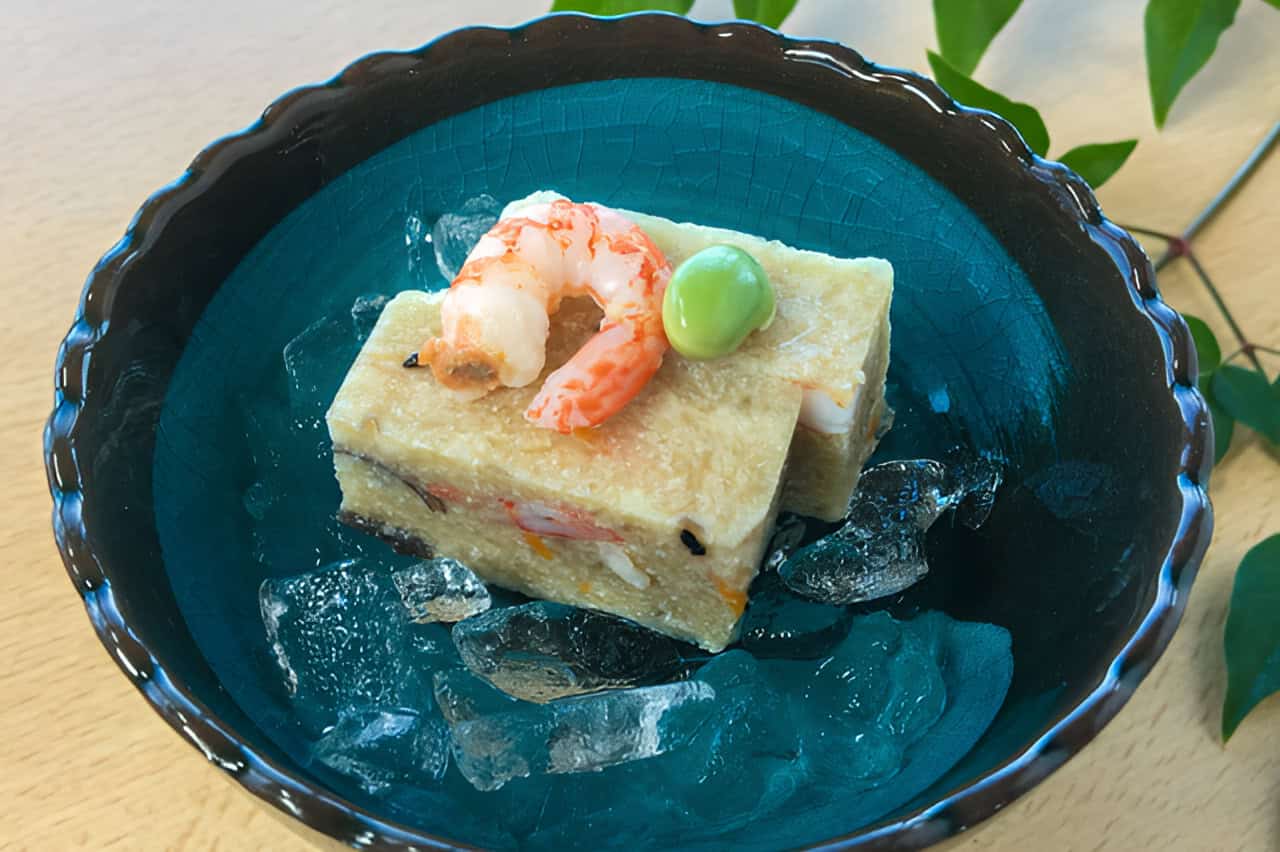
Summer in Japan brings heat, humidity, and tired appetites. So coastal cooks invented cooling dishes to fight the season. One of the most unusual comes from the Seto Inland Sea. People there make Igisu tofu, a jelly-like dish from seaweed. Despite its name, it holds no regular tofu at all. Instead, cooks set red seaweed and soybean flour into firm slices. The result looks a little like freeze-dried tofu. Igisu tofu いぎす豆腐 from Ehime remains a beloved local treasure. Let me walk you through this curious summer food.
What Is Igisu Tofu?
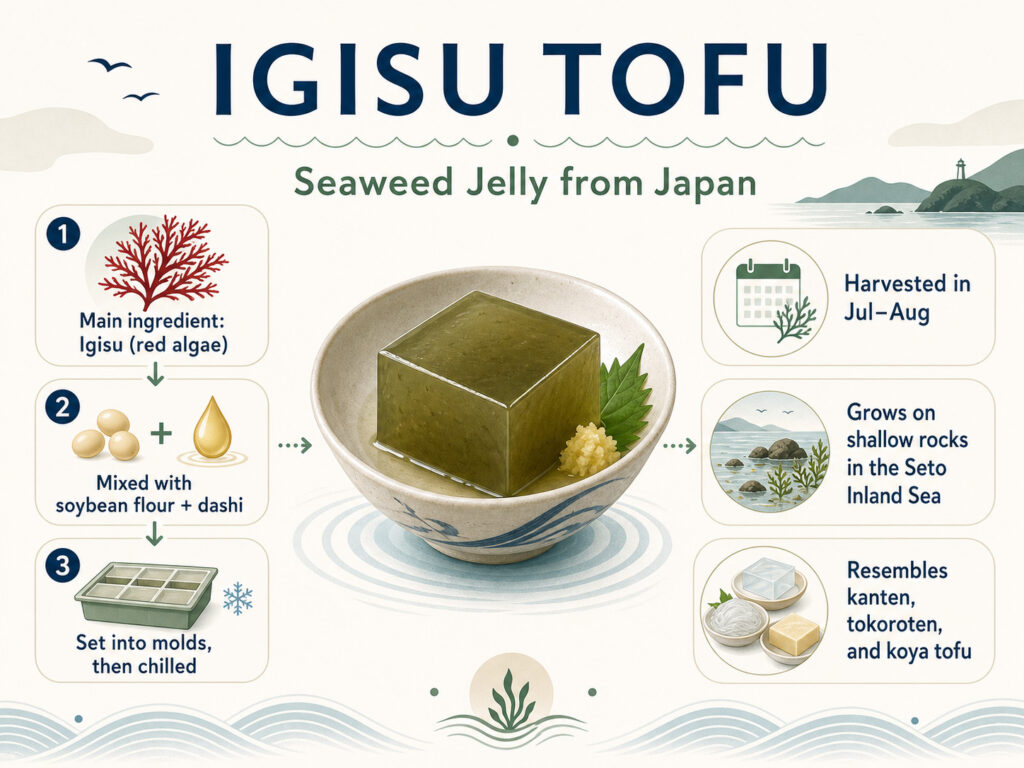
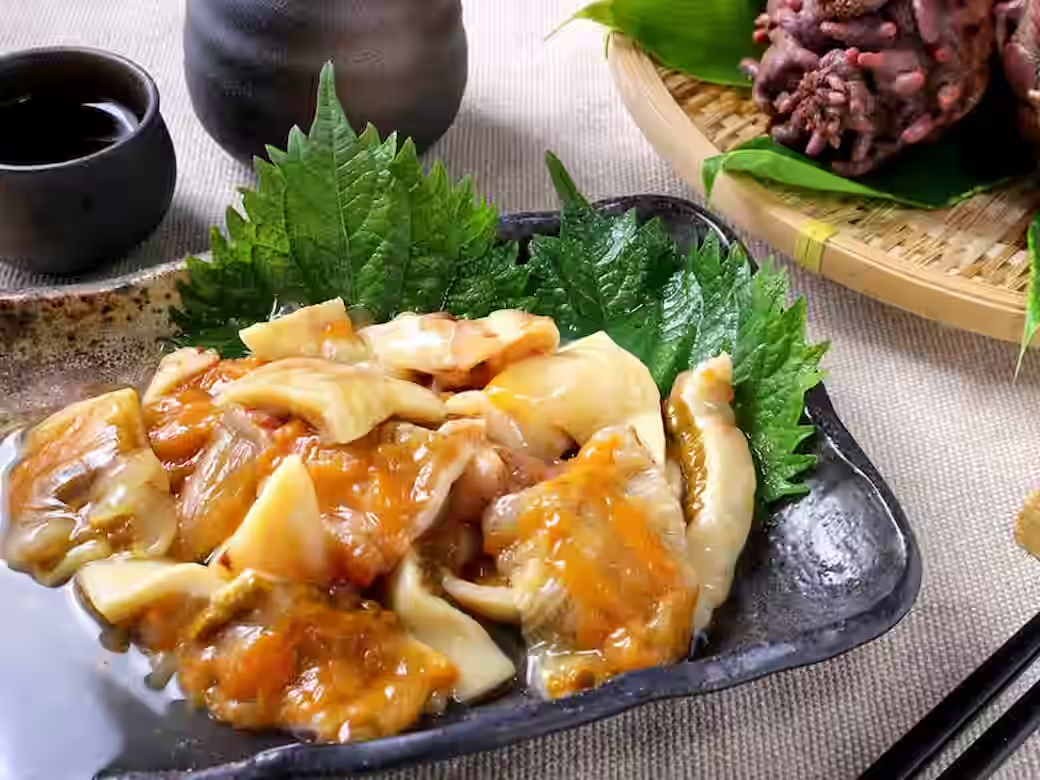
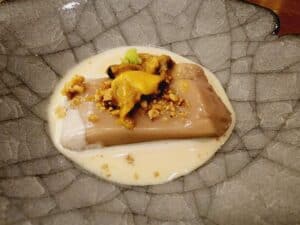
Igisu tofu, also written Igisu dofu, is a chilled seaweed jelly. The Japanese name igisudofu points to its key ingredient. That ingredient is igisu, a type of red algae. Cooks melt this seaweed down with soybean flour and dashi. Then they pour the mix into molds and let it set. So the dish firms up much like kanten or tokoroten.
This is Igisu seaweed tofu, not soy-curd tofu. The seaweed in question is Ceramium kondoi, a red alga. It grows on shallow rocks in the Seto Inland Sea. People gather it mainly in July and August. After harvest, they wash and dry it for storage. So this Japanese seaweed and soybean jelly carries the sea in every bite. Its finished look even resembles freeze-dried koya tofu.
The Taste and Texture of Igisu Tofu
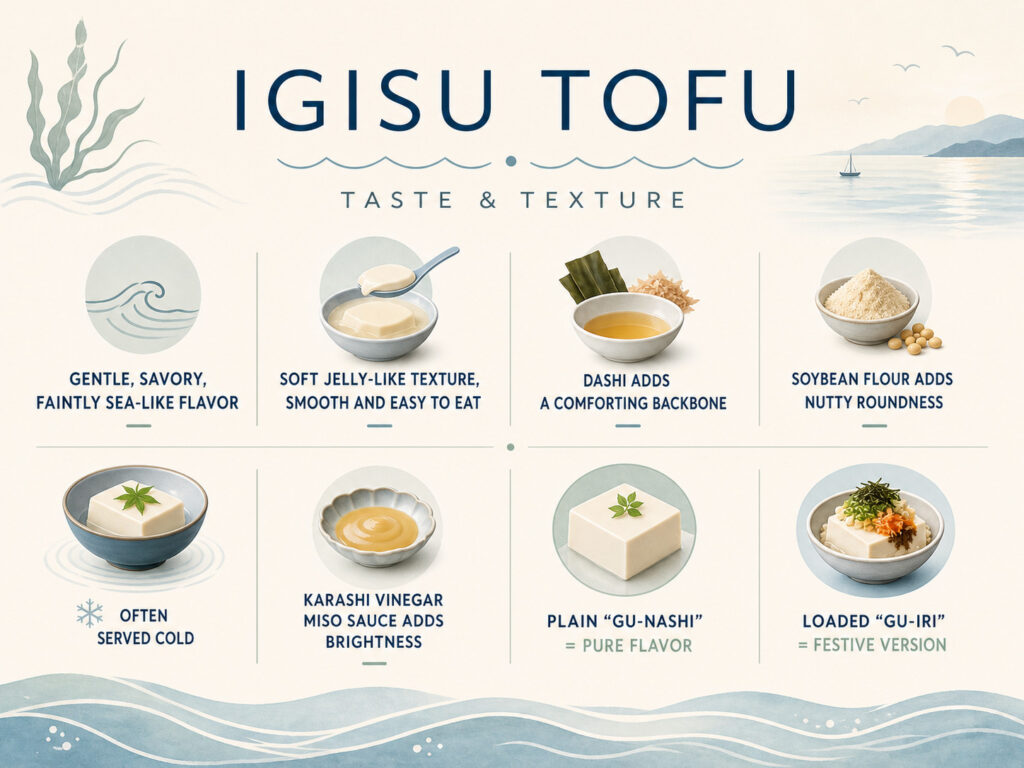
What does Igisu tofu taste like? The flavor stays gentle, savory, and faintly of the sea. Dashi gives it a soft, comforting backbone. The soybean flour adds a mild, nutty roundness. Most people serve it cold, like chilled tofu. So it suits hot days when appetite fades. Here is what defines a good slice:
- A light, smooth, jelly-like texture that slips down easily
- A savory Igisu seaweed flavor deepened by dashi
- A gentle aroma of the sea and roasted soybean
- Often dressed with karashi vinegar miso sauce
- Sometimes studded with shrimp, vegetables, and sesame
The sauce matters as much as the jelly. A tangy karashi su-miso brightens each cool slice. The mustard adds a quiet kick against the soft texture. For a richer version, cooks fold in shrimp and shiitake. So one dish can feel plain or quite festive. Plain “gu-nashi” styles show off the pure seaweed flavor. Loaded “gu-iri” styles look colorful and feel like a feast.
Igisu Tofu in Ehime and Kagawa
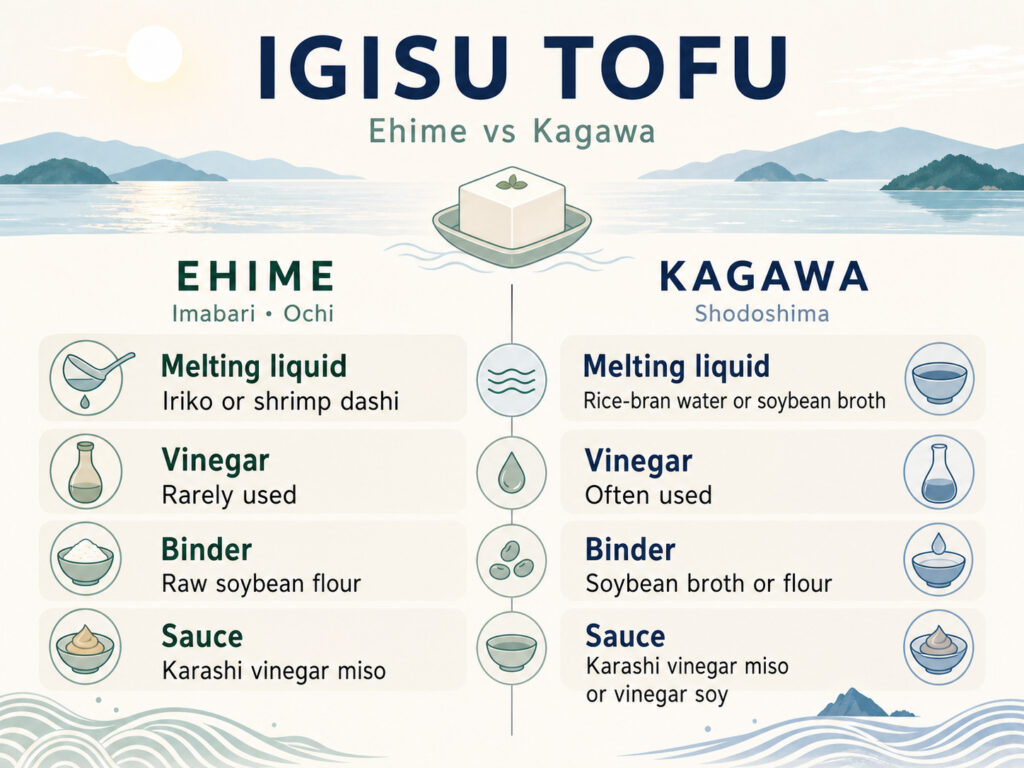
Igisu tofu is not unique to one prefecture. Both Ehime and Kagawa claim proud versions of it. The two share a base idea, yet differ in method. So a quick comparison helps before we cook.
The Ehime Style
Ehime centers its version on Imabari and the Ochi region. Cooks there melt the igisu in a fish-based dashi. They often use iriko or shrimp broth for depth. Then they add raw soybean flour for a smooth set. This Igisu tofu Imabari style tastes clean and savory.
The Kagawa Style
Kagawa keeps its tradition mainly around Shodoshima island. Tonosho town and the Mito Peninsula still pass it down. Cooks there often melt the igisu in rice-bran water or soybean broth. Near the end, they add a splash of vinegar to dissolve it fully. They then mix in seasoned vegetables, shellfish, or shrimp. So the Kagawa version leans rustic and resourceful.
| Point | Ehime (Imabari, Ochi) | Kagawa (Shodoshima) |
|---|---|---|
| Melting liquid | Iriko or shrimp dashi | Rice-bran water or soybean broth |
| Vinegar in the pot | Rarely added | Often added to fully dissolve |
| Binder | Raw soybean flour | Soybean broth, sometimes flour |
| Sauce | Karashi vinegar miso | Karashi vinegar miso or vinegar soy |
Both versions still serve the same role at the table. Each appears at Obon, memorials, and small celebrations. So the dish unites these neighboring Setouchi regions. The small differences simply reflect local pantries and habits.
How to Make Igisu Tofu
How do cooks make Igisu tofu from Ehime? The method takes patience, yet stays simple at heart. Each step builds the final jelly. Let us follow the process in order.
- Soak the dried igisu seaweed, then wash it many times to remove sand
- Prepare a dashi base, often using iriko or shrimp broth
- Simmer the seaweed in the liquid until it melts down
- Stir in raw soybean flour to smooth the texture
- Season with soy sauce, then add cooked shrimp and vegetables
- Pour into a mold and chill until firm, then slice
The soybean flour plays a clever role here. It dissolves the seaweed fibers into a smoother set. So the jelly turns silky rather than stringy. For the broth, our guide to dashi explains the basics well. Cooks then cut the firm block into neat squares. A drizzle of karashi vinegar miso finishes the plate.
Igisu Tofu vs Regular Tofu and Similar Dishes
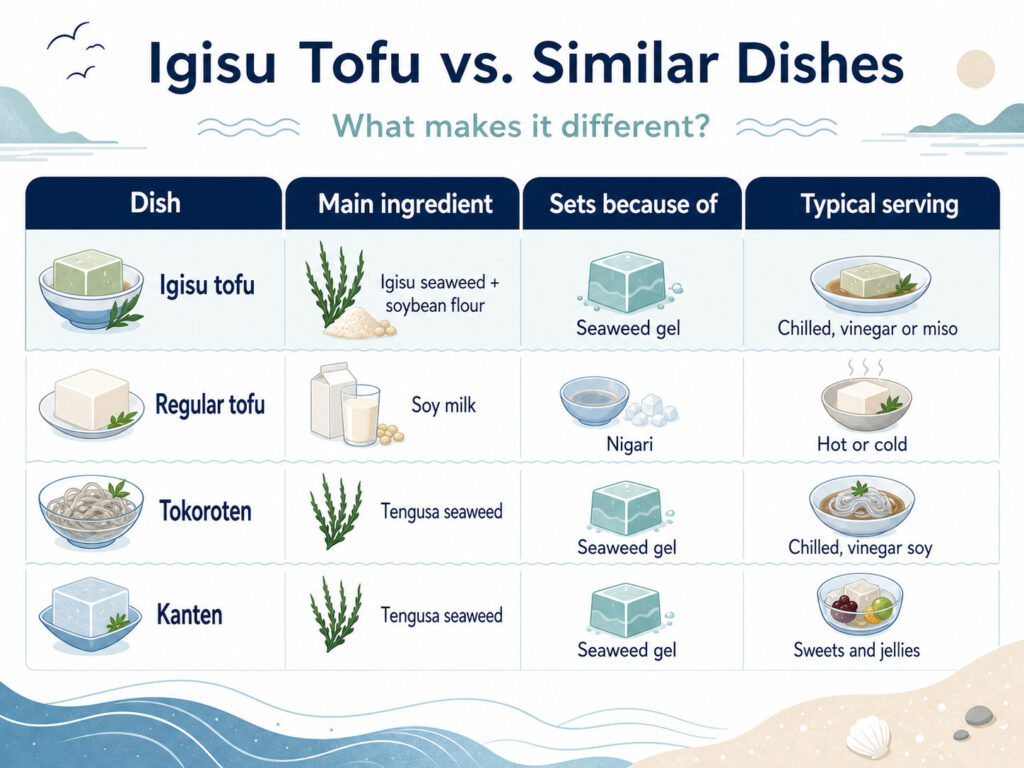
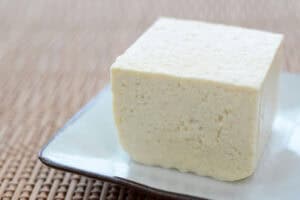
Many newcomers ask how it differs from real tofu. The short answer is the base ingredient. Regular tofu comes from soy milk and a coagulant. Igisu tofu, by contrast, sets through seaweed. So they share a name and a look, but little else.
| Dish | Main ingredient | Sets because of | Typical serving |
|---|---|---|---|
| Igisu tofu | Igisu seaweed, soybean flour | Seaweed gel | Chilled, with vinegar miso |
| Regular tofu | Soy milk | Coagulant (nigari) | Hot or cold |
| Tokoroten | Tengusa seaweed | Seaweed gel | Chilled, with vinegar soy |
| Kanten | Tengusa seaweed | Seaweed gel | Sweets and jellies |
So Igisu tofu sits closer to tokoroten than to tofu. Yet it dissolves the whole seaweed, not just its gel. The soybean flour then gives it a richer body. Similar jelly foods appear elsewhere in Japan too. Kyushu has okyuto, while Niigata makes igonori. Each region turns humble seaweed into a cooling dish.
The History and Culture of Igisu Tofu
A Dish of the Seto Inland Sea Coast
Igisu tofu grew up along the Seto Inland Sea. Its heartland covers Imabari and the Ochi district in Ehime. Across the water, Kagawa’s Shodoshima shares the same tradition. The islands of the Shimanami Kaido also know it well. There, the shallow coast offered plenty of igisu seaweed. So coastal families turned that gift into a summer staple. For poor island households, seaweed was a vital, free resource.
A Food for Obon and Memorials
The dish carries deep meaning beyond mere refreshment. Families prepared it for Obon and Buddhist memorial days. In Imabari, people even treated it as an offering for ancestors. Because it sets firm, it travels and keeps fairly well. So it suited gatherings during the hot summer season. Making it well takes skill, so it marked special days. This summer Obon and memorial dish still graces family tables.
Igisu Tofu Today
Times have changed the dish in small ways. The seaweed grows scarcer, so prices have risen. Fewer households still make it fully from scratch. Even so, local shops and supermarkets keep it alive. Schools serve it to teach children their food heritage. Some towns, like Kamijima, even host Igisu tofu cooking classes. So this near 100-year food of Ehime still thrives today.
Where to Eat Igisu Tofu
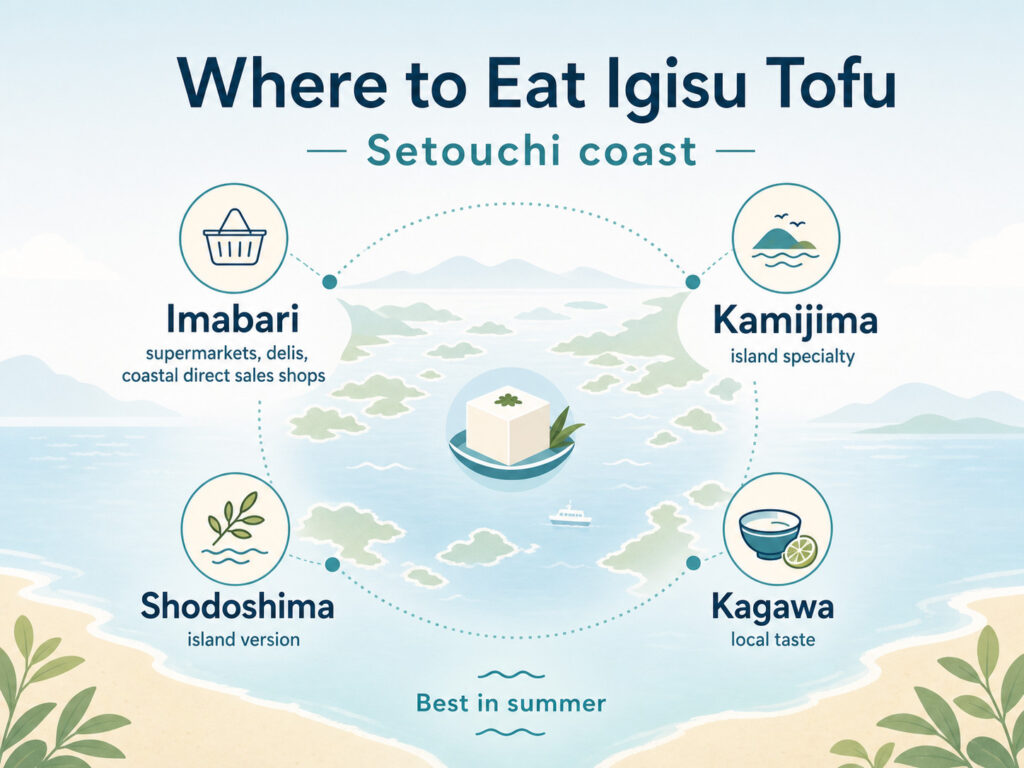
So where can you try Igisu tofu around the Setouchi coast? Imabari makes the most natural starting point. Local supermarkets and delis often sell ready slices in summer. Direct sales shops near the coast carry it too. The islands of Kamijima offer it as a proud specialty. Over in Kagawa, Shodoshima keeps its own island version. For more of the area’s food, explore our Ehime regional dishes. You can also pair it with other local Ehime classics.
Final Thoughts
Igisu tofu tells a quiet story of sea and thrift. It turns simple seaweed into a cooling summer treat. Its gentle flavor and smooth texture feel honest and old. Ehime and Kagawa both still treasure it for Obon. If you visit the Seto Inland Sea, seek a slice. A bite of this seaweed jelly connects you to the coast.
Igisu Tofu FAQ
What is Igisu tofu?
It is a chilled seaweed jelly from the Seto Inland Sea. Cooks make it with igisu red algae and soybean flour. They melt these in dashi, then chill the mix until firm. Despite the name, it contains no soy-curd tofu.
Why is it called tofu?
The name comes from its look, not its base. The set blocks resemble freeze-dried or pressed tofu. Soybean flour also links it to soy foods. So the word tofu describes the form, not the recipe.
What is igisu seaweed?
Igisu is a red alga known as Ceramium kondoi. It grows on shallow rocks in the Seto Inland Sea. People harvest it mostly in July and August. They then dry it for later cooking.
Is Igisu tofu only from Ehime?
No, Kagawa also has its own tradition. Shodoshima island is especially known for it. The Kagawa version often uses rice-bran water and vinegar. Ehime, meanwhile, leans on iriko or shrimp dashi.
How does it taste?
The flavor is mild, savory, and lightly of the sea. Dashi gives it a soft, comforting base. Soybean flour adds a gentle, nutty note. A karashi vinegar miso sauce brightens each bite.
How is it different from regular tofu?
Regular tofu sets from soy milk and a coagulant. This dish sets from melted seaweed instead. So the two differ at the most basic level. They share only a name and a similar shape.
Is it similar to tokoroten or kanten?
Yes, all three set into a jelly from seaweed. Tokoroten and kanten use tengusa algae. Igisu tofu uses igisu and adds soybean flour. That flour gives it a richer, smoother body.
When do people eat it?
People enjoy it most during the hot summer months. Families serve it for Obon and memorial days. The cool, smooth texture suits the season well. Some eat it simply as a refreshing side.
Where can you eat it?
Imabari and the Ochi region remain the heartland. Local supermarkets and delis sell it in summer. Kagawa’s Shodoshima island also offers it. A trip to the Setouchi coast gives the best chance.
References
- MAFF Our Regional Cuisines, Igisu Dofu (Ehime), https://www.maff.go.jp/j/keikaku/syokubunka/k_ryouri/search_menu/menu/igisu_dofu_ehime.html (Surveyed: June 2026)
- Sanuki no Shoku (Kagawa Food Portal), Igisu Tofu, https://sanukinoshoku.jp/local_cuisine/igisu-tofu/ (Surveyed: June 2026)
- JA Group, Recipe for Igisu Tofu (JA Ochi Imabari), https://life.ja-group.jp/recipe/detail?id=8630 (Surveyed: June 2026)
- MAFF Our Regional Cuisines, Igisu Dofu (Ehime), https://www.maff.go.jp/j/keikaku/syokubunka/k_ryouri/search_menu/menu/igisu_dofu_ehime.html (Surveyed: June 2026)
- National Association of School Dietitians, Igisu Tofu (Ehime), https://www.zengakuei.or.jp/kyodosyoku/pref/ehime_02.html (Surveyed: June 2026)
Related Articles
- Matsuyama Age Sushi (松山あげずし) (Surveyed: June 2026)
- Izumiya (いずみや) (Surveyed: June 2026)
- Dashi: Japanese Stock (Surveyed: June 2026)
- Chikuwa (ちくわ) (Surveyed: June 2026)
- Shojin Ryori (精進料理) (Surveyed: June 2026)





Comments