



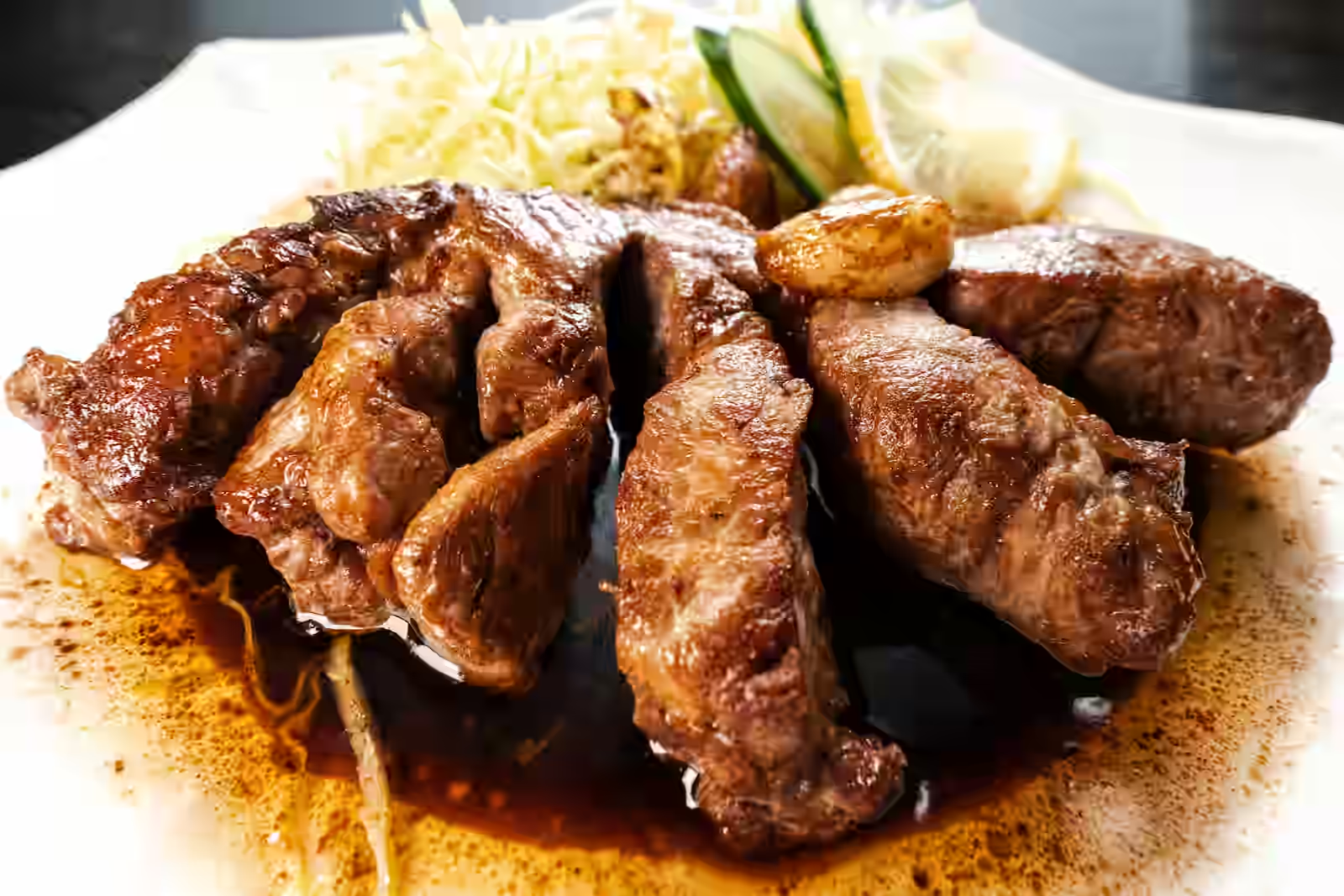
Yokkaichi Tonteki is a Japanese pork steak from Mie Prefecture in central Japan, sautéed with whole garlic cloves and finished in a dark garlic sauce. Locals treat it as a local specialty rather than a restaurant showpiece. The pork arrives thick, the sauce arrives strong, and a small mountain of shredded cabbage sits beside it.
Mie sits between Nagoya and Osaka, so plenty of visitors pass straight through. That seems a shame, because this dish rewards a stop.
What Is Yokkaichi Tonteki?
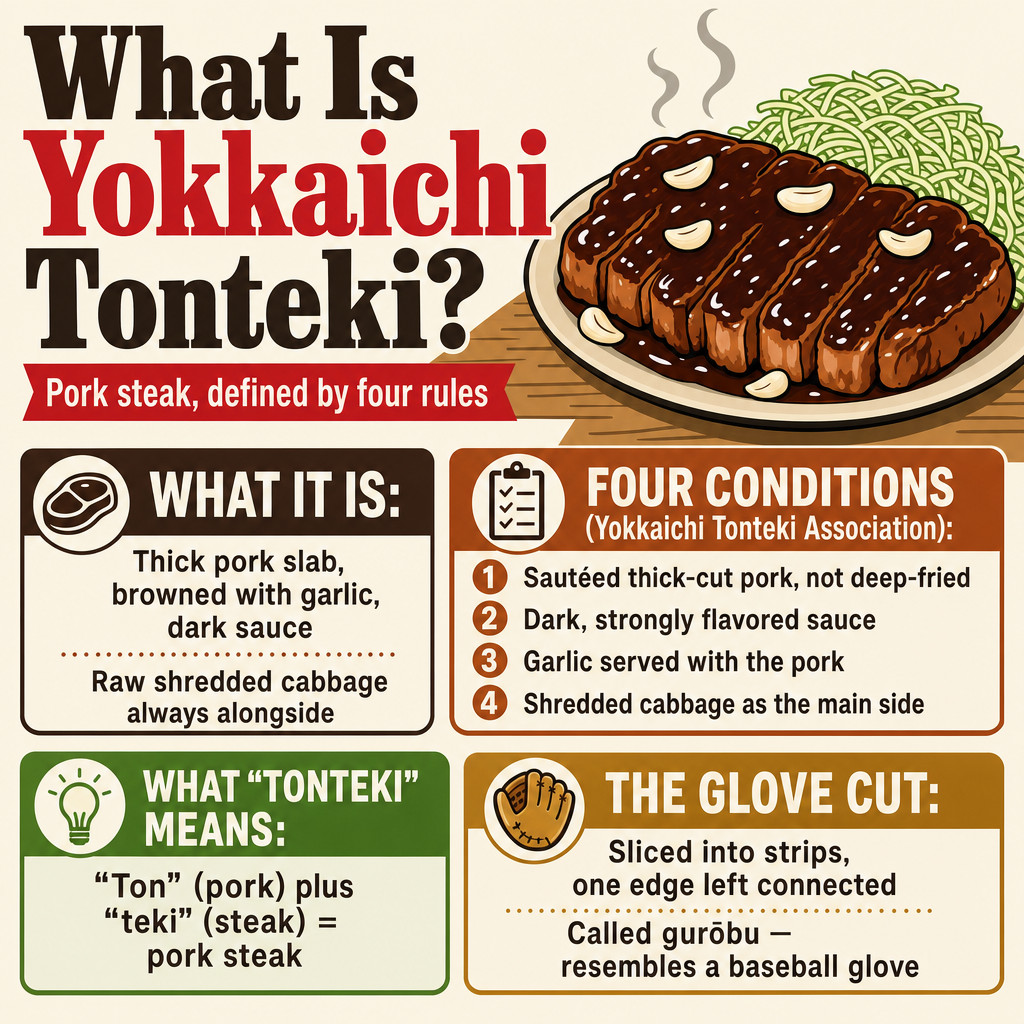
Basically, Yokkaichi Tonteki is a thick slab of pork, browned in a pan with garlic and coated in a concentrated brown sauce. Raw shredded cabbage always comes alongside too. Restaurants across the city serve it, including Chinese diners, ramen shops, tonkatsu specialists and izakaya.
The dish also has a formal definition, which surprises many first-time visitors. A local volunteer body, the Yokkaichi Tonteki Association, sets four conditions.
- Sautéed thick-cut pork. The meat is pan-cooked rather than deep-fried.
- A dark, strongly flavored sauce. Color matters here, so pale sauces do not qualify.
- Garlic served with the pork. Whole browned cloves usually sit on the plate.
- Shredded cabbage as the main side. Restaurants generally pile it high.
What the word “tonteki” means
First, the name joins two short pieces. “Ton” means pork, while “teki” comes from the English word steak. So tonteki reads simply as pork steak. Honestly, the dish is about as direct as its name suggests.
The glove cut
Many shops cut the meat into a shape locals call gurōbu, meaning glove. A knife slices the pork into strips, although one edge stays connected. The finished steak resembles a baseball glove, which is exactly where the nickname comes from. Because of those cuts, chopsticks work perfectly well.
Some shops instead serve short stick-shaped pieces, known as koma-yaki or koma-kire. The association counts those as Yokkaichi Tonteki too.
The Origin and History of Yokkaichi Tonteki
Postwar beginnings in an industrial city
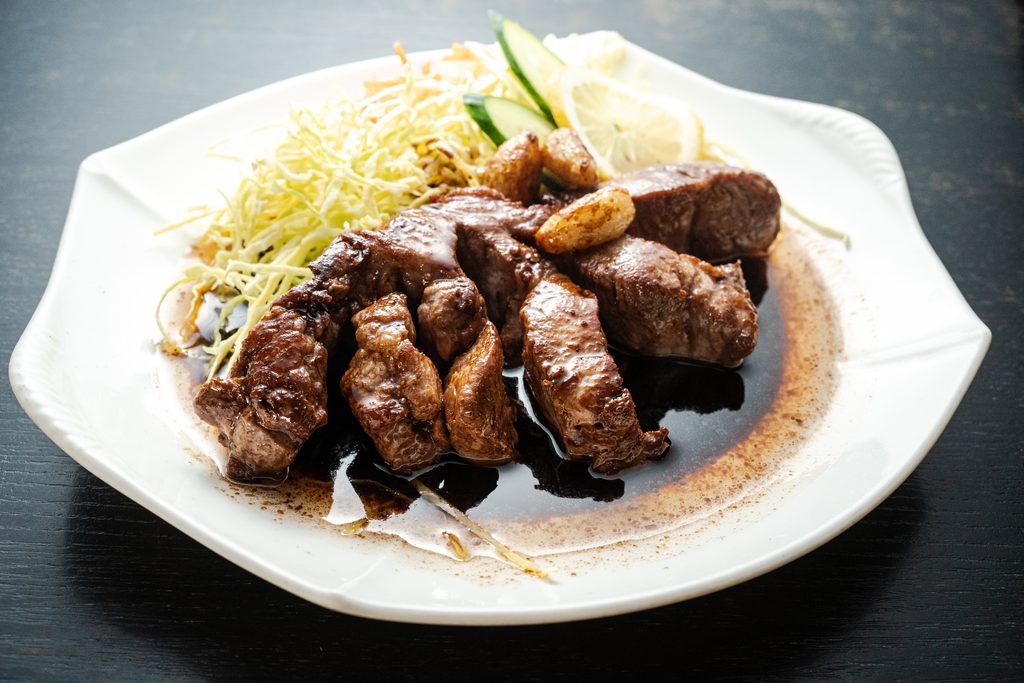
Both the tonteki association and the Yokkaichi Tourism Association date the dish to the years immediately after the Second World War. Restaurants in the city center served it first, and Chinese restaurants and meat specialists carried it furthest. Several of those long-standing shops still trade today, including one that has run for roughly half a century.
Yokkaichi was an industrial port back then, and the food suited that setting. Garlic, fat and a heavy sauce make sense when the meal has to carry a working afternoon. Eventually the dish escaped its original category. Ramen shops picked it up, then izakaya and tonkatsu restaurants followed. Each kitchen adjusted the sauce, which explains why no two versions taste identical today.
From local habit to regional brand
For decades tonteki stayed stubbornly local. Residents ate it constantly, yet almost nobody outside Mie knew the word. Then in 2008 a group of volunteers launched the Yokkaichi Tonteki Association. They also promoted the dish under a single brand name, joined B-kyu gourmet events, and pushed it toward a national audience.
B-kyu gourmet, incidentally, means everyday affordable local food rather than fine dining. Japanese research on these campaigns describes a familiar pattern. A volunteer group builds the brand first, and tourism follows afterwards. Yokkaichi fits that model closely.
What Does Yokkaichi Tonteki Taste Like?
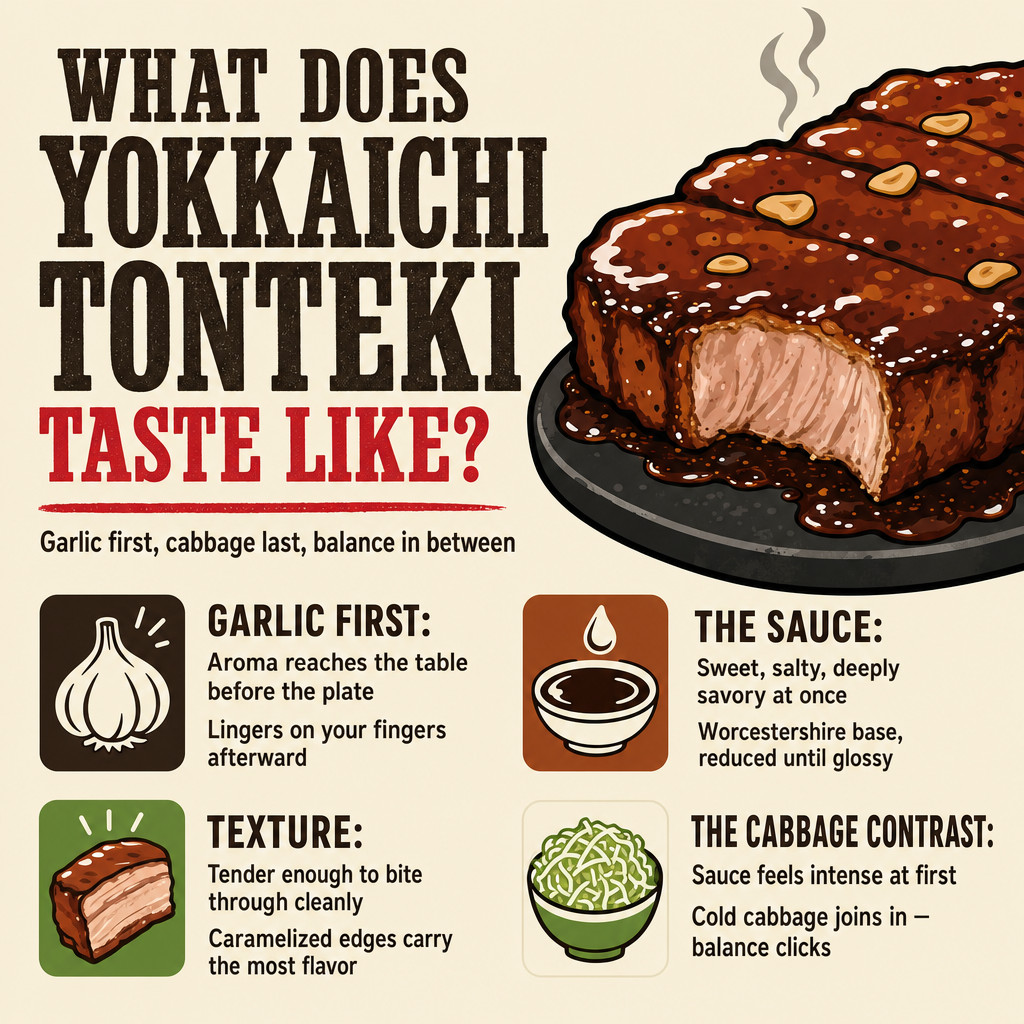
Garlic certainly hits you first. The aroma usually reaches the table before the plate does, and it lingers on your fingers long afterwards.
Next comes the sauce, which tastes sweet, salty and deeply savory all at once. Many shops build it on Japanese Worcestershire sauce, so a fruity, faintly sour edge runs underneath. Soy sauce and sugar then round the sharpness off. Because the sauce is reduced until glossy, it clings to the meat instead of pooling on the plate.
Texture then surprises people. Thick pork can easily turn tough, although a well-cooked tonteki stays tender enough to bite through cleanly. The edges caramelize where the sauce meets the pan, and those darker corners carry the most flavor.
An honest note. The first few bites feel intense, and the sauce can seem to be winning against the pork. Then a chopstickful of cold cabbage joins the same mouthful, and the balance suddenly makes sense. That contrast is really the whole idea.
Main Ingredients of Yokkaichi Tonteki
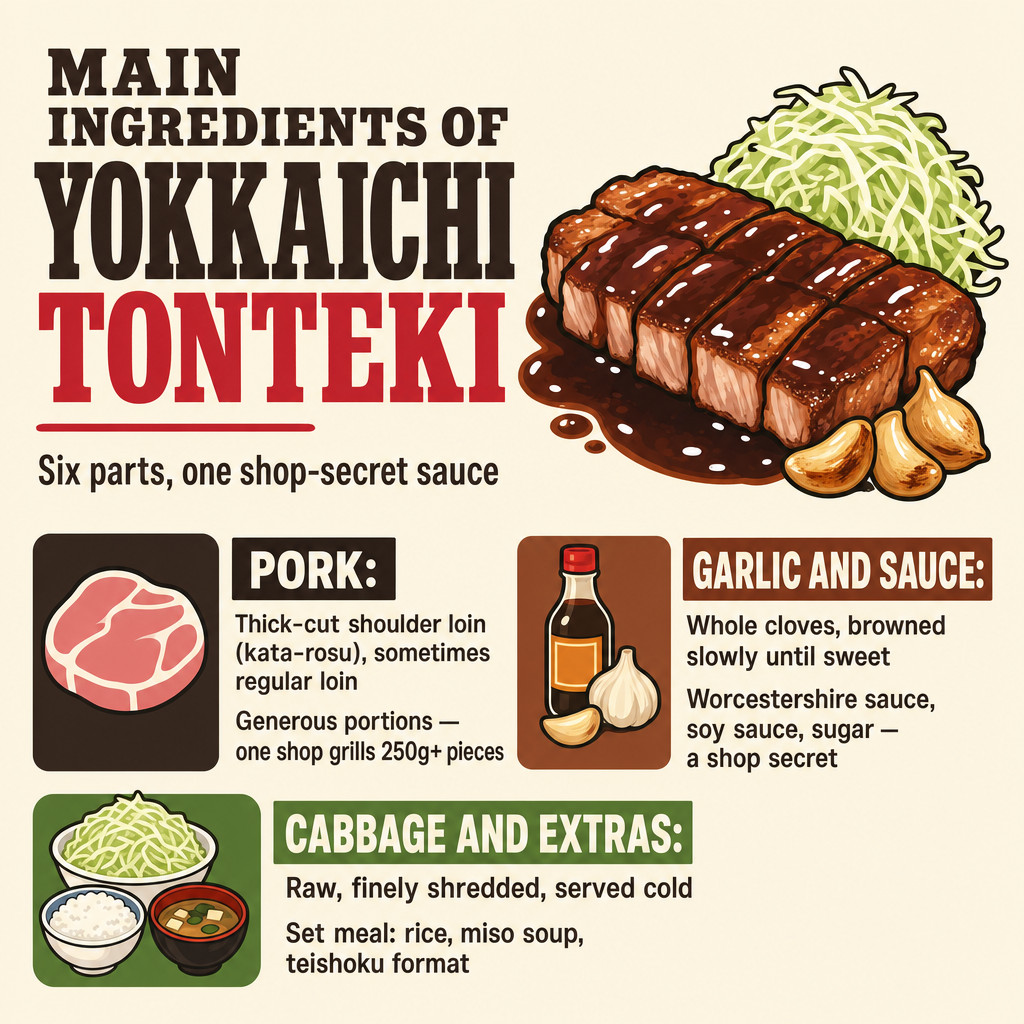
- Pork Usually thick-cut shoulder loin, called kata-rosu, although some shops choose regular loin instead
- Portion size Generous by Japanese standards, and one long-running shop grills a single piece of over 250 g
- Garlic Whole cloves, browned slowly so they turn sweet rather than bitter
- Sauce base Usually Japanese Worcestershire sauce, soy sauce and sugar, though the blend is a shop secret
- Cabbage Raw and finely shredded, then served cold against the hot pork
- Set meal extras Also rice, miso soup and sometimes a small soup bowl, following the usual teishoku format
Shoulder loin is the practical choice here, since it carries enough fat to survive a heavy sauce. One tonkatsu specialist in the city deliberately breaks that habit, using well-marbled regular loin for a lighter result. Sourcing varies too, and at least one shop works exclusively with Mie-raised pork.
How the Sauce Changes from Shop to Shop
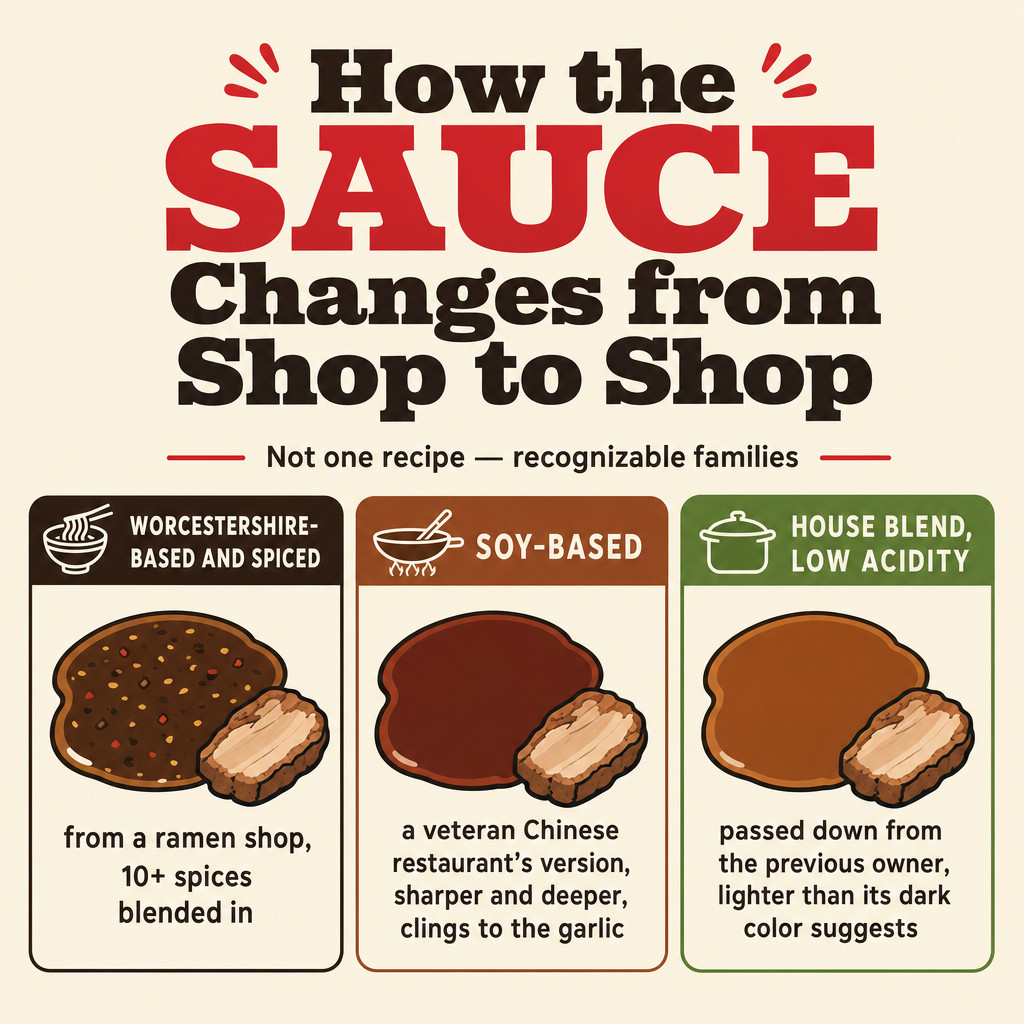
Here is the part most English-language descriptions skip. Yokkaichi Tonteki is not one fixed recipe, and the sauce splits into recognizable families. Locals compare shops the way other cities compare ramen, and everyone has a favorite.
- Worcestershire-based and spiced. One version comes from a ramen shop, which blends premium Worcestershire sauce with more than ten spices and seasonings.
- Soy-based. A long-established Chinese restaurant works from soy sauce instead, producing a sharper, deeper result that clings to the garlic.
- House blend, low acidity. Another veteran shop uses a recipe passed down from the previous owner, and the finish is lighter than the dark color suggests.
So the sweet-savory stereotype only tells part of the story. If you eat tonteki twice in Yokkaichi, choose two different styles rather than two similar plates.
How to Cook Yokkaichi Tonteki at Home
Still, you can get remarkably close outside Japan. One item deserves care, though. Japanese Worcestershire sauce tastes thicker, sweeter and fruitier than the British original, so look for a Japanese brand if you can.
What you need, for two servings
- Pork shoulder or loin steaks, 2 cm thick, ×2
- Garlic cloves, ×6
- Worcestershire sauce, 2 tbsp
- Soy sauce, 1 tbsp
- Oyster sauce, 1 tbsp
- Sugar, 1 tsp
- Shredded cabbage
- Oil, salt and pepper
Step by step
- Score the fat rim, then cut strips almost all the way through for a glove shape.
- Season lightly, then let the pork sit at room temperature for twenty minutes.
- Brown the garlic cloves slowly in oil, then lift them out.
- Afterwards, sear the pork over medium heat until both faces color deeply.
- Then pour in the sauce mixture, return the garlic, and reduce until glossy.
- Rest the meat briefly, then serve it over a bed of cabbage.
Mistakes worth avoiding
Thin cutlets dry out quickly, so thickness genuinely matters. Burnt garlic turns bitter, and the sauce will carry that bitterness everywhere. A cold pan cannot reduce the sauce properly either. Finally, skipping the cabbage removes the contrast the whole plate depends on.
Yokkaichi Tonteki vs Tonkatsu
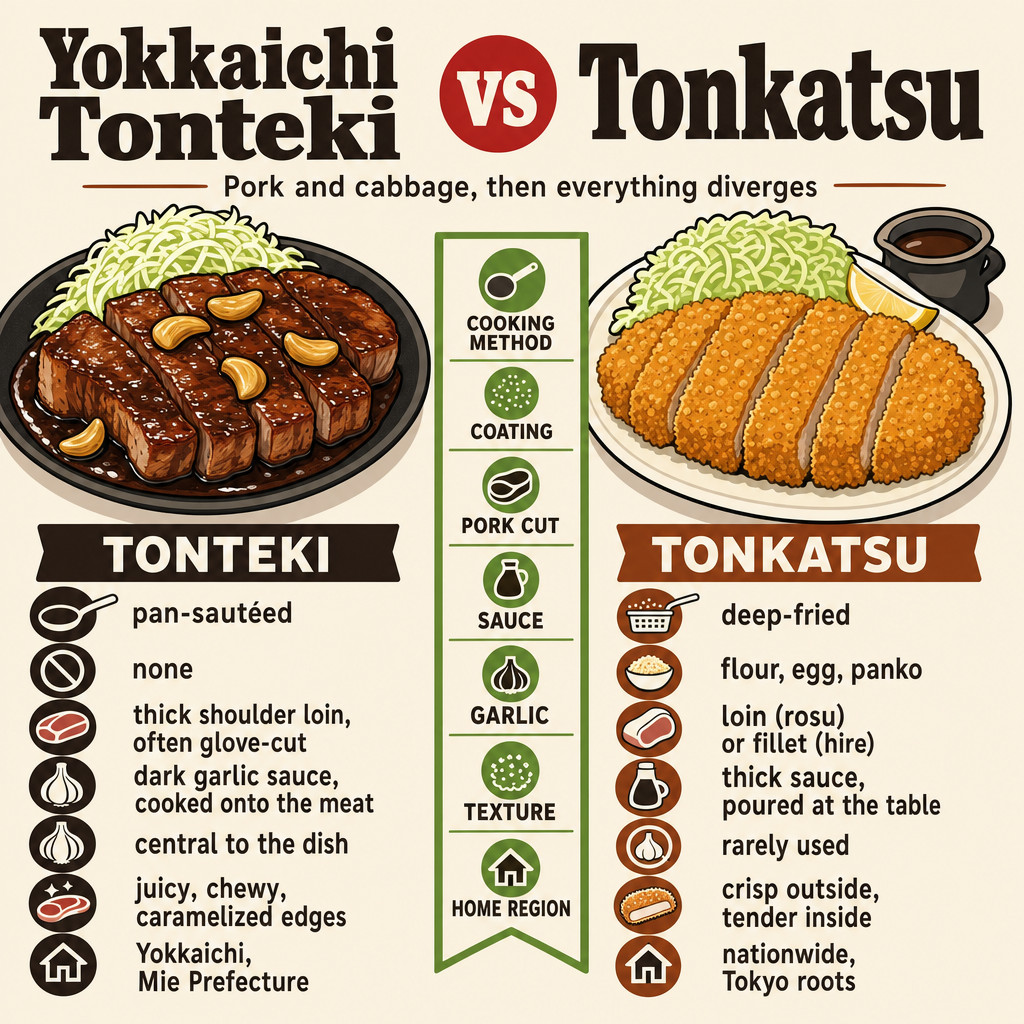
Both dishes use pork, and both also arrive with shredded cabbage. Beyond that, however, they diverge sharply. The table below sets the two side by side.
| Point | Yokkaichi Tonteki | Tonkatsu |
|---|---|---|
| Cooking method | Pan-sautéed | Deep-fried |
| Coating | None | Flour, egg and panko |
| Pork cut | Usually thick shoulder loin, often glove-cut | Loin (rosu) or fillet (hire) |
| Sauce | Dark garlic sauce, cooked onto the meat | Thick sauce, poured on at the table |
| Garlic | Central to the dish | Rarely used |
| Texture | Juicy, chewy, caramelized edges | Crisp outside, tender inside |
| Home region | Yokkaichi, Mie Prefecture | Nationwide, with Tokyo roots |
So which should you order? Choose tonkatsu when you want crunch, and tonteki when you want punch. Travelers who already know tonkatsu often prefer tonteki, simply because it feels less familiar. Anyone who enjoys shogayaki will recognize the same sweet-savory logic here.
How to Eat Tonteki Like a Local
Most shops serve it as a teishoku set, so rice and miso soup arrive automatically. The rice, too, is not optional in practice. That sauce is built for it.
- Drag each piece of pork through the sauce before lifting it.
- Eat pork and cabbage together, since the cold crunch cuts the fat.
- Push the leftover sauce into the cabbage rather than leaving it behind.
- Squash the garlic cloves onto the meat whenever you want the flavor doubled.
- Order beer or cold barley tea, because both handle the richness well.
Ordering, meanwhile, is straightforward. Say “Tonteki teishoku o onegaishimasu” and then you will get the full set. Several shops also list a dai-tonteki, meaning a large one, although the standard size already defeats most people. Refills differ by shop as well, since some offer free rice and miso soup at lunch while limiting cabbage to one refill.
Where to Eat Yokkaichi Tonteki
Yokkaichi lies under an hour from Nagoya, usually by Kintetsu limited express. Kintetsu Yokkaichi Station sits in the middle of the shopping district, so several tonteki shops stand within walking distance. JR Yokkaichi Station is closer to the port, though fewer trains stop there.
Dozens of restaurants across the city serve the dish, so choosing can feel harder than it should. The Yokkaichi Tonteki Association publishes a shop list, and the tourism association maintains its own map. Notably, the shops it features range from veteran Chinese restaurants to a ramen shop and a tonkatsu specialist.
Prices and practical notes. Among the shops featured by the Yokkaichi Tourism Association in April 2026, tonteki sets ran from about ¥1,680 to ¥2,200, or roughly US$10 to US$14 at ¥160 to the dollar. Single plates cost around ¥1,900 to ¥2,050. The association notes that those prices were current at the time of its reporting, so confirm with the restaurant before you go. Many independent shops also close between lunch and dinner.
Other Famous Foods from Mie Prefecture
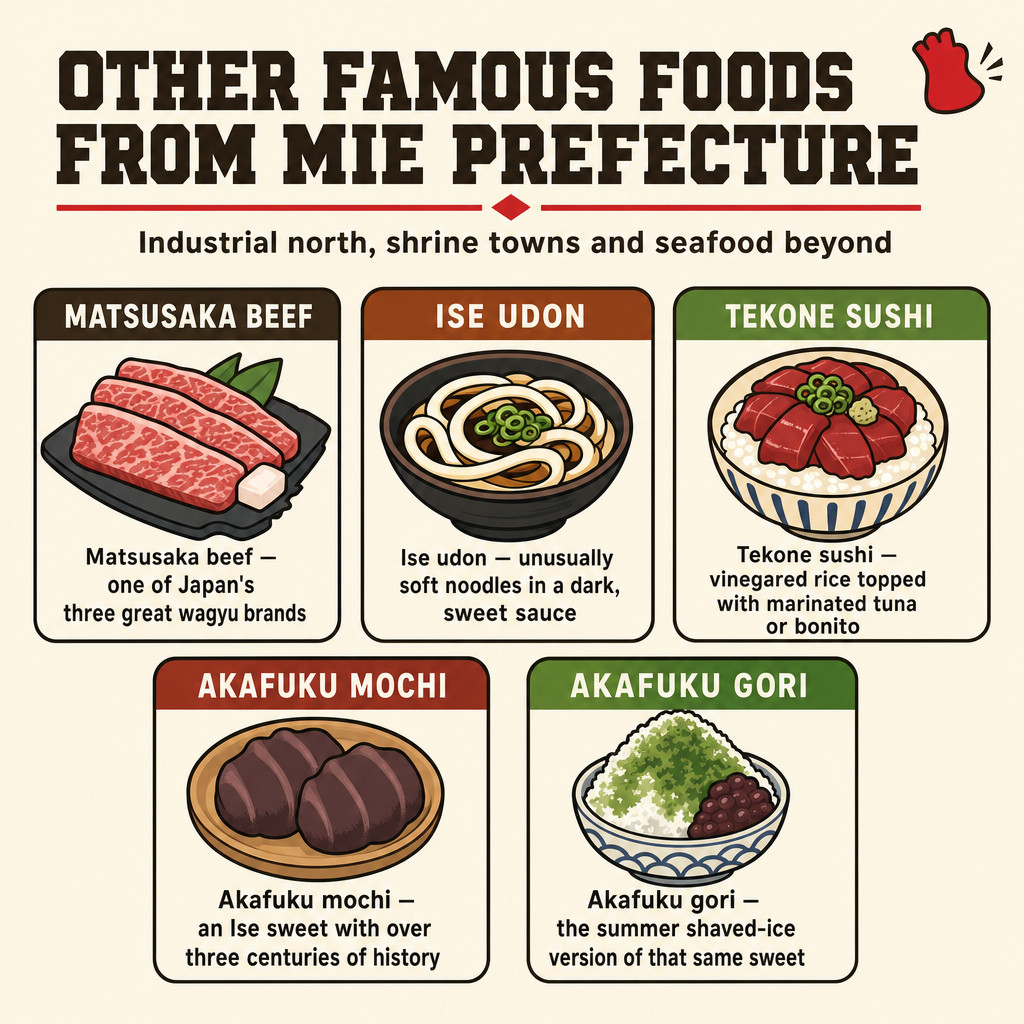
Mie certainly rewards a longer stay. Tonteki belongs to the industrial north, whereas the south and east lean toward shrine towns and seafood.
- Matsusaka beef, one of Japan’s three great wagyu brands
- Ise udon, unusually soft noodles in a dark, sweet sauce
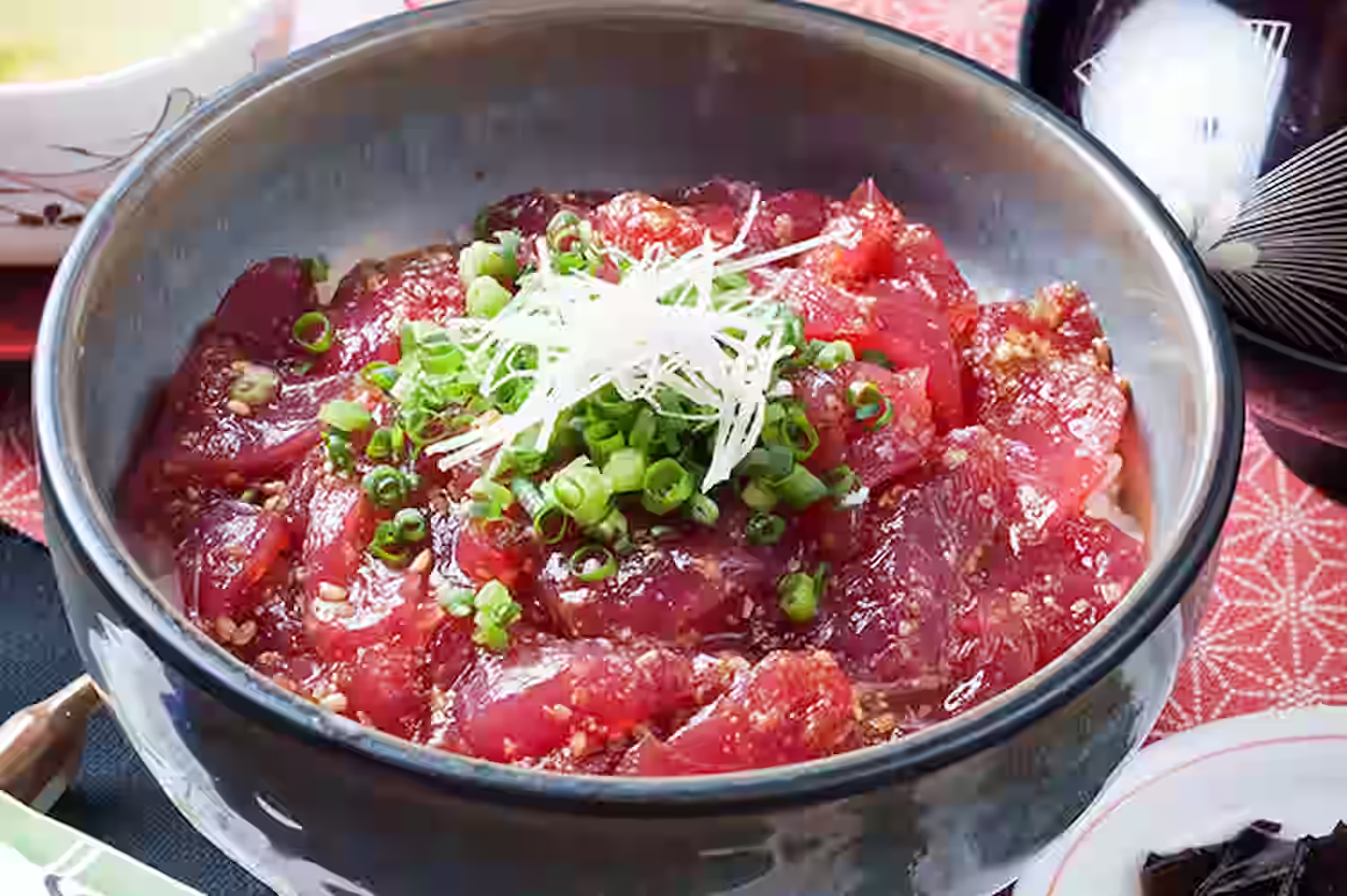
- Tekone sushi, vinegared rice topped with marinated tuna or bonito
- Akafuku mochi, an Ise sweet with more than three centuries of history
- Akafuku gori, the summer shaved-ice version of that same sweet
Our Kansai food guide covers the wider region, while the Japanese food guide sorts dishes by type.
Is Yokkaichi Tonteki Worth the Detour?
Yokkaichi Tonteki will never look elegant. It is brown, glossy and unapologetically garlicky, and no amount of plating changes that. Still, the dish tells you something useful about Japanese food culture. Not every regional specialty grew out of a shrine, a castle town or an old trade route. Some grew out of factories, hunger and a good thick cut of pork.
If your route runs between Nagoya and Osaka, Yokkaichi costs you barely half a day. Order the regular size, pick a sauce style rather than the nearest shop, and see whether it wins you over.
Yokkaichi Tonteki FAQ
Is Tonteki sweet or savory?
It lands firmly on the savory side, although sugar softens the edges. Worcestershire-based versions also bring fruitiness and a light sourness, while soy-based versions taste sharper. Because shops mix their own blends, sweetness varies noticeably between restaurants. Ask which style a shop makes if you have a preference.
Is Yokkaichi Tonteki spicy?
No, since chilli heat plays no part in the standard version. Garlic and black pepper supply the punch instead. One ramen shop in the city does build a deliberately spiced sauce, though. Anyone avoiding garlic, meanwhile, should choose something else entirely.
Why is Tonteki served with cabbage?
Above all, the cabbage balances a very rich plate. Cold, raw shreds cut through fat and concentrated sauce. Diners also use the cabbage to mop up whatever sauce remains. One tonkatsu specialist in Yokkaichi even treats it as a co-star rather than a garnish.
How much does a Tonteki set cost?
Sets featured by the Yokkaichi Tourism Association in April 2026 ranged from roughly ¥1,680 to ¥2,200. That works out at about US$10 to US$14 at ¥160 to the dollar. Single plates without rice cost slightly less in some shops. Prices change, however, so check with the restaurant directly.
Can you make Tonteki outside Japan?
Yes, and the recipe certainly forgives beginners. Thick pork shoulder, garlic, soy sauce and sugar are generally easy to find anywhere. However, Japanese Worcestershire sauce is the one ingredient worth hunting down. Otherwise, mix regular Worcestershire sauce with a little ketchup and oyster sauce.
Where can travelers eat Tonteki in Yokkaichi?
Several shops stand within walking distance of Kintetsu Yokkaichi Station, including one inside the Ichibangai shopping street. Chinese restaurants, ramen shops and tonkatsu specialists all serve the dish. Both the tonteki association and the tourism association publish shop information. Lunch is usually the easiest time to visit.
What else is Mie Prefecture famous for?
Matsusaka beef certainly ranks among Japan’s three great wagyu brands. Ise udon meanwhile offers unusually soft noodles in a dark sauce. Similarly, tekone sushi and Ise spiny lobster represent the coastal side of the prefecture. Akafuku mochi, for its part, has served Ise pilgrims for over three centuries.
References
- Yokkaichi Tonteki Association, What Is Yokkaichi Tonteki? (Accessed August 2026)
- Yokkaichi Tourism Association, Yokkaichi Tonteki, the City’s Energy Meal (Accessed August 2026)
- Japan Marketing Academy, B-1 Grand Prix: Competition and Cooperation among Regional Brands, Marketing Journal Vol. 31 No. 3, 2012 (Accessed August 2026)
- J-STAGE, A Study on Regional Revitalization through Food, Vol. 11, 2011 (Accessed August 2026)
Related Articles
- Matsusaka Beef (松阪牛) (Surveyed: August 2026)
- Ise Udon (伊勢うどん) (Surveyed: August 2026)
- Akafuku (赤福) (Surveyed: August 2026)
- Tonkatsu (とんかつ) (Surveyed: August 2026)
- Shougayaki (生姜焼き) (Surveyed: August 2026)
- Traditional Japanese Teishoku (定食) (Surveyed: August 2026)
- The Complete Kansai Food Guide (Surveyed: August 2026)




Comments