




Some foods earn their reputation through marketing. Others earn it through flavor. 鹿児島黒豚 Kagoshima black pork belongs firmly in the second category. One bite of a properly cooked cutlet or a thin slice dipped in shabu-shabu broth, and the difference from ordinary pork is immediate. Clear. Almost hard to believe.
Japan’s premium pork from Kagoshima has a devoted following both domestically and abroad. But what exactly makes it different? And why does Kagoshima, of all places, produce pork this good? The answer involves centuries of history, two continents, and a sweet potato.
What Is Kagoshima Black Pork?
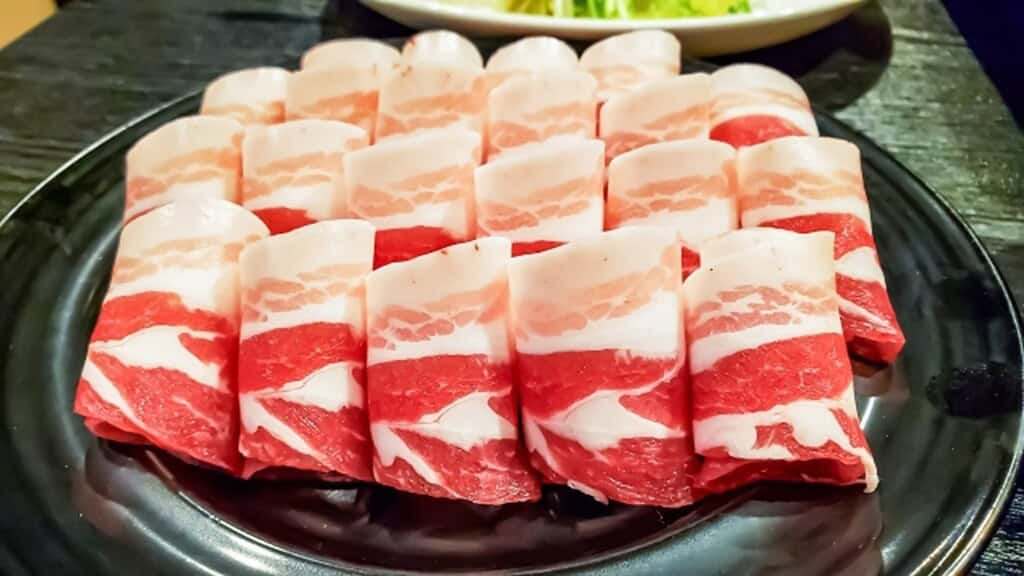
Kagoshima black pork, known locally as Kurobuta (黒豚), is a purebred Berkshire pork raised in Kagoshima Prefecture at the southern tip of Kyushu. The name literally means “black pig,” and it comes from the distinctive appearance of the animal. The body is black, with six white markings on the snout, tail, and all four feet. In Japanese, this pattern is called Roppaku, meaning “six whites.”
To be officially certified as 鹿児島の名物 premium Japanese pork under the Kagoshima brand, the pigs must be pure Berkshire. No crossbreeds qualify. They also must be raised to strict standards set by the Kagoshima Prefecture Black Pig Producers Association. That clarity of certification matters. It’s why Kagoshima Kurobuta carries more credibility than many other 黒豚 Japanese pork brands sold in Japan.
The History Behind the Brand
The story goes back about 400 years. Shimazu Iehisa, the feudal lord of the Satsuma domain, is said to have brought black pigs from the Ryukyu Kingdom (present-day Okinawa) to Kagoshima. These pigs took root in the southern climate and became part of the local food culture.
Unusually for Japan’s Edo period, Kagoshima’s pork-eating tradition survived the era’s strong Buddhist-influenced meat restrictions. The Satsuma domain was geographically isolated from Edo’s direct influence, and trade ties with the Ryukyu Kingdom reinforced its pork culture. Even in periods when meat eating was officially discouraged, Kagoshima kept eating pork.
Then came the Meiji era, and with it, an unlikely diplomatic connection. In 1863, British naval ships bombarded Kagoshima in retaliation for the killing of a British merchant. The conflict is known as the Anglo-Satsuma War. As part of subsequent relations, Berkshire pigs from England arrived in Kagoshima. The local black pigs were then crossbred with these imports during the late 19th century.
The results were significant. The first-generation hybrids combined the size of Berkshire genetics with the qualities of local Satsuma pigs. Through continued selective breeding, the modern Kagoshima Kurobuta emerged: pure Berkshire, adapted over generations to Kagoshima’s environment and rearing practices.
Production declined in the 1950s as faster-growing commercial breeds became dominant. But producers worked to revive it. By 1999, “Kagoshima Kurobuta” was officially certified as a prefectural brand. That recognition helped protect the name and ensure consistent standards.
Why Kagoshima Black Pork Is Special
There are several things that separate this Japanese black pork from ordinary pork, and from other premium pork brands like Chibaza Pork from Chiba or commercial Berkshire sold elsewhere.
First, the feed. In the later stages of raising, the pigs are fed a diet containing 10 to 20 percent sweet potato, Kagoshima’s most famous agricultural product, for at least 60 days before slaughter. Sweet potato is rich in vitamin E, which improves meat quality and reduces oxidation in the fat. The result is fat that tastes clean and light rather than heavy and greasy.
Second, the raising period. Kagoshima Kurobuta pigs take 230 to 270 days to reach slaughter weight. That’s roughly 1.2 to 1.5 times longer than conventional pigs. The longer growth period allows muscle fibers to develop more fully and fat to distribute more evenly.
Third, the amino acid profile. Scientific studies have measured the umami compounds and natural sugars in Kurobuta. One study found the savory taste to be 3.7 times greater than ordinary pork, and sweetness 6.7 times higher. These aren’t marketing claims. They’re measurable differences in chemistry.
As part of Kagoshima’s celebrated trio of black meats — alongside Kuroushi black beef and Kuro Satsuma-dori black chicken — the Kurobuta holds a place at the center of Kagoshima’s food culture.
What Does Kagoshima Black Pork Taste Like?
This might be the question worth sitting with before you visit.
The first thing you notice is the texture. The muscle fibers are unusually fine. When you bite into it, the resistance is clean and crisp, not chewy or stringy. Then the flavor arrives. There’s natural sweetness, which is the amino acids at work. Then umami. Then a richness from the fat that somehow feels light.
That last point surprises people. The fat in Kagoshima black pork melts at a higher temperature than most other pork breeds. This means it doesn’t feel heavy in the mouth. There’s no greasy residue. You can eat several slices of fatty cuts and still not feel overwhelmed. It’s the kind of richness that invites the next bite rather than discouraging it.
There’s also almost no pork smell. That gamey quality that can put some people off is essentially absent. This makes the meat remarkably versatile across preparations.
Best Ways to Eat Kagoshima Black Pork
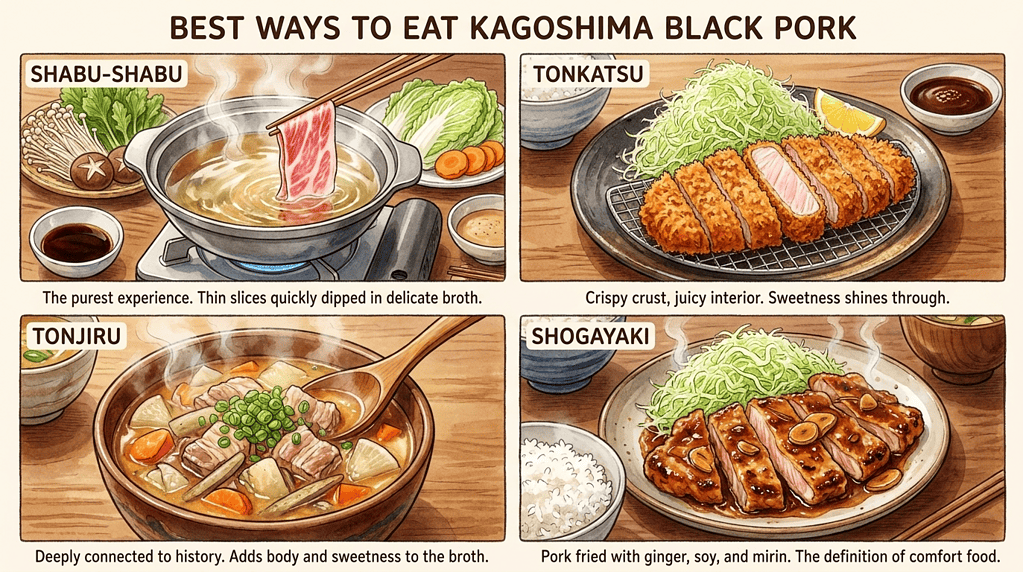
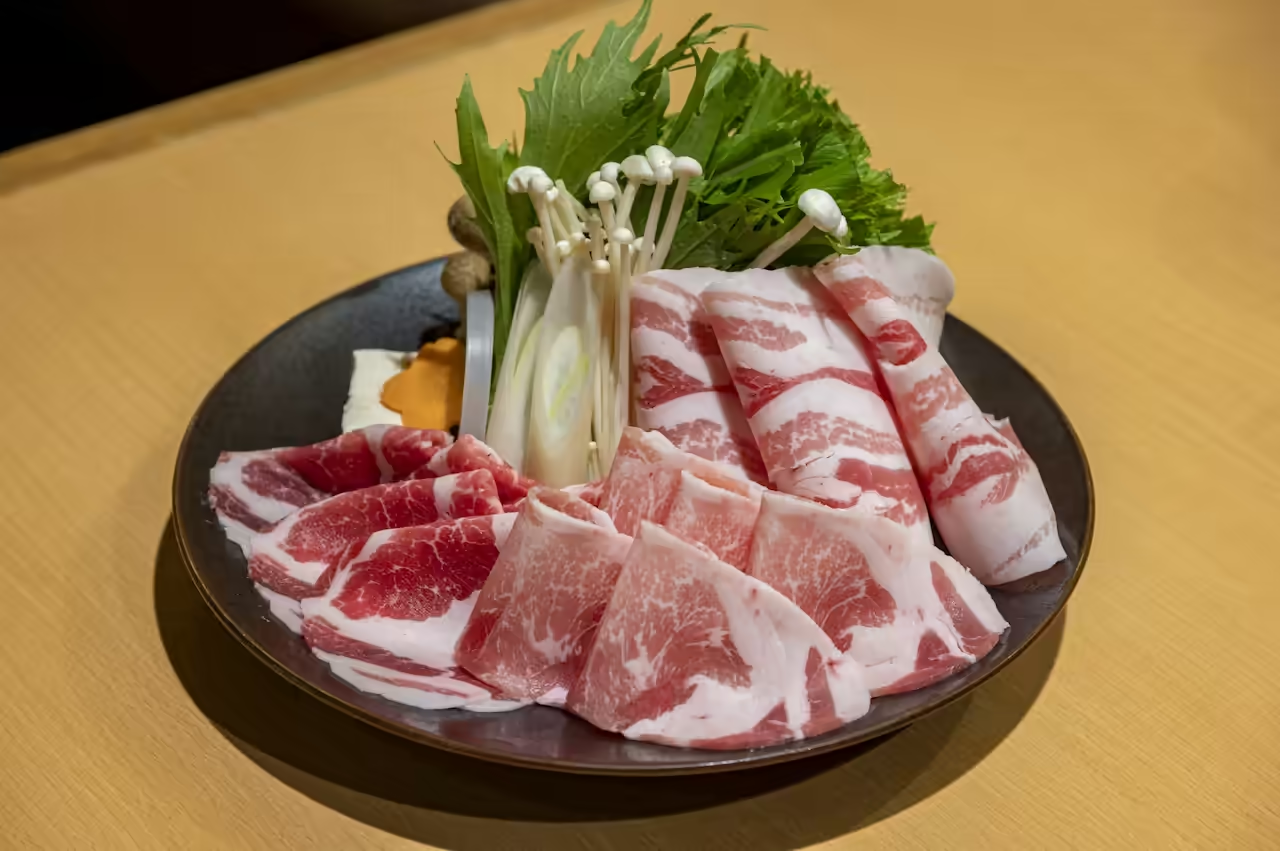
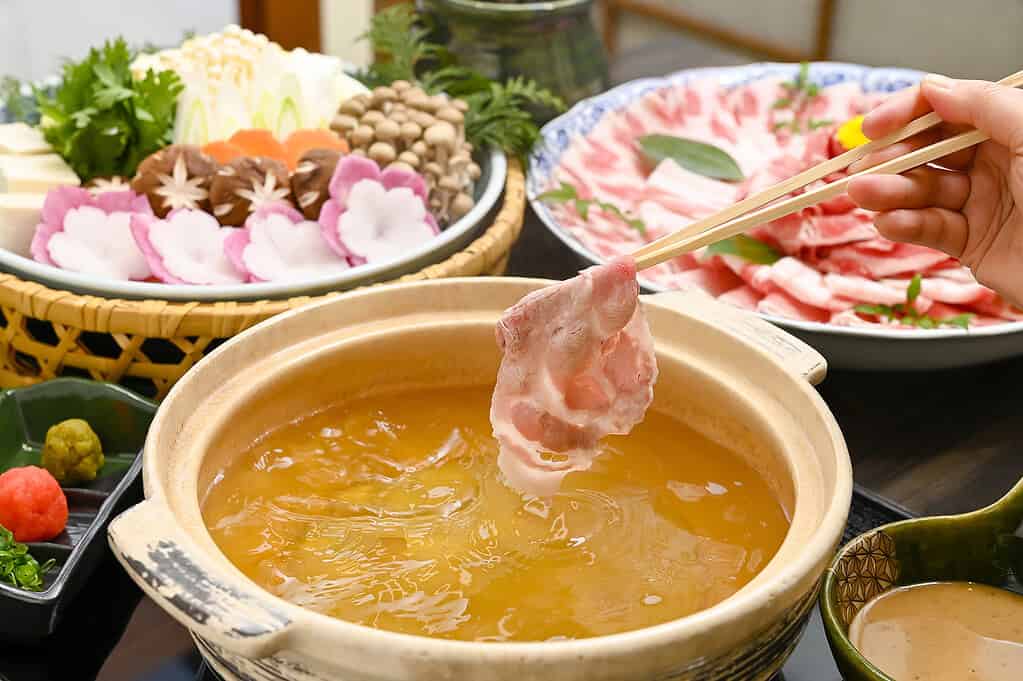
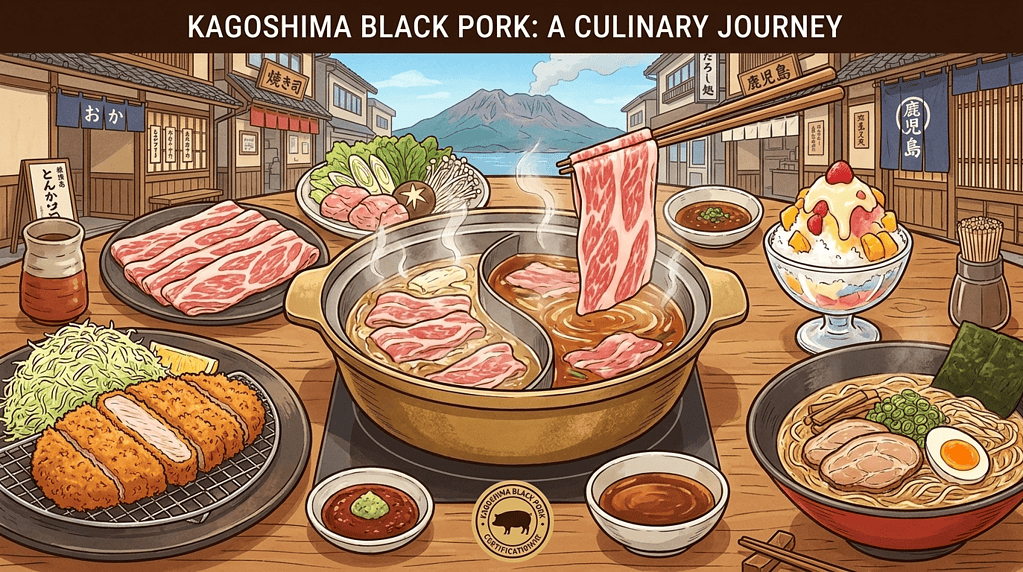
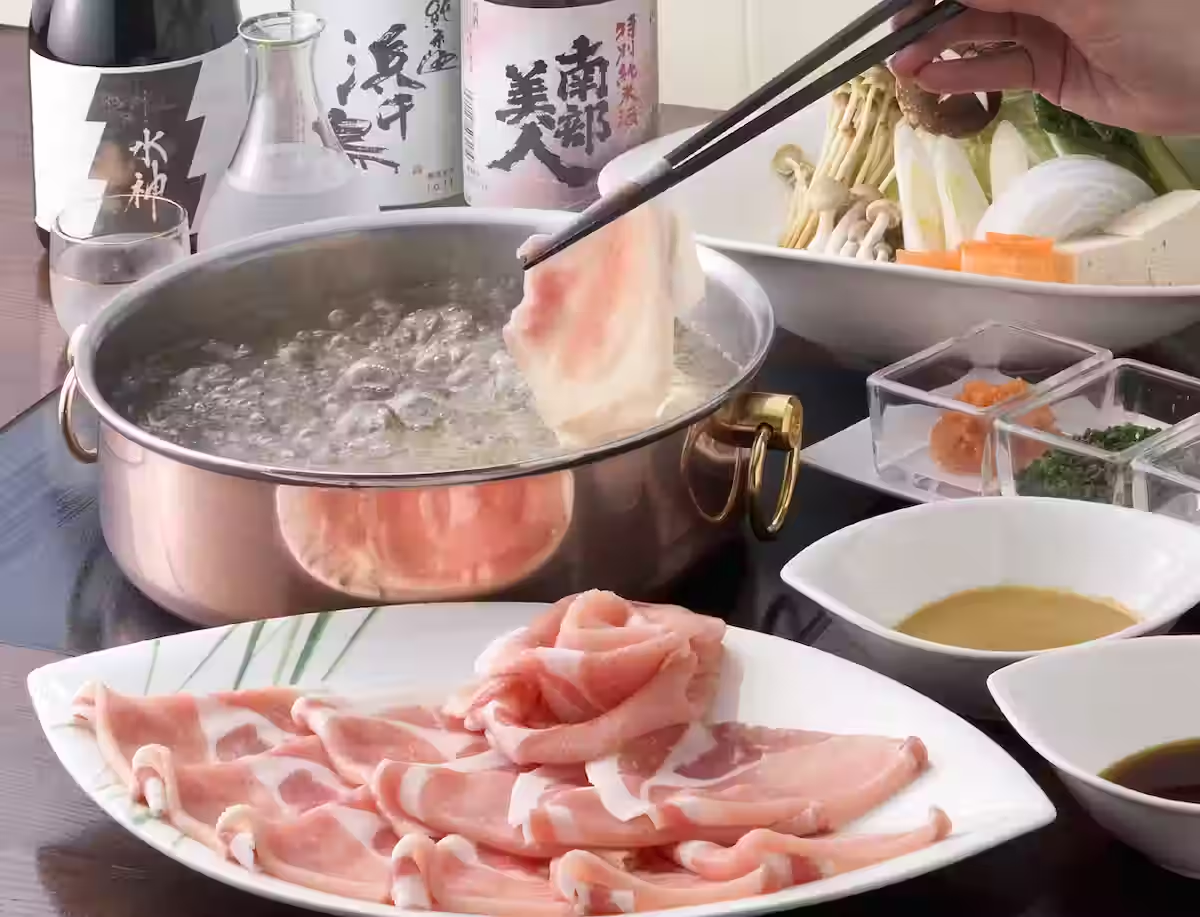
Shabu-shabu is probably the purest way to experience it. Thinly sliced Kurobuta, quickly dipped in delicate broth, then pulled through ponzu or sesame sauce. Nothing obscures the flavor. The fat blooms in the hot liquid, and each slice disappears in two or three bites. It’s a restrained, honest way to eat something this good.
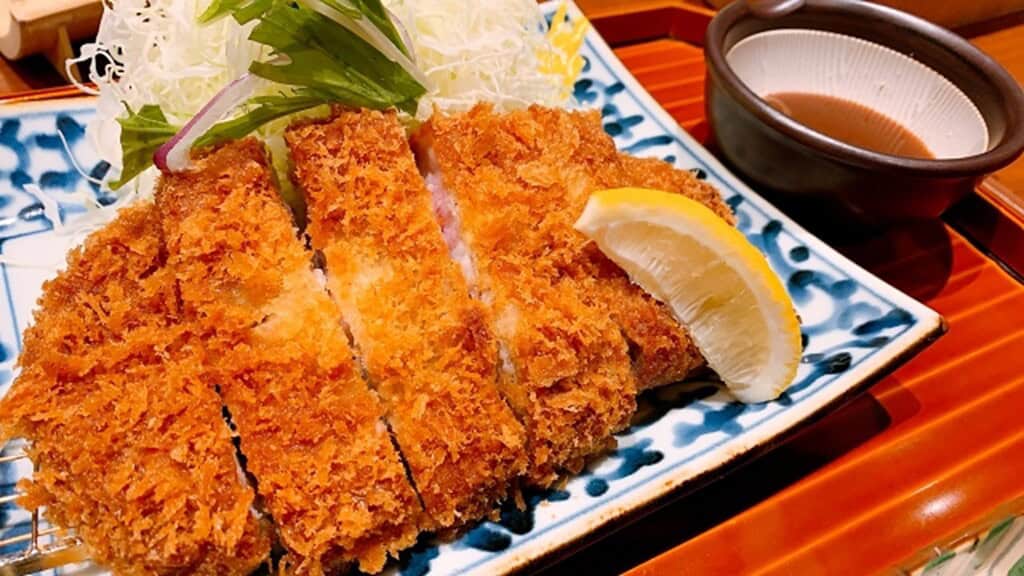
Tonkatsu made with Kurobuta is a different experience from standard tonkatsu. The same dish, entirely different character. The crust shatters cleanly, the interior is juicy rather than dry, and the sweetness of the meat comes through even under the breadcrumb coating. Many Kagoshima restaurants build their entire identity around this single preparation.
Tonjiru, the miso-based pork soup, is deeply connected to Kagoshima’s food history. Made with Kurobuta, the pork adds body and sweetness to the broth that regular pork can’t replicate. It’s the kind of soup you finish completely, every drop.
Shogayaki, pork fried with ginger, soy sauce, and mirin, is another ideal preparation. The strong seasoning doesn’t overwhelm the meat. It amplifies it. Served with shredded cabbage and white rice, it’s the definition of Japanese comfort food.
Where to Try Kagoshima Black Pork
Kagoshima City is the obvious starting point. The Tenmonkan district has multiple restaurants specializing in Kurobuta, ranging from casual lunch spots to proper sit-down dinner restaurants. Ichi-ni-san, one of the most recognized Kurobuta restaurant chains, serves shabu-shabu as its signature dish. The stock, made with kelp and bonito, is prepared specifically to complement the pork.
Specialty tonkatsu restaurants in Kagoshima often use Kurobuta exclusively. The difference from chain tonkatsu restaurants is noticeable at the first bite.
Outside Kagoshima, Tokyo and Osaka have restaurants dedicated to Kurobuta. JA Kagoshima-linked restaurants in both cities import the pork directly. These are reliable options when visiting the capital.
One note of caution: the name “Kurobuta” appears on menus across Japan, including in other countries. Not all of it is certified Kagoshima Kurobuta. The certified version comes from pure Berkshire pigs raised under the prefectural association’s standards. When in doubt, look for the Kagoshima certification mark or ask directly about the source.
Kagoshima has much more to offer beyond its pork. The Kagoshima ramen is a worthy meal in its own right, as is the local Shirokuma shaved ice and Sake Zushi. But if there’s one reason to make the trip south, Kagoshima black pork is it.
Kagoshima Black Pork vs Tokyo X: Two Very Different Premium Porks
Japan has over 400 branded pork varieties. Most aren’t worth comparing. But Tokyo X is a genuine rival, and understanding the difference between these two helps you choose what to order.
Edo Ingenuity, Satsuma Tradition
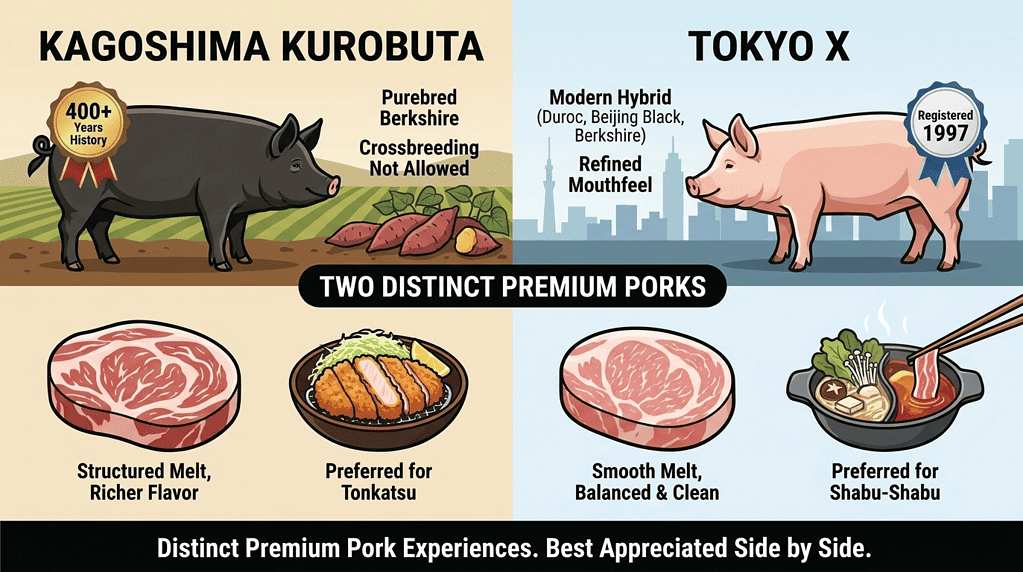
Tokyo X is a hybrid breed, not a heritage one. It was developed by Tokyo’s livestock research center through a three-way cross of Duroc from the United States, Beijing Black from China, and Berkshire from England. The breed was registered in 1997. Kagoshima black pork, by contrast, is pure Berkshire. The lineage goes back 400 years and crossbreeding is not permitted under the brand’s certification rules.
Fat, Flavor, and Where to Find Them
The fat behaves differently in each. Tokyo X fat melts at 34 to 36°C, right around body temperature. This creates an exceptionally smooth sensation in the mouth, almost immediate. The experience is clean and refined. Kagoshima Kurobuta fat also melts easily, but the sensation is slightly firmer and more structured before it gives way. Many people describe Kurobuta as having more “substance” to the bite.
Tokyo X leans toward a balanced, all-round profile. High amino acids, high inosinic acid, notable sweetness, no gamey smell. It’s the kind of pork that surprises people who expect something stronger. Kagoshima Kurobuta carries a deeper natural sweetness, shaped partly by its sweet potato diet. There’s more layering. Some tasters find it richer. Others prefer Tokyo X’s cleaner, lighter finish.
Kagoshima black pork is mainly consumed in Kagoshima Prefecture. Getting it fresh in Tokyo requires a specialist restaurant. Tokyo X, meanwhile, is sometimes called “phantom pork” because even in Tokyo it’s rare. Production is deliberately small. Neither is easy to find casually. For tonkatsu, many serious enthusiasts consider Kagoshima Kurobuta the stronger choice. For shabu-shabu or pork saute, Tokyo X’s lower fat melting point and delicate flavor can be equally compelling.
There’s no single correct answer. Both represent the serious side of Japanese premium pork. If you visit Tokyo, seek out Tokyo X. If you go south to Kagoshima, eat Kurobuta. ou’re lucky enough to find both on the same menu, try them side by side and decide for yourself.
References
- Tenpostar – Kagoshima Kurobuta Characteristics and History: https://tenposstar.com/en/articles/r/2302
- Visit Kagoshima (Official Guide) – Eating and Drinking in Kagoshima: https://www.kagoshima-kankou.com/for/highlights/GourmetTourism
- Visit Kyushu – The Delicious Secrets of Kagoshima’s Kurobuta: https://www.visit-kyushu.com/en/blogs/delicious-secrets-kagoshimas-free-range-kurobuta-pork/
Kagoshima Kurobuta FAQ
What is Kagoshima Kurobuta?
Kagoshima Kurobuta is a premium Berkshire pork from Kagoshima Prefecture. Farmers raise these black pigs with utmost care and a special diet. Food lovers know this meat for its tender texture and clean, sweet fat.
Where does Kagoshima Kurobuta come from?
Kagoshima Kurobuta originates from Kagoshima Prefecture in southern Kyushu. Samurai lords first brought these Berkshire pigs to the region over 400 years ago.
What does Kagoshima Kurobuta taste like?
Kagoshima Kurobuta has a rich, sweet, and umami-packed flavor. The texture feels incredibly tender and juicy. Diners often compare it to the Wagyu beef of the pork world because of its delicate marbling.
Where can I eat Kagoshima Kurobuta in Japan?
You will find the best Kagoshima Kurobuta right in Kagoshima City. Famous areas include the Tenmonkan dining district. High-end Tonkatsu shops and Shabu-shabu restaurants also serve this premium meat nationwide.
How much does Kagoshima Kurobuta cost?
A Kagoshima Kurobuta meal typically costs between 2,000 and 5,000 yen. Prices vary greatly depending on the restaurant and the specific cut you order.
Is Kagoshima Kurobuta vegetarian or vegan friendly?
Kagoshima Kurobuta consists entirely of premium pork meat. Vegans and vegetarians cannot eat this specific ingredient, but they can easily enjoy plant-based vegetable hot pots instead.
What are the main ingredients in Kagoshima Kurobuta dishes?
The main ingredients in a Kurobuta Shabu-shabu include the thinly sliced pork, fresh vegetables, and a light dashi broth. The unique sweet potato diet of the pigs gives the meat its distinctive sweet fat.
Can I cook Kagoshima Kurobuta at home?
Yes, you can easily cook Kagoshima Kurobuta at home. Japanese supermarkets and premium butchers stock these high-quality pork slices. Home cooks fry the meat for Tonkatsu or simmer it in hot pots effortlessly.
What is the difference between Kagoshima Kurobuta and regular pork?
The main difference involves the pigs’ diet and the meat texture. Kagoshima Kurobuta features fine marbling from a strict sweet potato diet, while regular pork offers a tougher, less flavorful bite.
Is Kagoshima Kurobuta popular outside Japan?
Kagoshima Kurobuta enjoys massive popularity among gourmets outside Japan. High-end diners order it enthusiastically at premium Asian restaurants in North America and Europe. This luxury meat successfully delights pork lovers all over the world.




Comments