



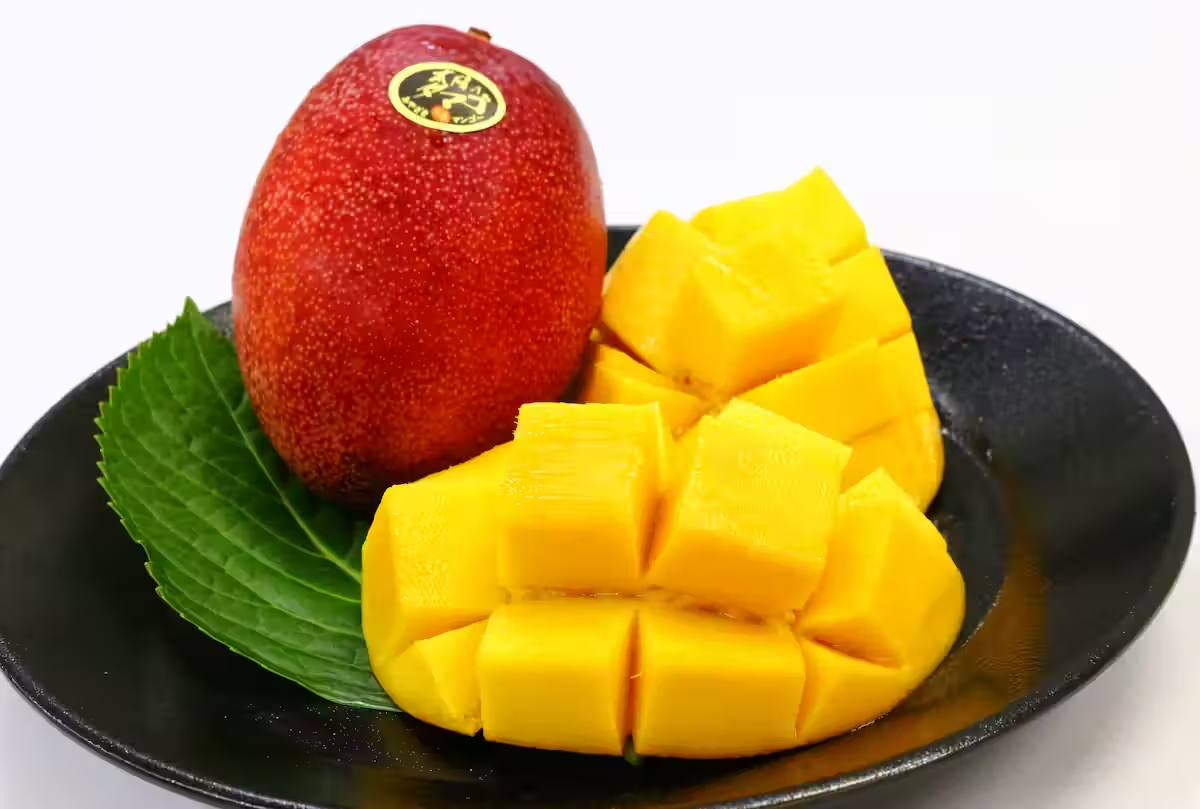
Some fruits cost more than a fine bottle of wine, and Taiyo no Tamago mango is one of Japan’s most famous examples. So what is Taiyo no Tamago mango? It is not a separate variety but a premium brand of Miyazaki-grown Irwin mango. To earn the name, each fruit must meet strict standards for sweetness, weight, color, and appearance. Growers also let the mango ripen fully on the tree until it naturally falls into a protective net. This rare method creates the fruit’s deep sweetness, rich aroma, and luxury reputation. Taiyo no Tamago 太陽のタマゴ Miyazaki mango is a true icon of Japanese summer.
What Is Taiyo no Tamago Mango?
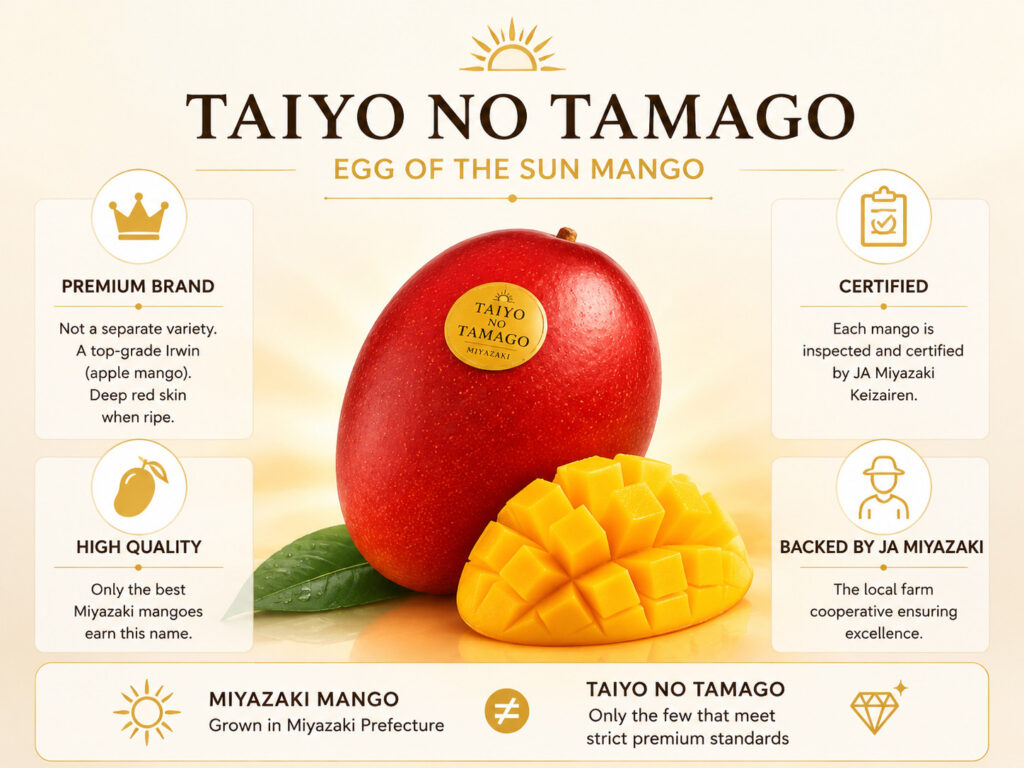
Taiyo no Tamago, or Egg of the Sun mango, is a premium brand. It is not a separate variety, though. The fruit is an Irwin mango, often called an apple mango. Its skin turns a deep, glossy red as it ripens. Only top Miyazaki mangoes may carry this name. So the brand marks quality, not species.
The brand belongs to JA Miyazaki, the local farm cooperative. Specifically, JA Miyazaki Keizairen certifies each fruit. In simple terms, “Miyazaki mango” means any mango grown in Miyazaki Prefecture. “Taiyo no Tamago,” by contrast, refers only to those that pass the prefecture’s strict premium standards. For a broader look at premium fruit culture in Japan, see our Japanese fruit guide.
The Taste and Quality of Taiyo no Tamago
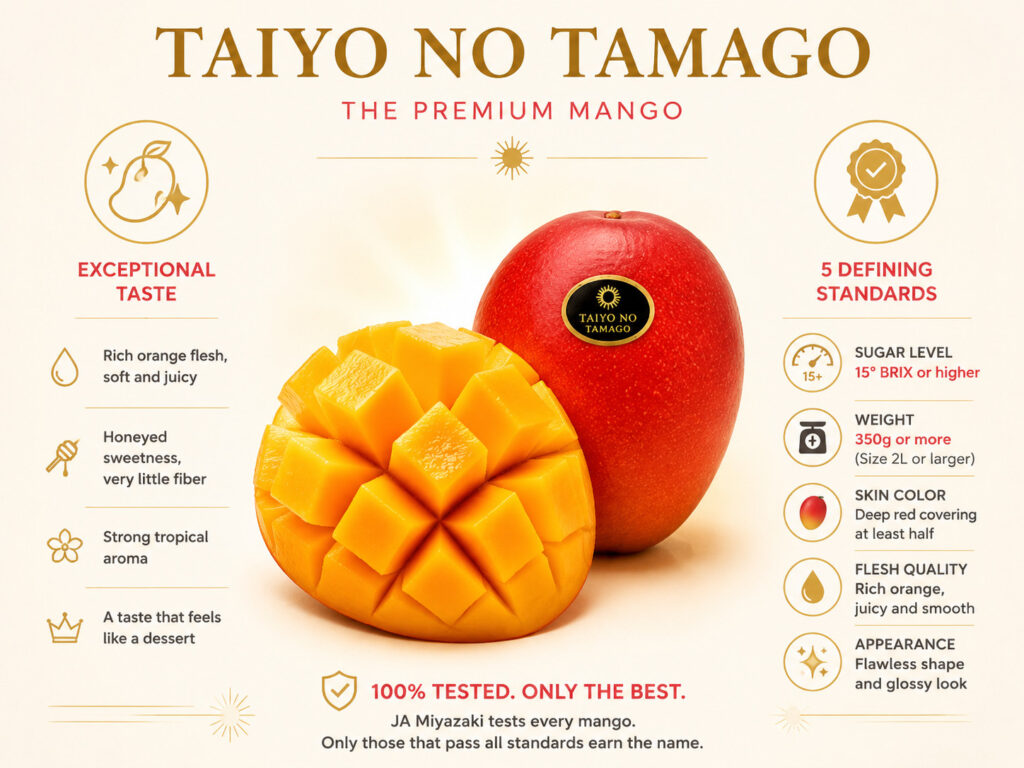
What makes this mango so special? The flavor is the first reason. Its flesh is rich orange, soft, and exceptionally juicy, with a honeyed sweetness and very little fiber. When cut open, the mango releases a strong tropical aroma that makes it feel more like a dessert than an everyday fruit. So each bite feels genuinely luxurious. Here is what defines a true Taiyo no Tamago:
- A sugar level of 15 degrees Brix or higher
- A weight of at least 350 grams, which is size 2L or larger
- Deep red skin covering at least half the surface
- Rich orange flesh that is juicy and smooth
- A flawless shape and an appealing, glossy look
These numbers are not just marketing claims. In fact, JA Miyazaki tests every single fruit. Only mangoes that pass all the standards earn the name. A normal sweet fruit sits near 10 to 12 Brix. This mango, by contrast, must reach at least 15. So the sweetness really is exceptional.
How Taiyo no Tamago Is Grown and Harvested
The growing method explains much of the magic. Unlike many mangoes, these are never picked early. Instead, growers let each fruit ripen fully on the tree. This patient approach builds the deep, complete flavor.
Ripened Until It Falls
Here is the most charming detail of all. Growers never cut the fruit from the branch. As each mango ripens, a small net is tied around it. When perfectly ripe, the mango drops on its own. The net then catches it gently as it falls. So the fruit picks its own moment of harvest. This is also why no ripening is needed at home.
Grading: AA vs A
Not all Taiyo no Tamago mangoes are ranked the same. The brand uses grade labels to show visual quality and overall evaluation. AA, often shown with a red label, represents the highest grade. A, often shown with a blue label, is the next grade. Both meet the Taiyo no Tamago standard. However, AA fruit is selected for especially strong appearance, color, and presentation.
How Much Does Taiyo no Tamago Mango Cost?
The price of Taiyo no Tamago mango varies by grade, size, season, and retailer. A single fruit can cost several thousand yen. Premium gift boxes, meanwhile, often cost much more. So this is rarely an everyday purchase.
The ceremonial first auctions push prices to dramatic heights. At some opening auctions, pairs of top-grade mangoes have sold for hundreds of thousands of yen. These prices are symbolic, not the everyday retail cost. Even so, they highlight the fruit’s status as a luxury gift and seasonal symbol.
Why Taiyo no Tamago Is So Expensive
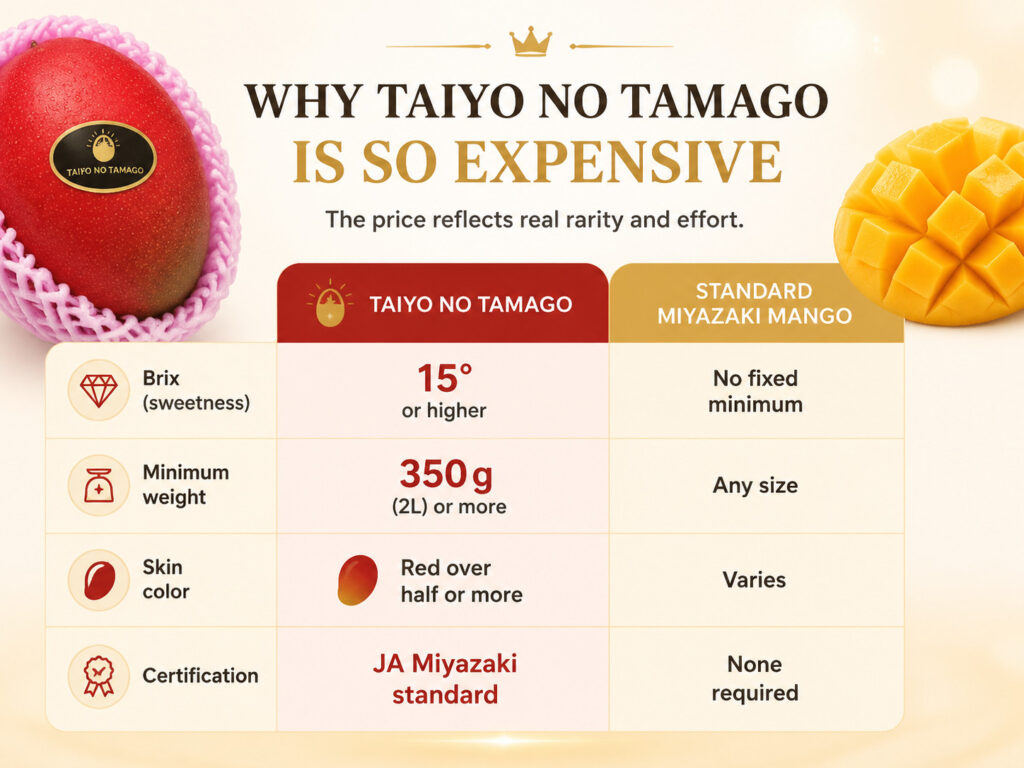
The price often surprises first-time buyers. Yet the cost reflects real rarity and effort. A short comparison shows where this mango sits.
| Point | Taiyo no Tamago | Standard Miyazaki mango |
|---|---|---|
| Brix (sweetness) | 15 degrees or higher | No fixed minimum |
| Minimum weight | 350 g (2L) or more | Any size |
| Skin color | Red over half or more | Varies |
| Certification | JA Miyazaki standard | None required |
The standards tell a clear story of scarcity. Only a limited share of Miyazaki mangoes qualify as Taiyo no Tamago. The highest grade represents an even smaller selection. This strict screening keeps the fruit rare and costly. Strong demand for summer gifts then pushes prices higher still. So rarity and reputation work together.
The History of Taiyo no Tamago
Mango farming in Miyazaki is younger than you might think. The story began only a few decades ago. Yet it grew into a national success.
Trial cultivation started around 1984 in Miyazaki. A few farms began growing mangoes in greenhouses. By 1987, growers had perfected the net-harvest method. They let the fruit fall naturally into nets. Later, the best mangoes gained the brand name Taiyo no Tamago. The public helped choose that name, which is now trademarked. So a young industry quickly built a famous label.
Today, the brand sits at the very peak of Japanese fruit. It appears in luxury gift boxes each summer. People buy it for special celebrations and thank-you gifts. So it has become a warm symbol of Japanese summer luxury.
When Is Taiyo no Tamago Mango in Season?
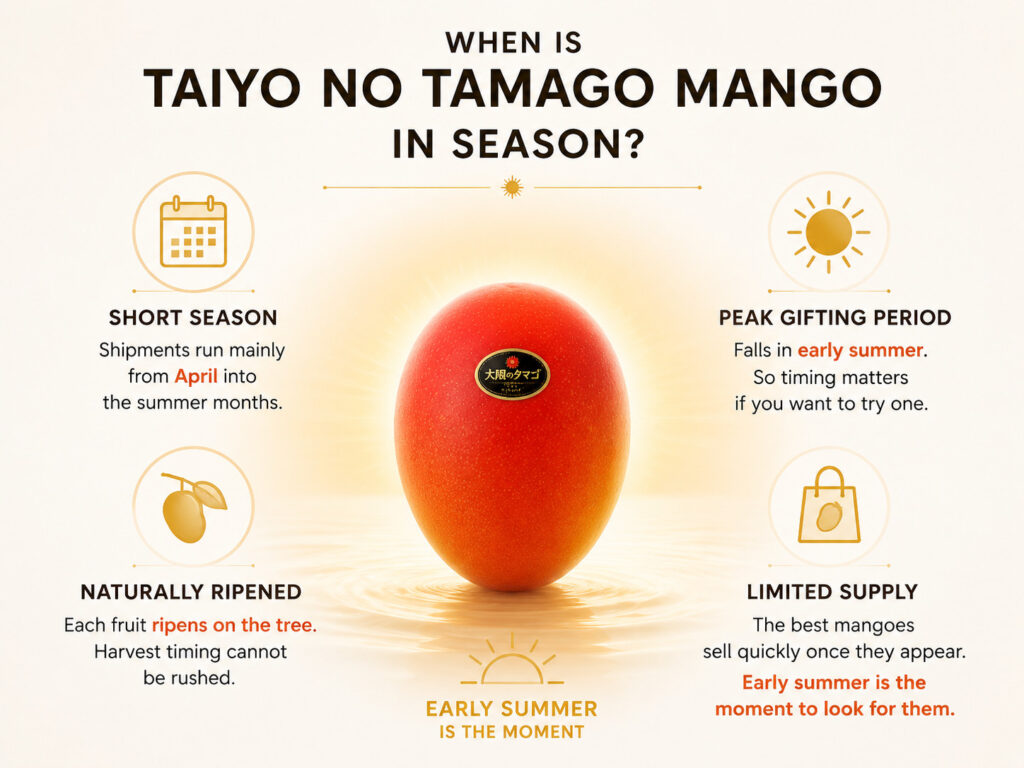
The season is short, which adds to the appeal. Shipments run mainly from April into the summer months. The peak gifting period falls in early summer. So timing matters if you want to try one.
Supply also stays limited throughout the season. Because each fruit ripens on the tree, harvest timing cannot be rushed. The best mangoes sell quickly once they appear. So early summer is the moment to look for them.
Where Can You Buy Taiyo no Tamago Mango?
In Japan, Taiyo no Tamago mangoes appear in several places. High-end department stores and fruit specialty shops carry them. Online gift retailers and seasonal fairs also stock them. They are usually packaged as luxury gifts, not everyday fruit.
Outside Japan, availability is far more limited. The fruit is seasonal, delicate, and costly to export. If you find one overseas, it likely comes through a premium Japanese produce supplier. So overseas prices can climb very high.
Best Way to Enjoy Taiyo no Tamago
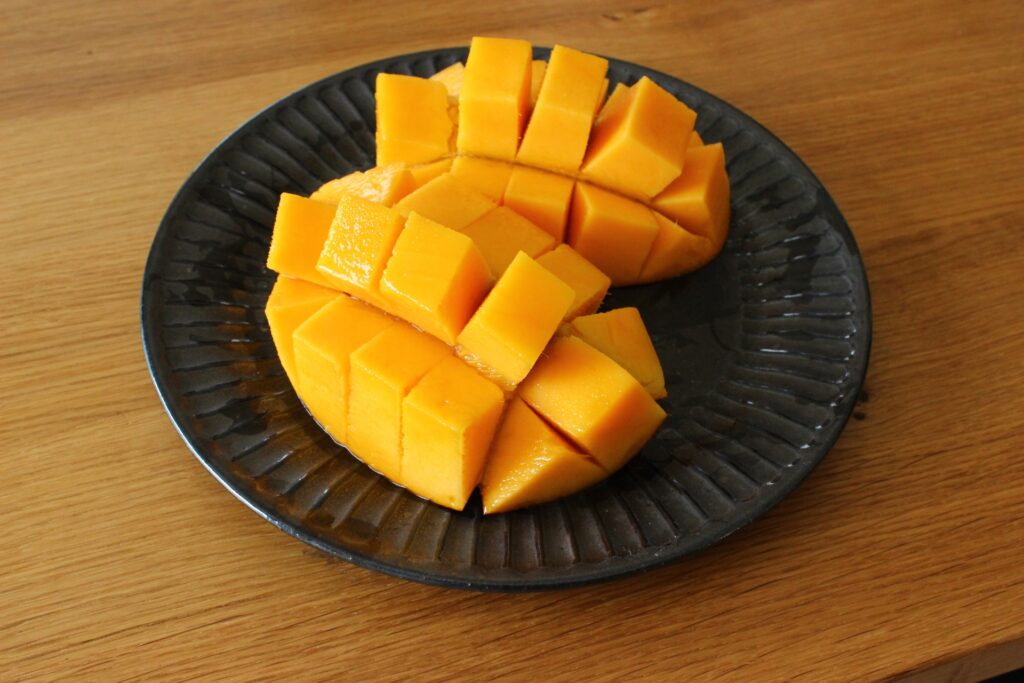
So how should you enjoy such a precious fruit? Fresh and simple is almost always best. A light chill of one or two hours brings out the aroma. Cut it into three along the flat stone. Then score the flesh into neat cubes.
The flavor truly shines on its own. Still, it also stars in elegant desserts. It works beautifully in parfaits, tarts, and cakes. You could even fold it into a fruit daifuku or a fruit sandwich. Because it is so prized, many people save it for guests. So the way you serve it becomes part of the gift.
Final Thoughts
Taiyo no Tamago shows how far careful farming can go. It turns a simple mango into a national treasure. Tree-ripening and strict grading create its remarkable taste. Its deep sweetness and rich aroma feel truly special. The price is high, yet the rarity is real. If you ever see one, the experience is worth it. A single Egg of the Sun captures a whole Miyazaki summer.
Taiyo no Tamago FAQ
What is Taiyo no Tamago mango?
It is Japan’s most prestigious mango brand. The name means “Egg of the Sun.” It is a premium Irwin mango from Miyazaki. Only top-grade fruit earns the title.
What variety is it?
It is an Irwin mango, also called an apple mango. The skin turns deep red when ripe. Taiyo no Tamago is a brand, not a variety. It marks the finest Miyazaki fruit.
Why is it so expensive?
The fruit is rare and labor-intensive. Only a limited share of Miyazaki mangoes qualify. Each one ripens fully on the tree. Strict grading and gift demand raise the price.
How much does it cost?
A single fruit can cost several thousand yen. Gift boxes cost considerably more. At ceremonial first auctions, pairs have sold for hundreds of thousands of yen. Those auction prices are symbolic, not everyday retail.
How sweet is it?
It must reach at least 15 degrees Brix. That is well above most everyday fruit. The flesh tastes rich, honeyed, and tropical. The sweetness is its signature trait.
What do the AA and A grades mean?
Both are top mangoes, but AA is the highest. The AA grade usually carries a red sticker. The A grade usually carries a blue sticker. AA fruit is chosen for especially strong color and looks.
How is it different from a regular Miyazaki mango?
All Taiyo no Tamago are Miyazaki mangoes. However, not all Miyazaki mangoes qualify. The brand requires high Brix, size, and color. So it is a certified top tier.
Do I need to ripen it at home?
No, it arrives fully ripe. Growers let it ripen on the tree until it drops. So you can eat it right away. A short chill before serving is nice.
When is it in season?
The season runs mainly from April into summer. Peak gifting happens in early summer. The fruit is a popular summer present. Supply is limited, so it sells quickly.
Can you buy Taiyo no Tamago outside Japan?
It is difficult but sometimes possible. Premium Japanese fruit importers occasionally carry it. Availability depends on the season and export rules. Because the fruit is delicate, overseas prices can be very high.
Is Taiyo no Tamago worth trying?
Yes, if you enjoy luxury fruit or Japanese food culture. The tree-ripened sweetness and smooth texture feel memorable. The presentation is also beautiful. For most people, it suits a special gift or rare tasting.
References
- JA Miyazaki Keizairen, Miyazaki Mango and the Taiyo no Tamago standard (Brix 15+, 350 g+, net harvest). (Surveyed: June 2026)
- Tobikkiri Gift, Taiyo no Tamago grades, sizes, and the share that qualifies. (Surveyed: June 2026)
Related Articles
- Japanese Fruit Guide (Surveyed: June 2026)
- Fruit Daifuku (フルーツ大福) (Surveyed: June 2026)
- Fruit Sandwich (フルーツサンド) (Surveyed: June 2026)
- Miyazaki Ramen (宮崎ラーメン) (Surveyed: June 2026)
- Kyushu Food Guide (Surveyed: June 2026)




Comments