




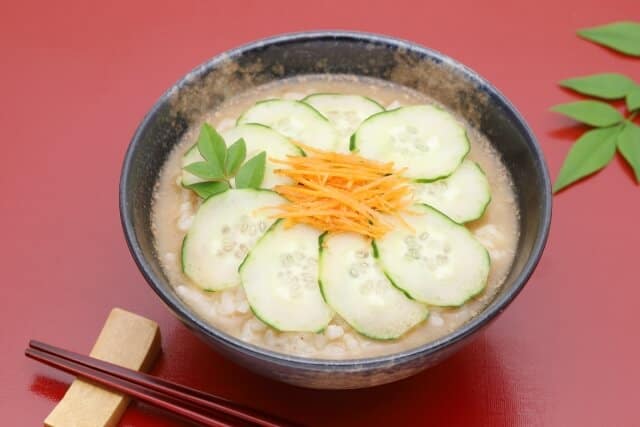
Hiyajiru is a chilled miso-based soup from Miyazaki Prefecture. Cooks blend grilled fish, roasted miso, sesame, and cold dashi, then pour it over barley rice. Cucumber, tofu, and fresh herbs complete this classic summer dish.
Picture a 35°C afternoon in southern Kyushu, with zero appetite. Somehow, this is the bowl that still empties. This guide explains what hiyajiru is, how people in Miyazaki eat it, how to make it at home, and where to try it in the prefecture.
What Is Hiyajiru?
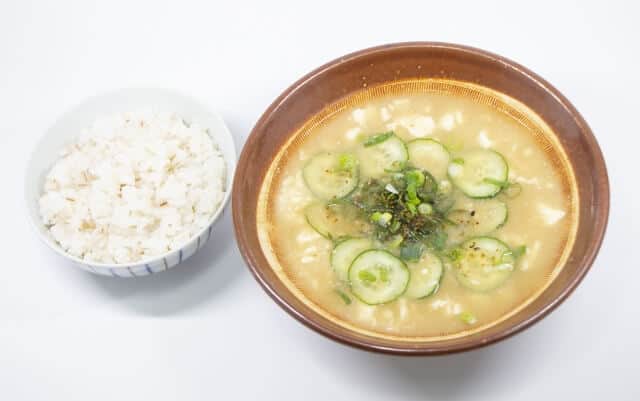
Hiyajiru (冷や汁) is a traditional local dish from Miyazaki Prefecture in Kyushu. It is a chilled miso soup that people pour over warm barley rice. Grilled fish, roasted miso, and cold dashi form the base.
The name is simple. “Hiya” means cold, and “jiru” means soup. Despite the plain name, the dish carries real depth. Locals treat it as a rice dish as much as a soup.
Key Features of Hiyajiru
- Chilled broth: cold dashi keeps the soup light and refreshing.
- Grilled fish: horse mackerel adds smoky, savory depth.
- Roasted miso: toasting the miso builds aroma and umami.
- Barley rice: the soup goes over mugi gohan, not plain white rice alone.
What Does Hiyajiru Taste Like?
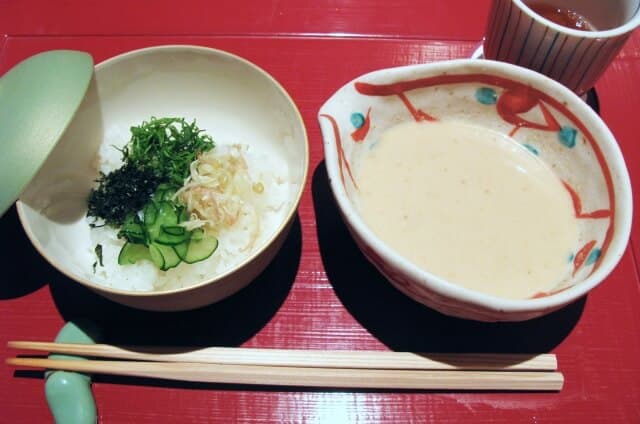
The flavor is nutty and savory, with toasted sesame leading the way. Roasted miso adds a gentle smokiness. The fish gives the broth body, while cucumber and shiso keep it fresh.
I will admit, cold miso soup over rice sounded strange to me at first. One spoonful in midsummer changed that. The chill wakes you up, and the umami keeps you eating. Somehow, the bowl empties fast.
History of Hiyajiru
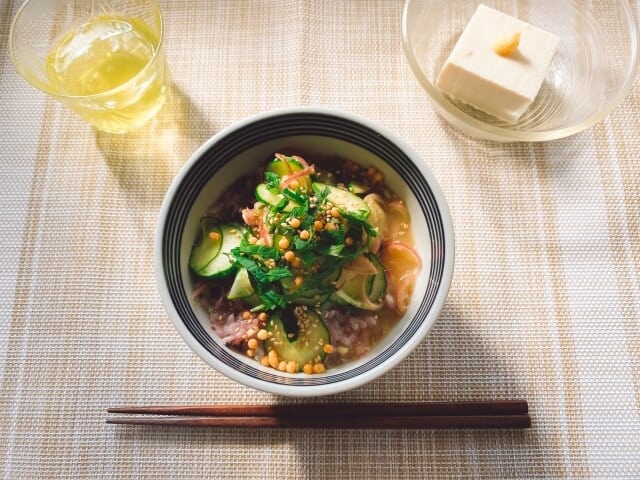
Why would anyone chill miso soup in the first place? The answer starts about 800 years ago, and it comes down to survival in the heat.
Records from the Kamakura Period
Records of cold miso-based soup appear as early as the Kamakura period. Old texts mention a dish called “hiyajiru” seasoned with miso. Over time, monks helped similar dishes spread across Japan. In Miyazaki, the hot climate helped this style survive as a summer staple.
A Farmers’ Summer Meal
Farmers in Miyazaki developed hiyajiru as a quick, nourishing meal for hot summer work. They needed food that was fast, filling, and easy to swallow in the heat. So they dissolved miso in cold water and poured it over leftover barley rice. Fish and sesame turned it into a complete meal.
From the Miyazaki Plain to the Whole Prefecture
Here is the surprising part: hiyajiru nearly stayed a local secret. Until around 1965, the dish belonged mainly to the Miyazaki Plain, along the central coast. Other areas of the prefecture rarely ate it. Media and food culture then carried it further. Today, people across Miyazaki Prefecture enjoy hiyajiru at home and in restaurants.
Why Hiyajiru Became a Summer Staple in Miyazaki
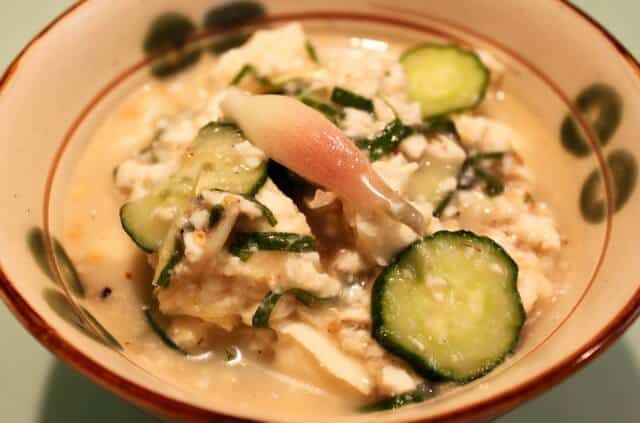
Miyazaki summers are hot and humid. Appetites drop, yet farm work does not stop. Hiyajiru solved that problem neatly. The cold broth goes down easily, even when nothing else appeals.
It also delivers real nutrition. Fish and tofu provide protein, miso adds minerals, and barley rice gives lasting energy. Preparation is quick, which mattered during the busy season. Families still serve it at summer gatherings, including around the Bon holidays. In short, it is comfort food built for the climate.
Hiyajiru Ingredients
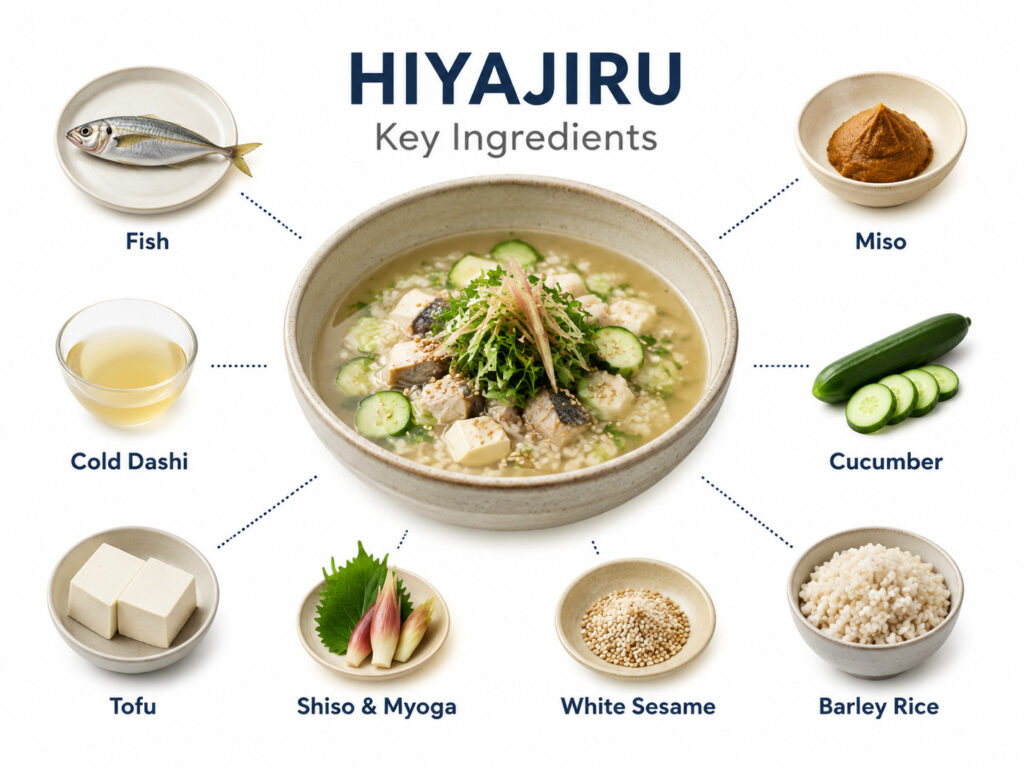
The core lineup is short, and each item earns its place. Households vary the details freely, so treat this as the standard rather than a strict rule.
| Ingredient | Role | Common substitute |
|---|---|---|
| Horse mackerel (aji) | Savory base and body | Flying fish, barracuda, canned sardines |
| Miso | Roasted for aroma and umami | Any blended or barley miso |
| Cold dashi | Chills and loosens the broth | Kombu or iriko stock |
| Cucumber | Cool crunch | None needed; it is essential |
| Tofu (firm) | Soft texture and protein | Silken tofu |
| Shiso and myoga | Fresh, herbal lift | Green onions, ginger |
| White sesame | Nutty depth | Sesame paste |
| Barley rice | The base; absorbs the broth | White rice |
Fish was once the “luxury version,” since it took extra work. Thrifty households stirred canned sardines or plain sesame miso into cold water instead. Both styles are authentic. The key is generosity with the herbs.
How to Make Hiyajiru
Ingredients (Serves 4)
| Ingredient | Amount |
|---|---|
| Blended miso | 56 g |
| Horse mackerel (filleted) | 50-60 g |
| Cucumber | 600 g |
| Shiso (perilla) | 28 g |
| Firm tofu | 300 g |
| Cold dashi | 800 g |
| White sesame seeds | 10 g |
| Barley rice (or white rice) | 640 g |
Steps
- Grill the fish. Bake the horse mackerel for 3 to 4 minutes until the surface whitens. Why it matters: grilling removes fishiness and adds a smoky note.
- Flake it carefully. Remove all skin and bones, then grind the flesh in a mortar. Why it matters: stray bones ruin the smooth, drinkable texture.
- Roast the miso and fish. Knead them together in a pan over low heat. Why it matters: roasting drives off moisture and concentrates the aroma.
- Stop at the right point. Turn off the heat once the paste firms up like a dumpling. Why it matters: over-roasting turns the miso bitter.
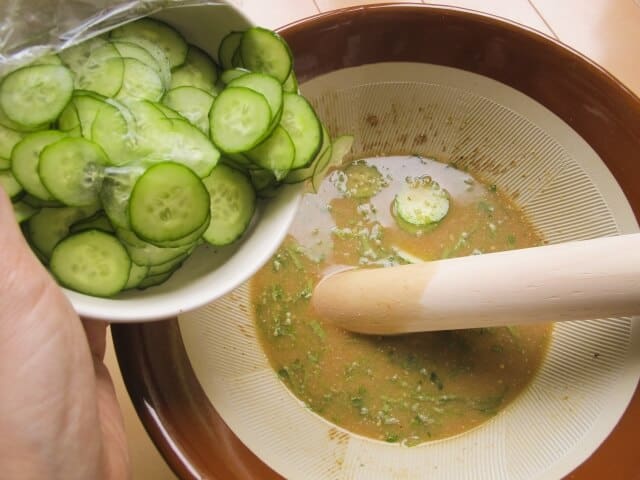
- Dissolve with cold dashi. Add the stock little by little, crushing the paste as you go. Why it matters: cold stock keeps the broth crisp; warm stock dulls it. No mortar? A bowl and a spoon work fine.
- Add the vegetables. Stir in thin cucumber slices, torn tofu, and shredded shiso.
- Finish and serve. Add sesame, chill well, then pour over warm barley rice.
How to Eat Hiyajiru
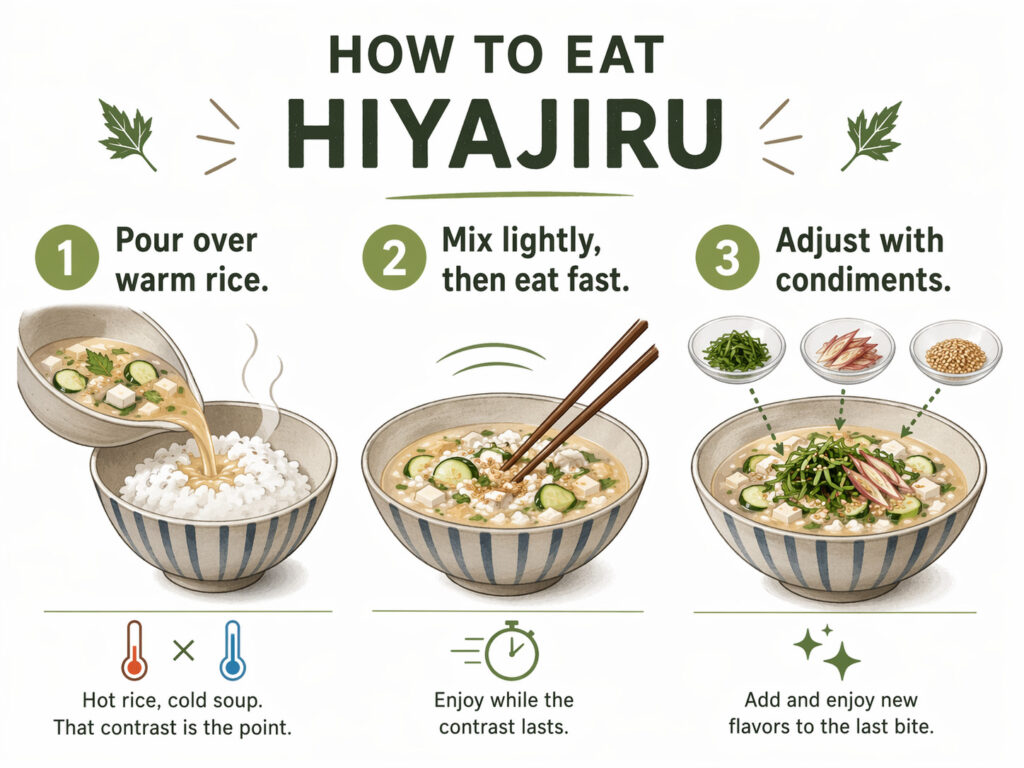
There is a simple rhythm to a good bowl. Locals rarely think about it, but first-timers find these steps helpful.
- Pour it over warm rice. The hot barley rice and cold soup should meet in the bowl. That temperature contrast is the point, so never chill the rice.
- Mix lightly, then eat fast. Loosen the rice with your chopsticks and eat while the contrast lasts. Many locals finish it like a savory rice porridge.
- Adjust with condiments. Add extra shiso, myoga, or sesame midway. The flavor shifts, and the bowl stays interesting to the last bite.
Regional Variations of Hiyajiru
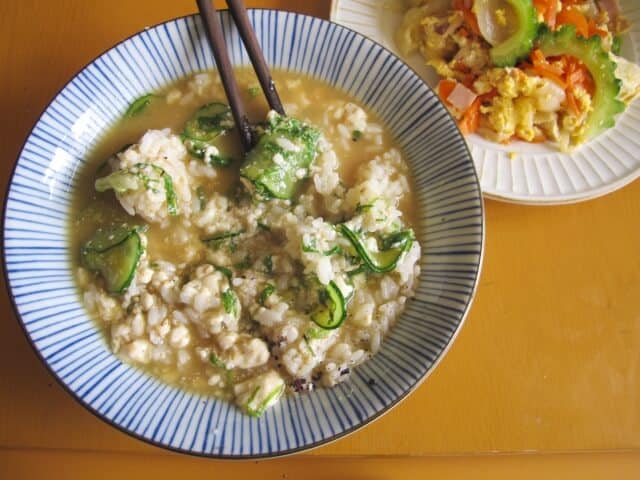
Miyazaki owns the most famous version, yet it is not the only one. Saitama and Yamagata both keep their own “hiyajiru” traditions. The table shows how far apart they sit.
| Miyazaki | Saitama | Yamagata | |
|---|---|---|---|
| Base | Roasted miso, cold dashi | Fresh-ground miso, sesame, sugar | Clear dashi |
| Fish? | Yes, grilled horse mackerel | No fish | No; vegetables lead |
| Served with | Barley rice | Udon noodles | Eaten as a side dish |
| Taste profile | Savory, nutty, smoky | Sweet, sesame-forward | Light and vegetal |
Saitama’s version, sometimes called “suttate,” skips fish entirely and dresses udon instead. Yamagata’s hiyashiru piles seasonal vegetables into chilled stock. Each one suits its own climate and farm life.
Hiyajiru vs Regular Miso Soup vs Ochazuke
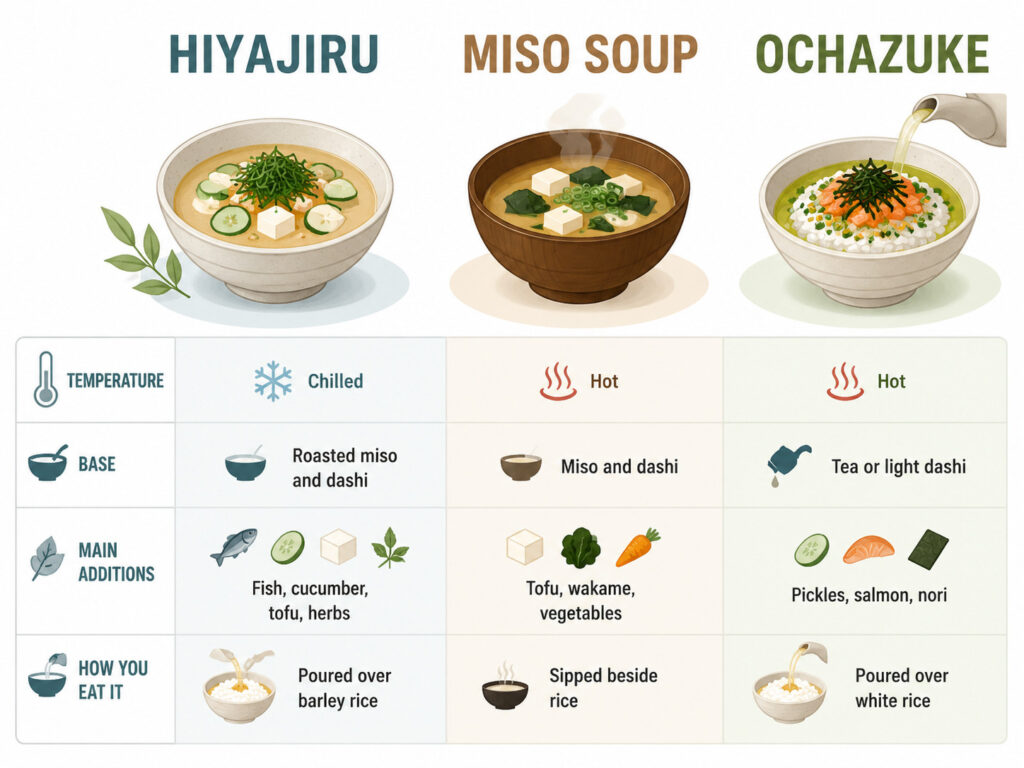
Readers often ask how hiyajiru differs from other soupy rice dishes. This quick table clears it up.
| Hiyajiru | Miso soup | Ochazuke | |
|---|---|---|---|
| Temperature | Chilled | Hot | Hot |
| Base | Roasted miso and dashi | Miso and dashi | Tea or light dashi |
| Main additions | Fish, cucumber, tofu, herbs | Tofu, wakame, vegetables | Pickles, salmon, nori |
| How you eat it | Poured over barley rice | Sipped beside rice | Poured over white rice |
The roasted miso and the cold temperature set hiyajiru apart. For more dishes in this family, see our Japanese soup guide.
Where to Eat Hiyajiru in Miyazaki
A hiyajiru set meal usually costs around 1,000 to 1,500 yen. One caution: some restaurants treat it as a summer-only menu item. So check the seasonal lineup before you go. These four spots are reliable starting points.
Furusato Cuisine Suginoko (ふるさと料理 杉の子)
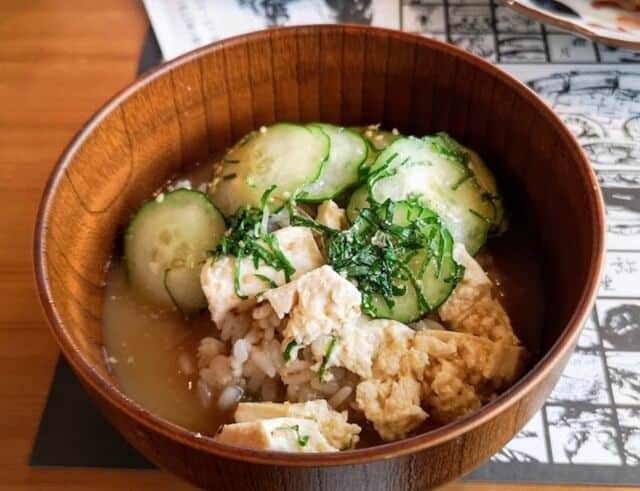
Suginoko opened in 1970 and helped introduce Miyazaki’s hiyajiru to the rest of Japan. The kitchen insists on local ingredients. Alongside hiyajiru, you can try chicken nanban in Miyazaki style and charcoal-grilled chicken.
- Why go: the definitive, classic hiyajiru experience.
- Atmosphere: a long-established, traditional dining room.
- Type: orthodox grilled-fish hiyajiru.
- Best for: first-timers who want the real thing.
Omotenashi Yume Kagura (おもてなし 夢かぐら)
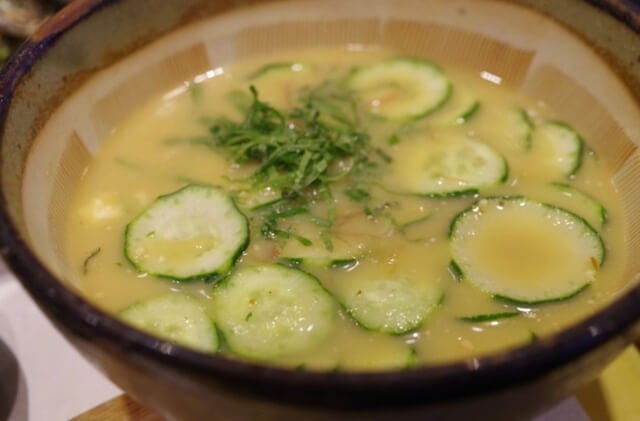
This airport restaurant plays with the classic. The menu runs from standard hiyajiru to seafood and even tropical versions. Other local dishes fill out the menu, so groups leave happy.
- Why go: several hiyajiru styles under one roof.
- Atmosphere: casual and convenient, inside Miyazaki Airport.
- Type: standard, seafood, and creative variations.
- Best for: a last taste before your flight home.
Nanfu Chaya (南風茶屋)
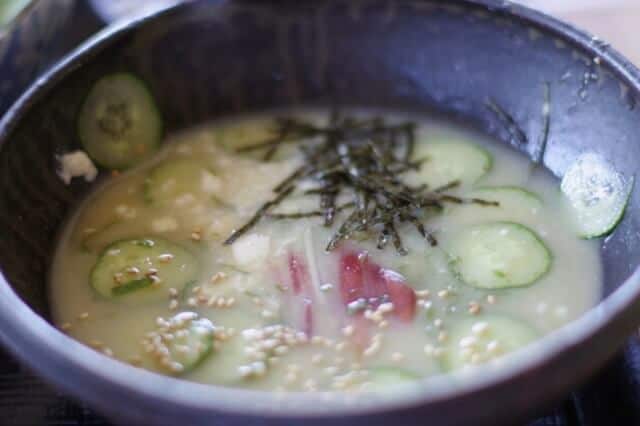
Nanfu Chaya sits on the coast south of the city, with sea views from its 50 seats. Set meals pair hiyajiru with other local favorites. The stop works well on a drive to the Nichinan coast.
- Why go: hiyajiru with an ocean view.
- Atmosphere: breezy, tropical, and relaxed.
- Type: classic hiyajiru in local set meals.
- Best for: travelers touring the coast by car.
Fujiki (ふじ木)
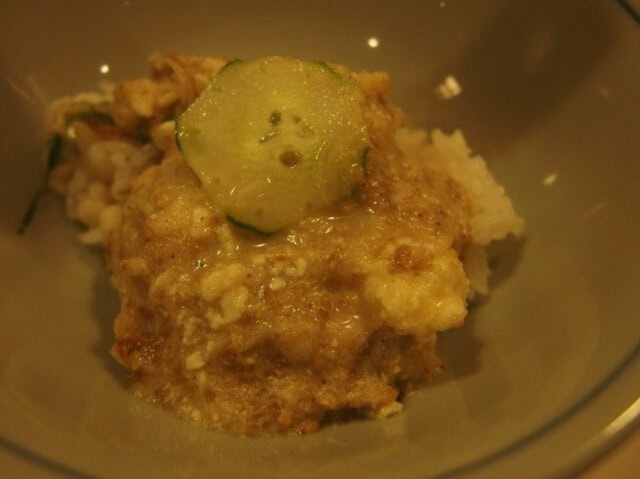
Fujiki ranks among the best Japanese restaurants in Miyazaki City. The mood stays homely despite the polish. Fish cookery is the specialty here, so the hiyajiru reaches another level.
- Why go: a refined, fish-forward take on the dish.
- Atmosphere: calm, homely, and quietly upscale.
- Type: premium fish-based hiyajiru.
- Best for: dinner with drinks and seasonal dishes.
Conclusion
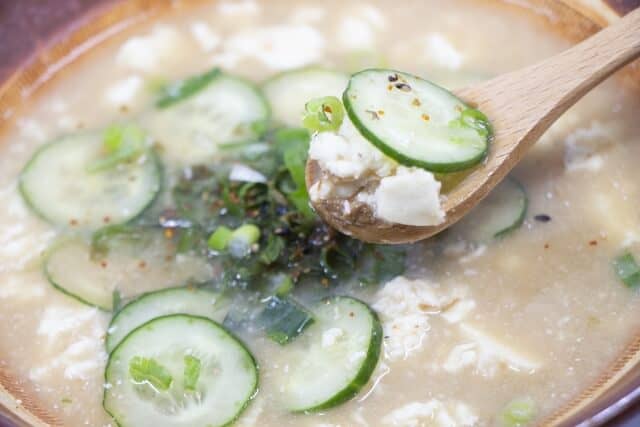
Miso soup anchors everyday Japanese meals, usually served hot. Hiyajiru flips that habit on its head. The roasted miso, cold dashi, and grilled fish create something a regular bowl cannot: a soup that cools you down while filling you up.
If you visit southern Kyushu in summer, put one bowl of hiyajiru on your list before anything else. Then keep exploring. Browse the Miyazaki regional cuisine guide, learn about chicken nanban, or cool off with nagashi somen, another Miyazaki-born summer food.
Hiyajiru FAQ
What does hiyajiru taste like?
It tastes nutty, savory, and refreshing. Toasted sesame and roasted miso lead the flavor. Grilled fish adds depth, while cucumber and shiso keep it light. The cold temperature makes it easy to eat in summer.
Is hiyajiru always made with fish?
No, not always. Grilled horse mackerel is the classic base in Miyazaki. However, homes often use canned sardines or skip fish entirely. The fish version was once considered the luxury style.
Do you eat it with hot or cold rice?
Warm rice is the standard. The chilled soup meets the hot barley rice, and the contrast is the charm. Some people use room-temperature rice in peak summer. Fully cold rice is less common.
Can I make it without a mortar?
Yes, easily. Put the roasted miso paste in a bowl instead. Add cold dashi little by little, and crush the paste with a spoon. The texture stays nearly the same.
What is the difference between hiyajiru and cold miso soup?
Hiyajiru is more than chilled miso soup. Cooks roast the miso with ground fish first, which builds a smoky, concentrated flavor. They then pour the finished soup over barley rice. Simply cooling regular miso soup skips both steps.
When do people in Miyazaki eat hiyajiru?
Summer is the main season. It began as a fast meal for farmers during hot fieldwork. Families still serve it at summer gatherings, including the Bon holidays. Restaurants in Miyazaki now offer it year-round.
Is hiyajiru healthy?
It is a fairly balanced dish. Fish and tofu supply protein, and sesame adds good fats. Barley rice brings fiber that white rice lacks. Portion size and salt from the miso are the main things to watch.
References
- MAFF (Ministry of Agriculture, Forestry and Fisheries), Our Regional Cuisines: Hiyajiru (Miyazaki), https://www.maff.go.jp/j/keikaku/syokubunka/k_ryouri/search_menu/menu/hiyajiru_miyazaki.html (Surveyed: June 2026)
- Miyazaki City Tourism Association, Local Cuisine, https://www.miyazaki-city.tourism.or.jp/ (Surveyed: June 2026)
- Furusato Cuisine Suginoko, Official Site, http://www.miyazaki-suginoko.net/ (Surveyed: June 2026)
Related Articles
- Miyazaki Food Guide (Surveyed: June 2026)
- Chicken Nanban (チキン南蛮) (Surveyed: June 2026)
- Nagashi Somen (流しそうめん) (Surveyed: June 2026)
- Japanese Soup Guide (Surveyed: June 2026)



Comments