



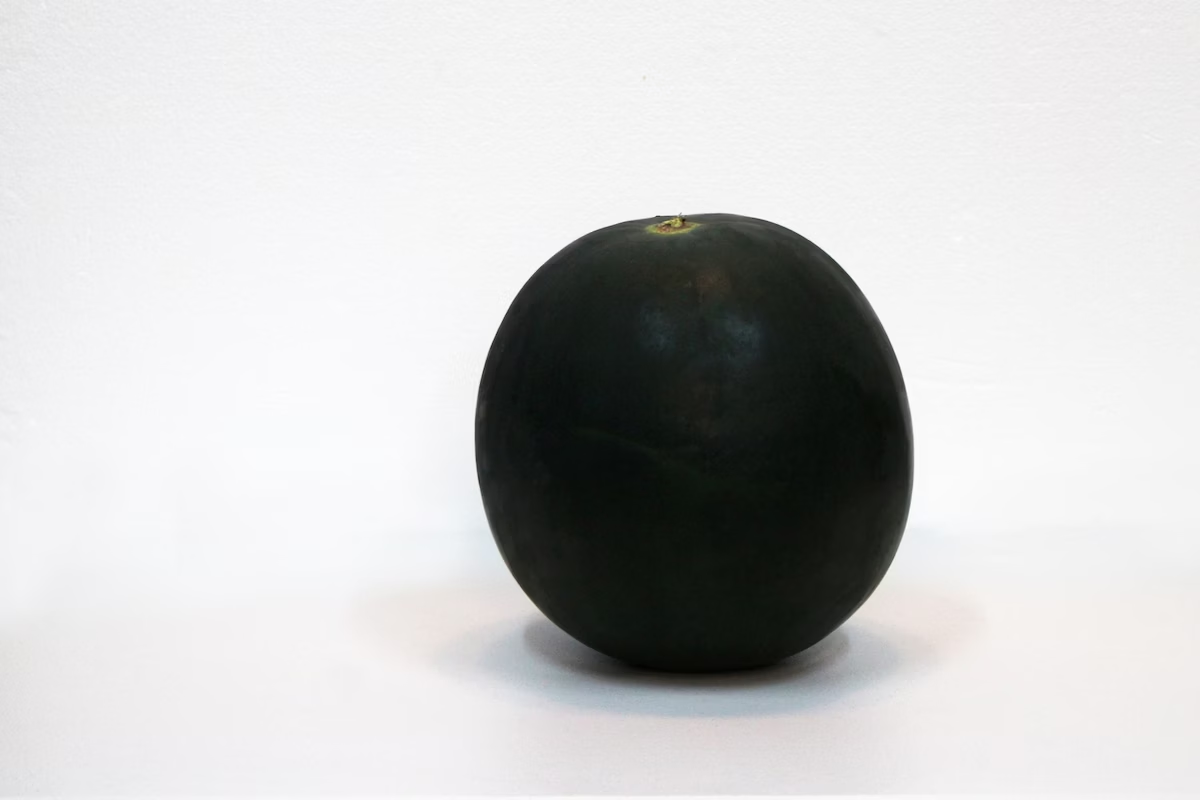
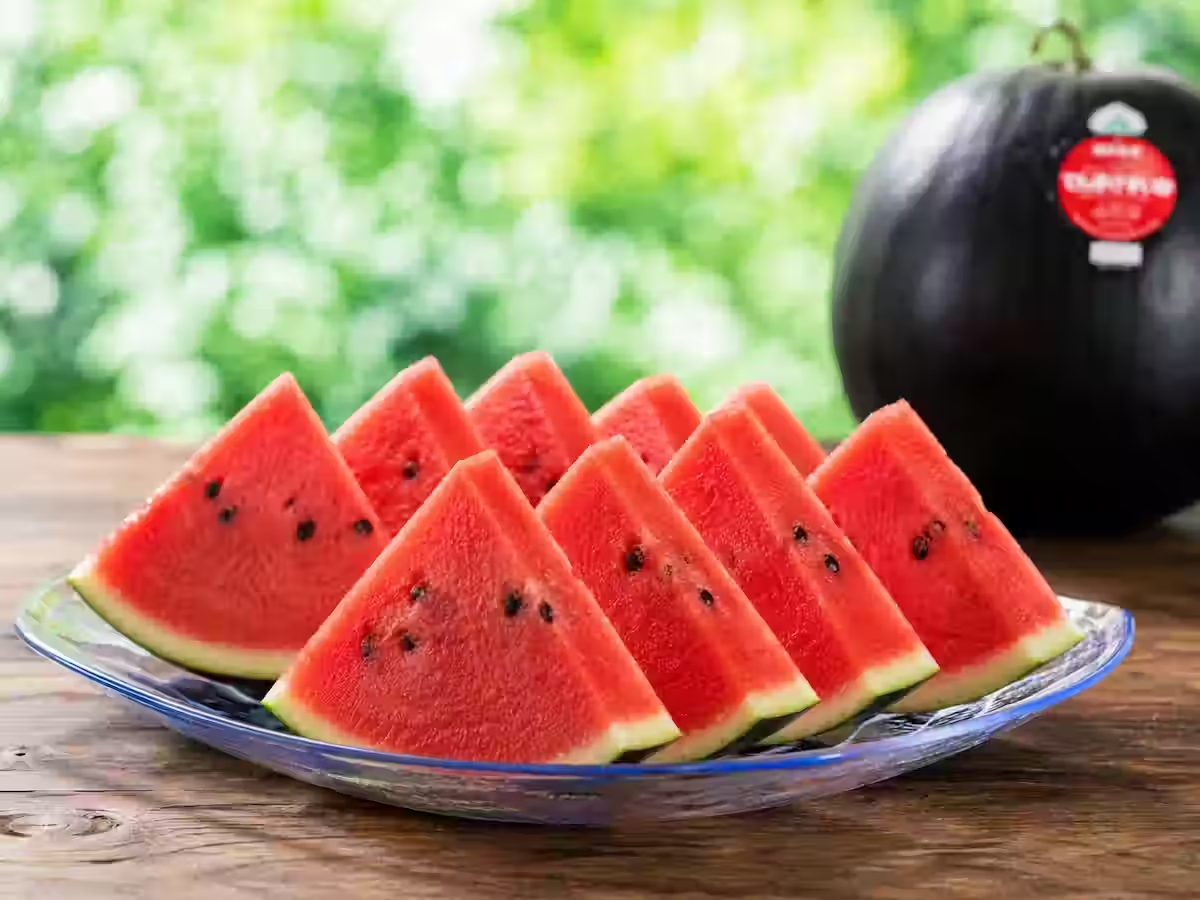
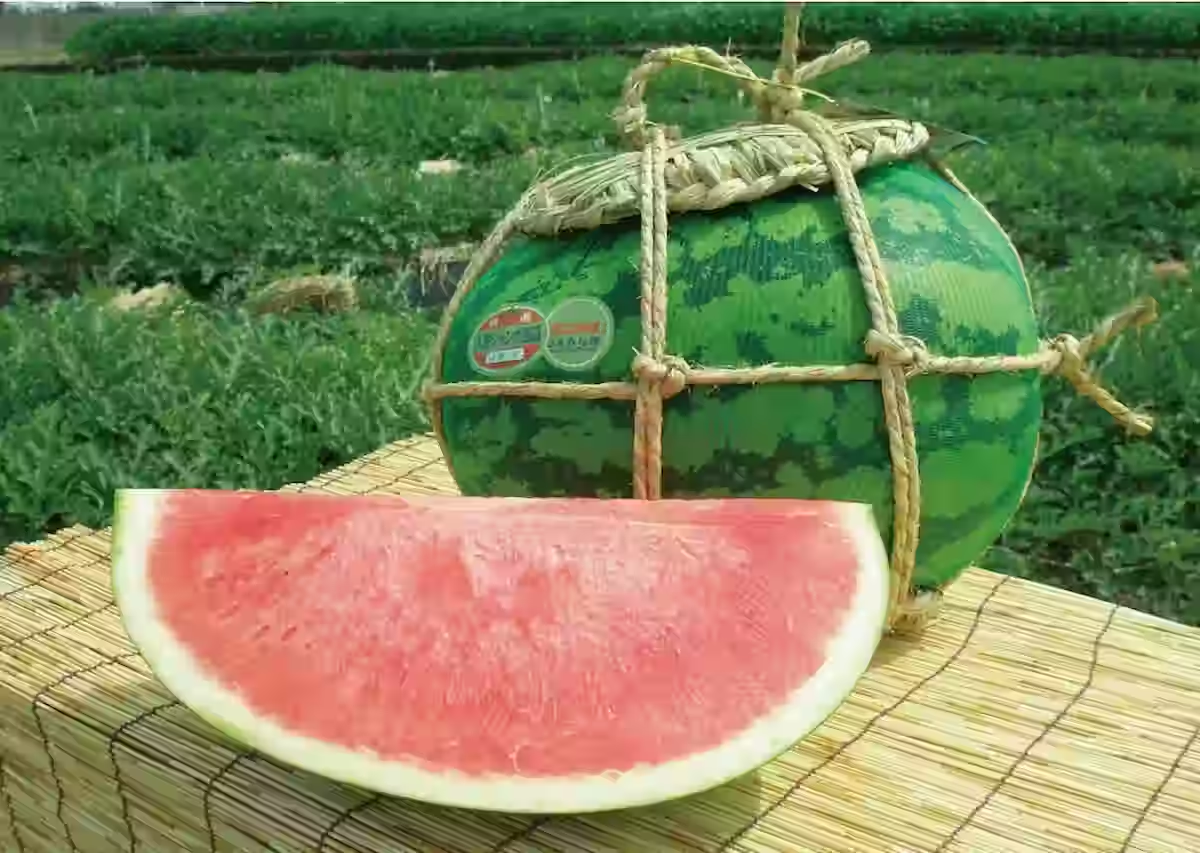
Picture a watermelon with a jet-black rind. It has no stripes at all. Slice it open, and deep pink-red flesh appears. Best of all, you find almost no seeds. This striking fruit is the Black Jack watermelon.
So what is the Black Jack watermelon exactly? It is a Japanese seedless watermelon variety. The skin is glossy and pitch black. The flesh is sweet, crisp, and richly colored. It belongs to a new generation of seedless fruit.
For years, seedless watermelons had a weak reputation. Many tasted bland and watery. The Black Jack watermelon set out to change that. So it combines convenience with real flavor. This balance is its great achievement. For more summer fruit, see our Japanese fruit guide.
Quick Facts About the Black Jack Watermelon
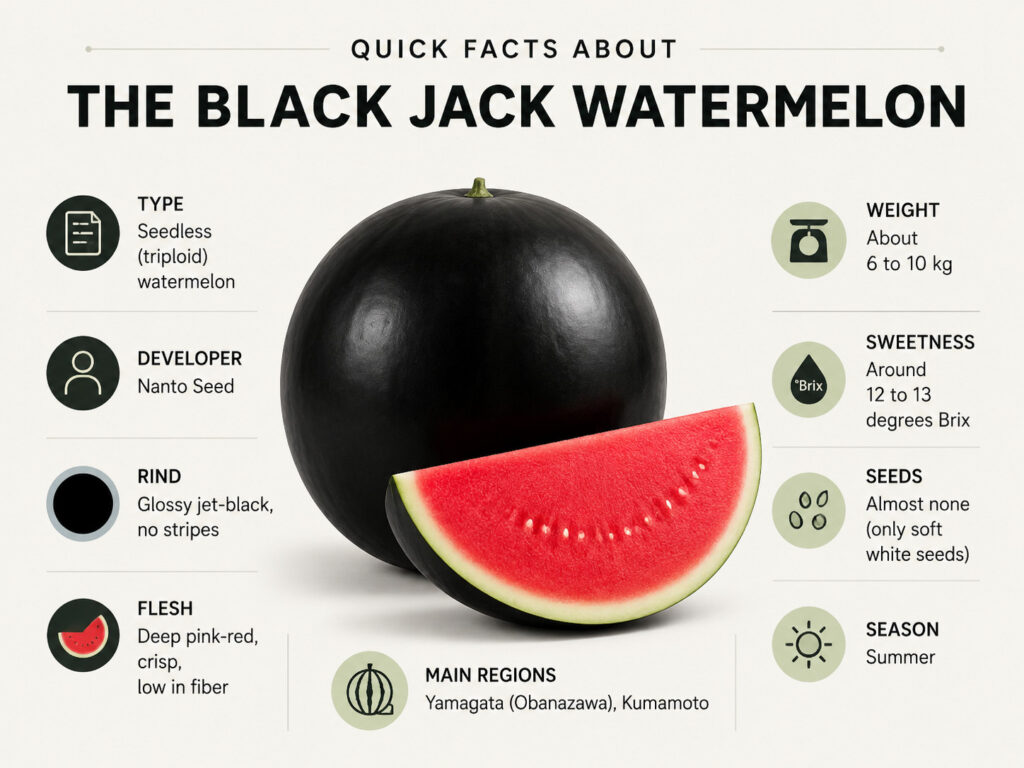
Here is a quick snapshot before the details begin.
| English Name | Black Jack watermelon |
| Japanese Name | ブラックジャック |
| Type | Seedless (triploid) watermelon |
| Developer | Nanto Seed |
| Rind | Glossy jet-black, no stripes |
| Flesh | Deep pink-red, crisp, low in fiber |
| Weight | About 6 to 10 kg |
| Sweetness | Around 12 to 13 degrees Brix |
| Seeds | Almost none (only soft white seeds) |
| Main Regions | Yamagata (Obanazawa), Kumamoto |
| Season | Summer |
What Does the Black Jack Watermelon Look and Taste Like?
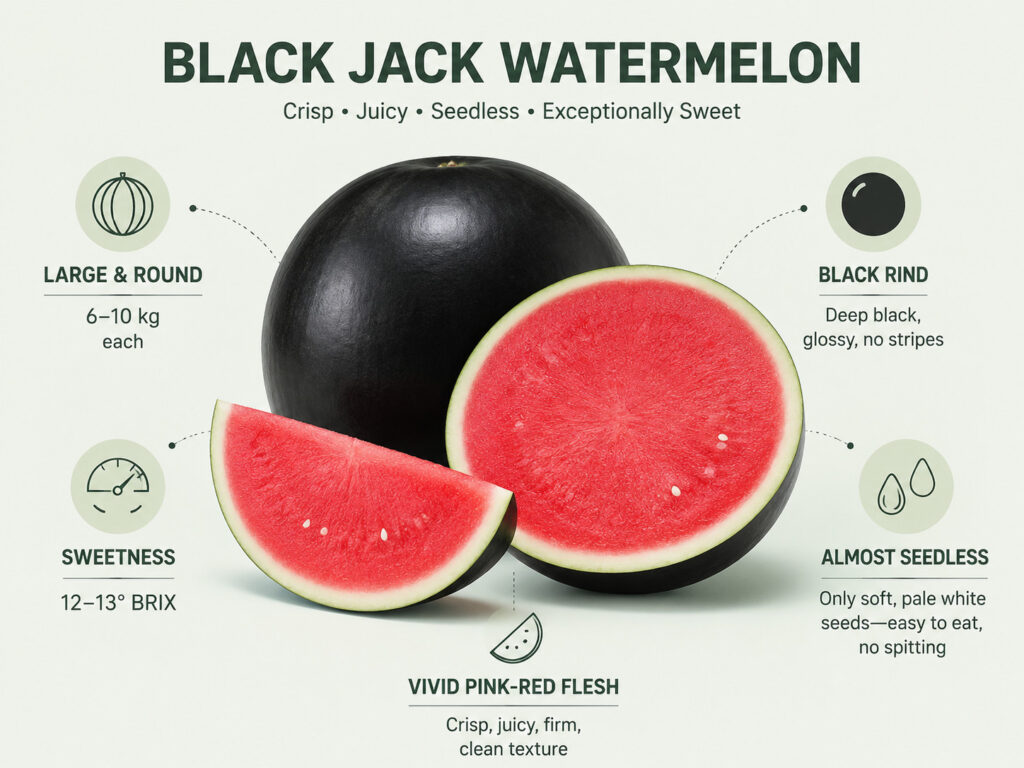
The Black Jack watermelon is a large, round fruit. Each one usually weighs about 6 to 10 kilograms. The rind is a deep, glossy black without stripes. Inside, the flesh glows a vivid pink-red. So the contrast looks quite dramatic when cut.
The flesh is crisp, juicy, and firm. It carries a sweetness of around 12 to 13 degrees Brix. The texture stays clean, with few fibers. So it does not leave stringy bits in your mouth. Many people find it refreshingly smooth.
The biggest selling point is the lack of seeds. This is an almost seedless watermelon. You may find only soft, pale white seeds. These are immature and easy to eat. So there is no need to spit anything out.
How It Compares to Other Watermelons
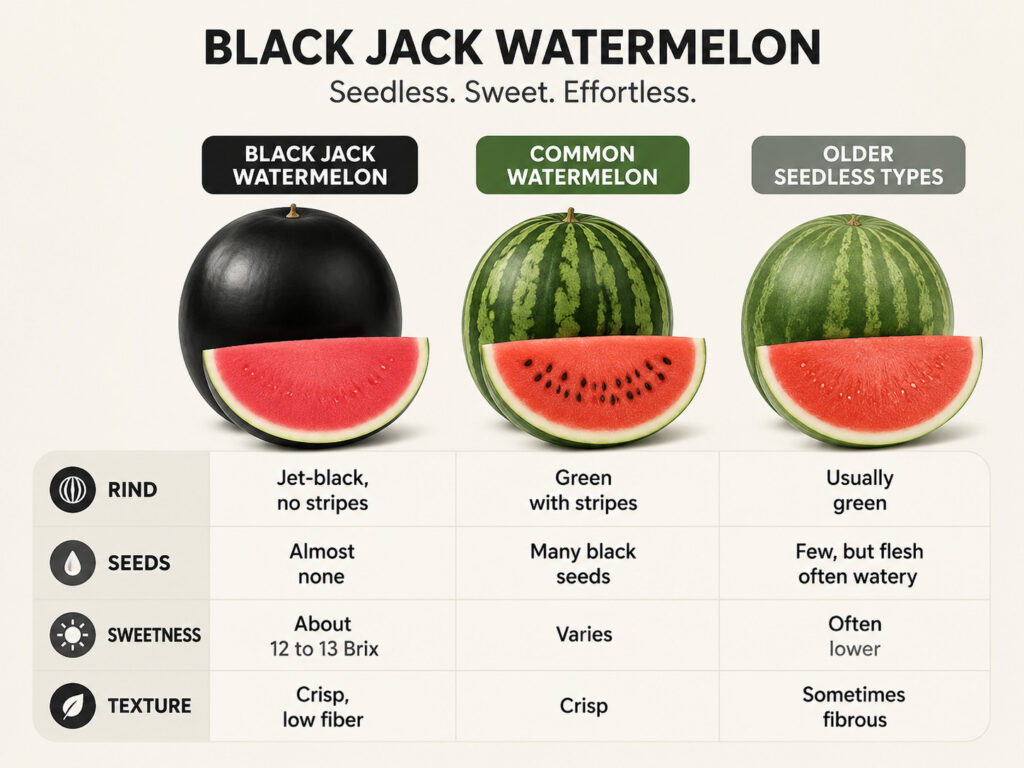
How does it compare to a normal watermelon? The flavor is just as sweet, sometimes more so. The jet-black rind looks far more dramatic. Most importantly, the seeds are nearly gone. So eating it feels effortless and fun. This ease sets it apart from common varieties.
It also differs from older seedless types. Earlier seedless watermelons often tasted flat. They could be watery and oddly fibrous. The Black Jack watermelon fixed these flaws. So it offers crisp texture and rich sweetness. This makes it a true upgrade.
Here is a simple comparison to make things clear.
| Point | Black Jack Watermelon | Common Watermelon | Older Seedless Types |
|---|---|---|---|
| Rind | Jet-black, no stripes | Green with stripes | Usually green |
| Seeds | Almost none | Many black seeds | Few, but flesh often watery |
| Sweetness | About 12 to 13 Brix | Varies | Often lower |
| Texture | Crisp, low fiber | Crisp | Sometimes fibrous |
How the Black Jack Watermelon Was Created
Now let us explore how this fruit came to be. The story involves clever plant breeding. A Japanese seed company called Nanto Seed developed it. They spent years perfecting the variety. So the Black Jack watermelon is a real labor of patience.
The Science of Seedless Watermelons
Seedless watermelons rely on a technique called chromosome doubling. Normal watermelons are diploid, with two chromosome sets. Breeders treat some plants to create tetraploids, with four sets. They then cross these with normal diploid plants. The result is a triploid seedless watermelon.
A triploid plant cannot form proper seeds. So the fruit grows with almost none inside. This method uses no genetic modification at all. It relies only on natural plant breeding. The same approach also gives us seedless grapes.
Fifteen Years of Breeding
Triploid watermelons were never easy to grow, though. The plants tend to grow wild and vigorous. They often fail to set fruit reliably. They can also form hollow centers or odd shapes. So older seedless varieties frustrated many farmers.
This is the problem Nanto Seed wanted to solve. They crossed about two hundred different parent plants. The work took roughly fifteen years to complete. So creating the Black Jack watermelon demanded real dedication. The team chased both easy growing and great taste.
Their effort finally paid off. The Black Jack watermelon grows much like an ordinary one. It resists hollow centers and deformed shapes. It also shows good disease resistance. So farmers can raise it without unusual trouble. This practicality helped the variety spread.
The Challenge of Growing It
There is real science behind this jet-black fruit. Yet the story stays easy to enjoy. Let us look a little closer at how it grows. The details explain why it feels so special.
Growing a triploid watermelon is genuinely tricky. The plants grow with great vigor and energy. Strangely, that strength can work against the farmer. An overgrown plant may refuse to set fruit. So skilled timing becomes truly essential.
Cool, cloudy weather makes things even harder. Poor light can stop the fruit from forming. Farmers sometimes pinch back the vines to help. This careful trimming improves the rate of fruit set. So patience and observation guide every harvest.
The reward, though, is a remarkably reliable fruit. The Black Jack watermelon resists hollow centers well. It also keeps a neat, round shape. So a high share of each crop reaches top grade. This consistency is part of its appeal.
The firm rind brings another quiet advantage. It protects the fruit during transport. Bruising and damage stay rare as a result. So the watermelon travels well to distant shops. This durability also makes it easy to cut and sell.
Season, Choosing, and Storing
Let us turn to how the fruit reaches your table. Timing matters a great deal here. The main season runs through the warm summer months. Early crops can appear from late spring, though. So the fruit follows the rhythm of the sun.
Choosing a good one takes only a little care. Look for a deep, even, glossy black rind. A heavy fruit usually holds more juice. A dull, light melon may be past its best. So weight and shine offer helpful clues.
Storing it is refreshingly simple. Keep a whole melon in a cool, dark place. Chill it well before you plan to serve it. Once cut, wrap the pieces and refrigerate them. So a little planning keeps every slice fresh.
An Easy, Joyful Fruit to Eat
Cutting a seedless watermelon feels almost luxurious. You simply slice and serve, with no fuss. There is no need to pick out hard seeds. So children can dive straight in. This easy eating is a quiet daily joy.
The flavor rewards that convenience too. The flesh tastes clean, bright, and sweet. Its crisp bite gives a satisfying crunch. So it refreshes beautifully on a hot day. Many fans say it disappears far too quickly.
It also fits neatly into many summer scenes. A picnic feels brighter with sweet watermelon. A family gathering welcomes a large, shareable fruit. So the Black Jack watermelon suits festive moments. Its dramatic look adds to the fun.
Where Black Jack Watermelons Grow Today
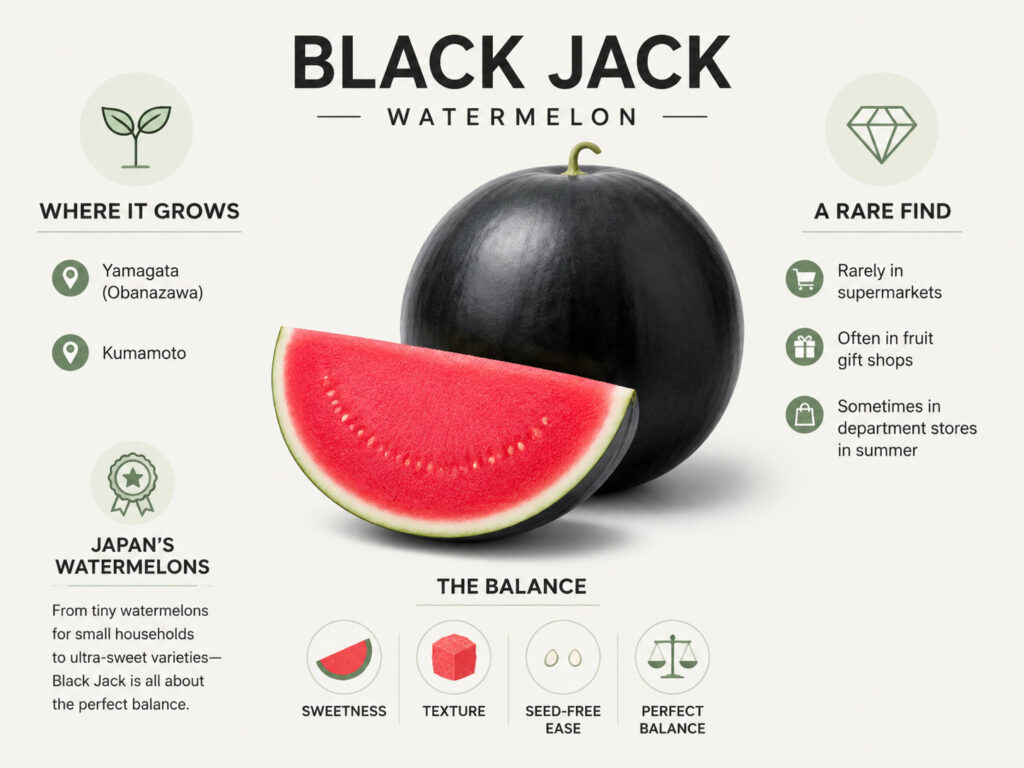
Today, several regions grow this special watermelon. Yamagata is a famous producer, especially Obanazawa. That area is known across Japan for sweet watermelons. Kumamoto in the south also grows it well. So fans can enjoy Black Jack watermelon from different parts of Japan.
Even so, the fruit remains fairly rare. Supermarkets rarely stock it. You are more likely to find it at fruit gift shops. Some department stores carry it in summer. So it still feels like a special discovery.
Japan has bred several other notable watermelons. Some focus on tiny size for small households. Others chase record-breaking sweetness above all. The Black Jack watermelon aims for balance instead. So it blends sweetness, texture, and seed-free ease.
Why It Makes a Great Gift
Because of this, it makes a wonderful gift. A jet-black watermelon surprises almost everyone. Many people have never seen one before. So it works beautifully as a summer present. The novelty adds to the delight.
This balance reflects a wider trend in Japanese fruit. Growers often refine a fruit for years. They chase taste, looks, and easy eating together. So premium fruit becomes a point of pride. The Black Jack watermelon fits this proud tradition.
Gift culture also shapes how people enjoy it. In Japan, fine fruit makes a respected present. A striking black watermelon feels generous and rare. So it appears at summer gift occasions. The surprise on a recipient’s face is half the gift.
The seedless quality also suits certain people perfectly. Children can eat it without any fuss. Older people appreciate the easy, seed-free bites. So families often welcome it at the table. It removes the small annoyance of spitting seeds.
It is worth keeping expectations realistic, though. This is still a niche, limited fruit. You may not find it at every market. So a little searching is often needed. That hunt, in a way, adds to the charm.
If you ever spot one, I would say try it. Chill it well before slicing it open. The dark rind and red flesh make a striking sight. Then enjoy the clean, sweet crunch. You may never look at seedless watermelon the same way.
Black Jack Watermelon FAQ
What is the Black Jack watermelon?
It is a Japanese seedless watermelon variety. The rind is glossy jet-black with no stripes. The flesh is sweet, crisp, and deep red. It was developed by Nanto Seed.
Is the Black Jack watermelon truly seedless?
It is almost completely seedless. You may find only soft white seeds. These are immature and easy to eat. So you do not need to spit them out.
How sweet is it?
Its sweetness sits around 12 to 13 degrees Brix. That matches or beats many common watermelons. The flavor is rich and clean. So it tastes far from bland.
How big is a Black Jack watermelon?
It is a large, round fruit. Most weigh about 6 to 10 kilograms. The shape is a well-rounded sphere. So one fruit easily feeds a group.
Why is the rind black?
The black rind is a feature of the variety. Breeders selected it for this striking look. The skin has no stripes at all. So it stands out from green watermelons.
Is it genetically modified?
No, it is not genetically modified. It is made through normal plant breeding. The method uses chromosome doubling. This same technique creates seedless grapes.
Where can I buy one?
It is still fairly rare in stores. Fruit gift shops are your best bet. Some department stores carry it in summer. Famous growing areas include Yamagata and Kumamoto.
How do I choose a good one?
Look for a deep, even, glossy black rind. A heavier fruit usually holds more juice. A dull surface may signal an older melon. So weight and shine are useful clues.
Why is it good for children and older people?
The lack of seeds makes it easy to eat. Children can enjoy it without fuss. Older people like the simple, seed-free bites. So it suits the whole family.
References
- Nanto Seed, product information on the “3X Black Jack” seedless watermelon (Brix around 12.5, weight 7 to 9 kg, deep pink-red firm flesh). (Surveyed: June 2026)
- Chiba Prefectural Agriculture and Forestry Research Center, cultivation methods for the black-rind seedless watermelon “Black Jack” (2022). (Surveyed: June 2026)
- Ministry of Agriculture, Forestry and Fisheries (MAFF), information on watermelon production and seedless breeding in Japan. (Surveyed: June 2026)
Related Articles
- Japanese Fruit (Surveyed: June 2026)
- Fruit Sandwich (Furutsu Sando) (Surveyed: June 2026)
- Fruit Daifuku (Surveyed: June 2026)




Comments