



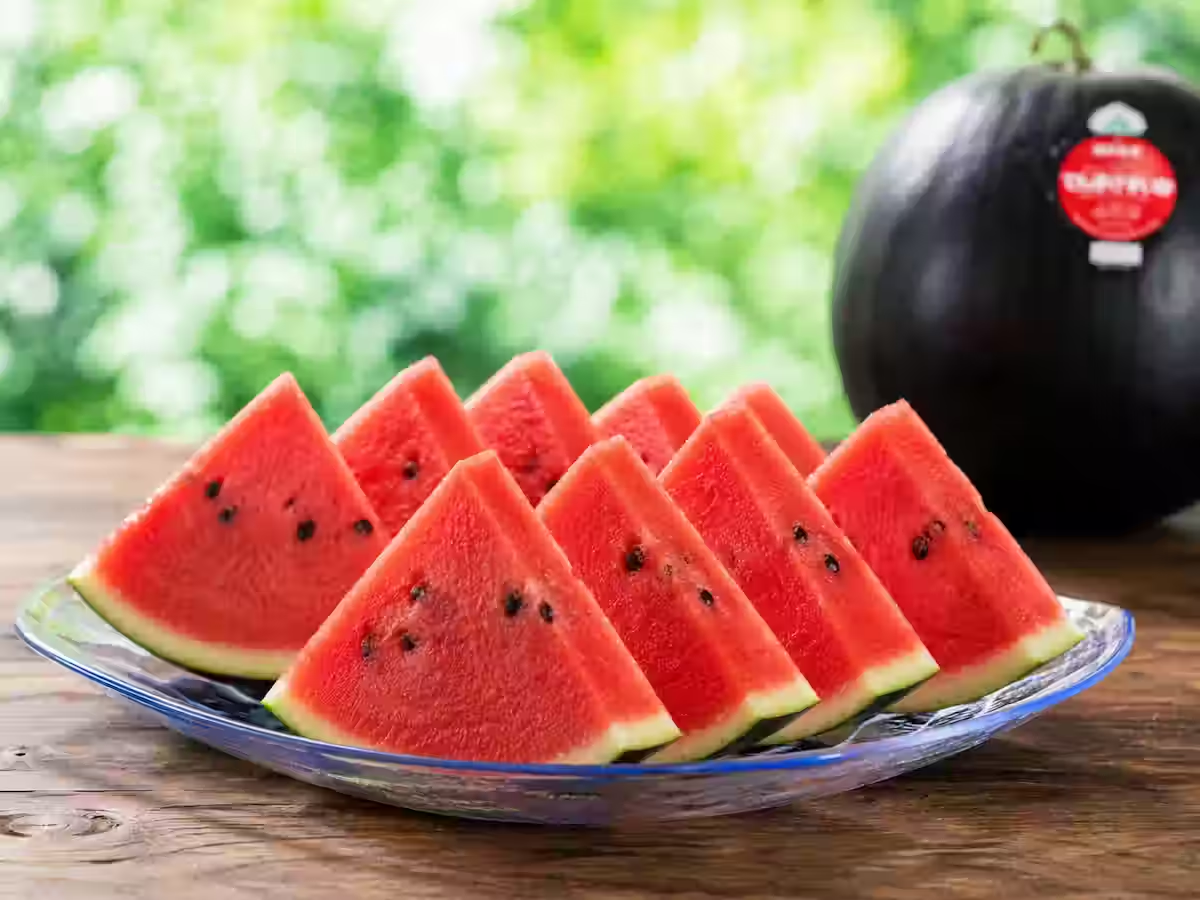
Densuke watermelon (でんすけすいか) is a premium black-rind watermelon grown exclusively in Toma, Hokkaido, Japan. Produced in limited quantities of under 4,000 fruits per year, it stands out for its smooth dark rind, dense red flesh, and Brix sugar levels of around 11–13°. Because of its rarity and strict quality control, it is widely regarded as one of Japan’s most prestigious luxury fruits.
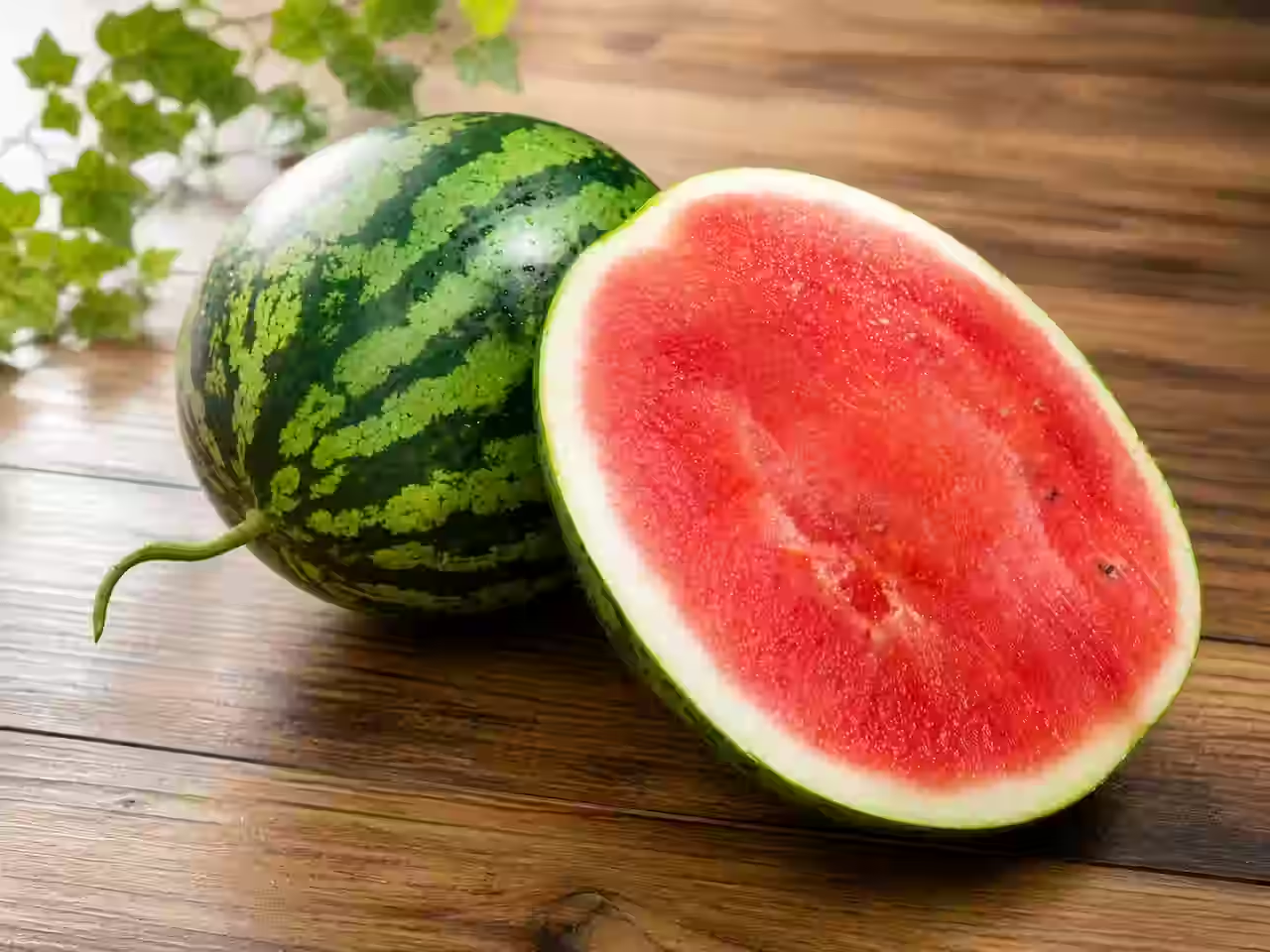
At first glance, it looks almost too perfect. The rind is deep green to black, with no stripes at all. It feels heavy in your hands, solid and dense. Then you slice it open, and the contrast appears instantly. Bright red flesh, sharply defined, almost glowing against the dark shell.
People often say this is not just fruit. It is a statement.
What Is Densuke Watermelon?
Densuke watermelon is a high-end Japanese watermelon grown only in Toma town in Hokkaido. Local farmers carefully cultivate each fruit using strict standards for shape, sweetness, and appearance. This makes it a rare watermelon variety rather than a mass-market product.
Unlike regular watermelons found in supermarkets, this is a luxury Japanese fruit designed for gifting. In Japan, fruit carries emotional meaning. It can represent appreciation, respect, or celebration. That cultural role explains why this black watermelon receives such attention.
Production is intentionally limited. Each year, farmers grow only a few thousand fruits, and only the best reach premium markets. That scarcity directly influences its reputation as a famous black fruit from Hokkaido.
Why Is Densuke Watermelon So Expensive?
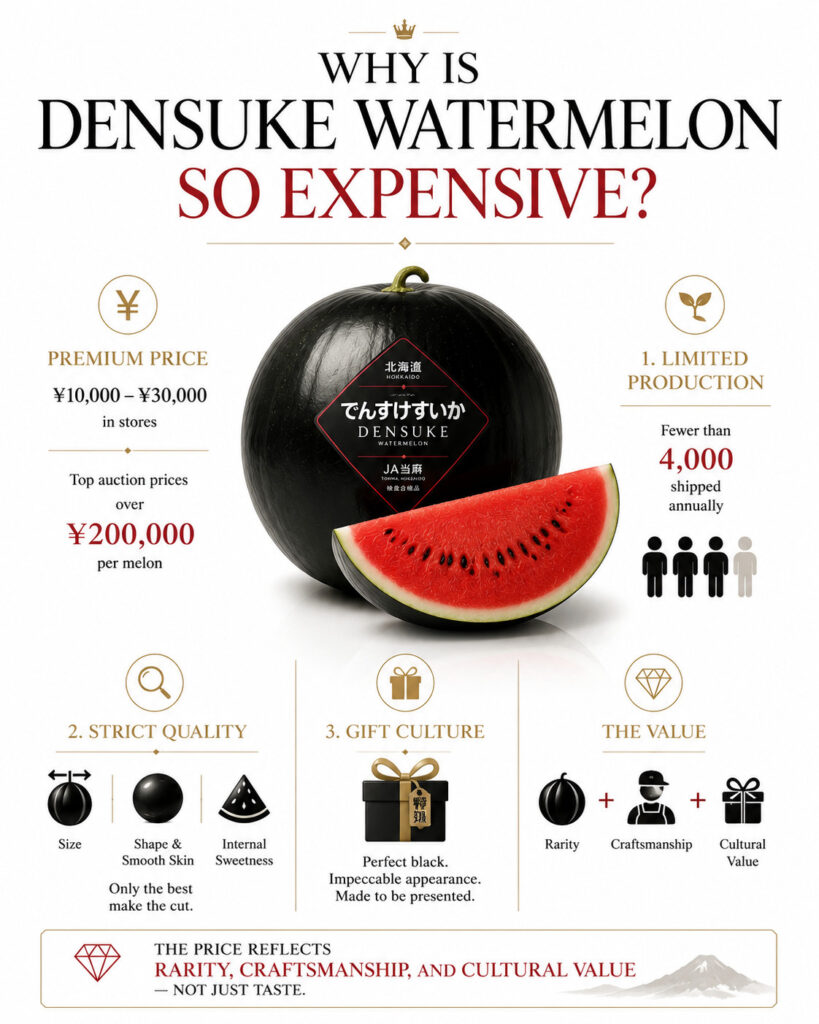
The price often surprises first-time readers. A typical fruit may sell for ¥10,000 to ¥30,000 in stores. However, the first auction of the season reaches much higher levels. For example, in recent years, top-quality fruits have sold for over ¥200,000 per melon at early auctions.
Several factors explain this.
First, production remains very limited. Fewer than 4,000 units are shipped annually, which creates strong scarcity. Second, quality standards are extremely strict. Farmers inspect size, shape, skin smoothness, and internal sweetness before release.
Third, the Japanese gift culture plays a major role. This fruit is not only eaten. It is presented. The perfect black appearance, often with no blemishes, makes it ideal as a premium gift.
In short, the price is not only about taste. It reflects rarity, craftsmanship, and cultural value.
What Does Densuke Watermelon Taste Like?
Densuke watermelon tastes sweet, crisp, and clean. The texture feels firmer than common watermelons, giving each bite a subtle crunch. At the same time, the juice remains refreshing rather than overly watery.
The sweetness is balanced, not overwhelming. With a sugar level around 11–13° Brix, it delivers a clear flavor instead of heavy sweetness. Some describe it as precise rather than rich.
The experience builds slowly. The first bite feels simple. Then the clean sweetness spreads, followed by a cooling finish. There is very little aftertaste, which makes it surprisingly elegant.
I remember expecting something dramatic. Instead, it felt controlled and calm. That restraint is part of its appeal.
What Makes This Black Watermelon Unique?
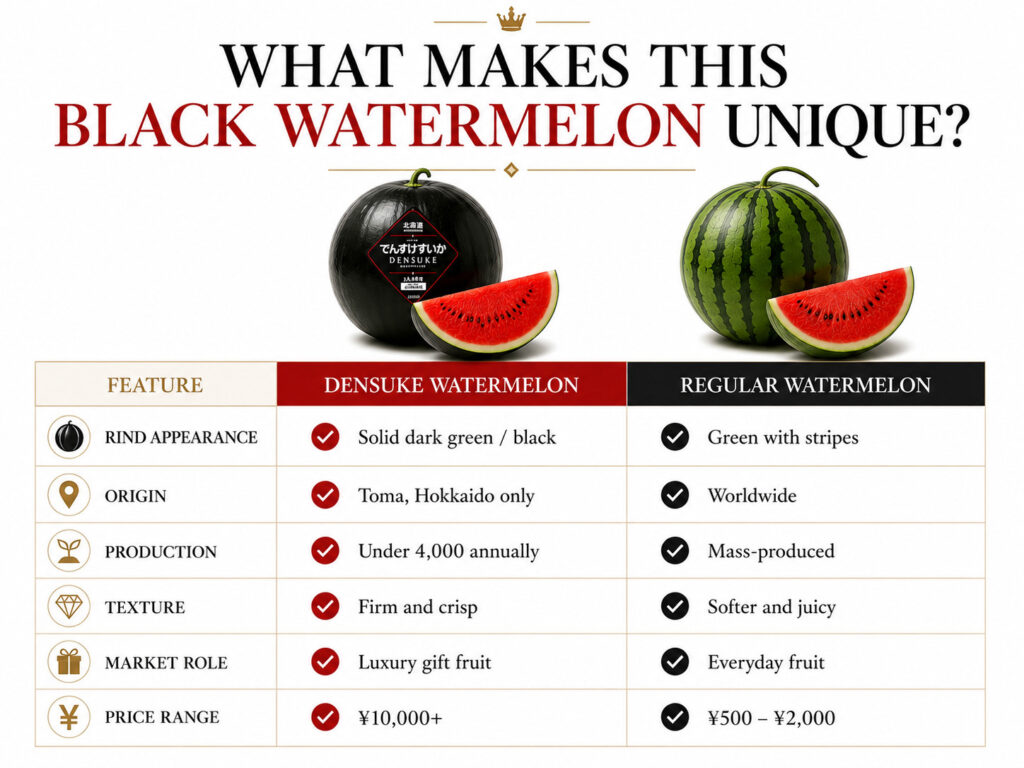
| Feature | Densuke Watermelon | Regular Watermelon |
|---|---|---|
| Rind appearance | Solid dark green / black | Green with stripes |
| Origin | Toma, Hokkaido only | Worldwide |
| Production | Under 4,000 annually | Mass-produced |
| Texture | Firm and crisp | Softer and juicy |
| Market role | Luxury gift fruit | Everyday fruit |
| Price range | ¥10,000+ | ¥500–¥2,000 |
This comparison shows the difference clearly. The black rind creates the strongest visual identity. However, the key difference lies in positioning. This fruit is not just eaten casually. It represents a high-end seasonal product.
Where Is Densuke Watermelon Grown?
Densuke watermelon grows only in Toma town in Hokkaido. The region’s climate plays an important role. Cool nights and warm days help create steady sugar development without excessive water content.
Farmers use careful cultivation methods. They monitor soil, temperature, and fruit development closely. Each watermelon is treated almost like a craft product.
Because of this local specialization, the fruit rarely appears outside Hokkaido except in major Japanese department stores or auctions.
When Is the Season?
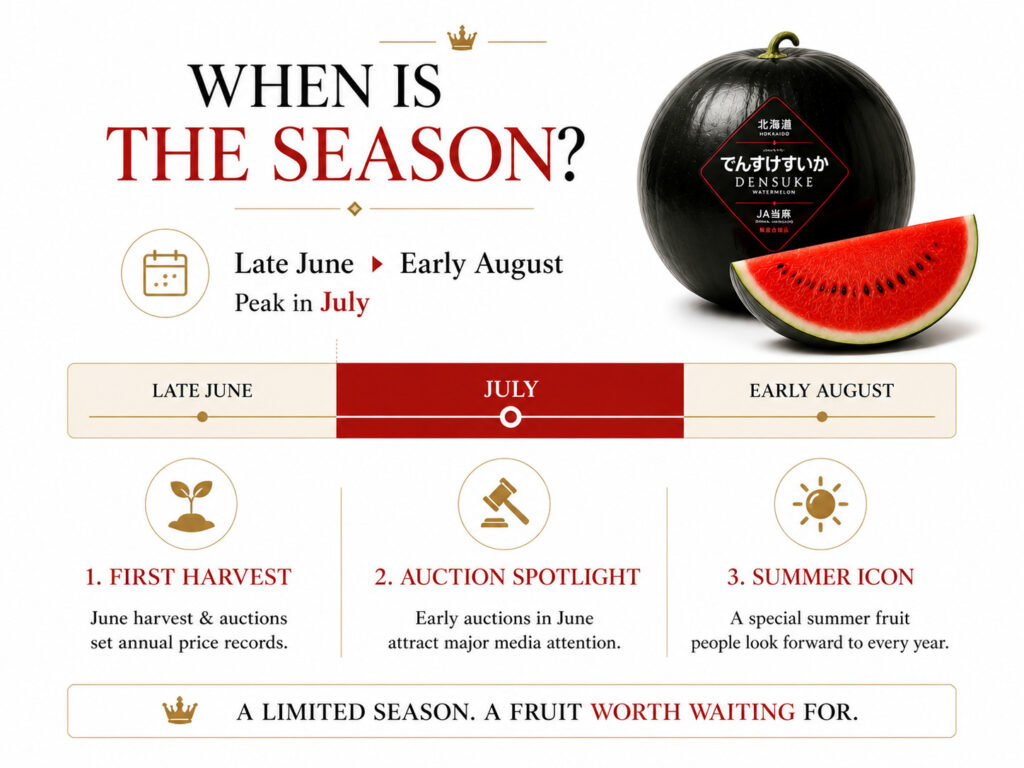
The season runs from late June to early August, with peak availability in July. This short window increases the feeling of exclusivity.
The first harvest is especially important. Auctions held in June often set annual price records. Media coverage around those events adds to the fruit’s reputation.
As a result, Densuke is often seen as a seasonal Japanese summer fruit, something people anticipate each year.
Where Can You Buy Densuke Watermelon?
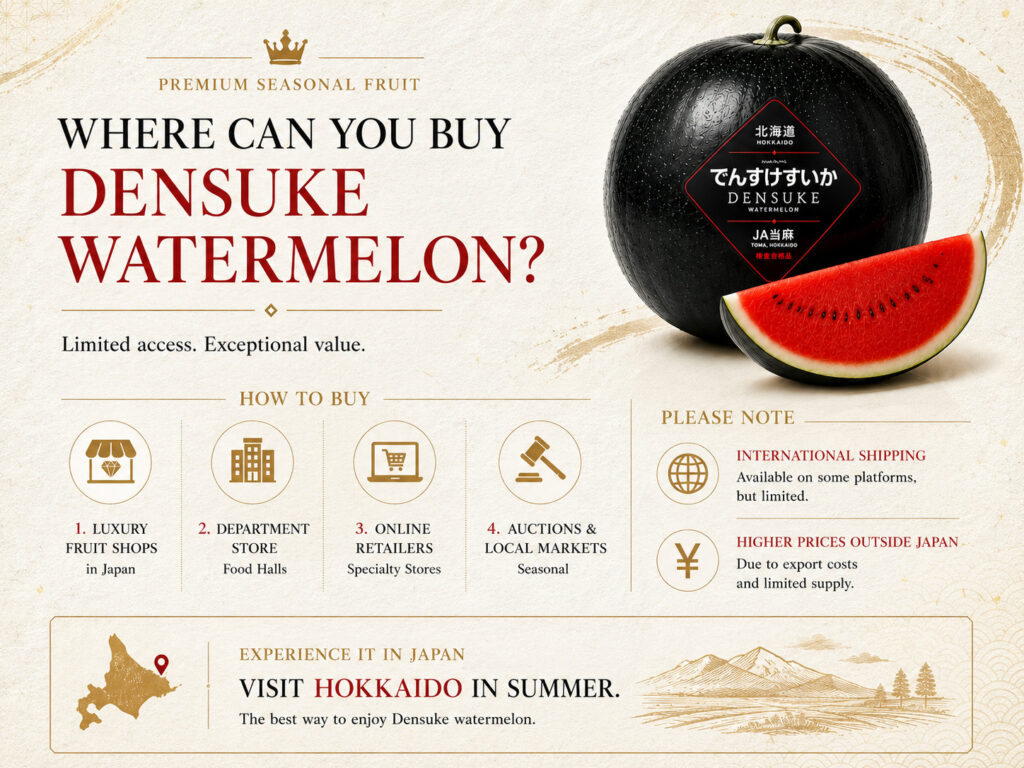
You can buy Densuke watermelon in several ways, though access can be difficult.
- Luxury fruit shops in Japan
- Department store food halls
- Specialty online retailers
- Seasonal auctions and local markets
Some online platforms offer international shipping, but availability remains limited. Prices are typically higher outside Japan due to export costs.
If you want to experience it in Japan, visiting Hokkaido during summer is the best approach.
How Should You Store and Eat It?
Storage is simple but important. Keep the whole fruit at a cool temperature before cutting. Once sliced, store it in the refrigerator and consume it quickly.
The best experience comes when served chilled. Cold watermelon enhances both sweetness and texture.
Here are simple tips:
- Chill before cutting
- Use a sharp knife for clean slices
- Eat soon after opening
- Avoid strong seasoning
- Share with others
This fruit works best as a shared experience. The size, appearance, and cost all invite group enjoyment.
How Does It Compare to Other Premium Watermelons?
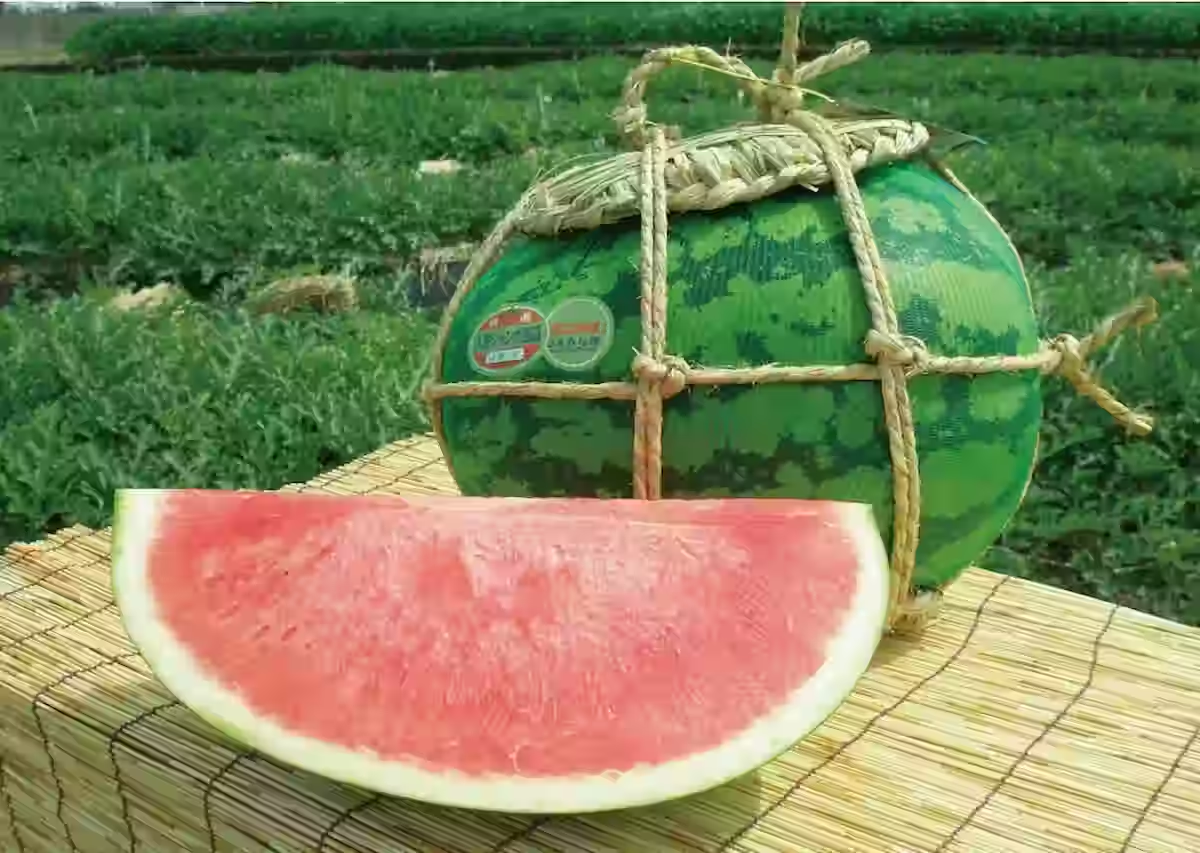
Japan produces several luxury watermelons. One example is the Nyuzen Jumbo Watermelon, which focuses more on size than darkness.
Densuke focuses on visual contrast and rarity. Nyuzen watermelons emphasize scale and summer abundance. Both reflect different regional identities.
This comparison helps explain Japanese fruit culture. Each region builds its own story around fruit, not just flavor.
Why Is Densuke Watermelon Famous?
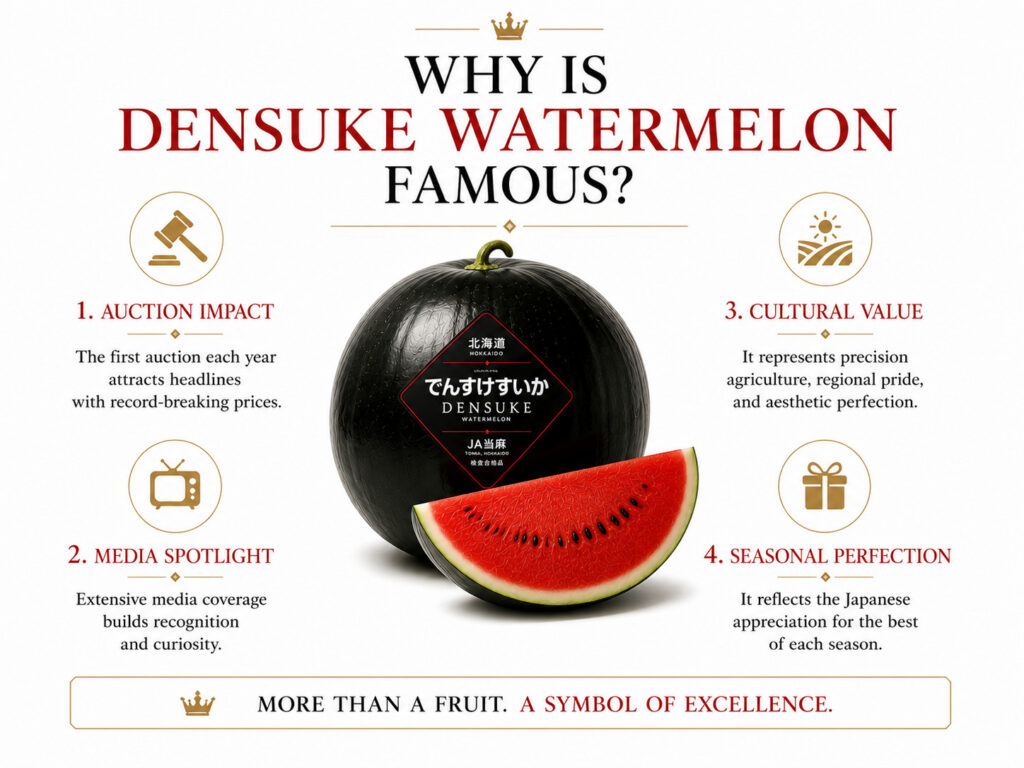
This fruit became famous through auctions, media coverage, and its unique appearance. The first auction each year often draws headlines due to high prices.
However, the deeper reason is cultural. It represents precision agriculture, regional pride, and aesthetic value.
It also matches the Japanese preference for seasonal perfection. A single fruit can carry meaning beyond its taste.
Final Thoughts
Densuke watermelon is not just a fruit. It is a reflection of Japanese food culture, where agriculture meets craftsmanship and presentation.
The black rind, crisp texture, and balanced sweetness all tell part of the story. The rest comes from scarcity, tradition, and the meaning attached to gifting.
At first, the price may feel surprising. Then you learn more about the production and culture. After that, it starts to make sense.
If you ever have the chance to try it in Hokkaido, it is worth the experience. Even one slice can stay in your memory.
Densuke Watermelon FAQ
What is Densuke Watermelon?
It represents a world-famous, premium luxury fruit from Japan. Farmers grow these large, round melons with a distinctive pitch-black rind and no stripes. Food lovers prize them for their incredible crispness, thick flesh, and exceptionally high sugar content.
Where does Densuke Watermelon come from?
This black-skinned fruit originates from Toma Town in Hokkaido, Japan’s northern island. Local farmers developed the brand in 1984 as an alternative crop to support their local agricultural economy. Today, only a limited number of certified growers in this specific region cultivate these premium plants.
What does Densuke Watermelon taste like?
It delivers a remarkably sweet, clean, and refreshing flavor. The deep red flesh feels extraordinarily crisp and crunchy with every single bite. Diners often compare its clean sweetness to premium berries rather than standard summer melons.
Why do people call this fruit Densuke?
The name pays tribute to a beloved 1960s Japanese comedic actor, Toshimitsu Omiya. Additionally, the word combines the Japanese kanji for “rice field” and “help”. Farmers planted the crop to rescue their paddies during agricultural rice reduction policies.
Where can I buy Densuke Watermelon in Japan?
You will find these exclusive melons at luxury department stores in major cities like Tokyo and Sapporo. High-end fruit parlors also serve seasonal slices during the peak summer months. You can also purchase them directly from local agricultural markets in Hokkaido.
How much does Densuke Watermelon cost?
A single premium fruit typically costs between 5,000 and 10,000 yen at standard retail. However, the historic first auction of the season in June regularly commands astronomical prices, sometimes reaching up to 750,000 yen. The rarity and extreme labor involved in growing each unit justify this luxury pricing.
Is Densuke Watermelon vegetarian or vegan friendly?
This natural crop contains absolutely no animal products. Vegans and vegetarians can safely enjoy this 100% plant-based summer luxury anywhere without any worries.
Can I eat Densuke Watermelon at home?
Yes, you can easily enjoy it at home if you purchase a whole fruit or a sliced portion. Many online farms and high-end department stores ship these carefully packed boxes directly to your doorstep. Home cooks simply chill the fruit and slice it into thick wedges for an unforgettable summer treat.
What is the difference between Densuke Watermelon and regular watermelon?
The main difference involves the outer appearance and the internal texture. This premium variety features a solid, glossy black rind instead of green stripes and offers much higher sweetness with a distinctively crispy crunch.
Is Densuke Watermelon popular outside Japan?
It enjoys massive popularity as a luxury status symbol outside Japan, especially among wealthy buyers in Asia. You will occasionally find these rare fruits at high-end markets in international metropolises. Food lovers worldwide view it as the ultimate masterpiece of luxury agriculture.
References
JA Toma – Densuke Watermelon Official Information
https://www.ja-toma.or.jp/
Ministry of Agriculture, Forestry and Fisheries Japan
https://www.maff.go.jp/
Nippon.com – Japanese Food Culture
https://www.nippon.com/en/
Hokkaido Government – Agriculture Information
https://www.pref.hokkaido.lg.jp/
Nyuzen Jumbo Watermelon (Food in Japan)
https://www.foodinjapan.org/chubu/toyama/nyuzen-jumbo-watermelon/




Comments