



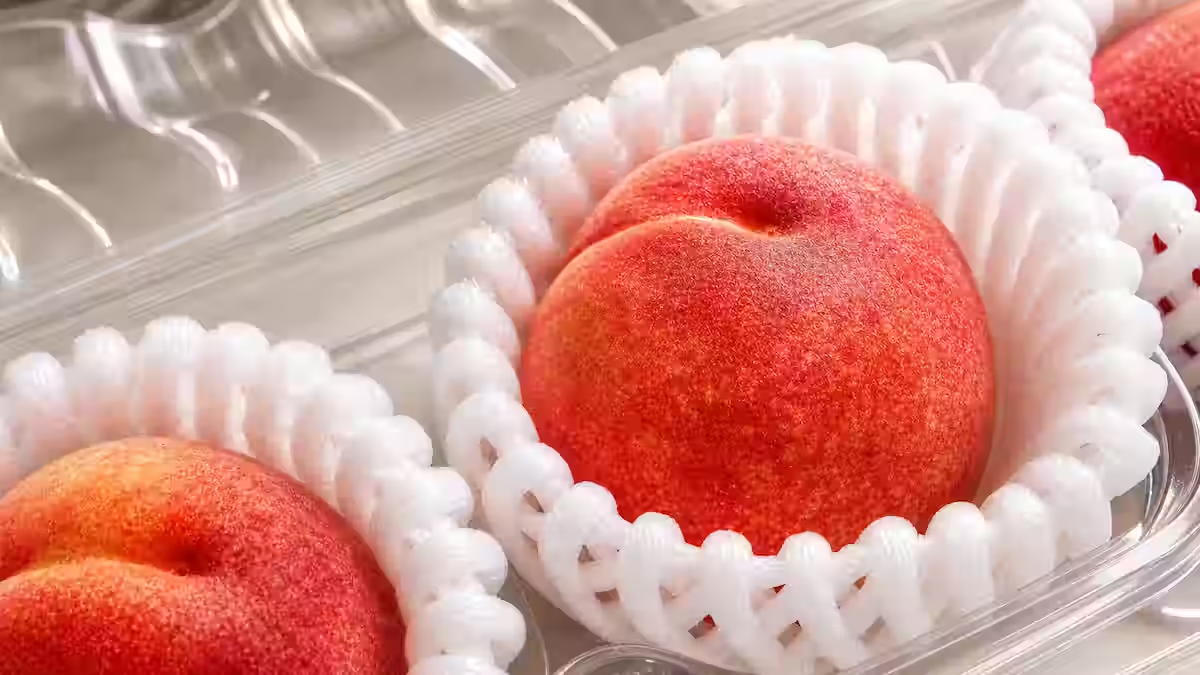
Most peaches arrive in the heat of midsummer. Yet one Japanese variety beats them all to the table. People call it Himemaruko, a super-early white peach. It ripens in early June, weeks before the usual rush. So it offers the very first taste of peach season. The fruit is small, blushed red, and sweetly fragrant. Himemaruko ひめまるこ early white peach is still rare and new. Let me introduce this charming little peach.
What Is Himemaruko Peach?
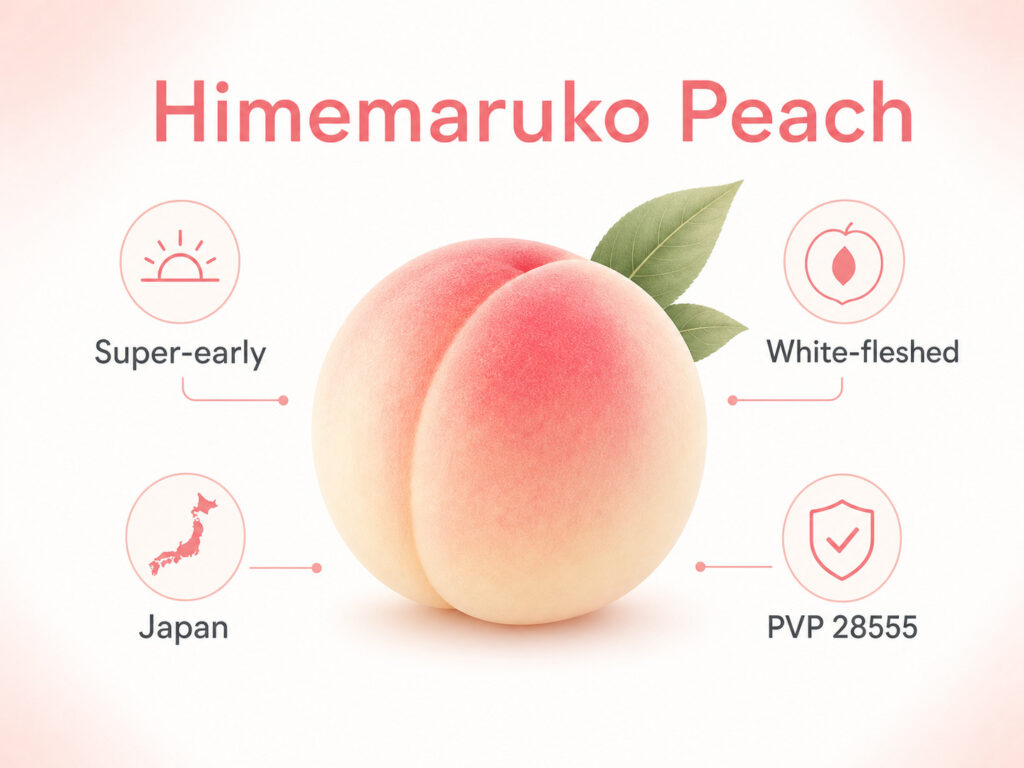
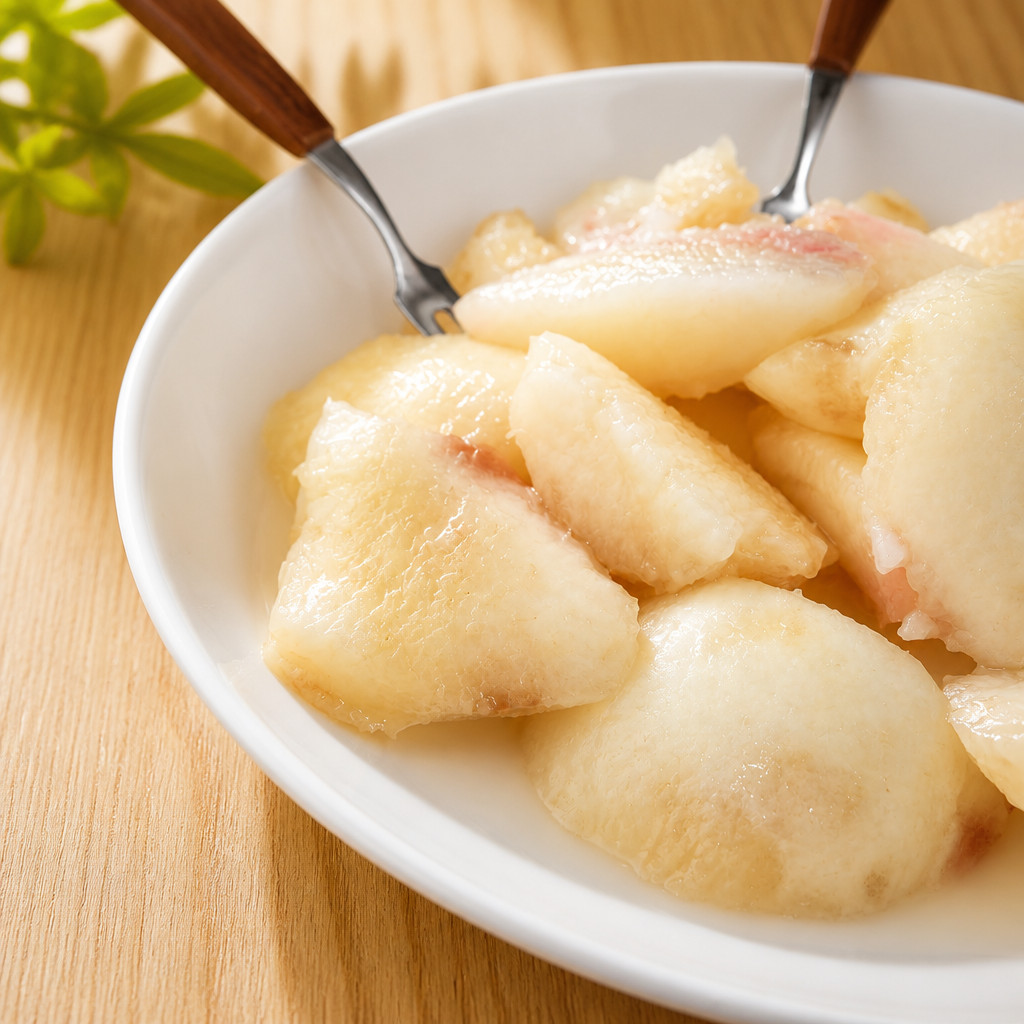
Himemaruko, also written Himemaruko momo, is a Japanese peach variety. It is a super-early, white-fleshed peach from Japan. The name suits the fruit rather well. It means a small, cute, and rounded peach. The flesh is creamy white, while the skin shows a pretty red blush. So this is a white-fleshed peach with real visual charm.
This Himemaruko early peach variety stands out for its timing. Japan’s national research body, NARO, developed it. Breeders registered it in 2021 under plant variety protection. Its PVP number is 28555, for those who track such things. So it counts as a genuinely new Japanese early peach variety.
The Taste and Features of Himemaruko
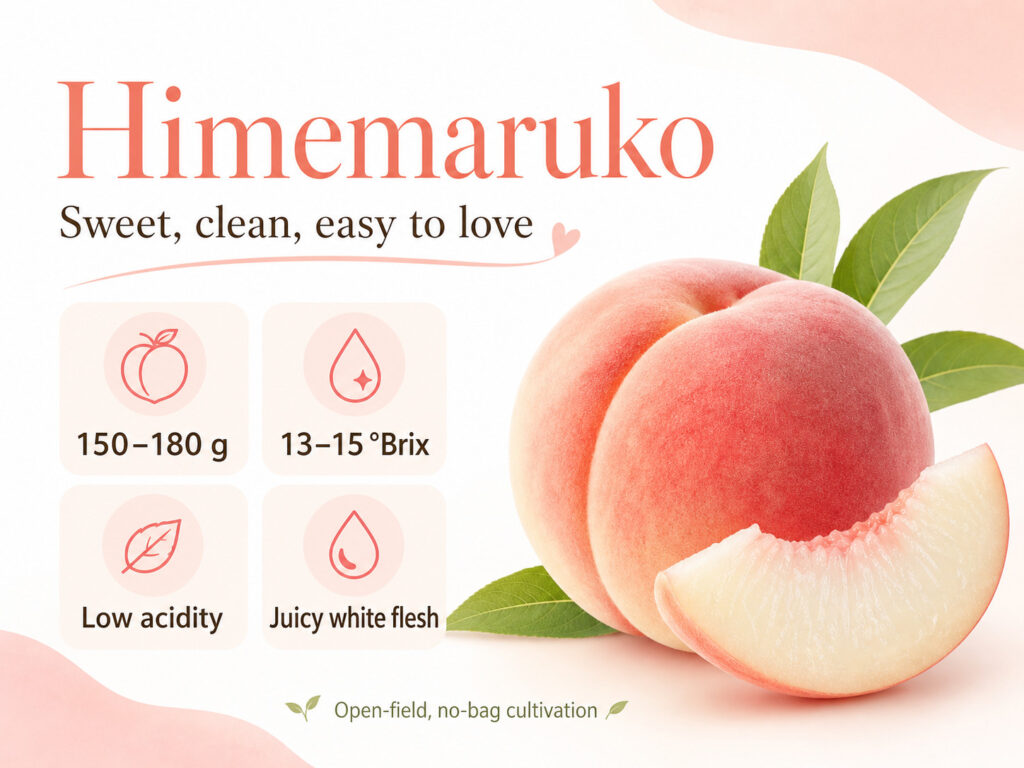
What does Himemaruko taste like? The flavor is sweet, clean, and easy to love. Its sugar level sits around 13 to 15 percent Brix. The acidity stays low, so the sweetness shines through. The flesh is juicy and melts softly in the mouth. So it makes a gentle, refreshing first peach of the year. Here is what defines this peach:
- A small to medium fruit, around 150 to 180 grams
- A sweet profile of roughly 13 to 15 percent Brix
- Low acidity, which makes it very easy to eat
- Juicy, melting white flesh with a soft texture
- Attractive red-blushed skin over creamy white flesh
The fruit is a little smaller than later peaches. Even so, the flavor feels surprisingly full and sweet. The skin colors well, so growers can skip the paper bags. That means open-field, no-bag cultivation works for this variety. One small caveat is worth noting, though. The stone clings to the flesh and can split easily.
When Is Himemaruko Peach in Season?
Timing is the whole point of this peach. Himemaruko ripens in early June in Japan. In Tsukuba, where it was bred, harvest starts then. So it arrives about nine days before Chiyohime. That gap may sound small, yet it matters greatly. It lets growers offer peaches before the main season.
This early window gives the fruit real value. Few peaches exist on the market in early June. So this extra-early peach can fetch a strong price. Growers in Tsukuba and Yamanashi have shown keen interest. Areas that already grow Chiyohime or Hanayome suit it well. For more on Japan’s peaches, see our Okayama fruits guide.
Himemaruko vs Himekonatsu vs Chiyohime
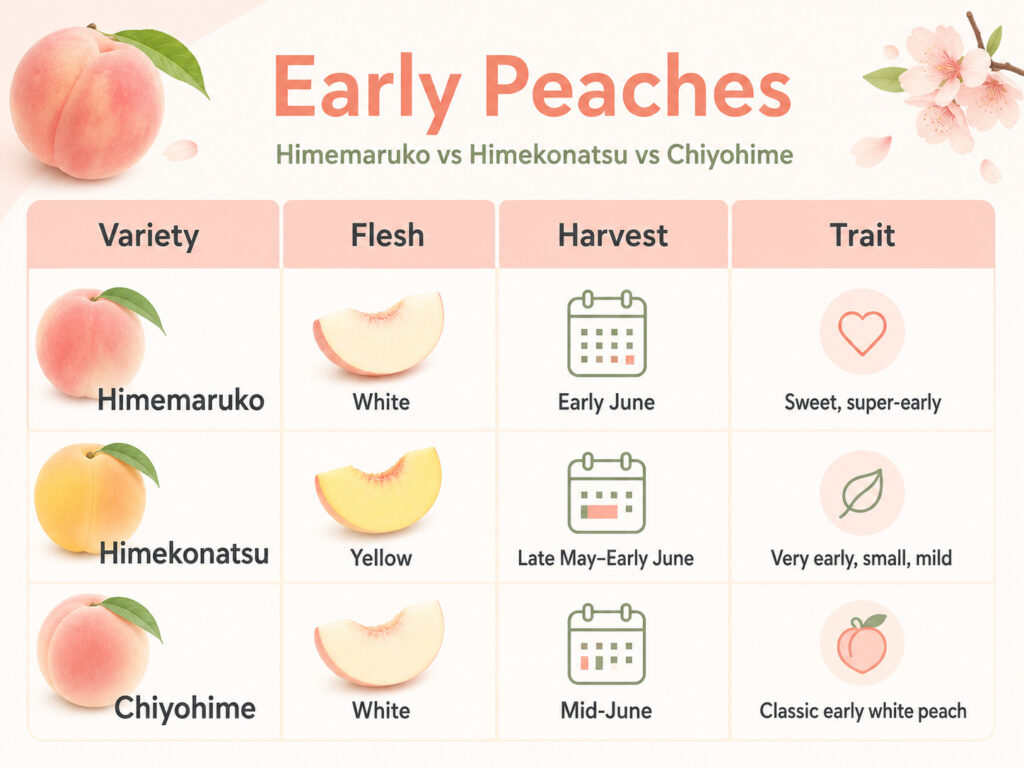
How does it compare with other early peaches? A short table makes the picture clear.
| Variety | Flesh | Harvest | Notable trait |
|---|---|---|---|
| Himemaruko | White | Early June | Super-early white peach, sweet |
| Himekonatsu | Yellow | Late May to early June | Very early, small, mild |
| Chiyohime | White | Mid-June | Classic early white peach |
So Himemaruko bridges a clever gap. It carries the white flesh that buyers in Japan love. Yet it ripens nearly as early as the yellow Himekonatsu. Its sugar level also tends to beat Chiyohime. So it blends early timing with strong, sweet flavor.
The History and Breeding of Himemaruko
A Cross of Two Peaches
Himemaruko has a clear and recent origin. Breeders at NARO crossed two parent peaches in 2002. They used Benikunimi as the seed parent. Then they paired it with the early variety Himekonatsu. From that cross, they selected one promising seedling. So Himemaruko comes from Benikunimi crossed with Himekonatsu.
Years of Testing
New fruit varieties take real patience to confirm. Trials of this peach began around 2010. Researchers tested it under the name Tsukuba 126. For years, they checked its flavor, timing, and growth. Finally, the variety earned its official registration. It became registered variety Himemaruko, PVP No. 28555, in 2021.
Himemaruko Today
For now, this peach remains quite rare. Nursery trees only reached growers a few years ago. So volumes stay small, and supply is limited. Some sellers even call it a phantom early peach. You may find it through direct-from-farm online orders. It also appears in sweet, aromatic gift boxes. So early-season fans hunt for it each June.
Best Way to Enjoy Himemaruko Peaches
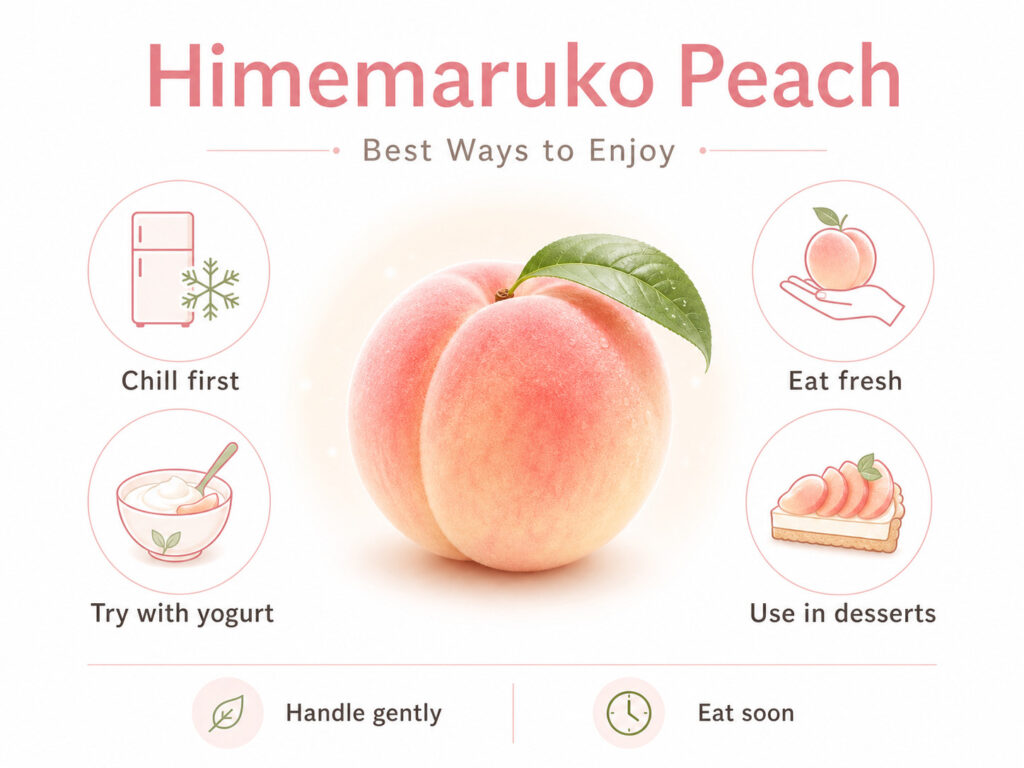
So how should you enjoy this early peach? Fresh and chilled is the simplest choice. A short rest in the fridge brings out the aroma. The soft, juicy flesh suits eating out of hand. For a treat, slice it over yogurt or ice cream. It also shines in light summer desserts and tarts. You might even try it in a peach version of fruit daifuku.
A few simple tips help you get the most from it. Handle the fruit gently, since the flesh is tender. Eat it soon, because early peaches do not keep long. For more seasonal ideas, browse our Japanese fruit guide. A ripe Himemaruko rewards a little care.
Final Thoughts
Himemaruko shows how Japanese fruit breeding keeps evolving. It brings sweet white peaches weeks ahead of schedule. Its low acidity and melting flesh make it easy to love. The fruit is small, yet its flavor feels generous. For now, it stays a rare, early-summer treasure. If you spot one in June, do not hesitate. A taste of the season’s first peach is worth it.
Himemaruko Peach FAQ
What is Himemaruko peach?
It is a super-early, white-fleshed Japanese peach. NARO developed and registered it in 2021. The fruit is small, sweet, and lightly fragrant. It ripens far earlier than most peaches.
When is Himemaruko peach in season?
It ripens in early June in Japan. In Tsukuba, harvest begins around that time. That makes it about nine days earlier than Chiyohime. So it is one of the first peaches of the year.
How does it taste?
The flavor is sweet and clean, with low acidity. Its sugar level reaches about 13 to 15 percent Brix. The white flesh is juicy and melts softly. So it is easy and pleasant to eat.
How big is the fruit?
It is a small to medium peach. Each fruit weighs about 150 to 180 grams. That makes it smaller than Chiyohime. Still, the flavor feels full and sweet.
What are its parent varieties?
It comes from a cross made by NARO. The seed parent is Benikunimi. The pollen parent is the early variety Himekonatsu. Breeders selected it from that cross.
How is it different from Himekonatsu?
Himekonatsu has yellow flesh, while this peach has white. Both ripen very early in the season. This variety tends to taste a touch sweeter. It also grows slightly larger than Himekonatsu.
Where can you buy it?
It is still rare and produced in small amounts. Direct-from-farm online orders are the best route. It also appears in seasonal peach gift boxes. Growers in Tsukuba and Yamanashi lead its cultivation.
What is the best way to eat it?
Fresh and chilled is the simplest, finest choice. The soft flesh suits eating out of hand. It also works in light desserts and tarts. Eat it soon, since early peaches do not keep long.
References
- NARO (National Agriculture and Food Research Organization), Peach Variety Himemaruko, https://www.naro.go.jp/collab/breed/0400/0412/133089.html (Surveyed: June 2026)
- NARO, Press Release on the super-early white peach Himemaruko, https://www.naro.go.jp/publicity_report/press/laboratory/nifts/132590.html (Surveyed: June 2026)
- Bulletin of the NARO (J-STAGE), New Peach Cultivar Himemaruko, https://www.jstage.jst.go.jp/article/naroj/2022/11/2022_15/_article/-char/ja/ (Surveyed: June 2026)
Related Articles
- Okayama Fruits Guide: Peaches and Grapes (Surveyed: June 2026)
- Japanese Fruit Guide (Surveyed: June 2026)
- Fruit Daifuku (フルーツ大福) (Surveyed: June 2026)
- Kaki (柿): Japanese Persimmon (Surveyed: June 2026)




Comments