





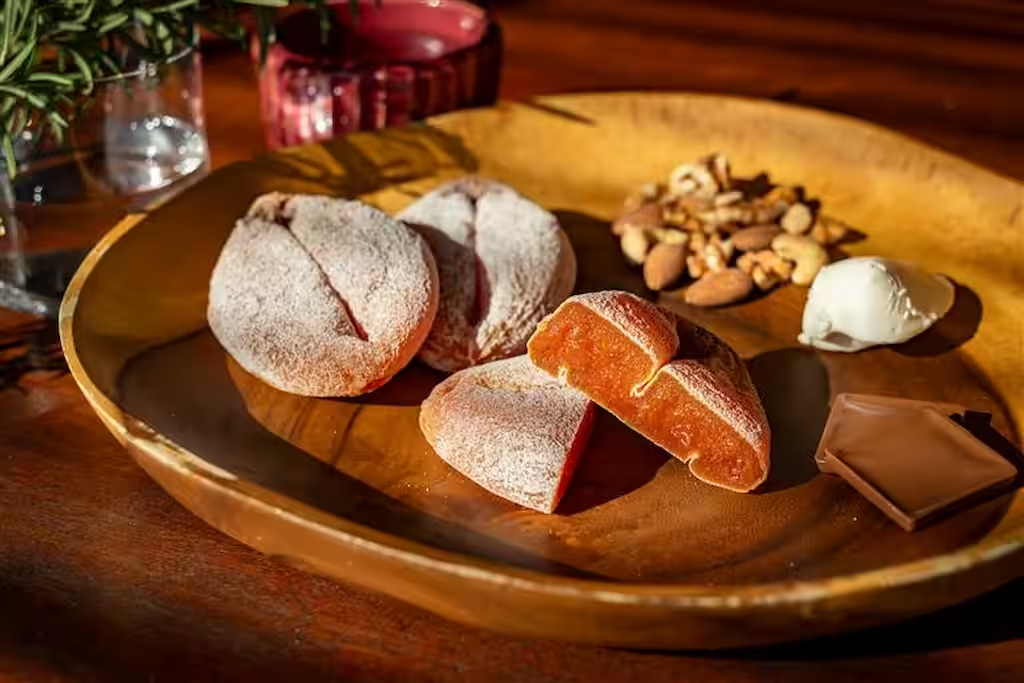
Koro gaki is a premium dried persimmon from Yamanashi Prefecture, made from large Koshu Hyakume persimmons. Farmers peel the fruit, then hang it to dry for weeks until it turns naturally sweet. A fine white bloom of natural sugar forms on the surface.
When winter arrives in Yamanashi, the countryside turns into a sea of bright orange. Thousands of persimmons hang from farmhouse eaves like golden curtains. This sight marks the season for koro gaki, a treat perfected over centuries. Locals wait for it all year.
What Is Koro Gaki?
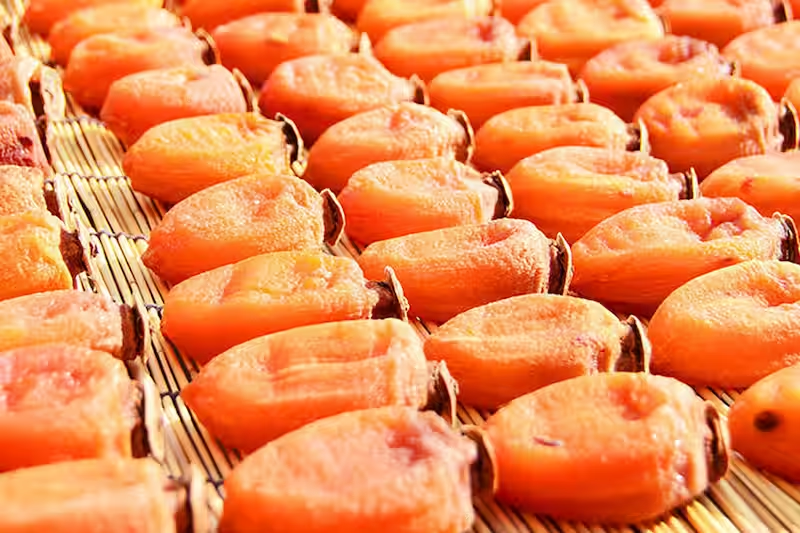
Koro gaki is a traditional dried persimmon from Yamanashi Prefecture, Japan. Makers use a specific variety called the Koshu Hyakume persimmon. These fruits are very large, sometimes close to the size of a small melon. They taste bitter when fresh, so drying is essential to make them sweet.
The name “koro” comes from the Japanese word “koro-koro,” which describes a rolling motion. During drying, farmers gently roll and massage each fruit by hand. This helps the persimmon dry evenly and stay tender inside. The whole process takes about 40 days.
As the fruit dries, a fine white powder appears on the surface. This is not added sugar or flour. It is the fruit’s own sugar rising up and crystallizing. That bloom is a sign of a well-made koro gaki.
What Does Koro Gaki Taste Like?
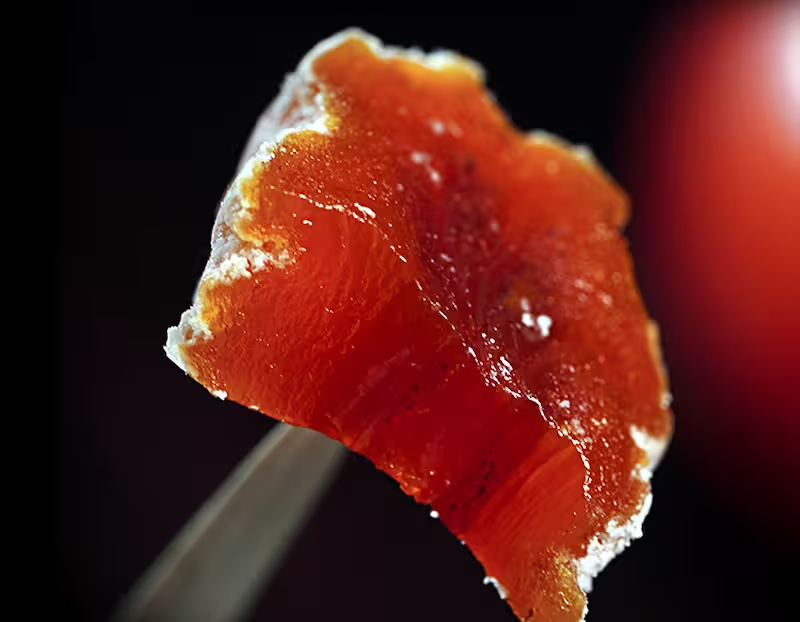
The taste is rich and concentrated. It is like persimmon jam wrapped in a soft, chewy dried fruit. The outside feels slightly firm, dusted with sugar. The inside stays moist and tender.
I will admit, the deep sweetness surprised me at first. Yet it never feels sugary or heavy. It tastes purely of fruit, almost honey-like. Try it with green tea, cream cheese, walnuts, or even a glass of Japanese whisky.
Koro Gaki vs Anpo Gaki
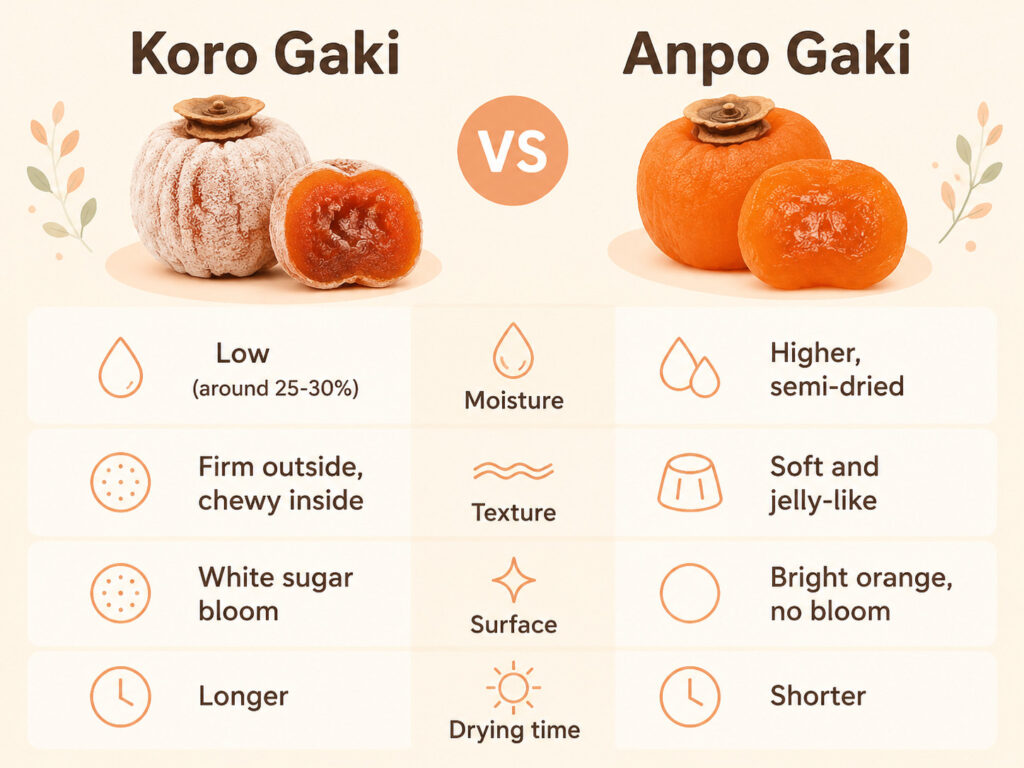
Both are dried persimmons, but they differ in moisture and texture. The table below makes the difference clear.
| Koro Gaki | Anpo Gaki | |
|---|---|---|
| Moisture | Low (around 25-30%) | Higher, semi-dried |
| Texture | Firm outside, chewy inside | Soft and jelly-like |
| Surface | White sugar bloom | Bright orange, no bloom |
| Drying time | Longer | Shorter |
So koro gaki dries longer and keeps less moisture. That extra drying creates the signature white bloom. Anpo gaki stays softer and juicier by comparison.
A Gift for Samurai and Shoguns
This sweet has a grand history reaching back to the Warring States period. The famous lord Takeda Shingen is said to have encouraged farmers to grow and dry persimmons. He valued dried fruit as a source of energy for soldiers during long campaigns.
By the Edo period, koro gaki had become famous for its quality. People presented it to the Shogunate as a special gift. Even today, it remains a luxury item. Many Japanese give koro gaki during the winter holidays to show respect and gratitude. It reflects the patience of the farmers who tend the fruit for weeks.
Health Appeal of Koro Gaki
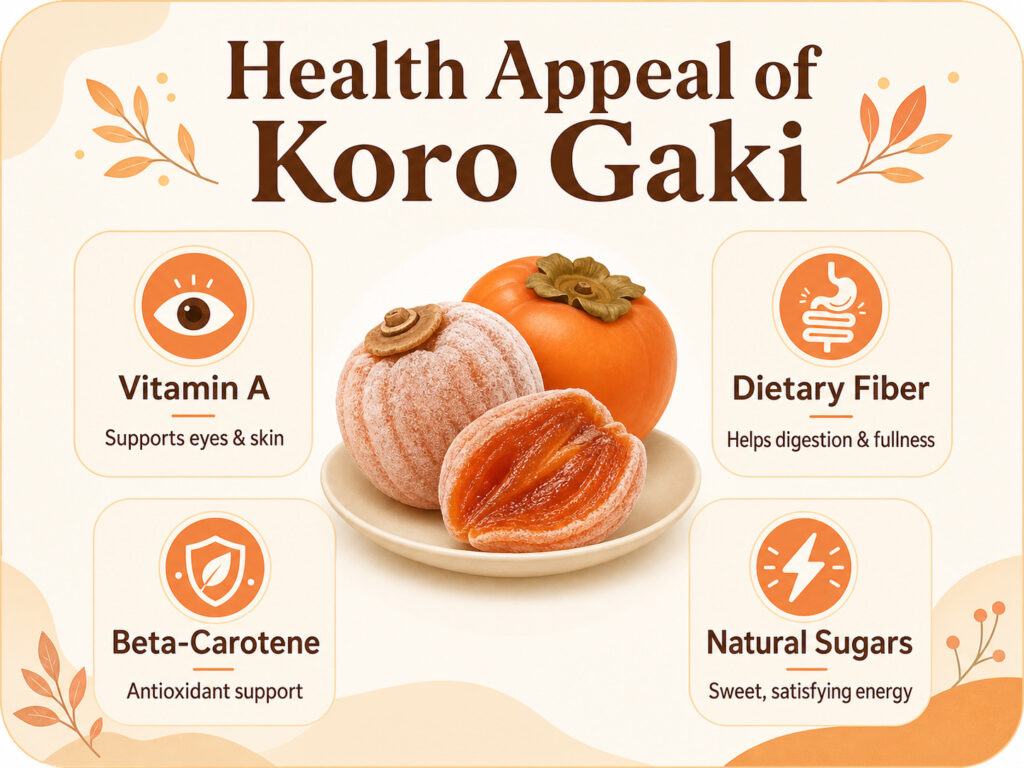
Since koro gaki is made only from fruit and sunshine, it is a wholesome way to enjoy something sweet. It contains several nutrients that suit the winter season.
- Vitamin A: may help support healthy eyes and skin in dry winter air.
- Dietary fiber: persimmons are rich in fiber, which supports digestion and helps you feel full.
- Beta-carotene: an antioxidant that may help support general wellness.
- Natural sugars: the fruit’s own sugars make it a satisfying snack as part of a balanced diet.
How to Eat and Store Koro Gaki
You can eat koro gaki straight from the pack. Slice it into rounds to share, or pair it with tea. The rich sweetness also balances salty or creamy foods. Cream cheese and walnuts are popular partners.
For storage, keep it cool and away from direct sunlight. Wrap each piece and refrigerate it to keep the texture soft. For longer keeping, freeze it, then thaw before eating. The white bloom may fade in the fridge, which is normal.
Best Season to See the Persimmon Curtains
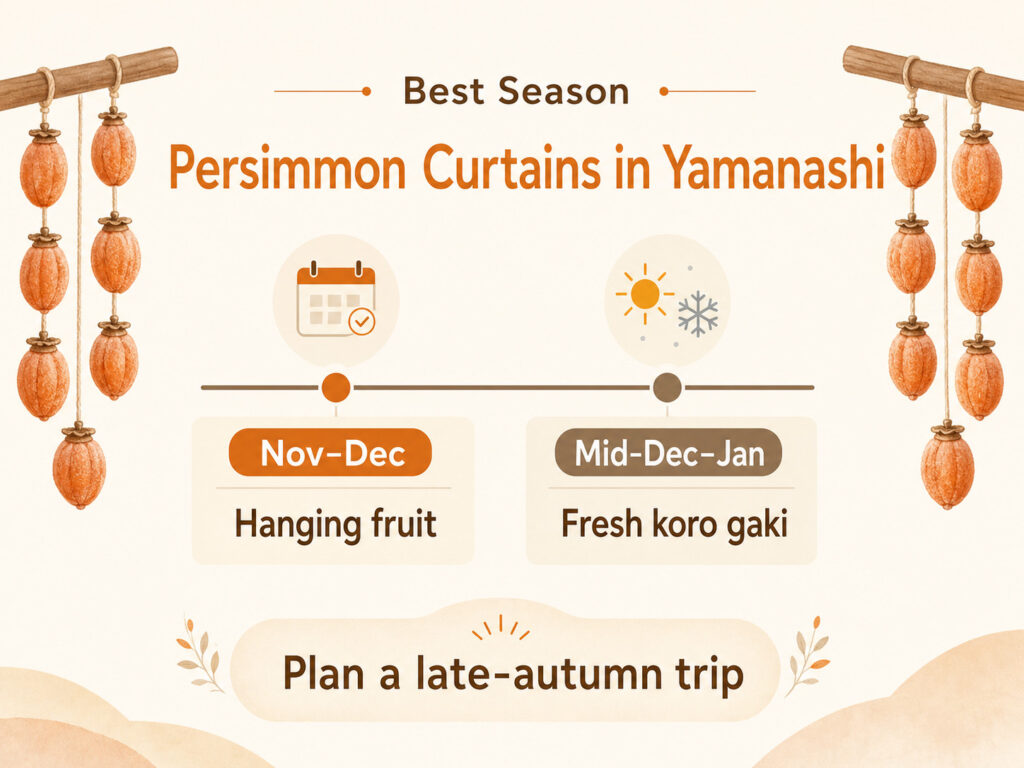
The hanging “persimmon curtains” are a Yamanashi winter highlight. Farmers usually hang the fruit from November to December. The finished koro gaki then sells from mid-December into January. So plan a late-autumn trip to catch both the view and the fresh harvest.
Where to Buy Koro Gaki
Iwanami Farm (岩波農園)
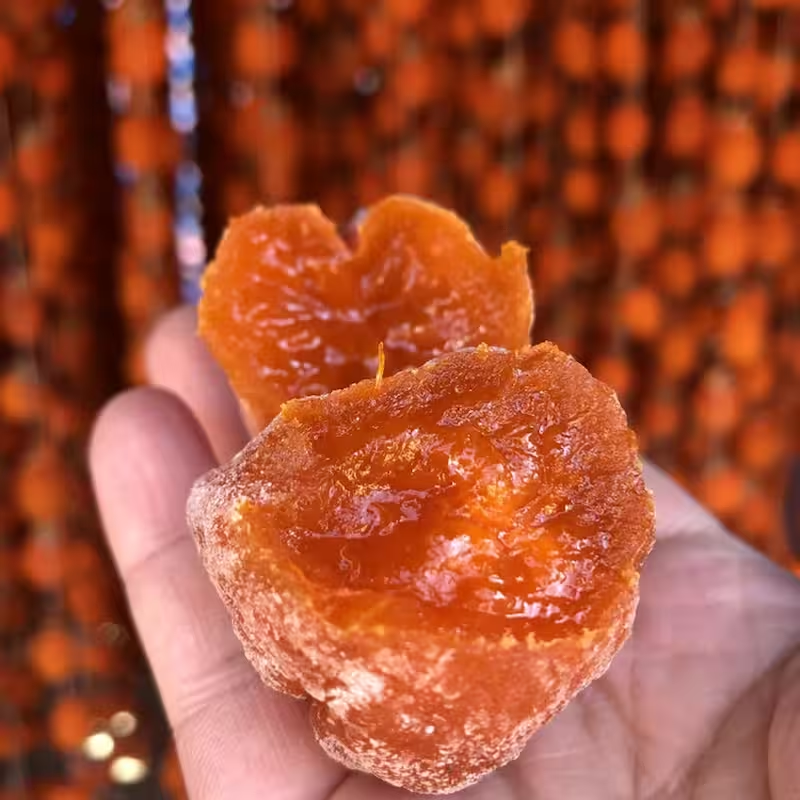
For the most authentic koro gaki, visit the Enzan area of Koshu City. Iwanami Farm is one of the best places to experience the tradition. The farm is famous for the stunning persimmon curtains that drape its property each autumn and winter. You can see the process up close and buy fresh fruit.
- Area: Shioyama Koyashiki, Koshu, Yamanashi (next to Erin-ji Temple).
- Known for: over 10,000 hanging persimmons and quality koro gaki.
- Best for: seeing the curtains and buying direct.
Conclusion
Koro gaki is more than dried fruit. It is a symbol of Japanese winter and the quiet power of nature. From a samurai energy food to a modern luxury gift, it stays close to Yamanashi’s heart.
So if you visit Japan in the colder months, look for these sugar-dusted treats. For more on the fruit behind it, read our guide to kaki (Japanese persimmon). You can also explore other Japanese autumn foods.
Koro Gaki FAQ
What is koro gaki?
Koro gaki is a traditional dried persimmon from Yamanashi Prefecture. Makers peel and sun-dry large astringent Koshu Hyakume persimmons. Over weeks, the fruit turns naturally sweet. A white sugar bloom forms on the surface.
Is the white powder on koro gaki mold?
No, it is not mold. The white powder is natural sugar from the persimmon. It rises to the surface and crystallizes during drying. A good bloom is a sign of quality.
What is the difference between koro gaki and anpo gaki?
The key difference is moisture. Anpo gaki is softer and keeps more moisture. This dried sweet dries longer and holds less. As a result, it develops a white sugar bloom on the surface.
When is the best season to buy it?
It is usually available from mid-December to January. The famous hanging persimmon curtains appear from November to December. So late autumn is ideal for both the view and the fruit. Some farms also sell packed stock year-round.
How do you store koro gaki?
Keep it cool and out of direct sunlight. Wrap each piece and refrigerate to keep it soft. For longer storage, freeze it and thaw before eating. The white bloom may fade in the fridge, which is normal.
Where is koro gaki famous?
It is most famous in Yamanashi Prefecture. Koshu City and Minami-Alps City are key areas. The Matsuzato area of Koshu is especially known for it. The local Koshu Hyakume persimmon makes it possible.
How do you eat koro gaki?
You can enjoy it straight from the pack. Slice it to share, or pair it with green tea. It also goes well with cream cheese, walnuts, or whisky. The rich sweetness balances salty and creamy flavors.
References
- MAFF, Uchino Kyodo-ryori (Korogaki, Yamanashi), https://www.maff.go.jp/j/keikaku/syokubunka/k_ryouri/ (Surveyed: June 2026)
- Yamanashi Prefecture Official Website, Koro Gaki, https://www.pref.yamanashi.jp/ (Surveyed: June 2026)
- JA Fruits Yamanashi, Kaki and Koro Gaki, https://www.ja-fruits.or.jp/ (Surveyed: June 2026)
Related Articles
- Kaki (柿) – Japanese Persimmon (Surveyed: June 2026)
- Imo Yokan (芋羊羹) (Surveyed: June 2026)
- Daifuku (大福) (Surveyed: June 2026)
- Japanese Autumn Foods Guide (Surveyed: June 2026)



Comments