





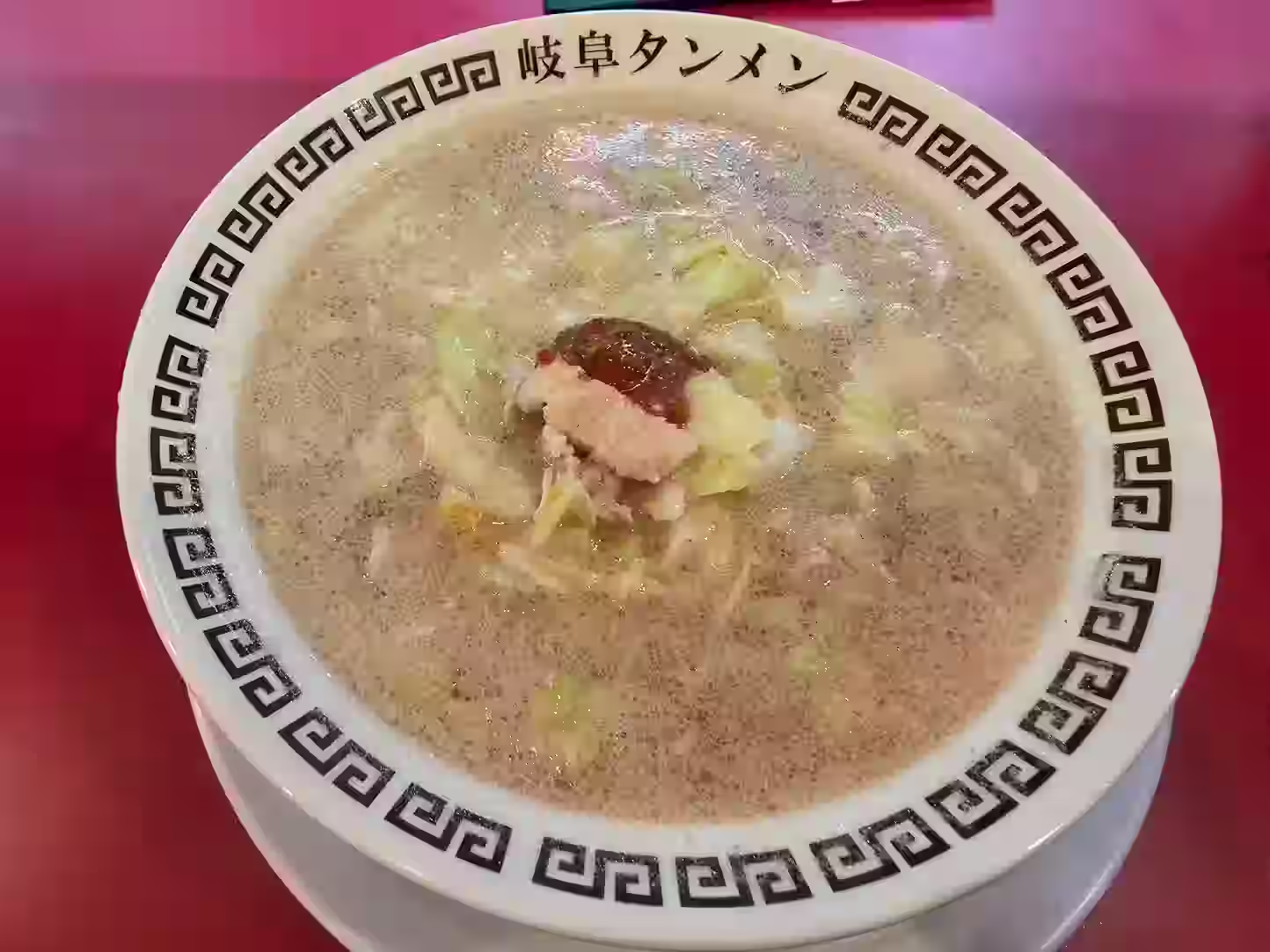
Drive along a main road in Aichi or Gifu around noon, and you will probably see it. A bright sign, a big parking lot, and a line of hungry locals. That is Gifu Tanmen, one of the Tokai region’s most talked-about bowls. I still remember my first visit, mostly because I ordered the wrong spice level. More on that later.
Outside central Japan, few travelers know this ramen exists. However, people around Nagoya and Gifu City treat it almost like soul food. This guide explains what Gifu Tanmen is, how it tastes, and how it differs from regular tanmen. We will also cover its unusual Aichi-origin story and a practical ordering guide. By the end, you should know exactly what to ask for at the counter.
What Is Gifu Tanmen?
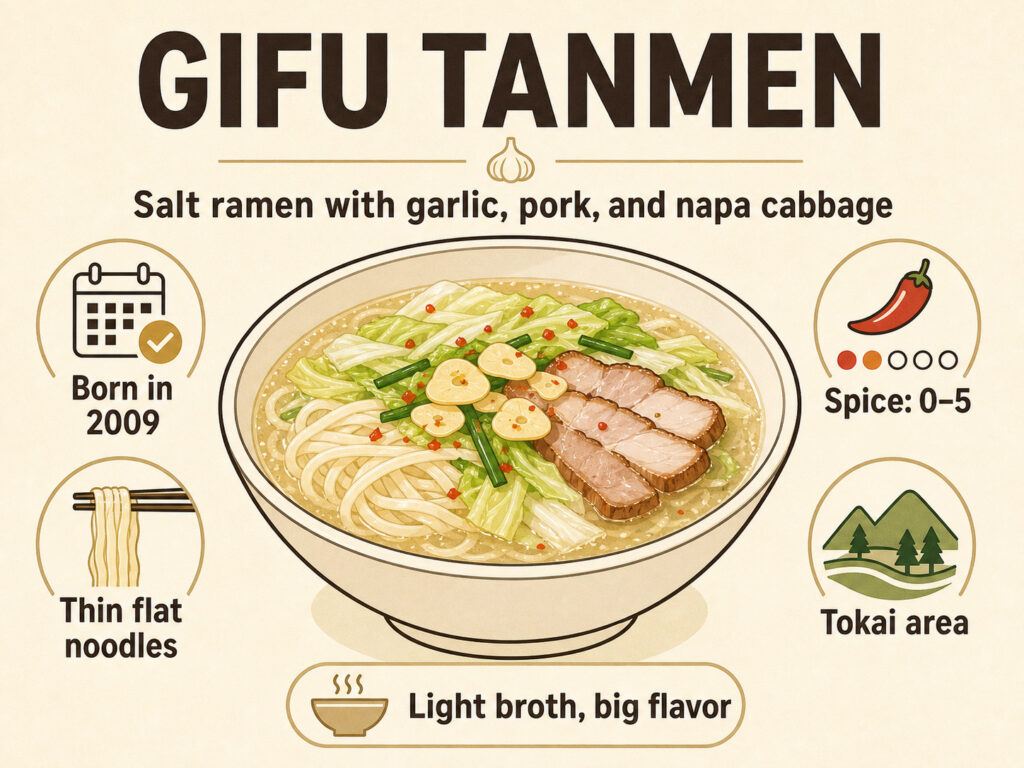
Gifu Tanmen is a salt-based ramen loaded with garlic, simmered pork, and sweet napa cabbage. A regional chain of the same name serves it across the Tokai area. The soup looks light at first glance, yet it hits with surprising punch. Thin, flat noodles in the Hakata style carry that broth beautifully.
Strictly speaking, this is not an old traditional dish. Instead, it began as a struggling noodle stall in 2009 and grew into a beloved local ramen. Today, media in Japan often call it a new classic of Gifu, even though it started in Aichi. Confusing? A little. That twist is part of its charm.
Quick Facts
- Japanese name: 岐阜タンメン (Gifu Tanmen)
- Type: Salt-based local ramen with garlic, pork, and napa cabbage
- Born: 2009, as a food stall in Inazawa City, Aichi Prefecture
- Named after: Gifu City, where the shop finally succeeded
- Spice levels: 0 to 5 at no extra charge, plus extreme options
- Noodles: Thin, flat, low-hydration noodles from a Fukuoka noodle maker
- Where: Roughly 20 shops across Aichi, Gifu, and Mie, plus newer branches in Toyama, Fukui, and Nagano (as of 2025)
What Does It Taste Like?
The first sip surprises most people. You expect a plain salt broth, but garlic arrives immediately and refuses to leave. Behind it, slow-cooked napa cabbage and pork release a gentle, almost dessert-like sweetness. The balance between sharp garlic and soft vegetable sugar defines this bowl.
The aroma is honest, maybe too honest. Garlic and simmered pork fill the air before the bowl even lands. If you have a meeting afterward, you might hesitate for a second. I did. Then I ate it anyway, and I have zero regrets.
Texture matters here as much as flavor. The thin, flat noodles snap pleasantly, much like the ones in Hakata Ramen. Meanwhile, the cabbage turns silky and the pork slices stay tender. Add a spoonful of the house chili tare, and a sour, fiery note cuts through the richness. Each element keeps the next bite interesting.
Gifu Tanmen vs Tanmen vs Tantanmen
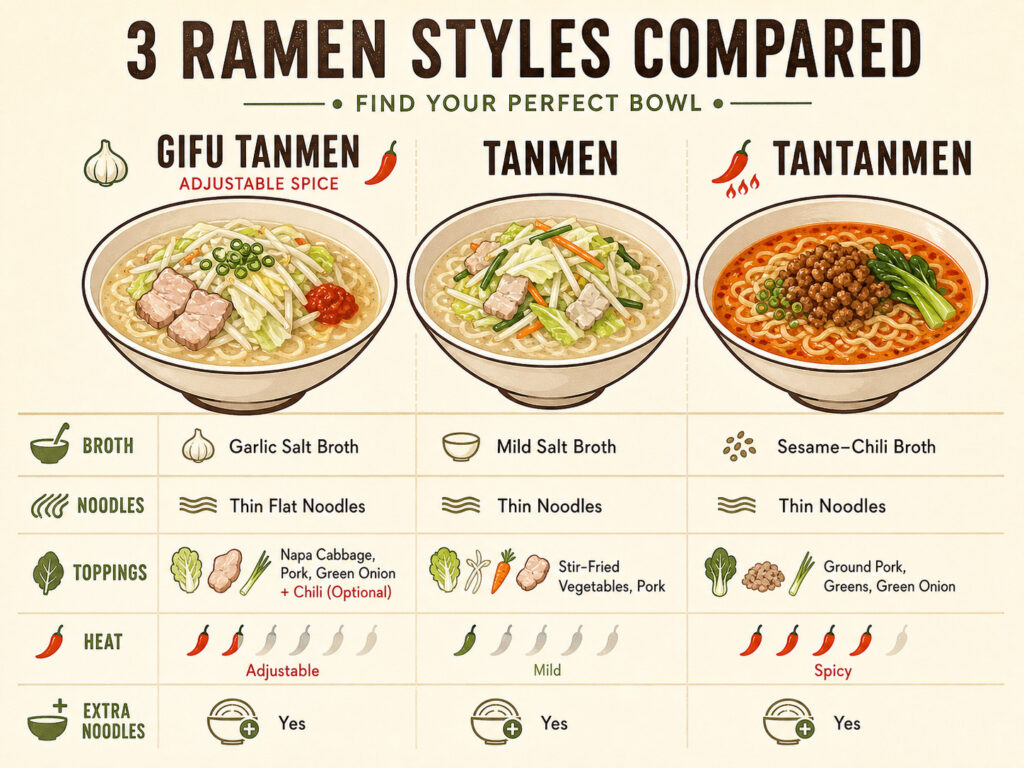
Many first-time visitors mix up these three names, and honestly, that is fair. They sound nearly identical. However, the bowls differ far more than the spelling suggests. The table below sorts out the confusion at a glance.
| Gifu Tanmen | Kanto-style Tanmen | Tantanmen | |
|---|---|---|---|
| Origin | Aichi/Gifu, 2009 | Kanto region, postwar era | Japanese take on Sichuan dan dan noodles |
| Soup base | Salt broth with strong garlic and pork umami | Mild salt broth | Sesame paste with chili oil |
| Noodles | Thin, flat, firm | Medium to thick | Medium, often straight |
| Main toppings | Simmered pork and napa cabbage | Stir-fried mixed vegetables | Spiced ground pork and greens |
| Spiciness | Fully adjustable, 0 to 5 and beyond | Basically none | Spicy by default |
| Extra noodles (kaedama) | Yes | Rare | Rare |
In short, Kanto tanmen celebrates vegetables in a gentle broth. Tantanmen leans on sesame and chili heat. Gifu Tanmen sits somewhere else entirely, built on garlic, pork sweetness, and optional fire. For a contrast with heavier pork broths, see our guide to Tonkotsu Ramen. Compared with that creamy style, Gifu Tanmen feels lighter yet somehow more addictive.
How Gifu Tanmen Began
A Failing Stall in Aichi
The story starts in April 2009 in Inazawa City, Aichi Prefecture. A small food stall called Tanmen Senmonten Itaya opened there, serving a salt ramen once eaten as a staff meal. Sadly, almost nobody came. The Tokai region had no real tanmen culture at the time, and a mysterious stall attracted little trust.
The owner nearly gave up. Then, by chance, a suitable vacant shop appeared in Gifu City. He moved there and opened a proper storefront, reportedly deciding to quit for good if this attempt failed. It did not fail. Instead, lines formed, and the shop became a local sensation.
Why the Name Says Gifu, Not Aichi
Success brought rapid expansion across Aichi, Gifu, and Mie. In 2017, the company unified every branch under one name, Gifu Tanmen. According to the chain, the name shortens a Japanese phrase meaning “a tanmen of gratitude to the people of Gifu.” The customers of Gifu City saved the business, so the brand honors them permanently.
Here is the fun irony. The operating company sits in Ichinomiya, Aichi, and Aichi holds the most branches. A 2025 survey by a Japanese travel magazine counted 11 shops in Aichi, 9 in Gifu, and 2 in Mie. So an Aichi-born chain carries a Gifu name with pride. Local food identity rarely follows neat prefectural borders, much like Miso Katsu spreading far beyond Nagoya.
Gifu Tanmen Today
The chain keeps experimenting. During the pandemic, several branches introduced drive-through lanes, a rare move for ramen. Noodles and soup come in separate containers, so nothing turns soggy on the way home. Furthermore, a cup noodle version now appears in supermarkets across the region, and new shops have reached Toyama, Fukui, and Matsumoto in Nagano.
Researchers who study local gourmet culture note that dishes like this can strengthen regional attachment and draw repeat visitors. A 2024 conference paper on local gourmet branding found that awareness alone is not enough; people need easy chances to actually eat the dish. Gifu Tanmen, with its roadside shops and long hours, seems to understand that instinctively.
How to Order: Spice Levels and Toppings
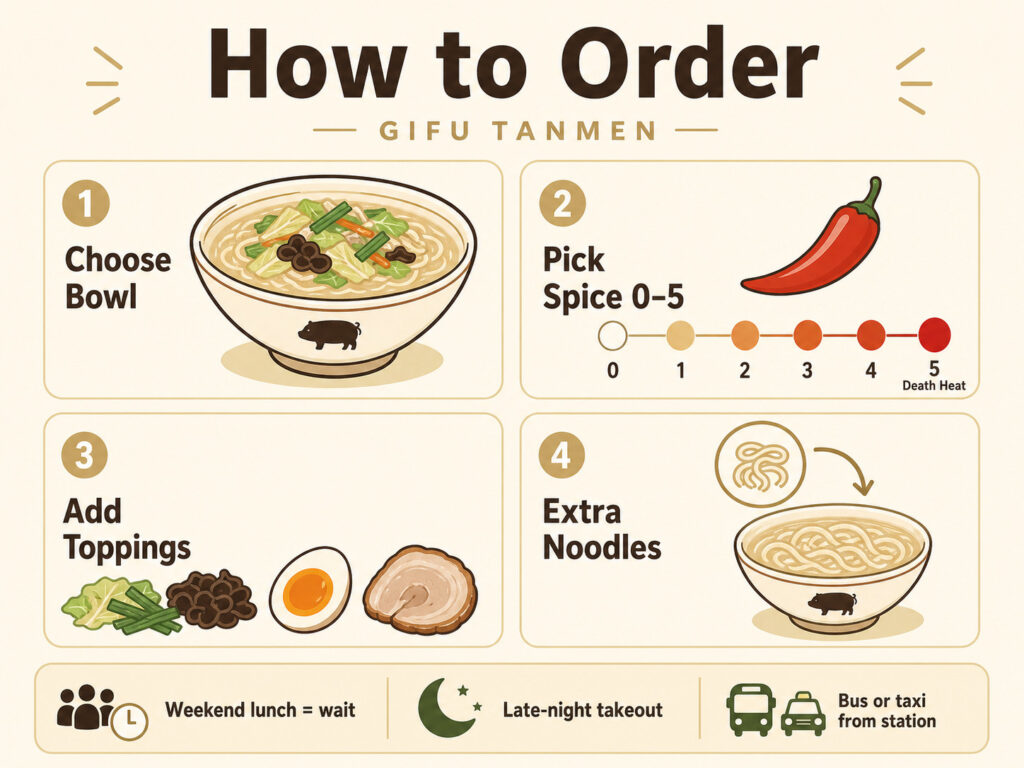
Ordering looks intimidating at first, but the system is simple. Follow these steps and you will pass as a regular.
- Choose your bowl. The standard Gifu Tanmen is the star. Sets with half-size fried rice or gyoza are popular, too.
- Pick a spice level. Levels 0 to 5 cost nothing extra. Level 1 or 2 suits most first-timers. Extreme “death-level” heat exists for the brave, at a small charge.
- Add toppings. Extra vegetables rank as the most-loved option. Seasoned egg, extra pork, and even quirky picks like green juice powder or protein appear on some menus.
- Consider kaedama. Like Hakata-style shops, you can order a refill of noodles for your leftover soup.
One honest warning from experience. The chili tare tastes sour and bright, and it changes the whole bowl, not just the heat. Therefore, start low and adjust at the table. I jumped straight to level 3 once and spent the meal sweating happily, though slightly regretting my confidence.
Where to Eat Gifu Tanmen
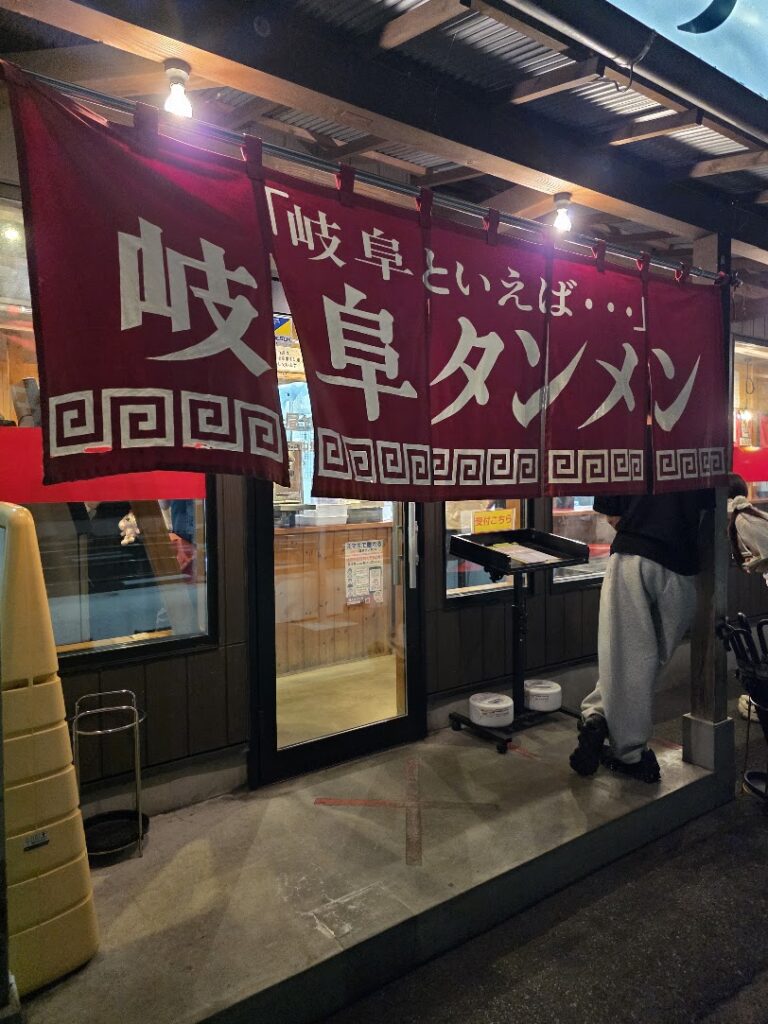
Most branches line suburban roads rather than station fronts, which reflects the region’s car culture. The Gifu main shop in Gifu City remains the symbolic home, since the brand’s success began there. Around Nagoya, shops in Ichinomiya, Inazawa, and the city’s port area serve the same menu. If you are exploring the area’s food scene anyway, our Nagoya food guide pairs well with a tanmen stop.
Expect a wait at lunchtime on weekends. Many shops run long hours, and some sell takeout sets late into the night. Travelers without a car can still reach a few branches by bus or taxi from Gifu Station. Alternatively, grab the cup noodle version as a souvenir and test the flavor at your hotel first.
Conclusion
Gifu Tanmen proves that a local ramen does not need a century of history to earn love. Born from a failing Aichi stall in 2009, rescued by Gifu customers, and named in their honor, it now defines a small corner of Japanese noodle culture. The garlicky salt broth, sweet cabbage, and adjustable heat make every visit slightly different.
If your trip passes through Nagoya or Gifu, set aside one lunch for it. Order level 1, add extra vegetables, and save room for kaedama. Gifu already offers quiet culinary treasures like Moroko Sushi, and this bowl adds a loud, modern one. Chances are, you will start planning a second visit before the soup runs out.
Gifu Tanmen FAQ
What is Gifu Tanmen?
Gifu Tanmen is a salt-based local ramen from central Japan. The soup combines strong garlic with the sweetness of simmered pork and napa cabbage. A regional chain of the same name serves it across the Tokai area. Diners can adjust the spice level freely from 0 to 5.
Is Gifu Tanmen actually from Gifu?
Not originally. The first shop opened as a food stall in Inazawa City, Aichi, in 2009. The business only succeeded after moving to Gifu City. Locals in both prefectures now claim it warmly.
Why is it called Gifu Tanmen if it started in Aichi?
The name expresses gratitude. Customers in Gifu City saved the struggling shop from closure. The brand name shortens a phrase meaning “a tanmen of thanks to the people of Gifu.” All branches adopted this name in 2017.
Is Gifu Tanmen spicy?
Only if you want it to be. Level 0 contains no heat at all and works well for children. Levels 1 and 2 add a gentle, sour-spicy kick from the house chili tare. Higher levels bring serious fire, so climb gradually.
How is Gifu Tanmen different from tantanmen?
The two share similar names but little else. Tantanmen uses sesame paste, chili oil, and spiced ground pork, following its Sichuan roots. Gifu Tanmen builds on a garlicky salt broth with pork and napa cabbage. Its default flavor is savory-sweet rather than spicy.
What toppings should I try first?
Extra vegetables are the most popular choice among regulars. The added napa cabbage deepens the soup’s natural sweetness. A seasoned egg makes a reliable second pick. Adventurous eaters can explore unusual options like protein powder at some branches.
Can I order extra noodles?
Yes, the shops offer a kaedama system. Staff bring a fresh serving of noodles for your remaining soup. This custom comes from Hakata-style ramen culture in Fukuoka. The thin, firm noodles suit the system perfectly.
Where can I eat Gifu Tanmen?
Roughly 20 branches operate across Aichi, Gifu, and Mie, mostly along suburban roads. The Gifu main shop in Gifu City holds special status as the birthplace of the brand’s success. Newer branches have opened in Toyama, Fukui, and Matsumoto. Check the official store list before visiting.
Can I try the flavor without visiting a shop?
Yes, to a degree. A licensed cup noodle version sells in supermarkets around the Tokai region. Several branches also offer takeout with noodles and soup packed separately. Still, the freshly made bowl delivers a stronger garlic punch than any packaged version.
References
- Gifu Tanmen Official Website, Top page, https://www.gifu-tanmen.com/ (Surveyed: July 2026)
- Gifu Tanmen Official Website, Menu page, https://gifu-tanmen.com/01_gifutan/ (Surveyed: July 2026)
- Japan Ramen Association, Japan Local Ramen List, https://ramen-kyokai.jp/gotouchi_ramen_map/ (Surveyed: July 2026)
- Nippon Tabi Magazine, Why is it called Gifu Tanmen despite most shops being in Aichi?, https://tabi-mag.jp/gifu-tangmen/ (Surveyed: July 2026)
- GAZOO (Toyota Motor Corporation), Ramen goes drive-through: buying Aichi-born Gifu Tanmen by car, https://gazoo.com/column/daily/21/03/28/ (Surveyed: July 2026)
- J-STAGE (Japan Institute of Tourism Research Proceedings, Vol. 39, 2024), A Study on Enhancing Regional Attachment through Local Gourmet Foods, https://www.jstage.jst.go.jp/article/jitrproceedings/39/0/39_147/_article/-char/ja/ (Surveyed: July 2026)
Related Articles
- Hakata Ramen (博多ラーメン) (Surveyed: July 2026)
- Tonkotsu Ramen (豚骨ラーメン) (Surveyed: July 2026)
- Miso Katsu (味噌カツ) (Surveyed: July 2026)
- Moroko Sushi (もろこ寿司) (Surveyed: July 2026)
- Food in Nagoya: Savor the Authentic Taste (Surveyed: July 2026)




Comments