At some point in every anime and manga, the action stops so that the character can eat something. Have you noticed the food is never too creative? Everyone eats the same few things. Ramen, bento, meat skewers, rinse and repeat. You hardly even notice the food itself because you’ve gotten used to seeing the same thing over and over.
Japan has 20.000+ ramen shops. Ramen is one of the most accessible and recognizable meals, surpassing even sushi. – Statista
Why is it like that? Japanese creators are famous for their creativity, so why can’t they be more creative when it comes to food?
Actually, the reason for that is pretty practical. All of these foods you see all the time are visual codes of sorts. A rice ball might tell you what the character’s financial situation is or even the current season.
Food is an important detail, but it’s also there to make fiction feel more real.
TOC
How Food Builds Character Without Explaining It
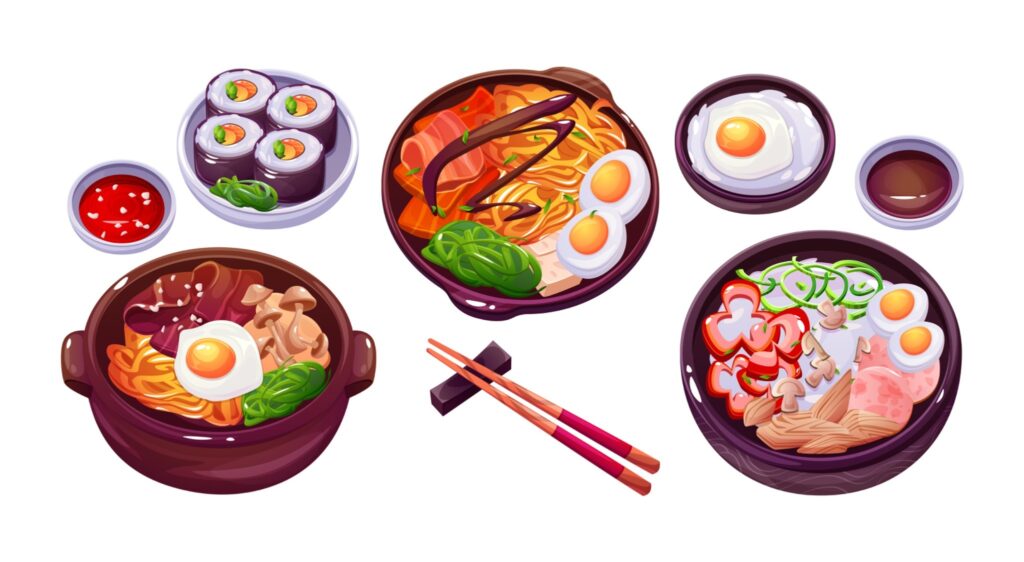
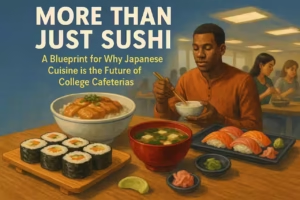
A variety of Japanese dishes including ramen, sushi, and side condiments, showcasing authentic Japanese cuisine.
You can learn some things just by watching someone eat.
Let’s say a character just woke up and arranged a little octopus sausage and flower-shaped carrots in a bento box. You might notice how nice it is of them to wake up early and that they’re probably the kind of person who cares for others. Now compare that to another character who tears open a cup of instant noodles in a dingy, dimly lit room. That’s probably someone who lives alone and whose life isn’t too pleasant.
Japan’s bento market is worth north of ¥5 trillion (JPY) annually. – Statista
Nobody said anything specific, but you see how things are just by looking at the scene and the food.
Now take sharing food as an example.
If a character offers their snacks to others, they’re most likely generous and warm. On the other hand, if they always eat alone, then it’s probably because they don’t have many (if any) friends. It all speaks volumes, and the funny thing is that speaking doesn’t even have to be involved.
These little habits say a lot. You can guess someone’s mood, financial situation, emotional state, traits, and so on. Of course, dialogue is important, as well, but food and details related to the culture in general make the story what it is.
Names also have meaning. You’ll find plenty of resources stating that Japanese male names tie into the way naming traditions work. You’ll see plenty of Japanese names that are rooted in foods.
Here are a couple of examples:
Minoru – comes from fruit, harvest
Makoto – grain
Yuzuru – (yuzu) citrus fruit
Kai – mustard plant
Momotaro – peach
Kuri – chestnut
These are just a handful of examples. If you’re a fan of anime and/or manga, you’ll be very familiar with most of these names, knowing at least one protagonist, villain, or a memorable side character that stuck with you.
If you look up Japanese male (and female) names – using one of these name generators is a great tool for this – you’ll find there’s dozens more.
Why Some Foods Appear Again and Again Across Different Stories
There are some dishes you see so often in anime and manga that you start to expect them. Rice balls, ramen, grilled fish, and others you’ve seen so many times.
The avg. person in Japan consumes 50+ kg of rice each year. – Japan Ministry of Agriculture
This has nothing to do with creators being lazy, so let’s see why that happens.
Family Meals Show Relationships More Than Dialogue Does
If you watch a family sit together to eat, it tells you everything about how they get along. Nobody has to say “I love you” because you see it in the way they pass food among each other, in how a mom packs a lunch, or in how a kid sets out chopsticks.
If the character eats alone, though, and all they have in front of them is a single bowl of miso soup, it says something about the atmosphere in the home.
Japan has recognized 24 (traditional) seasonal divisions called ‘sekki’. – Japan National Tourism Organization
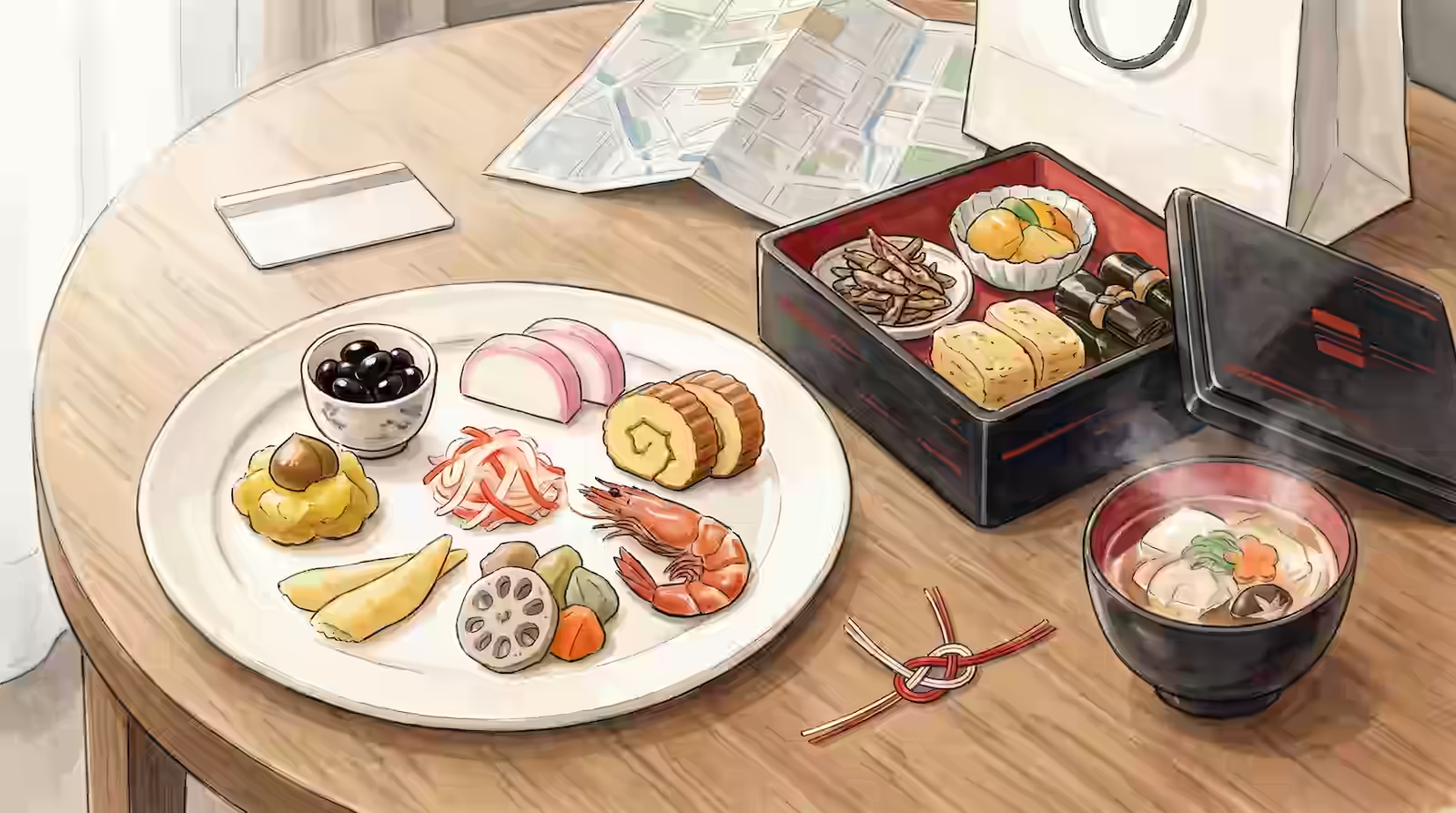
Naturally, creators use this to show which season it is without having to mention it specifically. Sakura mochi and bento boxes mean it’s cherry blossom season, and cold soba noodles and shaved ice mean it’s summer. Fall shows up with roasted sweet potatoes, and winter means steaming bowls of oden or hot pot.
When you see any of these, you instantly know what season it is, which is important for context.
Everyday Convenience Foods Make Fiction Feel More Real
You’ve probably noticed that not every meal is special, and it doesn’t have to be. Food from the convenience store shows up all the time. You’ll see lots of onigiri, corn soup picked up from a vending machine, and bags of melon pan.
Japan has 55,000+ convenience stores (konbini), which make ready-to-eat foods (e.g., onigiri, bento, ramen, etc.). – Japan Franchise Association
This is how the story shows it’s rooted in real life instead of a fantasy. It works particularly well for Japanese audiences because this feels so familiar to them.
Conclusion
In Japan, food is almost never just food.
If someone took the time and effort to show a character eating their lunch, you best believe that the food you see means something. Maybe it’s not anything huge, but it’s still part of the story. Remember Pokémon, with Brock making rice balls for the gang? That’s the perfect example of simple everyday food, and it’s ideal for eating on the go.
Pay attention to details like these because it will change how you experience the story.
There’s meaning to everything you see because why else would anyone go through the trouble of creating it?
Ryo Iwa is the founder and editor of foodinjapan.org. Born and raised in Japan, he writes from regional travel, market visits, and Japanese-language primary sources that rarely reach English readers, including brewing institute publications and industry glossaries. Where a figure cannot be traced to a source, the article says so.
He has been a Google Maps Local Guide for over 10 years, with more than 1,800 reviews and over 41,000 photos viewed hundreds of millions of times. He previously spent two decades as an IT consultant in Japan, the US, and the UK.












Comments