



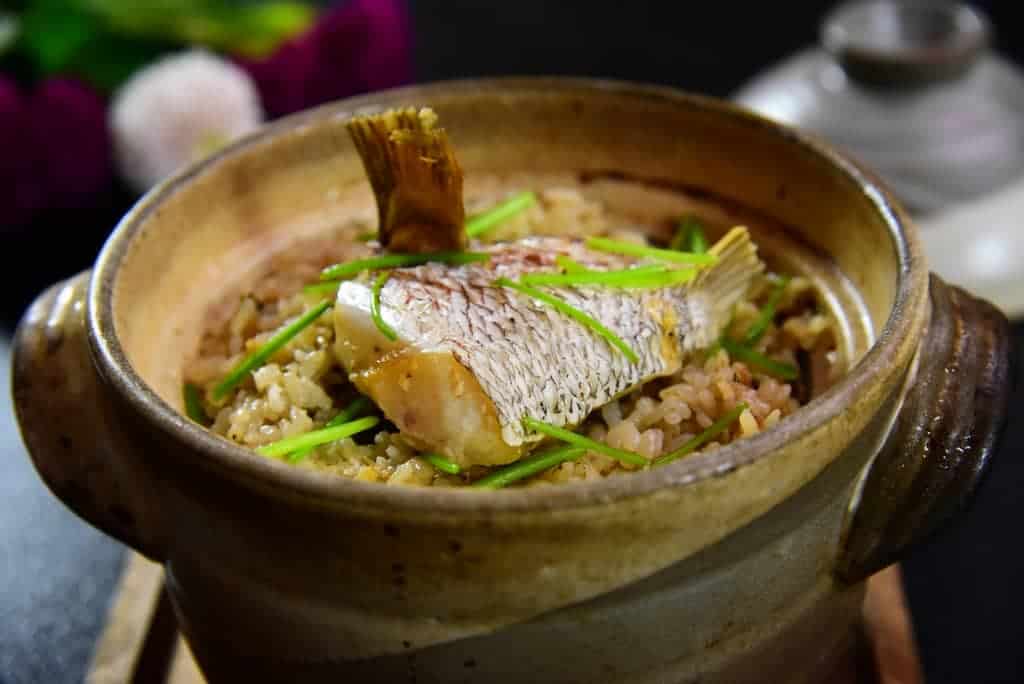
In Japan, the combination of fish and rice has become very common but still plays a very important role in Japanese food culture. You may know and eat Tai (sea bream) sometimes. However, do you know what is the meaning of this fish to Japanese people? Today, we will introduce you about it as well as a celebratory dish called “Tai meshi” (鯛めし).
What is Tai meshi?
Definition of Tai meshi
Tai meshi (鯛めし) is a Japanese dish that combines tai (sea bream) and rice (めし). The two ingredients are representative foods that have been familiar to Japanese people since ancient times and there are plenty of dishes of them all over the country such as sushi or sashimi. Beside this, tai meshi is a suitable for celebratory meals but still easy to make at home and enjoy with family and friends.
Tai meshi is often known as local dish of Ehime prefecture. However, even in this prefecture, there are two types of Tai meshi called Hojo tai-meshi in Toyo (eastern Ehime) – Chuyo (central Ehime) and Uwajima tai-meshi in Nanyo (southern part of Ehime).
Two Dishes Hidden Under One Name
Tai meshi simply means sea bream with rice. What surprises many people, though, is that Ehime prefecture alone has two distinct versions that taste nothing alike. Hojo-style simmers a whole fish into seasoned rice, pushing rich umami into every grain. Uwajima-style places raw sea bream over rice with egg sauce, which honestly caught me off guard the first time I tried it.
That First Breath When the Lid Lifts
Sea bream has long symbolized celebration in Japan, yet tai meshi is approachable enough to prepare at home and share with people you care about. A soft, oceanic warmth rises with the steam when the lid lifts. Faintly sweet, surprisingly delicate. It’s the kind of scent that makes you lean in without thinking.
About Tai (sea bream)
Sea bream is a special fish for Japanese people. People found traces of this fish in Jomon period’s ruins throughout Japan. After that, sea bream was used to contribute to the ancient court. In the Kamakura period, when the samurai came to power, the use of tai became more and more popular thanks to its good-looking appearance. Coming to the Muromachi period, Japanese people began to eat sea bream as a high-quality dish. All ancient documents such as “Kojiki”, “Nihon Shoki”, which are said to be “the oldest books in Japan” or literary works such as “Manyoshu”, “Kokinshu” are said to have the appearance of this special fish.
After the introduction of Buddhism and Confucianism, the custom of respecting the color red as a lucky color entered Japan. In some areas, it is even thought that they were objects of faith. A lot of factors has made it so popular among Japanese, one of it is the name of sea bream “tai” is somehow similar to the word “medetai” (happy) so people consider it as something that brings good luck.
Two types of tai-meshi in Ehime
As mentioned below, in this section, we would like to introduce more about the two types of sea bream rice. Let’s see what are the differences between the two flavors unique only to Ehime!
Hojo tai-meshi (北条鯛めし)
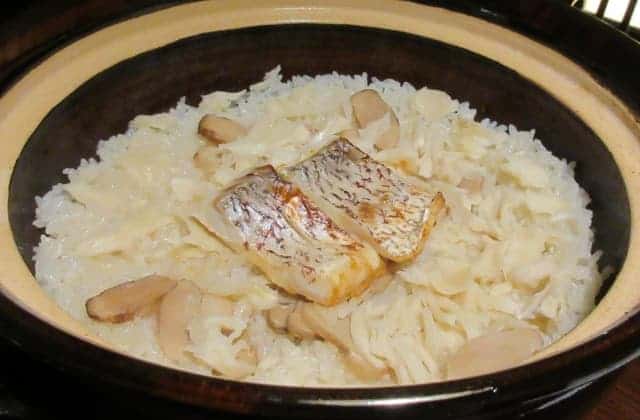
Features of Hojo sea bream rice
Hojo city (北条市) is a city located in the Chuyo (central) region of Ehime prefecture. On January 1, 2005, it was merged into the expanded city of Matsuyama City along with Nakajima-chou (Onsen district).
Since ancient times, Hojo tai-meshi has been popular as a local dish of Hojo city (modern Matsuyama city). The feature of the dish is that a whole grilled sea bream is cooked together with rice. To keep the fresh taste, before cooking, there is no need to fry the fish or add vegetables such burdock or carrots.
After slowly cooking in a pot, scrambled fish fillet will be mixed it together with cooked rice. Hojo tai-meshi can be found at stores in Hojo area, including long-established restaurants with a history of over 150 years.
Origin
Empress Jingu (Jingū-kōgō), on her way to leave for campaign in Korea, she stopped at Kashima and prayed to the Kashima Myojin shrine for victory in battle. The fishermen of Kazehayaura offered her fresh sea bream caught in the nearby waters. The Empress gladly accepted it as a good omen, and when she cooked rice and placed sea bream on top, she was very surprised by the good taste of it.
This is said to be the origin of Hojo tai-meshi, which is a specialty of the Hojo area. Therefore, in Hojo, this food is also a special dish served on celebrations like New Year’s Eve.
Uwajima Taimeshi (宇和島鯛めし)
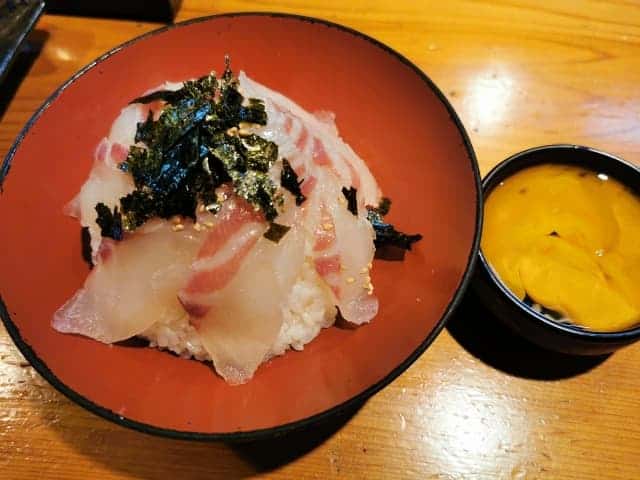
Feature of Uwajima sea bream rice
In Nanyo (southern) region which is centered on Uwajima city, sea bream in sashimi form is served with steamed rice along with special sauce, raw egg and condiments. This dish has become signature of Nanyo region and popular with the name Uwajima tai-meshi. In southern part (Nanyo) of Ehime prefecture, there is a dish called hyuga-meshi (ひゅうが飯) which is seasoned sashimi served on rice while tai-meshi is the version of sea bream fish in form of sashimi.
Origin
The origin of Uwajima Taimeshi is a dish called Kaizokumeshi (pirate’s rice) or ryoushi meshi (fishermen’s food) that was often eaten by the Iyo naval forces who were active mainly on Hiburi island from the period of Nothern and Southern Dynasties to the Edo period.
If you find this dish interesting, click here for more information.
How to make Taimeshi?
Recipe
| Ingredients | (5-6 servings) |
| Sea bream | 1 |
| Ginger | 2-3 slices |
| Konbu | 10×5 cm |
| Rice | 450g |
| Water | 480cc |
| Salt | Appropriate amount |
| Soy sauce | 3 tbsp |
| Sake | 3 tbsp |
| Mirin | 1 tbsp |
How to make the delicious Taimeshi
How to make Hojo sea bream rice
- Put 480cc of water and kombu seaweed in an earthenware pot and leave it there for about 30 minutes.
- Put the rice in a colander and also leave it for about 30 minutes.
- Sprinkle salt all over the fish and let it sit for about 10 minutes.
- After 10 minutes, wipe off the moisture with kitchen paper.
- Cut the ginger into strips.
★ Remember to remove the guts, scales and gills from the sea bream. If you find it difficult for you to do by yourself, you should ask the fisher to do it for you at the fish market.
- Take out the kelp from the earthenware pot and add soy sauce, sake, and mirin.
- Put the rice into the earthernware pot, rehydrate the kelp, and place the sea bream on top.
- Sprinkle with ginger, cover with a lid and cook.
- Place the pot on the stove under medium heat. When it comes to a boil, reduce the heat to low and cook for about 12 minutes. Then turn off the stove and let it steam for 10 minutes.
- Check if the rice boils after 10 minutes.
- Take out the kelp and remove the fish’s bones.
- Mix and sprinkle green onions.
- Ready to serve! Itadakimasu!
SOME TIPS FOR A DELICIOUS DISH
The amount of water should be 480cc. This amount of water will go well with the seasonings as the fish sea bream itself have some water inside it.
Restaurants
Marumizu (丸水)
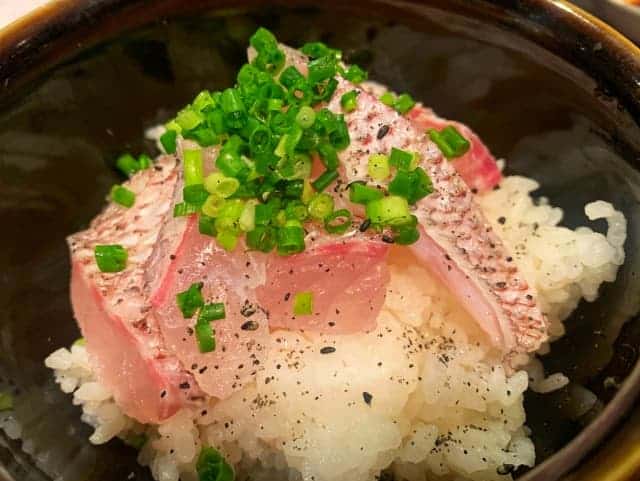
This is a long-established famous restaurant of Uwajima tai-meshi in Ehime. There is a line waiting in front of the restaurant during dinner time, but Uwajima sea bream rice is like Ehime’s fast food. The cooking time is fast, and it doesn’t take long to finish eating, so even if you line up, you can enter the store without waiting too long.
All the dishes here are very impressive with the fresh taste and well-seasoning sauce. Beside the tai-meshi, there are also local Ehime sake so make sure to try the excellent taimeshi dish with the local wine!
Akika (秋嘉)
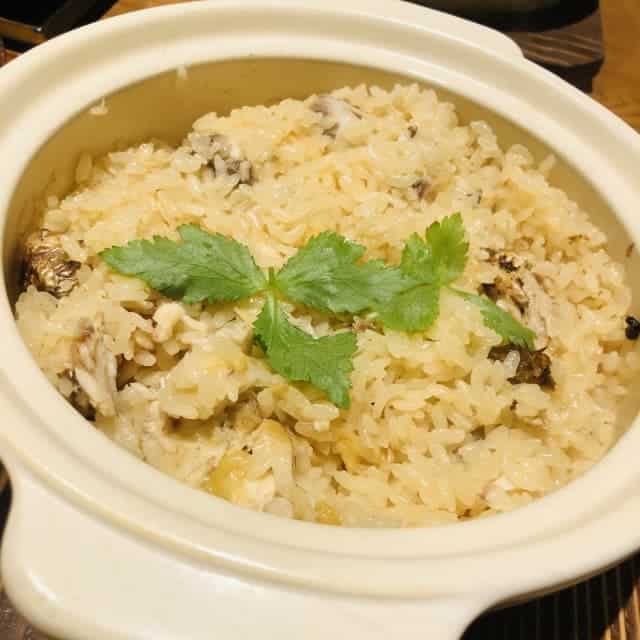
This is also a famous taimeshi restaurant in Matsuyama city. The signature menu of the store is “Matsuyama taimeshi rice”, along with uwajima tai-meshi and tai-meshi somen. The features of this restaurant are that you can enjoy set meal with tempura and sashimi using local cuisine and seasonal vegetables. Hurry up and try their amazing dishes! Details are as below:
Takeaway
Tai (sea bream) has long placed an importan role in Japanese culture, including food culture. It appears in so many popular dishes such as sushi, sashimi, etc but if you want to try anything different, what about Tai-meshi, a local specialty of Ehime prefecture. In Japan, people often eat this dish in celebration such as New Year’s Eve with the belief that it can bring good luck. The interesting thing is that even in Ehime prefecture, you can find two different styles of this dish: Hojo sea bream rice and Uwajima sea bream rice. Even if you do not have a chance to eat the original taste in Ehime, what about trying our recipe at home?! Let’s go and send us our result!
There are so many more Japanese rice dishes. Click here to find out!
Ehime Taimeshi (Sea Bream Rice) FAQ
What is Taimeshi?
It is a famous local dish from Ehime Prefecture featuring sea bream (Tai) served with rice.
Are there different styles?
Yes. Ehime proudly offers two completely different styles: the cooked Matsuyama style and the raw Uwajima style.
What is the Matsuyama style?
Chefs cook a whole sea bream together with rice in an earthen clay pot using savory kelp broth.
What is the Uwajima style?
Cooks marinate fresh sea bream sashimi in a sauce of raw egg and soy sauce, then pour it over hot rice.
Why is Ehime famous for it?
Fishermen catch the freshest and highest-quality sea bream in the nutrient-rich Seto Inland Sea surrounding Ehime.
What does “Tai” symbolize?
Japanese people associate “Tai” with the word “Medetai” (auspicious), making it a lucky fish for celebrations.
Is it safe to eat the raw egg?
Yes. Japanese farmers maintain extremely strict hygiene standards, making raw eggs perfectly safe to eat.
How do I eat the Matsuyama style?
You flake the cooked fish, carefully remove the bones, mix the fluffy meat into the rice, and scoop it into your bowl.
How do I eat the Uwajima style?
You mix the raw egg and sauce, dip the sashimi slices into the mixture, and pour everything over your rice.
What does the cooked version taste like?
It tastes deeply savory. The rice absorbs all the umami-rich fish broth during the cooking process.
What does the raw version taste like?
It tastes rich and silky. The sweet soy sauce and creamy egg yolk perfectly complement the firm sashimi.
Are there bones in the dish?
The raw Uwajima style has no bones. The cooked Matsuyama style contains bones, though many restaurants debone it for you.
What condiments do they use?
Diners usually sprinkle sesame seeds, chopped green onions, nori seaweed, and shiso leaves on top of the dish.
When is the best season to eat it?
Fishermen catch the fattiest sea bream in spring (called “Sakura Dai”) and autumn (called “Momiji Dai”).
Can I buy it as a train bento (Ekiben)?
Yes. Major train stations in Ehime sell delicious bento boxes featuring the cooked Matsuyama-style Taimeshi.




Comments