


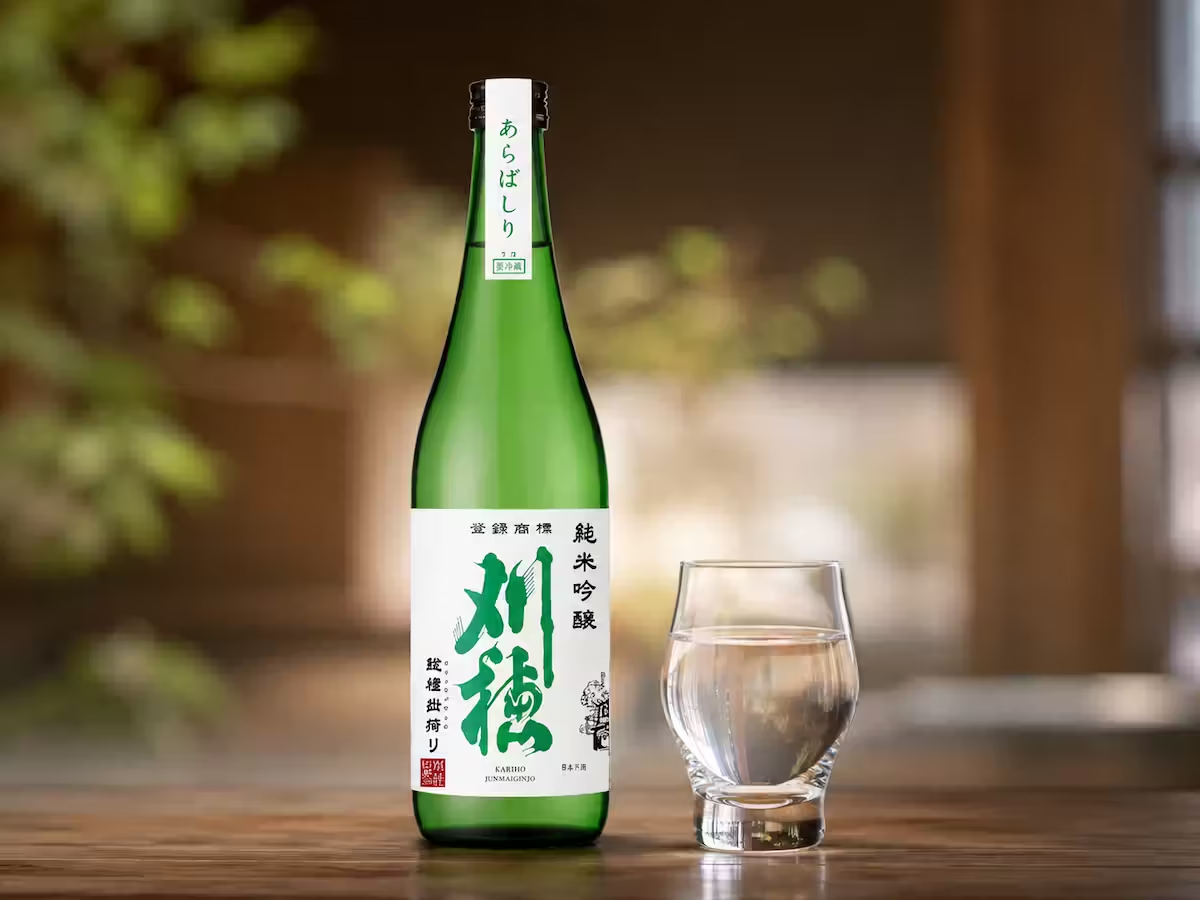
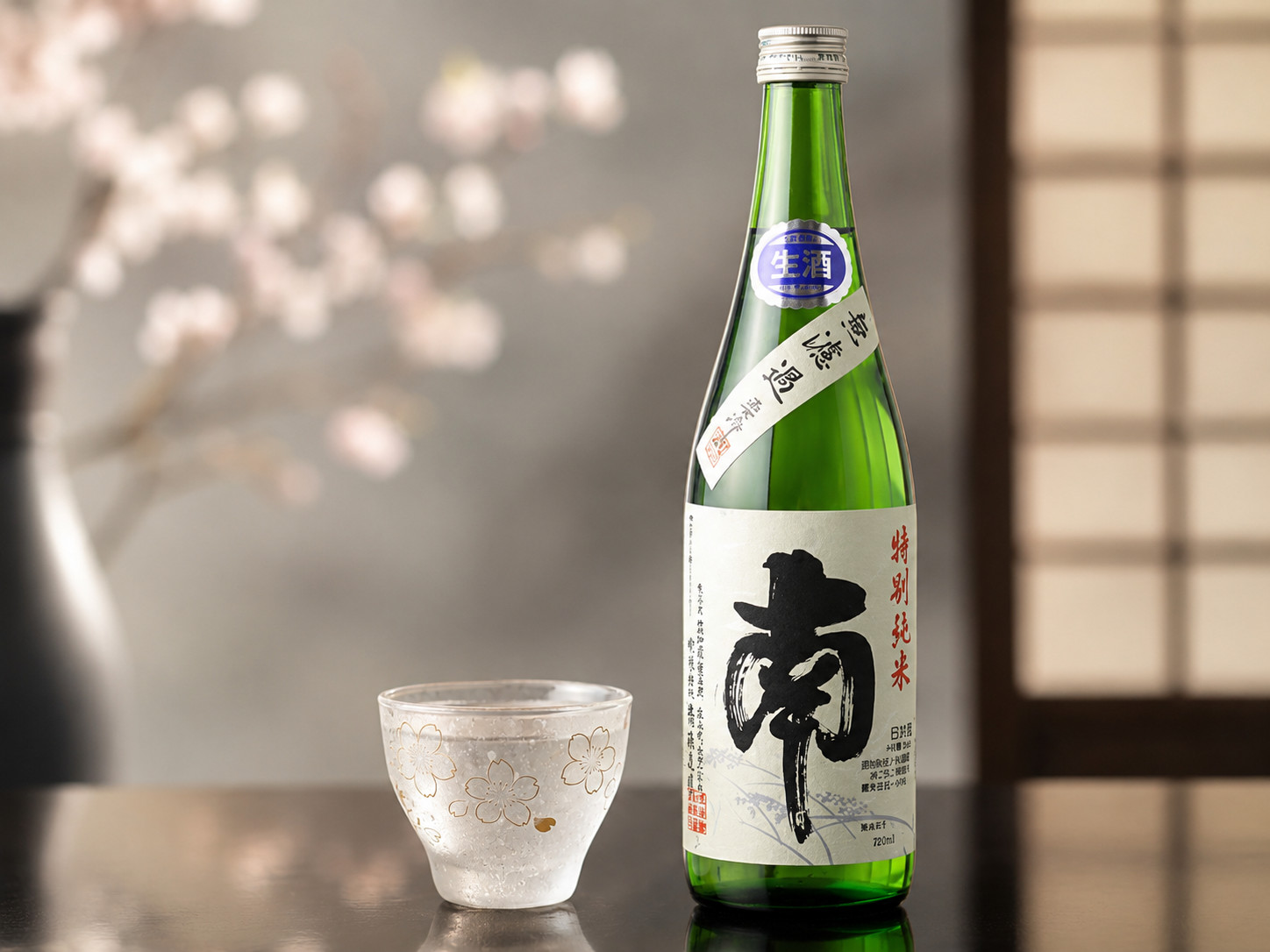
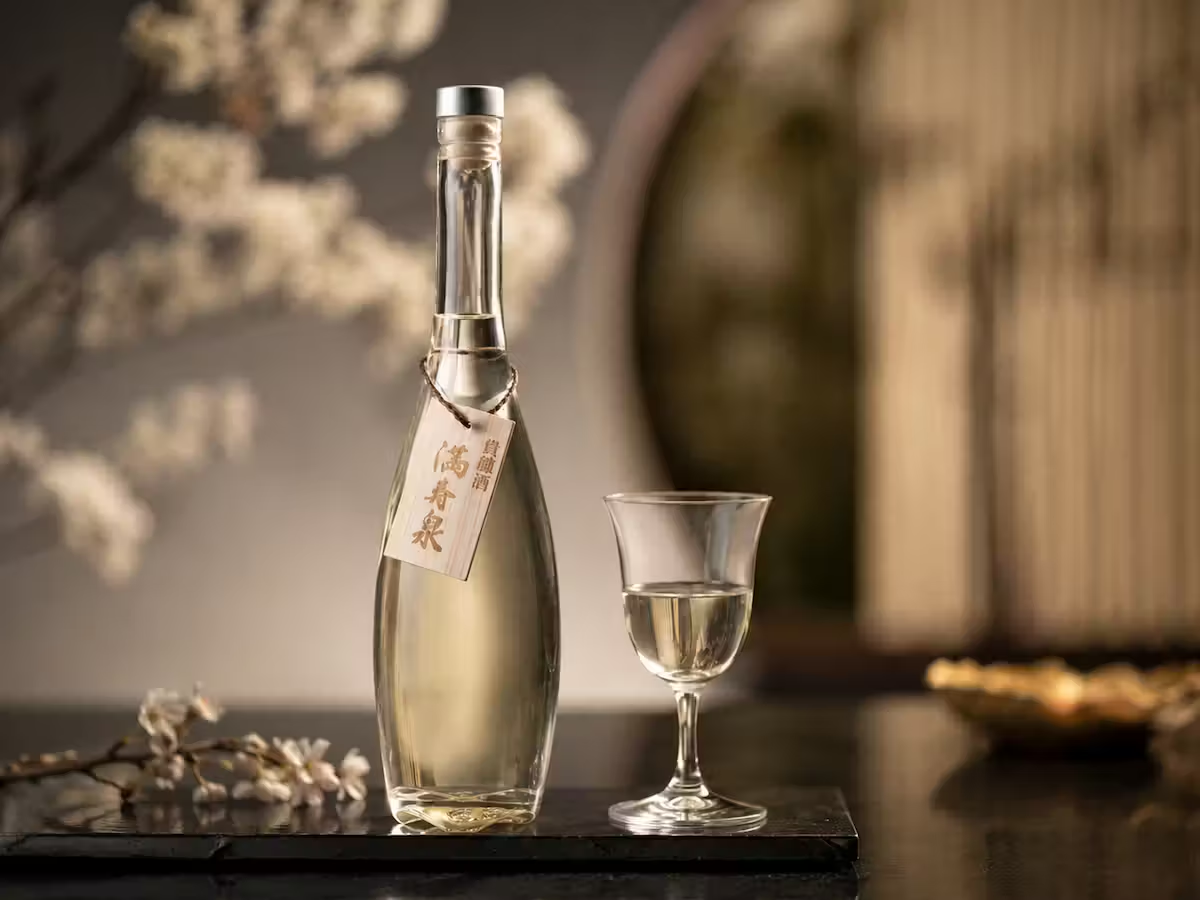


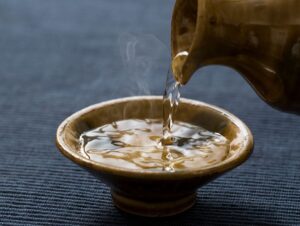
I first tried muroka sake at a small bar in Osaka. The glass looked slightly golden, not perfectly clear. I paused for a moment. Was this normal? Then I took a sip, and the answer came quickly. The flavor felt wider, deeper, and surprisingly natural.
Many people expect Japanese sake to be crystal clear. That image is common, but it is not the whole story. Unfiltered sake, especially muroka, shows another side. It feels more direct, almost like tasting the raw intention of the brewer.
If you want to understand fresh sake with deeper umami, this style is a great place to start.
What Is Muroka?
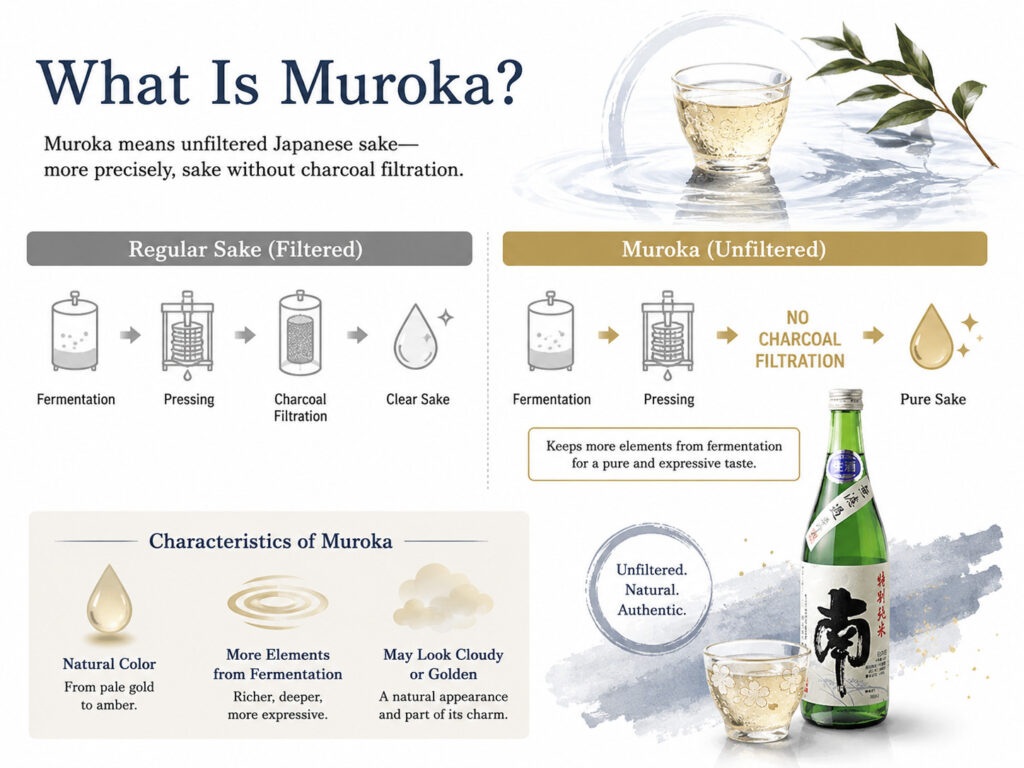
So, what is muroka? In simple terms, it refers to unfiltered Japanese sake, or more precisely, sake without charcoal filtration. Brewers still press the liquid from the mash, but they skip the final step that removes color and subtle compounds.
Because of that, muroka is often called sake without filtration. It keeps more elements from fermentation. These elements create a pure sake taste and a more expressive profile.
You might notice a natural color sake, ranging from pale gold to slightly amber. Sometimes it even looks like cloudy or golden sake, depending on how it is handled. That color can feel surprising at first, but it is part of the charm.
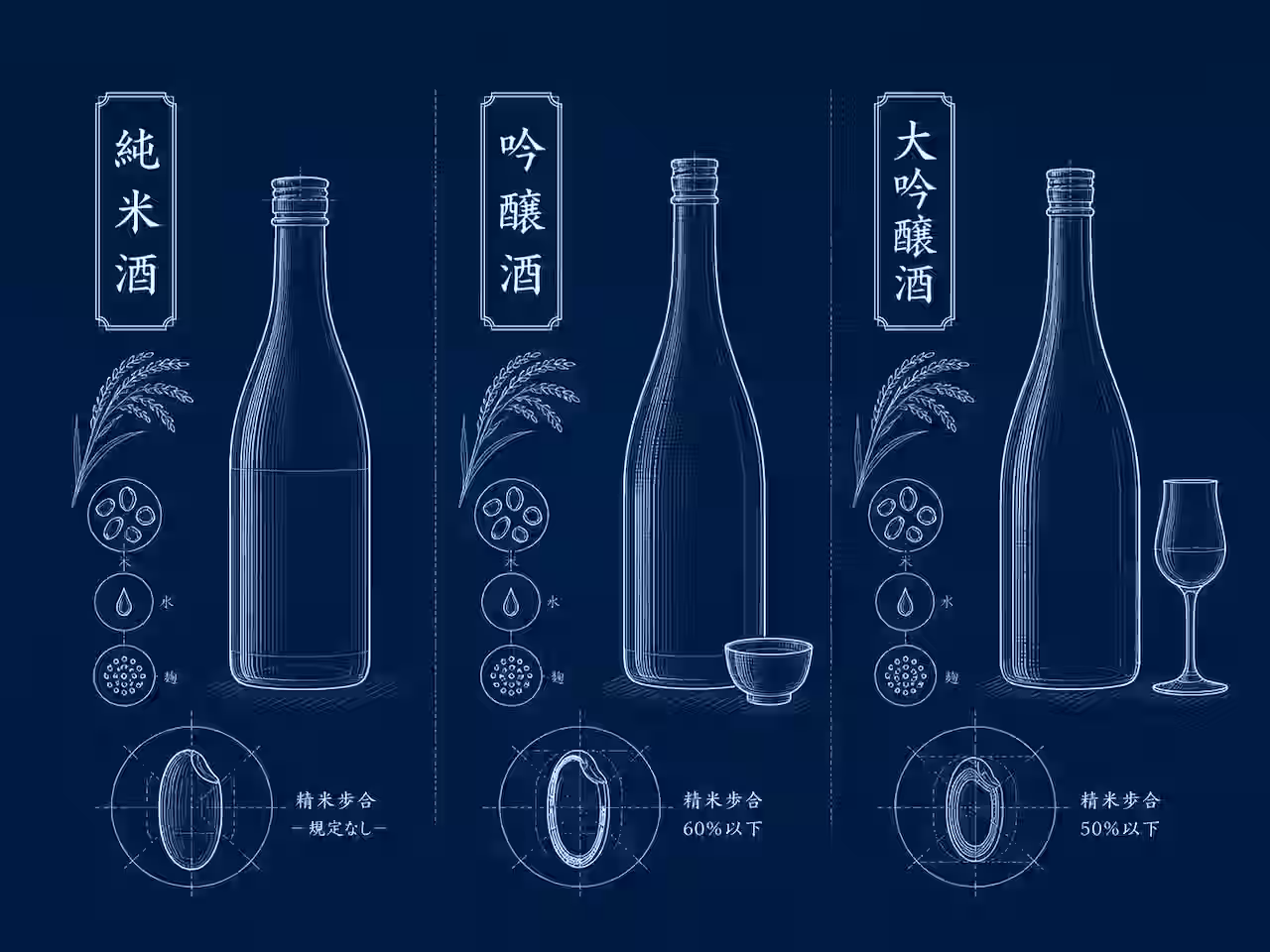
If you want a full overview of sake basics, you can explore Japanese sake. For classification details, sake classification is explained clearly there.
Why Unfiltered Sake Tastes Richer
A common question is simple. Why unfiltered sake tastes richer?
The answer lies in what remains in the liquid. Charcoal filtration usually removes color and some flavor elements. It helps create a clean and neutral taste. When brewers skip that step, more compounds stay behind.
This results in rich sake flavor and a stronger aroma. Many drinkers describe muroka as full-flavor sake with a broader texture. You may notice a slightly thicker mouthfeel. At the same time, the finish can still feel clean.
Here are key traits of muroka sake:
- Bold, unfiltered Japanese sake character
- Rich flavor, natural character from fermentation
- Fresh sake aroma, especially in young bottles
- A pure expression of rice
- Fuller body, cleaner finish when balanced
- For sake lovers who want more depth
Not every bottle tastes the same, though. Some feel powerful, while others remain elegant. That variation makes exploring muroka interesting, but also a bit unpredictable.
Muroka vs Filtered Sake
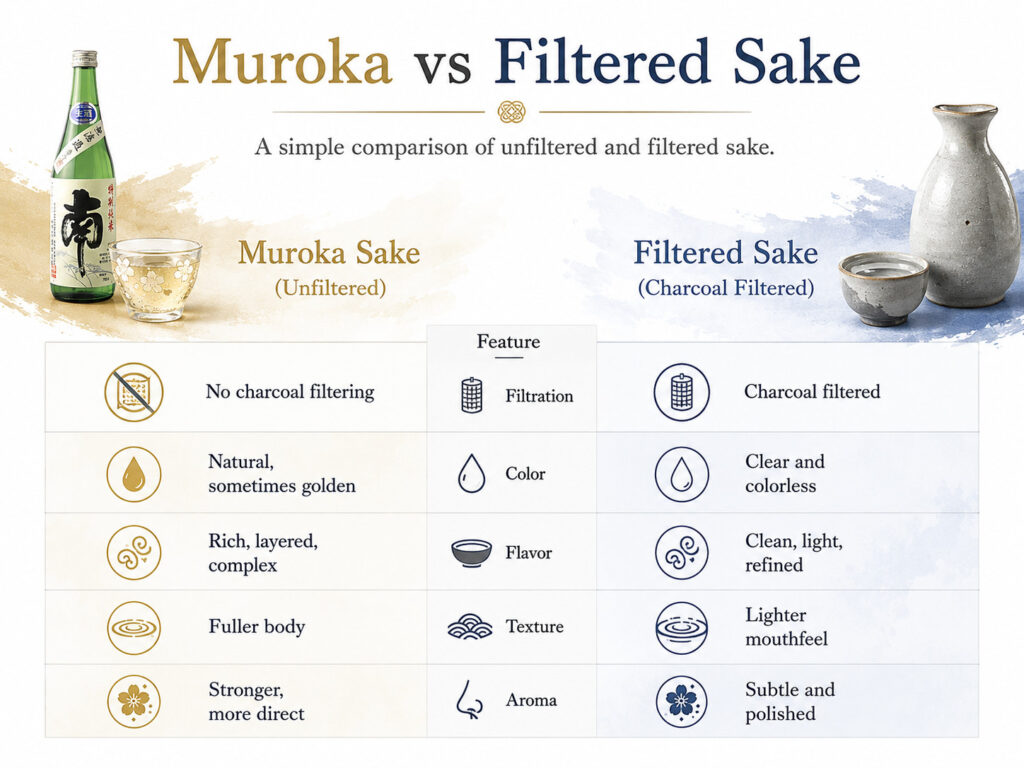
Many people wonder about the difference between muroka and filtered sake. A simple comparison helps clarify things.
| Feature | Muroka sake | Filtered sake |
|---|---|---|
| Filtration | No charcoal filtering | Charcoal filtered |
| Color | Natural, sometimes golden | Clear and colorless |
| Flavor | Rich, layered, complex | Clean, light, refined |
| Texture | Fuller body | Lighter mouthfeel |
| Aroma | Stronger, more direct | Subtle and polished |
If you enjoy delicate drinks, filtered sake works well. If you want sake with depth, muroka offers something more expressive.
Flavor and Aroma
When people talk about muroka sake flavor and aroma, texture often comes first. The liquid feels rounder and slightly heavier. It carries umami in a more noticeable way.
You may taste rice sweetness and gentle bitterness together. Some bottles show nutty, toasted, or cereal notes. Others bring soft fruit hints like apple or pear. It depends on the brewing style.
The most consistent feature is balance between power and smoothness. That is why many describe it as Japanese sake with deeper umami.
Muroka and Other Styles
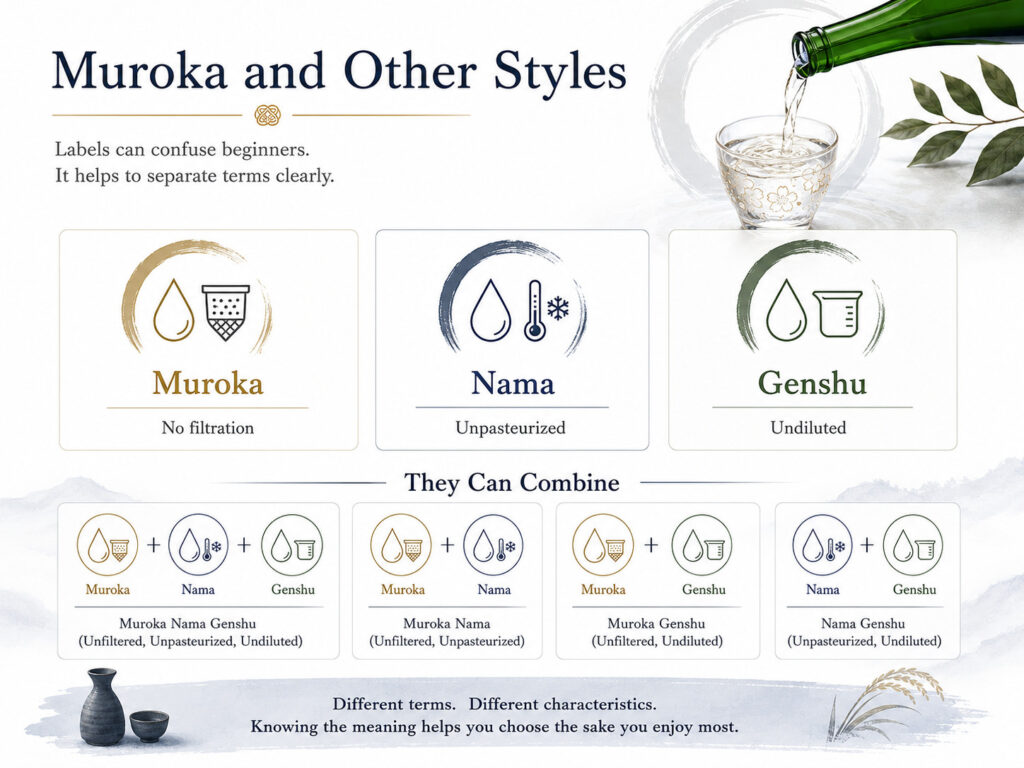
Labels can confuse beginners. It helps to separate terms clearly.
- Muroka means no filtration
- Nama means unpasteurized
- Genshu means undiluted
Sometimes these combine. For example, muroka nama genshu can taste intense. It often feels like fresh Japanese sake with strong character.
If you want to understand nama in more detail, check fresh sake (namazake). Comparing these styles helps you see how each process changes the result.
How to Drink Muroka Sake
Many people ask how to drink unfiltered Japanese sake. The answer is simple, but small choices matter.
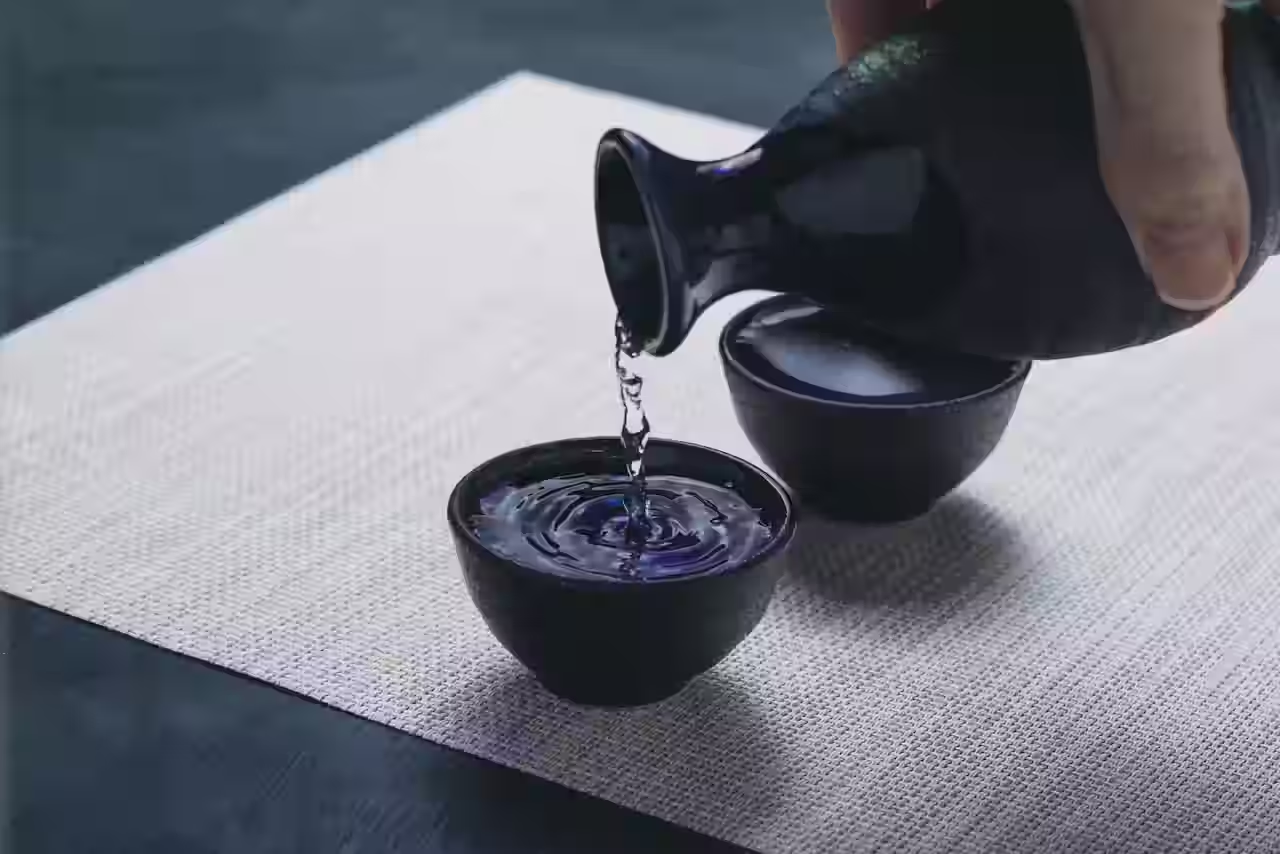
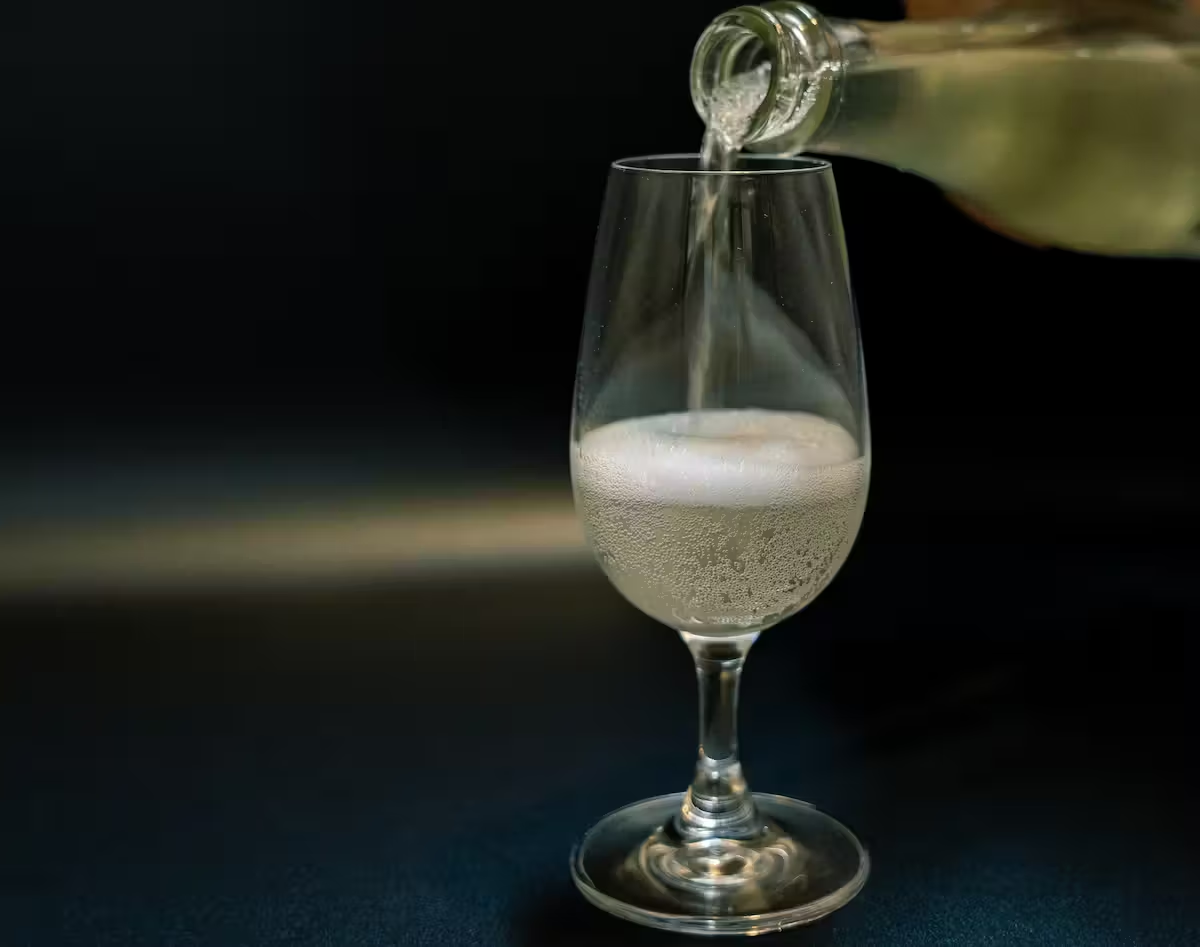
Start by chilling it slightly. Around 10°C works well. Pour into a glass that allows aroma to open. Wine glasses often work better than small cups.
Take one sip, then another. The second sip usually reveals more depth. Let it warm slightly in the glass. Sometimes the flavor becomes softer and rounder.
Muroka pairs beautifully with food. Try grilled fish, yakitori, or miso dishes. Fried foods also work well because the strong character balances oil. For a richer pairing idea, you can explore dishes like nigori-style sake pairings for contrast.
Storage Tips
Proper storage keeps unfiltered sake enjoyable.
- Store it in the fridge when possible
- Avoid light and heat
- Close the bottle tightly after opening
- Drink within a few days for best flavor
If the sake is also unpasteurized, treat it like fresh food. The flavor can change quickly, in good and bad ways.
History and Modern Appeal
Historically, sake was not always perfectly clear. Earlier methods often produced more color and variation. Over time, filtration became standard as technology improved.
Clarity became associated with quality. That trend shaped modern expectations.
Then something changed. Drinkers began searching for authenticity again. They wanted flavor, not just clarity. In that moment, artisanal Japanese sake like muroka gained attention.
Today, muroka represents both tradition and innovation. It shows how sake can evolve while staying connected to its roots.
Final Thoughts
Muroka sake offers something honest. It keeps more of what fermentation creates. That decision leads to full-flavor sake with character and depth.
It may feel unfamiliar at first. The color can surprise you. The taste can feel bold. Still, that is exactly the point.
If you want something safe, choose a filtered option. If you want discovery, muroka is worth trying.
It is not just alcohol. It feels like a small story in a glass. And sometimes, that is exactly what you are looking for.
Muroka Sake FAQ
What is Muroka Sake?
It represents a highly natural and robust style of Japanese rice wine. Brewers skip the active charcoal filtration step that standard commercial products undergo. This gentle handling preserves the original complex flavors, deep amber hues, and fresh aromas directly from the fermentation tank. Drinkers praise it for its raw, full-bodied character.
Where does Muroka Sake come from?
This rich style originates from craft breweries all across Japan. In the late 20th century, innovative brewmasters revived this traditional method to offer an alternative to highly processed, crystal-clear sakes. Today, almost every premium sake brewery produces a seasonal batch to showcase their raw craftsmanship.
What does Muroka Sake taste like?
It delivers an exceptionally bold, complex, and umami-rich flavor profile. You will experience a deep rice sweetness paired with a pleasantly robust and lingering finish. The texture feels noticeably heavier and more velvety on the tongue compared to standard varieties. Diners often compare its rich complexity to a full-bodied chardonnay or a light sherry.
Where can I buy Muroka Sake in Japan?
You will find these artisanal bottles at specialized liquor stores (jizake-ya) and premium department store basements. High-end izakayas and modern sake bars in major cities like Tokyo and Osaka also serve them by the glass. We recommend visiting regional breweries directly to taste the freshest seasonal releases.
How much does Muroka Sake cost?
A standard 720ml bottle typically costs between 1,500 and 3,500 yen. Prices vary depending on the specific brewery, the rice-milling ratio, and the rarity of the release. Since brewers target the premium market with this style, these bottles command a slightly higher price than standard table sakes.
Is Muroka Sake vegetarian or vegan friendly?
This traditional, unstripped beverage contains absolutely no animal products. Brewers craft the liquid using only premium sake rice, pure water, yeast, and koji mold. Vegans and vegetarians can safely enjoy this 100% plant-based drink alongside any meal.
What are the main ingredients in Muroka Sake?
The main ingredients include special sake rice, water, yeast, and koji mold. The natural, organic compounds remaining in the liquid give the drink its distinctive yellowish-amber hue and rich complexity. By avoiding carbon filtration, brewers allow these pure, raw elements to shine in your glass.
Can I make Muroka Sake at home?
You cannot legally brew this alcoholic beverage at home due to strict Japanese liquor laws. However, high-end bottle shops and online retailers stock these authentic releases year-round. Home cooks easily serve the cold liquid to pair with rich, savory dinners.
What is the difference between Muroka Sake and Nigorizake?
The main difference involves the presence of physical rice sediment. Nigorizake features a cloudy appearance because brewers use a coarse press to leave actual rice solids in the bottle. This non-charcoal-filtered variety, however, remains clear because brewers filter out the physical sediment while leaving the microscopic flavor compounds intact.
Is Muroka Sake popular outside Japan?
It enjoys rapidly growing popularity among international wine and spirit enthusiasts. Many high-end Japanese restaurants in North America, Europe, and Asia proudly feature these robust bottles on their menus. Global diners love its heavy body because it matches beautifully with western cuisines like cheese and grilled meats.
References
- SAKETIMES: https://en.sake-times.com/learn/muroka-saketimes-glossary (2019: charcoal filtration spread about 60 years ago)
- Japan Sake and Shochu Makers Association: https://www.japansake.or.jp (2024: classification and production overview numbers)
- Nihonshu FYI: https://nihonshufyi.com (2026: brewing and filtration explanations used in modern production)

Comments