






Some sweets stop you mid-bite. Tsuki no Shizuku is one of them. These Japanese candied grapes combine a crispy sugar shell with a burst of cold, juicy grape inside. The contrast is surprising in the best way.
What Is Tsuki no Shizuku?
Tsuki no Shizuku translates to “drops of the moon” in English. The name comes from the way each grape glimmers under light after coating. It looks almost too pretty to eat.
This Japanese grape confection centers on one specific ingredient: the Koshu grape, or Koshu budou. Confectioners coat each whole berry in a warm sugar fondant called fonzan, then let it set until the shell hardens completely. The finished sweet looks like a small, jewel-like orb.
Breaking through the outer layer reveals cold, juicy grape flesh inside. Crispy outside, juicy inside: that contrast defines the experience. Few Japanese sweets deliver such a textural surprise.
The Koshu grape suits this sweet particularly well. Its thick skin withstands the heat of the sugar syrup without splitting. The natural acidity of the grape also balances the sweetness of the coating beautifully.
Tsuki no Shizuku falls loosely within the wagashi tradition of Japanese confectionery. It sits at an interesting crossroads between seasonal fruit and handmade candy. Many visitors to Yamanashi try it for the first time without quite knowing what to expect.
Why Is Tsuki no Shizuku Famous?
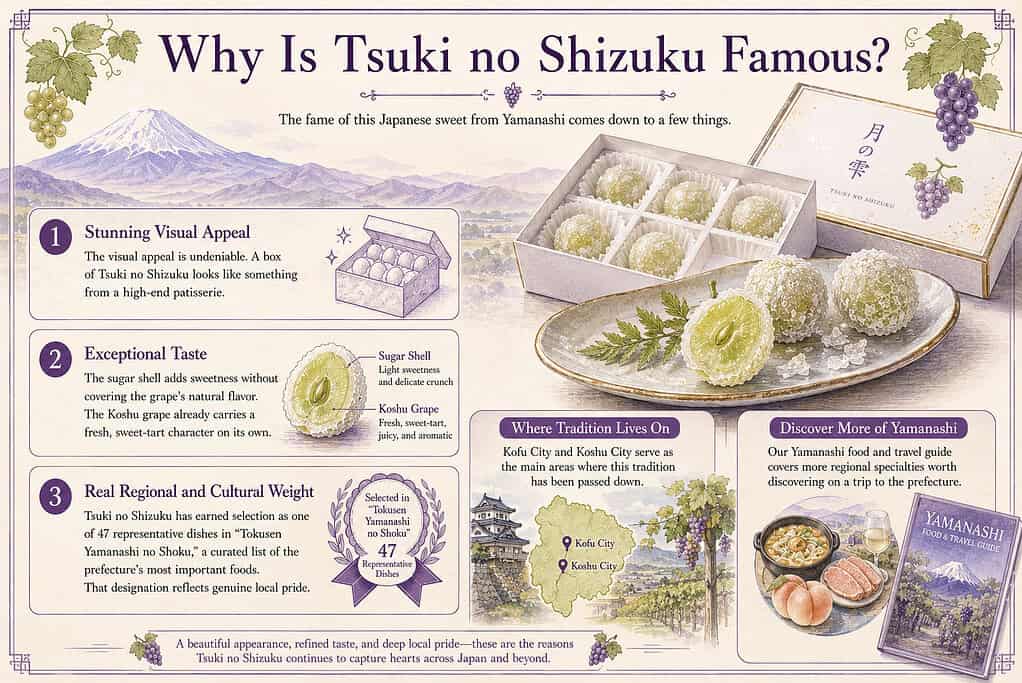
The fame of this Japanese sweet from Yamanashi comes down to a few things. First, the visual appeal is undeniable. A box of Tsuki no Shizuku looks like something from a high-end patisserie.
Second, the taste genuinely delivers. The sugar shell adds sweetness without covering the grape’s natural flavor. The Koshu grape already carries a fresh, sweet-tart character on its own.
Third, it carries real regional and cultural weight. Tsuki no Shizuku has earned selection as one of 47 representative dishes in “Tokusen Yamanashi no Shoku,” a curated list of the prefecture’s most important foods. That designation reflects genuine local pride.
Kofu City and Koshu City serve as the main areas where this tradition has been passed down. Our Yamanashi food and travel guide covers more regional specialties worth discovering on a trip to the prefecture.
What Does Tsuki no Shizuku Taste Like?
The first bite surprises most people. The shell cracks with a sharp, clean snap. Then the grape bursts and floods the mouth with cool, sweet juice.
The sugar coating carries a mild, almost neutral sweetness. This restraint allows the grape to remain the star throughout. Nothing competes with it.
Koshu grapes bring a refreshing sweet-tart depth that lighter grape varieties cannot replicate. The crystallized sugar shell works in harmony with that natural acidity. Some people loosely compare the experience to a crème brûlée, though the texture is entirely different.
Temperature matters too. Tsuki no Shizuku tastes best cold, straight from the refrigerator. Warmth softens the shell and changes the texture noticeably.
Tsuki no Shizuku at a Glance
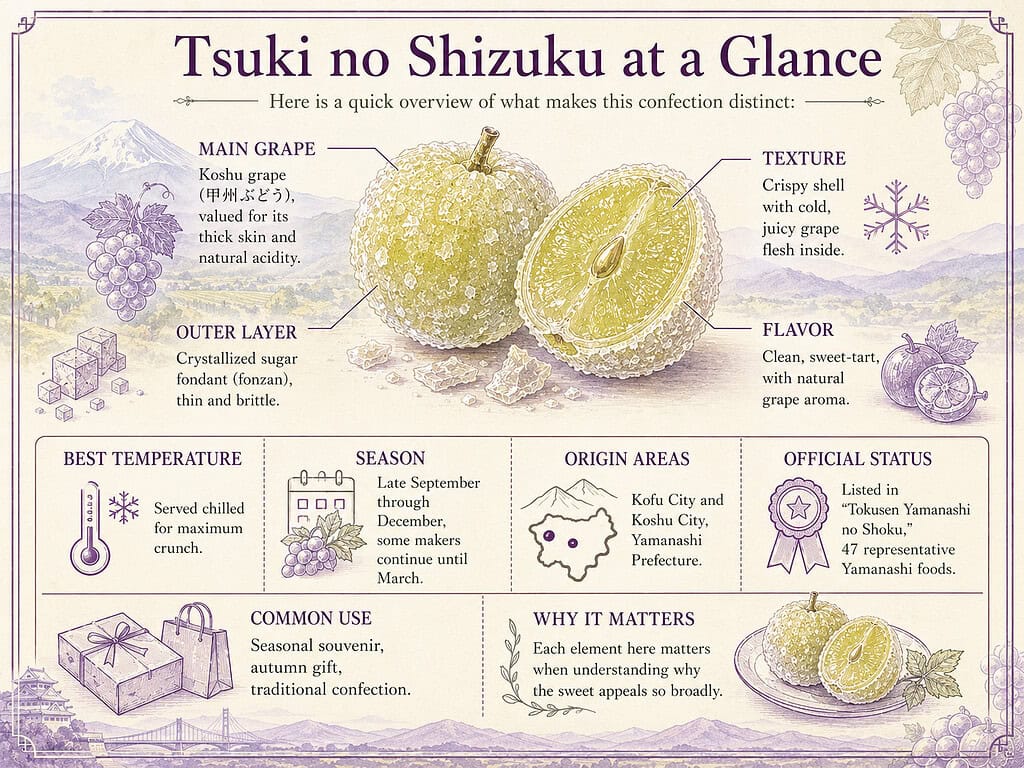
Here is a quick overview of what makes this confection distinct:
- Main grape: Koshu grape (甲州ぶどう), valued for its thick skin and natural acidity
- Outer layer: Crystallized sugar fondant (fonzan), thin and brittle
- Texture: Crispy shell with cold, juicy grape flesh inside
- Flavor: Clean, sweet-tart, with natural grape aroma
- Best temperature: Served chilled for maximum crunch
- Season: Late September through December, some makers continue until March
- Origin areas: Kofu City and Koshu City, Yamanashi Prefecture
- Official status: Listed in “Tokusen Yamanashi no Shoku,” 47 representative Yamanashi foods
- Common use: Seasonal souvenir, autumn gift, traditional confection
Each element here matters when understanding why the sweet appeals so broadly. Simplicity drives the concept. Execution makes or breaks it.
The History Behind Tsuki no Shizuku
The origin story of Tsuki no Shizuku is one of those happy accidents that feels almost too good to be true. During the Edo period, a confectioner in Kofu City was boiling sugar syrup when a single grape fell in by chance. It cooled and hardened around the fruit, and a new sweet was born.
Whether the full story holds exactly as told is hard to verify now. Still, the historical record supports its Edo-period roots clearly. A late Edo-period guidebook called “Kofu Kaimono Dokuan’nai” already lists Tsuki no Shizuku for sale at several sweet shops in the city. A separate publication, “Kai Meisho Sukoroku,” describes it as “Gokusei Tsuki no Shizuku,” suggesting it had already reached a level of premium recognition.
This places the sweet’s cultural history at well over 150 years at minimum. Few regional Japanese confections carry that kind of documented lineage. The name likely draws from the moon-like gleam of the hardened sugar surface.
Formal preservation efforts have grown in recent decades. Yamanashi Prefecture now includes Tsuki no Shizuku in its official list of 176 regional foods targeted for passing down to future generations. The sweet continues to appear at multiple traditional confectionery shops across the prefecture today.
Where to Buy Tsuki no Shizuku
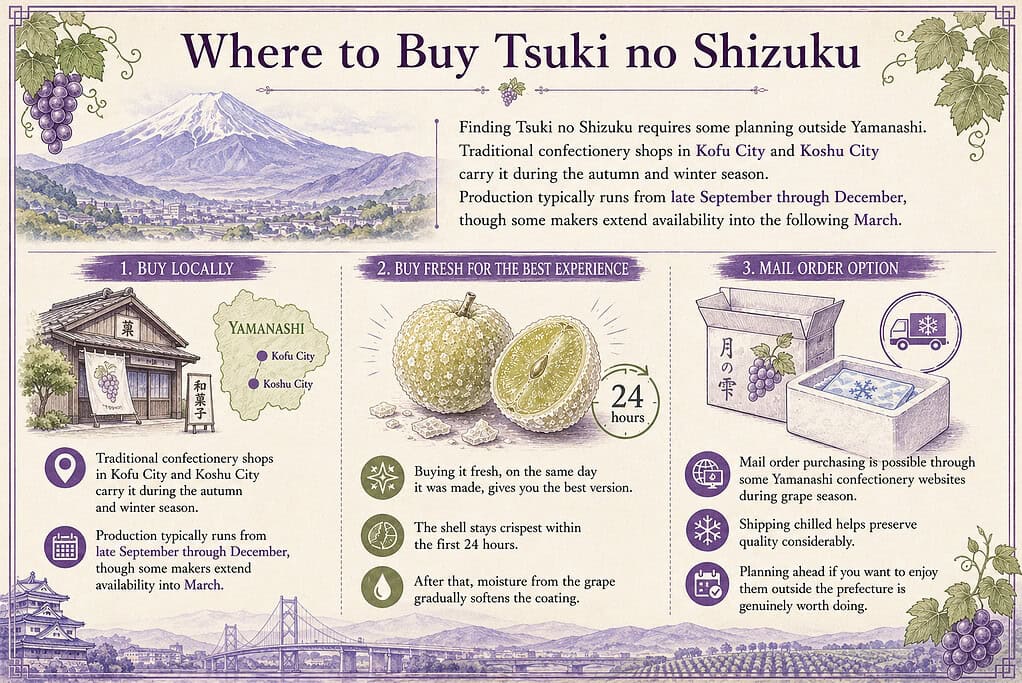
Finding Tsuki no Shizuku requires some planning outside Yamanashi. Traditional confectionery shops in Kofu City and Koshu City carry it during the autumn and winter season. Production typically runs from late September through December, though some makers extend availability into the following March.
Buying it fresh, on the same day it was made, gives you the best version. The shell stays crispest within the first 24 hours. After that, moisture from the grape gradually softens the coating.
Mail order purchasing is possible through some Yamanashi confectionery websites during grape season. Shipping chilled helps preserve quality considerably. Planning ahead if you want to enjoy them outside the prefecture is genuinely worth doing.
Japan’s other famous regional sweets
Tsuki no Shizuku FAQ
What is Tsuki no Shizuku?
It is a seasonal grape confection from Yamanashi Prefecture. Confectioners make it with fresh Koshu grapes completely coated in white sugar icing. Food lovers know it for its perfect balance of intense sweetness and refreshing tartness.
Where does Tsuki no Shizuku come from?
This traditional sweet originates from Kofu City. Local merchants have crafted this delicate grape treat since the late Edo period.
What does Tsuki no Shizuku taste like?
It delivers a bright, sweet, and tart flavor. The texture feels incredibly crunchy on the outside and explosively juicy on the inside. Diners often compare it to modern fruit candies but with a sophisticated, vintage twist.
Where can I eat Tsuki no Shizuku in Japan?
You will find the best ones exclusively in Yamanashi Prefecture during the autumn season. Famous areas include traditional sweet shops near Kofu Station. Highway rest areas also sell them heavily during the grape harvest months.
How much does Tsuki no Shizuku cost?
A standard box typically costs between 1,000 and 2,000 yen. Prices vary slightly depending on the brand and the number of sugar-coated grapes inside the box.
Is Tsuki no Shizuku vegetarian or vegan friendly?
This traditional confection contains absolutely no animal products. Vegans and vegetarians can safely enjoy this 100% plant-based fruit snack anywhere.
What are the main ingredients in Tsuki no Shizuku?
The main ingredients include fresh Koshu grapes and pure white sugar. The fresh Koshu grape gives the snack its distinctive sour burst to contrast the thick sugar coating.
Can I make Tsuki no Shizuku at home?
Yes, you can make this sweet at home. Grocery stores stock the key ingredients — fresh grapes and white sugar. Home cooks melt the sugar and dip the grapes carefully, though mastering the perfect white crystalline coating requires some patience.
What is the difference between Tsuki no Shizuku and candied strawberries?
The main difference involves the coating style and the fruit. This Yamanashi specialty features fresh grapes covered in an opaque, white sugar fondant, while candied strawberries rely on a clear, glass-like hard sugar shell.
Is Tsuki no Shizuku popular outside Japan?
It remains completely unknown outside Japan. You will never find this highly seasonal treat at Japanese markets in North America or Europe. This delicate autumn souvenir successfully maintains its exclusive status entirely within Yamanashi Prefecture.
References
- Yamanashi Prefecture Agricultural Promotion Division – Grape Production and Regional Confectionery Overview (2023): https://www.pref.yamanashi.jp
- Japan Tourism Agency – Regional Wagashi and Traditional Sweets Cultural Report (2022): https://www.mlit.go.jp/kankocho
- Yamanashi Kankou – Local Food Souvenir and Seasonal Product Data (2023): https://www.yamanashi-kankou.jp
- Ministry of Agriculture, Forestry and Fisheries Japan – Grape Cultivation Statistics by Prefecture (2023): https://www.maff.go.jp
- Japan Confectionery Association – Traditional and Regional Sweet Trends Report (2022): https://www.candy.or.jp
- Ministry of Agriculture, Forestry and Fisheries Japan – Uchi no Kyodo Ryori: Tsuki no Shizuku, Yamanashi Prefecture (2023): https://www.maff.go.jp/j/keikaku/syokubunka/k_ryouri/search_menu/menu/tukino_shizuku_yama_nashi.html




Comments