






Japanese Crown Melon: The Ultra-Premium Melon from Japan
This premium melon is not just fruit. It belongs to the world of Japanese luxury fruit, where presentation and meaning matter as much as taste. If you want to understand that culture, this Japanese fruit guide explains why fruit can feel so special in Japan.
Many people compare this fruit to a Yubari-style melon. That comparison becomes clearer if you explore Yuubari melon, which highlights how Japan treats premium melons.
What Is Crown Melon?
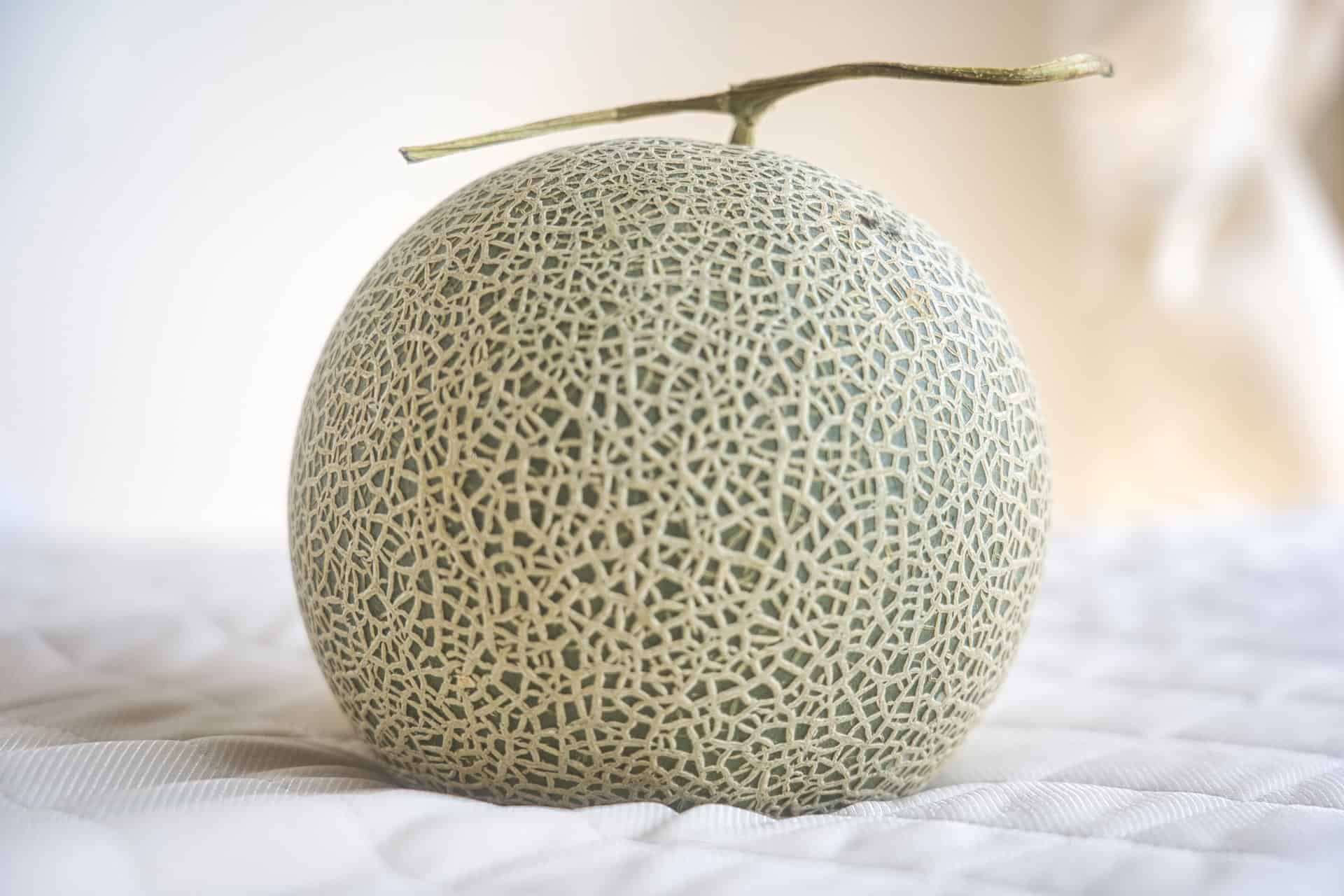
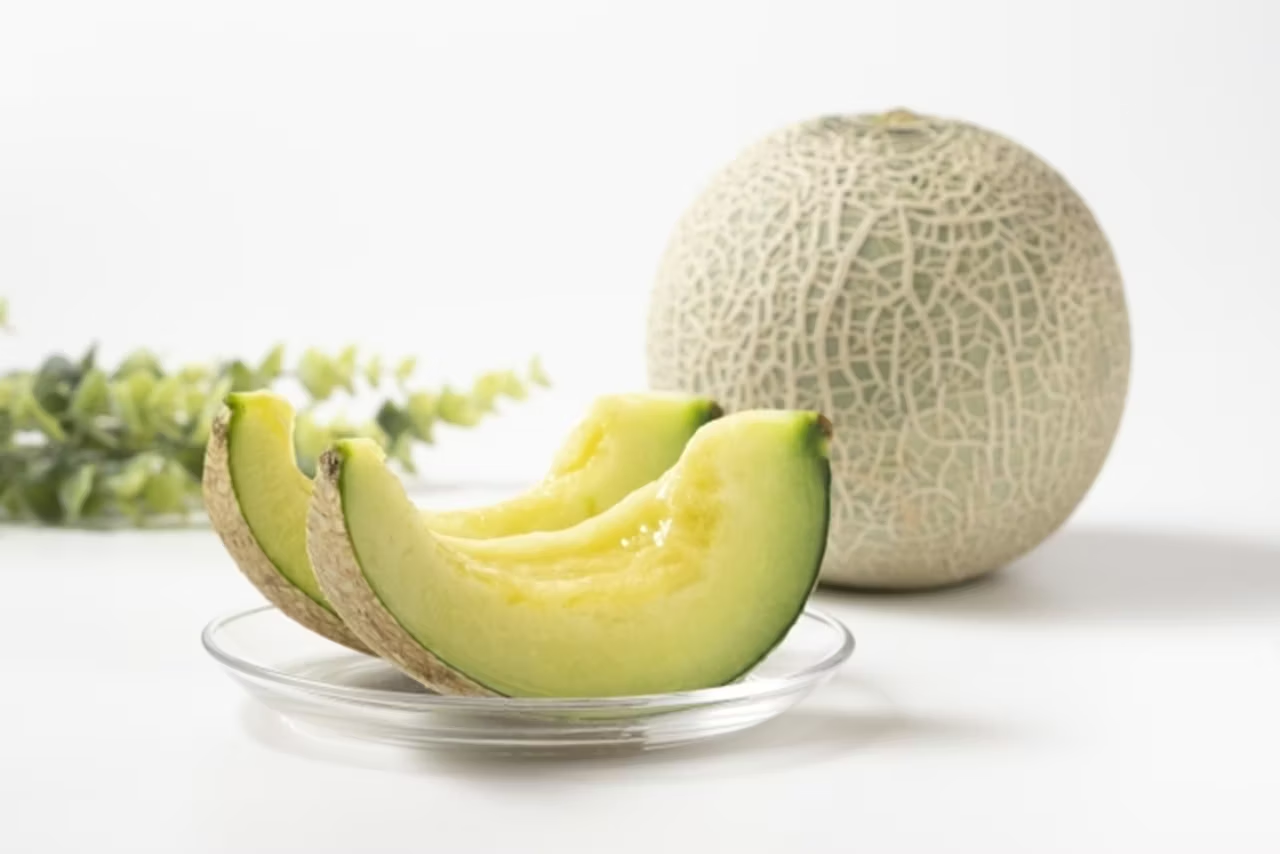
Crown Melon is a premium muskmelon grown in Shizuoka Prefecture. It follows a strict cultivation method known as one tree, one fruit. Farmers remove all other fruits so that one melon receives all nutrients. This process requires patience and skill, and not every harvest meets the standard.
Each melon is carefully inspected. Only selected fruit receives the crown label. That label represents consistency, which is rare in fresh produce. Compared with other regional melons such as Ibaraki melon, the fruit focuses more heavily on uniform quality and presentation.
Why Crown Melon Became Famous
The Melon became famous because it removes uncertainty. Most fruits vary in sweetness and texture. the fruit aims to deliver the same experience every time. That reliability builds trust, especially for gifting.
In Japan, fruit is often given as a present. It is not unusual to see beautifully wrapped melons in department stores. This idea may feel unfamiliar at first, but it quickly makes sense. When you understand Japanese food culture through guides like the Ibaraki Food Guide, you begin to see how regional pride and presentation shape perception.
What Does The Melon Taste Like?
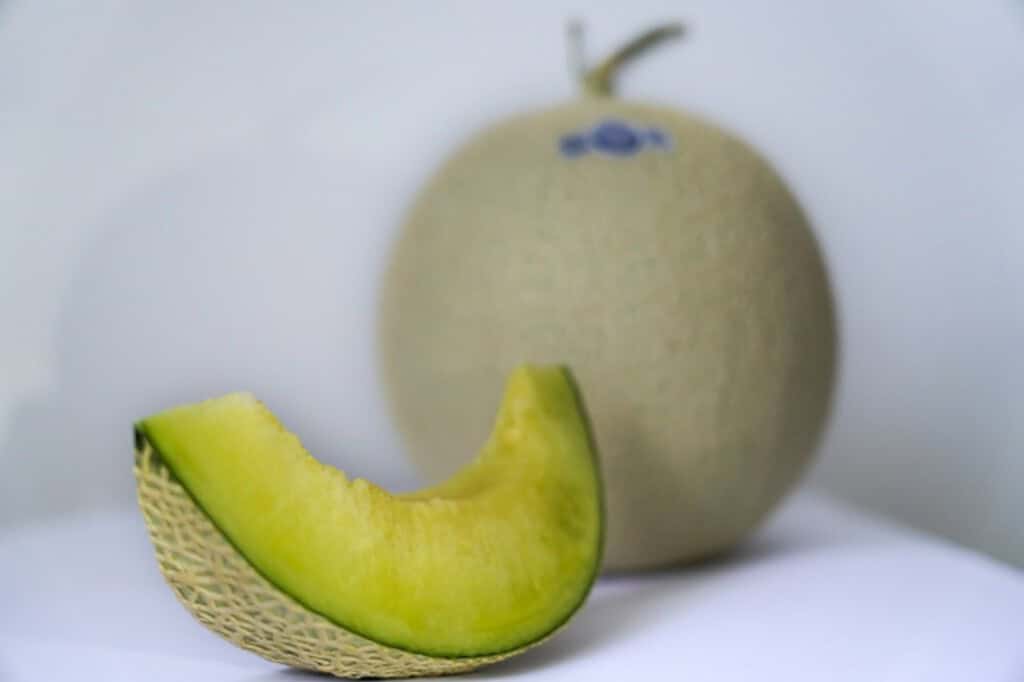
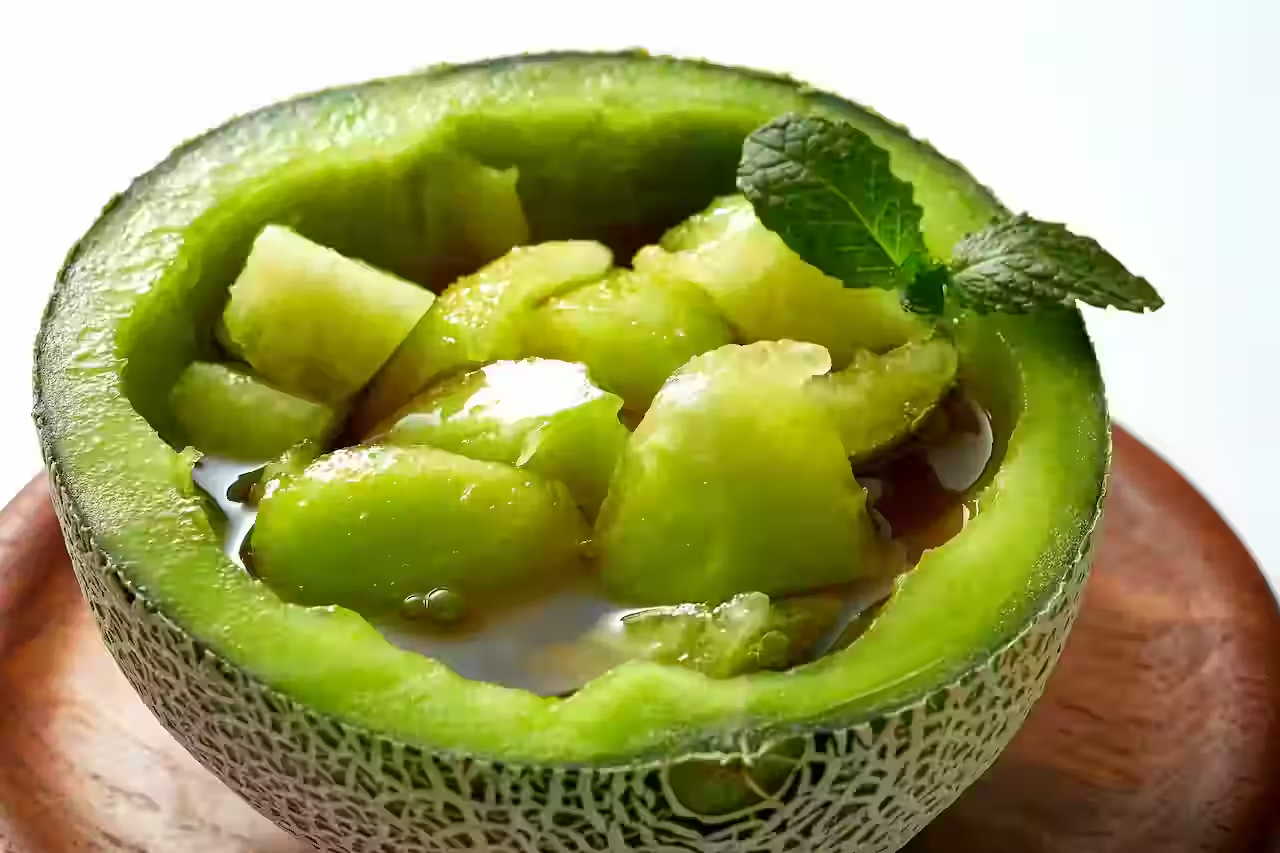
Many people ask what does the fruit taste like. The answer is more subtle than expected. It is sweet, but the sweetness is gentle. It does not overwhelm the palate. The texture is soft and juicy, sometimes almost creamy.
If you are used to stronger flavors, it may feel restrained. That is not a flaw. It is intentional. The flavor is designed to be balanced and elegant, which is a key trait of Japanese premium melon culture.
Crown Melon vs Regular Melon
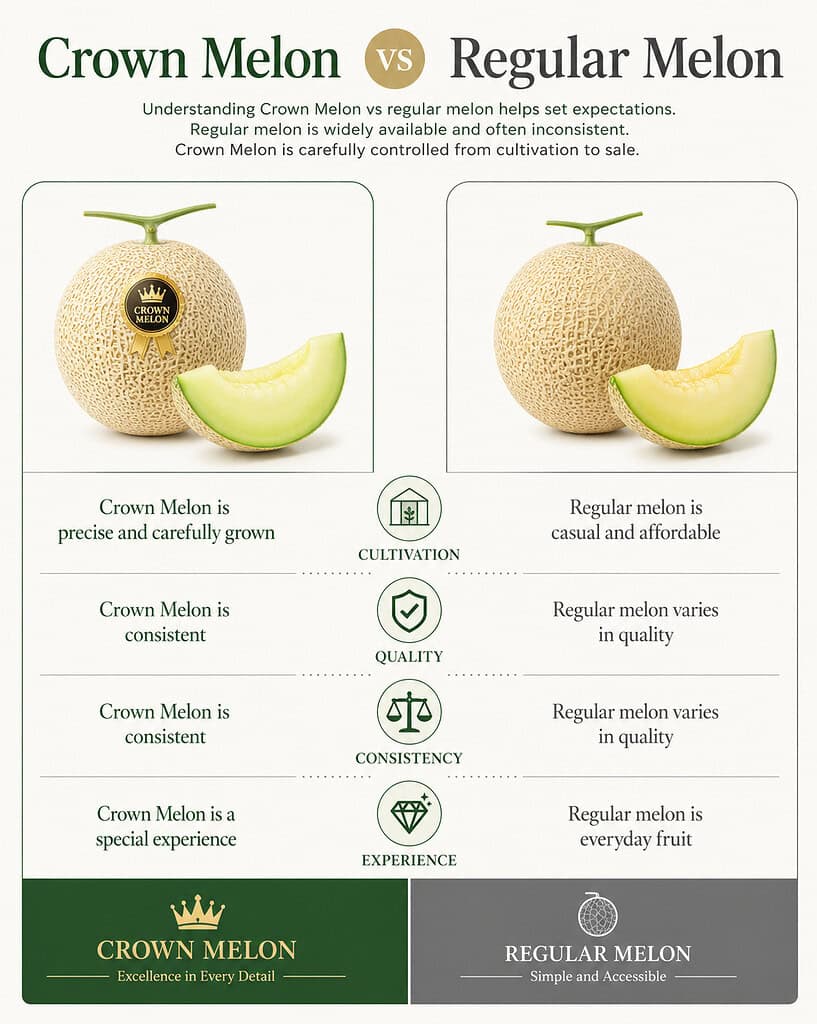
Understanding Crown Melon vs regular melon helps set expectations. Regular melon is widely available and often inconsistent. the fruit is carefully controlled from cultivation to sale.
- Regular melon is casual and affordable
- Crown Melon is precise and carefully grown
- Regular melon varies in quality
- Crown Melon is consistent
- Regular melon is everyday fruit
- Crown Melon is a special experience
For beginners, Crown Melon vs cantaloupe is also helpful. If you look at varieties like Quincy melon, you can see how Japanese melons differ from typical Western expectations. Compared with regional melon varieties, this fruit focuses more on consistency and presentation.
Price Comparison: Japan vs USA
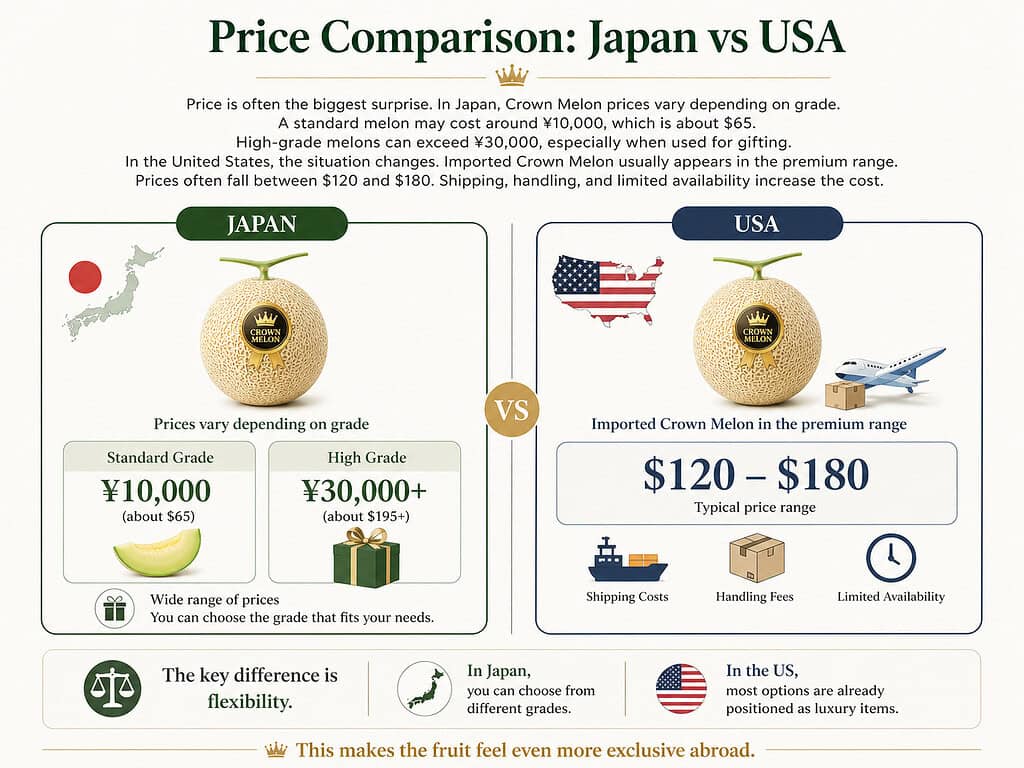
Price is often the biggest surprise. In Japan, Crown Melon prices vary depending on grade. A standard melon may cost around ¥10,000, which is about $65. High-grade melons can exceed ¥30,000, especially when used for gifting.
In the United States, the situation changes. Imported this melon usually appears in the premium range. Prices often fall between $120 and $180. Shipping, handling, and limited availability increase the cost.
The key difference is flexibility. In Japan, you can choose from different grades. In the US, most options are already positioned as luxury items. This makes the fruit feel even more exclusive abroad.
Where to Eat Crown Melon in Japan
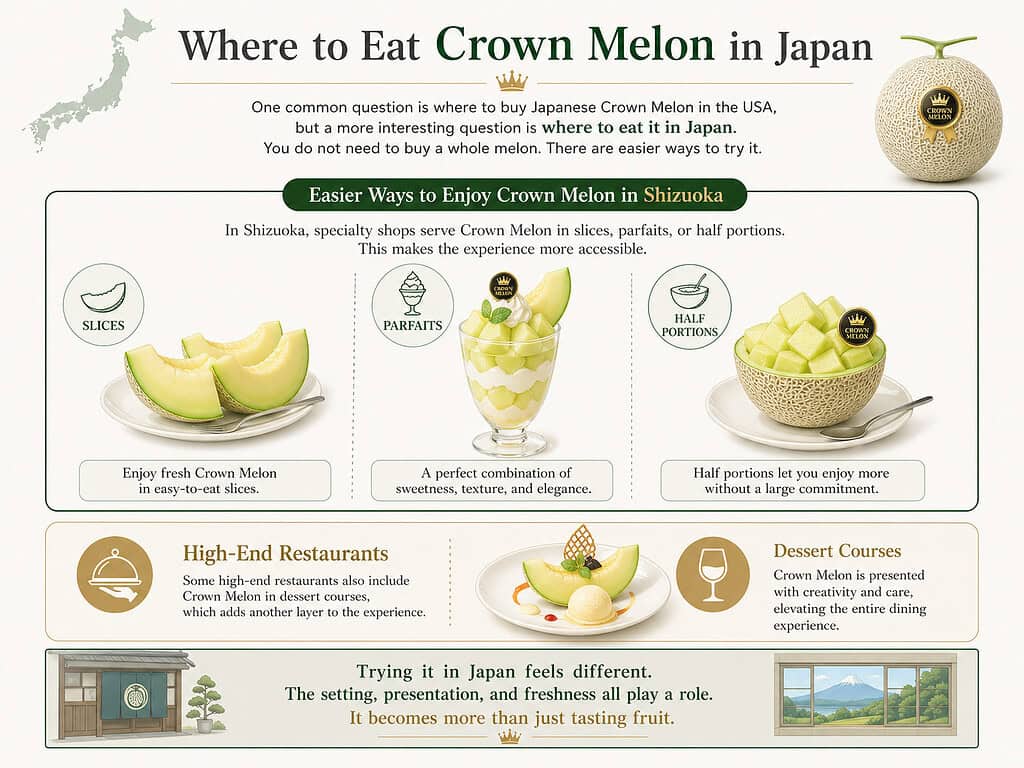
One common question is where to buy this premium melon in the USA, but a more interesting question is where to eat it in Japan. You do not need to buy a whole melon. There are easier ways to try it.
In Shizuoka, specialty shops serve this melon in slices, parfaits, or half portions. This makes the experience more accessible. You can taste the fruit without spending a large amount. Some high-end restaurants also include it in dessert courses, which adds another layer to the experience.
Trying it in Japan feels different. The setting, presentation, and freshness all play a role. It becomes more than just tasting fruit.
How to Eat and Serve the Japanese Melon
If you are wondering how to eat the Shizuoka melon, the process is simple but timing matters. Let the melon ripen at room temperature. When the bottom becomes slightly soft, it is ready. After that, chill it briefly to enhance the flavor.
Knowing how to cut Japanese Crown Melon properly also helps. Slice it into clean wedges and remove the seeds. Serve it without added sugar or garnish. The fruit is designed to stand on its own.
The best way to serve this premium melon to guests is simplicity. Use a clean plate and let the fruit speak. Guests often become curious, and that curiosity becomes part of the experience.
Is Japanese Crown Melon Worth the Price?
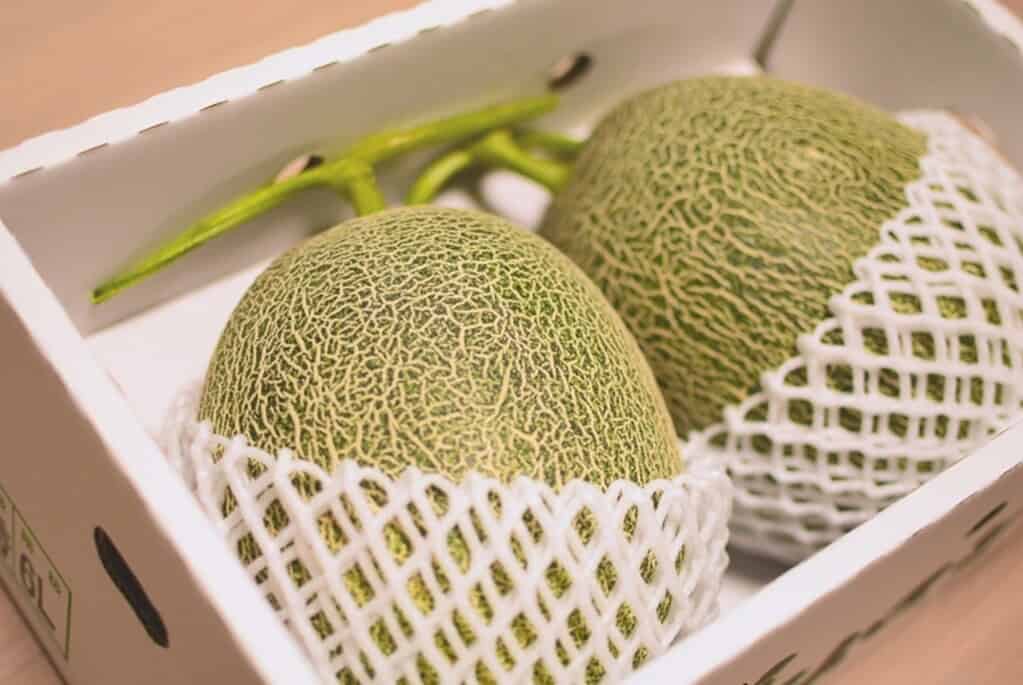
Is Japanese Crown Melon worth the price? The answer depends on what you expect. If you want an everyday snack, it may feel expensive. If you want a memorable experience, it can feel justified.
The value is not only in the taste. It includes presentation, craftsmanship, and cultural meaning. That combination is difficult to replicate. For many people, it becomes a story they remember.
History and Current Status
Crown Melon has a history of over 100 years in Shizuoka. It developed from early greenhouse cultivation and evolved through continuous refinement. Farmers focused on improving consistency and flavor over time.
Today, it remains a symbol of Japanese luxury fruit. It is exported worldwide, yet it still reflects its origin. The balance between tradition and modern demand keeps it relevant.
Final Thoughts
Crown Melon represents more than sweetness. It reflects a way of thinking about food, where care and intention matter deeply. For American readers, it offers a new perspective on fruit.
Trying it in Japan often feels more meaningful than buying it abroad. The environment, the presentation, and the story all come together. That combination is what makes Crown Melon special.
Crown Melon FAQ
What is Crown Melon?
It is a premium muskmelon from Shizuoka Prefecture. Farmers grow it with extreme care using a one-melon-per-vine technique. Food lovers know it for its perfectly beautiful netting and intense sweetness.
Where does Crown Melon come from?
This luxury fruit originates from Fukuroi City in Shizuoka Prefecture. Local farmers have cultivated this highly prized specialty since the Taisho period.
What does Crown Melon taste like?
It has a rich, incredibly sweet, and highly fragrant flavor. The texture feels delightfully juicy and melts in your mouth. Diners often compare it to drinking pure, high-quality nectar.
Where can I eat Crown Melon in Japan?
You will find the freshest ones right in Shizuoka Prefecture. Famous areas include local fruit farms in Fukuroi. High-end fruit parlors in Tokyo also serve this premium dessert as fresh slices or elaborate parfaits.
How much does Crown Melon cost?
A whole fruit typically costs between 5,000 and 20,000 yen. Prices vary greatly depending on the visual perfection, the size, and the beautiful gift packaging.
Is Crown Melon vegetarian or vegan friendly?
This natural crop contains absolutely no animal products. Vegans and vegetarians can safely enjoy this 100% plant-based luxury fruit anywhere.
What are the main ingredients in Crown Melon desserts?
The main ingredients in seasonal parfaits include fresh melon slices, whipped cream, and vanilla ice cream. The premium fruit itself gives the dessert its distinctive floral aroma and luxurious sweetness.
Can I eat Crown Melon at home?
Yes, you can easily eat it at home. Luxury department stores and online farms sell the whole fruit year-round. Home cooks slice it effortlessly and serve it chilled for special occasions.
What is the difference between Crown Melon and regular melons?
The main difference involves the farming method. The Shizuoka specialty receives all the vine’s nutrients because farmers cut away other fruits, while regular melons share nutrients among multiple fruits on the same plant.
Is Crown Melon popular outside Japan?
It enjoys massive popularity among fruit lovers outside Japan. Shoppers eagerly buy these branded fruits at premium Asian supermarkets in Hong Kong and Taiwan. This luxury item successfully represents Japanese agricultural perfection globally.
References
Crown Melon Official Site | https://www.crown-melon.co.jp/english/ | 2026 | Ref 1
Food in Japan Fruit Guide | https://www.foodinjapan.org/japanese-food/fruit/ | 2026 | Ref 2




Comments