



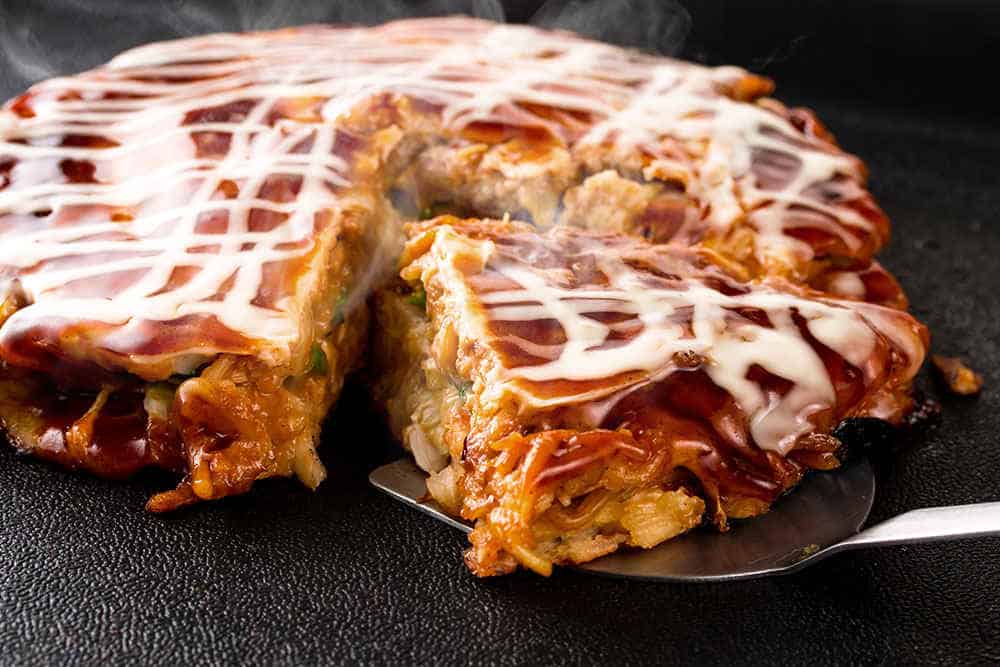
Modanyaki (モダン焼き) is Osaka’s hearty answer to a savory pancake. It’s okonomiyaki with yakisoba noodles. Think filling, flavorful, pure street-food comfort.
What is Modanyaki?
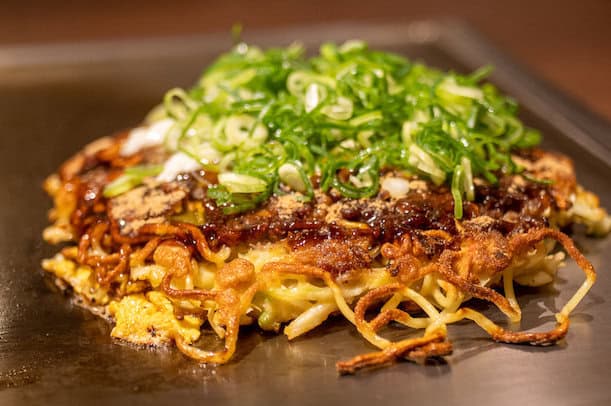
Modanyaki is a thick, savory Japanese pancake. It starts like any Osaka okonomiyaki: batter, cabbage, egg, and your choice of meat or seafood. The one key difference? Yakisoba. Adding those springy Chinese-style noodles transforms it into a whole new dish—a noodle okonomiyaki. Some cooks mix the noodles directly into the batter. Others layer them on top. Either way, it’s a carb-on-carb creation that screams Osaka teppan food.
Taste: bold, tangy, and deeply savory
The flavor hits hard in the best way. Thick, sweet-tangy sauce and creamy Japanese mayo coat every bite. The yakisoba brings its own seasoned depth, often pre-fried with a salty-sweet sauce. You get umami from the pork or seafood, gentle sweetness from the cabbage, and a faint ginger kick. It’s richer and more indulgent than a plain okonomiyaki. Some people find it almost too much. I call it just right for a hungry evening.
Texture: a springy, hearty mouthful
Here’s where modanyaki truly stands out. Standard okonomiyaki is soft with a bit of crunch. Modanyaki adds a whole new chew—those slippery, springy noodles. Each forkful delivers fluffy batter, crisp cabbage, tender meat, and bouncy yakisoba all at once. It feels substantial. Almost like eating two dishes combined. For some, the density is a little overwhelming. For most, it’s exactly the hearty Japanese street food they crave.
Aroma: the smell of a festival on a plate
When modanyaki sizzles on the griddle, the scent fills the air. There’s that familiar grilled pancake fragrance, the savory smoke of pork, and the tangy sweetness of sauce. The yakisoba adds its own touch—a slightly oily, wheaty aroma that reminds me of summer night markets. In Osaka’s bustling food streets, this smell pulls you toward the nearest teppan stall. It’s warm, nostalgic, and unmistakably comforting.
Modanyaki vs. Okonomiyaki: It’s All About the Noodles
The difference is simple. Osaka okonomiyaki is a savory pancake loaded with fillings but no yakisoba. Modanyaki takes the same base and adds stir-fried noodles. That’s it. Some menus call it “yakisoba inside okonomiyaki.” The result is heavier, more filling, and packed with extra texture. If you love the idea of a Japanese pancake with yakisoba, you’re looking for modanyaki. If you want the classic version, just order okonomiyaki.
Osaka-style vs. Hiroshima-style: Mixing vs. Layering
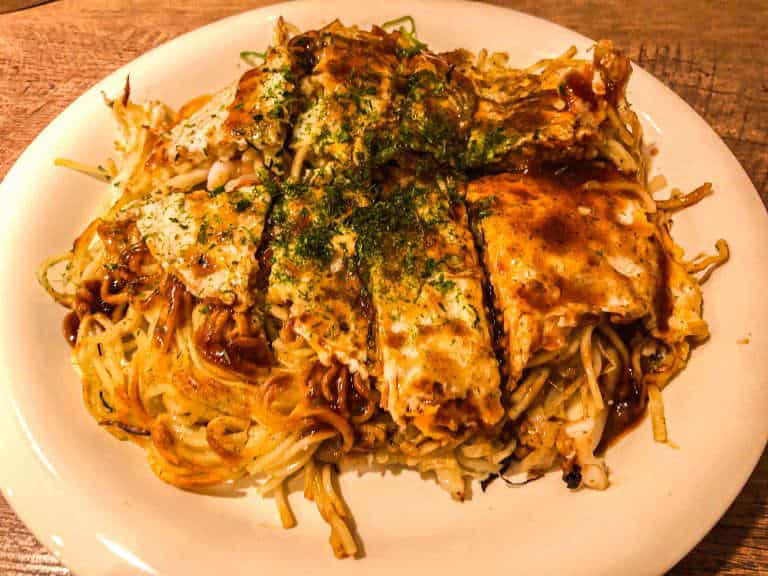
Both modanyaki and Hiroshima-style okonomiyaki include yakisoba. So it’s easy to mix them up. But the cooking method is completely different.
Osaka-style, including modanyaki, mixes everything into the batter. The cabbage, the meat, sometimes the noodles—all stirred together and poured onto the grill. Hiroshima-style is a layered affair. A thin crepe goes down first, then a mountain of cabbage, noodles, pork, and egg. The ingredients are stacked, not blended. Think of modanyaki as a mixed pancake. Hiroshima-yaki is more like a noodle sandwich. Both are delicious, but now you’ll know exactly what you’re eating.
Why “Modern”? The Story Behind the Name
The name doesn’t just mean contemporary. One theory traces modanyaki to Kobe in the 1950s. A shop started serving okonomiyaki with yakiudon, and the idea spread. Another story points to an Osaka restaurant called Botejyu. The owner reportedly named it “Modern Yaki” because adding noodles felt fresh and new.
But the most charming explanation comes from Japanese wordplay. The dish looked so loaded that people called it moridakusan—meaning “a whole lot.” Over time, moridakusan okonomiyaki shortened to modan yaki. So the name is really about abundance, not just trendiness. That makes perfect sense when you see how hearty this dish is.
Modanyaki Variations Worth Hunting Down
Osaka restaurants love to tweak their modanyaki. Here are some popular twists you might find.
Daring Flavor Twists
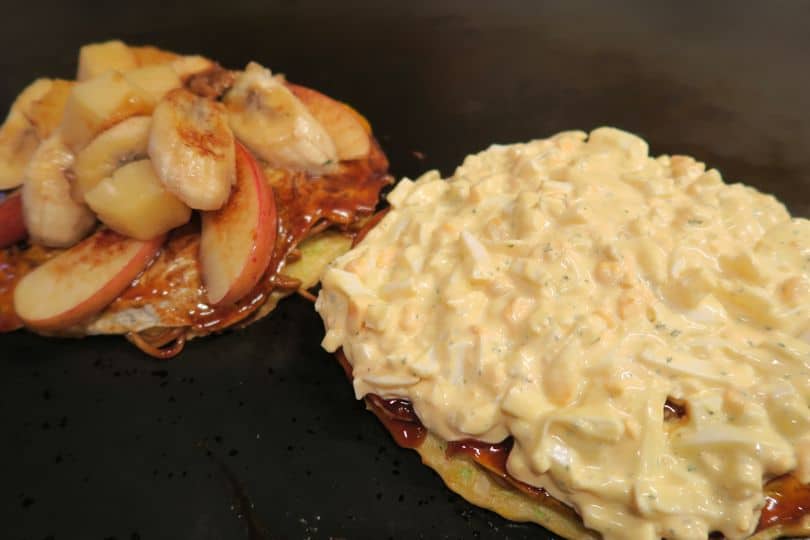
Tartar modanyaki swaps the usual sauce for a tangy, gentle sourness. It’s surprisingly refreshing. Cheese fondue modanyaki comes with a side of gooey melted cheese. Dip or pour as you like. Curry modanyaki taps into Japan’s deep love for curry spices; the aroma alone is incredible. Some shops even nod to classics like curry rice and curry bread with their own twists.
A Touch of Sweetness
Fruit modanyaki might sound unusual. But apple slices tucked into the pancake add a mellow sweetness. The contrast with the salty-savory sauce works better than you’d expect.
Feasting with a Crowd
Some places serve a deluxe modanyaki big enough for four to seven people. It’s loaded with over 18 ingredients. Friends, family, and an enormous teppan grill—that’s a proper Osaka night out.
How to Make Modanyaki at Home
Making modanyaki in your own kitchen is easier than you think. The process feels like a fun little project. Here’s a basic recipe to get you started.
Ingredients (Serves 2)
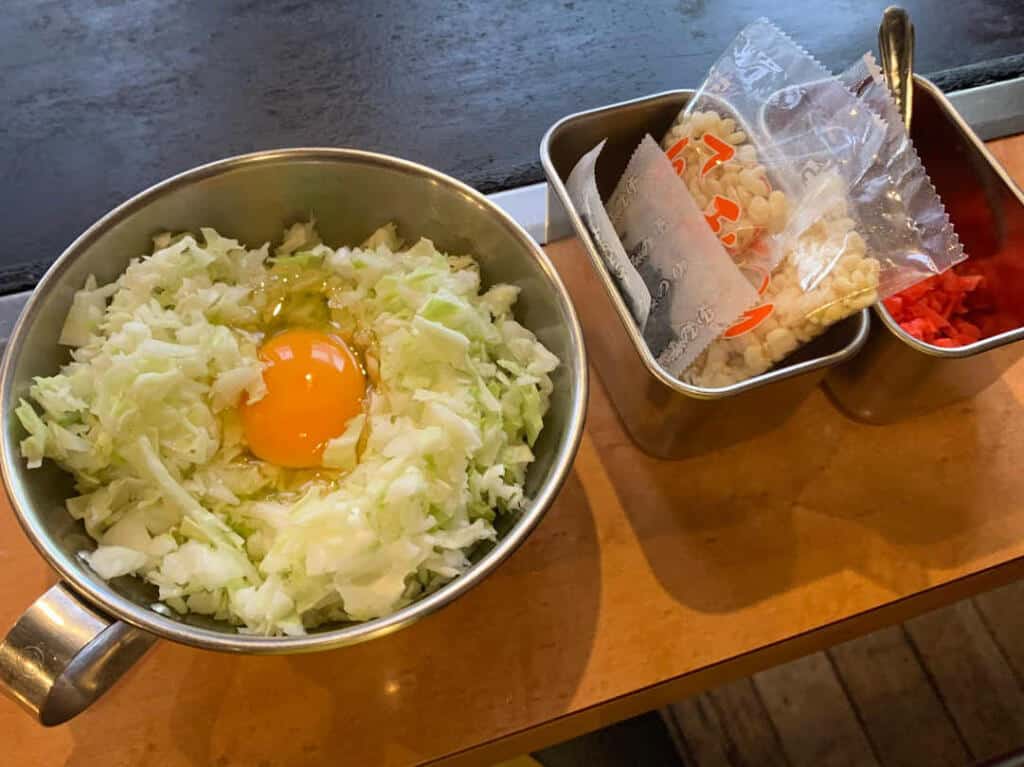
| Eggs | 2 |
| Water | 120ml |
| Okonomiyaki flour | 100g |
| Yakisoba noodles (steamed) | 1 ball |
| Cabbage (shredded thinly) | 150g |
| Pork belly (sliced thinly) | 100g |
| Tenkasu (tempura bits) | 15g |
| Pickled ginger | to taste |
| Salt & pepper | a pinch each |
| Salad oil | as needed |
Step-by-Step Instructions
- Slice the cabbage and pork belly into thin pieces, about 5 cm long.
- In a bowl, beat the eggs and water. Add the okonomiyaki flour and mix until completely smooth.
- Stir in the shredded cabbage, tenkasu, and pickled ginger. Everything should be well coated.
- Heat a griddle or large frying pan with a little oil. Pour in half the batter and shape it into a round.
- At the same time, fry the yakisoba next to your pancake. Season with salt and pepper.
- Place the cooked noodles on top of the pancake. Drizzle a tiny bit of extra batter over them, then layer the pork belly slices on top.
- Cook until the bottom is golden brown. Flip carefully and cook the pork side until fully done.
- Slide onto a plate. Drizzle generously with okonomiyaki sauce and Japanese mayo. A little yakisoba sauce adds even more flavor.
Tips for Perfect Modanyaki
- Make sure your batter has no lumps. Lumpy batter cooks unevenly.
- Fry the noodles quickly on high heat before adding them. That boosts the chewy texture.
- Keep the heat at medium. Too hot, and the outside burns while the inside stays raw.
- Don’t skip the double sauce. The combination of sweet okonomiyaki sauce and rich mayo is what makes it taste authentic.
Where to Eat Modanyaki in Osaka (and Beyond)
You don’t have to search hard. Osaka’s streets are dotted with excellent teppan grills. But some shops have earned legendary status.
A Local Gem in Sakai
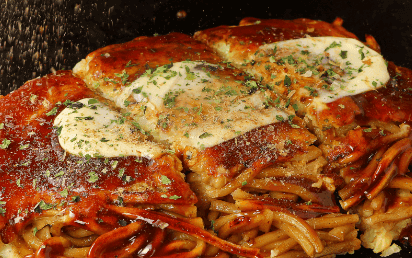
Oshiyaki Utama sits right in a busy shopping district. Generous portions and a cozy neighborhood feel make it a favorite. Their modanyaki is loaded and perfectly crisped.
Dotonbori’s Must-Visit
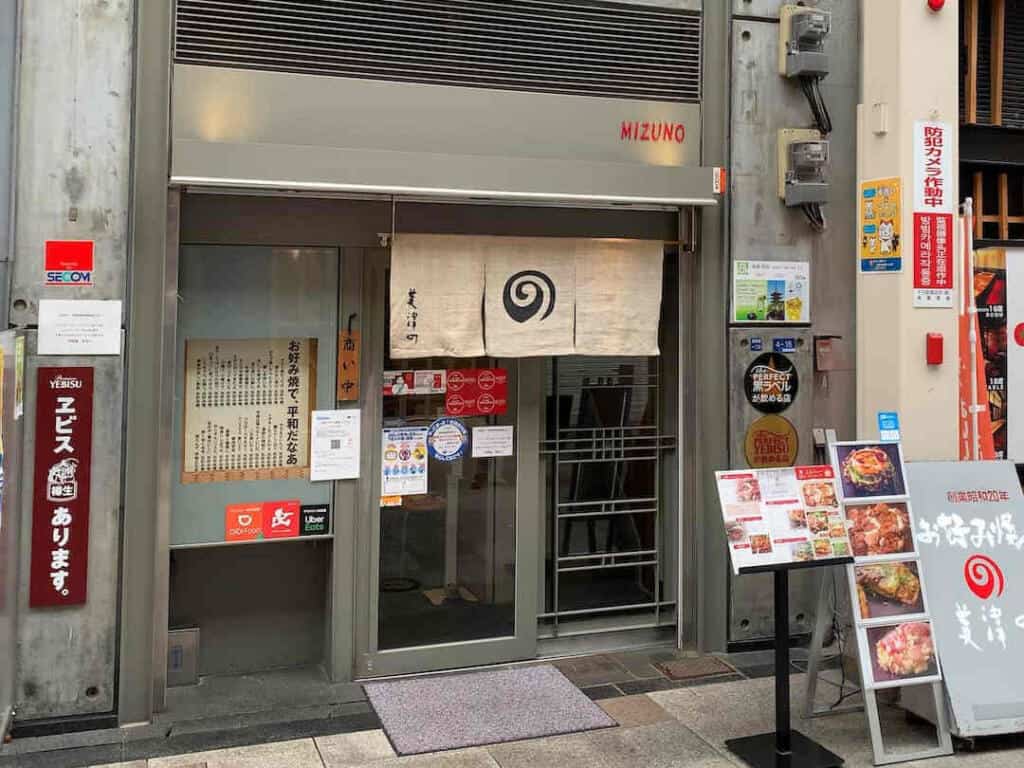
Okonomiyaki Mizuno is an institution. Tourists and locals both crowd into this Dotonbori hotspot. Their modanyaki comes piled high with toppings and that essential thick sauce. Prepare to queue. It’s worth the wait.
Kobe’s Old-School Masterpiece
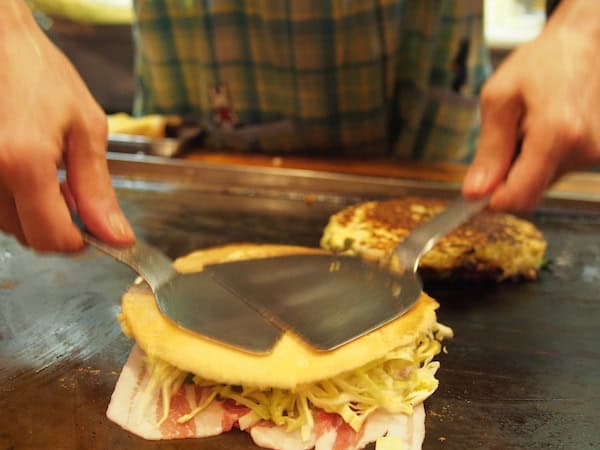
Ippei in Kobe is run by a husband-and-wife team. Their modanyaki is crispy on the outside and tender inside. What makes it special? Braised beef tendons in a sweet-spicy sauce. It’s a flavor you won’t forget.
Tokyo Outpost
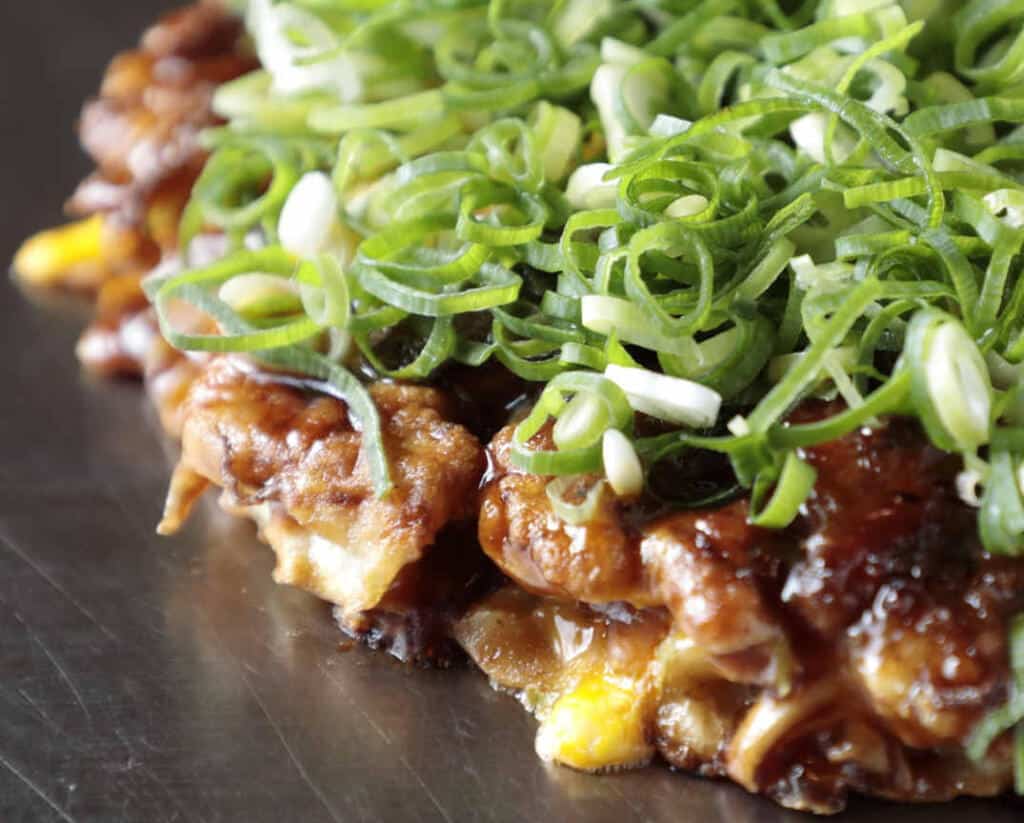
If you’re in Tokyo, Okonomiyaki Kiji Marunouchi brings authentic Osaka flavor to the capital. Their modanyaki tastes just like what you’d get in Dotonbori. Expect a line at lunchtime.
So, Is Modanyaki Worth the Hype?
Absolutely. If you enjoy Osaka’s teppan culture, modanyaki is a must. It’s comforting, flavorful, and unapologetically carb-heavy. For me, the texture of the springy noodles alongside the soft pancake is irresistible. Next time you’re in Osaka, don’t just order okonomiyaki. Go for the noodle-stuffed upgrade. Your stomach will thank you.
Love modanyaki? Explore all our okonomiyaki guides and discover more Osaka street food.
Kassha-yaki FAQ
What is Kassha-yaki?
Kassha-yaki is a savory spherical pancake from Kagawa Prefecture. Chefs make it with wheat batter and curry-flavored chicken. Food lovers know it for its fluffy exterior and gooey, spicy interior.
Where does Kassha-yaki come from?
Kassha-yaki originates from Sanuki City in Kagawa Prefecture. Local street vendors developed this unique snack decades ago as a clever alternative to octopus dumplings.
What does Kassha-yaki taste like?
Kassha-yaki has a savory, sweet, and distinctly spicy curry flavor. The texture feels incredibly soft outside with a firm, chewy center. Diners often compare it to traditional Takoyaki but with a rich curry punch.
Where can I eat Kassha-yaki in Japan?
You will find the best Kassha-yaki right in Kagawa Prefecture. Famous areas include specialized local shops in Takamatsu City and Miki Town. Local food festivals also serve this unique dish regularly.
How much does Kassha-yaki cost?
Kassha-yaki typically costs between 400 and 600 yen per serving. Prices vary slightly depending on the festival stall or the local shop you visit.
Is Kassha-yaki vegetarian or vegan friendly?
Traditional Kassha-yaki contains pieces of chicken and fish broth. Vegans and vegetarians can easily cook plant-based versions at home using firm tofu and curry spices instead of meat.
What are the main ingredients in Kassha-yaki?
The main ingredients in Kassha-yaki include wheat flour batter, chicken meat, curry spices, and a savory brown sauce. The curry-marinated chicken gives the dish its distinctive firm bite and spicy aroma.
Can I make Kassha-yaki at home?
Yes, you can easily make Kassha-yaki at home. Japanese grocery stores stock the key ingredients — flour mixes and curry powder. Home cooks simply pour the batter into a spherical griddle and add the seasoned chicken pieces.
What is the difference between Kassha-yaki and Takoyaki?
The main difference involves the core filling. Kassha-yaki features firm, curry-seasoned chicken meat, while traditional Takoyaki relies strictly on boiled octopus pieces.
Is Kassha-yaki popular outside Japan?
Kassha-yaki remains completely unknown outside Japan. You will rarely find it at Japanese restaurants in North America or Europe. This unique B-class gourmet snack successfully maintains its exclusive status entirely within Kagawa Prefecture.



Comments
List of comments (2)
The name “modanyaki” is hilarious, thanks for the post 🙂
thank you for reading!!
If you have something you want to know about Japanese food.
feel free to ask! 🙂