




Some mornings just stay with you. Hakodate Asaichi is one of those places that earns a permanent spot in your memory. The smell of the sea reaches you before the stalls do. Vendors call out in the early light, and somewhere behind the noise, a bowl of seafood donburi is waiting.
函館朝市 Hakodate Asaichi is not just a market. It is a ritual, especially for those who take food seriously.
What Is Hakodate Asaichi?
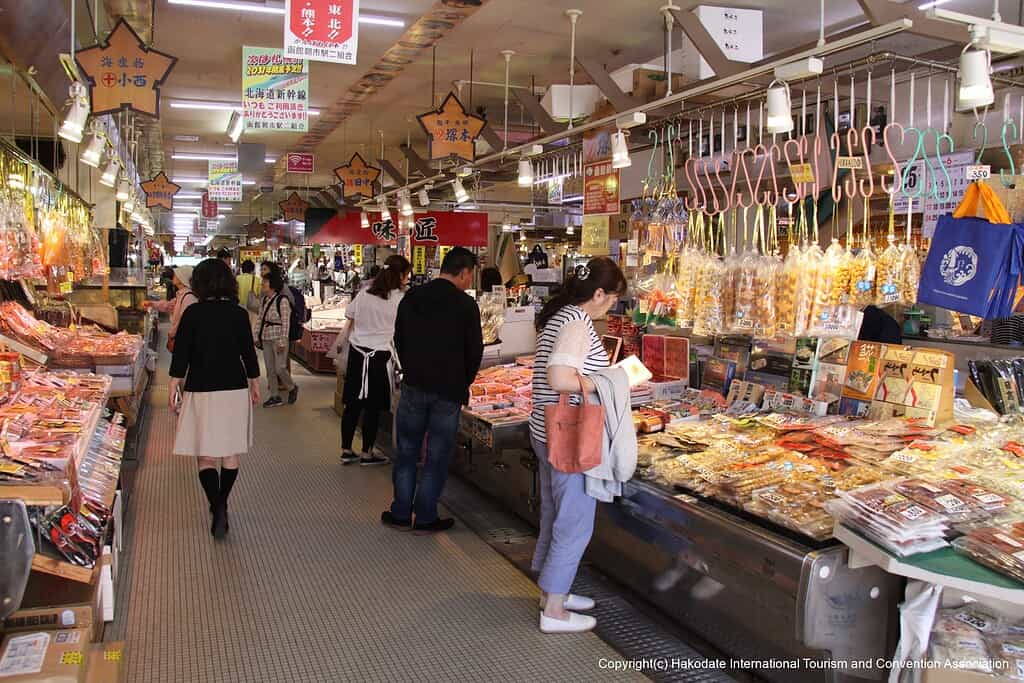
Hakodate Asaichi is a large outdoor and indoor seafood market. It sits less than a minute’s walk from JR Hakodate Station. The market covers roughly 10,000 tsubo, which is about the size of four soccer fields. Around 250 shops operate across this space daily.
Opening hours shift by season. From May through December, the earliest vendors are ready by 5:00 AM. In January through April, most shops open at 6:00 AM. Many stalls close by early afternoon, so arriving late means missing the best of it.
The Hokkaido seafood market atmosphere here is hard to replicate elsewhere. Cold air, fresh catches, and vendors who take visible pride in what they sell.
A Brief History of the Market
The origins of Hakodate Asaichi reach back to the years immediately after World War II. In those early postwar days, vendors began selling vegetables informally near the front of Hakodate Station. It was a modest beginning.
By the 1950s, the market had expanded and relocated to its current area. Seafood gradually became the dominant focus. The timing made sense. Hakodate faces the sea on three sides and has deep ties to fishing culture. What grew from a few vegetable stands became Hokkaido’s most famous morning market.
Today, the market operates as a cooperative of multiple zones. The most popular eating area is Donburi Yokocho, or “Rice Bowl Alley,” which houses around 20 restaurants side by side. There is also Ekini Market, which runs indoors and is open regardless of weather.
What to Eat at Hakodate Asaichi
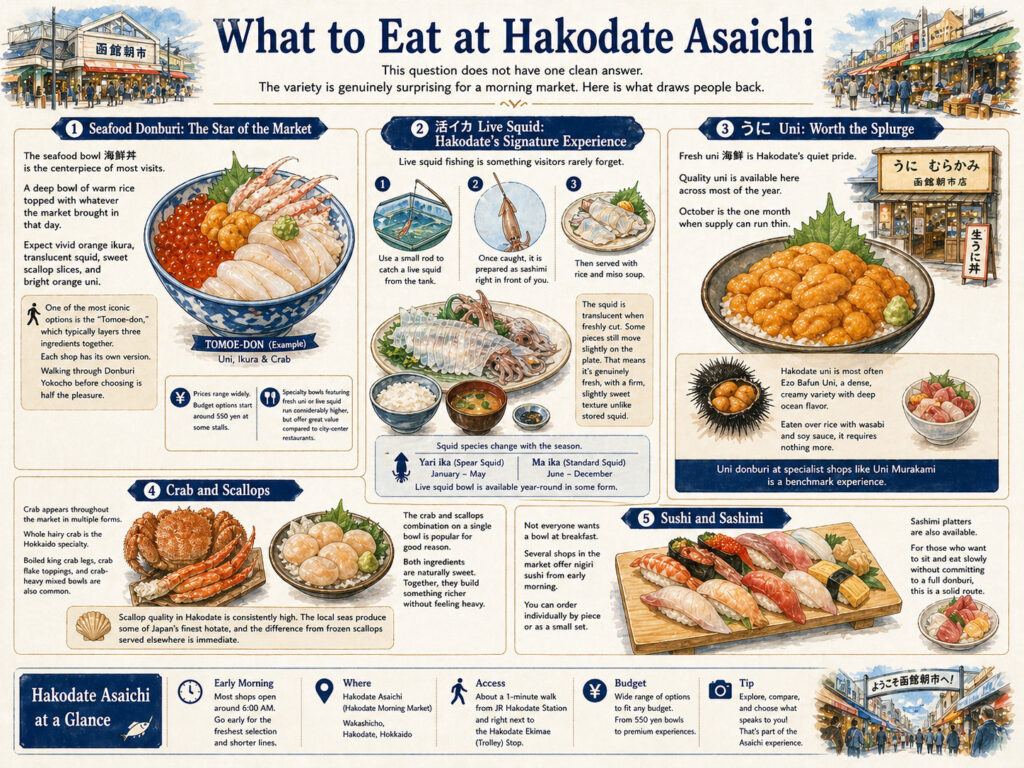
This question does not have one clean answer. The variety is genuinely surprising for a morning market. Here is what draws people back.
Seafood Donburi: The Star of the Market
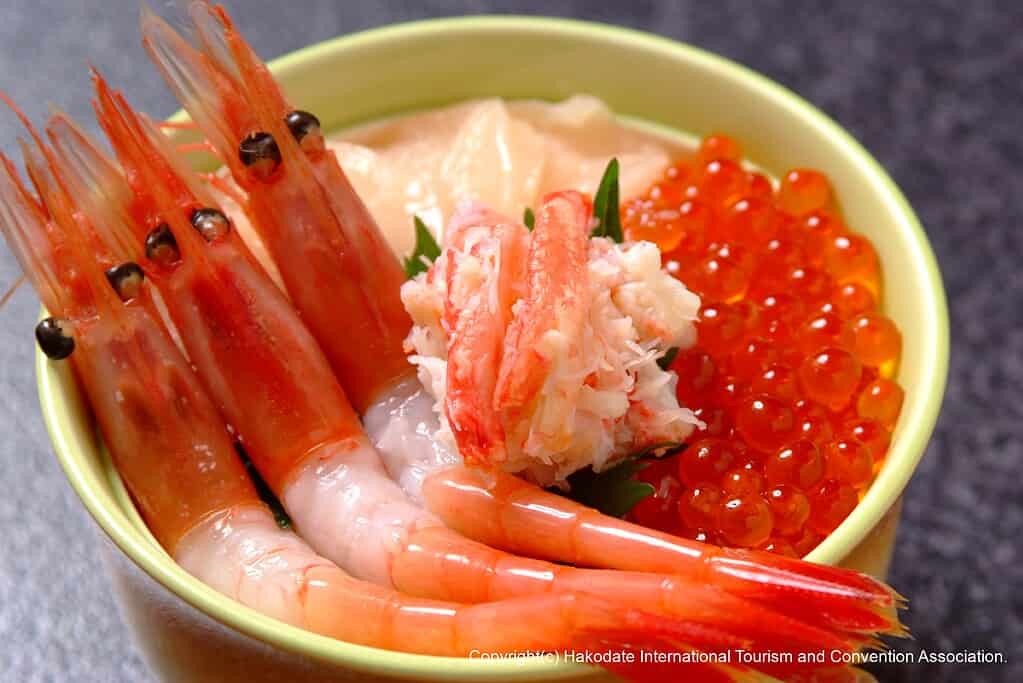
The seafood bowl 海鮮丼 is the centerpiece of most visits. A deep bowl of warm rice arrives topped with whatever the market brought in that day. Expect vivid orange ikura, translucent squid, sweet scallop slices, and bright orange uni on top.
One of the most iconic options is the “Tomoe-don,” which typically layers three ingredients together. It might be uni, ikura, and crab, or squid, salmon, and scallops. Each shop has its own version. Walking through Donburi Yokocho before choosing is half the pleasure.
Prices range widely. Budget options start around 550 yen at some stalls. Specialty bowls featuring fresh uni or live squid run considerably higher. Still, the value compared to a city-center restaurant is notable.
活イカ Live Squid: Hakodate’s Signature Experience
Live squid fishing is something visitors rarely forget. The Ekini Market features a famous indoor squid fishing pond, open from 6:00 AM. You use a small rod to catch a live squid from a tank. Once caught, it is prepared as sashimi right in front of you, then served with rice and miso soup.
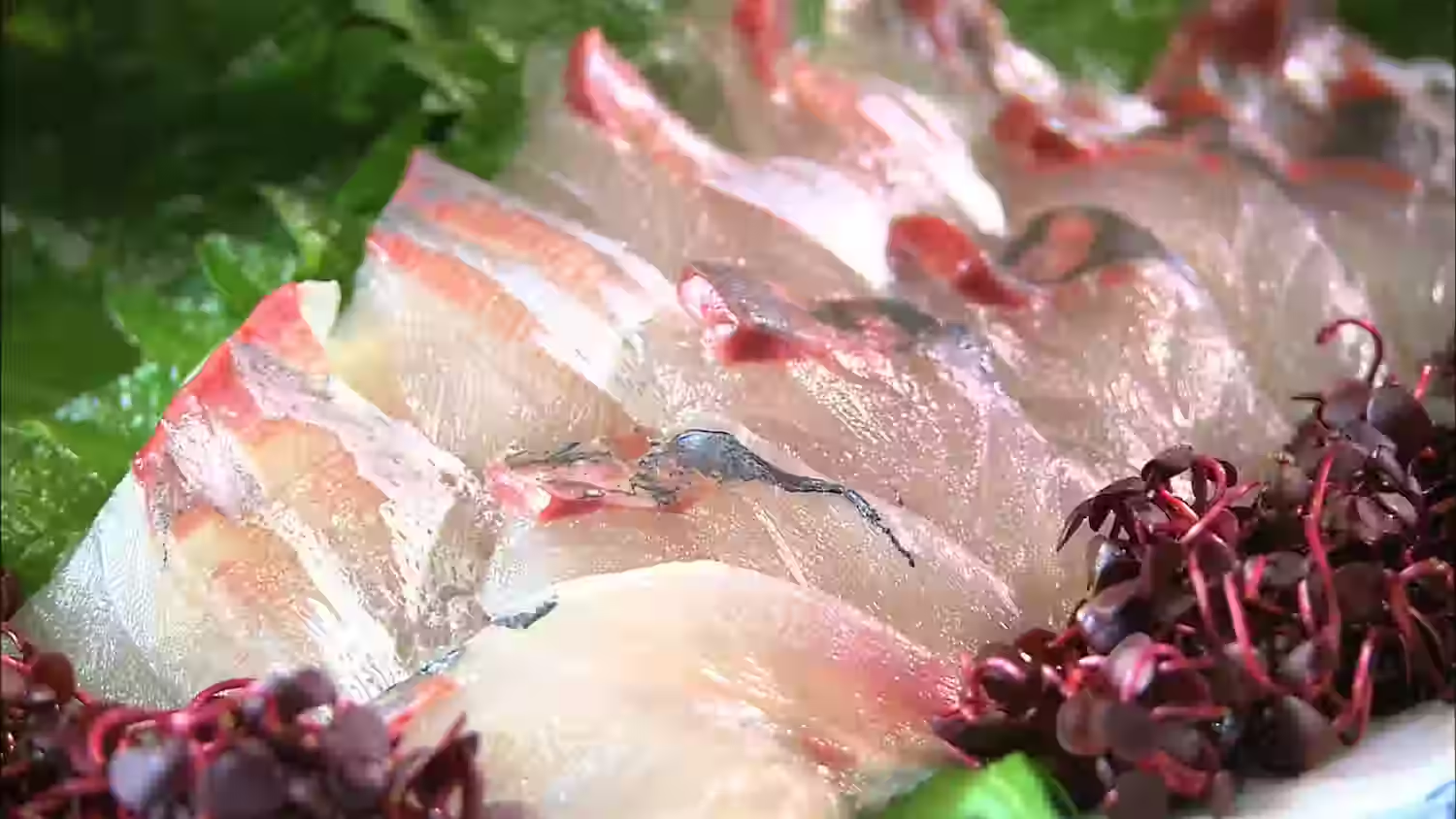
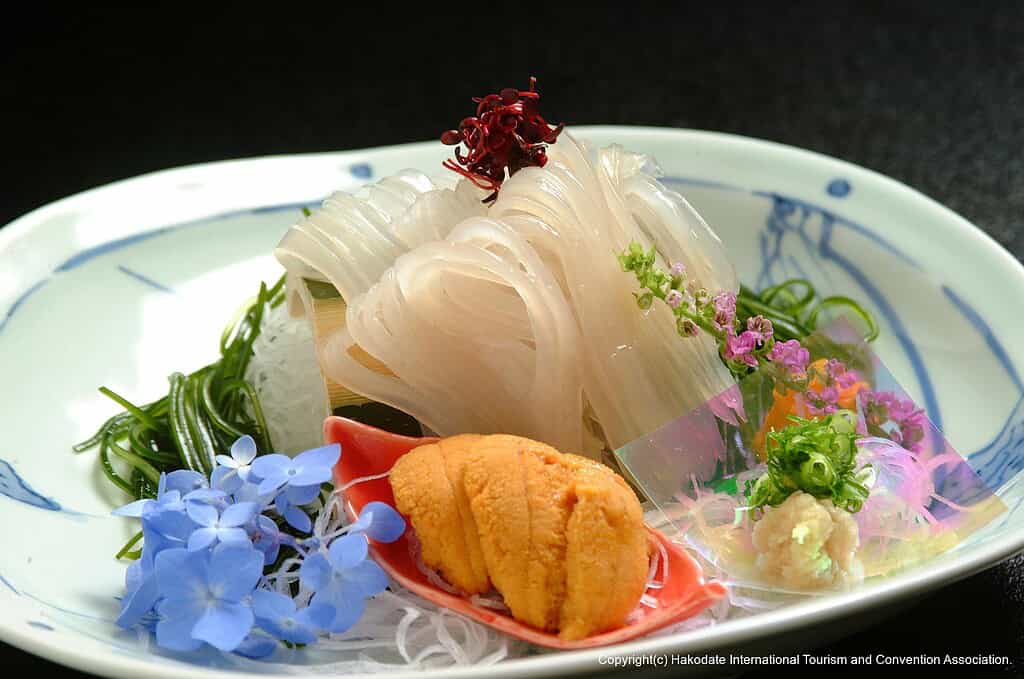
The squid is translucent when freshly cut. Some pieces still move slightly on the plate. That sounds alarming, but it means the fish is genuinely fresh. The texture is firm and slightly sweet, completely different from squid that has been stored or frozen.
Squid species change with the season. Yari ika, or spear squid, is available roughly from January through May. Ma ika, the standard squid, is caught from June through December. The live squid bowl in Hakodate is available year-round in some form.
うに Uni: Worth the Splurge
Fresh uni 海鮮 is Hakodate’s quiet pride. The market’s chairman once corrected a magazine that claimed uni was only good in July. Quality uni is available here across most of the year. October is the one month when supply can run thin, so that is worth knowing.
Hakodate uni is most often Ezo Bafun Uni, a dense, creamy variety with deep ocean flavor. Eaten over rice with wasabi and soy sauce, it requires nothing more. The uni donburi at specialist shops like Uni Murakami is a benchmark experience.
Crab and Scallops
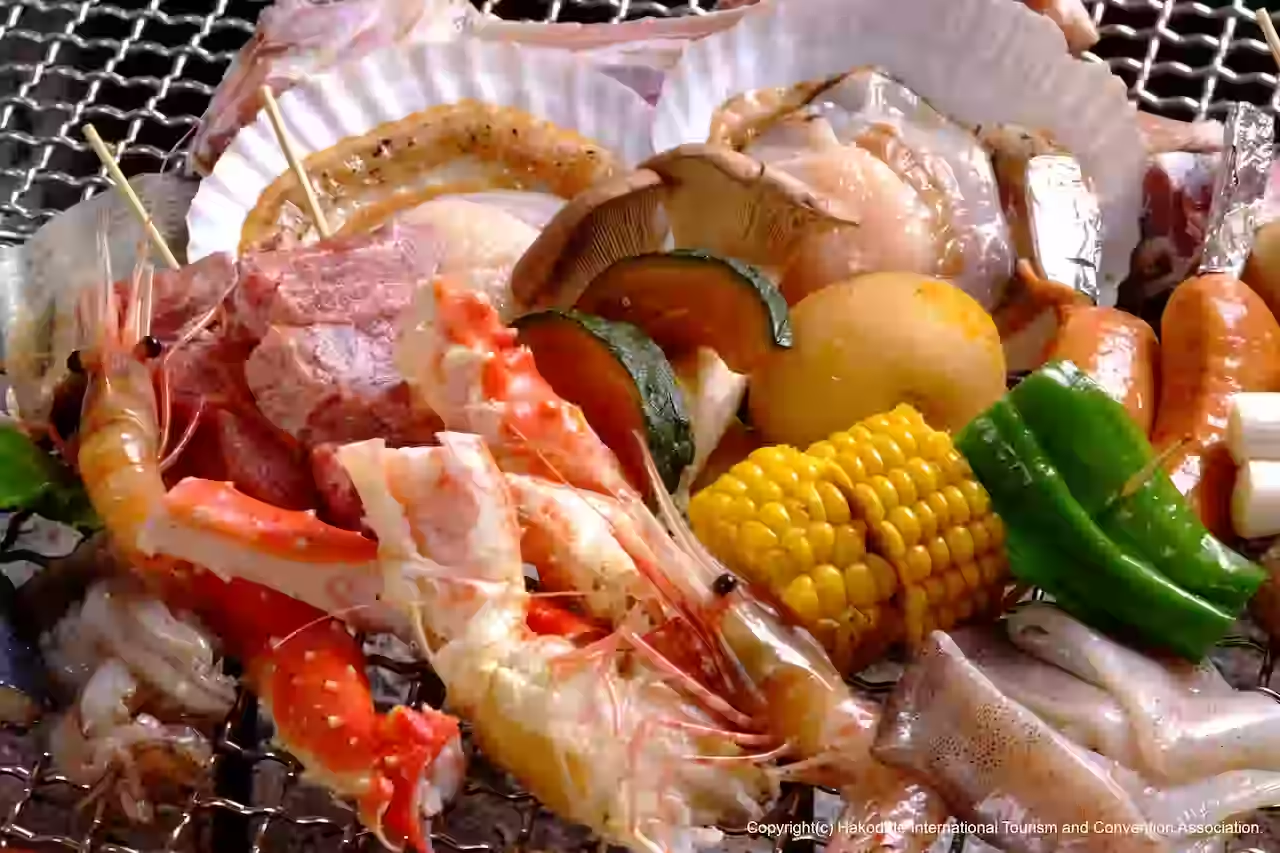
Crab 카니 appears throughout the market in multiple forms. Whole hairy crab is the Hokkaido specialty. Boiled king crab legs, crab flake toppings, and crab-heavy mixed bowls are also common. The crab and scallops combination on a single bowl is popular for good reason. Both ingredients are naturally sweet. Together, they build something richer without feeling heavy.
Scallop quality in Hakodate is consistently high. The local seas produce some of Japan’s finest hotate, and the difference from frozen scallops served elsewhere is immediate.
Sushi and Sashimi
Not everyone wants a bowl at breakfast. Several shops in the market offer nigiri sushi from early morning. You can order individually by piece or as a small set. Sashimi platters are also available. For those who want to sit and eat slowly without committing to a full donburi, this is a solid route.
Why This Market Stands Apart
Most seafood markets in Japan operate well. A few are genuinely exceptional. Hakodate Asaichi falls into the second category, and for specific reasons.
First, geography matters. The sea surrounds Hakodate on three sides. Fish and squid move from boats to vendors in very short time. Second, competition inside the market keeps standards high. Restaurants sit close together. Visitors compare openly. Shops that do not perform simply do not last.
Third, the live element is rare. The live squid pond attracts visitors from across Japan and abroad specifically because it turns eating into an experience. You are not just ordering breakfast. You are participating in something.
The morning seafood breakfast culture here is also distinct from other markets. Arriving at 6:00 AM and eating a full kaisendon with grilled fish and miso soup while the city is barely awake has a quality that is hard to name. It simply feels like the right time and place to be eating well.
Connecting Hakodate to Hokkaido’s Broader Food Identity
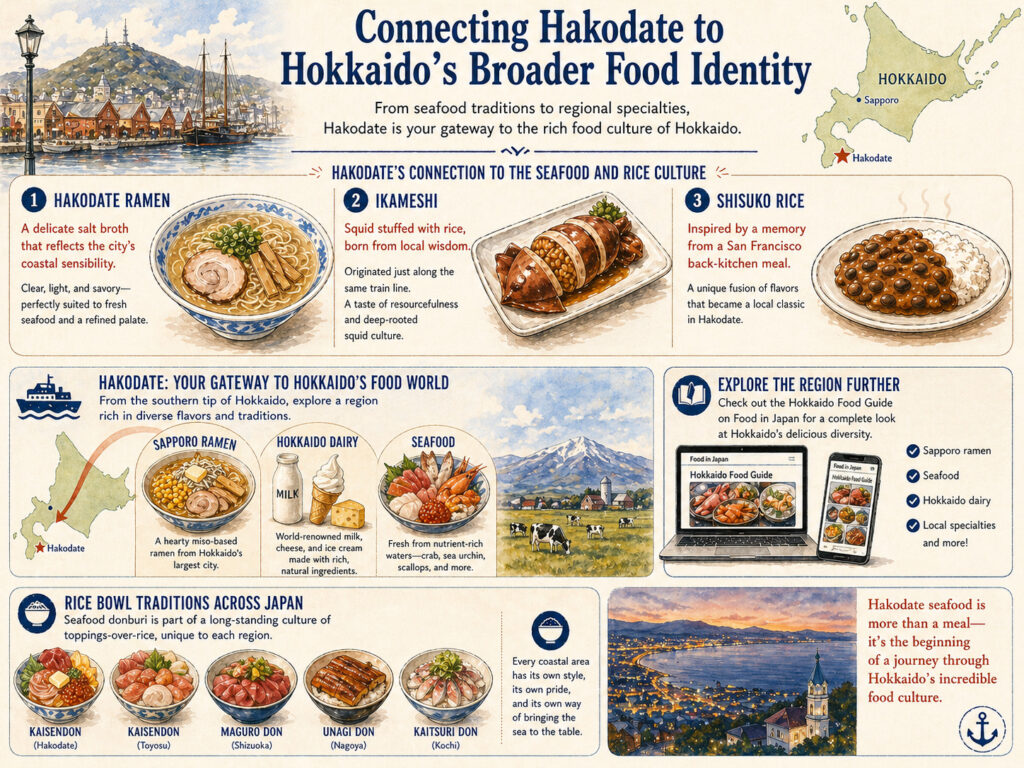
Hakodate’s relationship with seafood runs through everything. Hakodate ramen uses a delicate salt broth that reflects the city’s coastal sensibility. Ikameshi, squid stuffed with rice, originated just along the same train line and shows how deeply squid culture is embedded here.
For a wider view of the region, the Hokkaido food guide on Food in Japan covers everything from Sapporo ramen to Hokkaido dairy. Hakodate seafood is a natural entry point into that broader world.
If you want to compare rice bowl traditions across Japan, the Japanese rice dishes guide offers useful context. The seafood donburi sits within a rich tradition of toppings-over-rice that has developed differently in every coastal region.
Practical Notes Before You Go
The market is open every day, though some shops take Wednesdays off during certain months. Arriving early, before 8:00 AM on weekends, greatly improves your chances at the live squid pond before lines form. The market has two parking lots nearby with space for around 350 cars total. Spending 2,200 yen or more at recommended shops earns one hour of free parking.
If the weather turns, Donburi Yokocho and Ekini Market are both fully indoors. Rain does not have to change your plans.
One honest note: some visitors expect a quiet, undiscovered gem. Hakodate Asaichi is not that. It is well-known, frequently busy, and popular with tour groups. That said, the seafood quality remains genuine. Popularity has not softened the standards, which is ultimately what matters.
References
- Hakobura – Hakodate Morning Market Seafood Feature: https://www.hakobura.jp/features/33
- Hakobura – Live Squid Fishing Pond (Ikuri Pond): https://www.hakobura.jp/spots/329




Comments