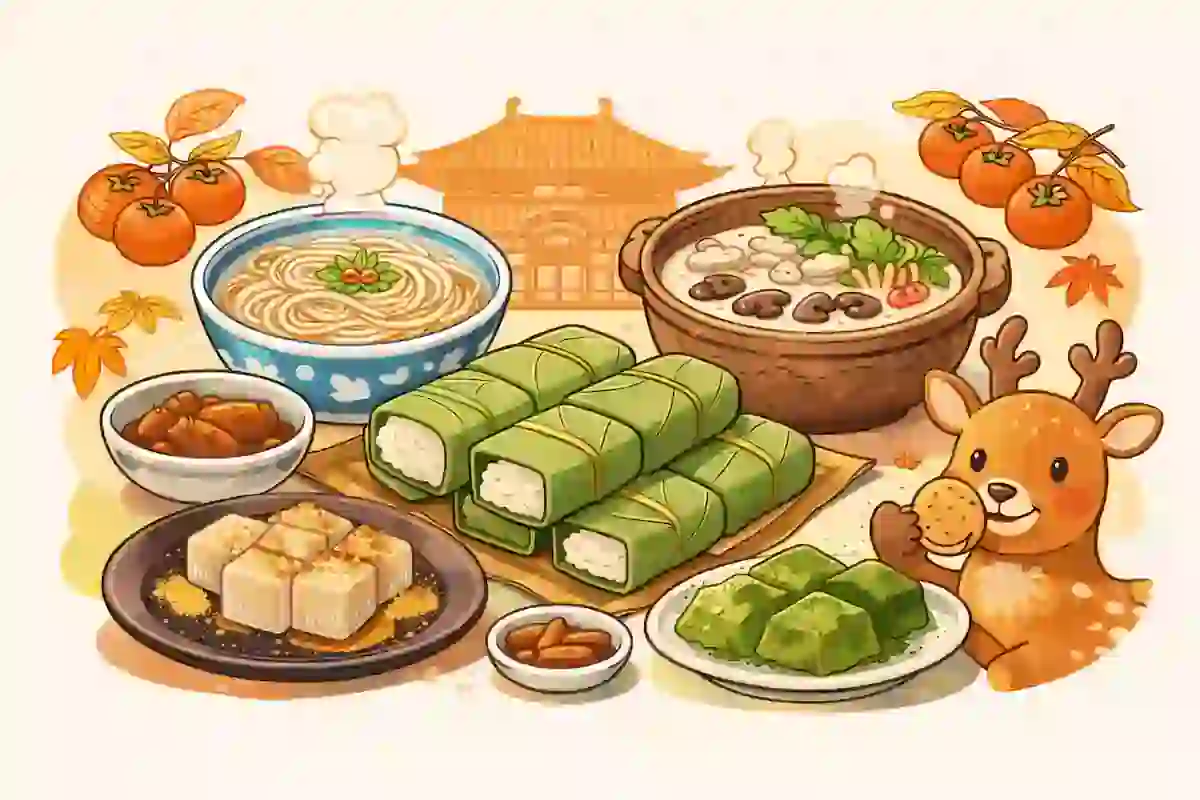
Nara is Japan’s oldest culinary city. As the country’s first permanent capital (710–784 AD), it was the birthplace of Buddhist vegetarian cooking, the origin of Japan’s somen noodle tradition, and the place where persimmon leaf sushi was invented as preserved food for mountain villages. Nara’s cuisine is defined by Kakinoha Zushi, Miwa Somen, Asuka Nabe, Yoshino Kuzu sweets, and a reverence for Yamato vegetables cultivated since ancient times. This guide covers 20 essential dishes with prices, the best areas, and insider tips.
Kakinoha zushi is Nara’s most iconic food: small portions of vinegared rice topped with salted mackerel or salmon, wrapped tightly in a persimmon leaf and pressed overnight. The persimmon leaf’s natural tannins act as a preservative and impart a subtle, earthy fragrance to the rice. Originally developed in the Yoshino mountain region before refrigeration, the fish was salted and transported 100km from the Kumano Sea along the “Mackerel Road” — persimmon leaves kept it fresh along the way.
The leaf is not eaten; unwrap at the table and eat the compact sushi in one or two bites. Hiraso and Izasa are the two most celebrated producers, both available near Kintetsu Nara Station.
Buy kakinoha zushi in the morning for the best texture — pressed overnight, they improve after resting. The mackerel version is traditional; salmon is milder for those new to salted fish. Do not dip in soy sauce.
2
Ayu Pressed Sushi
鮎の押し寿司 · Seasonal Sweetfish Sushi
¥¥¥ · ¥1,800 to ¥3,500 (~$12 to $23) · May–Oct only
Seasonal
Nara’s clear mountain streams produce ayu (sweetfish) which appears in seasonal pressed sushi from May through October. The Yoshino River’s ayu is prized for its clean, slightly sweet flesh with a light aroma — grilled ayu is the more common preparation, but pressed sushi using lightly salted ayu represents one of Nara’s most refined seasonal eating experiences. Traditional ryokan in the Yoshino area serve it as part of kaiseki sets during the fishing season.
Ayu pressed sushi is only available May–October. Book ahead at Yoshino ryokan specifically for this dish — it is rarely found in Nara City itself.
🍜
Noodles
Nara is the birthplace of somen — Japan’s most ancient noodle tradition, over 1,300 years old
Miwa somen is Japan’s oldest noodle tradition, originating at Omiwa Shrine in Sakurai City over 1,300 years ago. Hand-stretched in winter air to 0.3–0.5mm diameter, then aged 1–2 years in warehouses, the noodles develop a firm “koshi” (springy resistance) that does not go soft in cold broth. Served cold with dipping broth in summer (hiyashi somen) or hot in dashi in winter. The “kami-sugi” grade — thinnest, resembling hair — is the premium variety.
The famous Nagashi Somen tradition — catching noodles flowing down a split bamboo flume with chopsticks — originated in the Miwa area and is offered at some restaurants from June to September.
The restaurants at the foot of Mt. Miwa near Omiwa Shrine serve the freshest Miwa somen. The “kami-sugi” grade is worth the premium price at least once.
Yamato yaki somen won the top prize at the first Nara B-grade Gourmet contest in 2011. Miwa somen noodles are stir-fried with Yamato Nikudori heritage chicken, local vegetables, soy sauce, and mirin — transforming the delicate summer noodle into a hearty, savory year-round dish. Miwa somen’s firm texture holds up beautifully to stir-frying without breaking, making it an ideal vehicle for this bold preparation.
Available in the Sakurai City area near the Miwa somen production district. The combination of local somen and local heritage chicken makes this a genuinely Nara-only dish.
Beyond Miwa somen’s famous brand, somen culture permeates all of Nara Prefecture. Nara produces several grades and styles of thin wheat noodles, and the differences in production method, oil type, diameter, and aging period are taken seriously by local connoisseurs. Mountain restaurants serve somen as a course within seasonal menus, pairing it with pickles, mountain vegetable tempura, and seasonal dashi variations throughout the year.
Summer Nagashi Somen (noodles flowing down bamboo flumes) is available at outdoor restaurants in the Yoshino area from June through September — book at least a week in advance.
🍲
Hot Pots
Nara’s mountain winters inspired two extraordinary hot pot traditions unlike anywhere else in Japan
Asuka nabe is one of Japan’s most historically fascinating hot pots: chicken and vegetables simmered in a broth of chicken stock and cow’s milk, seasoned with white miso, soy sauce, and sugar. The dish traces its origin to the Asuka Period (7th century), when a Tang Dynasty envoy introduced dairy products to Emperor Kotoku, inspiring the region to raise dairy cattle. The milk broth creates an unexpectedly elegant, creamy flavor with no bitterness.
Typical ingredients include chicken, Chinese cabbage, onions, shiitake mushrooms, potatoes, carrots, tofu, and shirataki. Like sukiyaki, it is dipped in beaten raw egg before eating. Add udon noodles at the end to finish the milky broth.
Best experienced at traditional ryokan and restaurants in Asuka Village and Kashihara area, 30 min from Nara City by Kintetsu. Available year-round but especially warming in autumn and winter.
Kappa nabe uses a rare cut of beef called “kappa” — found directly under the cow’s hide, so uncommon it doesn’t appear on standard beef charts. Despite the name’s association with the water sprite of Japanese folklore, this is a serious specialty dish. The kappa beef is simmered in a flavorful broth with mizuna greens and seasonal vegetables, producing a tender, richly flavored result entirely unlike standard beef hot pot.
Only a small number of specialty restaurants and traditional inns in Nara serve kappa nabe, often as part of a set menu. Ask at your accommodation for the best current recommendation.
🍚
Rice Dishes & Pickles
Temple porridge and sake-lees pickles — Nara’s most enduring everyday food traditions
Tea okayu (tea porridge) is one of Japan’s oldest surviving everyday foods: rice simmered in hojicha or bancha tea until soft and fragrant, eaten with pickles, kinzanji miso, and simple side dishes. The tea infuses the rice with a subtle roasted aroma and warm amber color. Originally a temple monks’ meal designed to be nutritious while using minimal rice, it became a beloved everyday food throughout Nara and Wakayama Prefectures.
The Kasuga Taisha shrine’s tearoom, Kasuga Kajaya, serves a celebrated version called “Manyo-gayu” — tea porridge with seasonal vegetables that changes monthly. Paired with kakinoha zushi and kuzumochi, it forms the most quintessentially Nara meal available.
Tea okayu restaurants near Kasuga Taisha typically close by 3–4pm. Arrive early for the best tatami room settings with garden views.
9
Nara-Zuke
奈良漬け · Sake Lees Pickles
¥¥ · ¥600 to ¥2,000 per pack (~$4 to $13)
1,300-Year Tradition
Nara-zuke has been produced in Nara for over 1,300 years: white melon, cucumber, watermelon rind, and daikon are layered in sake lees — the solid residue from sake pressing — and aged for 2–4 years. The result is an amber-colored pickle with a complex flavor — savory, slightly sweet, earthy, and rich with umami. Nara is famous for its sake brewing tradition (Nara was home to Japan’s first “temple sake”), and nara-zuke was born directly from that heritage.
Served sliced thinly alongside rice. The most celebrated producer, Kanzaburo, operates near Nara Station. Also available as sets at many souvenir shops on Higashimuki Shopping Street.
Ask for tasting samples before buying — dedicated shops offer different aging periods side by side. The 3-year aged version has the most complex flavor. Nara-zuke has a long shelf life and travels well as a souvenir.
🏯
Temple Food
Nara’s Buddhist heritage created Japan’s most sophisticated vegetarian cuisine — shojin ryori
Shojin Ryori (精進料理) — Buddhist vegetarian cuisine — was born in Nara’s temple kitchens and remains one of Japan’s most profound food traditions. Using no meat or fish, it relies entirely on vegetables, tofu, sesame, mountain herbs, and fermented ingredients. Several Nara restaurants and temple lodgings serve full shojin ryori courses.
Nara’s shojin ryori is served as a multi-course kaiseki-style meal at temple lodgings (shukubo) and dedicated restaurants near major temples. A full course includes sesame tofu (goma dofu), simmered mountain vegetables, miso soup with tofu and fu (wheat gluten), steamed rice, seasonal pickles, and delicate wagashi sweets. Nara’s food culture overview explains the Buddhist culinary influences in depth.
Kofukuji, Toshodaiji, and Yakushiji have associated restaurants or shukubo serving shojin ryori. Book 1–2 weeks in advance. Eating in a traditional tatami room adjacent to a 1,300-year-old temple is itself the main event.
11
Yamato Vegetables
大和野菜 · Ancient Heritage Vegetables
¥¥ to ¥¥¥ · varies by dish
1,000+ Year Heritage
Yamato vegetables are 17 heritage varieties cultivated in Nara since ancient times, many documented in 8th-century records. Key varieties include Yamato Masubi greens, Kintoki carrots (brilliant red, sweeter than modern varieties), Yamato yams (intensely sticky and nutritious), Takayama burdock, and Ise imo (sweet mountain potato). These ingredients appear throughout Nara’s restaurant menus as prized seasonal produce and are central to both shojin ryori and kaiseki cooking.
The Nara City farmers’ market near Kintetsu Nara Station (open weekends) sells Yamato vegetables directly from local growers. Several Naramachi restaurants post seasonal menus featuring whichever varieties are currently at peak.
🍱
Local Specialties
Dishes and ingredients found only in Nara, shaped by mountain geography and ancient history
Yoshino kuzu is Japan’s finest arrowroot starch, produced exclusively in the Yoshino mountains by hand-extracting starch from kuzu plant roots. The resulting powder produces kuzumochi (translucent, silky wagashi) and kuzukiri (chilled kuzu noodles in syrup) with a texture and delicacy impossible to replicate with commercial starch. Yoshino kuzu has been prized since the Nara Period as both a culinary and medicinal ingredient.
The Yoshino mountain town (90 min from Nara City, famous for cherry blossoms) has several specialty kuzu shops where artisans demonstrate the production process and sell fresh kuzumochi made that morning.
Fresh kuzumochi from Yoshino must be eaten within hours — it firms up irreversibly as it cools. Buy and eat on-site for the transcendent version. Packaged kuzuyu (kuzu hot drink sachets) travel well as a souvenir.
13
Deer Crackers (Shika Senbei)
鹿せんべい · Sacred Deer Wafers
¥ · ¥200 per bundle (~$1.30)
Nara Park Icon
Shika senbei — thin rice flour and wheat bran crackers sold throughout Nara Park — are primarily for feeding the famous sacred deer, but are technically edible for humans: plain, lightly sweet, and cracker-like. The experience of buying a bundle and being surrounded by Nara’s bow-trained deer is one of the most photographed food moments in Japan. The deer are national treasures and have been sacred to Kasuga Taisha shrine since the 8th century.
Hold the crackers high and bow — Nara’s deer are trained to bow back before accepting food, a 300-year-old tradition. Approach from the front; deer can be persistent and occasionally nippy. Sold by vendors throughout Nara Park from early morning.
14
Yamato Nikudori Chicken
大和肉鶏 · Nara Heritage Chicken
¥¥¥ · ¥2,000 to ¥5,000 (~$13 to $33)
Local Breed
Yamato Nikudori is Nara’s certified heritage chicken breed, raised free-range in the Yamato highlands. The meat is darker, firmer, and more richly flavored than standard chicken, with a mineral depth from the region’s mountain water and diet. It is used in Asuka nabe, Yamato yaki somen, yakitori, and oyakodon throughout Nara’s traditional restaurants. The combination of local chicken and local vegetables in a single dish is a hallmark of Nara’s farm-to-table philosophy.
Look for the “大和肉鶏” label on menus — restaurants using certified Yamato Nikudori often highlight it as a premium ingredient. Yakitori restaurants in Naramachi are a good starting point.
🍡
Sweets and Confections
Nara’s ancient capital status created Japan’s most refined wagashi and kuzu-based sweet traditions
Warabi mochi originated in Nara Prefecture and is the city’s most beloved wagashi sweet. Made from bracken (warabi) starch, water, and sugar, it has a silky, jelly-like texture that dissolves on the tongue — lighter and more delicate than rice-based mochi. Served dusted with kinako (roasted soybean flour) or topped with anko (sweet red bean paste) and eaten with a toothpick. Senjyuan, with four branches in Nara City, is the most celebrated producer. Their matcha flavor version is a modern classic alongside the traditional kinako version.
Warabi mochi is at its best within hours of being made — buy from shops producing it fresh daily. The Naramachi district has several traditional confectionery shops that make it fresh each morning.
Kuzumochi made from Yoshino kuzu starch is a translucent, gently wobbling confection of extraordinary delicacy. Set in cold water and cut into cubes, served with kuromitsu (black sugar syrup) and kinako. The texture is between silken tofu and firm jello, with a clean flavor that lets the kuromitsu and kinako take center stage. Fresh kuzumochi from Yoshino artisans is one of the finest wagashi experiences in Japan — far superior to versions made with cheaper substitutes.
Kuzuya Nakai Shunpudo in Yoshinoyama is the benchmark producer, using only water and genuine Yoshino kuzu flour. Budget ¥800 for a portion eaten on-site in their traditional setting.
17
Persimmon Sweets
柿スイーツ · Seasonal Persimmon Confections
¥¥ · ¥400 to ¥1,000 (~$3 to $7) · Autumn only
Autumn Special
Nara is one of Japan’s premier persimmon-growing regions. From September through November the city’s confectioneries and cafes transform their menus around the fruit. Hoshigaki (sun-dried persimmon dusted in white starch), persimmon roll cake, persimmon jam, persimmon ice cream, and wagashi incorporating persimmon paste are all served during autumn. The Nishiyoshino area of Gojo City — known as “Persimmon Village” — produces Nara’s finest dried persimmons, considered among the best in Japan.
Visit Nara in October–November for peak persimmon season. The Naramachi district’s cafes create elaborate seasonal menus around local persimmons available for only 6–8 weeks.
18
Nara Wagashi
奈良の和菓子 · Ancient Capital Confections
¥¥ · ¥300 to ¥800 per piece (~$2 to $5)
Traditional Sweets
Nara’s wagashi tradition predates Kyoto’s by nearly a century. The city’s confectioneries produce namagashi (fresh seasonal wagashi) incorporating Yamato tea, Yoshino kuzu, warabi starch, persimmon, and mountain chestnuts. Designs are inspired by Nara’s UNESCO Heritage sites — deer motifs, Great Buddha shapes, and autumn leaves appear in handmade confections year-round. Naramachi’s small traditional shops are the best places to find handcrafted seasonal pieces.
Buy namagashi from Naramachi confectioneries in the morning when freshest — most are made that day and should be consumed within 24 hours. Deer-shaped mochi is the most photographed Nara souvenir sweet.
Kaiseki ryori is Japan’s highest form of multi-course cuisine, and Nara’s ancient temples and historic ryokan offer some of the most meaningful kaiseki experiences in the country. A full kaiseki course unfolds through 8–12 courses — sakizuke (amuse-bouche), soup, sashimi, grilled, simmered, and steamed dishes, rice and pickles, and wagashi — each course using seasonal Yamato vegetables, local tofu, mountain herbs, and Yamato Nikudori chicken as its foundation.
Nara’s kaiseki is distinguished by the use of ingredients rooted in the region’s 1,300-year agricultural heritage: Kintoki carrots, Yamato yams, heirloom burdock, and freshwater ayu from the Yoshino River appear in courses that change entirely with each season. Many traditional ryokan in Nara City and the Yoshino area offer kaiseki dinner as part of overnight stay packages — the most immersive way to experience the full depth of Nara’s cuisine.
Book kaiseki courses at Nara ryokan at least 1–2 weeks in advance, especially during cherry blossom season (late March–April) and autumn foliage (October–November). Ask about “Yamato yasai kaiseki” (大和野菜懐石) — courses specifically featuring heritage Yamato vegetables — for the most distinctive Nara experience.
Kakigoori (shaved ice) has developed into one of Nara’s most celebrated summer food traditions. Nara’s artisan kakigoori scene is built on the region’s extraordinary local ingredients: natural shaved ice flavored with syrups made from Yoshino kuzu, Nishiyoshino persimmon, locally harvested azuki beans, Yamato matcha, and seasonal mountain fruits. Unlike the simple festival-stall versions found across Japan, Nara’s specialty kakigoori shops layer flavors, textures, and toppings into elaborate seasonal creations that change monthly.
The city has quietly become one of Japan’s top kakigoori destinations, with dedicated shops in Naramachi and the area around Kofukuji attracting visitors specifically for the dessert. Many shops use natural ice blocks harvested from mountain springs and shaved to an ultra-fine snow-like texture that is worlds apart from machine-crushed ice. Available from May through September, with peak season in July and August.
Nara’s kakigoori shops often have long queues on summer weekends — arrive before 11am or after 3pm for shorter waits. Flavors featuring Yoshino kuzu syrup or local persimmon are the most distinctive Nara-specific varieties worth seeking out.
📍 Where to Eat by Area
🦌 Nara Park Area
🦌 Shika senbei (deer crackers)
🍡 Warabi mochi shops
☕ Traditional tea houses
🍱 Kakinoha zushi takeout
🏘 Naramachi
🍡 Artisan wagashi shops
🥒 Nara-zuke specialty stores
🍚 Tea okayu restaurants
🍵 Traditional machiya cafes
🚉 Kintetsu Nara Station
🎁 Kakinoha zushi (Hiraso/Izasa)
🥒 Nara-zuke souvenir shops
🍜 Miwa somen restaurants
🍡 Kuzumochi takeaway
⛩ Kasuga / Temple Area
🍚 Tea okayu (Kasuga Kajaya)
🥗 Shojin ryori set meals
🌿 Yamato vegetable cuisine
🍡 Shrine precinct sweet shops
🌸 Yoshino (Day Trip)
🍡 Fresh kuzumochi / kuzukiri
🍣 Ayu pressed sushi (May–Oct)
🍜 Nagashi somen (June–Sep)
⏱ 90 min from Nara by Kintetsu
🏛 Asuka / Kashihara
🍲 Asuka nabe restaurants
🐔 Yamato Nikudori dishes
🚲 Cycling + farm lunch culture
⏱ 30 min from Nara by Kintetsu
Budget Breakdown: A Day of Eating in Nara
Meal
Dish
Cost (¥)
Cost (USD)
Breakfast
Tea okayu set with nara-zuke
¥900–¥1,500
~$6–$10
Lunch
Kakinoha zushi box (5 pieces)
¥1,200–¥1,800
~$8–$12
Snack
Warabi mochi + matcha
¥500–¥800
~$3.50–$5
Dinner (casual)
Miwa somen + side dishes
¥1,200–¥2,000
~$8–$13
Dinner (special)
Asuka nabe course
¥3,500–¥6,000
~$23–$40
Day total (casual)
~¥3,800–¥6,100
~$25–$41
💡 Practical Tips for Eating in Nara
🕐 Hours and Access
Most Nara restaurants and wagashi shops open from 10am and close by 5–6pm — earlier than other Japanese cities. Tea okayu and temple-adjacent restaurants often close by 3pm. Nara is 35 minutes from Kyoto by Kintetsu Limited Express (¥680), 45 minutes by JR, and 60 minutes from Osaka (Namba) by Kintetsu. Naramachi and Nara Park are fully walkable from both Kintetsu Nara Station and JR Nara Station (15 minutes on foot).
💳 Cash vs. Card
Many traditional wagashi shops, small restaurants, and Naramachi cafes are cash-only. Major souvenir shops near Kintetsu Nara Station accept cards. Bring ¥5,000–¥8,000 in cash for a full day of eating. ATMs at Japan Post and 7-Eleven near both Nara stations accept international cards.
🌿 Dietary Restrictions
Nara is one of Japan’s most vegetarian-friendly cities due to its Buddhist food heritage. Shojin ryori is entirely plant-based. Tea okayu, warabi mochi, and Yoshino kuzu sweets are all vegetarian and most are vegan. Miwa somen is vegan when served cold with vegetable dashi.
🎁 Best Souvenir Foods
Kakinoha zushi (vacuum-sealed, keeps 1 week), Nara-zuke (long shelf life, excellent gift), Yoshino kuzu powder / kuzuyu sachets (lightweight, travel well), dried Miwa somen (premium quality), and autumn persimmon sweets. Kintetsu Nara Station’s souvenir floor stocks all of these from multiple producers.
Nara Food FAQ
What is Nara’s most famous food?
Kakinoha zushi (persimmon leaf sushi) is Nara’s most iconic dish — small pressed sushi wrapped in persimmon leaves, developed in the Yoshino mountains as preserved food before refrigeration. Nara-zuke (sake lees pickles) and Miwa somen are the other two foods most closely identified with the city.
Is Nara good for vegetarians?
Nara is one of Japan’s best cities for vegetarians and vegans. Shojin ryori (Buddhist temple cuisine) is entirely plant-based and widely available. Tea okayu, warabi mochi, kuzumochi, and Yoshino kuzu sweets are all vegetarian and mostly vegan.
What is Asuka Nabe and where can I eat it?
Asuka nabe is a milk-based chicken hot pot from the Asuka region of Nara, tracing origins to the 7th century when dairy farming was introduced. Served at traditional restaurants and ryokan in Asuka Village, 30 minutes from Nara City by Kintetsu, where it is considered an everyday local comfort food.
What is the best season to visit Nara for food?
Autumn (October–November) is peak season for persimmon sweets and seasonal wagashi. Summer (June–September) offers Nagashi somen and fresh warabi mochi at their best. Spring (late March–April) brings cherry blossoms in Yoshino alongside fresh kuzumochi.
Where can I buy the best Kakinoha Zushi in Nara?
Hiraso (sushi restaurant serving kakinoha zushi and tea okayu, 11:30am–8:30pm, closed Mondays) and Izasa are the two most celebrated producers. Both have shops near Kintetsu Nara Station. For takeout, Kakinohazushi Hiraso Todaiji near the station is open 9am–7pm. Buy in the morning when the pressed sushi is at its freshest texture.
What are the best Nara food souvenirs?
Kakinoha zushi (vacuum-sealed, keep refrigerated), Nara-zuke (long shelf life, excellent gift), Yoshino kuzu powder / kuzuyu sachets (lightweight, travel well), dried Miwa somen, and autumn persimmon sweets. All available at Kintetsu Nara Station’s souvenir floor.
Ryo Iwa is the founder and editor of foodinjapan.org. Born and raised in Japan, he writes from regional travel, market visits, and Japanese-language primary sources that rarely reach English readers, including brewing institute publications and industry glossaries. Where a figure cannot be traced to a source, the article says so.
He has been a Google Maps Local Guide for over 10 years, with more than 1,800 reviews and over 41,000 photos viewed hundreds of millions of times. He previously spent two decades as an IT consultant in Japan, the US, and the UK.

















Comments