





Here’s a small puzzle. You order something called a yakitori bento. Yakitori means grilled chicken. You open the box, and inside you find grilled pork. Nobody apologizes. Everyone acts like this is completely normal. In Hakodate, it is.
That quiet contradiction is exactly what makes 函館の焼き鳥弁当 Hakodate yakitori bento worth understanding. It’s not a mistake. It’s a local food tradition with its own logic, its own history, and a loyal following that spans decades.
What Is Hakodate Yakitori Bento?
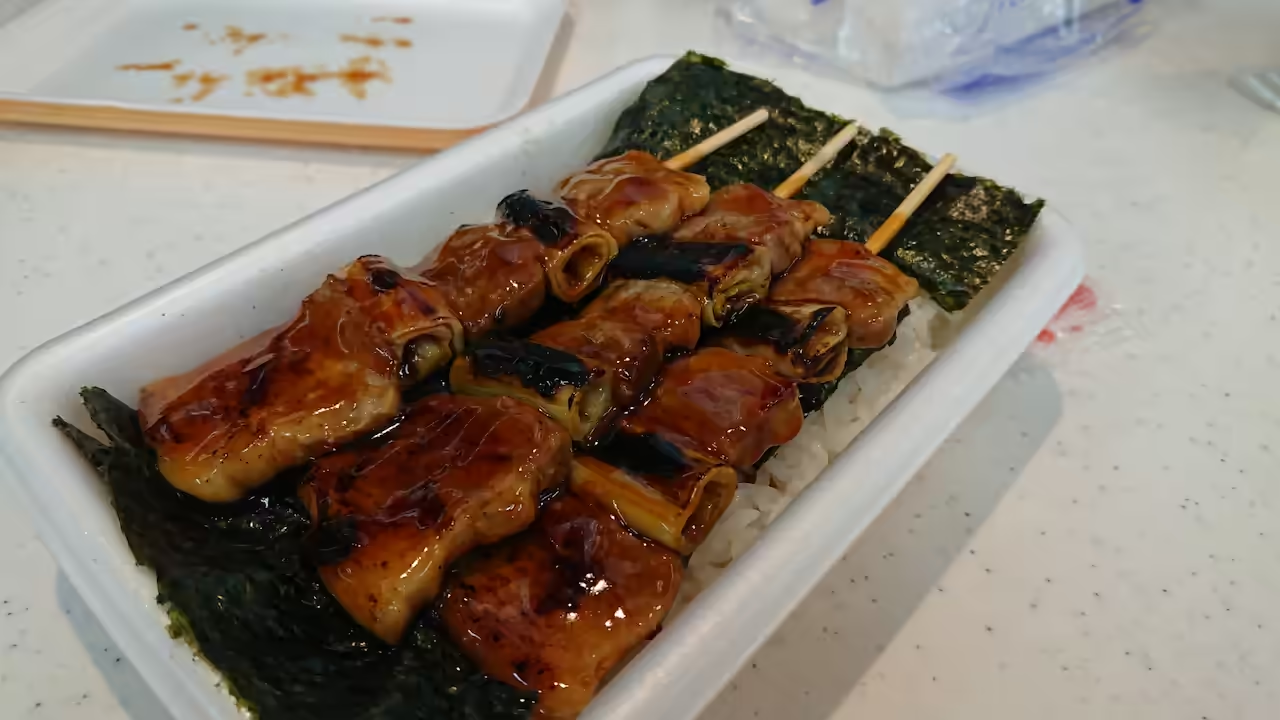
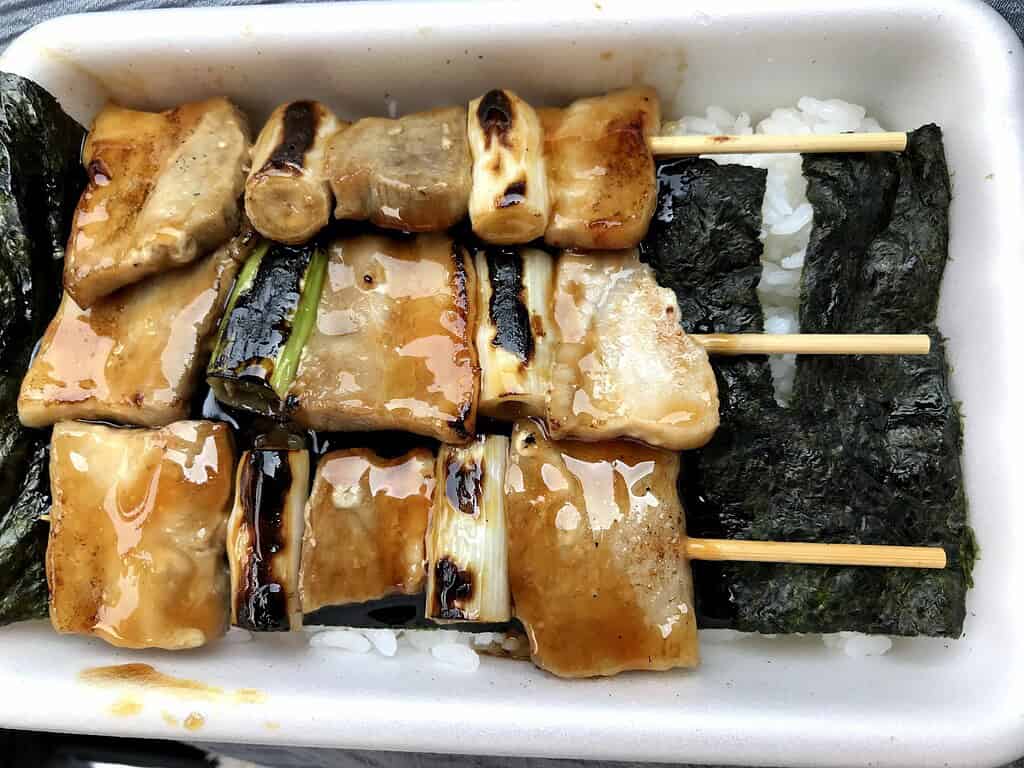
At its core, this is a straightforward box meal. Steamed rice sits at the bottom. A sheet of dried seaweed covers it. On top, freshly grilled pork skewers. That’s the whole thing.
But the details matter. The やき弁 yakibento, as locals sometimes call it, is made entirely to order. Nothing is prepared in advance. When you place your order, the staff lights the grill. You wait. The skewers cook in front of you, sometimes sprayed with local red wine from Hakodate Wine to tenderize the meat and deepen its flavor. What arrives is genuinely hot, genuinely fresh, and significantly better than any pre-packaged bento can be.
The name ハセガワストア Hasegawa Store is inseparable from this dish. This local convenience store chain, affectionately called “Hasesuto” by Hakodate residents, created the yakitori bento and has been serving it since 1979. It remains the original and the definitive version.
The History: A Convenience Store That Changed Hakodate
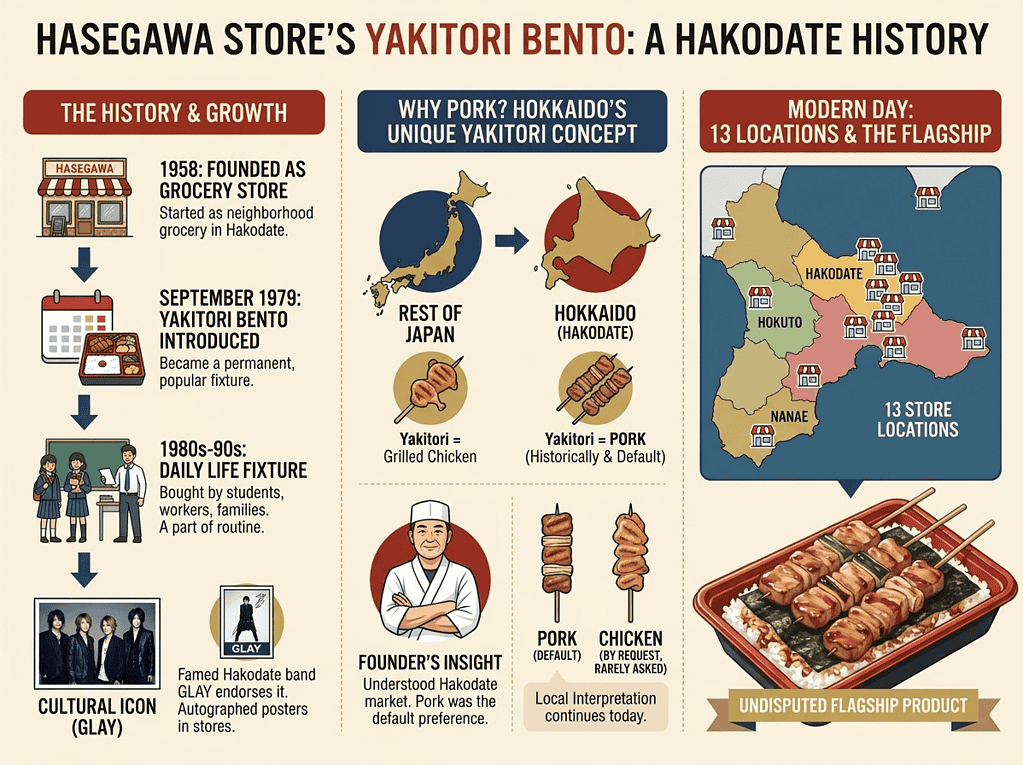
Hasegawa Store was founded in 1958. It started as a neighborhood grocery store in Hakodate, growing slowly through the postwar era. The yakitori bento appeared on the menu in September 1979 and became a permanent fixture almost immediately.
Why pork instead of chicken? The answer connects to how Hokkaido uses the word yakitori. In much of the rest of Japan, yakitori means grilled chicken on a skewer. But in Hokkaido, the term has historically included pork. Several long-established yakitori restaurants in Hakodate have always worked with pork as their primary meat. Hasegawa Store’s bento reflected that local interpretation.
There’s also the practical angle. The founder of Hasegawa Store had experience in restaurant work and understood what sold in Hakodate. Pork was the default. Chicken was available if you asked for it specifically, but nobody really did. That dynamic continues today.
The dish took off. By the 1980s and 1990s, it had become a fixture in Hakodate daily life. Students bought it after school. Workers picked it up on the way home. Families made it part of weekend routines. The band GLAY, one of Japan’s biggest rock groups and famously from Hakodate, have spoken publicly about growing up eating it. Autographed posters from the band hang in some Hasegawa Store locations. That kind of cultural connection doesn’t happen to a forgettable product.
Today, Hasegawa Store operates 13 locations around Hakodate, Hokuto, and Nanae. The yakitori bento remains the undisputed flagship.
What Does Hasegawa Store Yakitori Bento Taste Like?
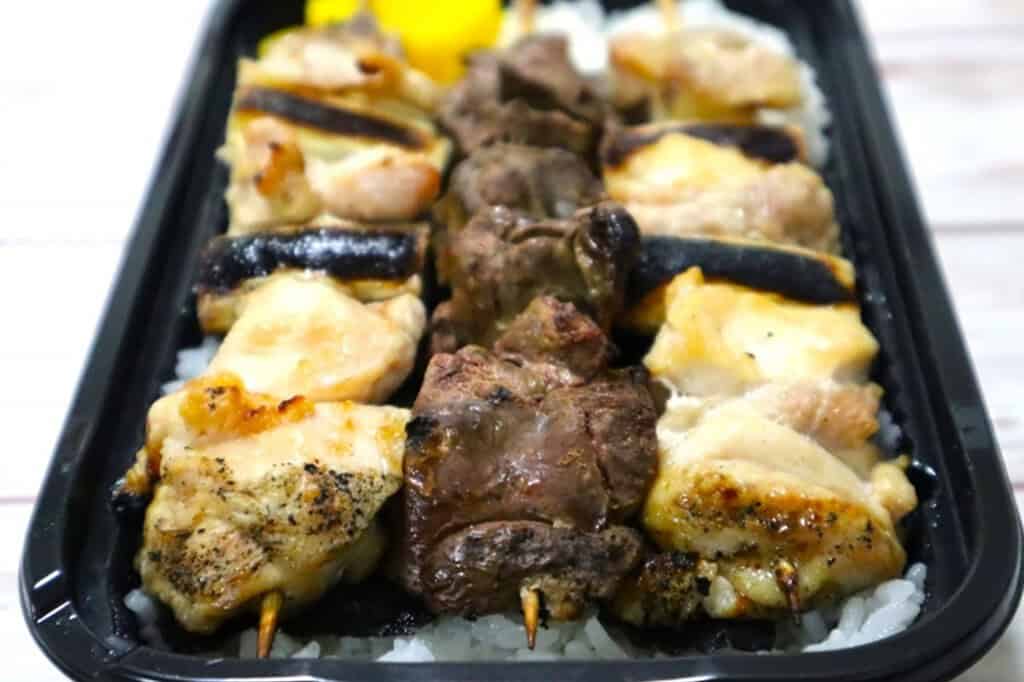
The short answer: bold, savory, smoky, and satisfying in a way that’s hard to replicate at home.
The pork is typically shoulder or belly cuts, threaded with green onion on the skewer. The green onion is prepared carefully. Only the soft inner parts are used. The balance between fat and lean meat is checked during preparation. None of this is accidental.
The seasoning options are where things get interesting. There are five: tare (sweet soy sauce glaze), salt, shio-dare (a salt-based sauce), umakara (a spicy version), and miso. Miso is a house specialty. It combines white miso, aged miso, and a small amount of doubanjiang for warmth without overwhelming heat.
Most locals recommend tare for a first visit. It’s the most approachable and plays well against the seaweed and rice. The sweetness of the glaze, the smoke from the open flame, the faint bitterness of the nori, the clean backdrop of plain steamed rice. Together they work as a complete thing.
The pork itself doesn’t have the heavy richness that can sometimes overwhelm grilled pork dishes. The red wine spray during cooking contributes to a mellower, more rounded flavor. Some people eat several skewers without feeling like they’ve had too much. Others find one small-size bento enough. The portion sizes are generous either way.
Why Yakitori Bento Is Famous in Hakodate
Part of it is the product itself. But a bigger part is what Hasegawa Store chose not to do.
They never pre-made the bento, optimized for speed over quality and opened locations outside of the southern Hokkaido area. Every single bento is grilled after you order it. That commitment, sustained for over 40 years, builds a particular kind of trust.
Hakodate is a city that takes its local food identity seriously. Hakodate ramen is one of Hokkaido’s three great ramen styles. The morning market is famous across Japan for its fresh seafood. Ikasomen draws people specifically to the city. The yakitori bento sits in this same current. It isn’t a tourist invention. It’s something residents genuinely eat, regularly, and have eaten for most of their lives.
That authenticity is readable. Visitors sense it when they walk into a Hasegawa Store and see the grill at the center of the shop, surrounded by order sheets and a small queue. It doesn’t feel like a performance. It feels like lunch.
For anyone exploring Hokkaido’s food culture, the yakitori bento offers something that larger, more famous dishes don’t always provide: immediate accessibility, genuine local specificity, and a price point that lets you order it twice without thinking too hard.
How to Order at Hasegawa Store
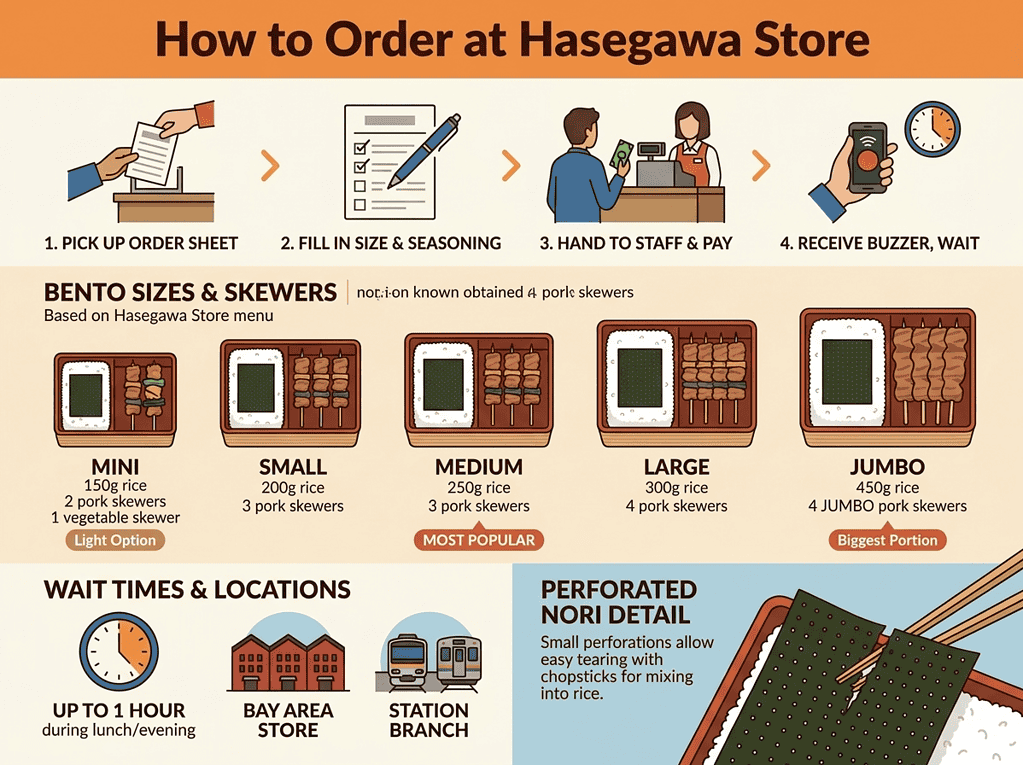
The ordering system is specific to this shop. Walk in, pick up an order sheet from the counter, fill in your size and seasoning choice, hand it to the staff, and pay. You receive a buzzer. When it goes off, your bento is ready.
Sizes range from Mini (150g rice, two pork skewers, one vegetable skewer) to Jumbo (450g rice, four jumbo pork skewers). The medium is the most popular starting point. If you’re visiting as part of a longer day of eating around Hakodate, the small or mini gives you the experience without derailing the rest of the day.
During busy periods, including lunch hours and early evenings, wait times can stretch. An hour is not unusual at popular branches. The Bay Area store, conveniently located near the Kanemori Red Brick Warehouses and directly next to Lucky Pierrot, tends to be the most visited by out-of-towners. The station branch is best for anyone working around train connections.
The seaweed layer in the bento has small perforations. These aren’t accidental. They allow you to tear the nori easily with chopsticks, mixing pieces of it into the rice. It’s a small thoughtful detail in a product that has been refined over more than four decades.
Yakitori Bento Today
The yakitori bento is now listed by multiple sources as one of the must-try local foods of southern Hokkaido. It appears in travel guides, food magazines, and prefectural tourism materials alongside Hokkaido’s broader food traditions.
Hasegawa Store has also expanded the concept slightly over the years. A “W” version mixes salted pork belly directly into the rice beneath the skewers. Monthly limited-edition bentos appear seasonally. Individual skewers can be ordered à la carte: heart, liver, chicken skin, tail. The base remains unchanged.
It’s worth sitting with the original contradiction one more time before visiting. A chicken-named dish filled with pork. A convenience store that grills everything fresh. A local chain that has never expanded beyond its home city. In Hakodate, all of this makes perfect sense. The yakitori bento doesn’t explain itself. It just delivers, every time, to everyone who orders it.
References
- Good Luck Trip – Hasegawa Store Bay Area: https://www.gltjp.com/en/directory/item/14571/
- Domingo – Yakitori Bento Deep Dive: https://domingo.ne.jp/en/article/41325
- More About Japan – Hasegawa Store’s Famous Yakitori Bento: https://moreaboutjapan.com/hasegawa-stores-yakitori-bento/
Hakodate Yakitori Bento FAQ
What is Hakodate Yakitori Bento?
Hakodate Yakitori Bento is a famous convenience store meal from Hokkaido. Hasegawa Store staff make it with grilled pork skewers over seaweed and rice. Food lovers know it for using pork instead of chicken despite the name “yakitori.”
Where does Hakodate Yakitori Bento come from?
Hakodate Yakitori Bento originates from Hakodate City. The local convenience store chain Hasegawa Store has sold this comforting meal to hungry customers since 1978.
What does Hakodate Yakitori Bento taste like?
Hakodate Yakitori Bento has a savory, sweet, and smoky flavor. The texture feels incredibly tender and juicy. Diners often compare it to classic grilled meat bowls but with a rich garlic-soy glaze.
Where can I eat Hakodate Yakitori Bento in Japan?
You will find this authentic bento exclusively in the Hakodate area. Famous spots include the original Hasegawa Store branches. Staff grill the meat fresh right inside these local convenience stores.
How much does Hakodate Yakitori Bento cost?
Hakodate Yakitori Bento typically costs between 500 and 800 yen per box. Prices vary depending on the portion size and the extra meat skewers you select.
Is Hakodate Yakitori Bento vegetarian or vegan friendly?
The traditional Hakodate Yakitori Bento contains pork meat and a soy glaze. Vegans and vegetarians cannot eat this specific meal, though they can easily purchase simple rice balls at the same store.
What are the main ingredients in Hakodate Yakitori Bento?
The main ingredients in Hakodate Yakitori Bento include skewered pork, green onions, nori seaweed, and white rice. The sweet and savory garlic-soy sauce gives the dish its distinctive addictive taste.
Can I make Hakodate Yakitori Bento at home?
Yes, you can easily cook this meal at home. Supermarkets stock the key ingredients — pork belly blocks, leeks, and sweet soy sauce. Home cooks grill the skewered pork and place it over seaweed rice effortlessly.
What is the difference between Hakodate Yakitori Bento and regular Yakitori?
The main difference involves the meat selection. The Hakodate specialty features pork belly skewers placed over rice, while regular Yakitori across Japan relies strictly on grilled chicken.
Is Hakodate Yakitori Bento popular outside Japan?
Hakodate Yakitori Bento remains completely unknown outside Japan. You will rarely see this specific pork dish at Japanese restaurants abroad. This nostalgic convenience store meal successfully maintains its legendary status solely within Hokkaido.




Comments