




Some restaurants are worth traveling for. ラッキーピエロ Lucky Pierrot is one of them. It’s not a global chain. You won’t find it in Tokyo or Osaka. Every single one of its 17 locations sits in Hakodate, a small port city at the southern tip of Hokkaido. And yet, people fly in from across Japan just to eat here.
That alone should tell you something.
What Is Lucky Pierrot?
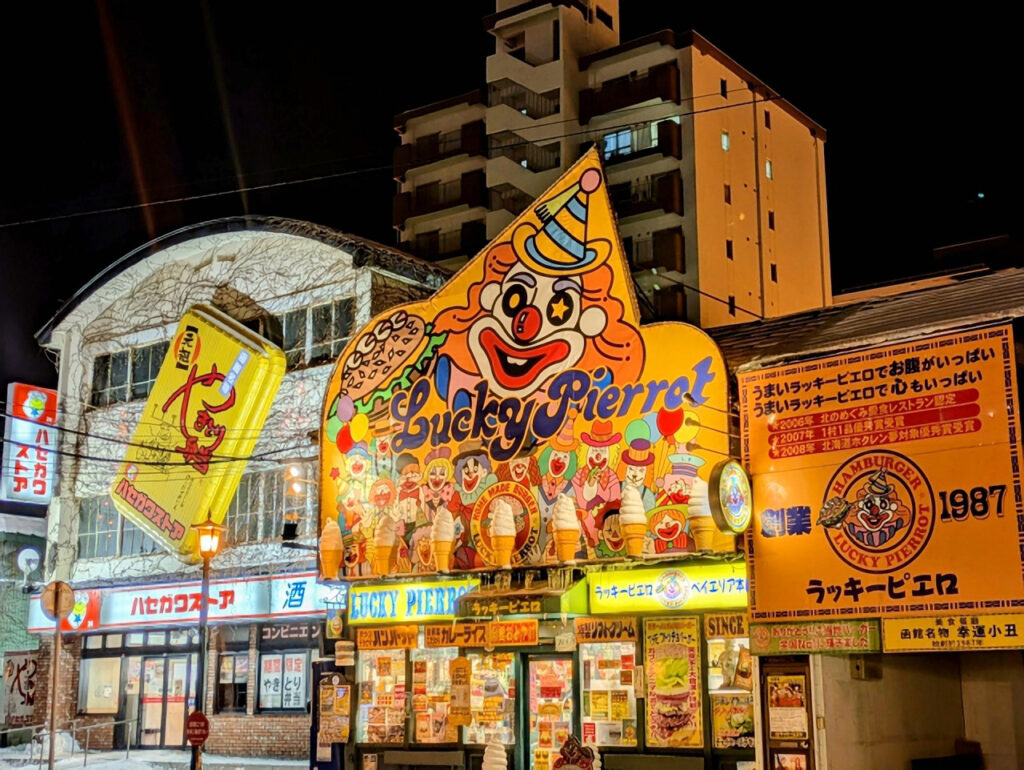
Lucky Pierrot is a local Japanese burger chain founded in Hakodate in 1987. It’s the definition of a 函館名物 Lucky Pierrot burger experience: oversized, made-to-order, and completely unlike anything you’d find at a national chain. The Nikkei newspaper named its signature burger Japan’s best local hamburger. That recognition wasn’t for one moment. It has held that reputation for years.
The chain serves roughly 1.8 million customers a year. For a city of just 240,000 people, that number is remarkable. Locals eat here regularly. Visitors make it a primary stop. There are no Lucky Pierrot locations outside of the Hakodate area. No plans to expand. That’s a deliberate decision, not a limitation.
The History: One Man, One Vision, One City
Ichiro Oh opened the first Lucky Pierrot in 1987. He was an ethnic-Chinese Japanese from Kobe who had moved to Hakodate and fallen in love with the city. He had previously run a Chinese restaurant, and that background would shape the menu in a lasting way.
Fast food in Japan at the time followed a familiar model. Speed, efficiency, turnover. McDonald’s and Mos Burger were the templates. Oh wanted something different. He wanted customers to linger, to be entertained, to feel like each visit was its own experience.
“I treated it like entertainment,” he has said. Each of the 17 stores was designed with a completely different theme. One features birds of the world. Another is inspired by Italian Renaissance painter Sandro Botticelli. One celebrates the history of hamburgers. Another has harp-playing cherubs. Walking into any Lucky Pierrot store is genuinely strange in the best possible way.
The made-to-order system was also intentional. Nothing sits under a heat lamp here. Every burger is assembled after you place your order. You wait. It takes a few minutes. But what arrives is hot, fresh, and worth every second.
The Chinese Chicken Burger: Japan’s Number One Local Burger
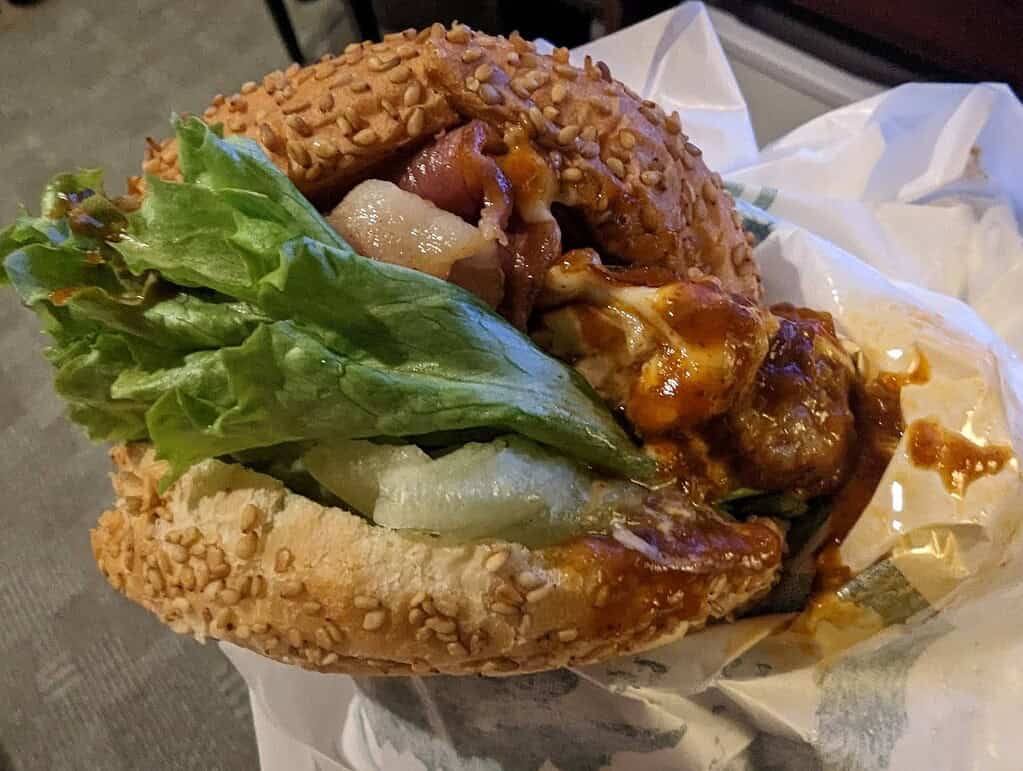
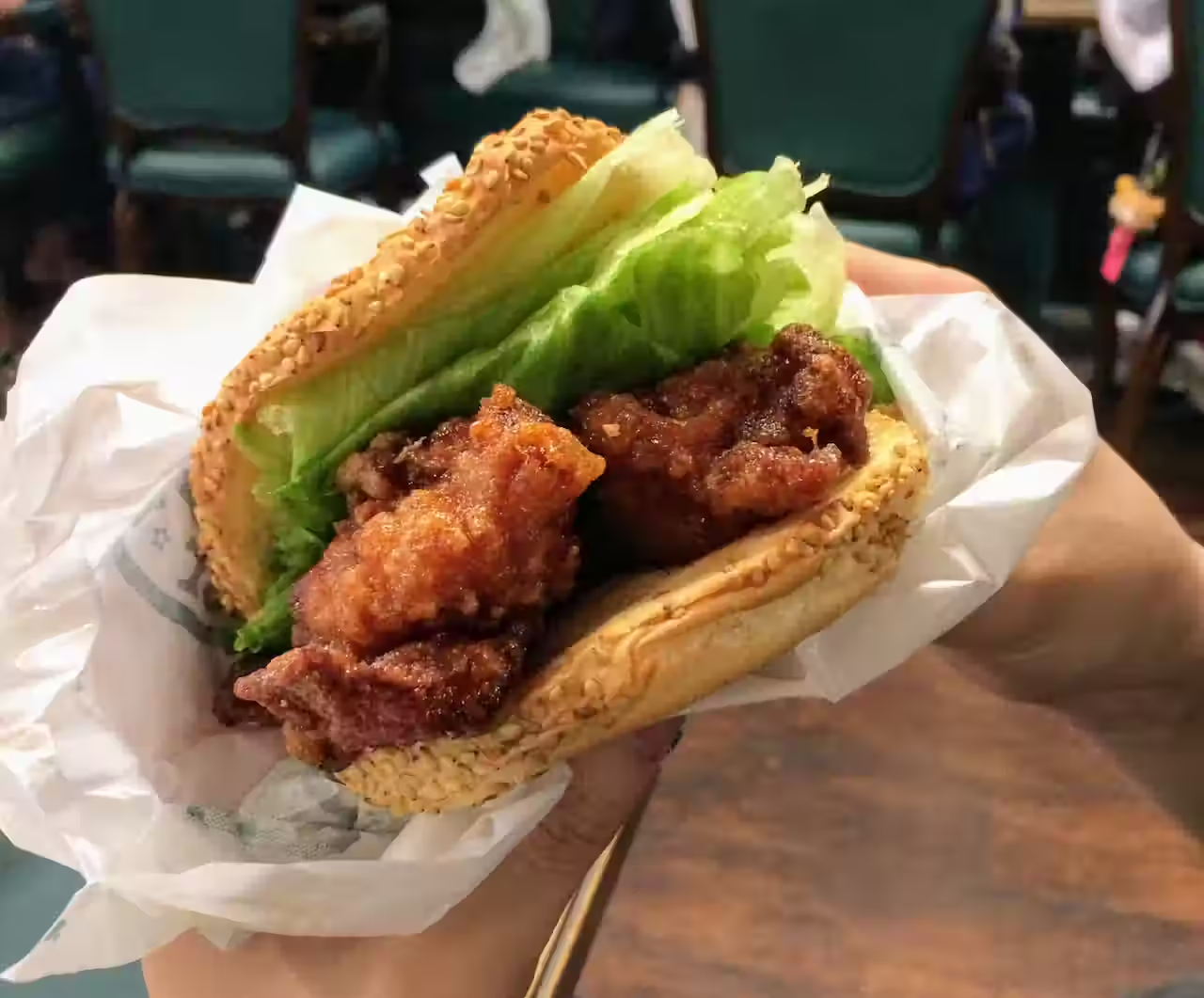
The star of the menu is the Chinese Chicken Burger. It has won national local burger competitions in Japan. It outsells everything else by a significant margin.
What is it, exactly? Three large pieces of deep-fried chicken, seasoned in a sweet and savory Chinese-style sauce, stacked into a soft bun with crisp lettuce and mayonnaise. The burger stands roughly 14 centimeters tall and 11 centimeters wide. You need both hands. You might need a napkin. Probably more than one.
The flavor is bold. The sauce is where the character lives. It’s slightly sweet, slightly tangy, deeply savory. The chicken itself is juicy and well-seasoned. The crunch of fresh lettuce cuts through the richness. It’s a combination that sounds simple but clearly isn’t, given how many people specifically travel to Hakodate just to eat it.
The Chinese connection comes from the founder’s restaurant background. The burger was inspired by the kind of fried chicken dish his mother would prepare for guests. That personal origin gives it a warmth that most fast food doesn’t have.
For more on the tradition of Japanese fried chicken more broadly, the karaage page covers the technique and history in detail. Lucky Pierrot’s version sits in its own category, but the shared DNA is there.
What Makes Lucky Pierrot Burgers Unique
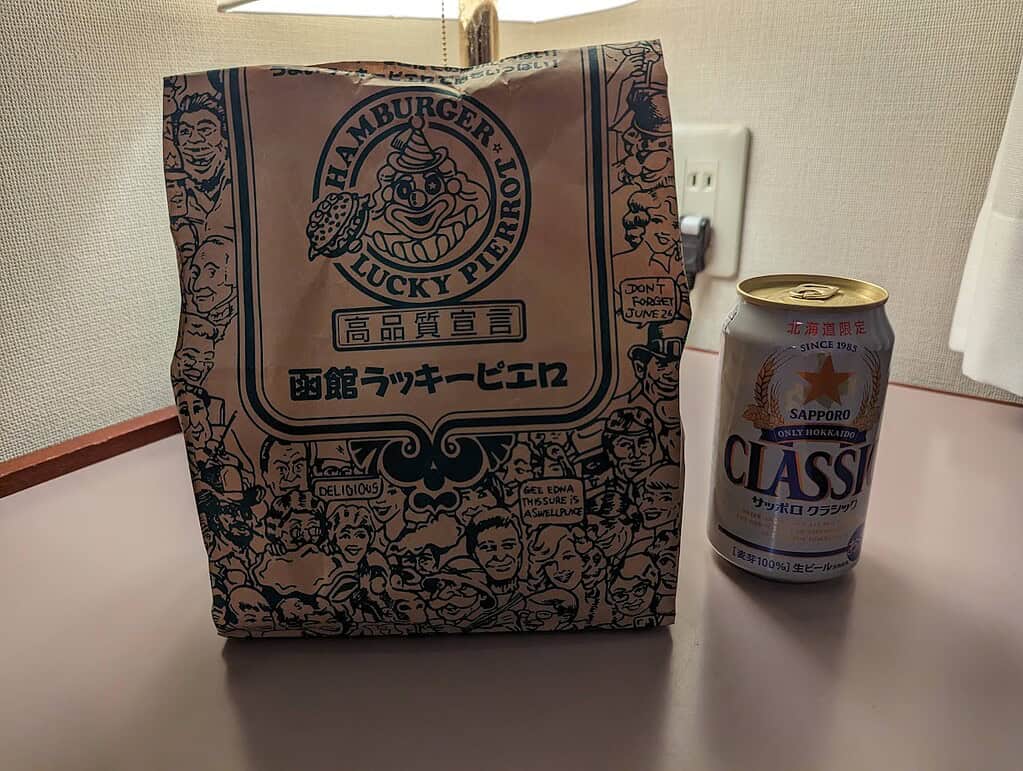
Several things set this ご当地バーガー Hokkaido local burger apart from everything else in Japan’s fast food landscape.
First, the ingredient sourcing. Lucky Pierrot is deliberate about using produce from southern Hokkaido and the wider Hokkaido region. During peak seasons, up to 80 percent of ingredients come from local producers. The Hokkaido potatoes in the fries are genuinely excellent. The dairy in the soft serve ice cream is fresh and rich. You can taste the difference.
Second, the scale. These aren’t dainty burgers. The Lucky Egg Burger, the second-best seller, combines a fried egg with a meat patty and weighs in at around 330 grams. The menu also includes tower burgers, including one modeled after the local landmark Goryokaku Tower. It’s the kind of food that requires a strategy before you start eating.
Third, the menu breadth. Lucky Pierrot is technically a burger restaurant, but the menu extends well beyond burgers. Curry rice, omurice, ramen, yakisoba, hamburg steak, spaghetti, soft serve ice cream, and more. It reads like a greatest hits of Japanese comfort food. Visitors often order something outside the burger section and find it equally good.
Fourth, the Genghis Khan Burger. Hakodate and Hokkaido are known for jingisukan, grilled mutton. Lucky Pierrot turned it into a burger. Only here. Only in Hakodate. That kind of local specificity is exactly what makes this place what it is.
Why Lucky Pierrot Is Famous
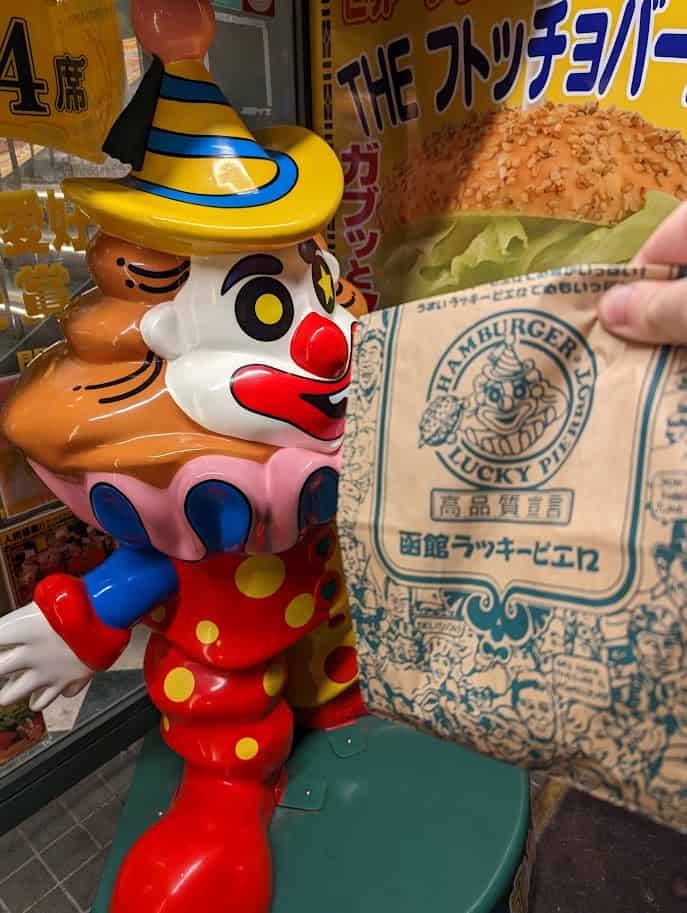
The fame comes from a combination of factors that no single element can explain alone.
The refusal to expand is part of it. Lucky Pierrot could have grown. There was demand. There is still demand. But Oh decided early on that the chain would stay in Hakodate. That decision created scarcity. It made Lucky Pierrot into something you have to go somewhere for. That’s rare in fast food. It’s rare in restaurants generally.
The award recognition helped. Japan’s Nikkei newspaper calling the Chinese Chicken Burger the country’s best local burger wasn’t a quiet footnote. It spread. It gave people a reason to go out of their way.
The individuality of each store helps too. Every location has its own theatrical identity. There’s no single experience of Lucky Pierrot. Each visit, each branch, offers something slightly different.
And Hakodate itself is a compelling destination. Hakodate’s food scene is genuinely strong, built around seafood, salt ramen, and local specialties like squid dishes found at the morning market. Lucky Pierrot fits naturally into a city that takes its local food identity seriously.
For a broader look at what the region offers, the Hokkaido food guide and the Hokkaido local food article both place Lucky Pierrot alongside the island’s most respected food traditions.
What to Order at Lucky Pierrot
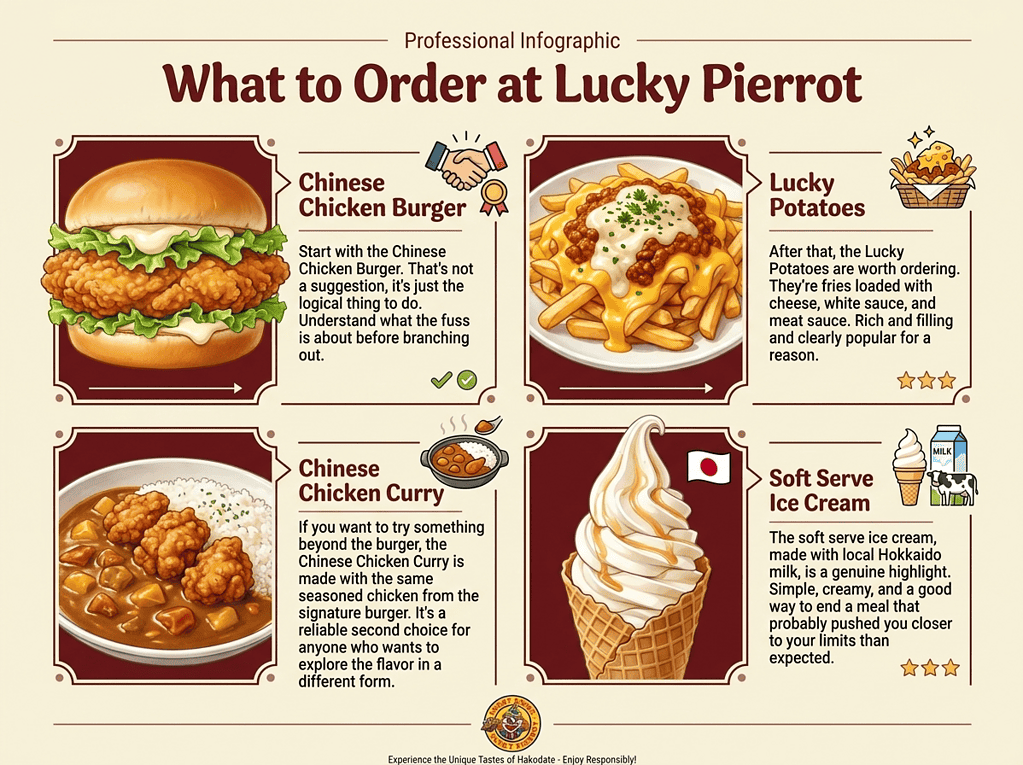
Start with the Chinese Chicken Burger. That’s not a suggestion, it’s just the logical thing to do. Understand what the fuss is about before branching out.
After that, the Lucky Potatoes are worth ordering. They’re fries loaded with cheese, white sauce, and meat sauce. Rich and filling and clearly popular for a reason.
If you want to try something beyond the burger, the Chinese Chicken Curry is made with the same seasoned chicken from the signature burger. It’s a reliable second choice for anyone who wants to explore the flavor in a different form.
The soft serve ice cream, made with local Hokkaido milk, is a genuine highlight. Simple, creamy, and a good way to end a meal that probably pushed you closer to your limits than expected.
Where to Eat Lucky Pierrot in Hokkaido
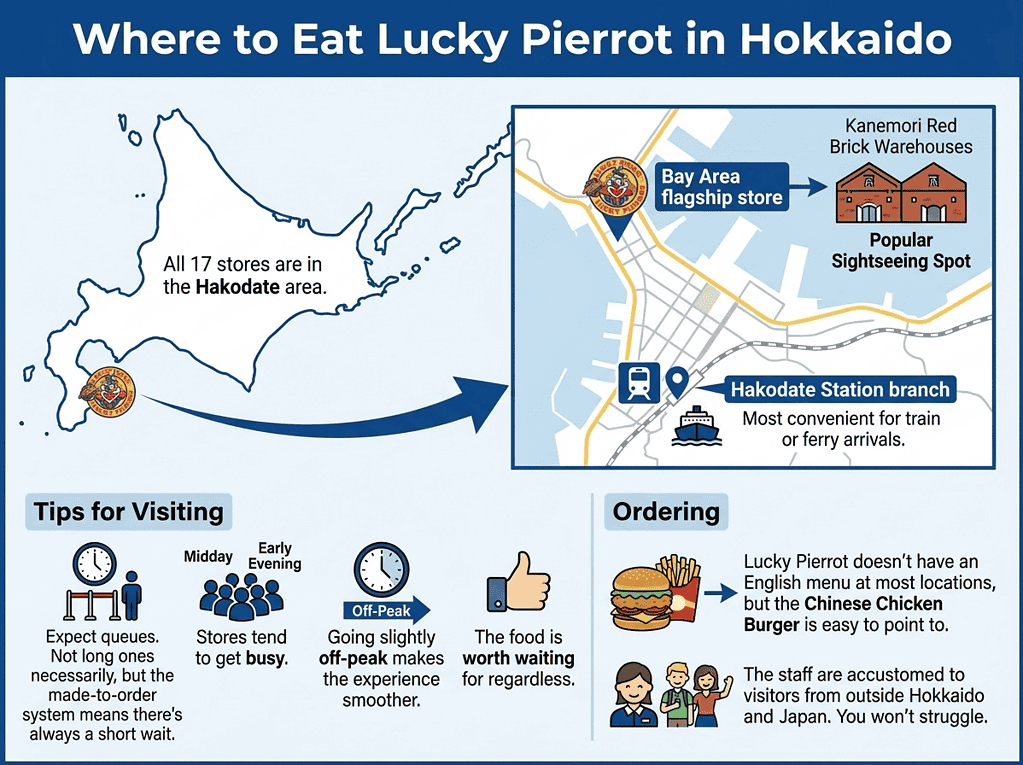
All 17 stores are in the Hakodate area. The Bay Area flagship store is the original and sits near the Kanemori Red Brick Warehouses, a popular sightseeing spot. The Hakodate Station branch is the most convenient for visitors arriving by train or ferry.
Expect queues. Not long ones necessarily, but the made-to-order system means there’s always a short wait. The stores tend to get busy around midday and in early evening. Going slightly off-peak makes the experience smoother, but the food is worth waiting for regardless.
Lucky Pierrot doesn’t have an English menu at most locations, but the Chinese Chicken Burger is easy to point to. The staff are accustomed to visitors from outside Hokkaido and Japan. You won’t struggle.
Hakodate has plenty of other reasons to visit. The Ikasomen at the morning market is a local squid specialty worth trying. The salt ramen is excellent. The overall food culture of Hokkaido rewards exploration. Lucky Pierrot is one of the best reasons to start in Hakodate, but it won’t be the only memorable meal.
References
- Hokkaido Love – Lucky Pierrot: Hakodate’s Unique Burger Chain: https://en.visit-hokkaido.jp/destinations/lucky-pierrot-hakodates-unique-burger-chain
- The Japan Times – Lucky Pierrot’s anti-McDonald’s approach: https://www.japantimes.co.jp/life/2023/04/02/food/lucky-pierrot-hakodate-local-burger-chain/



Comments