



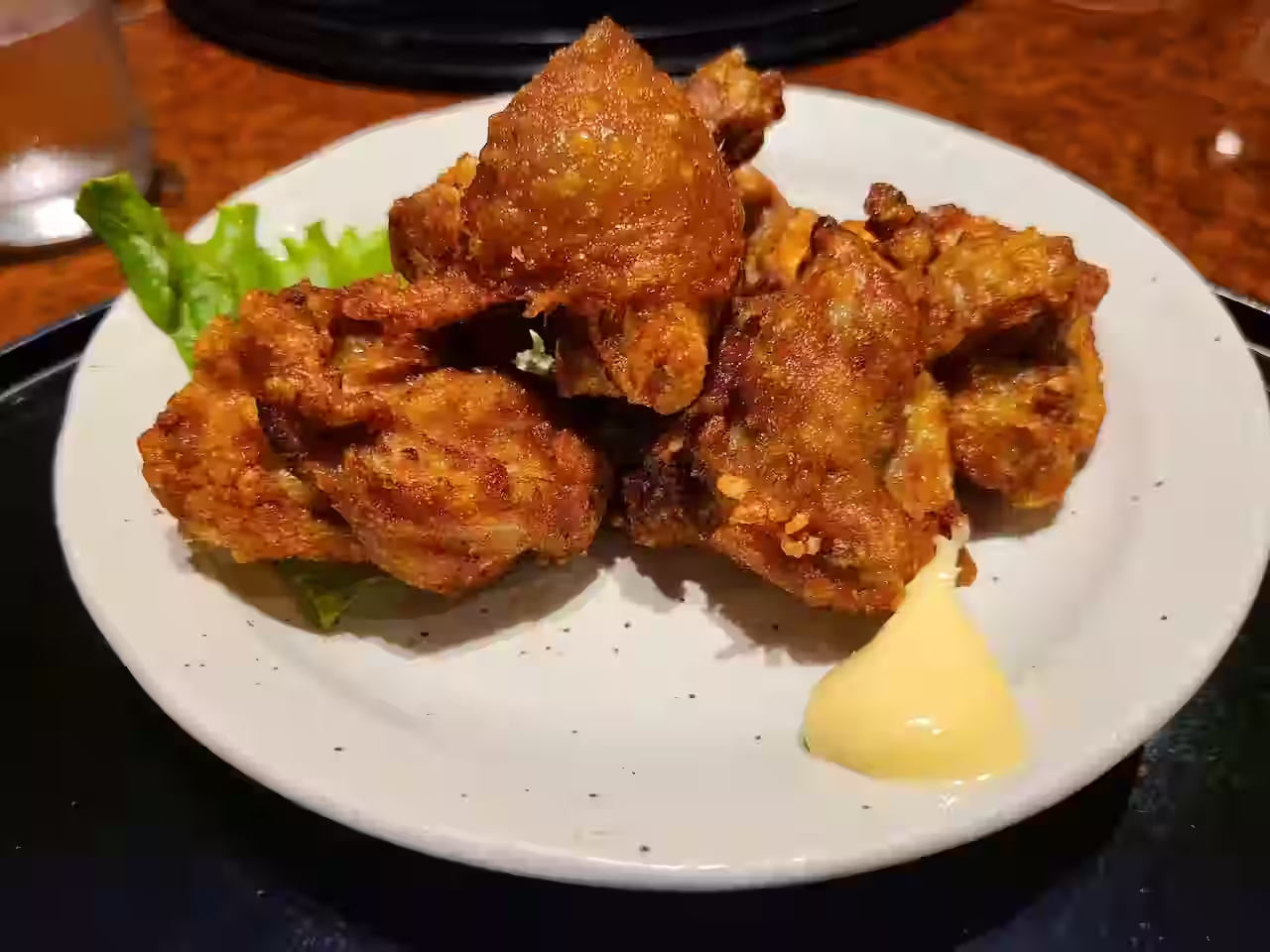
The first time you order ザンギ Zangi at a Hokkaido izakaya, it might just look like regular fried chicken. But then you take a bite. The crust is thicker. The seasoning goes all the way through. The aroma of soy, garlic, and ginger hits you before you even finish chewing. This isn’t ordinary 北海道の唐揚げ Hokkaido fried chicken. It’s something with a story.
Zangi is one of those foods that people in Hokkaido grew up eating. It shows up at family dinners, izakaya counters, and supermarket deli cases. Locals don’t really explain it. They just eat it. And if you’re visiting from outside the prefecture, that’s actually the best way to understand it too.
What Is Zangi?
ザンギ Japanese fried chicken is a deep-fried chicken dish that originated in Kushiro, a port city in eastern Hokkaido. At its core, it’s chicken marinated in a bold mix of soy sauce, garlic, and ginger, coated in flour or potato starch, then fried until deeply golden and crispy.
The name itself has a small piece of history baked in. It comes from the Chinese term for fried chicken, “炸鶏” (zhá jī). A letter was added in the middle: the sound “n,” associated with the Japanese word “un” (運), meaning luck. So Zangi was literally named to bring good fortune to those who eat it. Whether or not that works is up for debate. But the flavor is not.
What makes Zangi distinct from standard karaage is worth understanding. With karaage, the coating is often lightly seasoned. With it, both the meat and the batter are marinated together. The result is a more intensely flavored crust. The pieces also tend to be larger. And traditionally, they’re cooked on the bone, using the whole chicken rather than just specific cuts.
The History of Zangi
The story starts around 1960 in Kushiro’s Suehiro entertainment district. A small Chinese-style restaurant called Torimatsu began serving a dish: whole chicken, chopped into large bone-in pieces, heavily seasoned, fried and served with a special dipping sauce. That restaurant still exists today and is considered the birthplace of Zangi.
Kushiro was, at the time, a significant chicken farming center in Hokkaido. There was good local chicken available. A chef used it creatively, drawing on Chinese frying techniques and local flavor sensibilities. The result spread first through Kushiro, then gradually across all of Hokkaido.
By the time Zangi became common in Sapporo izakayas, a small shift had happened. Boneless versions became more popular. Recipes varied from shop to shop. The distinction between Zangi and karaage grew blurry in some restaurants. But in Kushiro, locals still maintain a clear difference. Strong seasoning, bone-in option, and a special dipping sauce called “Zantare.” That’s the original.
What Does Zangi Taste Like?
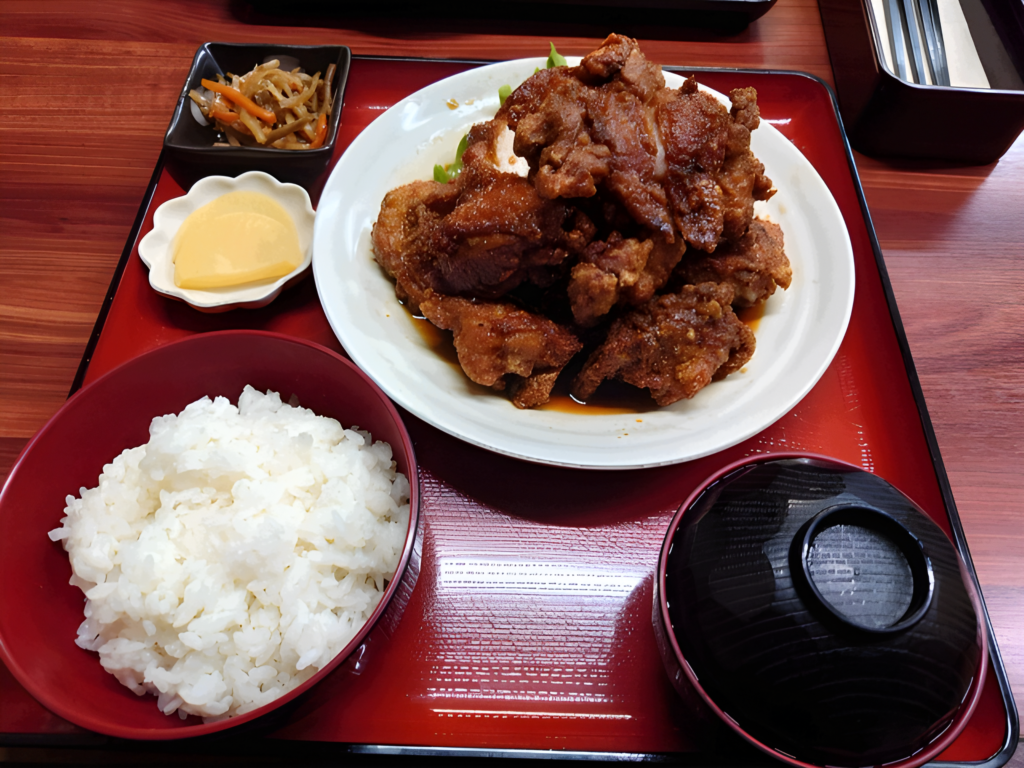
The flavor is bold and savory, with a warmth that builds slowly. Soy-marinated chicken forms the base. Garlic and ginger add sharpness. Some recipes include sake, sugar, and white pepper to round things out. The coating, fried twice in many preparations, creates a crust that shatters on the first bite before giving way to juicy meat underneath.
There’s something satisfying about Zangi that lighter karaage-style chicken doesn’t always deliver. The seasoning doesn’t stay on the surface. It’s in the meat. Every bite carries the same flavor from edge to center.
Interestingly, Zangi is often served with additional sauce. In Kushiro, the traditional accompaniment is Zantare, a sweet and tangy soy-based sauce with chopped scallions and black pepper. Some shops serve it with Worcestershire sauce. Others add mayonnaise. Each version adds another dimension to an already layered dish.
If you’ve tried tako karaage and enjoyed the idea of heavily seasoned, deeply fried Hokkaido-style cooking, Zangi chicken is the natural next step.
Zangi vs. Karaage: What’s Actually Different?
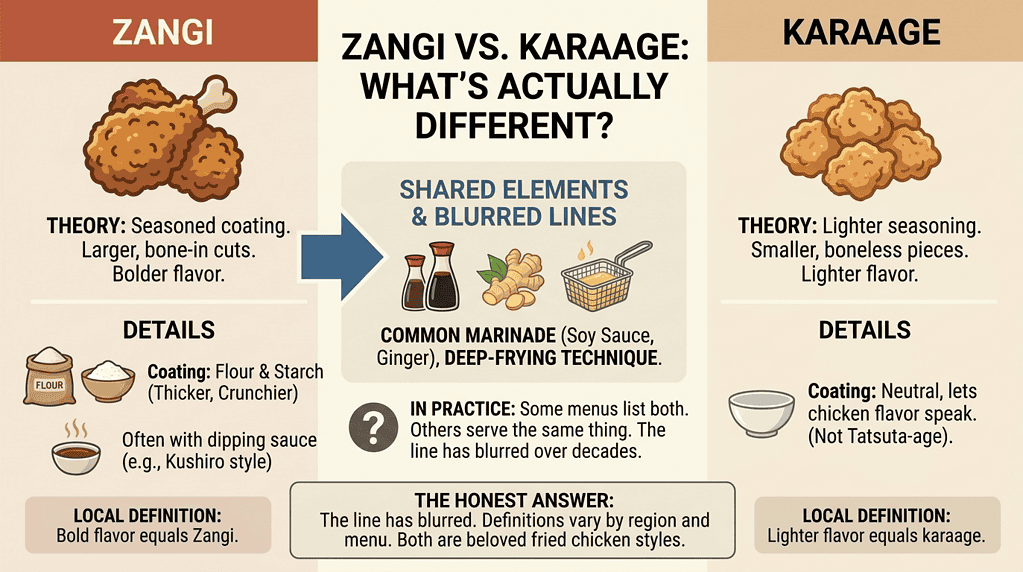
This question comes up constantly. The honest answer is that the line has blurred over decades.
In theory, Zangi means the coating is seasoned along with the chicken, the pieces are larger, and bone-in cuts are traditional. Karaage often uses lighter seasoning, smaller boneless pieces, and a more neutral coating that lets the chicken flavor speak more directly. Both use similar marinades of soy sauce and ginger. Both involve deep-frying. The techniques overlap significantly.
In practice, some Hokkaido restaurants list both on the menu as separate items. Others serve the same thing under different names. Locals sometimes define it simply: bold flavor equals Zangi, lighter flavor equals karaage. If you ask someone from Kushiro, they’ll be more specific. The dipping sauce is part of the equation.
Unlike tatsuta-age, which uses only potato starch and has a distinctive reddish color, Zangi typically uses both flour and starch in the coating for a thicker, crunchier exterior.
Why Zangi Is Famous in Hokkaido
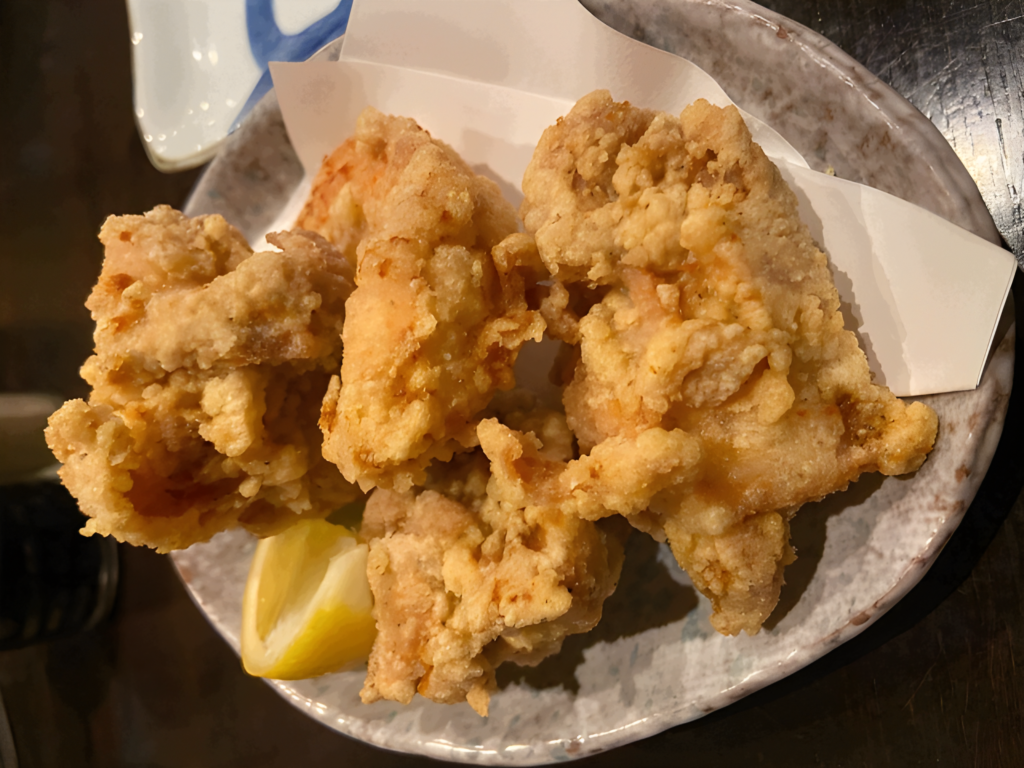
Zangi isn’t just a dish. It’s woven into Hokkaido daily life in a way that’s hard to overstate.
Walk into a Hokkaido supermarket and you’ll find it in the deli section, pre-made and ready to eat. Set meal restaurants list it alongside rice and miso soup as a standard option. Izakayas always have it. It’s Japanese comfort food in its most honest form: affordable, filling, deeply flavored, and satisfying after a cold day.
The dish also reflects something about Hokkaido itself. The island’s food culture has always been practical and hearty. Hokkaido cuisine leans toward rich, warming flavors that make sense in a cold climate. Zangi fits that character completely.
There’s also the variety. Because every shop has its own marinade recipe, no two Zangis taste quite the same. Some add grated apple or pineapple to tenderize the meat and use dark soy for a deeper color. Some push the garlic hard. Others balance toward ginger. That personal touch, kept quietly as a house recipe, is part of what keeps the dish interesting.
Best Ways to Eat Zangi
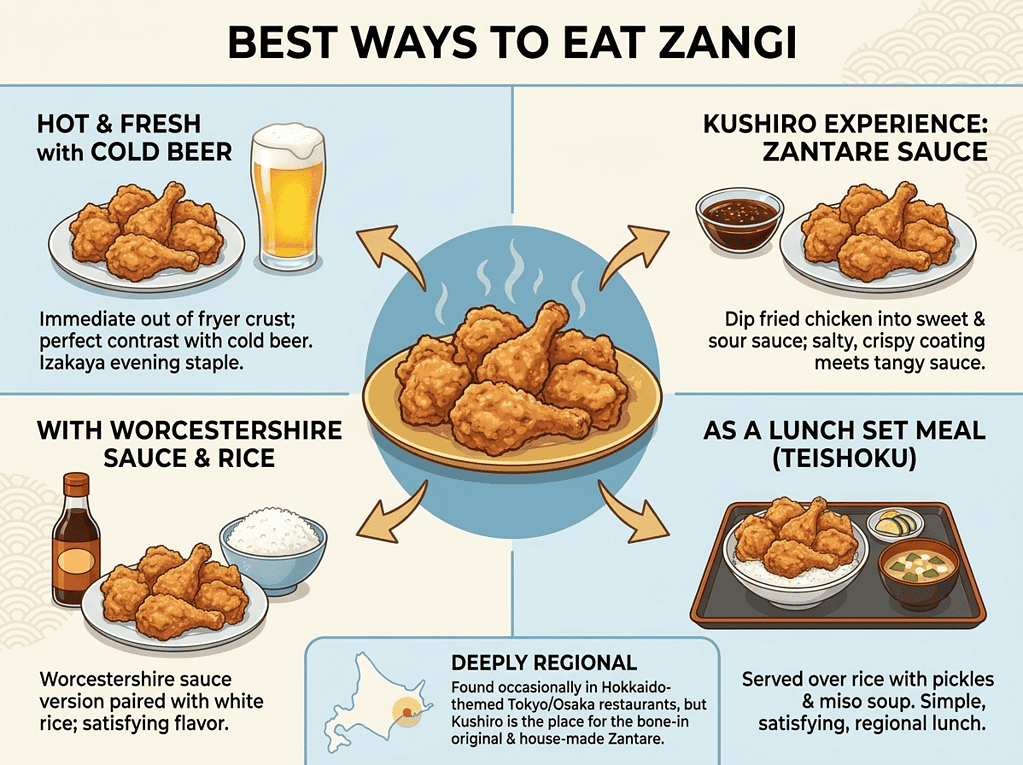
Hot, fresh from the fryer, is the obvious answer. A plate of Zangi with cold beer is basically the definition of a good evening at a Hokkaido izakaya. The crust is at its best immediately out of the oil, and the contrast with cold beer is exactly as good as it sounds.
For the Kushiro experience, ask for Zantare on the side. Dip the fried chicken into the sweet and sour sauce. The contrast between the salty, crispy coating and the tangy sauce is genuinely excellent. Some people find the Worcestershire sauce version even better with white rice.
Zangi also works well as a lunchtime set meal. Many Hokkaido teishoku restaurants serve it over rice with pickles and miso soup. Simple, satisfying, and deeply regional.
Outside Hokkaido, Zangi appears occasionally in Hokkaido-themed restaurants in Tokyo and Osaka. It has gained some recognition nationally. But for the real thing, especially the bone-in original with house-made Zantare, Kushiro is where you need to go.
Takeaway
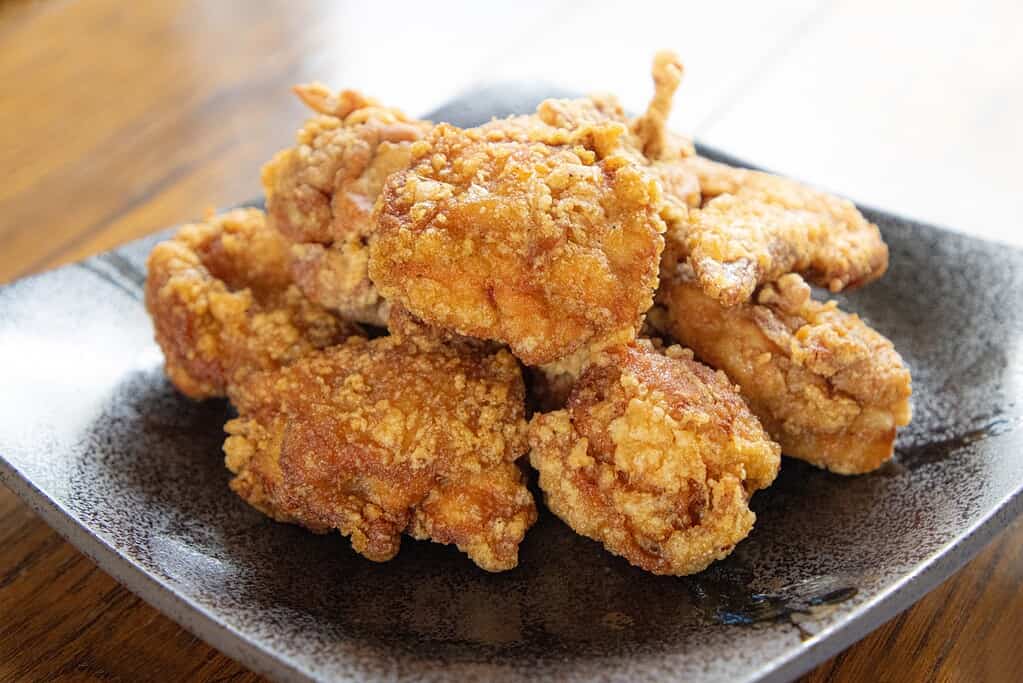
The dish has held its place in Hokkaido food culture through decades of change. Newer variations have appeared over time. Salmon Zangi, made with Hokkaido salmon, is popular. Taco Zangi, made with octopus, is a Hokkaido specialty in its own right. Even venison Zangi exists in some restaurants in the interior of the island.
The name now also appears on menus across Japan, particularly in areas with Hokkaido connections. But the soul of Zangi remains firmly in the north, in the small izakayas and deli counters where it started. Torimatsu in Kushiro still serves it, bone-in, with the same secret Worcestershire-based sauce it always has.
If you’re putting together a plan for eating through Hokkaido, Zangi deserves a place on the list. Not as an afterthought, but as a destination in itself.
References
- Live Japan – Zangi Fried Chicken: Hokkaido’s Soul Food: https://livejapan.com/en/in-hokkaido/in-pref-hokkaido/in-obihiro/article-a1000039/
- Japanese Culture Sakura Web – What is Zangi: https://japanese-culture.sakuraweb.com/what-is-zangi-hokkaido-fried-chicken/
- Taka’s Kitchen – Zangi (Hokkaido Style Fried Chicken): https://takas-kitchen-jp.com/zangi-hokkaido-style-juicy-and-delicious-fried-chicken/




Comments