


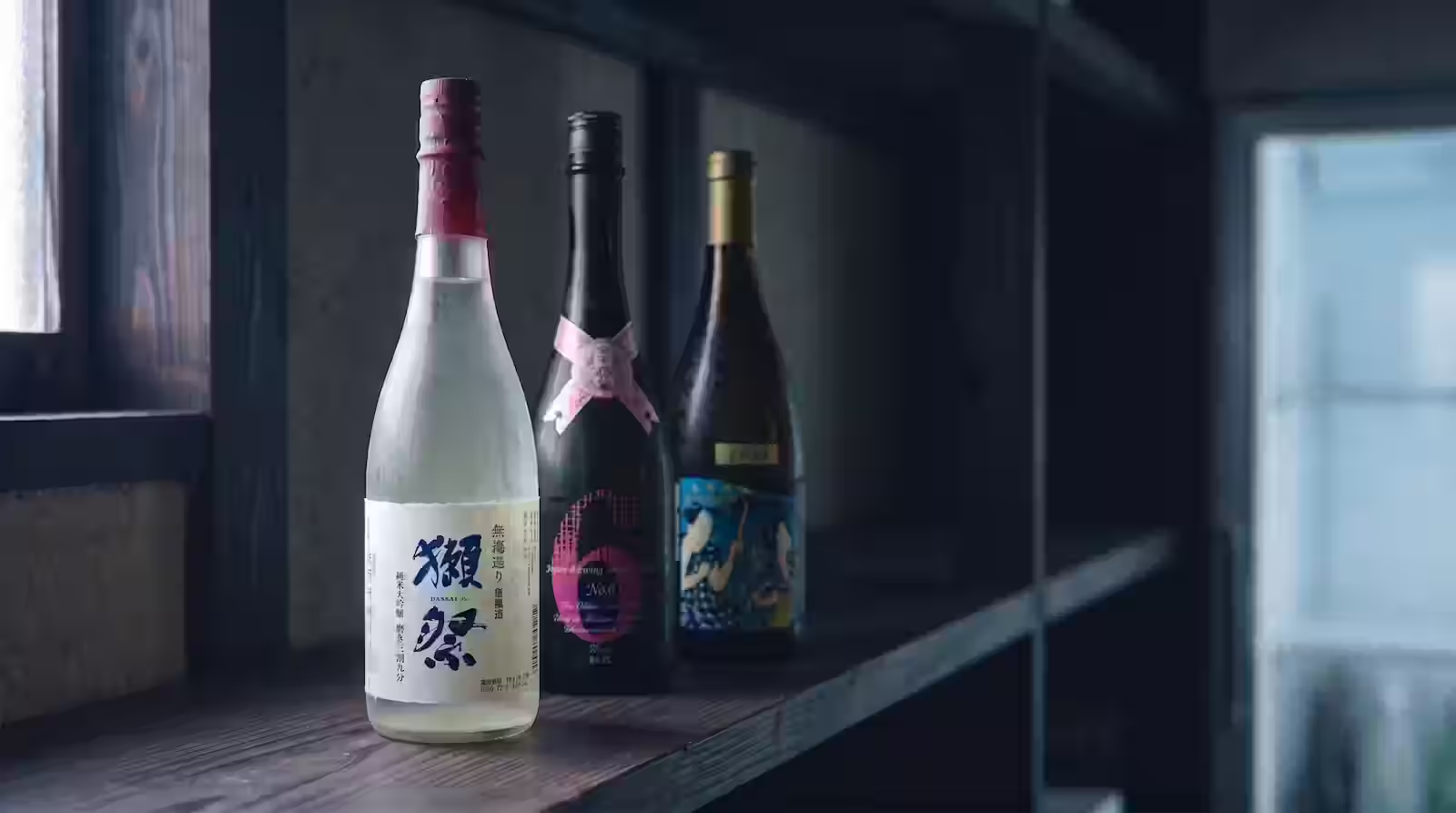


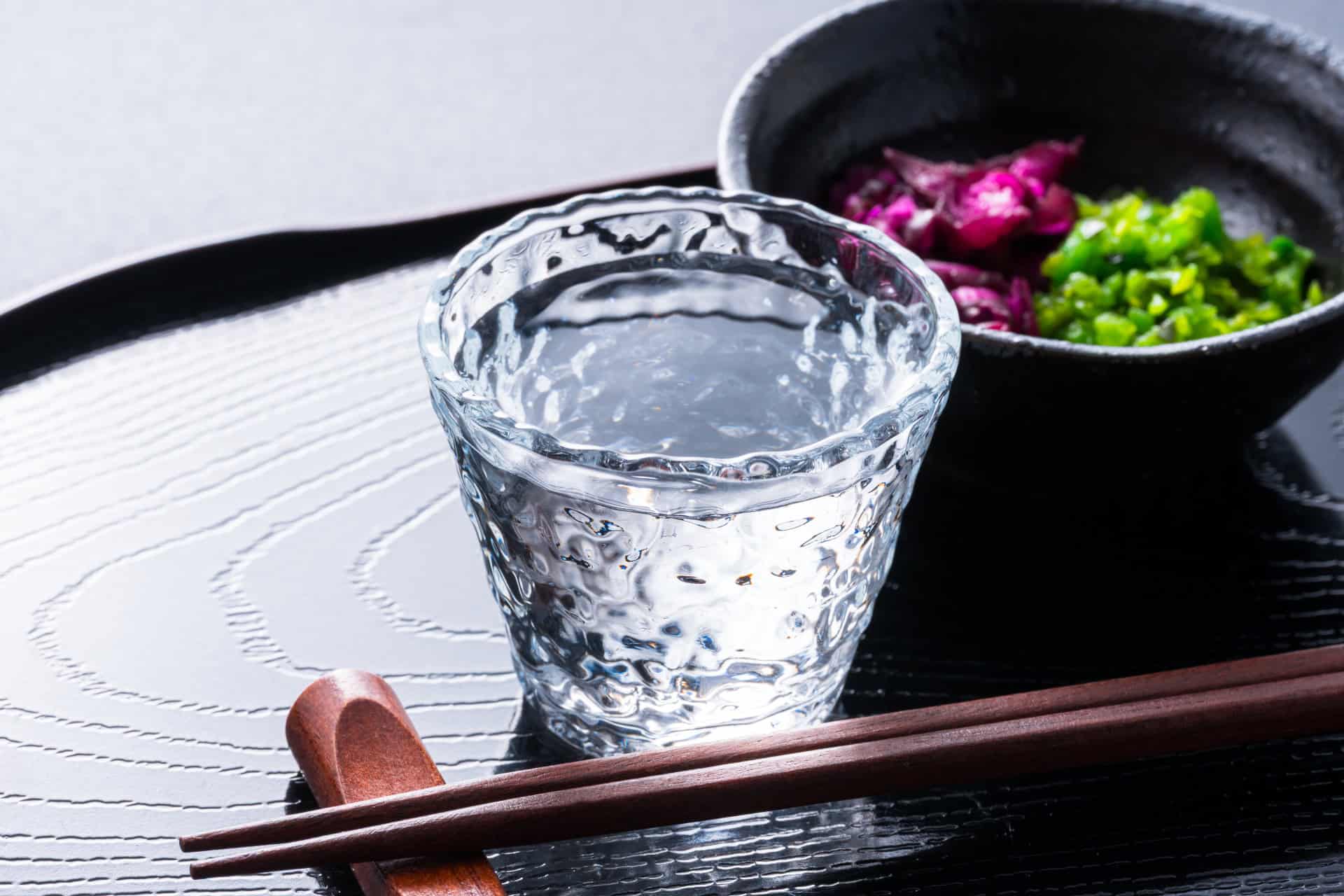
Futsushu is the everyday sake most commonly drunk in Japan. You can find it in supermarkets, izakaya, convenience stores, and family dinners. It represents the casual side of Japanese sake culture.
This is not low-quality sake. Futsushu simply prioritizes affordability, balance, and everyday drinkability over luxury refinement. Think of it as the daily table wine of Japan.
For many people in Japan, futsushu is the sake they drink with dinner. It fits grilled fish, karaage, yakitori, and simple home cooking. That ordinary rhythm gives it real charm.
Basic Information About Futsushu
So, what is futsushu in Japanese sake? Futsushu means regular sake or standard sake. It does not follow the stricter rules used for premium sake categories.
Premium sake, such as Junmai or Ginjo, must meet specific ingredient and polishing standards. Futsushu has more flexibility. Small amounts of distilled alcohol may be added to adjust balance and consistency.
This flexibility helps brewers make affordable sake for daily life. Many futsushu products appear as budget-friendly bottles, carton sake, or convenience-store alcohol. That makes it one of Japan’s most common sake types.
If you want the wider picture, see the sake guide. For category differences, check the types of Japanese sake guide.
Futsushu vs Premium Sake
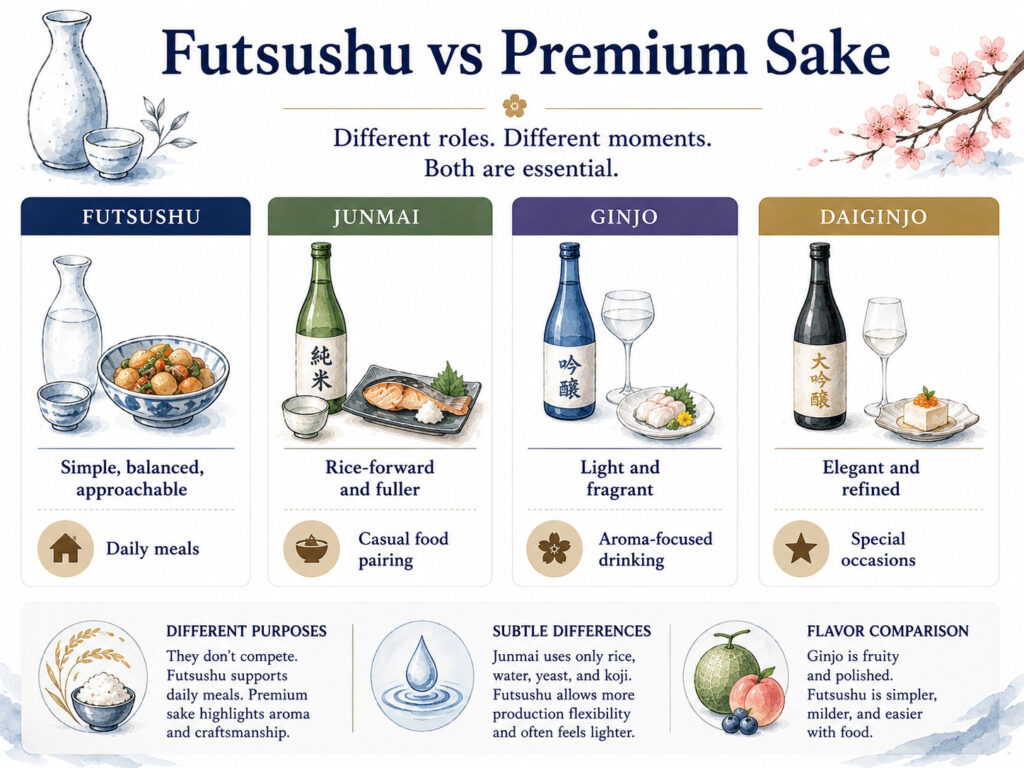
| Type | Drinking Image | Main Role |
|---|---|---|
| Futsushu | Simple, balanced, approachable | Daily meals |
| Junmai | Rice-forward and fuller | Casual food pairing |
| Ginjo | Light and fragrant | Aroma-focused drinking |
| Daiginjo | Elegant and refined | Special occasions |
Futsushu and premium sake serve different purposes. They do not compete directly. Futsushu supports daily meals, while premium sake often highlights aroma and craftsmanship.
The difference between futsushu and Junmai sake can feel subtle at first. Junmai follows pure rice standards. Futsushu allows more production flexibility and often feels lighter.
How futsushu tastes compared to Ginjo also matters. Ginjo usually smells fruity and polished. Futsushu feels simpler, milder, and easier with food.
Flavor Profile and Warm Sake Culture
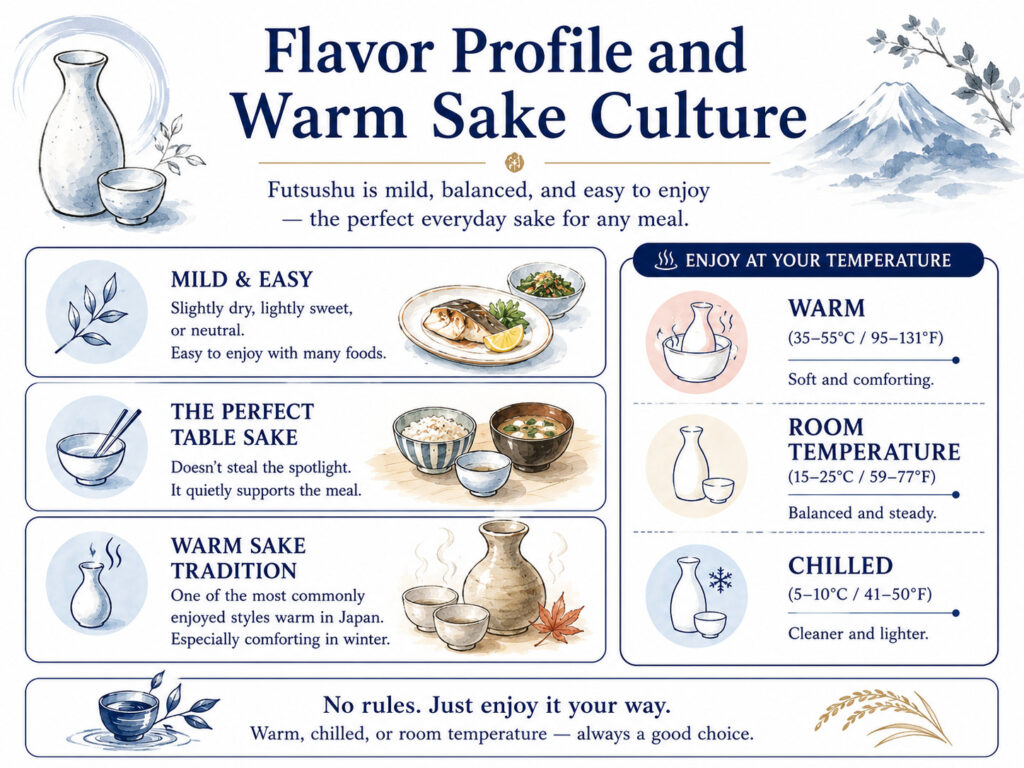
Futsushu flavor profile is mild, balanced, and easy to understand. It can taste slightly dry, lightly sweet, or neutral. Its mild flavor makes it easy to enjoy with many kinds of food.
This casual sake style does not demand attention. Instead, it supports the meal quietly. That is why it works so well as Japanese table sake.
Futsushu is one of the sake styles most commonly enjoyed warm in Japan. Warm sake culture feels especially natural in winter. The heat softens sharp edges and gives familiar comfort.
| Temperature | Impression |
|---|---|
| Warm | Soft and comforting |
| Room temperature | Balanced and steady |
| Chilled | Cleaner and lighter |
For beginners, this flexibility helps. You can try futsushu warm, chilled, or at room temperature. There is no need to overthink it.
Futsushu in Japanese Daily Life
Futsushu reflects the regular side of Japanese sake. It appears after work, at neighborhood izakaya, and beside simple dinners. Some people drink it from small cups. Others pour it from paper cartons at home.
Carton sake is especially practical. Many futsushu products are sold in paper cartons for affordable daily use. This may surprise visitors, but it feels normal in Japan.
One Cup Ozeki also shows this everyday culture well. Its retro glass cup became an iconic convenience-store sake format. People may buy it near stations, for picnics, or for casual drinking.
Futsushu may not feel luxurious. Still, it reflects the ordinary rhythm of Japanese life. That nostalgia is part of its appeal.
History of Futsushu
Futsushu became more widespread after World War II. Japan needed affordable alcohol for everyday consumption. Brewers focused on practical production and mass accessibility.
Over time, premium sake categories became more clearly defined. Futsushu remained outside those stricter classifications. Instead, it kept its role as regular Japanese alcohol.
That history explains its familiar image today. It feels old-fashioned to some drinkers. For others, it brings comfort and memory.
Food Pairing With Futsushu
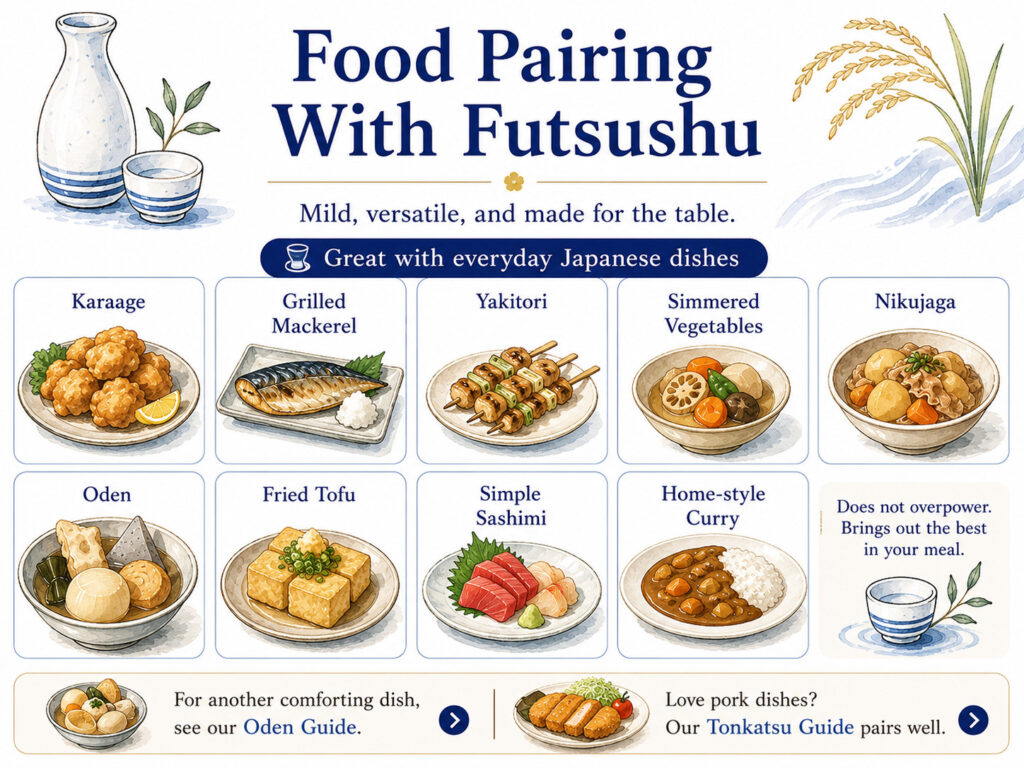
Futsushu pairs best with everyday Japanese meals. Its mild flavor works across many dishes. It does not overpower food, which makes it useful at the table.
Good pairings include:
- karaage
- grilled mackerel
- yakitori
- simmered vegetables
- nikujaga
- oden
- fried tofu
- simple sashimi
- home-style curry
For another comforting Japanese dish, see the oden guide. If you like pork dishes, the tonkatsu guide also pairs well with casual sake.
Popular Futsushu Brands in Japan
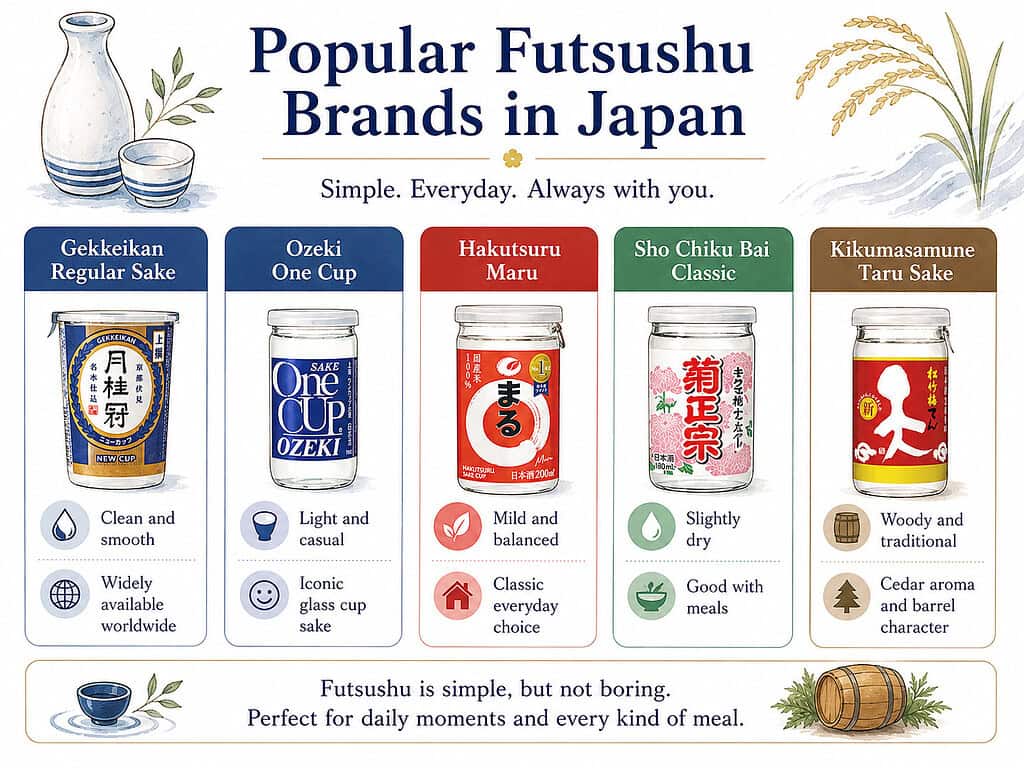
| Brand | Style | Simple Feature |
|---|---|---|
| Gekkeikan Regular Sake | Clean and smooth | Widely available worldwide |
| Ozeki One Cup | Light and casual | Iconic glass cup sake |
| Hakutsuru Maru | Mild and balanced | Classic everyday choice |
| Sho Chiku Bai Classic | Slightly dry | Good with meals |
| Kikumasamune Taru Sake | Woody and traditional | Cedar aroma and barrel character |
Gekkeikan is easy to find and smooth enough for beginners. Ozeki One Cup has a nostalgic, retro feeling. Hakutsuru Maru offers a mild everyday style.
Sho Chiku Bai Classic works well with food. Kikumasamune Taru Sake adds cedar aroma and traditional barrel-aged character. These brands show that futsushu is simple, but not boring.
Final Thoughts
Futsushu shows the ordinary side of Japanese sake culture. It is not about luxury, rare rice, or polished aroma. Its strength lies in comfort, price, and daily usefulness.
This everyday Japanese sake belongs at home dinners, izakaya tables, and convenience-store shelves. It may seem simple, but that simplicity tells a real story.
For beginners, futsushu offers an easy entry point. For experienced drinkers, it can feel nostalgic. In both cases, it remains a casual sake for daily meals.
Futsushu FAQ
What is Futsushu?
It represents regular Japanese rice wine for everyday drinking. Brewers create it without following strict premium classification rules.
Is Futsushu cheap sake?
Shops price it affordably, but cheap does not mean bad. Brewers focus on balance and daily drinkability when crafting these bottles.
Is Futsushu good warm?
Yes. Diners commonly drink it warm in Japan, especially during the colder seasons.
What do Japanese people drink daily?
Many people drink beer, shochu, highballs, or this everyday beverage. This drink remains a very common choice for home dining.
Can Futsushu be high quality?
Yes. Brewers craft some varieties very carefully to produce a pleasant taste. They simply skip the premium classification labels to keep prices low.
Why is Futsushu so common in Japan?
It offers an affordable and flexible option. Diners easily pair it with their daily meals, from robust meat dishes to simple snacks.
Is Futsushu good for beginners?
Yes. Its relaxed style makes this beverage one of the easiest ways for newcomers to start exploring Japanese rice wine.
Where can I buy Futsushu in Japan?
You will find this everyday drink everywhere. Supermarkets, convenience stores, and local liquor shops stock various brands in large cartons or glass bottles.
What are the main ingredients in Futsushu?
Brewers use rice, koji mold, pure water, and distilled alcohol. The added alcohol gives the drink a crisp, robust finish and preserves the flavor.
How does Futsushu differ from Junmai?
The main difference involves the ingredients and brewing rules. This standard category allows added alcohol and sugars, while pure Junmai relies entirely on rice and water without any additives.
References
- https://japansake.or.jp/, checked in 2026, sake classifications include premium categories and general sake styles.
- https://www.nta.go.jp/, checked in 2026, sake labeling and classification rules define special designation sake.
- Sake, checked in 2026, related internal article for Japanese sake culture and basic sake information.




Comments