




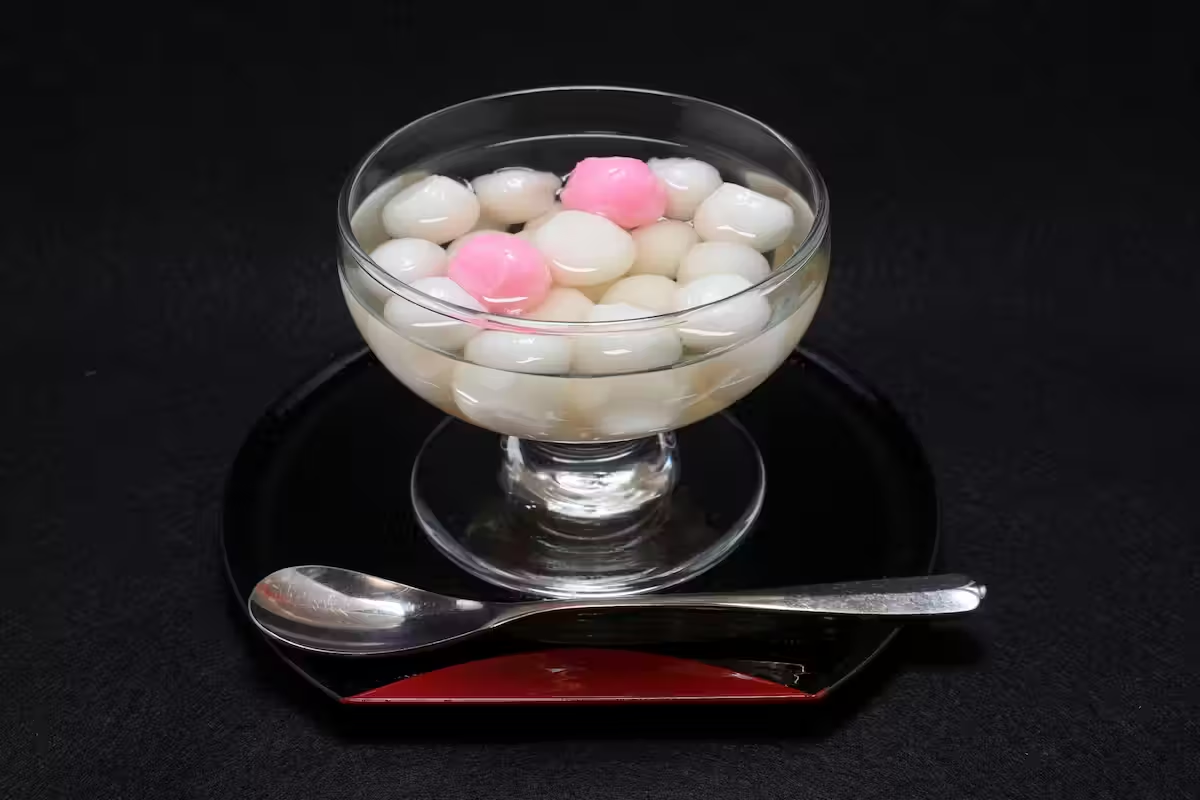
Kanzarashi is one of those quiet local sweets that instantly evokes a place. In this case, that place is Shimabara, a spring-fed town in Nagasaki. On a hot day, a bowl of it feels like a small blessing. So what exactly is kanzarashi? It is a chilled dessert of small, chewy rice dumplings floating in a light, sweet syrup. The dumplings are cooled in Shimabara’s famous spring water, which gives the sweet its gentle, refreshing character.
It looks simple, and honestly, it is. Yet that simplicity is the whole point, and it has charmed people for well over a century. This guide walks through the dessert from every angle. It covers the taste, the making, and the history, along with where to try it in Shimabara. Let me introduce this humble treasure from the City of Water.
Quick Facts About Kanzarashi
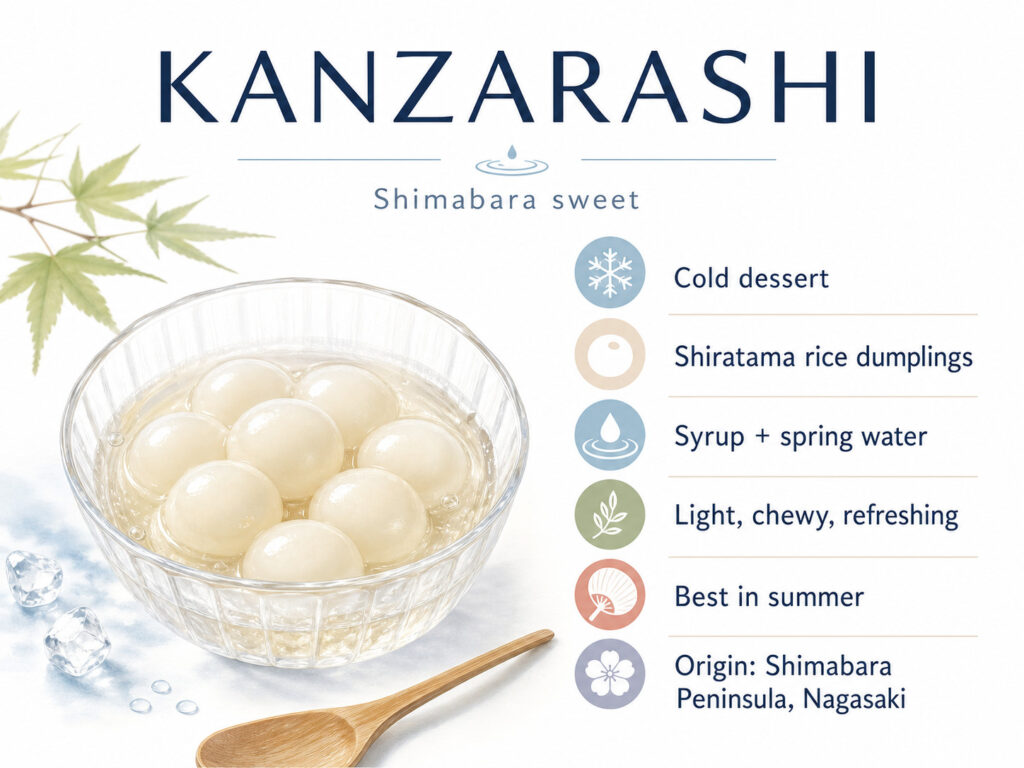
| Japanese Name | かんざらし (kanzarashi) |
| Origin | Shimabara Peninsula, Nagasaki |
| Type | Chilled dessert of rice dumplings in syrup |
| Main Ingredients | Shiratama rice flour, sugar, honey, spring water |
| Flavor | Light, gentle sweetness; soft, chewy texture |
| Best Season | Summer (served year-round in Shimabara) |
| Name Meaning | “Cold-soaked,” from making rice flour in midwinter |
Kanzarashi is a traditional sweet from the Shimabara Peninsula in Nagasaki. At its heart sit small shiratama rice dumplings, chilled and served in syrup. The name points to how the rice flour was once made, by soaking rice in cold midwinter water. People treasure it above all as a refreshing summer dessert. Because Shimabara overflows with clear spring water, the town and the sweet grew up together.
What Is Kanzarashi?
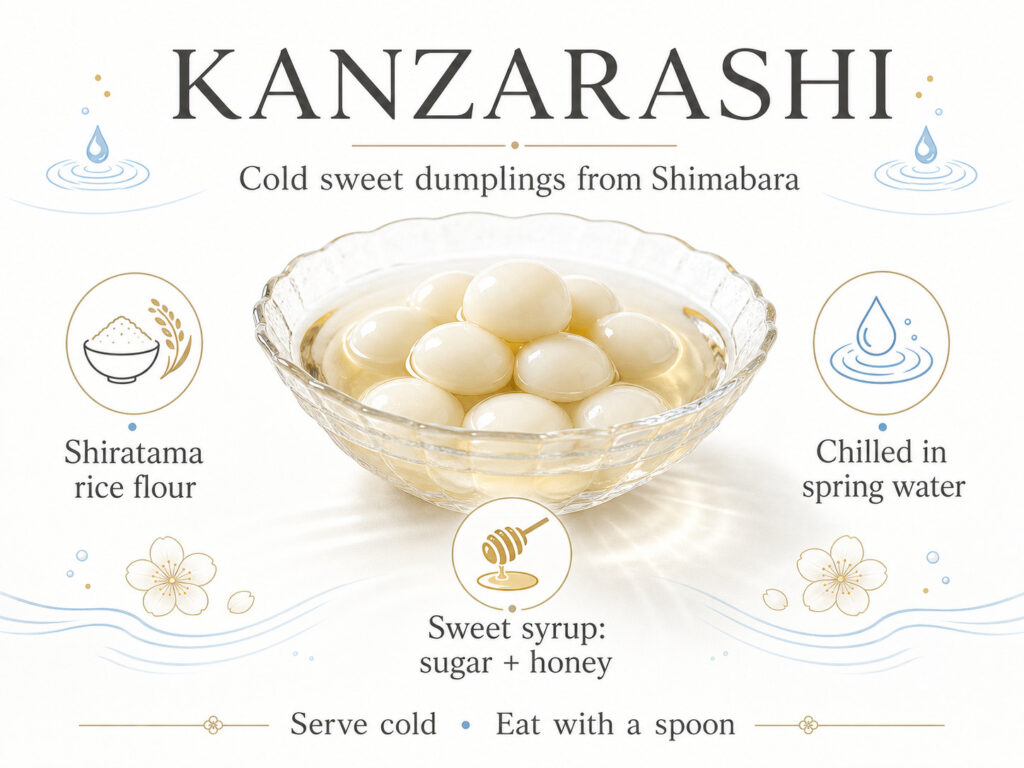
Kanzarashi is a cold Japanese dessert built from just a few humble parts. Small round dumplings, made from shiratama rice flour, rest in a clear, sweet syrup. Typically, the syrup blends sugar and honey into a light, gentle sweetness. Cooks chill the dumplings in cold spring water, which keeps them soft and springy. The result is a bowl of tender white dumplings, glinting in a pool of pale syrup.
Then you eat it with a spoon, scooping up both dumplings and syrup at once. Each bite is cool, chewy, and softly sweet. In Shimabara, many people call it a kind of soul food. Indeed, it belongs to summer, to visitors, and to the town’s beloved springs.
The Spring Water of Shimabara
You cannot separate kanzarashi from the water of Shimabara. After all, the town sits at the foot of Mount Unzen, and water wells up almost everywhere. Clear springs run through gardens, streets, and old stone channels. For this reason, Shimabara is fondly known as the City of Water. The story of this water is dramatic, though.
The quality of these springs has national recognition too. In 1985, the Shimabara springs joined Japan’s list of 100 Exquisite Waters. More than fifty spring sites bubble up around the city. Moreover, the water stays around 16 degrees Celsius all year, which makes it perfect for chilling sweets.
In 1792, a huge collapse of Mount Mayuyama reshaped the local land. Afterward, fresh spring water began to well up across the area. In time, that abundant, steady water became a gift to the townspeople. Since the springs stay cool all year, they are perfect for chilling dumplings. So kanzarashi is, in a real sense, a dessert born from Shimabara’s spring water.
What Does Kanzarashi Taste Like?
The flavor of kanzarashi is soft, cool, and gently sweet. The syrup is light rather than sugary, so it never feels heavy. Instead, you taste honey and sugar, with a clean sweetness that fades quickly. Then there is the texture, which is really the star. Meanwhile, the little dumplings are chewy, smooth, and springy all at once.
They slip down easily, and that pleasant slipperiness is part of the charm. Together, the cold syrup and soft dumplings feel wonderfully refreshing. I always find it hard to stop at one bowl. After all, it is sweet enough to satisfy, yet light enough to keep eating. On a humid Japanese summer afternoon, few things feel quite so welcome.
Compared With Other Japanese Sweets
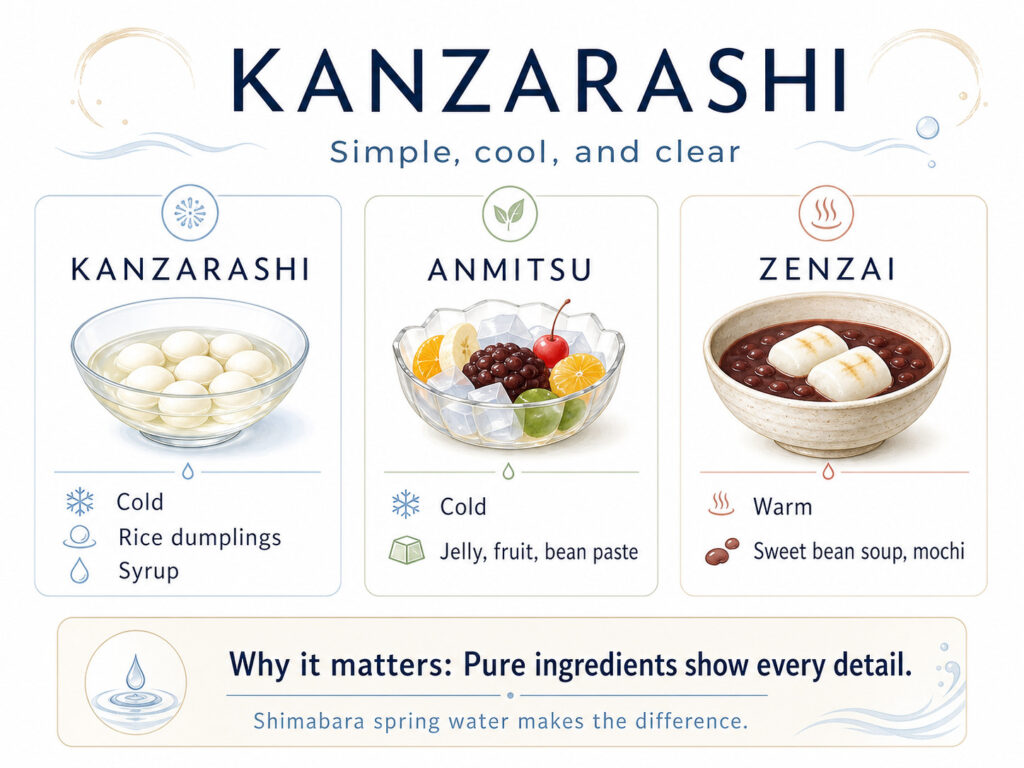
If you know Japanese sweets, kanzarashi will feel both familiar and new. In fact, its dumplings are close cousins of shiratama dango, the classic rice-flour balls. Those same dumplings often appear alongside red beans or fruit in other sweets. In kanzarashi, though, they take center stage in a simple pool of syrup.
Anmitsu and Zenzai Side by Side
Compare it with anmitsu, and the contrast is clear. Anmitsu piles up agar jelly, fruit, and sweet bean paste for a busy, layered bowl. Kanzarashi strips all that away, leaving just dumplings and syrup. Zenzai, by contrast, is a warm, rich sweet bean soup. Kanzarashi is its cool, clear, minimalist opposite.
| Dessert | Served | Main Parts | Style |
|---|---|---|---|
| Kanzarashi | Cold | Rice dumplings, syrup | Simple, refreshing |
| Anmitsu | Cold | Jelly, fruit, bean paste | Layered, varied |
| Zenzai | Warm | Sweet bean soup, mochi | Rich, hearty |
| Shiratama dango | Varies | Rice dumplings | Plain base sweet |
Why the Simplicity Matters
That plainness is not a weakness at all. Naturally, with so few ingredients, the quality of each one really shows. The water, the dumplings, and the syrup all have nowhere to hide. This is exactly why Shimabara’s clean spring water matters so much.
Where the Name Kanzarashi Comes From
The name kanzarashi has a lovely, seasonal story behind it. “Kan” refers to the coldest part of winter, and “zarashi” means to expose or soak. Long ago, people made the rice flour during this deep-winter cold. Specifically, they soaked glutinous rice in icy water, then ground and dried it into flour. Working in the cold season had a practical reason.
In winter, the flour was far less likely to spoil or attract insects. So the finished flour earned the name kanzarashi, the cold-soaked rice flour. Eventually, that same name passed to the dessert itself.
The History of Kanzarashi
The roots of kanzarashi reach back into the Edo period. In fact, local historians trace it to an old custom in the Shimabara domain. During the Bon festival, families offered rice dumplings at graves and altars. Afterward, people began eating those dumplings in a sweet syrup. That humble habit slowly grew into something more.
In time, hosts started serving the cool sweet to summer guests. There was also a deeper, everyday reason for the dish. Ordinary people once paid much of their rice as tax, and ate broken rice instead. So they ground this rice into flour, then shaped it into dumplings for storage in spring water. With plenty of local sugar available too, a cold sweet was a natural step.
By the early Meiji era, shops in Shimabara were serving kanzarashi. A famous early example was a shop called Ginsui, loved for its simple bowls. From there, the sweet became a lasting symbol of the town.
The Sweet in Shimabara Today
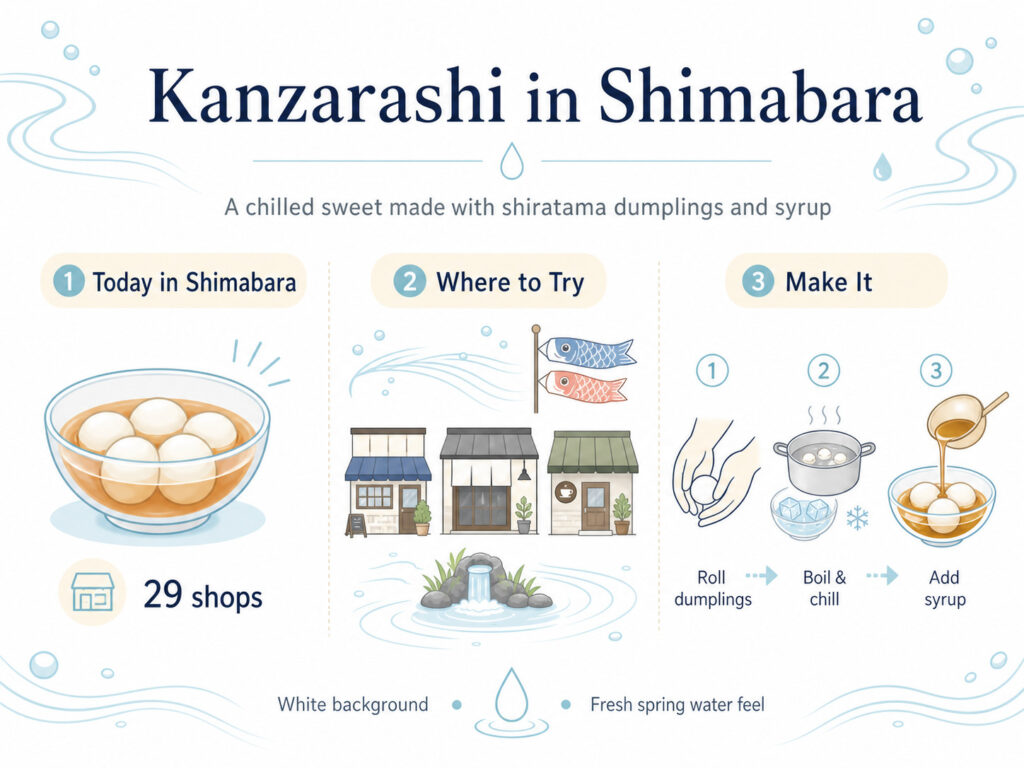
Kanzarashi is very much alive in Shimabara today. Today, dozens of shops and cafes around the city serve their own versions. In fact, a 2023 city survey counted 29 shops offering the sweet. A single bowl usually holds 16 to 18 little dumplings. Each one guards its own syrup recipe, so the sweetness varies from place to place. Trying several bowls around town has become a small traveler’s pleasure.
Famous Places to Try It
The revived Ginsui is perhaps the most storied spot of all. This beloved shop first opened in 1915 beside the Hamanokawa spring. Notably, it closed in the late 1990s, then reopened in 2016 after a careful restoration. Its story even inspired a Japanese television drama in 2019. In 2021, the building joined Japan’s registered tangible cultural properties. It now draws visitors eager to taste a truly classic bowl. Near the lovely Koi no Oyogu Machi, the Town of Swimming Carp, more cafes await. There, colorful carp glide through clear streams beside the shops. Old converted houses, such as the Shimabara Mizuyashiki, serve kanzarashi by their own spring-fed gardens.
Trying a Hands-On Workshop
You can also try making kanzarashi with your own hands. At the Shimabara Yusui-kan, visitors can join a hands-on kanzarashi workshop. There, you roll the little dumplings, chill them in spring water, and add the syrup. Eating your own bowl by the garden is a genuinely lovely experience. At home, the recipe is refreshingly easy as well.
You simply make shiratama dumplings, boil them, cool them, and drop them into syrup. A syrup of sugar, water, and a spoon of honey is all you need.
How to Make Kanzarashi at Home
Making kanzarashi at home takes only a little time and care. First, you prepare the syrup, since it needs to chill before serving. To begin, warm sugar and water together until the sugar dissolves, then stir in honey. Let this syrup cool, and then chill it well in the refrigerator.
Next, you make the dumplings from shiratama rice flour. Add water gradually to the flour, kneading until it feels like your earlobe. Then roll the dough into small balls, about the size of a marble. Boil the dumplings until they float, then give them another minute. Right away, scoop them into cold water to firm up and cool.
Finally, drop the chilled dumplings into the cold syrup and serve. For an extra-cool bowl, you can add a few small ice cubes on top.
Is Kanzarashi Just a Summer Treat?
Kanzarashi shines brightest in the summer heat, without a doubt. Indeed, the cold syrup and cool dumplings suit hot, sticky days. Still, its name is a reminder of winter, when the rice flour was made. In that sense, the dessert quietly carries both seasons within it. These days, you can enjoy it year-round in many Shimabara cafes. Yet a chilled bowl in August remains the purest way to understand its appeal.
Final Thoughts
Kanzarashi is a gentle, unhurried kind of sweet. It asks for little, just good water, soft dumplings, and a light syrup. In return, it offers a moment of cool, quiet pleasure on a hot day. In a sense, the dessert carries the story of Shimabara in every bowl. It speaks of the town’s springs, its history, and its warm hospitality.
For over a hundred years, people here have shared it with summer guests. Understand kanzarashi, and you understand a little of Shimabara itself. If you ever visit the City of Water, a cool bowl will be waiting.
Kanzarashi FAQ
What is kanzarashi?
Kanzarashi is a traditional cold dessert from Shimabara, Nagasaki. It features small shiratama rice dumplings in a light syrup. Cooks chill the dumplings in local spring water. People enjoy it most in summer.
Where does kanzarashi come from?
Kanzarashi comes from the Shimabara Peninsula in Nagasaki. The town is famous for its abundant spring water. That water is central to the dessert. Locals often call it a soul food of Shimabara.
What does the name kanzarashi mean?
The name means “cold-soaked.” Long ago, people soaked rice in icy midwinter water. They then ground and dried it into flour. Making it in the cold kept the flour from spoiling.
What does kanzarashi taste like?
Kanzarashi tastes lightly sweet and very refreshing. The syrup blends sugar and honey in a gentle way. The dumplings are soft, chewy, and smooth. Together they feel cool and easy to eat.
What is kanzarashi made of?
Kanzarashi uses just a few simple ingredients. The dumplings come from shiratama rice flour and water. The syrup blends sugar and honey. Spring water chills the dumplings and keeps them soft.
How is kanzarashi different from anmitsu?
Anmitsu is a layered dessert with jelly, fruit, and bean paste. Kanzarashi is far simpler, with only dumplings and syrup. It focuses on clean, gentle flavor. The quality of the water really stands out.
How do you make kanzarashi at home?
Making it at home is quite easy. You prepare a syrup of sugar, water, and honey, then chill it. You roll shiratama dumplings, boil them, and cool them in water. Finally, you add the dumplings to the cold syrup.
Where can I eat kanzarashi in Shimabara?
Dozens of shops in Shimabara serve it. The revived Ginsui is a famous classic spot. Cafes near the Town of Swimming Carp also serve it. Each shop has its own syrup recipe.
Can you try making it in Shimabara?
Yes, you can join a workshop at the Shimabara Yusui-kan. There you roll the dumplings and chill them in spring water. Then you add the prepared syrup. Eating your own bowl by the garden is a treat.
Is it only a summer dessert?
Kanzarashi is most popular in summer. Its cold syrup suits hot, humid days. Still, many Shimabara cafes serve it all year. The name itself recalls winter, when the flour was made.
Is it similar to other Japanese desserts?
Yes, its dumplings resemble shiratama dango. Those rice balls appear in many Japanese sweets. Kanzarashi simply serves them cold in syrup. Its charm lies in that gentle simplicity.
Why is Shimabara’s spring water so important?
Shimabara overflows with clear, cool spring water. That water chills the dumplings and keeps them soft. It stays cold throughout the year. Without this water, kanzarashi would not be the same.
References
- Ministry of Agriculture, Forestry and Fisheries (MAFF), on kanzarashi as a local dish of Shimabara, its history, and recipe. (Surveyed: July 2026)
- Shimabara City, official page on kanzarashi and shops serving it. (Surveyed: July 2026)
- Enjoy! Shimabara (Shimabara Tourism), on the kanzarashi-making experience at Shimabara Yusui-kan. (Surveyed: July 2026)
- Mizu no Bunka Center (Mizkan), journal “Mizu no Bunka” No. 63, feature on kanzarashi and the spring water of Shimabara, including the Hamanokawa spring (16C, medium-soft water). (Surveyed: July 2026)
- Ministry of the Environment, on the Shimabara spring water group, selected among Japan’s 100 Exquisite Waters in 1985. (Surveyed: July 2026)
- Nagasaki Prefecture Tourism (Nagasaki Tabinet), on Ginsui, founded 1915, and its kanzarashi made with the Hamanokawa spring. (Surveyed: July 2026)
Related Articles
- Japanese Fruit and Seasonal Produce (Surveyed: July 2026)
- Sushi (Surveyed: July 2026)




Comments