





Osaka’s love affair with food is no secret. You might know takoyaki and okonomiyaki, but one drink flies under the radar. That drink is mixed juice. If you have never heard of it, you are not alone. Many visitors stumble upon it by accident. They walk into a vintage coffee shop, point at something on the menu, and suddenly discover one of Osaka’s most famous local drinks.
What Is Mixed Juice?
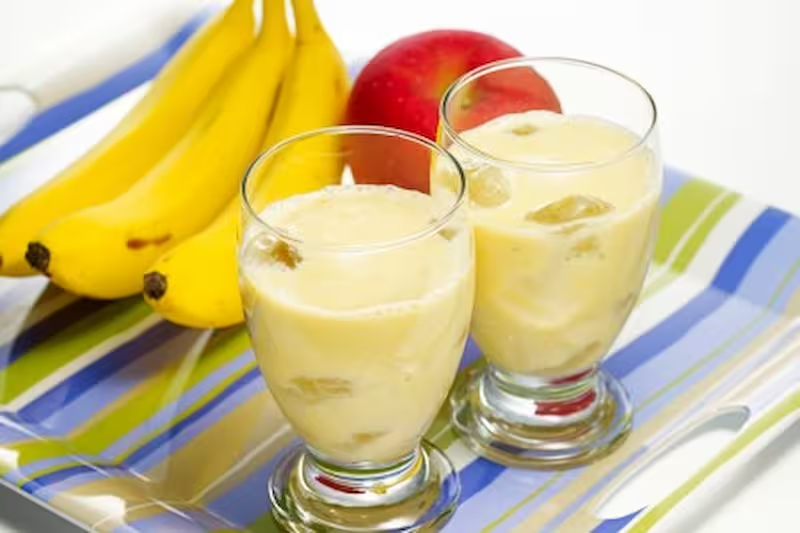
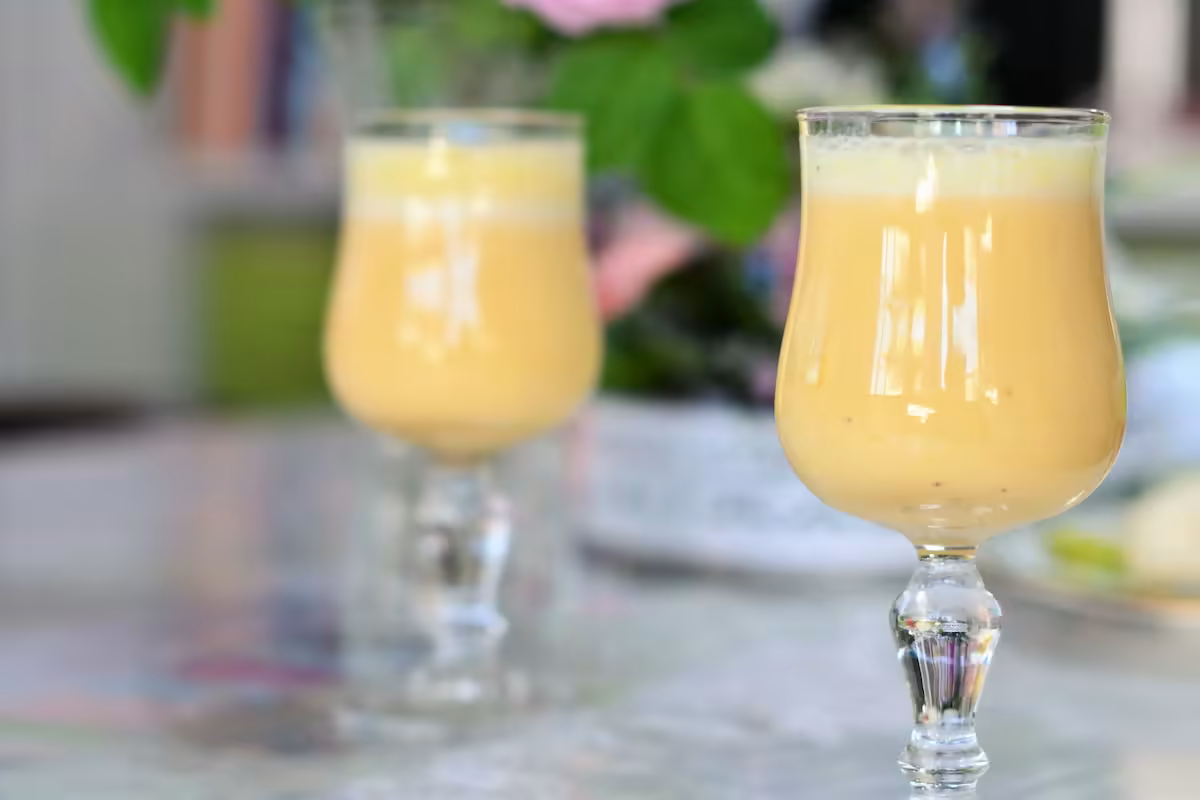
What is mixed juice, exactly? The name can confuse people. In most of Japan, “mixed juice” means a blend of fruit juices only. In Osaka, it means something else entirely. Here, mixed juice combines fruit, milk, and ice in a blender. The result is a thick drink somewhere between a smoothie and a milkshake. But it predates both trends by decades.
A typical glass of Japanese mixed juice starts with banana for body. Shops then add tangerine segments, yellow peach, and sometimes apple or pineapple. Everything gets blended with cold milk and a touch of sugar. The fruit syrup from canned fruit often goes in too. That is one reason the taste feels nostalgic. Canned fruit carries the flavor of another era.
Some visitors expect something light and watery. That expectation vanishes the moment the straw stands straight up in the glass. The texture is rich and almost velvety.
Why Is Mixed Juice Popular in Osaka?
People often wonder why mixed juice is so popular in Osaka. The answer lies partly in the city’s character. Osaka is a merchant town. People here value practicality and hate waste. The local word “mottainai” captures this perfectly. It means something is too good to waste.
When a drink tastes this comforting, it naturally becomes an everyday staple. Mixed juice is a sweet blend of fruit juice and milk. It works as breakfast, as a pick‑me‑up on a hot afternoon, or as a gentle finish after a meal. For many locals, it also brings back childhood memories. Parents brought their kids, and those kids grew up to bring their own children. That cycle has repeated for over seven decades.
The History Behind Osaka Mixed Juice
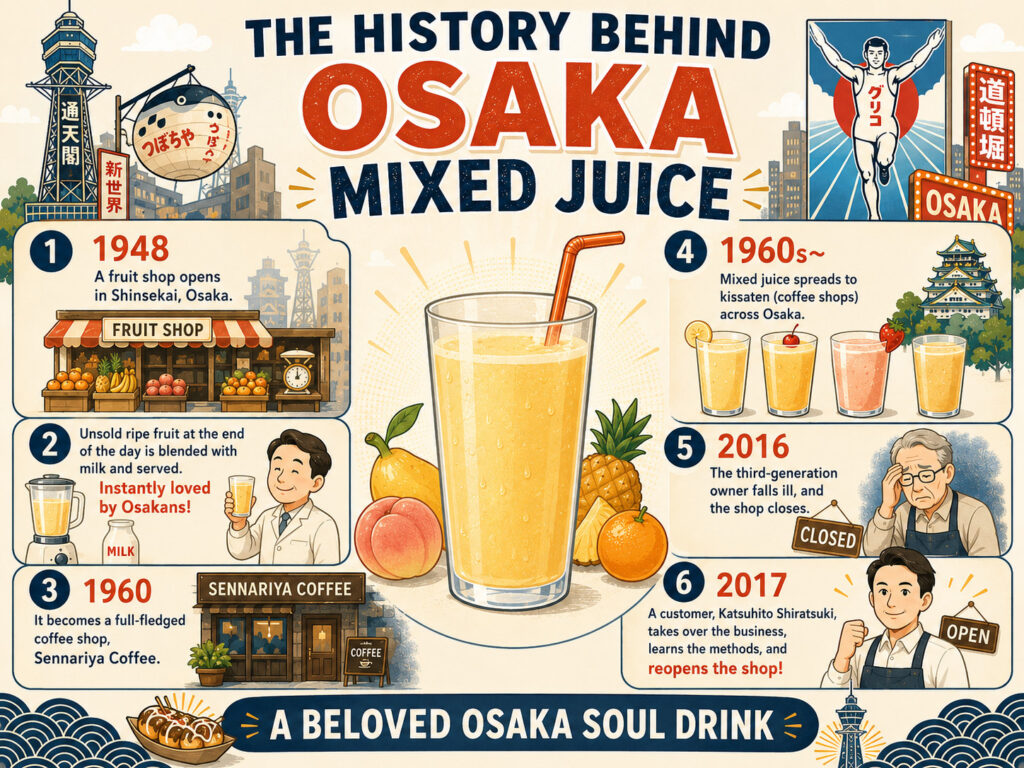
The story of Osaka mixed juice history begins in Shinsekai, a lively downtown district in southern Osaka. In 1948, a small fruit shop opened its doors there. The first owner, Ichiro Tsunekawa, faced a common problem. At the end of each day, perfectly ripe fruit remained unsold. Rather than throw it away, he began blending it with milk and serving the mixture to customers. The idea was simple, but the response was immediate. Osakans loved the drink.
The shop’s reputation grew. By 1960, it had transformed into a full‑fledged coffee shop called Sennariya Coffee. Other kissaten across the city took notice and soon added their own versions of mixed juice to their menus. Each establishment refined its own recipe over time.
Sennariya Coffee almost disappeared for good in 2016 when the aging third‑generation owner fell ill and closed its doors. A customer named Katsuhito Shiratsuki could not bear the loss. He had grown up visiting the café with his parents. He took over the business, learned the methods, and reopened in 2017. The spirit of the original drink survived.
Mixed Juice as a Classic Japanese Kissaten Drink
To understand the mixed juice phenomenon, you need to picture a kissaten. These are traditional Japanese coffee shops born in the Showa era. They offer dim lighting, leather seats, and the soft sound of jazz. In Osaka, a classic Japanese kissaten drink is almost always mixed juice. It appears on menus alongside cream soda and siphon coffee as a standard item.
In fact, mixed juice might be the true taste of an Osaka kissaten. The drink feels inseparable from the atmosphere. Showa retro mixed juice remains a favorite among younger generations too. Recently, convenience stores and beverage makers have turned it into packaged products. Even Lawson’s MACHI café released a Fruit Mix Frappe inspired by this Showa‑era staple. The retro appeal shows no sign of fading.
Mixed Juice vs. Smoothies
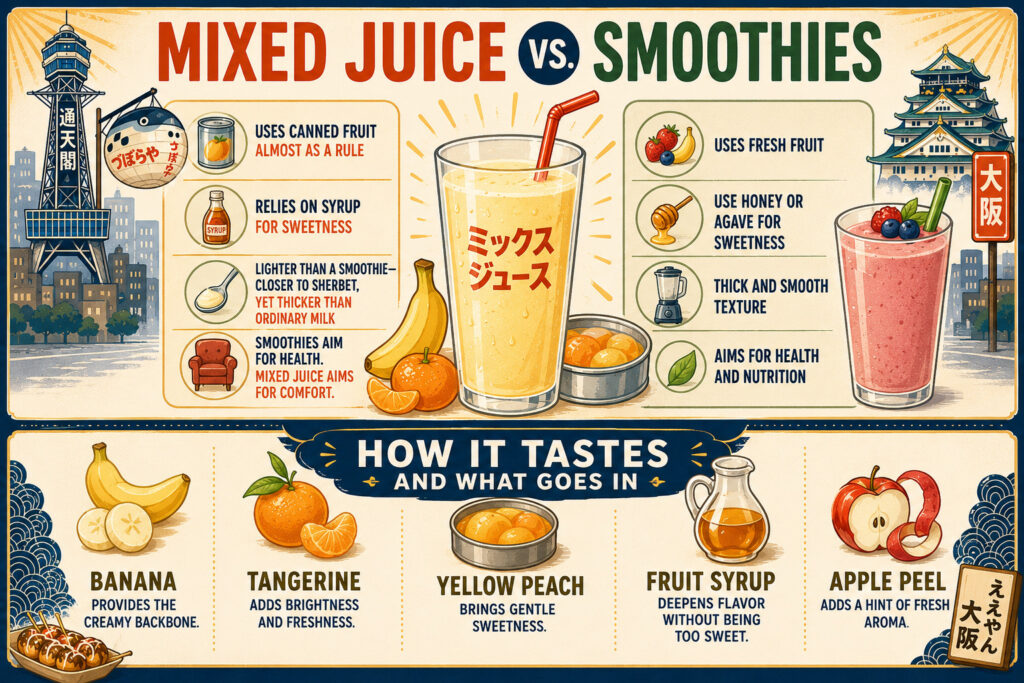
If you have only tried modern smoothies, you might expect something similar. The two drinks are not the same.
Mixed juice uses canned fruit almost as a rule. It relies on syrup for sweetness instead of honey or agave. The final texture is lighter than a smoothie—closer to sherbet—yet thicker than ordinary milk. One more difference matters a lot. Smoothies aim for health. Mixed juice aims for comfort.
How It Tastes and What Goes In
Mixed juice taste and ingredients can vary from one shop to another. Still, a common base unites them. Banana provides the creamy backbone. Tangerine and yellow peach add brightness and gentle sweetness. A dash of fruit syrup deepens the flavor without making it cloying. Some shops leave a little apple peel to boost the fresh aroma.
How to Make Japanese Mixed Juice at Home
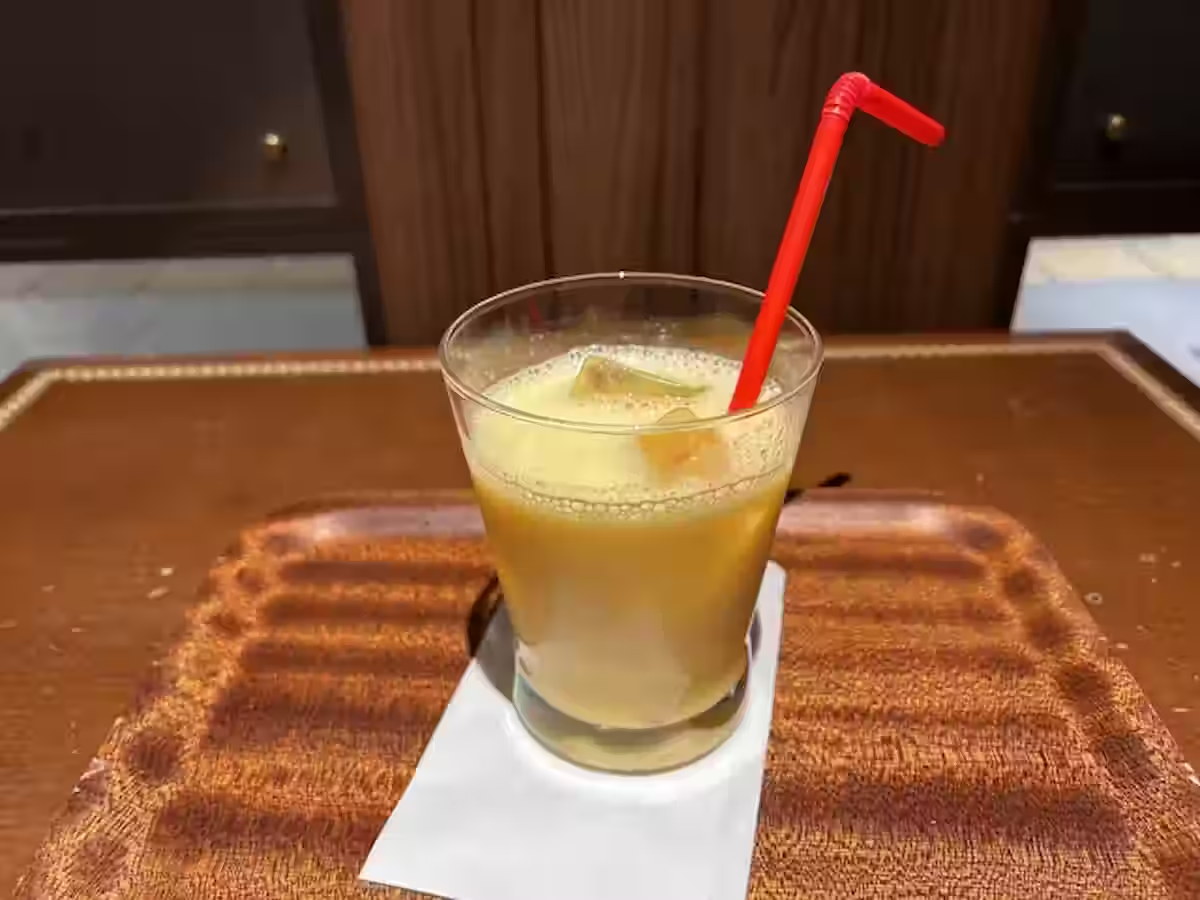
If a trip to Osaka is not in your immediate plans, you can make a simple version at home. Here is a basic reference.
- Banana – 1 ripe banana
- Canned mandarin oranges – about ½ cup
- Canned yellow peaches – about ½ cup
- Syrup from canned fruit – about ½ cup
- Milk – about ½ cup
- Ice – a handful
Blend everything until smooth. Add sugar only if you feel it needs more sweetness. Pour into a tall glass and serve immediately.
A Healthy and Energizing Treat
This drink is not just delicious; it is also a powerhouse of nutrition. Because it uses whole fruits and dairy, it provides a great balance of energy.
- Bananas: Provide the creamy base and quick energy.
- Oranges: Add Vitamin C to help your immune system.
- Milk: Adds protein and calcium for strong bones.
- Fiber: Since it uses real fruit, it helps with digestion.
It is a popular choice for busy workers in Osaka because the natural sugars and protein give them a steady energy boost during a long day.
Where to Experience the Original
Sennariya Coffee (千成屋珈琲)
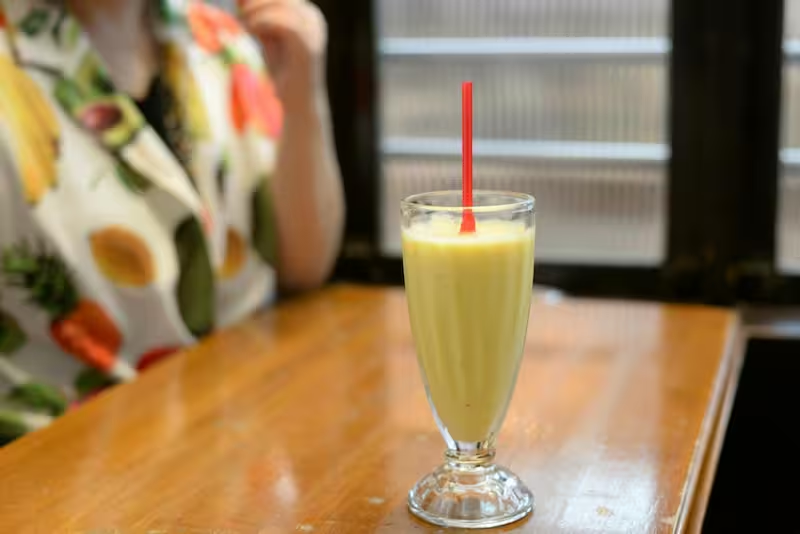
To taste the most authentic version, you should visit the birthplace of the drink. Sennariya Coffee is a “retro” cafe that feels like traveling back in time.
Where to Try It in Osaka
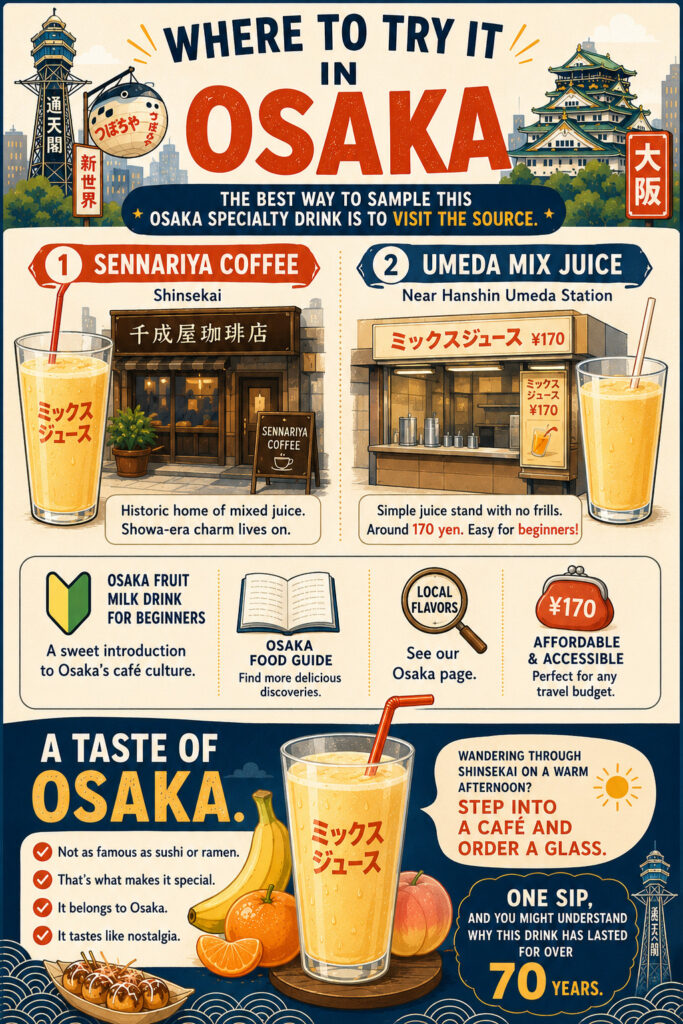
The best way to sample this Osaka specialty drink is to visit the source. In the Shinsekai area, Sennariya Coffee remains the historic home of mixed juice. The interior still radiates Showa‑era charm. For a different experience, head to Umeda Mix Juice near Hanshin Umeda Station. A simple juice stand serves the drink in a no‑frills style. The price hovers around 170 yen, making it an easy stop for beginners. Osaka fruit milk drink for beginners can feel like a sweet introduction to the city’s café culture. For more food discoveries, you can also consult a broader Osaka food guide. And for a deeper dive into the city’s local flavors, see our Osaka page.
Mixed juice might never reach the global fame of sushi or ramen. That is partly why it feels so special. It belongs to Osaka. It tastes like nostalgia. If you find yourself wandering through Shinsekai on a warm afternoon, step into a café and order a glass. One sip, and you might understand why this drink has lasted for over seventy years.
Osaka Mixed Juice FAQ
What is Osaka Mixed Juice?
It is a retro fruit beverage from the Kansai region. Cafe owners make it with milk, bananas, canned fruits, and ice. Food lovers know it for its thick texture and nostalgic sweetness.
Where does Osaka Mixed Juice come from?
This sweet beverage originates from the Shinsekai district in Osaka. A local fruit shop owner invented it during the 1940s to prevent overripe fruits from going to waste.
What does Osaka Mixed Juice taste like?
It delivers a sweet, creamy, and fruity flavor. The texture feels incredibly thick, smooth, and icy. Drinkers often compare it to a rich banana milkshake blended with bright tropical fruits.
Where can I drink Osaka Mixed Juice in Japan?
You will find the best ones right in Osaka. Famous spots include retro coffee shops (kissaten) and busy juice stands inside major train stations. Convenience stores also sell packaged versions nationwide.
How much does Osaka Mixed Juice cost?
A fresh glass typically costs between 200 and 600 yen. Prices vary slightly depending on the specific juice stand or the traditional cafe you visit.
Is Osaka Mixed Juice vegetarian or vegan friendly?
Traditional recipes contain cow’s milk. Vegans cannot drink the standard version, but they can easily blend plant-based alternatives at home using soy or almond milk. Vegetarians can safely enjoy it anywhere.
What are the main ingredients in Osaka Mixed Juice?
The main ingredients include fresh bananas, canned mandarin oranges, canned peaches, milk, and sugar. The ripe bananas give the drink its distinctive creamy texture and heavy sweetness.
Can I make Osaka Mixed Juice at home?
Yes, you can easily blend this drink at home. Grocery stores stock the key ingredients — bananas, canned mixed fruits, and milk. Home cooks simply toss everything into a blender with ice and mix it quickly.
What is the difference between Osaka Mixed Juice and a standard fruit smoothie?
The main difference involves the fruit selection and liquid base. The Kansai specialty features canned fruits with heavy syrup and cow’s milk, while standard smoothies usually rely on fresh or frozen berries and clear fruit juice.
Is Osaka Mixed Juice popular outside Japan?
It remains relatively unknown outside Japan. You will rarely find this specific retro drink at Japanese cafes in North America or Europe. This nostalgic beverage successfully maintains its beloved local status primarily within the Kansai region.
References
- Japan Travel – Take Your Cup Of Coffee With Something Quirky At A Kissaten (https://www.japan.travel/en/ph/story/coffee-culture-in-japan-kissaten/) (2025)
- MATCHA – Osaka Mixed Juice: The Birthplace of Japan’s Mixed Juice at Sennariya Coffee (https://matcha-jp.com/cn/7400) (2019)
- Japanese Cooking 101 – Mix Juice Recipe (https://japanesecooking101.com/mix-juice-recipe/) (2019)
- The Japan News – Birthplace of ‘mix juice’ gets new lease on life (https://japannews.yomiuri.co.jp/features/delicious/20220920-59433/) (2022)
- Grape Japan – “Mixed Juice” inventor Sennariya Coffee brings their nostalgic Showa fare to the Kanto area (https://grapeejapan.com/147666) (2020)



Comments