




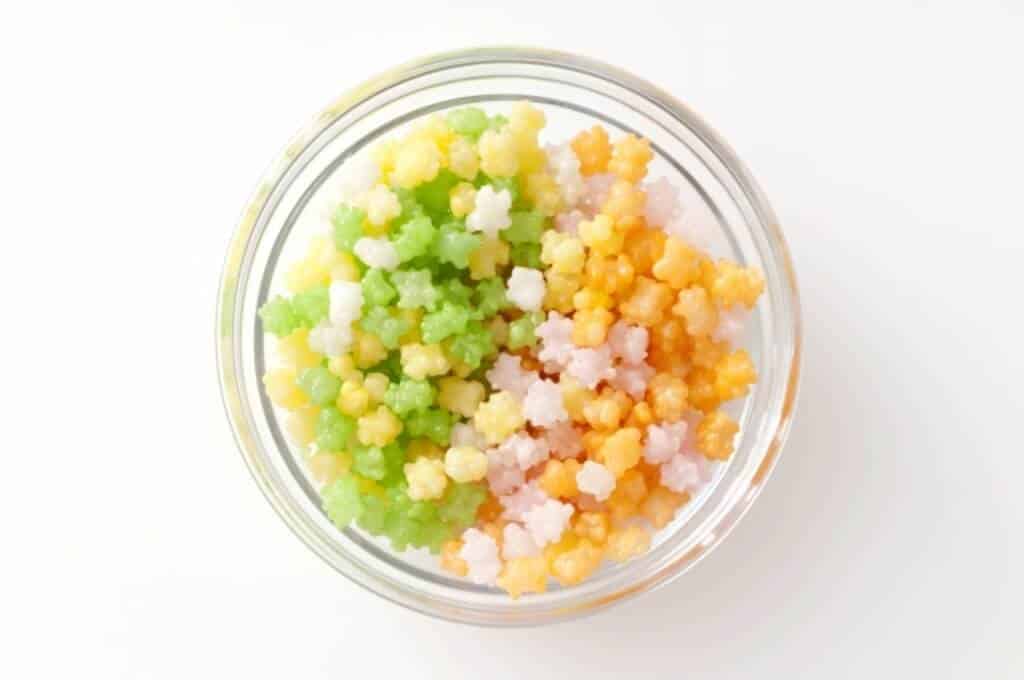
Konpeito (金平糖) is Japan’s most iconic star-shaped sugar candy. This colorful Konpeito has delighted people in Japan for over 400 years. Originally a rare gift for warlords and nobility, it became one of the country’s most beloved traditional wagashi sweets. Today, you find it in souvenir shops, department store food halls, and specialist confectionery stores across Japan. Few traditional Japanese sweets can match its combination of history, visual charm, and surprisingly delicate texture.
What Is Konpeito?
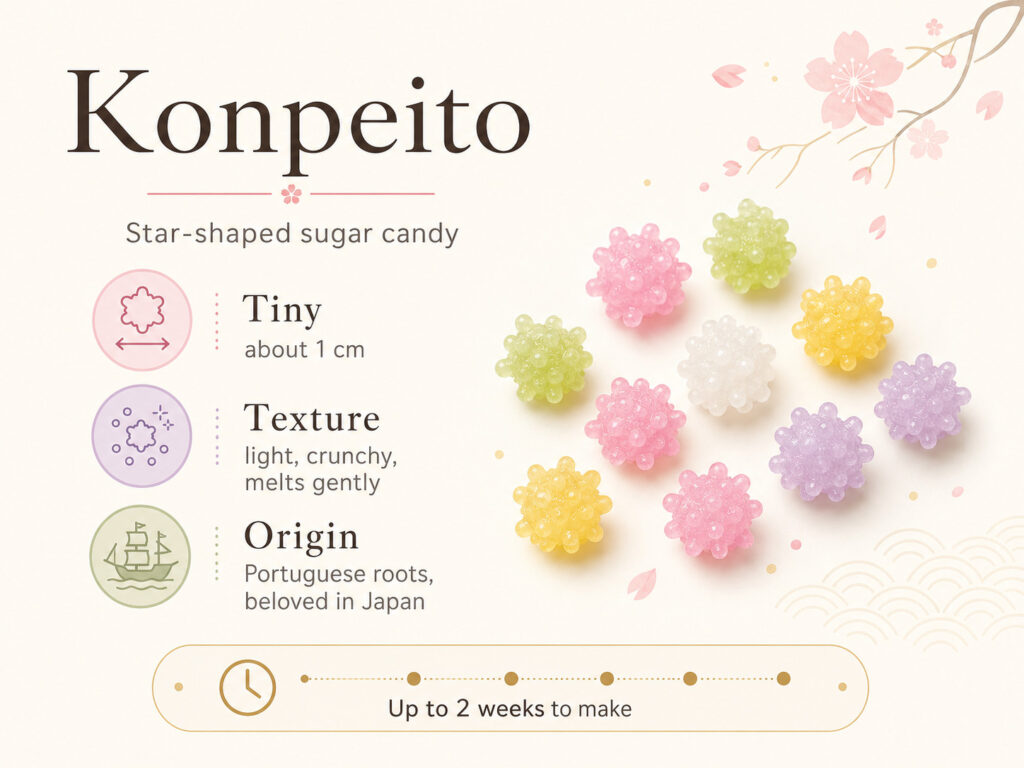
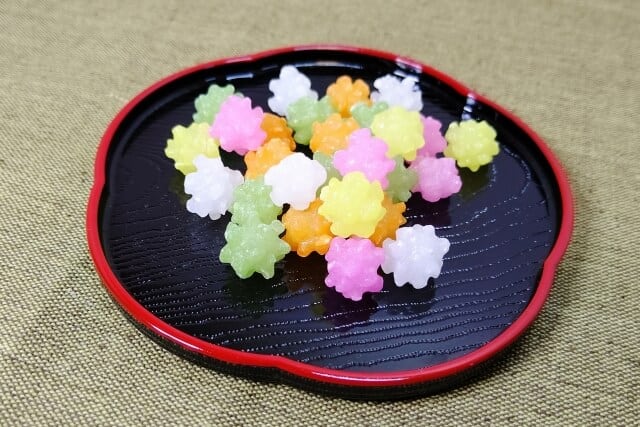
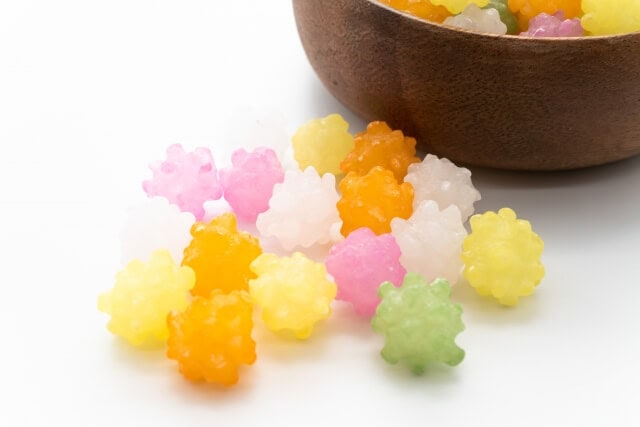
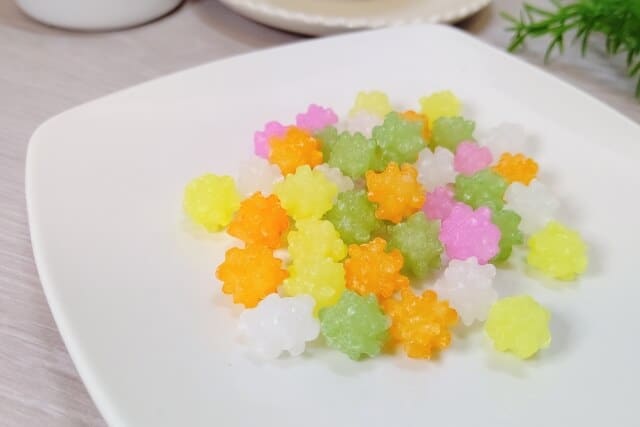
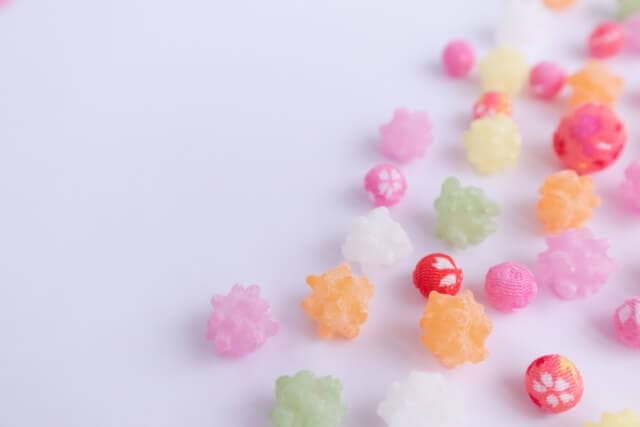
Konpeito is a small, sugar-based candy with a distinctive star shape and tiny protruding bumps across the surface. Each piece is lightweight and crunchy. The texture melts gently rather than breaking hard on the teeth. Colors typically range from white, pink, and yellow to pale green and lavender, though modern varieties come in dozens of shades.
Konpeito belongs to the broader world of Japanese sweets, though its Portuguese roots give it a unique origin story. Most pieces measure about one centimeter across. Each one takes skilled artisans up to two weeks to produce. That detail alone hints at why this small candy carries such cultural weight in Japan.
Etymology and Meaning of Konpeito
The word konpeito comes directly from the Portuguese “confeito,” meaning a type of sugar comfit. Japanese writers render it as 金平糖 (golden flat sugar), though these characters function mainly as ateji, chosen for their sound rather than their literal meaning. Older texts also record it as 金米糖 and 金餅糖. Each variation reflects a different attempt to phonetically capture the Portuguese word in Japanese script. The diversity of written forms shows how quickly and enthusiastically Japan adopted the candy after its introduction.
History of Konpeito in Japan
Arrival from Portugal
Around 1546, Portuguese traders first arrived in Japan via Tanegashima island in southern Kyushu. They introduced a range of Nanban confectionery, including castella sponge cake and konpeito. In 1569, Luís Fróis, a Portuguese Jesuit missionary, visited warlord Oda Nobunaga in Kyoto. He presented Nobunaga with a glass bottle of konpeito as a diplomatic gift. Nobunaga reportedly received it with considerable interest. At that time, konpeito was an extremely rare item. Only court nobles and high-ranking samurai had access to it, and the production method remained a carefully guarded secret.
Japanese Production and Spread
For roughly the first century after its introduction, konpeito in Japan depended entirely on Portuguese imports. Then, in the early Edo period, a confectionery craftsman in Nagasaki decided to reproduce the candy domestically. After two years of focused research, he succeeded. Production subsequently spread from Nagasaki to Kyoto and eventually to Edo, present-day Tokyo. Konpeito gradually became accessible to ordinary people, not only the elite. By the mid-Edo period, Japanese artisans had refined the craft significantly. Many people today assume konpeito originated in Japan, because it fits so naturally into Japanese food culture. However, it actually came from Portugal, which makes its story all the more interesting.
Taste and Texture of Konpeito
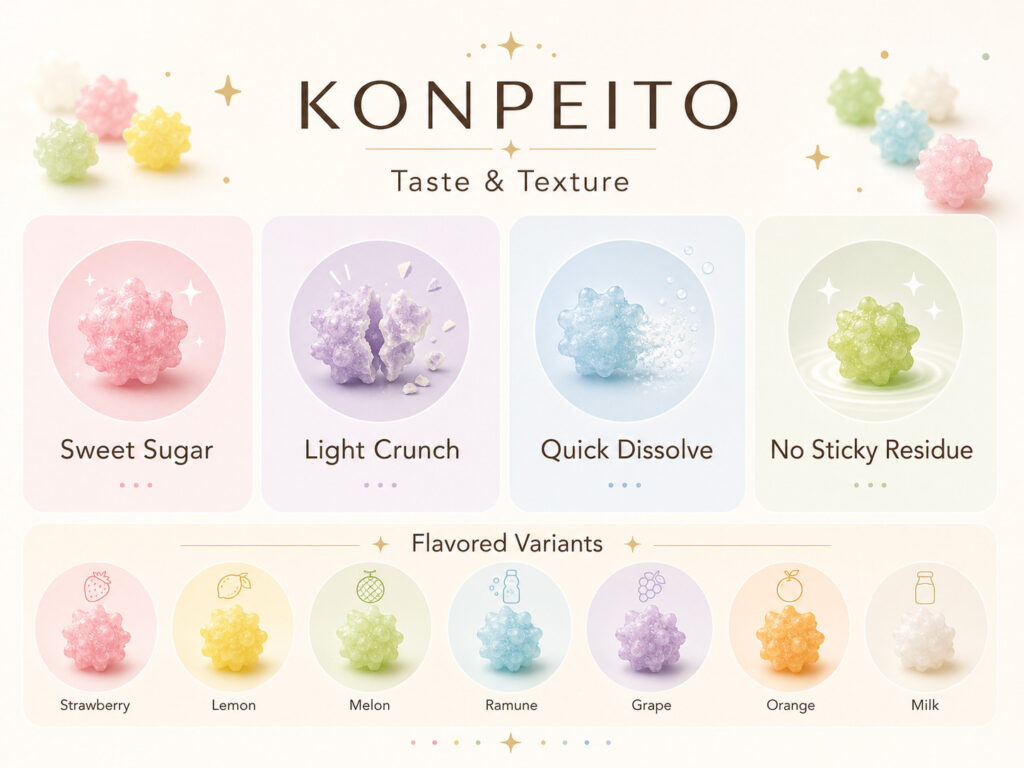
Konpeito tastes primarily sweet, with a clean sugar flavor at its base. Modern varieties, however, introduce a wide range of complementary flavors. The texture surprises most first-time tasters. It looks hard and dense, but the candy is actually light and crunchy. It dissolves quickly and evenly on the tongue. There is no sticky residue, and no harsh crunch. The experience feels closer to a gentle, airy collapse than to biting a boiled sweet.
This texture results from the layered sugar-coating process used in production. Each bump on the surface develops through repeated applications of sugar syrup over many days. As a result, the interior stays surprisingly delicate. Flavored versions, such as matcha or citrus, add a secondary layer of taste that lingers briefly after the sugar dissolves. Many people find the combination of appearance and texture unexpectedly satisfying.
Flavours of Konpeito
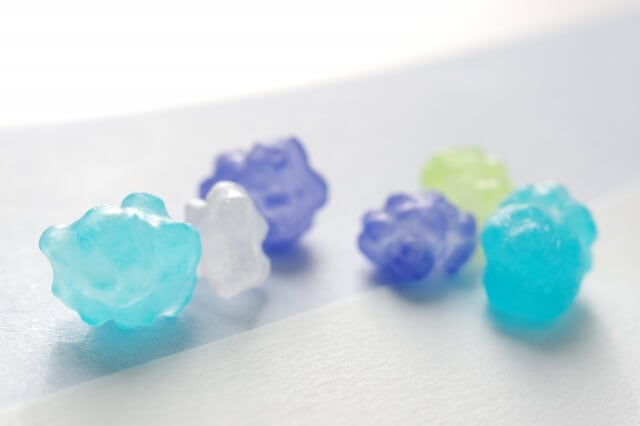
One of the most appealing things about konpeito is its range of flavours. Traditional plain white sugar remains the most historically accurate option. However, specialist shops and modern producers now offer a wide variety. Below are the most common categories:
- Fruit: orange, apple, muscat grape, pineapple, strawberry, yuzu, and plum
- Japanese tea: matcha, sencha, hojicha, and genmaicha
- Adult flavors: coffee, cinnamon, and dark chocolate
- Savory-adjacent: salt, sake lees (sakekasu), and ginger
- Seasonal editions: sakura (spring), chestnut (autumn), and regional specialties
Producing flavored konpeito is considerably more difficult than making plain sugar varieties. Adding fruit juice, oil, or salt disrupts the sugar crystallization process. As a result, artisans often need years of additional experimentation to develop a stable new flavor. That difficulty is one reason why specialty shops treat each flavor as a serious product in its own right.
How Konpeito Is Made
Professional konpeito production centers on a large rotating copper drum called a dora-nabe. Artisans heat the drum and add small amounts of warm sugar syrup repeatedly while tiny sugar cores tumble inside. This process builds up the bumpy surface layer by layer. The protruding points form because syrup clings more readily to existing protrusions than to flat areas. Temperature, angle, and the rhythm of the drum all require constant attention. Skilled producers say the craft demands at least 20 years of practice to fully master.
A simplified home version is possible, though it produces a rougher result. Below is a basic method for making konpeito at home:
Simple Home Method
| Ingredient | Amount |
|---|---|
| Granulated sugar | 300g |
| Molasses or sugar syrup | 800g |
Place a small handful of granulated sugar into a dry frying pan over low heat. Add a small amount of warm sugar syrup and stir gently with chopsticks to prevent clumping.
When the surface turns dry and whitish, add another small pour of syrup and mix again. Break apart any pieces that stick together. Repeat this step many times, allowing the crystals to build up slowly.
After approximately 100 repetitions, the pieces will reach a size similar to commercially sold konpeito. The process is slow. Patience is the most important ingredient.
Remove the finished pieces from the heat and spread them on a tray to cool completely. The bumps will firm up as the candy cools. Store in an airtight container.
Cultural Uses and Significance
Imperial and Wedding Tradition
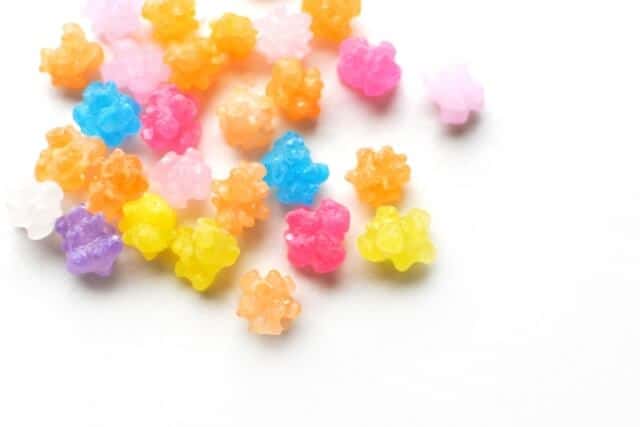
Konpeito carries strong associations with celebration and prestige in Japan. The imperial household has long presented it as a gift at auspicious occasions, including coronations and royal weddings. At such ceremonies, guests receive konpeito in a small decorative container called a bonbonnière. This tradition blends European gift-giving custom with Japanese confectionery culture in a genuinely unique way. The bonbonnière itself often becomes a keepsake long after the event.
Hinamatsuri (Doll’s Festival)
On Hinamatsuri, observed on March 3rd each year, many families display Hina dolls alongside seasonal sweets. Konpeito’s pastel colors suit the spring festival beautifully. Alongside hina-arare rice crackers, konpeito traditionally appears on the tiered display shelf as part of the seasonal offering to the dolls.
Preservation and Practicality
Konpeito stores exceptionally well. The high sugar content acts as a natural preservative. Properly sealed, it can last for a year or more without quality loss. This long shelf life historically made it valuable as a travel provision and emergency food. Even today, some organizations include konpeito in emergency supply kits. As a souvenir, the durability makes it a particularly practical choice for travelers taking gifts home.
Konpeito vs Rock Candy vs Dragée
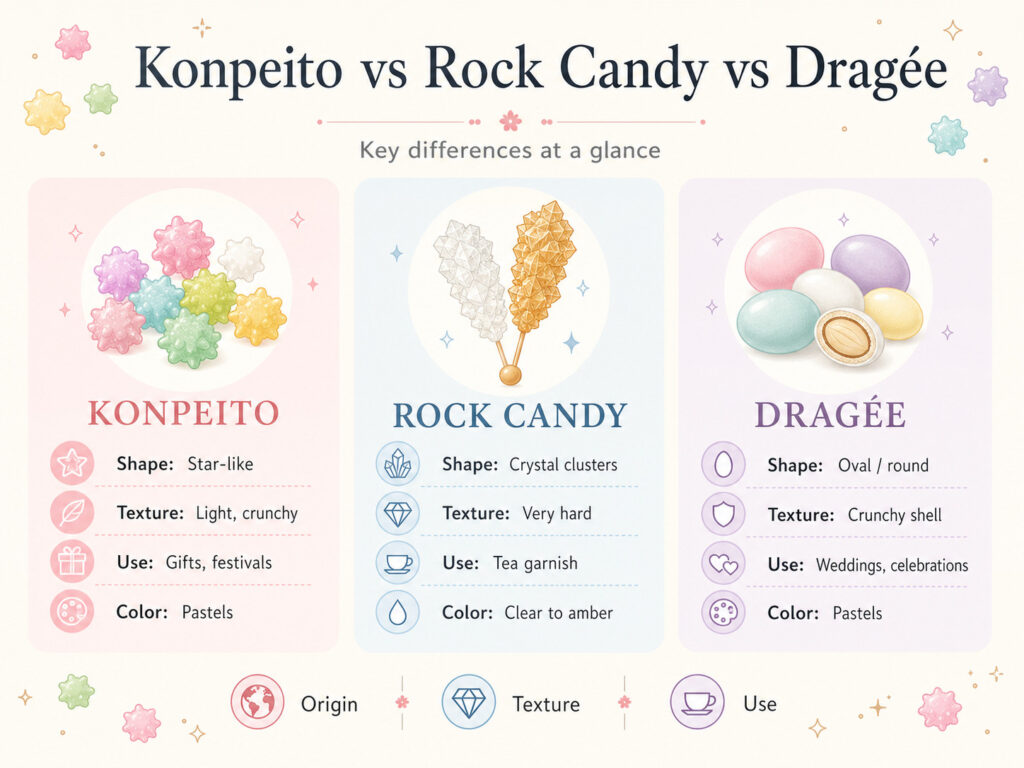
Konpeito is sometimes confused with similar sugar confections from other cultures. The table below clarifies the key differences:
| Feature | Konpeito | Rock Candy | Dragée |
|---|---|---|---|
| Shape | Star-shaped with bumps | Irregular crystal clusters | Smooth oval or round |
| Origin | Portugal, refined in Japan | Various countries | France |
| Texture | Light, crunchy, quick to melt | Very hard | Crunchy sugar shell |
| Color | Multiple vivid pastels | Clear to amber | Various pastel colors |
| Common use | Gifts, festivals, souvenirs | Tea and cocktail garnish | Weddings and celebrations |
| Shelf life | 12+ months | Very long | 6–12 months |
| Price range (Japan) | ¥300–¥2,000 per package | Varies | Varies |
In contrast to rock candy, konpeito is far lighter and less dense. Compared with dragée, the bumpy surface and Japanese production technique set it distinctly apart. Konpeito is, in that sense, a category of its own.
Where to Buy Konpeito in Japan
In Kyoto, Ryokusuian Shimizu (緑寿庵清水), founded in 1847, stands as one of Japan’s most celebrated konpeito specialists. The shop offers dozens of seasonal flavors in elegant packaging and draws visitors from across the country and abroad. In Tokyo, department store depachika food halls in Nihonbashi, Ginza, and Shinjuku carry a selection of premium konpeito. At popular tourist spots such as Asakusa, Nikko, and Nara, souvenir shops typically stock simple bags for around ¥300 to ¥500.
For those unable to visit in person, online shopping is a reliable alternative. Amazon Japan and Rakuten both carry konpeito from multiple producers, including seasonal and limited editions. Prices range from roughly ¥300 for a standard bag to ¥2,000 or more for gift-boxed sets from specialist shops. If budget allows, the specialty shop versions are worth the difference.
Tips on Choosing Konpeito
By Quantity
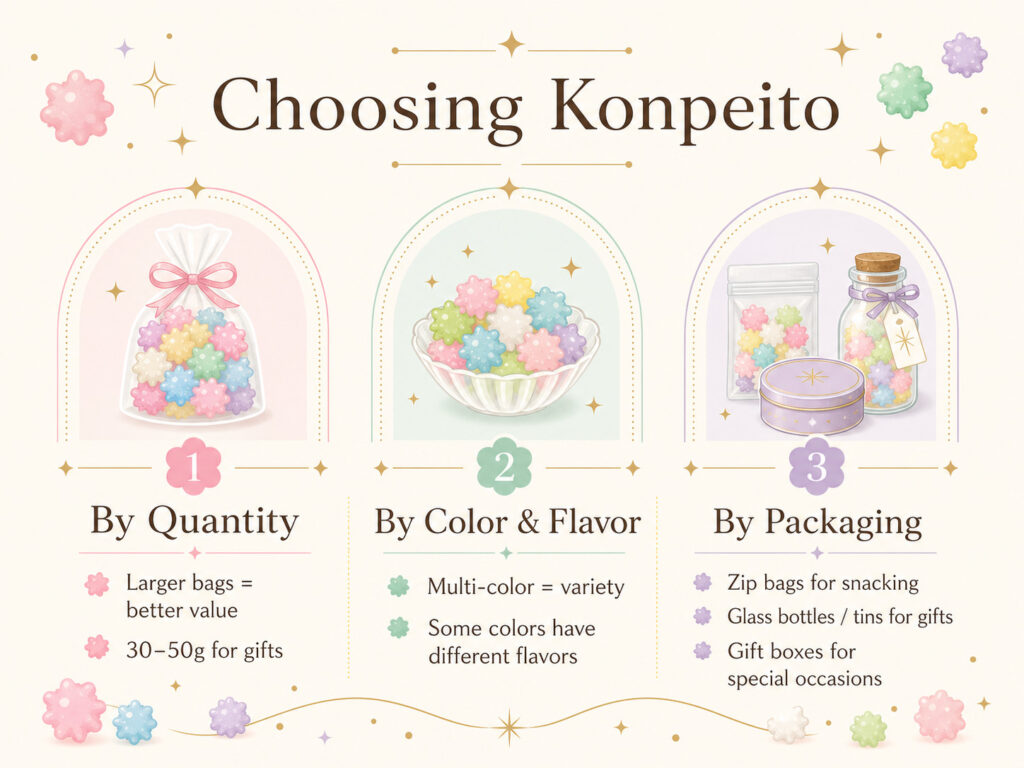
For personal enjoyment, larger bags offer better value. For gifts or souvenirs, small packs of 30 to 50g work well. Many products also have a long shelf life, so buying extra is rarely a problem.
By Color and Flavour
Multi-color assortments are visually attractive and allow tasting several flavors in one purchase. Some products assign a different flavor to each color. This makes them particularly interesting as gifts, since they offer variety in a compact package.
By Packaging
Bags with zip closures suit everyday snacking. Small glass bottles and decorative tins work well as gifts. For special occasions, gift boxes from specialty producers offer a more formal presentation and often include seasonal flavors not available elsewhere.
Recommended Konpeito
Below are three widely available options that suit different preferences and budgets. All are available through online retailers if you cannot find them in store.
Konpeito Kingdom — Blueberry Konpeito
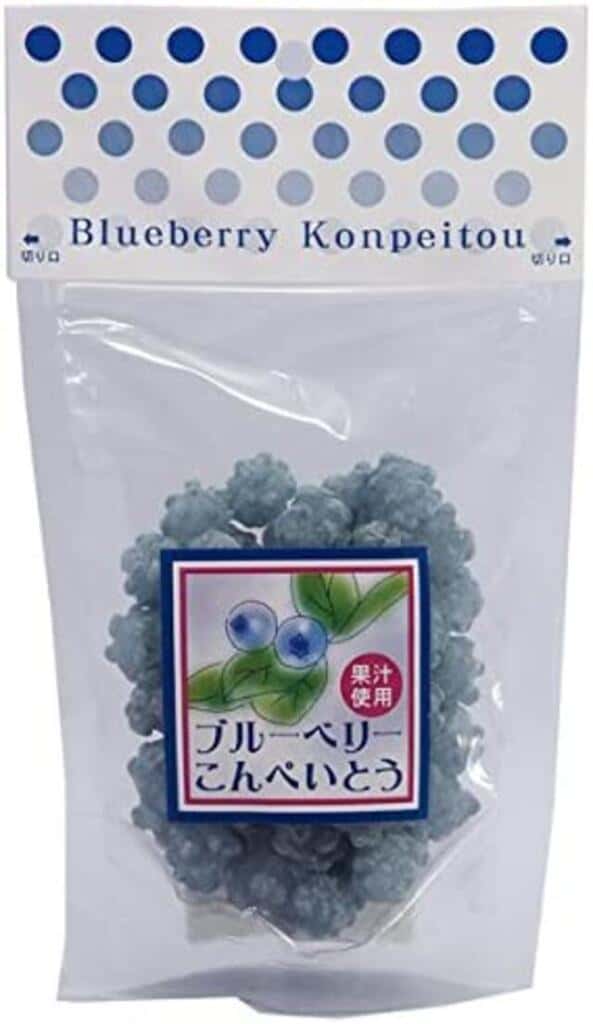
Konpeito made with concentrated blueberry juice. The fruity flavor is clear without being artificial. The zip-seal bag makes it easy to store and carry. A good everyday choice for those who enjoy fruit flavors.
Ujien Seikaan — Apple Konpeito
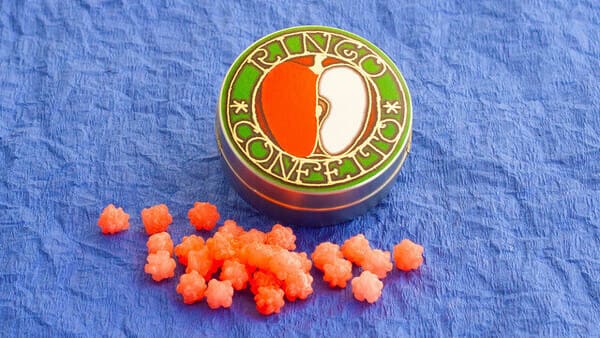
A well-balanced apple konpeito with a gentle sourness and natural sweetness. The syrup blending ratio makes the flavor more refined than standard fruit candy. Popular as a souvenir or small gift.
Aoki Koetsudo — 8-Colour Rainbow Set
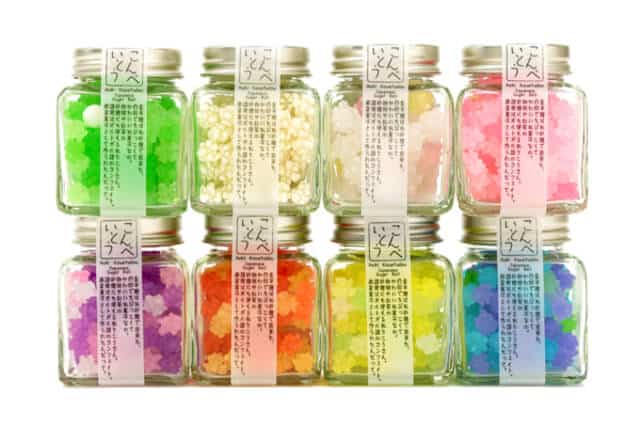
Eight colors, eight flavors, all in a charming small bottle. Yellow is banana, pink is peach, blue is cider. Additionally, natural coloring agents like gardenia and safflower produce the vivid tones. This set suits gifting very well and works as a decorative item too.
Conclusion
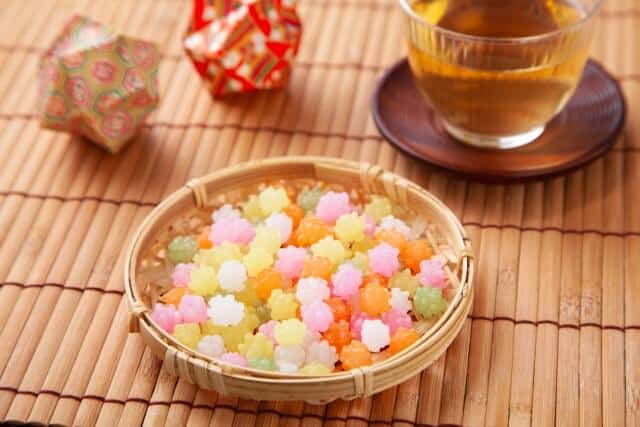
Konpeito is a simple candy with a surprisingly rich history. From its origins as a diplomatic gift to a powerful warlord in the 16th century, it became one of Japan’s most recognizable traditional sweets. The star-shaped, colorful candy that fills souvenir shops today looks much the same as it did four hundred years ago. That continuity is part of its appeal.
For anyone visiting Japan, trying konpeito is worthwhile. The plain white version reveals the craft clearly. A flavored variety, like matcha or yuzu, shows how the tradition has evolved. Together, they tell the story of a candy that traveled from Portugal to a warlord’s hands and eventually to every corner of Japan. To explore more of Japan’s rich confectionery world, the wagashi guide covers the broader landscape of traditional Japanese sweets.
Konpeito FAQ
What is Konpeito?
Konpeito (金平糖) is a traditional Japanese star-shaped sugar candy with small bumps on the surface. Artisans make it by repeatedly coating tiny sugar cores with warm syrup inside a rotating copper drum, building up the characteristic shape over one to two weeks. Each piece is lightweight, crunchy, and dissolves quickly on the tongue. Originally brought from Portugal in the 16th century, it has since become one of Japan’s most beloved traditional confections.
What does Konpeito taste like?
The base flavor is sweet and clean, similar to pure sugar. Modern varieties, however, add fruit, tea, coffee, or savory flavors that sit alongside the sweetness. The texture is light and crunchy rather than hard, which sets it apart from most other sugar candies. It dissolves evenly and quickly, leaving no sticky residue. Many people find it less intense than expected, which makes it easy to eat in small amounts over time.
Where did Konpeito originally come from?
Konpeito originated in Portugal, where a similar candy called “confeito” existed for centuries. Portuguese traders and missionaries brought it to Japan in the mid-16th century as part of the Nanban trade. It was first presented to warlord Oda Nobunaga in 1569 by a Jesuit missionary. For roughly 100 years, Japan relied on imports. Eventually, a craftsman in Nagasaki studied and reproduced the candy domestically, after which production spread across the country.
Where can I buy Konpeito in Japan?
The most celebrated specialist is Ryokusuian Shimizu in Kyoto, which has sold konpeito since 1847 and offers dozens of seasonal flavors. Additionally, department store food halls (depachika) in Tokyo, Osaka, and Kyoto carry premium versions from established producers. Souvenir shops at tourist destinations typically stock affordable bags starting from around ¥300. For those outside Japan, Amazon Japan and Rakuten both ship domestically and internationally, with prices ranging from ¥300 to over ¥2,000 for premium gift sets.
References
- Japan National Tourism Organization (JNTO) — “Traditional Japanese Sweets and Confectionery” (Surveyed: June 2026)
- Ministry of Agriculture, Forestry and Fisheries of Japan (MAFF) — “Traditional Food Culture of Japan” (Surveyed: June 2026)
- National Diet Library of Japan — “History of Nanban Confectionery and Portuguese Influence on Japanese Sweets” (Surveyed: June 2026)
Related Articles
- Wagashi (Surveyed: June 2026)
- Castella (カステラ) (Surveyed: June 2026)
- Japanese Sweets Guide (Surveyed: June 2026)
- Hina-arare (Surveyed: June 2026)
- Daifuku (大福) (Surveyed: June 2026)
Comments