



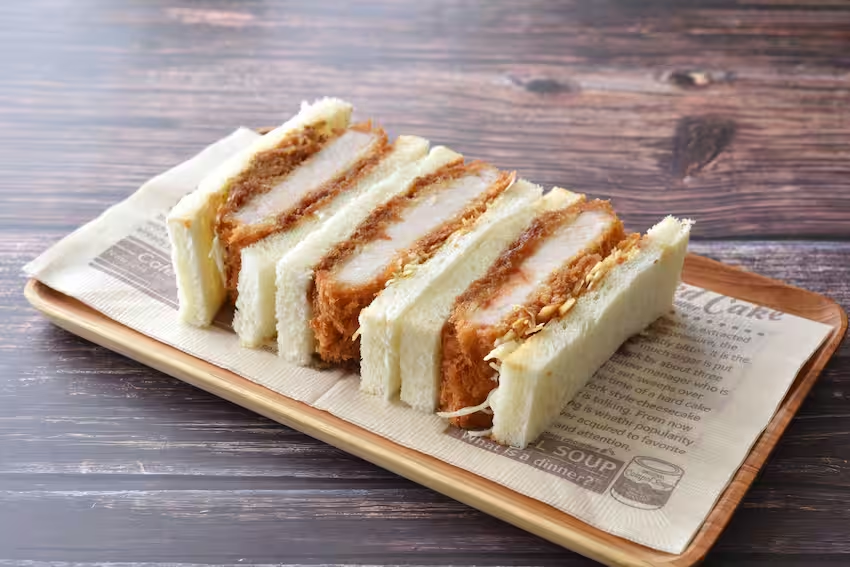
Katsu sando (カツサンド) is Japan’s iconic pork cutlet sandwich. A breaded, deep-fried tonkatsu cutlet sits between two thick slices of soft Japanese milk bread, called shokupan. Sweet-savory tonkatsu sauce and crisp shredded cabbage complete the classic combination. Simple on paper. Genuinely satisfying in reality. That’s the whole formula, and it’s been a Japanese staple for nearly a century.
What Is Katsu Sando?
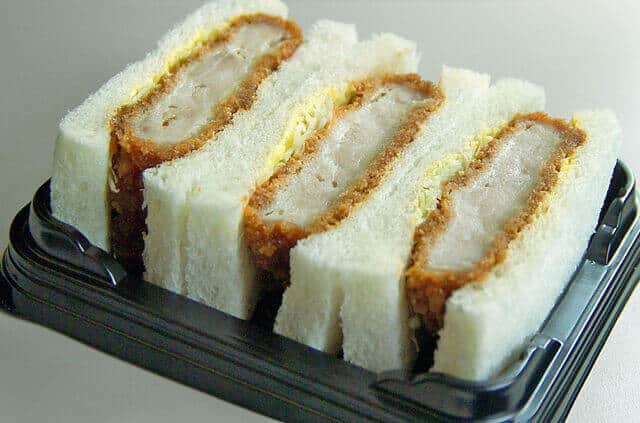
Katsu sando means “cutlet sandwich.” The katsu refers to a breaded meat cutlet, almost always pork in the classic version. The sando is the Japanese shortening of “sandwich.” Together they describe something deceptively simple: a crispy cutlet tucked into fluffy bread with sauce and cabbage, cut into neat rectangles or triangles and ready to eat with one hand. The format lends itself equally to a quick train lunch, a picnic, or a sit-down set at a specialty restaurant. That versatility is a big part of why katsu sando remains so popular across Japan.
Why Katsu Sando Tastes So Good
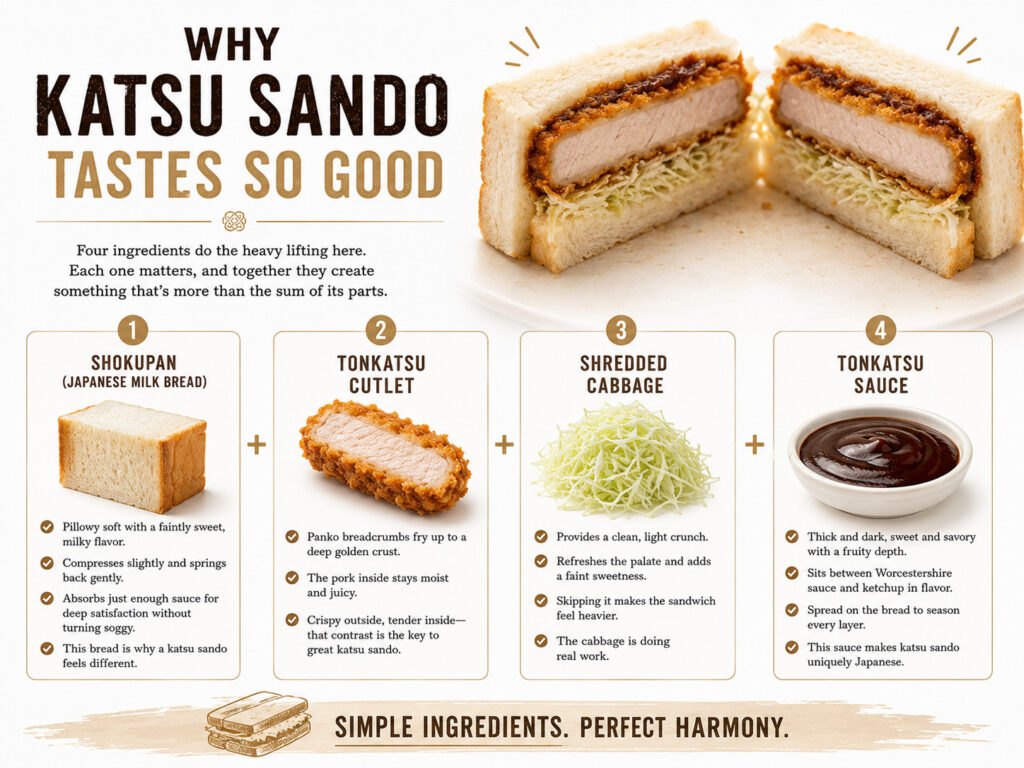
Four ingredients do the heavy lifting here. Each one matters, and together they create something that’s more than the sum of its parts.
Shokupan (Japanese milk bread) is pillowy soft with a faintly sweet, milky flavor. It compresses slightly under pressure and springs back gently. The crust at the edge adds a subtle chew. Good shokupan absorbs just enough sauce at the cut face to make the first bite deeply satisfying, without turning soggy. This bread is specifically why a katsu sando feels different from a Western-style sandwich.
The tonkatsu cutlet delivers the crunch. Panko breadcrumbs fry up to a deep golden crust that breaks cleanly when you bite through. The pork inside stays moist, especially in pork loin versions where the fat keeps the meat juicy. That contrast of textures, crispy outside and tender inside, is the whole reason the sandwich works.
Shredded cabbage provides a clean, light crunch. It refreshes the palate between bites of the richer cutlet and adds a faint sweetness. Some people assume it’s optional. Skipping it makes the sandwich feel heavier. The cabbage is doing real work.
Tonkatsu sauce ties everything together. Thick and dark, it sits somewhere between Worcestershire sauce and ketchup in flavor profile: sweet and savory at once, with a slightly fruity depth. Spread on the bread before assembly, it seasons every layer. Some shops mix in karashi mustard or build their own proprietary blend. The sauce is what makes katsu sando taste specifically Japanese.
A Short History of Katsu Sando
The katsu sando originated in Tokyo’s Ueno district in 1935. Toki Ishizaka, the proprietress of a tonkatsu restaurant called Isen, came up with the idea. Geishas who visited the restaurant wanted a way to enjoy the food elegantly, without smudging their makeup. Ishizaka placed a tender cutlet between specially shaped bread slices, making it easy to eat in a few clean bites. The practical problem produced an elegant solution.
The concept spread quickly across Tokyo and eventually nationwide. Its appeal was obvious: real meal satisfaction in handheld form, presentable enough for upscale venues, fast enough for train platforms. Today you find katsu sando at everything from basement depachika counters to convenience stores to high-end lunch spots. That range across price points and settings says a lot about how deeply embedded it is in Japanese food culture. For more on Tokyo’s food scene, see the Tokyo food guide on Food in Japan.
Variations of Katsu Sando
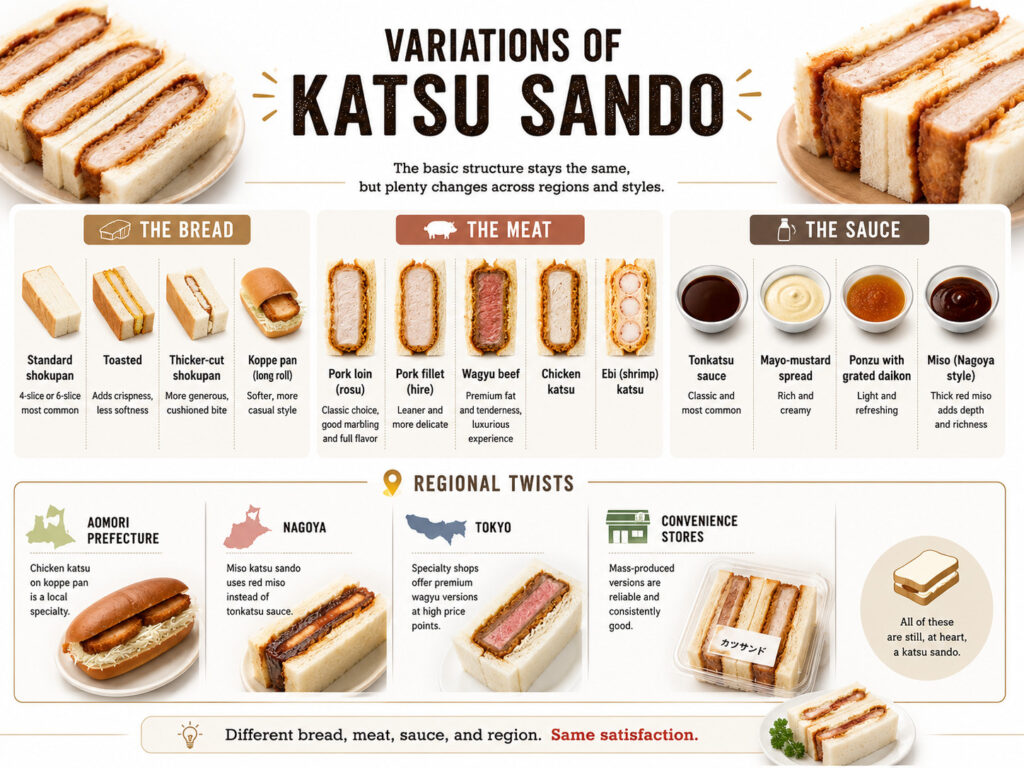
The basic structure stays the same, but plenty changes across regions and styles. Here’s what varies most.
The bread: Standard shokupan in 4-slice or 6-slice thickness is most common. Toasting adds crispness at the expense of some softness. Thicker-cut shokupan creates a more generous, cushioned bite. Some regions use koppe pan (a long, soft roll) for a more casual result.
The meat: Pork loin (rosu) is the classic choice, with good fat marbling and full flavor. Pork fillet (hire) is leaner and more delicate. Many specialty shops now offer wagyu beef katsu sando, where the premium fat and tenderness of the beef make the sandwich feel genuinely luxurious. Chicken katsu and ebi (shrimp) katsu versions also appear regularly.
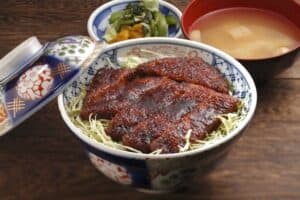
The sauce: Classic tonkatsu sauce dominates, but shops personalize freely. Mixed mayo-mustard spread is popular for richness. Ponzu with grated daikon creates a lighter, more acidic version. Nagoya-style miso katsu sando uses the region’s thick red miso sauce instead, which adds a deeper, earthier character to the whole sandwich.
Regional twists: In Aomori Prefecture, chicken katsu on koppe pan is a local specialty. Nagoya’s misokatsu sando replaces tonkatsu sauce with red miso. Tokyo specialty shops offer premium wagyu versions at high price points. Convenience stores across Japan carry their own mass-produced versions, which are consistently reliable and genuinely good. All of these are still, at heart, a katsu sando.
Katsu Sando Recipe
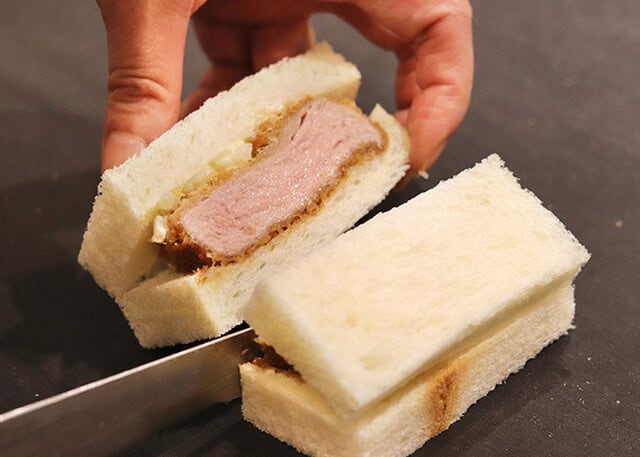
Ingredients for Katsu Sando (4 servings)
| Ingredient | Amount |
|---|---|
| Pork shoulder (for cutlet) | 200g |
| Flour | 30–50g |
| Egg | 50g |
| Panko breadcrumbs | 50–70g |
| Shredded cabbage | 100g |
| Worcestershire sauce | 70g |
| Tomato ketchup | 70g |
| Sesame oil | 5g |
| Mustard butter | 28g |
| Shokupan (Japanese milk bread) | 8 slices |
How to Make Katsu Sando
Coat the pork in flour, then dip it in beaten egg. Press panko breadcrumbs onto all surfaces for an even coating. Fry in oil at 170°C until deep golden and cooked through. Set aside to rest for two minutes before cutting.
Mix Worcestershire sauce, ketchup, and a small amount of sesame oil in a bowl. Dip the warm cutlet into the sauce, coating all sides well. Spread mustard butter evenly on one side of each bread slice.
Layer shredded cabbage on a slice of bread. Place the sauced cutlet on top, then add more cabbage. Press the second bread slice firmly down. Wrap in cling film and rest for five minutes; this helps the sandwich hold its shape. Slice into rectangles or triangles and serve.
Where to Eat Katsu Sando in Tokyo
The two shops below represent very different ends of the katsu sando spectrum, which is part of what makes the sandwich so interesting to explore in Tokyo.
Choushiya (チョウシ屋) — Ginza
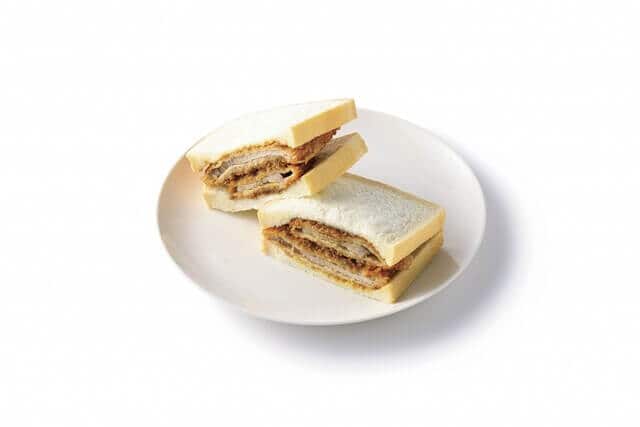
Choushiya in Ginza serves a katsu sando with serious presence: 5.6cm thick, cutlet nestled between bread slices with the crust intact, drenched in a house sweet sauce. The nostalgic flavor and generous size make it a favorite among regulars. Worth queueing for at lunch.
Imakatsu Ginza (銀座イマカツ) — Ginza
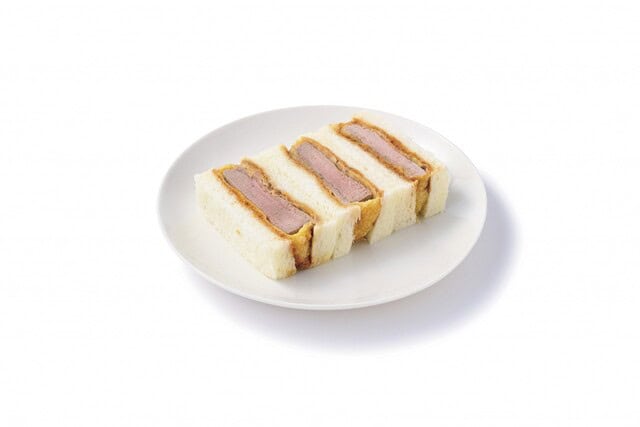
Imakatsu Ginza takes a more refined approach. Their fillet katsu sando features a slender, tender cutlet in moist shokupan, soaked with a carefully selected tonkatsu sauce. The balance of soft cutlet and delicate bread feels true to the elegance of the Ginza neighborhood. Good for a sit-down lunch rather than a grab-and-go.
Beyond specialty shops, convenience stores across Japan sell katsu sando reliably and well. 7-Eleven, Lawson, and FamilyMart all carry versions. The convenience store katsu sando is a genuine option, not a compromise. Travelers who pick one up at a train station or airport often find it more satisfying than expected.
Explore other Japanese sandwiches and breads in Japan worth trying.
Katsu Sando FAQ
What is katsu sando?
Katsu sando is a Japanese pork cutlet sandwich. A breaded, deep-fried tonkatsu cutlet sits between two slices of soft shokupan (Japanese milk bread), with tonkatsu sauce and shredded cabbage. Shops typically cut it into rectangles or triangles for easy eating.
What bread does katsu sando use?
Shokupan (Japanese milk bread) is the standard choice. It has a pillowy soft texture and mild sweetness that complements the cutlet. Most shops use crustless versions cut 4 or 6 slices thick. Some regional styles use koppe pan (a soft roll) instead.
What meat goes in katsu sando?
Pork loin (rosu) is the most common choice, offering a juicy, flavorful cutlet with good fat marbling. Pork fillet (hire) gives a leaner result. Some specialty shops use wagyu beef for a premium version. Chicken katsu is also a popular alternative.
Is katsu sando filling?
Yes, more so than it looks. The deep-fried cutlet, thick bread, and sauce combine to make a genuinely satisfying meal. Most people find a standard katsu sando sufficient for lunch without needing anything else on the side.
Where can I find katsu sando in Japan?
Convenience stores (konbini) sell reliable versions nationwide. Department store basement food halls (depachika) offer more refined options. Specialty tonkatsu restaurants and Tokyo cafes serve high-end versions. Train station ekiben stalls also carry them as popular travel food.
What sauce does katsu sando use?
Classic tonkatsu sauce, a thick blend of Worcestershire sauce and fruit-based ingredients, is standard. Some shops add karashi (Japanese mustard) or mayo for extra richness. Nagoya-style versions use red miso sauce instead. Each variation changes the overall flavor noticeably.
Can I make katsu sando at home?
Yes, and it’s straightforward. Bread pork in flour, egg, and panko, then fry until golden. Mix Worcestershire sauce and ketchup for the sauce. Layer with shredded cabbage in shokupan. Wrapping the assembled sandwich and resting it for five minutes before cutting helps it hold together cleanly.
Are there regional katsu sando variations?
Yes. Nagoya offers misokatsu sando with rich red miso sauce. Aomori serves chicken katsu on koppe pan. Tokyo specialty shops offer wagyu versions at premium price points. Convenience stores across Japan have their own consistent house styles too.



Comments