



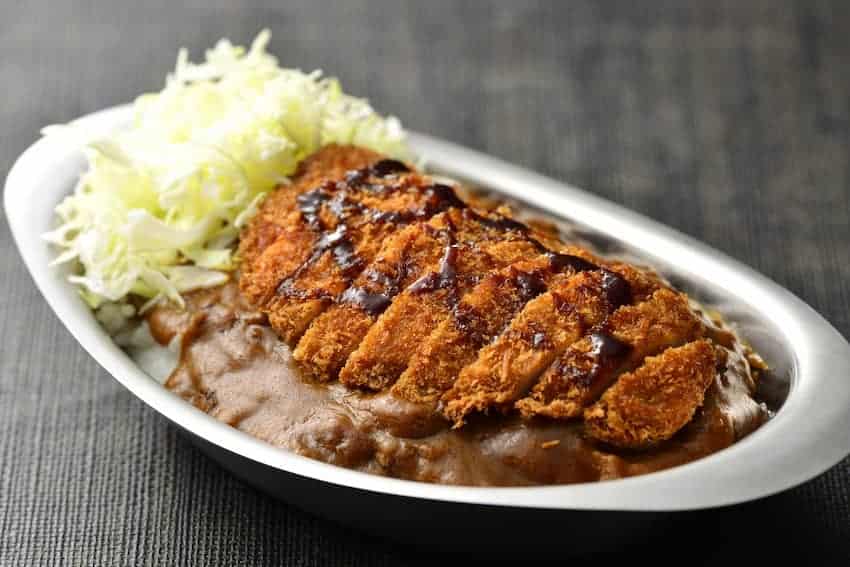
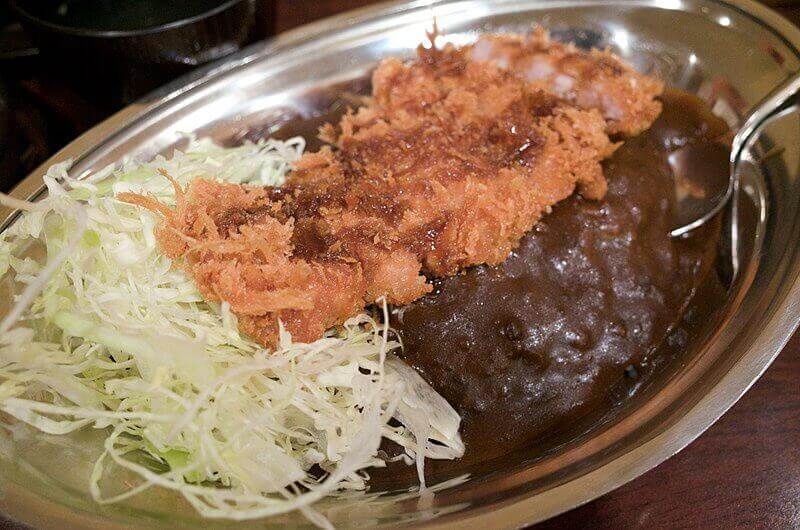
Kanazawa curry (金沢カレー) is the thick, almost black curry rice that made Ishikawa Prefecture famous among curry lovers. Shops ladle it over rice on a stainless steel plate. A pork cutlet and a heap of shredded cabbage finish the plate. Locals then eat the whole thing with a fork.
This guide covers what the dish actually is, how it tastes, and where the style came from. It also includes a home recipe, plus the shops in and around Kanazawa that serve it.
What Is Kanazawa Curry?
Quick answer
Kanazawa curry is a regional Japanese curry from Kanazawa, Ishikawa. It uses a thick, dark roux served over rice on a stainless steel plate with shredded cabbage and a fork. Most versions include pork cutlet with tonkatsu sauce on top.
Kanazawa curry is a regional curry rice from Ishikawa Prefecture. Most of the famous shops sit in Kanazawa City or the towns just beside it. The style grew out of Japanese curry rice as yoshoku restaurants cooked it. Those Western-influenced diners spread across Japan during the twentieth century.
So what actually sets it apart? A standard curry rice plate leaves part of the rice bare. Kanazawa shops do the opposite and bury every grain under sauce. It resembles a small dark landslide, which is exactly the point.
Ishikawa people eat a lot of curry, and the shop count reflects that. Champion Curry, citing an NTT Townpage survey from 2013, notes that Ishikawa led Japan in registered curry houses per 100,000 residents. The dish therefore reflects Kanazawa’s practical yoshoku food culture rather than any ancient tradition. Searching for a Kanazawa curry recipe? The taste profile below explains why home versions rarely match the shops.
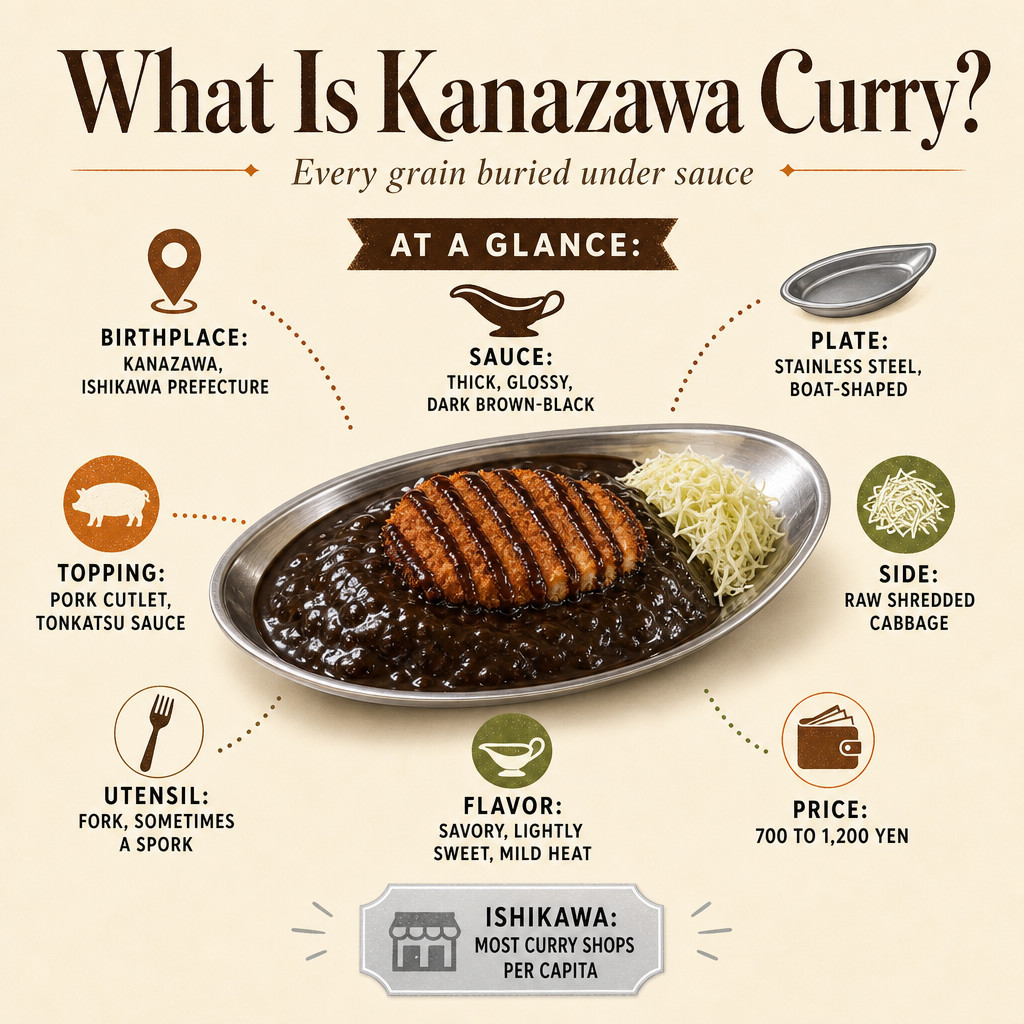
Kanazawa Curry at a Glance
- Birthplace
- Kanazawa and neighbouring cities, Ishikawa Prefecture
- Sauce texture
- Very thick, glossy, dark brown to near black
- Plate style
- Stainless steel, usually boat-shaped
- Standard topping
- Pork cutlet with tonkatsu sauce poured over it
- Side
- Raw shredded cabbage
- Utensil
- Fork, or a spork on some menus
- Flavour
- Deeply savoury, lightly sweet, very mild heat
- Typical price
- Roughly 700 to 1,200 yen for a standard katsu curry (menus checked August 2026)
Key Features of Kanazawa Curry
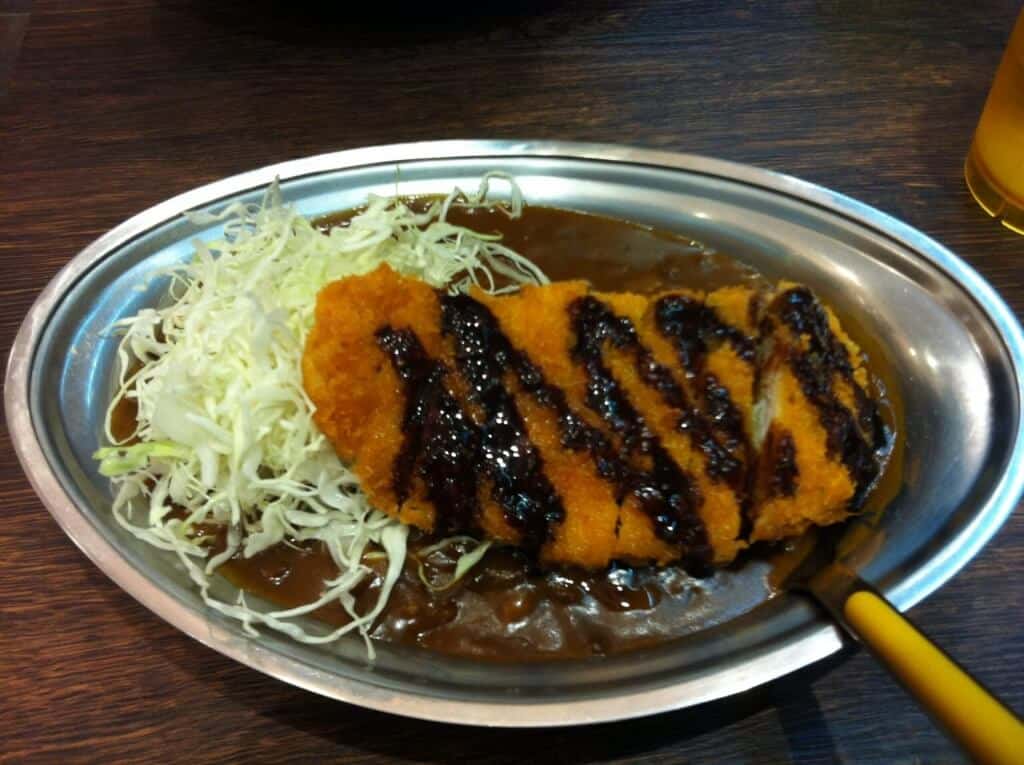
Shops rarely tick every box, yet the checklist below is what most people in Ishikawa treat as the standard style. Champion Curry, one of the oldest names in the genre, lists almost the same points on its own history page.
- A thick dark roux. The sauce clings to a fork instead of running off it.
- A stainless steel plate. Most shops use the shallow boat shape.
- Shredded cabbage. Raw, cold and piled on one side of the plate.
- A fork or spork. Spoons appear occasionally, but the fork is the classic.
- Katsu on top of the sauce. The cutlet sits above the curry, not beside it.
- Sauce-covered rice. No white rice should be visible when the plate arrives.
These six points come from Champion Curry’s published account and from the Kanazawa Curry Association, which describes the shops in similar terms. Where the two sources differ, this guide says so rather than picking a winner.
What Kanazawa Curry Smells and Tastes Like
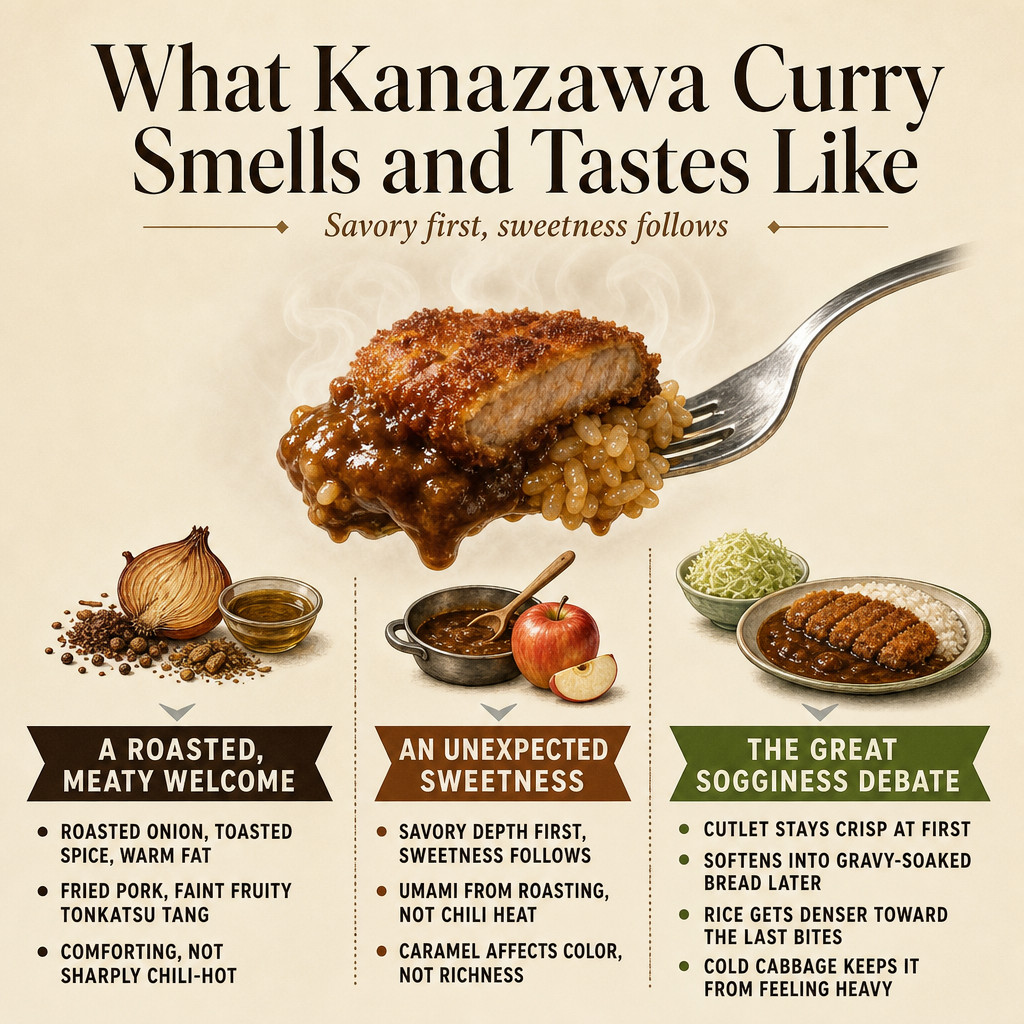
A Roasted, Meaty Welcome
The smell arrives before the plate does. Expect roasted onion, toasted spice and warm fat rather than sharp chilli heat. Meanwhile the fried pork adds a savoury edge, and the tonkatsu sauce contributes a faint fruity tang. It smells comforting, honestly, though not quite like the curry most visitors picture.
An Unexpected Sweetness
The first mouthful lands as pure savoury depth. A low sweetness follows, and it lingers longer than expected. That part still catches people off guard, including me.
Heat is not really the point here. Instead of chilli, the roux leans on long roasting and concentrated umami. Champion Curry has published its own account of the recipe. The company credits the flavour to the roasting time of the roux, plus a savoury seasoning added late in production.
One popular claim deserves a correction. Many articles say caramel gives the sauce its taste, yet the company itself now says caramel mainly affects colour. Darker does not automatically mean richer, in other words.
The Great Sogginess Debate
Texture is where opinions split. The cutlet holds its crunch surprisingly well at first, because the roux is too thick to soak in quickly. You may wonder how long that lasts. Not forever, in truth.
After a few minutes the coating softens into something closer to gravy-soaked bread. Some regulars actually prefer it that way. Underneath, the rice absorbs sauce steadily, so the last few bites taste denser than the first. That cold shredded cabbage on the side stops the plate from feeling heavy.
The History of Kanazawa Curry
From Yoshoku Kitchens to Curry Counters
Unlike many older regional dishes, Kanazawa curry has a relatively modern history. Curry itself reached Japan through Western channels in the Meiji era. Food historian Katarzyna Cwiertka has documented how the military then helped spread it nationwide. Ishikawa later developed its own take inside local yoshoku restaurants.
According to Champion Curry’s published company history, founder Yoshikazu Tanaka opened a yoshoku restaurant called Tanaka in Kanazawa in 1961. Tanaka had previously worked as head chef at Restaurant New Kanazawa, where several future curry shop founders also trained. By 1963 at the latest, his shop already served the format people now recognise. That meant a steel boat plate, a sauced cutlet on top, and shredded cabbage alongside.
Other shops followed quickly. The same company history dates Indian Curry to 1964, Kitchen Yuki to 1966, and both Turban Curry and Alba to 1971. Because the recipe passed between friends and former colleagues, the shops share a family resemblance without being identical. Local restaurants had already established the style long before the name became popular.
Do treat these dates with a little care. Champion Curry is a participant in the story, not a neutral observer, and it says so itself. Other shops describe the origins differently, and no single founding account is settled.
How the Name Spread
People began calling this style “Kanazawa curry” only in the mid-2000s. The Kanazawa Curry Association credits Go Go Curry with popularising the term. As the association tells it, a television reporter asked the founder what his curry was called. He answered on the spot, and the phrase stuck.
Media coverage did the rest. Writers started grouping the dish with Yokosuka Navy Curry and Sapporo soup curry as one of Japan’s named regional curries. Long-standing customers reportedly found the new label a little odd. After all, several flagship shops sit outside Kanazawa City itself.
Why Is Kanazawa Curry Served on a Stainless Steel Plate?
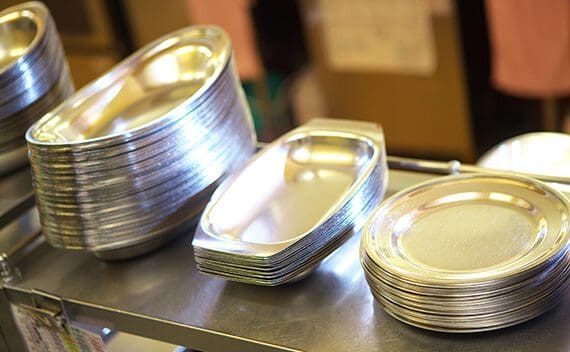
The reason is refreshingly unromantic. Curry counters turn tables fast, and Champion Curry reports serving times of roughly three to five minutes at peak hours. Ceramic chips and breaks under that pace, whereas steel survives.
The fork has a similarly practical origin. Older shops used imported European pork, which was firmer than today’s meat, so a fork pierced the cutlet more easily. Since the sauce is thick enough to stay on the tines, nobody missed the spoon. The habit stuck even after the pork changed.
Kanazawa Curry vs Japanese Curry and Other Regional Styles
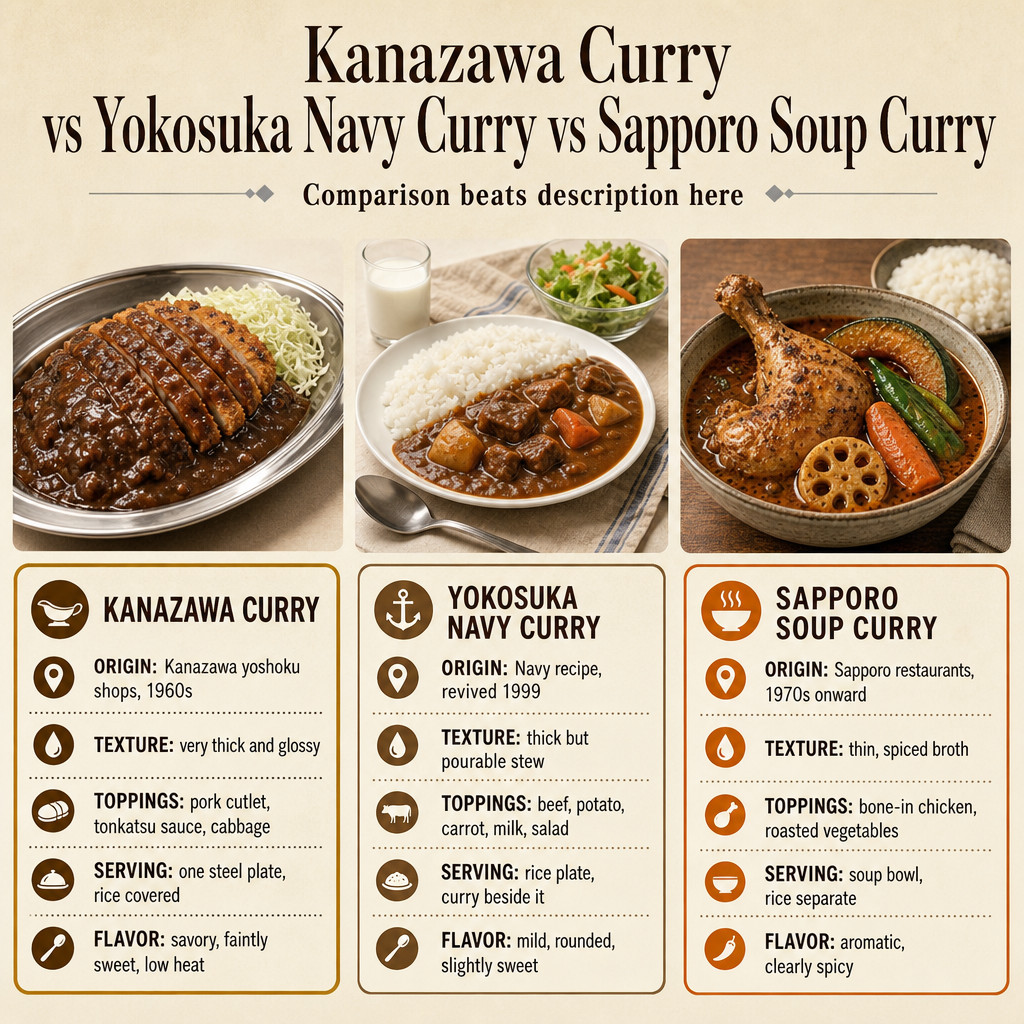
Comparison helps more than description here. Below, the three best-known named regional curries sit side by side.
| Point | Kanazawa Curry | Yokosuka Navy Curry | Sapporo Soup Curry |
|---|---|---|---|
| Origin | Kanazawa area yoshoku shops, 1960s | Imperial Japanese Navy recipe, revived by Yokosuka City in 1999 | Sapporo restaurants from the 1970s onward |
| Texture | Very thick and glossy | Thick but pourable stew | Thin, spiced broth |
| Toppings | Pork cutlet with tonkatsu sauce, shredded cabbage | Beef, potato and carrot, served with milk and salad | Bone-in chicken and large roasted vegetables |
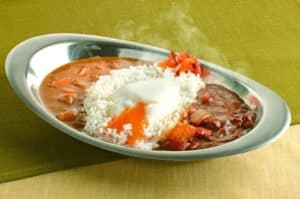
| Serving style | One steel plate, rice fully covered | Plate of rice with curry beside it | Soup bowl, rice served separately |
| Flavour | Savoury, faintly sweet, low heat | Mild, rounded and slightly sweet | Aromatic and clearly spicy |
In short, the Kanazawa version is the densest of the three. Yokosuka leans historical, Sapporo leans spice-forward, and Kanazawa leans into sheer richness.
Kanazawa Curry Recipe
Home-Style Kanazawa Curry
One honest caveat before you start. Champion Curry states that its roux uses a specialised roasting method plus a seasoning shoppers cannot buy. A home kitchen can therefore only approximate the shop flavour. This Kanazawa curry recipe aims for the right texture and balance instead of an exact copy.
Kanazawa Curry Ingredients
- 2 tablespoons olive oil
- 2 large onions, finely sliced
- 1 tablespoon grated ginger and 2 garlic cloves
- 1 tablespoon black honey (kokuto syrup)
- 800 ml water and 1 bouquet garni
- 1 tablespoon chutney paste
- 200 g tomato puree
- 1 teaspoon each of garam masala, cumin and curry powder
- 100 g Japanese curry roux, chopped
- 1 teaspoon granulated consomme
- 4 portions of cooked Japanese short-grain rice
- 4 tonkatsu cutlets, plus tonkatsu sauce
- 200 g finely shredded raw cabbage
How to Make Kanazawa Curry
Heat the olive oil over medium heat. Cook the onions, ginger and garlic for 8 to 10 minutes, until the onions turn deep golden and smell sweet.
Stir in the black honey and fry for 2 more minutes. The mixture should darken and turn glossy without catching on the pan.
Pour in the water, then add the bouquet garni, chutney paste, tomato puree and ground spices. Simmer gently for 30 minutes, stirring now and then.
Remove the bouquet garni and lower the heat. Stir the curry roux in piece by piece, then simmer for 15 minutes until the sauce coats a spoon thickly.
Add the granulated consomme and taste carefully. Adjust with a pinch of salt if the sauce still feels flat.
Fry the breaded cutlets at 170°C for 6 to 7 minutes. Drain them on a rack so the coating stays crisp.
Spread the rice across a steel plate, then pour the sauce over it until no rice shows. Slice the cutlet, lay it on top, add tonkatsu sauce and pile the cabbage on one side.
How to Serve and Eat Kanazawa Curry
Order matters more than you might think. Rice goes down first, the roux covers it completely, and the sliced cutlet sits on top of the sauce. Tonkatsu sauce goes over the cutlet, never underneath it. Finally, the cabbage occupies one corner, and a fork or spork replaces the spoon.
How locals work through a plate
- Mix a little roux into the rice. Work from one edge rather than stirring the whole plate.
- Cut the katsu with the side of the fork. The coating is soft enough that a knife is unnecessary.
- Reset with the cabbage. A few strands between bites keep the richness from piling up.
Where to Eat Kanazawa Curry in Kanazawa
Several chains and independents compete for the title of the definitive shop. Each one differs slightly in sweetness, spice and portion size, so trying two is more revealing than trying one.
A practical note first. Most curry counters take orders through a ticket machine by the door, and many are cash-friendly rather than card-friendly. Reservations are not a thing here either. Weekday lunch queues move fast, though a weekend visit can mean twenty minutes outside.
Champion Curry (Omicho Market branch)
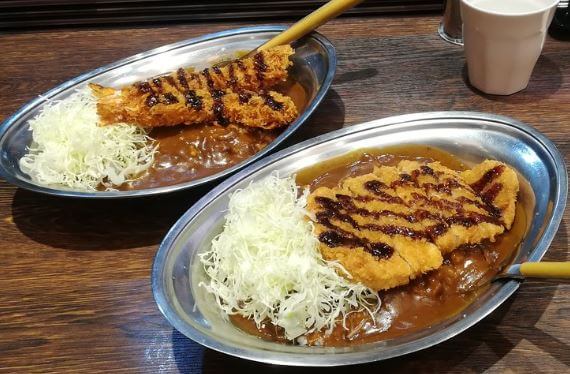
Champion Curry traces its recipe directly to Yoshikazu Tanaka and the 1961 yoshoku restaurant that started everything. The L Katsu Curry remains the signature order, and the roux tastes noticeably dark and bittersweet.
One detail trips up a lot of visitors. The head store is in Nonoichi City, not central Kanazawa, so most travellers head to the Omicho Market branch instead. That branch closes in the late afternoon, which makes it a lunch stop rather than a dinner one.
Go Go Curry (Kanazawa Station)
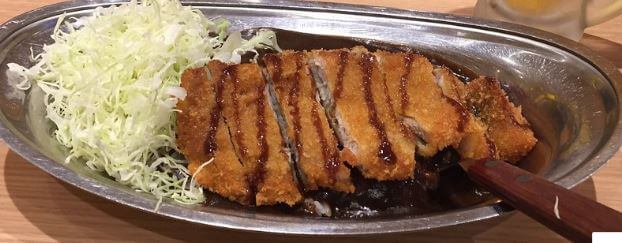
Go Go Curry opened its first shop in Shinjuku in 2004 and pushed the name nationwide soon after. Its roux runs a touch sharper than Champion’s, although a mild children’s plate exists too. The Kanazawa Station branch sits inside the Hyakubangai complex. Therefore it works well as a first or last meal.
Turban Curry (Hirosaka main store)
Turban Curry dates from 1971 and often gets named as one of the genre’s founding shops. Its roux tastes milder and more stew-like, which makes it a good second stop after a bolder plate elsewhere. The main branch stands in Hirosaka, within walking distance of Kenrokuen and the 21st Century Museum. Today the brand operates under the Go Go Curry group.
Gold Curry (Kanazawa M’za branch)
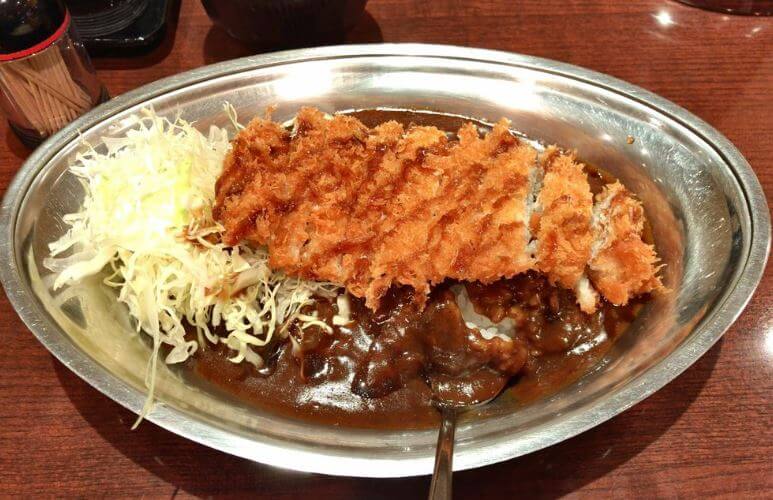
Gold Curry is the newer name on this list, and its version tastes distinctly sweeter. The branch sits in the basement restaurant floor of Kanazawa M’za, the department store at Musashigatsuji. Note that the building was called Meitetsu M’za until 2021, so older guides use the previous name. A shopping centre setting also feels easier than a counter-only shop for a first visit.
Kitchen Yuki (Hakusan main store)
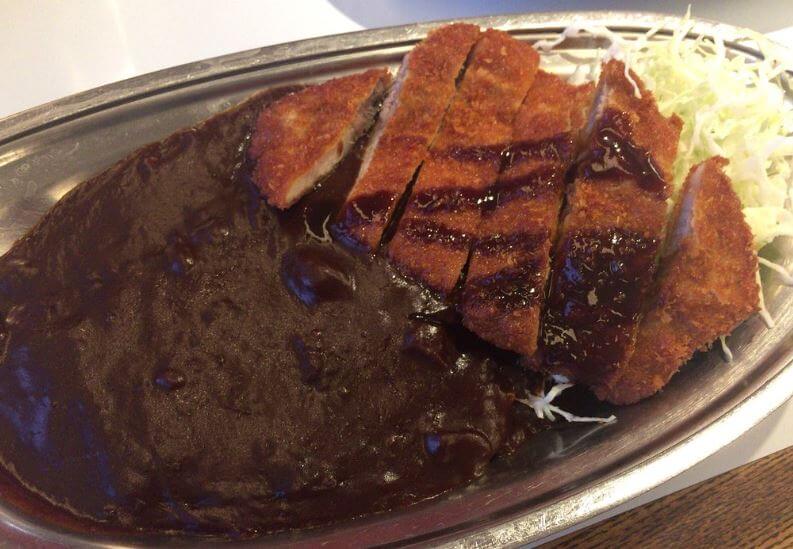
Founded in 1966, Kitchen Yuki is a yoshoku restaurant rather than a pure curry counter. Its founder trained alongside Tanaka, so the curry belongs to the same lineage. The main shop stands on Route 8 in Hakusan City, which realistically means a car or a taxi. Its very dark house curry and the baki fried rice are both worth ordering.
Before you go: opening hours, prices and menu items change frequently, and several of these shops close between lunch and dinner. The details above were checked against each company’s official pages in August 2026. Please confirm on the official website, or phone the shop, on the day of your visit.
Building a Kanazawa Food Trip Around It
One plate of curry rarely fills a whole day. Fortunately, Kanazawa’s other yoshoku creation sits nearby on most menus: Hanton rice, a ketchup rice and omelette dish topped with fried seafood. Together they show how thoroughly this city rewrote Western cooking.
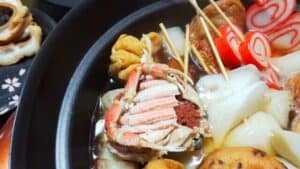
For dinner, switch registers entirely. Kanazawa oden offers a clear, patient broth that feels like the opposite of the curry plate. In winter, the crab-shell pieces are worth seeking out. With more time, browse the wider Ishikawa food guide for other Ishikawa specialties. Seafood, Kaga vegetables and fermented dishes all feature there.
Conclusion
Kanazawa curry looks blunt and tastes surprisingly considered. Every element traces back to a practical decision in a busy yoshoku kitchen. The unbreakable plate and the fork both had jobs to do, and knowing that changes how the plate reads.
Try it in Kanazawa if you can, ideally at two different shops on the same trip. The differences are small but genuine, and choosing a favourite is half the fun. Otherwise, the home recipe above will get you reasonably close on a slow afternoon.
Kanazawa Curry FAQ
Is Kanazawa curry spicy?
Not really, no. This curry aims for depth rather than heat, so most shops land between mild and medium. Go Go Curry runs slightly sharper than Champion Curry. Several shops also keep curry powder on the table for anyone wanting more, and children’s portions are milder again.
Why is it served on a metal plate?
The reason is purely practical. Curry shops serve plates within a few minutes, and ceramic chips quickly at that pace. Stainless steel survives constant handling and stacks easily behind a busy counter. Over time the boat-shaped plate simply became part of the look.
How do I order at a Kanazawa curry shop?
Buy a ticket from the machine first, then hand it to the staff. Many machines now carry photos, and some offer an English display. Sizes usually run small, medium and large, and toppings are chosen separately. Bring cash, since not every shop accepts cards.
Can Kanazawa curry be vegetarian?
Rarely, unfortunately. The local style leans on meat-based stock and a fried cutlet, so standard shop menus will not suit vegetarians or vegans. Commercial Japanese curry roux also often contains animal-derived ingredients, so please read the label. At home, however, you can use vegetable stock and a fried aubergine or tofu cutlet instead.
What is the best topping?
The pork loin cutlet is the classic choice, and most regulars start there. Fried shrimp comes second and adds a lighter, sweeter note. Boiled egg, sausage and cream croquette also appear on many menus. If you cannot decide, several shops sell a combination plate carrying most of them at once.
How does it differ from ordinary Japanese curry?
Three things separate them. The roux is far thicker and darker, sauce hides the rice completely, and the cutlet sits above the curry with tonkatsu sauce over it. Ordinary curry rice also arrives with a spoon, whereas the local style hands you a fork. Shredded cabbage on the plate is another giveaway.
Does caramel give the sauce its flavour?
That claim circulates widely, yet Champion Curry has publicly corrected it. According to the company, caramel affects colour far more than taste. The real character comes from how long the roux roasts and from a savoury seasoning added late in production. A darker plate does not guarantee a richer one.
Can I make it properly at home?
You can get close, but not exact. Champion Curry says its roux relies on a specific roasting process and a seasoning that home cooks cannot buy. Using ready-made Japanese curry roux with a little demi-glace, Worcestershire sauce and ketchup produces a similar direction. Focus on thickness first, since texture carries most of the character.
References
- Champion Curry, The History of Kanazawa Curry, https://chancurry.com/history/ (Surveyed: August 2026)
- Champion Curry, Store List for Ishikawa and Greater Kanazawa, https://chancurry.com/area/ishikawa-kanazawa/ (Surveyed: August 2026)
- Kanazawa Curry Association, Official Site, https://kanazawacurry-kyokai.com/ (Surveyed: August 2026)
- Go Go Curry Group, Store Directory, https://shop.gogocurry.com/stores (Surveyed: August 2026)
- Kanazawa M’za, Restaurant Floor Guide, https://www.kmza.jp/mz_cat/cat31/ (Surveyed: August 2026)
- Gold Curry, Official Site, https://www.gold-curry-honten.com/ (Surveyed: August 2026)
- Kitchen Yuki, Official Site, https://kitchen-yuki.co.jp/ (Surveyed: August 2026)
- Cwiertka, K. J. (2006). Modern Japanese Cuisine: Food, Power and National Identity. London: Reaktion Books (Surveyed: August 2026)
- Association for Asian Studies, Education About Asia, Cuisine and Identity in Contemporary Japan, https://www.asianstudies.org/publications/eaa/archives/cuisine-and-identity-in-contemporary-japan/ (Surveyed: August 2026)
Related Articles
- Curry Rice (カレーライス) (Surveyed: August 2026)
- Yokosuka Kaigun Curry (よこすか海軍カレー) (Surveyed: August 2026)
- Soup Curry (スープカレー) (Surveyed: August 2026)
- Hanton Rice (ハントンライス) (Surveyed: August 2026)
- Kanazawa Oden (金沢おでん) (Surveyed: August 2026)
- Jibuni (治部煮) (Surveyed: August 2026)
- Tonkatsu (とんかつ) (Surveyed: August 2026)
- Ishikawa Food Guide (Surveyed: August 2026)




Comments