Tokyo Food Trends: Urban Dynamism and the Personalization of Dining
Exploring the 2026 food landscape. This is not just a list of fads, but a deep dive into how Tokyo’s hyper-dense urban structure, spatial constraints, and evolving lifestyles shape the world’s most extraordinary culinary city.
Tokyo boasts the highest number of Michelin stars globally, yet some of its most profound culinary experiences are found at underground counters for under $5. For travelers in 2026, the question is no longer just “what is trending,” but “why did this emerge here, and under what social conditions?” From the intense population density and complex transit networks to the hyper-individualization of post-pandemic lifestyles, this guide uncovers the deep correlation between urban design and dining experiences. For classic must-eats, see our What to Eat in Tokyo guide.
Individualization & Solo Dining: The Architecture of Personal Space
In Tokyo, eating alone is not a sign of loneliness, but a rational shelter and a carefully designed escape from the relentless sensory overload of the megacity.
Ichiran and the “Flavor Concentration” Architecture
Spatial Optimization
Tokyo has elevated solo dining to an art form out of sheer necessity. Driven by an intense population density and a craving for personal time, the partitioned counter—pioneered by Ichiran—is a brilliant piece of urban spatial design. It maximizes microscopic commercial real estate while completely shielding the diner from the gaze of others. This system has now expanded to yakiniku, shabu-shabu, and curry shops. In a city where you are constantly surrounded by millions, this format offers a meditative, solitary sanctuary.
In massive terminal hubs like Shinjuku and Shibuya, the demand for 24-hour solo dining aligns perfectly with the city’s sleepless rhythm.
The Social Evolution of “Ohitorisama”
Evolving Mainstream
With the rise of single-person households and shifting demographics, “ohitorisama” (the honored solo diner) has firmly established itself as a positive lifestyle choice. High-end sushi and yakitori restaurants now predominantly feature open-kitchen counter seating, allowing solo patrons to interact directly with the chefs. This format frees diners from group conformity, allowing them to pursue culinary excellence efficiently and at their own pace—a direct reflection of Tokyo’s increasingly individualized social fabric in 2026.
📍
Transit Hubs and the Convergence of Regional Cuisine
Tokyo as the ultimate mega-terminal where ingredients and cultures from across the Japanese archipelago intersect.
Regional Ramen and the Logistics Revolution
Infrastructure Marvel
Tokyo is a living museum of regional ramen. This is made possible by Japan’s unparalleled cold-chain logistics and the city’s role as the nation’s economic epicenter. You can taste authentic Hakata tonkotsu in Shinjuku or Hokkaido miso in Ikebukuro without leaving the city limits. Major transit stations have become culinary battlegrounds where regional shops vie for the attention of millions of daily commuters.
The “Ramen Street” beneath Tokyo Station isn’t just a tourist trap; it’s a strategically placed showcase of regional pride capitalizing on the highest foot traffic in the country.
Prefectural Embassies of Food
Urban Migration
Tokyo’s izakaya culture features countless “prefectural cuisine” (kenmin ryori) restaurants. These serve as culinary embassies for domestic migrants missing the tastes of home—from Okinawa’s awamori to Fukuoka’s motsunabe. As Tokyo draws populations from all over Japan, these concentrated micro-communities preserve authentic regional flavors amidst the metropolitan sprawl.
🧍
Land Values and Counter Culture
How Tokyo’s exorbitant real estate birthed its fastest, most democratic dining format.
Tachinomi and the Economics of Standing
Hyper-Efficiency
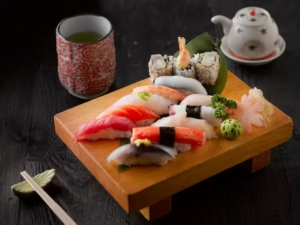
The tachinomi (standing bar) culture is a direct byproduct of Tokyo’s astronomical land prices. By removing chairs, restaurants can double their capacity and significantly increase turnover rates. What originated as a budget-friendly option for salarymen under train tracks has evolved into premium standing sushi bars in Tsukiji and chic standing natural wine bars in Nakameguro. The format democratizes high-quality food, trading physical comfort for exceptional culinary value.
Tsukiji Outer Market offers premium Edomae nigiri at standing counters. The lack of seating means lower overhead, which translates to market-direct prices for top-tier seafood.
The Counter Omakase Boom
Premium Intimacy
On the other end of the spectrum, the counter omakase model maximizes value through intimacy. Limited to 6 to 8 seats, these micro-restaurants minimize staff and eliminate food waste by serving a fixed chef’s choice menu. This spatial constraint forces a profound focus on craftsmanship, turning the dining experience into an interactive theater of teppanyaki, yakitori, or sushi.
☕
Urban Margins and Craft Cafe Culture
Finding “third spaces” and community in a hyper-developed metropolis.
Repurposed Spaces and Third-Wave Coffee
Neighborhood Revitalization
Tokyo’s third-wave coffee scene thrives in the urban margins—renovated kissaten, former warehouses, and quiet residential backstreets. Because commercial rents on main avenues are prohibitive, independent roasters open in neighborhoods like Kuramae, Kiyosumi-Shirakawa, and Shimokitazawa. These cafes function as crucial “third spaces” (places outside home and work) providing breathing room and a sense of local community in an otherwise fast-paced city.
Walk the backstreets of Kiyosumi-Shirakawa. The area’s transformation from a sleepy warehouse district to Tokyo’s coffee capital perfectly illustrates how urban zoning and industrial history shape modern food trends.
🍞
Fast Lifestyles and the Evolution of Daily Staples
How Tokyo’s relentless pace elevated simple bread into an artisanal obsession.
Shokupan and the Pursuit of Softness
Domestic Comfort
The phenomenon of premium Japanese milk bread (shokupan) reflects a desire for affordable, everyday luxury. In a city where long commutes and demanding jobs leave little time for elaborate breakfasts, a high-quality slice of incredibly soft, pillowy toast becomes a crucial moment of domestic comfort. The tangzhong method used to create this texture highlights Japan’s engineering approach to food.
Specialty shokupan bakeries often require reservations or early queueing, proving that Tokyoites are willing to invest time to elevate their fast-paced morning routines.
🌿
The Global City and Plant-Based Evolution
Adapting traditional philosophies to meet international demands.
Modernizing Shojin Ryori
Cultural Translation
As Tokyo solidifies its status as a top global destination, its food scene has rapidly adapted to international dietary needs. Traditional shojin ryori (Buddhist vegetarian cuisine), once confined to temple settings, is being reinterpreted by a new generation of chefs. They extract its core philosophy—respect for ingredients and zero waste—and apply it to modern, accessible dining formats, bridging the gap between ancient tradition and global vegan trends.
The Practical Rise of Vegan Ramen
Global Accessibility
Driven by inbound tourism and a growing eco-conscious local demographic, dedicated vegan ramen and sushi options are multiplying in hubs like Shinjuku and Shibuya. Utilizing umami-rich kombu and shiitake instead of animal dashi, these restaurants prove that Tokyo can cater to global standards without sacrificing its profound culinary identity.
🥂
Economic Polarity and High-Low Dining
A culinary meritocracy where excellence exists at every price point.
Tokyo’s ultimate paradox is its flat culinary hierarchy. A $3 bowl of noodles under a railway track and a $300 kaiseki dinner are both driven by the same obsessive commitment to craft. Excellence here is not dictated by price, but by dedication.
Konbini Culture: The Ultimate Urban Infrastructure
Culinary Lifeline
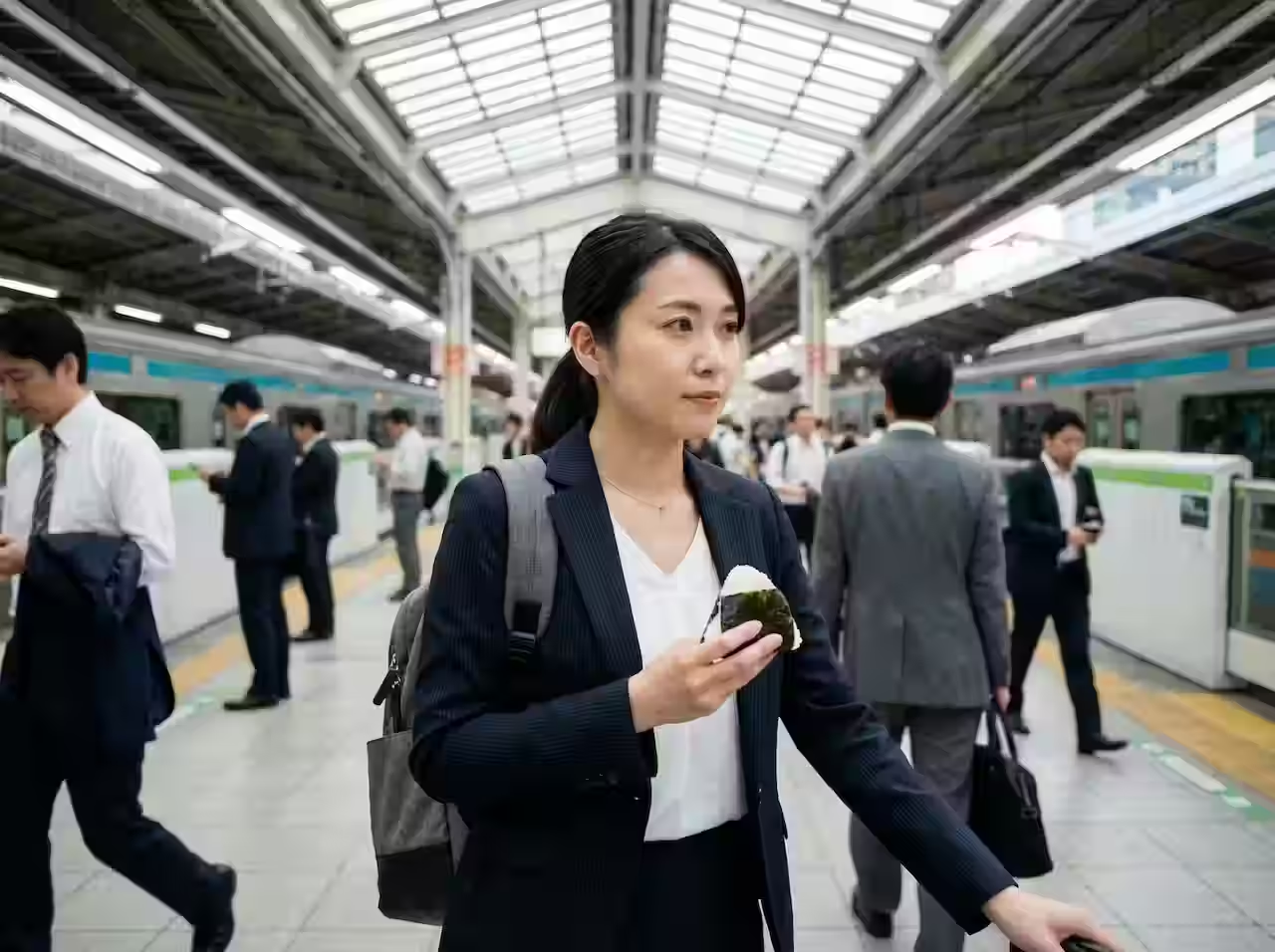
Japanese convenience stores (konbini) are not just shops; they are the fundamental lifelines of the megacity. With food development teams rivaling top restaurants, they provide premium onigiri, seasonal sweets, and hot snacks to fuel a 24/7 society. The extraordinary quality of konbini food demonstrates that in Tokyo, convenience does not require compromising on taste.
The Democratization of Michelin
Culinary Meritocracy
Tokyo is the only city where you can eat Michelin-starred food for under $10. The Michelin Bib Gourmand recognition of humble ramen and tonkatsu joints highlights a unique social trait: the democratization of excellence. Whether it’s a basement depachika bento or a renowned street stall, high-level culinary execution is accessible to the masses.
🏬
Commuter Flows and Depachika
Subterranean food halls strategically built into the city’s transit veins.
Architecture of Convenience and Luxury
Depachika (department store basement food halls) are strategically positioned at the nexus of major subway and train lines. They are designed to intercept the millions of commuters passing through daily. By concentrating the country’s finest wagashi, seasonal bento, and international patisseries directly on the commuting routes, they transform the grueling Tokyo transit experience into an opportunity for daily luxury and efficient gift-buying.
Visit Isetan Shinjuku or Mitsukoshi Ginza’s basements around 6:00 PM. You will witness the perfectly choreographed chaos of Tokyo’s workforce picking up premium dinners on their way home.
🗺️
Neighborhoods and Urban Structure
How the history and layout of specific districts foster distinct food cultures.
☕ Shimokitazawa
A maze of narrow, car-free streets spared from post-war redevelopment. This intimate scale naturally fosters independent, bohemian food culture, craft coffee, and sourdough bakeries.
🌸 Nakameguro
Centered around a canal that limits massive commercial zoning, allowing for chic, small-scale standing bars and premium eateries that blend seamlessly with the residential vibe.
🍣 Tsukiji Outer Market
Though the inner wholesale market moved, the historic grid of Tsukiji remains. Its hyper-dense alleys dictate the culture of standing sushi and quick-turnover street food.
🏮 Kagurazaka
Historically a geisha district with winding cobblestone alleys designed to maintain privacy. Today, these hidden layouts host intimate French bistros and traditional ryotei.
🎌 Yanaka
A district that survived wartime bombings. Its preserved pre-war architecture and traditional shopping streets (shotengai) make it the epicenter for historic tea merchants and nostalgic street snacks.
🌆 Shinjuku Kabukicho
The ultimate entertainment labyrinth. Operating on a 24-hour clock, its food scene features late-night ramen and tiny Golden Gai bars packed into narrow alleys, built to serve the sleepless crowds.
💡
Practical Insights for Navigating the Food Grid
Strategies for hacking Tokyo’s culinary ecosystem.
The Digital Map vs. The Physical City
Because Tokyo builds vertically and lacks a conventional street-address system, reliance on Google Maps and Tabelog (Japan’s premier review site) is absolute. Many of the best restaurants are hidden on the 7th floor of a non-descript multi-tenant building or down a subterranean corridor. Trust the digital coordinates over physical storefront visibility.
The Lunch Arbitrage
In Tokyo’s business districts, lunch is a high-volume, competitive market. Fine-dining restaurants offer lunch courses at a fraction of their dinner prices to capture the daytime corporate crowd. Utilizing this “lunch arbitrage” is the smartest way to experience high-end sushi or French-Japanese cuisine on a budget.
Hyper-Seasonality
Japan’s hyper-seasonality is deeply ingrained in the urban food supply. Supermarket shelves and depachika layouts completely transform every few weeks—from spring cherry blossoms to autumn matsutake mushrooms. In Tokyo, eating seasonally is not an eco-trend; it is the fundamental rhythm of the city.
Huong Ngo is a Vietnamese writer who has studied Japanese language and culture for over five years. She previously lived and worked in Japan for three years, gaining firsthand experience of Japanese society, culture, and everyday life.
She writes about Japanese food, culture, and travel, while also enjoying the opportunity to explore cuisines and traditions from around the world. Her interests include traveling, discovering local foods, and learning about the cultural stories behind them. She is also a longtime Doraemon fan, with a particular fondness for dorayaki.
Her experience living in Japan and background in Japanese studies inform her approach to exploring Japan beyond the most familiar tourist destinations.
















Comments