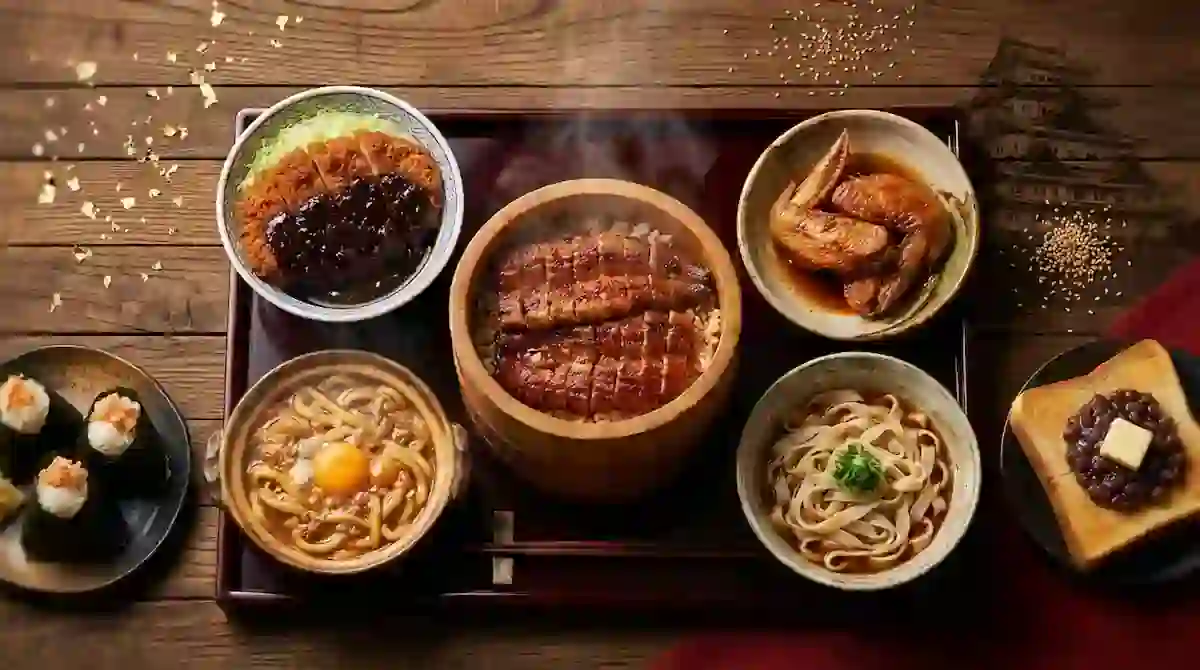
Nagoya is Japan’s most underrated food city. Situated at the heart of the Chubu region, it gave the world Hitsumabushi, Miso Katsu, Tebasaki, and a singular obsession with Hatcho miso that defines every dish on every table. Nagoya cuisine — known locally as Nagoya meshi (名古屋めし) — is bold, unapologetic, and unlike anything found in Tokyo or Osaka. The broths are darker, the sauces are richer, and the flavors are intensified by centuries of fermented bean paste tradition. This guide covers 20 essential dishes with prices, the best neighborhoods, and insider tips from the city’s most dedicated eating streets.
Hitsumabushi is Nagoya’s greatest culinary invention: a lacquered wooden ohitsu tub filled with perfectly grilled, caramelized eel over rice, eaten in three distinct stages. First, eat a portion plain to taste the eel’s crisp skin and sweet tare glaze. Second, add wasabi and nori for a fresh contrast. Third, pour dashi broth over the remaining rice and eat it as a warm, fragrant porridge — called ochazuke style. Each stage transforms the same ingredient into a completely different experience.
The technique was born in Nagoya’s Atsuta district in the Meiji era. Atsuta Horaiken (est. 1873) is the most celebrated restaurant. Expect queues of 1–2 hours on weekends; arrive at opening for same-day seating.
The third stage — pouring dashi over leftover rice — is the most Nagoya-specific step. Do not skip it. Ask for extra dashi if needed.
2
Unadon
うな丼 · Nagoya-Style Eel Bowl
¥¥¥ to ¥¥¥¥ · ¥2,500 to ¥5,000 (~$17 to $33)
Classic
Nagoya-style unadon differs from Tokyo’s version in one critical way: the eel is not steamed before grilling. This Kansai-style “jikaishi” preparation keeps the skin shatteringly crisp and the flesh more intensely flavored. Nagoya eel shops grill over bincho charcoal at close range, creating a lacquered crust that shatters with each bite.
The Atsuta district near Atsuta Jingu shrine has the highest concentration of premium eel restaurants in the city. The shrine’s association with eel offerings dates back centuries, making this neighborhood Japan’s most serious eel dining destination outside the Uji river towns.
Order “jo” (上) grade for larger eel portions. Many shops offer “tokuju” (特上) with an entire eel on one bowl — worth it for a special occasion.
🍖
Miso Classics
Hatcho miso — aged 3 years, intensely savory — appears in nearly every Nagoya dish
A perfectly breaded, deep-fried pork cutlet doused in Nagoya’s defining sauce: a thick, deeply savory reduction of Hatcho miso, dashi, mirin, and sugar. The sauce is coal-black, intensely umami-rich, and utterly unlike the pale tonkatsu sauce found elsewhere in Japan. The combination of crunchy panko crust and dense miso glaze is one of the most satisfying flavor combinations in Japanese food.
Miso Katsu was popularized in the 1950s at Nagoya’s Yabaton restaurant chain. Yabaton Honten in Sakae is the most celebrated location, but the same sauce appears at hundreds of restaurants across the city.
Order “tonteki style” at some restaurants to get miso sauce poured tableside. Dipping the pork into the sauce rather than having it pre-coated lets you control the intensity.
Miso nikomi udon is Nagoya’s most comforting dish: raw, unboiled udon noodles simmered directly in a clay pot of Hatcho miso broth with chicken, narutomaki fish cake, a raw egg cracked in at the end, and green onions. Because the noodles cook in the broth rather than separately, they absorb the miso deeply and retain a uniquely firm, chewy texture. The clay pot arrives at the table still bubbling fiercely.
Yamamotoya Honten, operating since 1925, is the defining restaurant and has been visited by every notable food writer in Japan at some point.
Break the egg into the broth yourself when it arrives, stir gently, and wait 30 seconds before eating. The broth intensifies at the bottom of the pot — drink it directly from the clay pot at the end.
5
Miso Oden
味噌おでん · Miso-Braised Oden
¥¥ · ¥150 to ¥400 per piece (~$1 to $2.70)
Street Food
While Tokyo’s oden uses a delicate clear dashi broth, Nagoya’s version submerges daikon radish, konjac, eggs, and tofu in a dark Hatcho miso broth that has been simmering for months. Each piece of daikon becomes almost black on the outside, softly yielding inside, saturated with miso. A final brush of additional miso paste is applied before serving.
Available year-round at Nagoya convenience stores, izakaya counters, and Osu Kannon shopping district food stalls.
The konnyaku and daikon absorb the miso most completely — start with these. Ask for “karame” when ordering for maximum miso intensity.
Hatcho miso is the invisible backbone of Nagoya dining: a three-year-aged soybean-only miso produced exclusively in Okazaki City, 35 minutes from Nagoya. The Kakukyuu and Maruya Hatcho breweries press their miso in wooden barrels topped with stone weights totaling several tons, producing the deepest umami base in Japanese cuisine. Akadashi — red miso soup — is served with every meal from breakfast teishoku to late-night izakaya sets.
Visit the Kakukyuu Hatcho Miso Brewery in Okazaki for a free tour and tasting. The attached shop sells aged miso blocks — one of the best edible souvenirs from the region.
Kishimen are Nagoya’s signature noodles: wide, flat wheat noodles served in a clear dashi broth — a rare gentle contrast to the city’s miso-heavy palette. The noodles are smooth, slippery, and silky in texture, typically topped with katsuobushi bonito flakes, spinach, and narutomaki fish cake.
Kishimen stalls on the platforms of Nagoya Station are among Japan’s most famous station noodle experiences, serving commuters since the 1960s. At around ¥500–¥700, they represent exceptional value and an authentic glimpse into Nagoya’s everyday food culture.
The platform stalls at Nagoya Station (JR platforms 1–3) run from early morning until late evening. Eat standing at the counter for the full experience. Add a raw egg for ¥60.
Taiwan mazesoba was invented in Nagoya in 2008 at Menya Hanabi and has since spread to every major city in Japan. Thick noodles are served dry, topped with spicy minced pork, raw egg yolk, green onions, nori, and garlic — everything mixed tableside. The “Taiwan” flavor profile originates from Nagoya’s Taiwan ramen tradition of spicy minced pork with dried sardines and chili.
After finishing the noodles, ask for “tsuika” — free rice added to the remaining sauce at the bottom of the bowl for a second mini-meal.
Mix at least 30 times before eating. The emulsification of egg yolk, spicy pork fat, and noodle starch defines the texture. Add vinegar from the table to cut through the richness.
9
Ankake Spaghetti
あんかけスパゲッティ · Thick Sauce Spaghetti
¥¥ · ¥900 to ¥1,500 (~$6 to $10)
Nagoya Invention
Ankake spaghetti is a beloved Showa-era Nagoya invention: thick spaghetti (2.2mm+) served with a dark, spicy, starchy sauce made from meat stock thickened with a cornstarch slurry and seasoned with black pepper, Worcestershire, and tomato. Invented in the 1960s, it remains a Nagoya obsession. Popular toppings include Vienna sausage, bacon, and mushrooms.
Order “kara-kara” for extra spicy sauce. The thick noodles are intentional — do not substitute. Eat with a fork, not chopsticks, at the retro counter seats.
🍗
Chicken
Nagoya Cochin — Japan’s most prized heritage chicken — anchors the city’s poultry obsession
Nagoya’s tebasaki are unlike any other chicken wing in Japan: deep-fried twice for maximum crispness, then glazed with a sweet-and-savory tare of soy sauce, mirin, sake, and garlic while piping hot, finished with black pepper and sesame seeds. The double-fry creates a skin that shatters like lacquered glass. Invented in 1963 at Furaibo restaurant, Sekai no Yamachan (World’s Yamachan) is now the name most associated with the dish, with locations across Japan and internationally.
Eat with both hands. Use the two-twist technique to clean the wing bones in one motion — restaurant staff will demonstrate. Order cold Kinshachi or Nagoya Red Miso Beer alongside.
11
Nagoya Cochin Dishes
名古屋コーチン · Heritage Breed Chicken
¥¥¥ to ¥¥¥¥ · ¥2,500 to ¥7,000 (~$17 to $47)
Premium
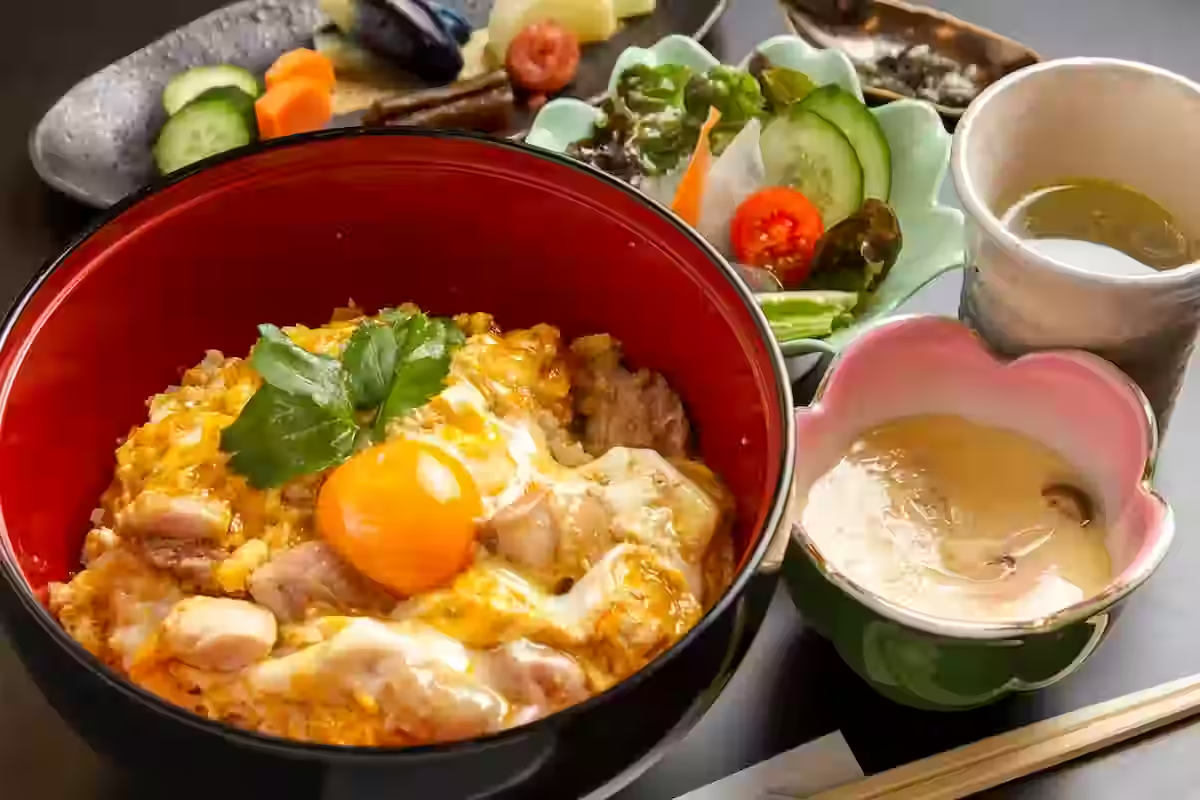
Nagoya Cochin is one of Japan’s three great heritage chicken breeds, bred in Aichi Prefecture since 1882. The meat is darker, richer, and chewier than standard chicken, with a mineral depth reminiscent of game birds. Exceptional for yakitori, sukiyaki, oyakodon, and especially chicken sashimi. Cochin oyakodon uses deep-orange Nagoya Cochin eggs for extraordinary richness.
Order “chicken sashimi” (toriwasa) if available — safe because Nagoya Cochin is raised under certified conditions. A singular experience found almost nowhere else in the world.
12
Doteni
どて煮 · Miso-Braised Offal
¥¥ · ¥600 to ¥1,200 (~$4 to $8)
Izakaya Staple
Doteni is Nagoya’s signature izakaya dish: beef offal (motsu) simmered for hours in a sweet Hatcho miso broth with konjac, burdock, and tofu. The offal becomes meltingly tender while absorbing deep red miso. Almost every Nagoya izakaya offers doteni as a standard menu item. At ¥600–¥900 for a generous portion, it is one of the best-value dishes in the city.
Ask for “karame” (darker) or “amakara” (sweet-savory) to specify your preference. Doteni improves with each reheating — order a second portion once you’ve finished the first.
🍞
Morning Culture (Nagoya Morning)
Nagoya’s legendary “morning service” — free food with coffee — is a way of life
The Nagoya Morning Service is one of Japan’s great food traditions. Order a coffee (¥400–600) at a Nagoya-style kissaten before 11am and receive free thick-cut toast, a hard-boiled egg, and often red bean paste — at no extra charge. Over 1,000 kissaten in greater Nagoya operate this system, practiced since the 1950s.
13
Ogura Toast
小倉トースト · Red Bean Paste Toast
¥ to ¥¥ · ¥400 to ¥800 (~$3 to $5)
Morning Essential
Ogura toast is Nagoya’s most distinctive morning food: thick white bread slices, toasted and spread generously with butter then topped with sweet red bean paste (ogura-an). Invented in the 1930s at a Nagoya kissaten, the idea spread across the city’s cafe culture and never left. The contrast of crispy toast, melting butter, and earthy sweetness from the bean paste is surprisingly excellent. Nearly every traditional kissaten in Nagoya serves it as part of the morning service.
The best versions use thick-cut “shoku pan” (Japanese milk bread). Komeda Coffee serves a very large version called the “Ogura Toast Morning Set” — still the benchmark for visitors trying it for the first time.
14
Komeda Morning
コメダモーニング · Kissaten Breakfast
¥¥ · ¥500 to ¥700 — includes free food with coffee
Kissaten Culture
Komeda Coffee was founded in Nagoya in 1968 and remains the most iconic symbol of the city’s coffee shop culture. Order any coffee before 11am and receive free thick-cut toast with egg salad or red bean paste. Now with over 900 locations across Japan, the experience feels most authentic in its Nagoya homeland — leather chairs, enormous portions, and an unhurried atmosphere that prizes lingering.
Sitting at Komeda with a coffee and the morning newspaper for 90 minutes is a legitimate and celebrated Nagoya experience. No one will rush you. The culture prizes this kind of slow morning.
🍱
Local Specialties
Dishes invented in Nagoya that rarely appear outside Aichi Prefecture
A small rice ball (onigiri) with a single crispy shrimp tempura nestled inside, wrapped in nori seaweed. The genius lies in the temperature contrast — warm rice softens the nori while keeping the tempura’s batter intact from inside. Tenmusu was originally created in Tsu City, Mie Prefecture, before Nagoya adopted and perfected it. Chiyo in Osu is the most celebrated tenmusu shop in the city. Sold in sets of 5, they are Nagoya’s most popular casual souvenir food.
Eat tenmusu within 2 hours while the rice is still warm. Freshly made versions from Chiyo in Osu are far superior to the boxed versions at Nagoya Station.
16
Ebi Furai
エビフライ · Giant Fried Shrimp
¥¥¥ · ¥1,800 to ¥3,500 (~$12 to $23)
Nagoya Pride
Nagoya’s ebi furai are notably different from the national standard: significantly larger shrimp (often 25–30cm before cooking), breaded with coarser panko for a shatteringly crispy shell, and served with a rich tartar sauce that includes homemade pickles and a touch of miso. Nagoya’s pride in ebi furai is so great that the dish appears on regional mascot merchandise.
Dip in tartar sauce rather than tonkatsu sauce to experience the Nagoya preparation. Ask if the restaurant makes their own tartar — the best include finely chopped cucumber pickles and capers.
Despite the name, Taiwan ramen was invented in Nagoya in 1970 by Taiwanese chef Kuo Ming-You at his restaurant Misen in Chikusa Ward. Thin ramen noodles in a clear broth are topped with intensely spicy minced pork cooked with garlic, ginger, chili peppers, Chinese chives, and green onions. Misen restaurant remains the original home, offering “American” (mild), “Italian” (even spicier), and original levels.
Order “kara-me” (spicier) or “ama-me” (milder) when ordering. The original Misen restaurant in Chikusa Ward is worth the short detour. Arrive before 11:30am to avoid the queue.
🍡
Sweets and Confections
Nagoya’s wagashi tradition blends Edo-period craftsmanship with distinctive local flavors
18
Uiro
ういろう · Steamed Rice Cake
¥¥ · ¥500 to ¥1,200 (~$3.50 to $8)
Traditional Wagashi
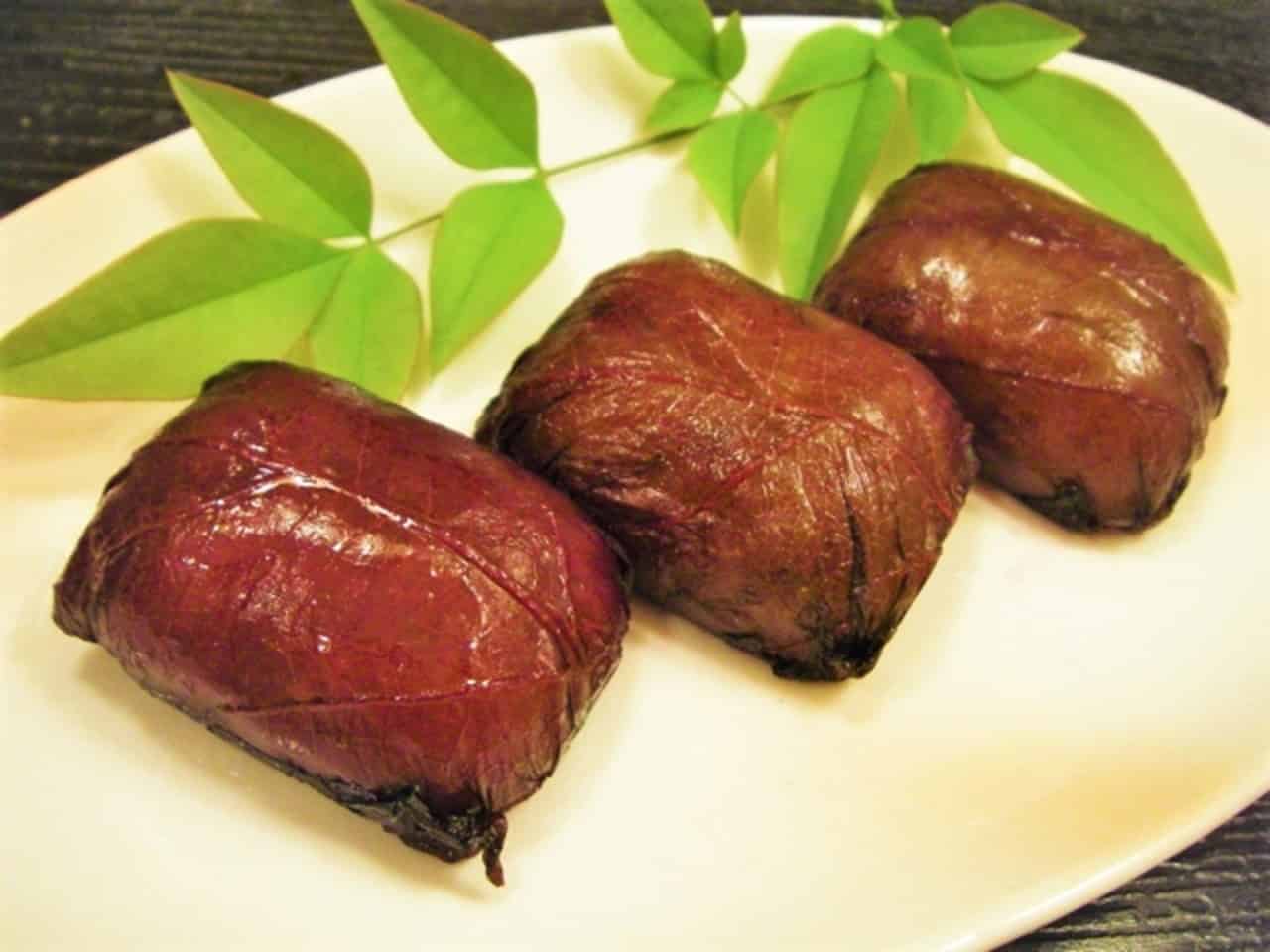
Uiro is Nagoya’s most traditional wagashi sweet: a firm, lightly sweetened steamed cake made from rice flour and sugar, available in matcha, white, red bean, and black sesame flavors. The texture is denser and more glutinous than mochi, with a subtle chewiness and barely sweet flavor that pairs extraordinarily well with bitter matcha tea. Records of its production in Nagoya date to the Muromachi period. Eiraku-ya, Osu Uiro, and Tawaraya Uiro are the three most celebrated producers.
Uiro dries out quickly after cutting — consume within 2–3 days. Vacuum-sealed versions at Nagoya Station shops keep for up to 2 weeks and travel well as souvenirs.
Miso Dengaku is one of Japan’s oldest cooking traditions: tofu, konnyaku, daikon, and eggplant skewered and grilled, then coated with a sweetened Hatcho miso glaze and caramelized over charcoal. Nagoya’s version uses the region’s signature red miso, giving the glaze a deep, almost smoky intensity that sets it apart from lighter miso dengaku found in Kyoto or Tokyo. A staple since the Edo period.
Tofu dengaku absorbs the miso glaze most completely — order this alongside konnyaku for the best textural contrast. Available at izakaya, traditional restaurants, and Osu Kannon market stalls.
Toyohashi Curry Udon is a unique regional specialty from Toyohashi City in eastern Aichi Prefecture: curry udon built in distinct layers — a raw egg and tororo (grated mountain yam) sit on top of the curry, which covers a hidden layer of rice at the bottom of the bowl. As you eat through the curry noodles, the rice gradually absorbs the remaining sauce, creating a second dish within the same bowl. A remarkable Aichi invention increasingly well-known beyond the prefecture.
Toyohashi is 50 minutes from Nagoya by express train on the Tokaido Line — a worthwhile day trip for food lovers wanting to explore beyond the city center.
📍 Where to Eat by Area
🏯 Atsuta District
🐟 Hitsumabushi (Atsuta Horaiken)
🐟 Premium eel restaurants
🍱 Atsuta Jingu shrine market
🍡 Traditional wagashi stalls
🏙 Sakae / Central
🍖 Miso Katsu (Yabaton Honten)
🍗 Tebasaki izakaya
🍜 Ankake spaghetti
🍱 Ebi furai restaurants
🕌 Osu Kannon
🍱 Tenmusu (Chiyo shop)
🍡 Uiro and wagashi
🍢 Miso oden stalls
🍞 Traditional kissaten
🚉 Nagoya Station Area
🍜 Kishimen platform stands
🎁 All souvenir foods
☕ Komeda Coffee branches
🍱 Tenmusu gift boxes
🌿 Kakuozan / Chikusa
🍜 Taiwan ramen (Misen)
☕ Artisan kissaten
🐔 Nagoya Cochin restaurants
🍡 Boutique wagashi
🏭 Okazaki (Day Trip)
🍱 Hatcho Miso brewery tours
🏰 Okazaki Castle area dining
🐟 Freshwater eel farms
⏱ 35 min by Meitetsu train
Budget Breakdown: A Day of Eating in Nagoya
Meal
Dish
Cost (¥)
Cost (USD)
Breakfast
Komeda morning service (coffee + toast)
¥500–¥680
~$3.50–$5
Lunch
Miso Nikomi Udon
¥1,200–¥1,800
~$8–$12
Snack
Tenmusu (3 pieces)
¥500–¥700
~$3.50–$5
Dinner (casual)
Tebasaki + doteni + beer at izakaya
¥2,000–¥3,500
~$13–$23
Dinner (special)
Hitsumabushi at Atsuta Horaiken
¥4,000–¥7,000
~$27–$47
Day total (casual)
~¥4,200–¥6,700
~$28–$45
💡 Practical Tips for Eating in Nagoya
🕐 Hours and Access
Most miso nikomi udon shops open from 11am and close by 9pm. Kissaten operate from 7am for morning service. Atsuta Horaiken for Hitsumabushi opens at 11:30am — arrive by 11am to queue. Nagoya Station is a Shinkansen hub with connections to Tokyo (1h 40min) and Osaka (50min). The Nagoya City Subway covers all food districts; a one-day pass costs ¥740.
💳 Cash vs. Card
Traditional kissaten, small udon shops, and many izakaya are cash-only. Major restaurants near Nagoya Station and department store food halls accept cards. Bring ¥5,000–¥10,000 in cash for a full day of eating. Meitetsu Department Store B1 food hall accepts cards at all stalls and is excellent for quick Nagoya meshi sampling.
🌿 Dietary Restrictions
Hatcho miso itself is made from only soybeans and is vegan, but most Nagoya dishes combine it with pork or chicken stocks. Miso oden with konnyaku and tofu is the most accessible vegetarian option. Ogura toast at kissaten is vegetarian-friendly. Apps like HappyCow list suitable restaurants in central Nagoya.
🎁 Best Souvenir Foods
Uiro (vacuum-sealed, keeps 2 weeks), Tenmusu (eat within 2–3 hours), bottled Yabaton miso katsu sauce, Hatcho miso blocks, and dried Kishimen noodles are all ideal edible gifts. All available at Meitetsu Department Store basement food hall connected to Nagoya Station.
Nagoya Food FAQ
What is Nagoya meshi?
Nagoya meshi (名古屋めし) is the collective term for the distinctive local cuisine of Nagoya and greater Aichi Prefecture. It encompasses dishes featuring Hatcho miso, as well as Nagoya-specific inventions like Hitsumabushi eel rice, Tebasaki chicken wings, Taiwan ramen, and Ogura toast. The term signals a food culture with no direct equivalent elsewhere in Japan.
What makes Nagoya food different from Osaka or Tokyo?
The primary difference is the dominance of Hatcho miso, which gives Nagoya cuisine its characteristic deep red-brown color, intense umami, and slightly astringent richness. Tokyo cuisine tends toward delicate dashi-based flavors; Osaka cuisine is known for bold, sweet-savory sauces. Nagoya sits apart from both with a darker, more fermented, more intensely flavored profile. See our Food in Nagoya overview for a broader introduction.
Is Nagoya food vegetarian or vegan friendly?
Hatcho miso itself is made from only soybeans and is vegan, but most dishes combine it with pork or chicken stocks. Miso oden with tofu and konnyaku is accessible. Ogura toast at kissaten is vegetarian-friendly. Apps like HappyCow list suitable restaurants in central Nagoya.
What is the best souvenir food from Nagoya?
Uiro (vacuum-sealed, keeps 2 weeks), Tenmusu (eat same day), bottled Yabaton miso katsu sauce, Hatcho miso blocks, and dried Kishimen flat noodles. All available at Meitetsu Department Store’s basement food hall directly connected to Nagoya Station.
How much does a day of eating in Nagoya cost?
A full day of casual eating — morning service coffee and toast, miso nikomi udon for lunch, tebasaki and doteni at an izakaya for dinner — typically costs ¥4,200–¥6,700 (~$28–$45 USD) per person. Adding a Hitsumabushi dinner at Atsuta Horaiken pushes the total to around ¥8,000–¥12,000 (~$53–$80).
When is the best time to visit Nagoya for food?
Nagoya is excellent for food year-round. Autumn (October–November) is peak season for doteni and miso nikomi udon. Consider a day trip to Okazaki for the Hatcho Miso brewery, or to Toyohashi for Toyohashi Curry Udon. Also worth exploring is the Ieyasu-inspired Ieyasu Takagari Nabe hot pot.










Comments