Japan’s Teppanyaki and Hibachi Culture: A Complete Guide
The history, techniques, wagyu grades, and regional traditions behind Japan’s most celebrated grilling culture from Kobe’s 1945 birthplace to today’s world-class teppanyaki restaurants
Japan’s grilling culture is one of the most sophisticated and diverse in the world. The word hibachi (火鉢) means “fire bowl” in Japanese a traditional charcoal heating vessel with centuries of history. The grilling experience most visitors associate with “hibachi” is in fact teppanyaki (鉄板焼き), a distinctly Japanese culinary tradition born in Kobe in 1945 that transformed the relationship between chef, ingredient, and diner. This guide explores both traditions alongside the full spectrum of Japan’s grilling culture.
The hibachi is a round or square vessel made of ceramic, wood, lacquered clay, or metal, filled with ash and lit binchotan charcoal. It has warmed Japanese homes, tea ceremony rooms, and inn parlors since the Heian period (794 to 1185). During the Edo period it became a central fixture of daily domestic life, with elaborate lacquered hibachi becoming status symbols among wealthy merchant families. Traditional hibachi were used for warmth, for boiling water for tea, and for lightly toasting small items directly over the charcoal. They were never used for large-scale cooking.
Authentic traditional hibachi can still be seen at historical ryokan throughout Japan, particularly in the Kyoto, Kanazawa, and Tohoku regions. Some traditional tea houses use small hibachi to prepare matcha ceremony settings.
Binchotan: Japan’s Sacred Charcoal
備長炭 · White Charcoal
The fuel that makes Japanese grilling unique is binchotan, a pure white charcoal made from ubame oak in Kishu (modern Wakayama Prefecture) using a technique developed in the 17th century. Binchotan burns at over 1,000°C, produces almost no smoke or odor, and maintains an extremely stable heat for hours. Its purity means food absorbs no charcoal flavors only the clean, intense heat. This is why yakitori, unagi, and premium teppanyaki restaurants pay enormous premiums for genuine Kishu binchotan over cheaper alternatives. The charcoal is so hard that striking two pieces together produces a metallic ring, and it conducts electricity.
If you see the phrase 備長炭使用 (binchotan shiyou) on a restaurant sign or menu, it indicates the restaurant uses genuine binchotan charcoal a meaningful quality signal for yakitori and charcoal-grilled cuisine.
From a Kobe steak restaurant in 1945 to a global culinary icon
The Birth of Teppanyaki: Kobe, 1945
1945 Misono, Kobe
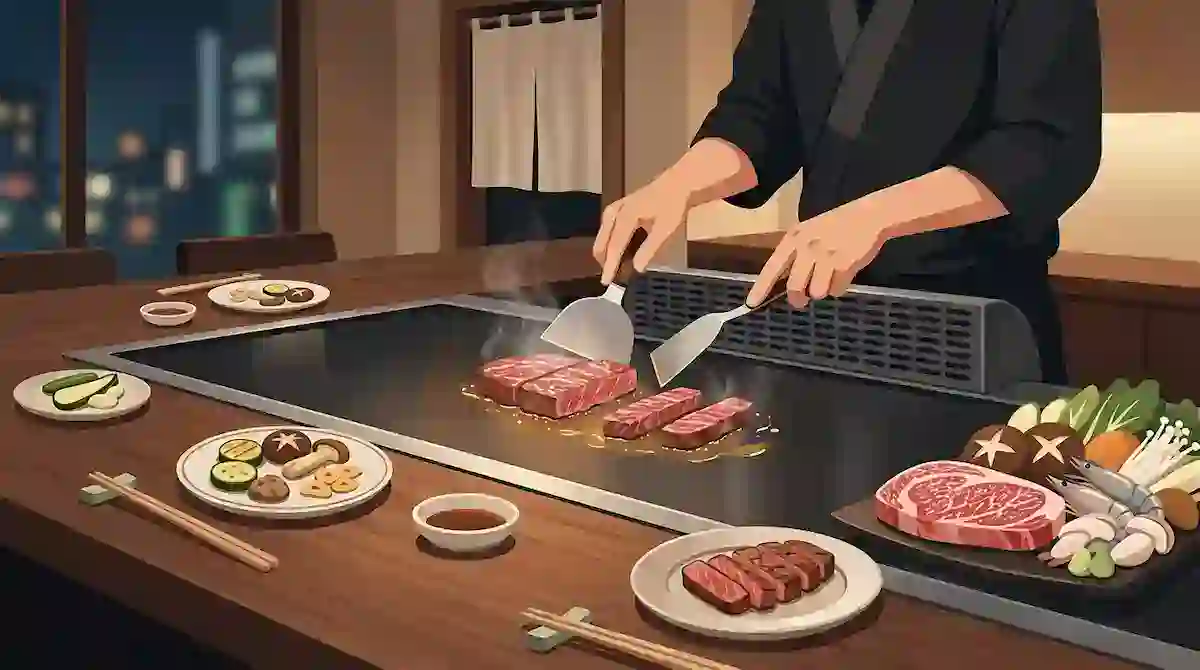
Shigeji Fujioka opened Misono in Kobe’s Kitano district, the first restaurant to cook steak on a flat iron teppan plate in front of seated diners. Originally intended to appeal to American occupation forces who were unfamiliar with raw fish, the counter-dining format allowed Fujioka to showcase the quality of Kobe beef through direct, visible cooking. The concept was revolutionary: the chef as performer, the iron plate as stage.
1950s Spread to Tokyo and Osaka
As Japan’s postwar economy recovered, teppanyaki restaurants spread from Kobe to Osaka and Tokyo. The format adapted: in Tokyo, the focus sharpened on premium wagyu beef and multi-course dining; in Osaka, teppanyaki developed more casual, accessible versions. Misono opened a Tokyo branch in Ginza, cementing teppanyaki’s status as high-end dining.
1964 International Expansion
Rocky Aoki, a Japanese-American entrepreneur, opened Benihana in New York in 1964, adapting Japanese teppanyaki into a theatrical show-cooking format for American audiences. This created “hibachi-style” dining as Americans know it and inadvertently caused the widespread confusion between hibachi and teppanyaki that persists globally today.
1980s to 1990s Hotel Teppanyaki Era
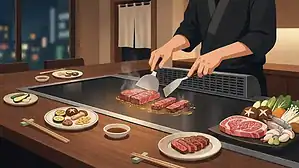
Japan’s luxury hotel boom brought teppanyaki restaurants into five-star hotels, elevating the cuisine further. Counter seats facing a private teppan, served by a single dedicated chef with a full wagyu course, became the standard format for high-end teppanyaki. The combination of A5 wagyu, hotel-level service, and counter intimacy created what is now considered the classic Japanese teppanyaki experience.
Present Michelin Recognition
Multiple teppanyaki restaurants in Japan now hold Michelin stars. The cuisine is recognized internationally as a distinctly Japanese culinary tradition rooted in both the quality of Japanese wagyu and the artisanship of the teppan chef. Premium teppanyaki has become one of Japan’s most sought-after dining experiences for international visitors.
The Philosophy of Teppanyaki
Teppanyaki at its finest embodies the Japanese culinary principle of shizen no aji the natural flavor of the ingredient. The chef’s role is not to mask or transform the ingredient but to reveal its highest potential through precise heat, timing, and restraint. A master teppan chef reads the surface of A5 wagyu the way a painter reads a canvas: the moment the deep red gives way to a barely-blush pink is the precise second to turn the slice. Too early, too cold; one second late, irreversible. This precision, performed in front of the diner at a counter, creates a form of culinary theater that is quietly riveting rather than acrobatically showy.
The phrase Japanese chefs use is te no kioku (手の記憶) the memory of the hands. The skill of reading and reacting to the teppan is learned through years of repetition until the correct response becomes instinctive.
🐄
Wagyu: The Ingredient That Defines Japanese Grilling
Understanding Japan’s most celebrated beef grades, breeds, and regional varieties
The Wagyu Grading System
Essential knowledge
Wagyu beef is graded by Japan Meat Grading Association using two scales: yield grade (A, B, or C) indicating how much usable meat comes from the carcass, and quality grade (1 to 5) based on marbling, color, firmness, and fat quality. A5 is the highest grade, indicating both maximum yield and the finest quality. The marbling score within the quality grade runs from 1 to 12 (BMS), with BMS 8 to 12 representing the extraordinary “snowflake” fat distribution visible in premium A5 wagyu. For a full breakdown of the grading system, see our complete wagyu ranking guide. Most teppanyaki restaurants use A4 or A5 grade beef.
Hyogo Prefecture. The most internationally famous wagyu, from Tajima-strain Japanese Black cattle. Strict certification: only about 3,000 head qualify annually. Rich, deeply marbled, with fat that melts at 25°C. The birthplace of teppanyaki.
Mie Prefecture. Often called “the best beef in Japan” domestically. Virgin female cattle only, raised to extraordinary levels of marbling through a strict diet. Known for its intensely sweet fat and delicate texture.
Shiga Prefecture. Japan’s oldest wagyu brand, supplied to feudal lords since the Edo period. Balanced flavor with slightly firmer texture than Kobe or Matsusaka. Excellent for both teppanyaki and sukiyaki.
Yamagata Prefecture. One of Japan’s three great wagyu alongside Kobe and Matsusaka. Raised in the cold Tohoku climate, with firm texture and deep umami flavor. Less internationally known but revered domestically.
Miyazaki Prefecture. Japan’s largest wagyu producing prefecture and winner of multiple national wagyu championships. Produces a high volume of A4 and A5 grade beef with strong marbling at relatively accessible prices. Excellent value for teppanyaki.
Ibaraki Prefecture. Known for well-balanced marbling and clean, mild flavor. Only Japanese Black cattle raised over 30 months with carefully selected fodder qualify. Ibaraki’s fertile farmland produces beef with a distinctive sweetness well-suited to teppanyaki’s high-heat cooking style.
📍
Regional Teppanyaki Styles
How teppanyaki differs across Japan’s major regions
1Kobe Style The Original
Hyogo Prefecture
Kobe teppanyaki at its finest is a study in restraint: the chef seasons A5 Kobe beef with only coarse salt, cooks each slice individually with expert heat control, and serves it immediately. There is no sauce applied during cooking condiments (wasabi, ponzu, and garlic chips) are offered separately, allowing the beef to speak for itself. The original Misono restaurant in Kobe’s Kitano district has maintained this philosophy since 1945 and remains the defining teppanyaki experience in Japan.
Kobe’s teppanyaki cluster in Kitano-cho and around Sannomiya station has the highest concentration of original teppanyaki restaurants. Misono Kobe is essential for any serious teppanyaki pilgrim.
2Tokyo Style Hotel Counter Dining
Tokyo
Tokyo teppanyaki is defined by the luxury hotel counter experience: an intimate counter of 8 to 12 seats, a private chef, multi-course progression from appetizer through garlic rice to the main wagyu course. The presentation is more refined and theatrical than Kobe’s austere style, with knife work and the dramatic sizzle of premium wagyu receiving equal attention. The Ginza, Akasaka, and Roppongi hotel districts hold Japan’s highest concentration of Michelin-recognized teppanyaki restaurants.
3Osaka Style Accessible Teppanyaki
Osaka
True to Osaka’s kuidaore (eat until you drop) spirit, the city has developed more casual and accessible teppanyaki formats alongside premium options. Lunch teppanyaki sets in Namba and Shinsaibashi offer A4 wagyu courses from ¥3,000 to ¥6,000 dramatically more affordable than Tokyo equivalents. Osaka teppanyaki also incorporates more seafood and local ingredients alongside wagyu, reflecting the city’s deeper relationship with market-fresh cooking.
4Hokkaido Style Seafood Teppanyaki
Hokkaido
Hokkaido teppanyaki emphasizes the island’s extraordinary seafood rather than wagyu: Hokkaido scallops (the world’s finest), snow crab, sea urchin (uni), and salmon are cooked on the iron plate alongside local Hokkaido wagyu. The combination of premium land and sea ingredients on a single teppan creates a distinctly northern Japanese style. Sapporo’s Susukino district has excellent teppanyaki restaurants showcasing Hokkaido produce.
🍢
Japan’s Other Grilling Traditions
The full breadth of Japanese fire cuisine beyond teppanyaki
Japan’s most democratic grilling tradition: chicken and offal on bamboo skewers, grilled over binchotan charcoal. Every part of the bird is used thigh, breast, skin, liver, heart, gizzard, cartilage, and tail. The binchotan’s clean heat caramelizes the exterior without bitterness, producing a depth of flavor impossible on gas or electric grills. Yakitori ranges from ¥150 standing-alley stalls to ¥15,000 premium jidori (free-range) tasting menus at Michelin-starred restaurants in Ginza. The yakitori alleyways (yokocho) under Tokyo’s elevated train lines particularly Yurakucho and Shinjuku are among Japan’s most atmospheric dining environments.
Yakiniku
焼肉 · Japanese BBQ
¥¥ to ¥¥¥¥
Yakiniku is the democratized form of Japanese wagyu culture: thin-sliced beef, pork, and offal ordered by the cut, cooked by the diner on a charcoal or gas grill built into the table. The yakiniku menu teaches Japanese beef cuts in the most engaging way possible by tasting them side by side. The progression from affordable cuts (harami, kalbi) to premium ones (zabuton, A5 sirloin) over the course of an evening is one of Japan’s most enjoyable culinary education experiences. Premium wagyu yakiniku restaurants in Tokyo and Osaka rival teppanyaki in quality at often lower prices.
The most important yakiniku technique: do not overcook. A5 wagyu on a charcoal grill needs 20 to 30 seconds per side at most. The fat should just begin to render, not fully melt away.
Jingisukan is Hokkaido’s defining grilling tradition: fresh lamb and mutton cooked on a dome-shaped convex iron grill, with onions and vegetables arranged around the edges to catch the dripping fat. Named after Genghis Khan, it was introduced to Hokkaido during the Meiji era as part of sheep farming initiatives. The fresh Hokkaido lamb has a clean, mild flavor that surprises visitors expecting gaminess. Sapporo’s beer gardens serve jingisukan outdoors in summer, pairing it with Sapporo beer in one of Japan’s most festive dining rituals.
Robatayaki
炉端焼き · Fireside Grilling
Traditional style
Robatayaki originates in Hokkaido fishing village culture, where fishermen gathered around a central open hearth (irori) to cook their catch over slow charcoal. Today’s robatayaki restaurants recreate this atmosphere: a large open charcoal hearth dominates the restaurant space, with raw ingredients displayed in front of it. Chefs grill to order using long wooden paddles to pass food directly to diners. The style emphasizes rustic, seasonal variety over premium cuts fish, vegetables, tofu, mochi, and whatever is fresh that day creating a warmth and informality that feels distinctly Japanese.
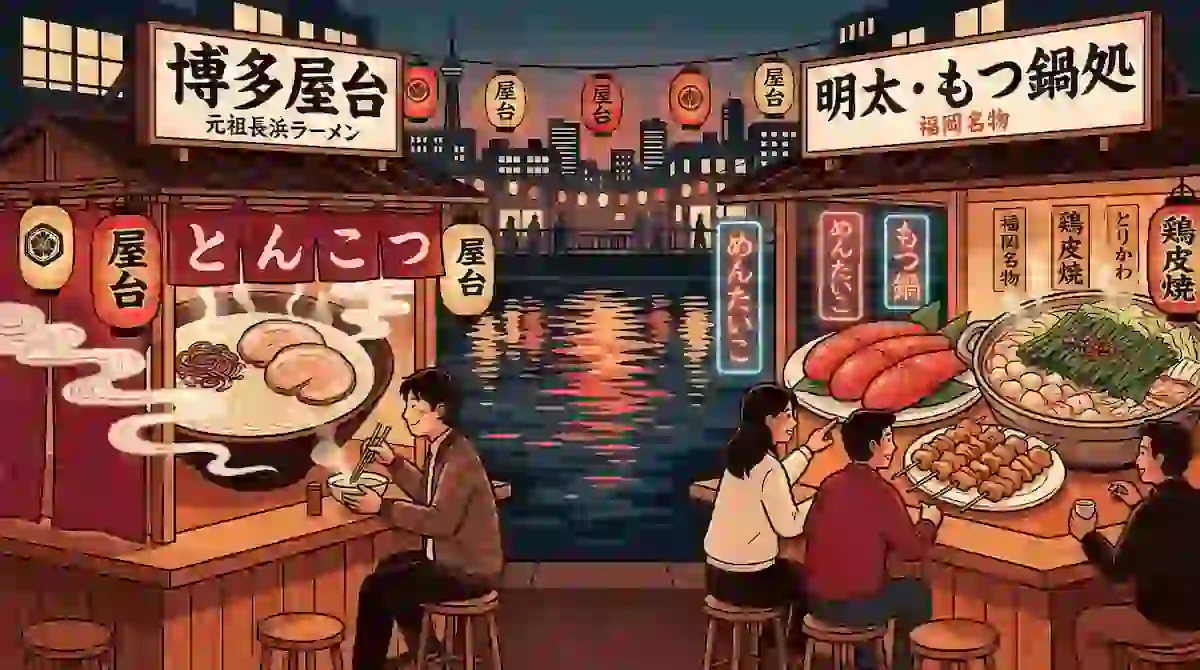
Fukuoka has its own distinct yakitori tradition centered on tori kawa: chicken skin wrapped tightly around a skewer and grilled over charcoal repeatedly for 30 to 40 minutes, basting with tare each time, until the exterior is shatteringly crispy. The technique requires extraordinary patience and heat management. The Yakitori Alley under the Shinkansen tracks near Hakata Station is Fukuoka’s most celebrated street, and tori kawa is its defining dish.
📊
Japanese Grilling Styles: Complete Comparison
Understanding each tradition at a glance
Style
Heat Source
Who Cooks
Main Ingredient
Atmosphere
Teppanyaki
Iron plate
Chef at counter
Wagyu beef, seafood
Refined, counter dining
Yakitori
Binchotan charcoal
Chef (skewers)
Chicken, all cuts
Casual to premium
Yakiniku
Charcoal or gas
Diner (self-grill)
Beef, pork, offal
Social, interactive
Jingisukan
Dome iron grill
Diner (self-grill)
Lamb, mutton
Festive, Hokkaido-style
Robatayaki
Open charcoal hearth
Chef (open hearth)
Fish, vegetables, mixed
Rustic, communal
Hibachi (traditional)
Binchotan charcoal
Heating, not cooking
Warmth, small items
Traditional, domestic
💴
Price Guide by Grilling Style
What to expect at each budget level across Japan’s grilling traditions
Style and Level
Experience
Cost Per Person
Yakitori (casual)
Standing alley, 6 to 8 skewers with beer
¥1,500 to ¥3,000
Yakiniku (mid-range)
Casual set or all-you-can-eat
¥2,500 to ¥5,000
Jingisukan
Beer garden or specialist restaurant
¥2,000 to ¥4,000
Teppanyaki (lunch)
A4 wagyu lunch course
¥4,000 to ¥8,000
Yakitori (premium)
Michelin jidori course, Ginza or Shibuya
¥8,000 to ¥15,000
Yakiniku (wagyu)
Premium A5 wagyu yakiniku dinner
¥10,000 to ¥25,000
Teppanyaki (dinner)
A5 Kobe or Matsusaka beef full course
¥15,000 to ¥50,000
Best value insight: Teppanyaki lunch courses offer the same A4 or A5 wagyu and the same chef at 40 to 60% of dinner pricing. A ¥5,000 teppanyaki lunch course in Osaka or Kobe frequently delivers the quality of a ¥15,000 Tokyo dinner experience.
🔥 ✦ 🔥 ✦ 🔥
🙏
Dining Etiquette
How to show respect and get the best from the experience
At Teppanyaki Restaurants
Counter-seat teppanyaki is an intimate, conversation-friendly format. Engage with the chef if they speak your language many top teppanyaki chefs in major hotel restaurants speak English and enjoy explaining their techniques. Do not rush: a full teppanyaki course takes 90 to 120 minutes and the pacing is intentional. When the chef asks how you prefer your steak cooked, medium-rare is ideal for high-marbled A5 wagyu the fat renders at low internal temperature, making well-done wasteful. Arrive on time for reservations: counter seating begins together and the chef cooks for the full group in sequence.
At Yakiniku Restaurants
The golden rule is to change the tongs between raw and cooked meat most restaurants provide separate pairs. Do not overcook premium wagyu; a lightly seared exterior with pink interior is correct and intentional. When the grill surface becomes charred and sticky from fat, ask the staff to replace it this is expected and not impolite. At premium yakiniku restaurants, the staff will often offer to grill the first pieces for you to demonstrate the correct technique and doneness.
At Yakitori Restaurants
Specify tare (sweet soy glaze) or shio (salt) when ordering each skewer this is the fundamental choice that shapes the flavor. The default varies by restaurant: some ask per skewer, others have a house preference. Eat each skewer as it arrives rather than letting it cool yakitori is always best immediately off the grill. At traditional alley yakitori stalls, standing or perching on a stool beside strangers is the norm and part of the appeal.









Comments