




West Meets East: A Guide to Japanese Fusion Food
How Japan absorbed, transformed, and made its own the culinary traditions of China, Portugal, France, and beyond, creating dishes that are now considered quintessentially Japanese
Japanese cuisine is often described as pure and insular, but this picture is incomplete. Over four centuries of contact with the outside world, Japan has absorbed foreign ingredients and techniques with extraordinary creativity, filtering everything through its own aesthetic sensibility until the result is unmistakably Japanese. Curry rice, tonkatsu, omurice, and Napolitan spaghetti are all foreign inventions transformed into Japanese institutions. This guide explores both the history of Japan’s culinary borrowings and the modern fusion dishes that continue to define the country’s food culture.
📋 Contents
The History of Yoshoku: How the West Came to Japanese Tables
Four centuries of culinary diplomacy
What Is Yoshoku?
洋食 · Western-Style Japanese FoodYoshoku (洋食, literally “Western food”) is the category of Japanese dishes that originated from Western cooking but have been transformed over generations into something distinctly Japanese. The key distinction between yoshoku and simply eating Western food is the depth of transformation: a yoshoku curry bears little resemblance to an Indian curry, and a yoshoku omurice is not a French omelette. These dishes absorbed the form and some techniques of their origins, then were remade to suit Japanese palates: softer textures, sweeter flavors, lighter seasoning, and a meticulous presentation. Today, yoshoku restaurants (often family-run洋食屋) are beloved institutions across Japan, serving these comfort food classics to multiple generations.
The Portuguese: Japan’s First Foreign Food Influence
The first major foreign culinary influence on Japan arrived with Portuguese traders and missionaries in the 1540s. Their most lasting contribution: tempura. The Portuguese word “temporas” (referring to the Ember Days of fasting when Christians ate fried vegetables and fish) gave Japan its technique of battering and frying food in oil. The Japanese refined the batter to extraordinary delicacy, the oil temperature to scientific precision, and elevated what was essentially a missionary fasting dish into one of Japan’s most celebrated culinary forms. Other Portuguese contributions include castella sponge cake (from the Portuguese “pão de Castela”) and kabocha squash, which arrived via Portuguese traders from Cambodia.
The Meiji Era: Japan Opens to the World
The most transformative period for Japanese fusion cuisine began in 1868 with the Meiji Restoration, when Japan deliberately opened itself to Western ideas, institutions, and food. Emperor Meiji famously lifted the centuries-old ban on eating meat in 1872, and beef consumption in Japan began. Western-style restaurants (seiyoken) opened in Yokohama and Tokyo, staffed by Japanese chefs trained to cook European food but gradually adapting it to local tastes. Milk, butter, cheese, and bread became newly available. By the 1890s, a distinct yoshoku tradition was taking shape: Western-format dishes served in Japanese portions, seasoned with soy sauce and mirin, softened in texture, and presented with the visual care Japan applied to everything.
Portugal (1540s)
Tempura technique, castella cake, kabocha squash, kasutera (sponge cake)
Netherlands (1600s)
Baumkuchen-style sweets, waffle techniques, beer brewing, Nagasaki food culture
India via Britain (1870s)
Curry, adapted via British curry powder into Japan’s distinctly mild, sweet curry rice
France (1880s to 1920s)
Omurice, cream croquettes, French sauce techniques, patisserie tradition
Germany (1900s)
Baumkuchen, rye bread, beer hall culture, sausage (wiener) in Japanese hot dog rolls
Italy (1950s)
Napolitan spaghetti (ketchup-based), wafu pasta, pizza adaptations with Japanese toppings
Classic Yoshoku: Japan’s Western-Inspired Comfort Food
The dishes that crossed the ocean and never went home
1Japanese Curry Rice
カレーライスJapanese curry rice is perhaps the most successful culinary transformation in history: an Indian spice tradition, filtered through British naval rations, adopted by the Japanese Imperial Navy in the Meiji era, and gradually softened, sweetened, and thickened into something entirely its own. Japanese curry bears almost no resemblance to Indian curry: it is milder, sweeter, and thicker, made with a roux base rather than a spice paste, and served over rice with fukujinzuke pickles. It is now one of Japan’s most eaten dishes, with the average Japanese person consuming it more than 70 times per year. Regional variations include Kanazawa’s gold leaf curry, Osaka’s curry ramen, and Fukuoka’s unique raw egg-in-curry style at Jiyuken.
2Omurice
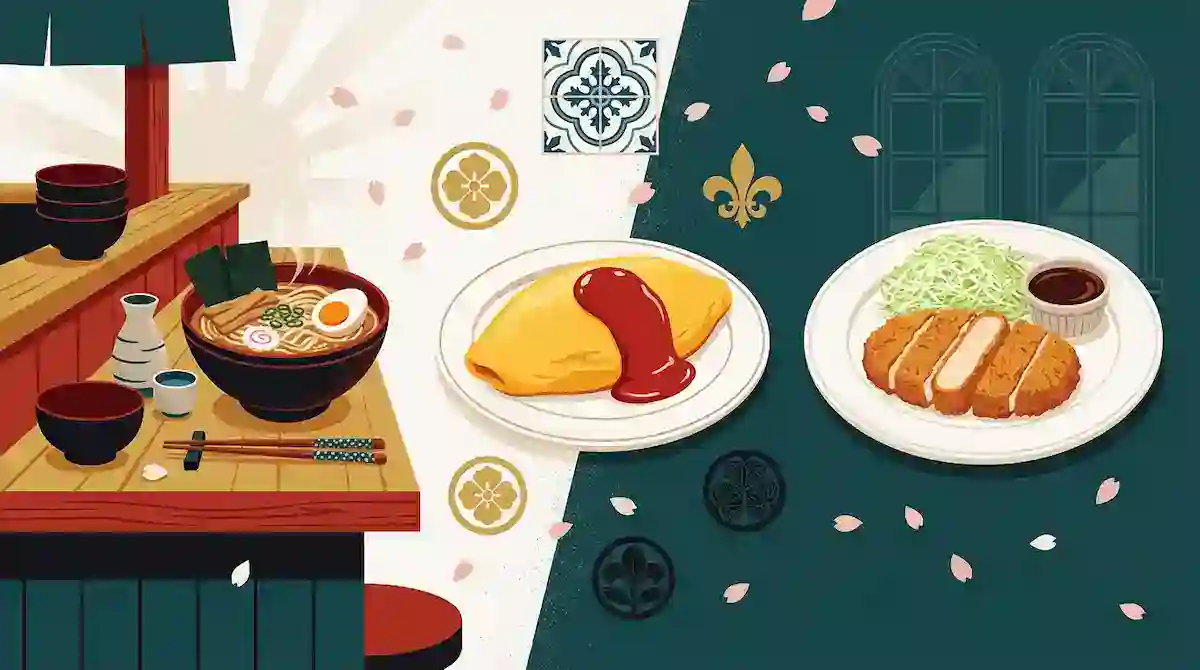
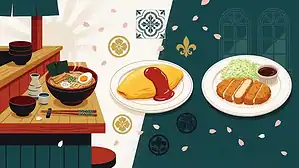
オムライス · Omelette RiceOmurice was created in the early 1900s (most accounts credit Osaka’s Hokkyokusei restaurant, est. 1922) by wrapping ketchup-seasoned fried rice in a thin, French-inspired omelette. The result is neither French nor traditionally Japanese: the omelette skin technique draws from classical French cooking, while the ketchup rice filling and the dish’s function as an everyday comfort food are purely Japanese. Modern versions range from the original firm omelette style to the dramatic “split” omurice where a jiggly, barely-set egg falls open at the table to reveal the rice beneath. It remains one of Japan’s most beloved home cooking and restaurant dishes across all age groups.
3Tonkatsu
とんかつ · Breaded Pork CutletTonkatsu was invented at Rengatei restaurant in Tokyo’s Ginza district in 1899, adapted from the European Wiener schnitzel (breaded veal cutlet) using pork and panko breadcrumbs instead of fine European breadcrumbs. The Japanese version is thicker, crispier, and richer, typically served with shredded cabbage, rice, miso soup, and a thick, sweet-savory tonkatsu sauce (itself modeled on Worcestershire sauce). The adoption of panko, Japan’s distinctive large, airy breadcrumbs, was the key transformation: panko creates a shatteringly crispy coating that absorbs less oil than European fine crumbs, producing a lighter, crunchier result. Tonkatsu spawned an entire family of Japanese katsu dishes: chicken katsu, gyukatsu (beef), wagyu gyukatsu, and katsudon (tonkatsu over rice with egg).
4Napolitan Spaghetti
ナポリタンNapolitan spaghetti has nothing to do with Naples, Italy. It was invented in Yokohama in the early 1950s by the chef at Hotel New Grand, inspired by the tomato ketchup-dressed pasta rations he saw American occupation forces eating. The Japanese version uses spaghetti stir-fried in butter with onions, green peppers, sausage or ham, and generous ketchup, finished with a dusting of grated cheese. It bears no resemblance to Italian pasta but has developed its own distinct character: slightly sweet, savory, and deeply nostalgic. Napolitan is now firmly established as a Japanese comfort food, served at kissaten (old-style coffee shops) and yoshoku restaurants, and celebrated as a uniquely Japanese dish despite its Italian-sounding name.
5Korokke
コロッケ · CroquetteThe French croquette arrived in Japan in the Meiji era and was immediately transformed. The Japanese korokke replaced the French cream filling with a mixture of mashed potato (or ground meat) seasoned with soy sauce and onions, coated in panko, and deep-fried. It became a staple of butcher shop counters, where warm korokke were sold freshly fried as an affordable snack from the 1920s onwards. Today, korokke appear at supermarkets, butchers, convenience stores, and dedicated specialty shops, with regional variations including curry korokke, corn korokke, and the premium wagyu korokke using high-grade beef.
6Hambagu
ハンバーグ · Japanese Hamburger SteakHambagu (from “Hamburg steak”) is one of Japan’s most beloved yoshoku dishes: a thick, juicy ground beef patty seasoned with soy sauce, Worcestershire sauce, and nutmeg, served on a sizzling iron plate with a sauce of demi-glace (or ponzu, or Japanese-style cream sauce), alongside rice and a small salad. It is nothing like an American hamburger, having no bun and a distinctly Japanese flavor profile. Hambagu was popularized in Japan in the 1970s when family restaurant chains like Denny’s Japan and Skylark introduced it as an affordable protein dish. Today it appears on menus from family restaurants to Michelin-starred establishments, where premium versions use wagyu beef mixed with foie gras or black truffle.
Chinese Influences: Japan’s Closest Culinary Neighbor
Over 1,500 years of Chinese culinary exchange
Ramen: China’s Gift, Japan’s Masterpiece
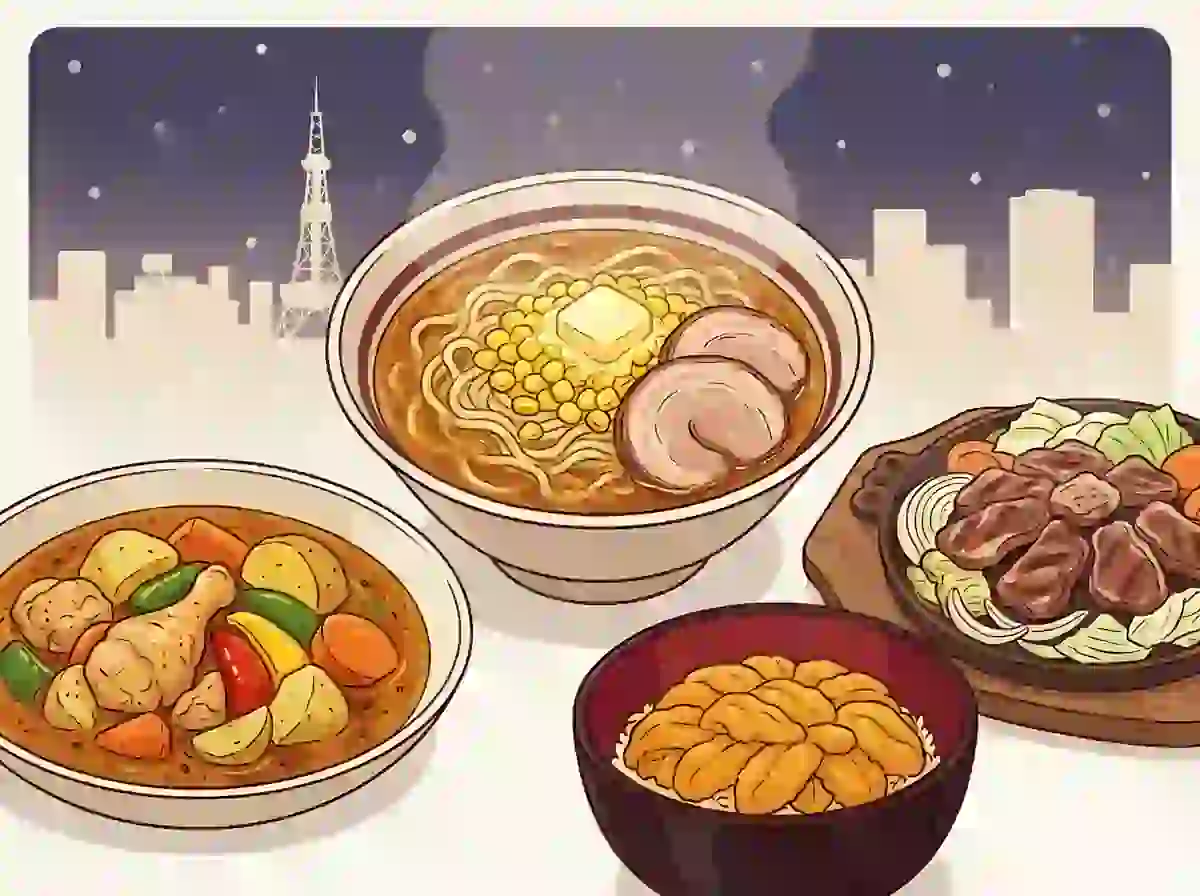
Ramen descends from Chinese noodle soup traditions that arrived in Japan via the port city of Yokohama’s Chinatown in the late 19th century. The original Chinese wheat noodles in broth (chuka soba, literally “Chinese soba”) were gradually adapted to Japanese tastes over decades: the broth became more complex and region-specific; the toppings became more carefully considered; the noodle texture was refined. By the postwar period, ramen had evolved into a distinctly Japanese form with no real equivalent in China. Today Japan’s regional ramen styles (Hakata tonkotsu, Sapporo miso, Tokyo shoyu, Kyoto tori paitan, Niigata butter corn) represent one of the most diverse and sophisticated noodle cultures in the world, born from a Chinese foundation but thoroughly Japanese in expression.
Gyoza: The Japanese Reinvention of Jiaozi
Chinese jiaozi (potsticker dumplings) arrived in Japan via soldiers and repatriates returning from Manchuria after World War II. The Japanese version evolved in distinct ways: thinner skin, more garlic in the filling, and crucially the preference for pan-fried (yaki gyoza) over the Chinese preference for boiled (sui gyoza). Japanese gyoza are typically eaten dipped in soy sauce, vinegar, and chili oil, served as a side dish to ramen rather than as a main. The city of Utsunomiya in Tochigi Prefecture claims the title of Japan’s gyoza capital, consuming more per person than any other city. Fukuoka’s tetsunabe gyoza, cooked in a cast iron pot, represents the most distinctly Japanese regional variation.
Chahan and Yakisoba: Wok Techniques Made Japanese
Chahan (fried rice) and yakisoba (stir-fried noodles) both derive from Chinese wok-cooking techniques but have developed unmistakably Japanese identities. Japanese chahan tends toward lighter seasoning, less oil, and a drier texture than Chinese fried rice, with soy sauce as the primary flavor. Yakisoba uses Chinese-style wheat noodles but is seasoned with a distinctly Japanese sweet-savory sauce (similar to tonkatsu sauce) and topped with beni shoga (red pickled ginger), aonori seaweed, and katsuobushi bonito flakes. Festival yakisoba, cooked on a large iron griddle at matsuri stalls, is one of Japan’s most recognizable street food experiences and bears little resemblance to any Chinese noodle dish.
Western Sweets, Made Japanese
How Japan transformed European baking into something extraordinary
Japanese Shortcake
ショートケーキJapanese shortcake bears the same name as its American and British relatives but is a fundamentally different creation. Where Western shortcake uses a dense, buttery biscuit base and stabilized cream, the Japanese version uses a light castella sponge (genoise), fresh whipped cream unsweetened or barely sweetened, and fresh whole strawberries. The result is lighter, more delicate, and less sweet than any Western counterpart. Created by Fujiya confectionery in the 1920s and perfected over decades, it is now the standard birthday and celebration cake across Japan and the foundation of the country’s beloved Christmas cake tradition.
Baumkuchen
バウムクーヘンBaumkuchen, the German layered ring cake (its name means “tree cake” after the rings visible when sliced), arrived in Japan in 1919 when a German prisoner of war named Karl Juchheim baked it at an exhibition in Hiroshima. It became Japan’s most beloved foreign cake, with the Japanese version distinctly softer, moister, and less sweet than the German original. Japan now consumes more baumkuchen than Germany, and specialty baumkuchen shops operate across the country. The symbolism of its layered rings (representing growth and continued good fortune) made it a popular wedding and gift item. Regional Japanese variations use matcha, yuzu, sakura, and local honey, creating a thoroughly Japanese product from a German foundation.
Castella: Portugal’s Legacy
カステラCastella (from the Portuguese “pão de Castela,” bread of Castile) arrived in Nagasaki with Portuguese traders in the 16th century and has been baked in Japan for over 400 years. The Japanese version evolved away from the Portuguese original: it became moister, denser, and sweeter, baked in long rectangular wooden molds, with the distinctive sugar-crystallized bottom crust that is now a defining feature. Nagasaki’s Fukusaya, operating since 1624, is the most famous castella producer and sells nothing but castella. The cake’s 400-year history in Japan makes it arguably more “Japanese” today than “Portuguese,” representing one of the most complete cultural absorptions in culinary history.
Modern Japanese Fusion
Contemporary chefs carrying the tradition forward
Wafu Pasta: Italian Technique, Japanese Soul
和風パスタWafu pasta (Japanese-style pasta) uses Italian pasta formats but Japanese flavor profiles: mentaiko (spicy cod roe) butter pasta, natto and nori pasta, uni (sea urchin) cream pasta, shiitake and dashi-based pasta, and mushroom and butter soy sauce pasta are all standard wafu varieties found across Japan. The technique respects Italian precision (al dente, emulsified sauce) while the flavors draw entirely from Japanese ingredient culture. Wafu pasta emerged in the 1980s and 1990s as Japanese chefs trained in Italy returned home and began integrating their classical training with local ingredients. It represents the most naturally successful modern fusion form in Japan.
French-Japanese Cuisine
仏日料理The dialogue between French and Japanese cuisine has produced some of the world’s most celebrated restaurants. French technique applied to Japanese ingredients, or Japanese seasonal philosophy applied to French format, has created a distinct culinary language spoken fluently by chefs like Seiji Yamamoto, Yoshihiro Narisawa, and Hiroyuki Hiramatsu. At the highest level, this is not fusion in the superficial sense but a deep synthesis: the French obsession with sauce and the Japanese obsession with dashi; the French love of butter and the Japanese love of umami; the French seasonal calendar and the Japanese shun (peak season) philosophy. Tokyo’s French-Japanese restaurant culture is rivaled only by Paris itself.
Japanese-Korean Fusion: Yakiniku and Beyond
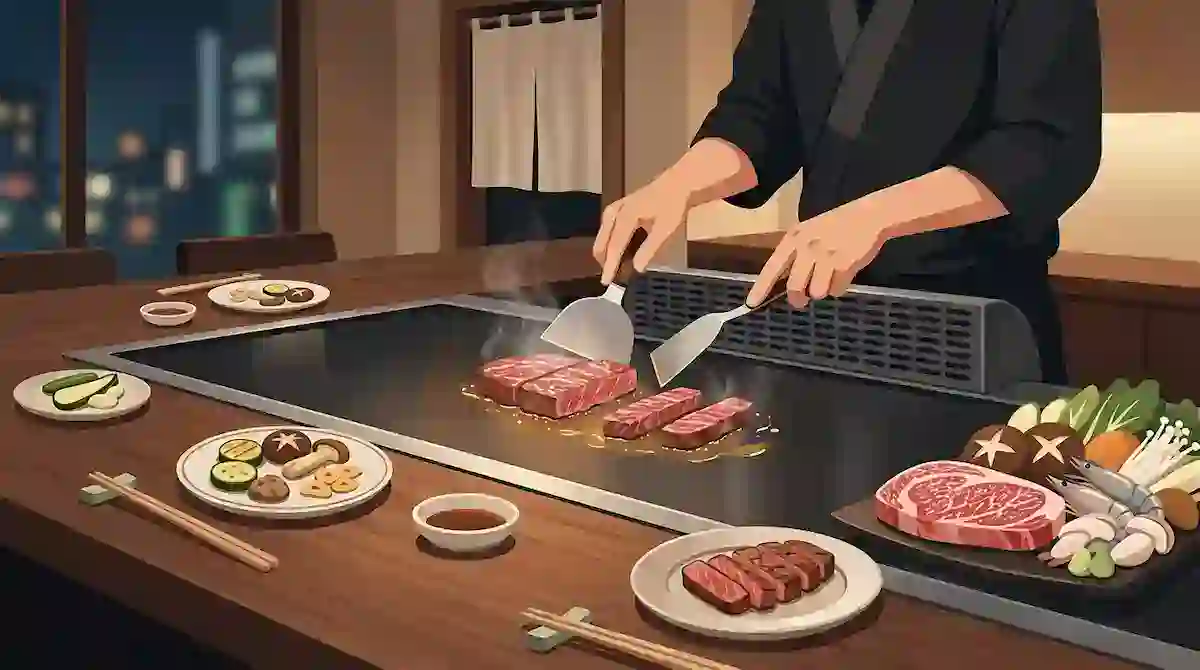
Japan’s relationship with Korean cuisine is complex, historically layered, and enormously productive. Yakiniku (Japanese BBQ) derives directly from Korean gui (grilled meat) culture, brought to Japan by Korean immigrants in the early 20th century. Kimchi has become a standard condiment in Japanese supermarkets and izakaya. Bibimbap, jeon (Korean pancakes similar to pajeon), and Korean fried chicken have all found large Japanese audiences, adapted slightly to Japanese taste. The Shin-Okubo neighborhood of Tokyo (often called “Korea Town”) is the most concentrated expression of Korean-Japanese culinary culture, with restaurants serving both authentic Korean cooking and fusion hybrids unique to Japan’s Korean diaspora.
The Japanese Fusion Philosophy
Why Japan’s culinary borrowings always become something new
Kaizen Applied to Cuisine
The Japanese concept of kaizen (continuous improvement) explains much about how foreign foods are transformed in Japan. Where other food cultures might adopt a foreign dish and serve it largely unchanged, Japan treats each adoption as a starting point for refinement. The curry roux was perfected over decades until Japanese curry became its own category. The tonkatsu panko coating was optimized until it became the world’s best fried food coating technique. The baumkuchen was remade softer and moister until it became something the Germans themselves sought to import back from Japan. This is not mere copying but systematic improvement: the application of Japan’s extraordinary craft culture to whatever arrives at its shores.
The Japanese Palate: Less Sweet, Less Heavy, More Umami
Every Western dish that Japan adopted underwent the same transformation: sweetness was reduced, heaviness was lightened, and umami was deepened. Japanese curry is less spicy than Indian curry. Japanese shortcake uses far less sugar than Western versions. Japanese croissants are lighter and more layered than French originals. Japanese cheesecake is airier and less rich than New York style. This consistent pattern reflects the Japanese palate’s preference for delicacy over richness, subtlety over boldness, and the complex satisfaction of umami over simple sweetness. Understanding this transformation pattern helps explain why Japanese versions of foreign foods are often considered, by the Japanese and by international visitors alike, to be the best in the world.
Where to Experience Japanese Fusion Food
The best places across Japan to explore its fusion culinary heritage
Tokyo: Yoshoku Restaurants and Modern Fusion
Tokyo has the widest range of both classic yoshoku and contemporary fusion. For traditional yoshoku, look for small family restaurants (洋食屋, yoshoku-ya) in Ginza, Kanda, and Ueno, many operating since the Meiji or Taisho eras. For modern French-Japanese haute cuisine, the Roppongi, Nishi-Azabu, and Minami-Aoyama areas have the highest concentration of world-class restaurants. The Shin-Okubo Korean Town offers the best Korean-Japanese fusion. For wafu pasta, Daikanyama and Minami-Aoyama specialists are the most creative.
Nagasaki: Japan’s Oldest Fusion City
Nagasaki was Japan’s only port open to foreign trade for over 200 years during the Edo period’s sakoku (isolation) policy, making it the birthplace of Japanese fusion cuisine. Shippoku ryori, a Nagasaki specialty banquet cuisine blending Japanese, Chinese, and Dutch cooking traditions into a single multi-course meal, is the most direct surviving expression of this heritage. Castella from Fukusaya (est. 1624) represents Japan’s oldest surviving fusion food product. Champon (Nagasaki’s famous thick noodle soup with pork, seafood, and vegetables, originally a Chinese student dish) and sara udon (crispy noodles with thick stir-fried toppings) are both unique to Nagasaki and born of Chinese-Japanese exchange.
Osaka: The City That Perfected Comfort Fusion
Osaka’s kuidaore (eat until you drop) culture made it the natural home of yoshoku refinement. Omurice was likely invented here (at Hokkyokusei in 1922). The city’s Chinese-influenced takoyaki batter culture, its Korean-Japanese yakiniku tradition in the Tsuruhashi neighborhood (Japan’s largest Korean market), and its French-trained pastry scene all contribute to Osaka’s position as Japan’s most diverse fusion food city after Tokyo.

Comments